Puerto Rico en la Casa: Bad Bunny Brings Latin Culture to the Forefront
At the Super Bowl Halftime Show, Bad Bunny brought Puerto Rican history to North America’s biggest stage
Fresh off the 68th Grammy Awards stage and straight to the Apple Music Super Bowl LX Halftime Show, Bad Bunny is no stranger to making history. In a landmark week, he won the Grammy for Album of the Year with DeBÍ TiRAR MáS FOToS, marking the first time a fully Spanish-language album has claimed the award. However, this isn’t just a milestone in Benito Antonio Martínez Ocasio’s career, but a defining cultural moment for the Latin community.
Hailing from the beauty of Vega Baja, Bad Bunny transformed the 13-minute performance at Levi’s Stadium in Santa Clara, California, into a cinematic journey through the rich history of his homeland. It opened in a maze of sugarcane, sweet in taste, but heavy with meaning. For centuries, sugarcane shaped Puerto Rico’s economy, identity, and the daily lives of jíbaros (rural farmers), from the 1500s through the 20th century. Its dramatic decline in the late 1900s, driven by industrialization, rising costs, and the closure of the island’s last refinery in 2003, left the crop as a lasting symbol of colonialism and industrial exploitation.
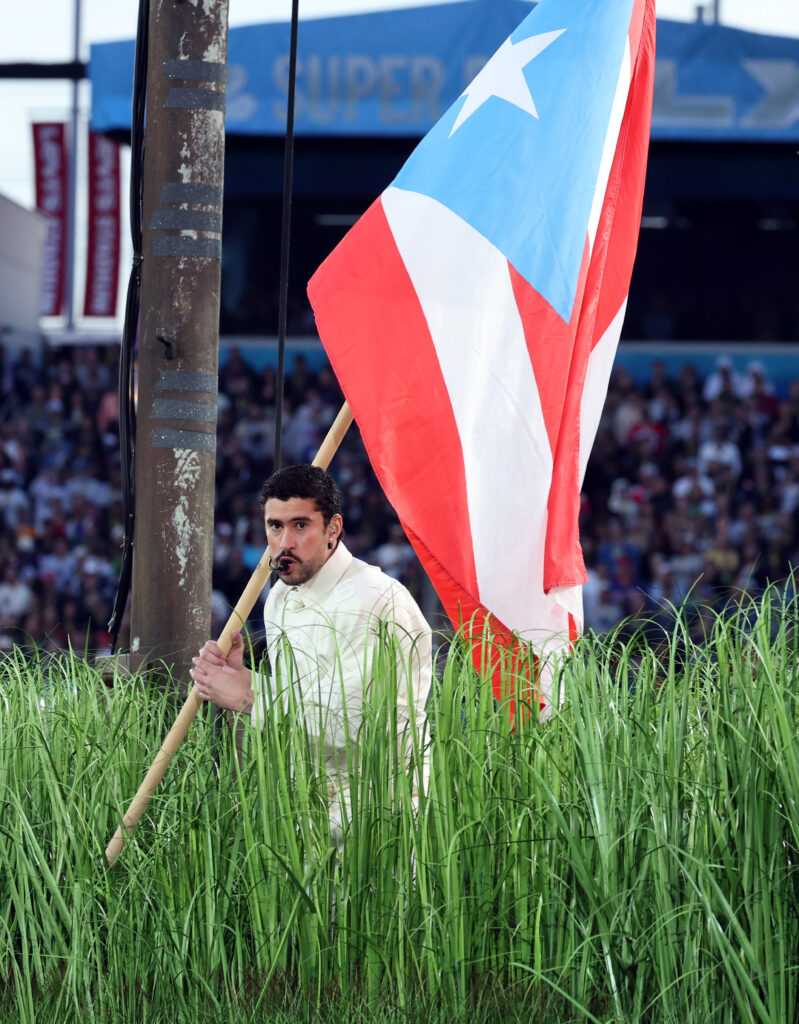
As Bad Bunny moved through the sugarcane fields singing his viral 2022 hit “Tití Me Preguntó,” the visuals shifted to scenes of everyday life familiar to many Puerto Ricans. Street vendors selling piraguas, pinchos, and coconut water appeared alongside men locked in domino games and local pawnbrokers. These are sights you’d instantly recognize walking through Old San Juan’s cobblestone streets. La garita, the iconic Spanish colonial watchtower most famously found at Castillo San Felipe del Morro and Fort San Cristóbal, also made an appearance in Bad Bunny’s set, grounding the performance in lived history and place.
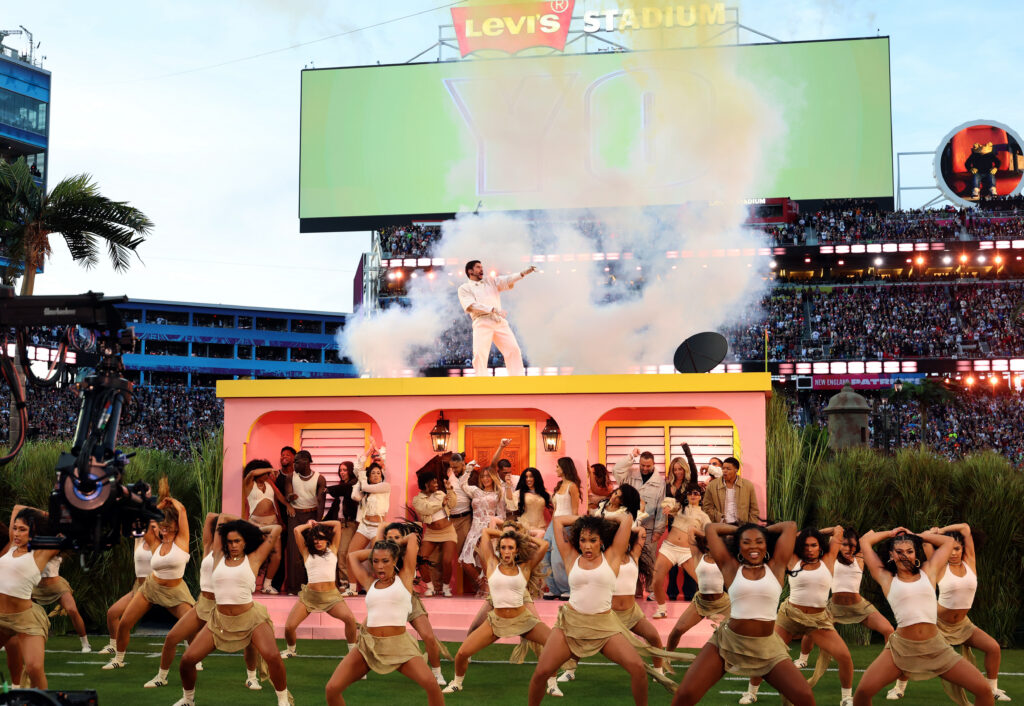
The audience was then led into La Casita, a set inspired by the traditional architecture of Puerto Rican homes found across the island, from both urban neighborhoods to rural areas. Serving as the centerpiece of Bad Bunny’s No Me Quiero Ir De Aquí residency in Puerto Rico, La Casita became far more than a stage design. The real home—owned by 84-year-old Puerto Rican resident Román Carrasco Delgado—is located on the island’s southeastern coast in Humacao. Within its four pink walls, a star-studded house party came to life, with guests including Cardi B, Pedro Pascal, Karol G, Jessica Alba, and Young Miko—filling the space with a sense of intimacy, joy, and familiarity.
Yet La Casita is not simply a hangout for Benito and his friends. It symbolizes the deeply rooted “party de marquesina” culture, carport parties that function as centers of community.
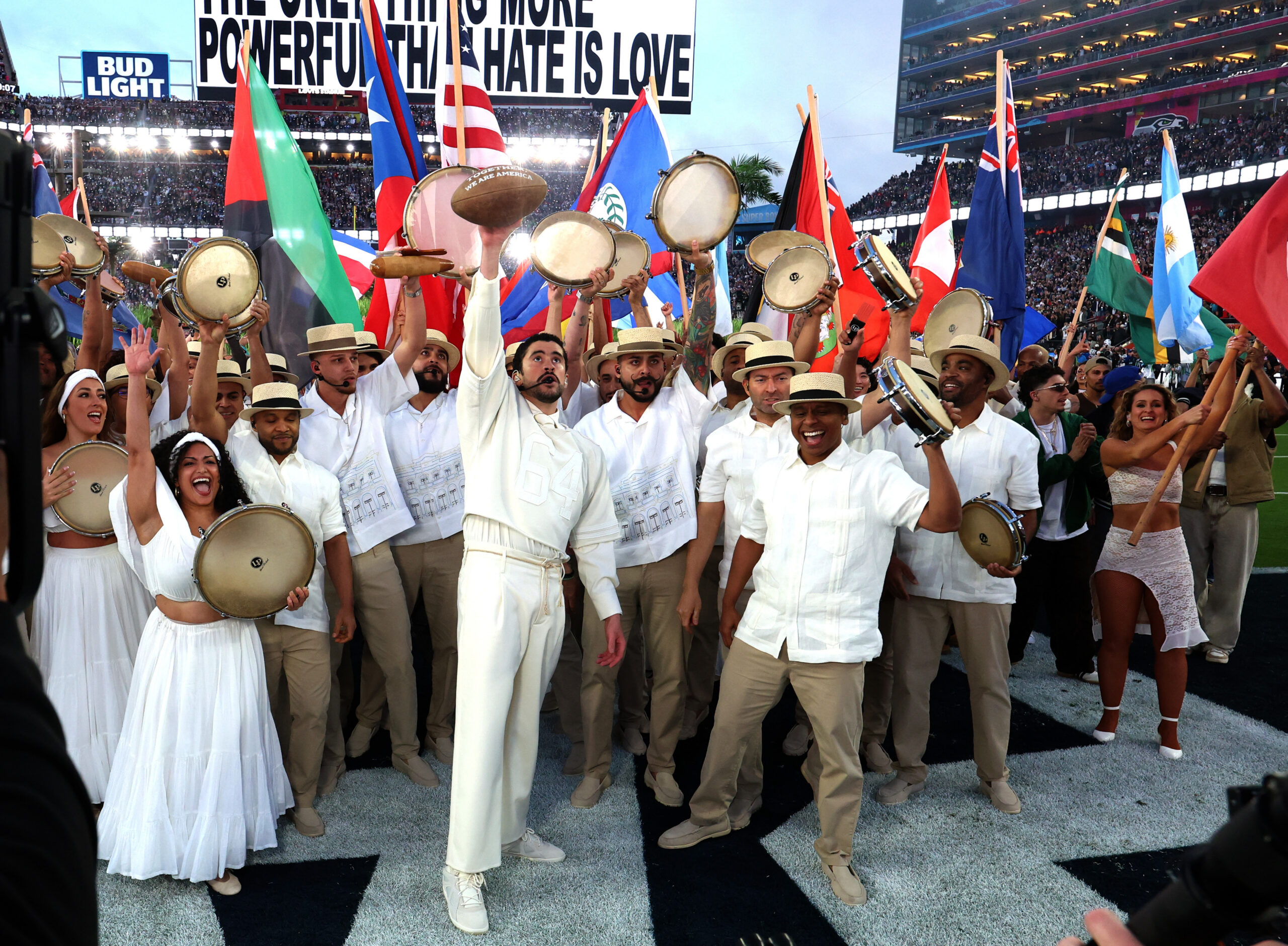
In moments as politically charged as these, finding a throughline of hope can feel nearly impossible. Yet that hope appeared unexpectedly in the young couple, Thomas “Tommy” Wolter and Eleisa “Elli” Aparico, who became part of the story just five minutes into Bad Bunny’s performance. According to his representatives, the couple had invited the Puerto Rican superstar to attend their wedding—only for him to turn the gesture around and invite them to be part of the Apple Music Halftime Show. As the message of unity echoed across the stadium, the performance closed on a simple truth, displayed on a billboard and impossible to ignore: the only thing more powerful than hate is love—a sentiment Bad Bunny had echoed just a week earlier during his Grammy Awards speech.
Bad Bunny didn’t take the stage alone. He was joined by New York City sweetheart, Lady Gaga. In a moment that felt both intimate and historic, Gaga debuted a salsa rendition of “Die With a Smile” to commemorate the newly engaged couple. Dressed in custom Luar, she became a living embodiment of the Puerto Rican flag, clad in red, white, and sky blue—the colors of the island’s original 1895 flag. Pinned at her chest was a flor de maga brooch, a quiet but powerful nod to Puerto Rico’s national flower.
Their shared presence onstage underscored the importance of visible allyship from Americans with global platforms. It’s one thing to voice solidarity, but another to physically step into the space, to share the spotlight and uplift a culture so often politicized.
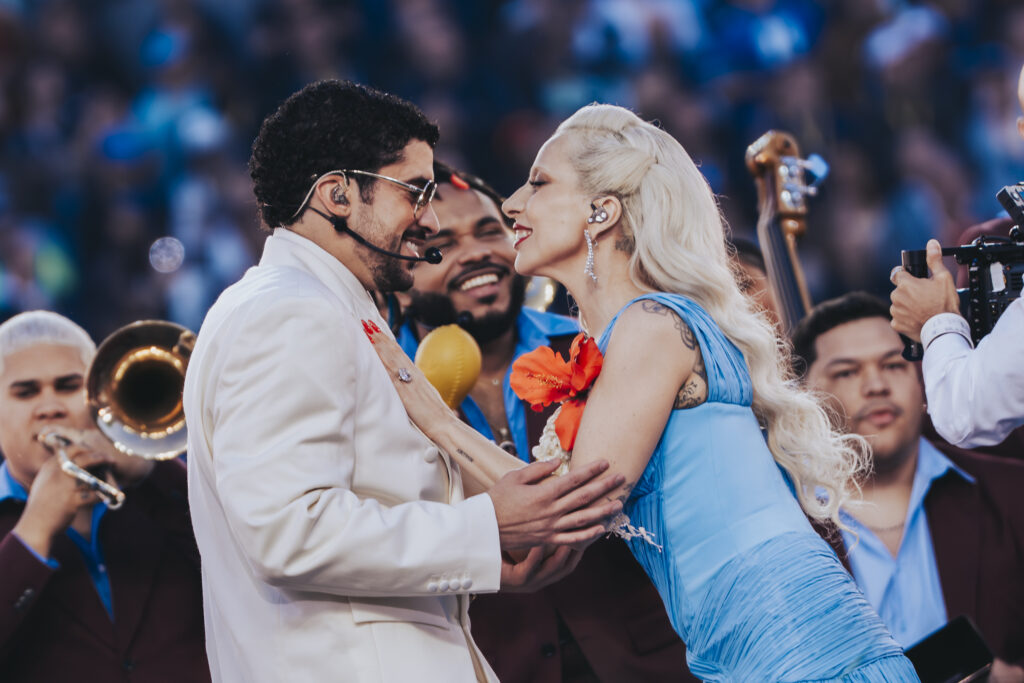
Back on the field, the energy carried on and even multiplied into a large-scale celebration as dancers filled the space and Bad Bunny launched into “NUEVAYoL,” transforming the stadium floor into a unified celebration. The performance included a special appearance by Toñita, the owner of the Williamsburg bar Caribbean Social Club, a longtime cornerstone of New York’s Latinx community, further amplifying the cultural weight of the moment.
In a brief but deeply moving pause, Bad Bunny stepped away to acknowledge a young boy watching TV with his parents, who were viewing footage of him winning Album of the Year at the Grammys. In a symbolic gesture, Bad Bunny handed the boy his Grammy award. The interaction served as a powerful reminder that we were all once children, with dreams of believing in a hopeful future.
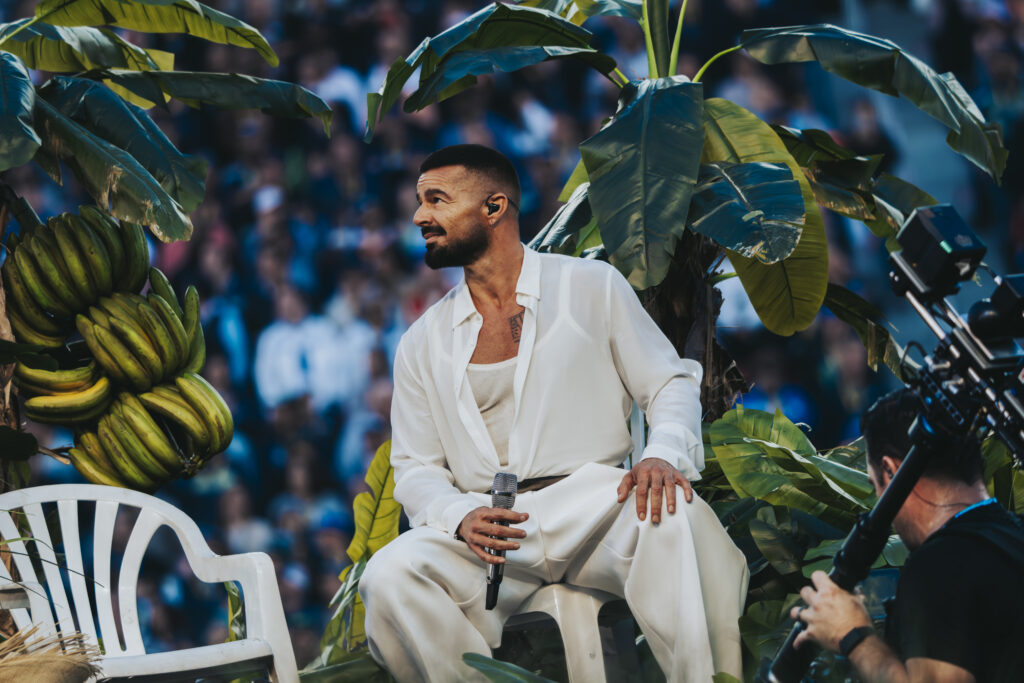
The camera then cuts back to a scene that mimics his DeBÍ TiRAR MáS FOToS album cover: two white plastic chairs under a plantain tree—an image that is deeply familiar to Puerto Ricans, triggering memory, connection, and presence. Puerto Rican global icon Ricky Martin then performs “LO QUE LE PASÓ A HAWAii,” a protest song warning that Puerto Rico faces the same fate as Hawaii: displacement of locals, loss of culture, and economic colonisation driven by over-tourism and gentrification.
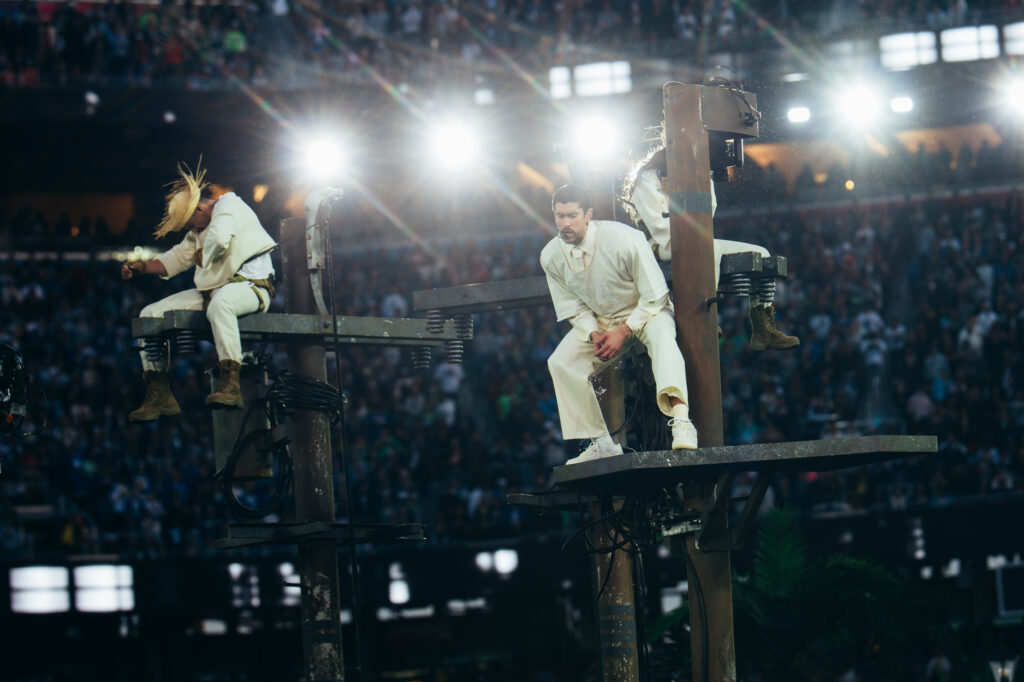
The audio cuts and the stage dims as Bad Bunny launches into “El Apagón,” literally translated as the blackout, performing atop damaged electricity poles. Puerto Rico’s ongoing electricity crisis has become a deeply politicized issue in recent years, with recurring power outages exacerbated by inconsistent service under LUMA Energy, a U.S.–Canadian consortium. In 2021, LUMA signed a 15-year agreement with the Puerto Rico Electric Power Authority (PREPA) to manage the island’s energy transmission and distribution, a move that has since affected millions of residents across the archipelago.
Following Hurricane Maria in 2017, Puerto Rico endured the longest blackout in American history. The crisis was not solely the result of a natural disaster, but the consequence of a dangerously outdated and poorly maintained power grid, one neglected for decades under U.S. colonial governance.
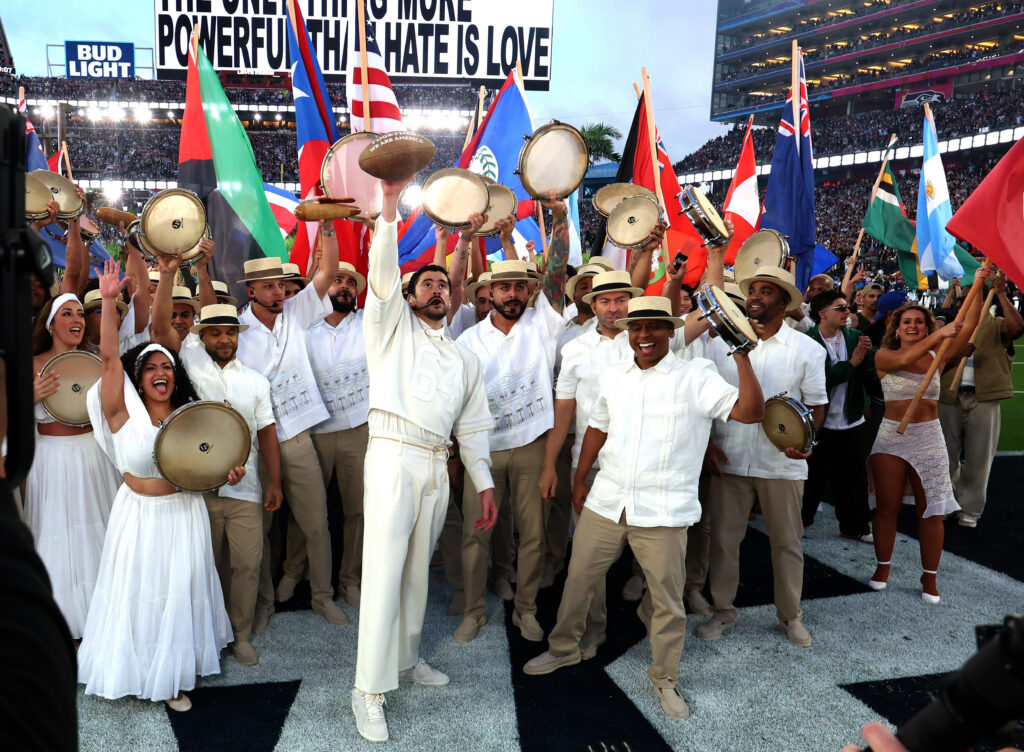
At the show’s conclusion, Bad Bunny proclaimed, “God bless América,” shouting the countries across North and South America, including Central America and the Caribbean, that together comprise the entirety of the continent, as performers waved flags from the nations. The moment placed him within a long tradition of Latin artists who use music to assert hemispheric unity in opposition to U.S. imperial dominance. Holding a football up to the camera, he revealed the phrase “Together we are America” and declared, “Seguimos aquí” (“We’re still here”).
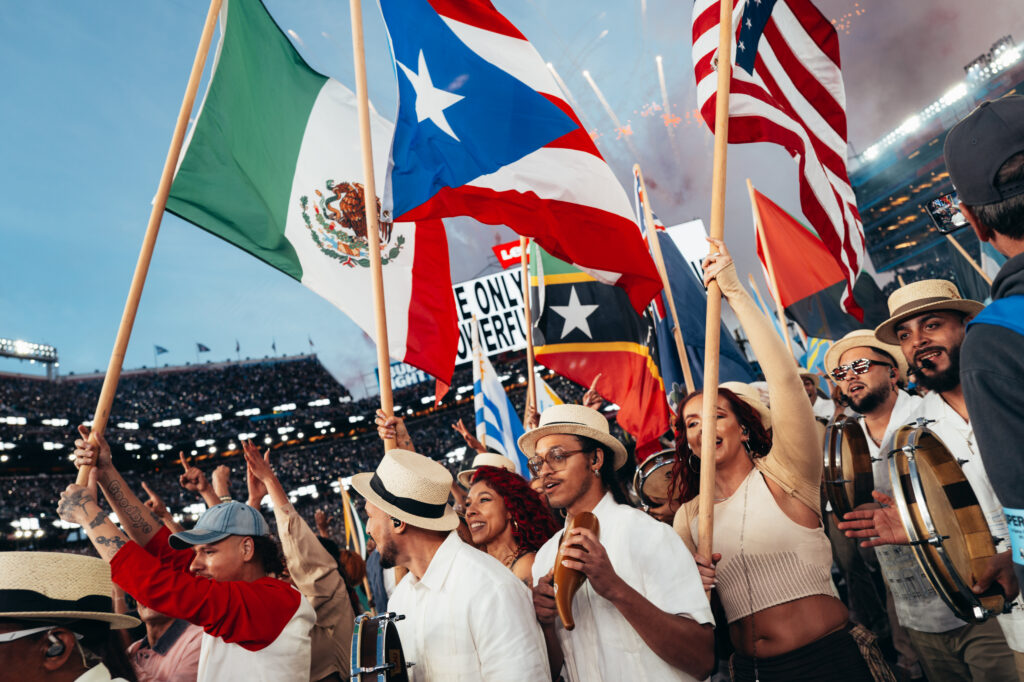
In this context, the message became a direct response to conservative claims that Bad Bunny, and Latinos more broadly, are not “American enough.” Rather than seeking inclusion within a narrow national definition, he frames America itself as a collective, multicultural project, shaped by Latino and Caribbean presence.
Discover More