Actor Corey Mylchreest on His Craft, ‘Queen Charlotte’ & the Latest BOSS Campaign

The British actor moves between genres and eras without skipping a beat
There are no signs of Corey Mylchreest slowing down anytime soon. The 27-year-old actor is best known for his portrayal of Young King George in Queen Charlotte: A Bridgerton Story which elevated the actor’s trajectory and magnetized a growing fanbase. Following this foray in the London Regency era, he continued with the romantic storyline as Jamie Davenport in My Oxford Year, shifted gears for the political thriller Hostage, and is working on back-to-back films this year. And offscreen—but still behind the camera—he fronts the BOSS campaign for SS26, “Be the Next.” V spoke with Mylchreest about his different roles, evolving through them and what style means to him.
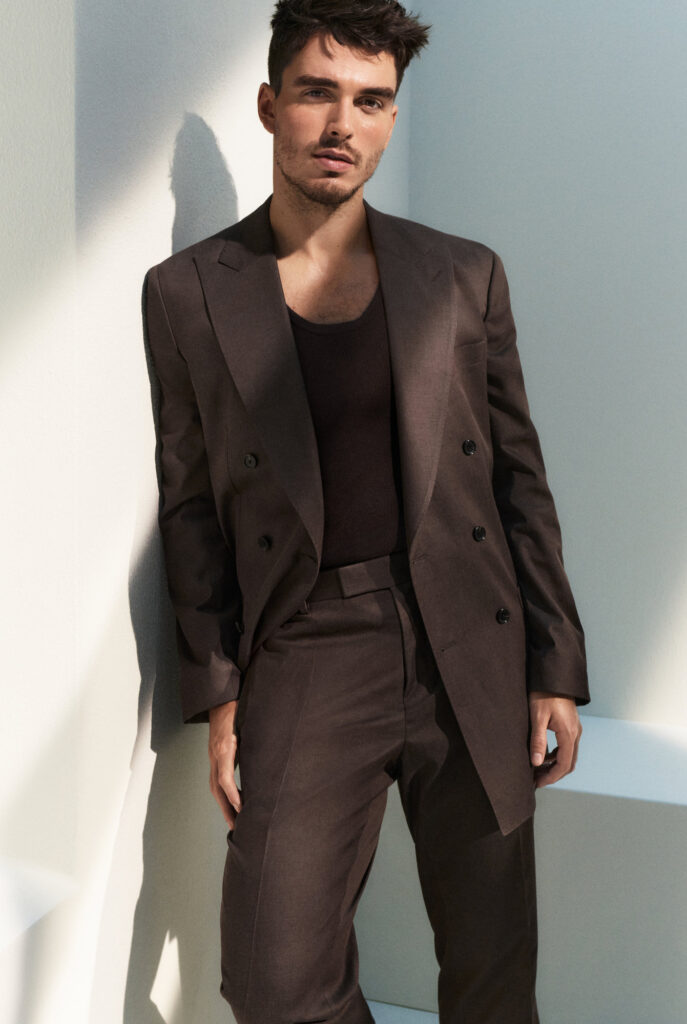
Catherine Gerdes: You’re starring in the spring/summer 2026 campaign from BOSS. How does BOSS reflect or connect with your personal style?
Corey Mylchreest: Classic is a big thing for me. And BOSS’s pieces have always felt incredibly grounded in what I’m drawn to wear. Strong and relaxed, all at once.
I’ve been very lucky this year to be working on back-to-back films. It’s a privilege but it’s also a lot of time in airports, on new sets and in new countries and this clothing has been a constant I can rely on. My experience wearing BOSS at their shows and shoots, at airports and at home has reinforced why I always come back to it, it’s classic. It feels like me.
CG: In just the past few years, you’ve starred in roles that spanned genres including thriller, drama and romance. Do you have a preferred genre for your work? Is there one you’re eager to explore?
CM: I think it can be quite unhealthy for actors to focus on genre. I try to think about the truth of the work. And obviously, truth in a horror film looks different from truth in a comedy. What I’m learning through working on such a span of different projects is that it’s all really a collaboration between you and the cinematographer in a way, along with other things, of course… but there’s a real technique involved in your collaboration with the cinematographer. Once that clicks, then you can get into the truth of things.
I’ve always wanted to do horror. And I was lucky enough to do that at the end of last year when I made Banquet with the wonderful director Galder Gaztelu-Urrutia, and again, that was much more technical than I thought it would be because of that collaboration. The camera does so much of the horror work and you do all of the human character creation work. And that’s something that I’m really excited to see come together. Because, really, there was no horror involved in what I was doing, it was created in the music and the shot choice and the movement of the camera.
It’s important to say, though, although I don’t consider genre, I do want to work with different filmmakers and different cinematographers and different actors and the collaboration between all of those different melting pots, is what creates the feel, the vibe, the themes of a project. I guess that’s what the audience then interprets as genre.
I would love to work with Dennis Villeneuve. And Greta Gerwig’s a dream. If you look at the way Greta Gerwig always works, the way that she shoots, it’s always so different. There are so many lovely clips of her talking to her actors, and she does that in such an impressive way and in such a human way. And yet you can look at different films of hers, at Ladybird, at Barbie, each shot in such unique ways but you can still feel the pursuit of human exploration. And in terms of actors, I do, I really do want to work with Christian Bale. Even if I was just an extra. I would just want to learn, to watch him work.
CG: Starring as Young King George in Queen Charlotte was a turning point in your career. As an actor, what were your takeaways from this role?
CM: Well, my main takeaway was that I learned how to be on camera. Not to say that I am an expert now but before that, I’d done four hours on a show and that was it. So I’m very thankful for the cast but especially to Tom Verica, the director. For a lot of us, it was our first job. It felt like we were all in it together. No one felt embarrassed. Everyone felt free to explore and fail and learn. The whole time, we were chatting about what we were learning. Of course India or Sam, they had already worked, but I think they’d agree that it was their biggest job. And even when we came at it from different perspectives, we all felt like, “Oh my god, this is massive”.
Tom is an amazing actor in his own right, as well as a director and an amazing producer. It meant that — and I can see it even more in hindsight now — he really held my hand through it all. And because it was a TV show, we shot for seven months. You know, most films shoot for six weeks, maybe even five, but I ended that job with seven months of being on set almost every day. That’s just, literally, a priceless experience. You can only learn through doing and failing. So yeah, learning, that was what I got to take away.
CG: Also, that character had a fabulous, regal wardrobe! Were you surprised to see yourself in period dress?
CM: I was surprised initially at the costume fittings! I wasn’t surprised when I saw the show because not only had we shot it for 7 months, but we’d been doing fittings for about a month, maybe 2 months before, because everything had to be handmade.
We had an amazing tailor, as well as Lyn Paolo, as our Head of Wardrobe. Again, I knew nothing going into it, but I was just so impressed. The whole thing was overwhelming for me, but I can look back now and really appreciate what it meant to literally build from scratch, from the raw material, every single costume that was involved in that production. The sheer amount of work and hand stitching that involved an entire team was incredible. And then, it’s on my body. It’s strange but you feel a good motivating sense of pressure to do this intricate work that they have done justice. To raise your game to match the work that they put in.
CG: According to BOSS, this campaign is about those who “lead the way for others by breaking through—all while turning self-belief into strength.” How does this idea resonate with you and your experiences?
CM: There’s a step even before self-belief and that is doing something even when every part of your brain is telling you that you can’t do it. You just know, you have to.
There is a moment from cinema that’s always stayed with me. In The Prisoner of Azkaban, Harry believed he saw his dad cast a spell to save him. Later, he realizes that he had actually saved himself. The only reason that he knew he was capable was because he’d witnessed it.
Before you “prove” anything to the world, to your community, or to your friends, family, your colleagues, or the industry that you work in, you just have to do it, you have to go all in. You have to prove you can to yourself first. And often the only way to do that is to just do it. And if you fail, then you learn, and if you don’t fail, then you’ve gone, “Oh my god, I jumped across that thing and I’m still on my feet!” And that’s incredibly exciting. And now, how can I do it again and do it better, you know?
And I think that’s a really good mindset to take on when you’re auditioning and when projects come your way. I try to ask myself: is this something that I’ve done before? Is this something that scares me? Because if you enter into a project, and you don’t know if you can do it, I think that your work is always better because you reach and meet new parts of yourself. And you grow. That’s my favorite thing about this. This job, this industry. You’re actually meeting new parts of yourself and you’re shining spotlights on something inside that hadn’t been visible before. Sometimes you don’t like it, it’s uncomfortable. And sometimes you get to say, “Oh wow, that’s pretty cool. I didn’t know that I would have that in me.” Exploring what it is to be yourself, and through that, what it is to be human, which I guess, to me, is the same message of proving something to yourself, before you prove anything to the world.
Discover More