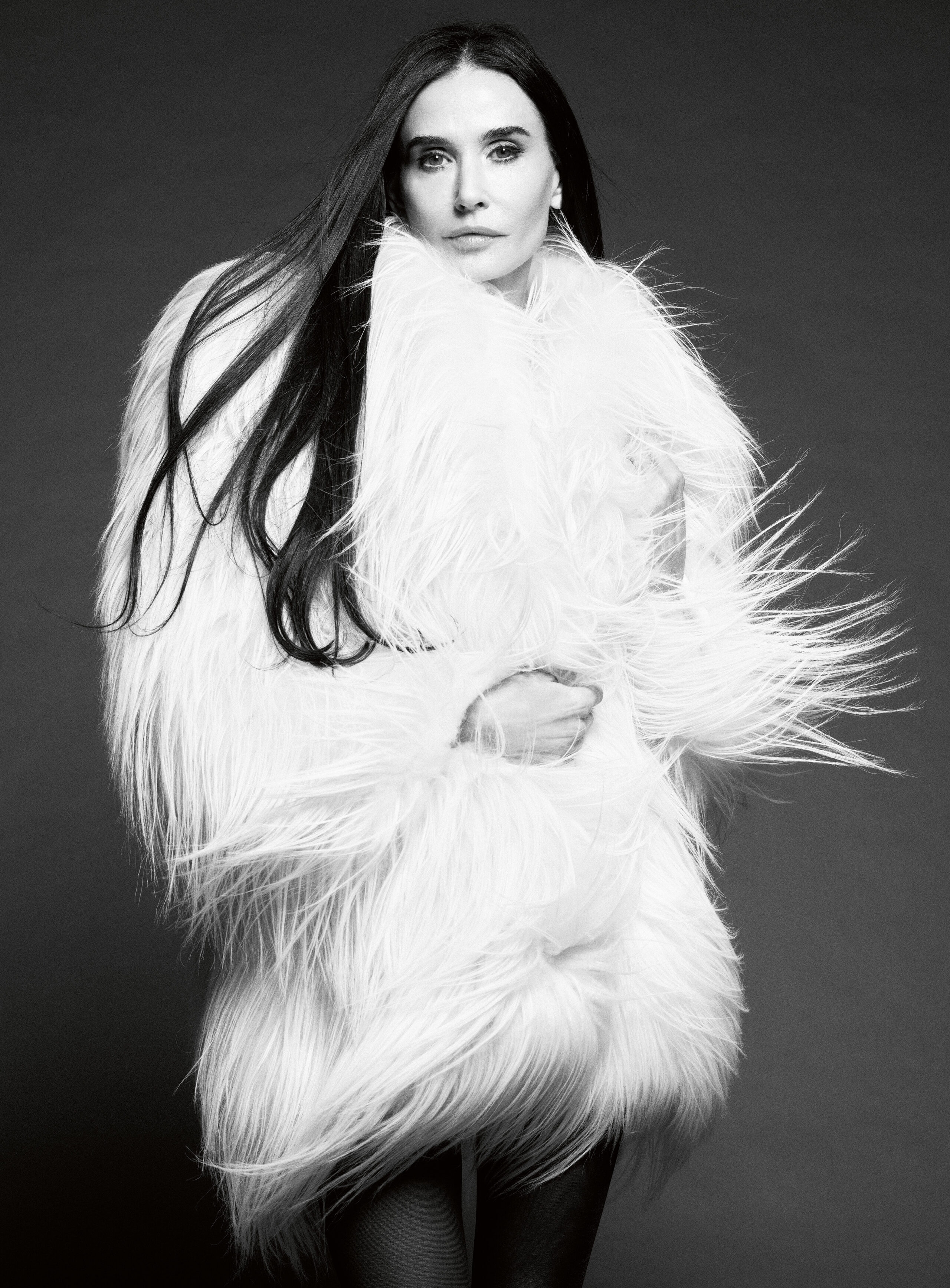

V160: The Power & Poise of Demi Moore’s Next Act
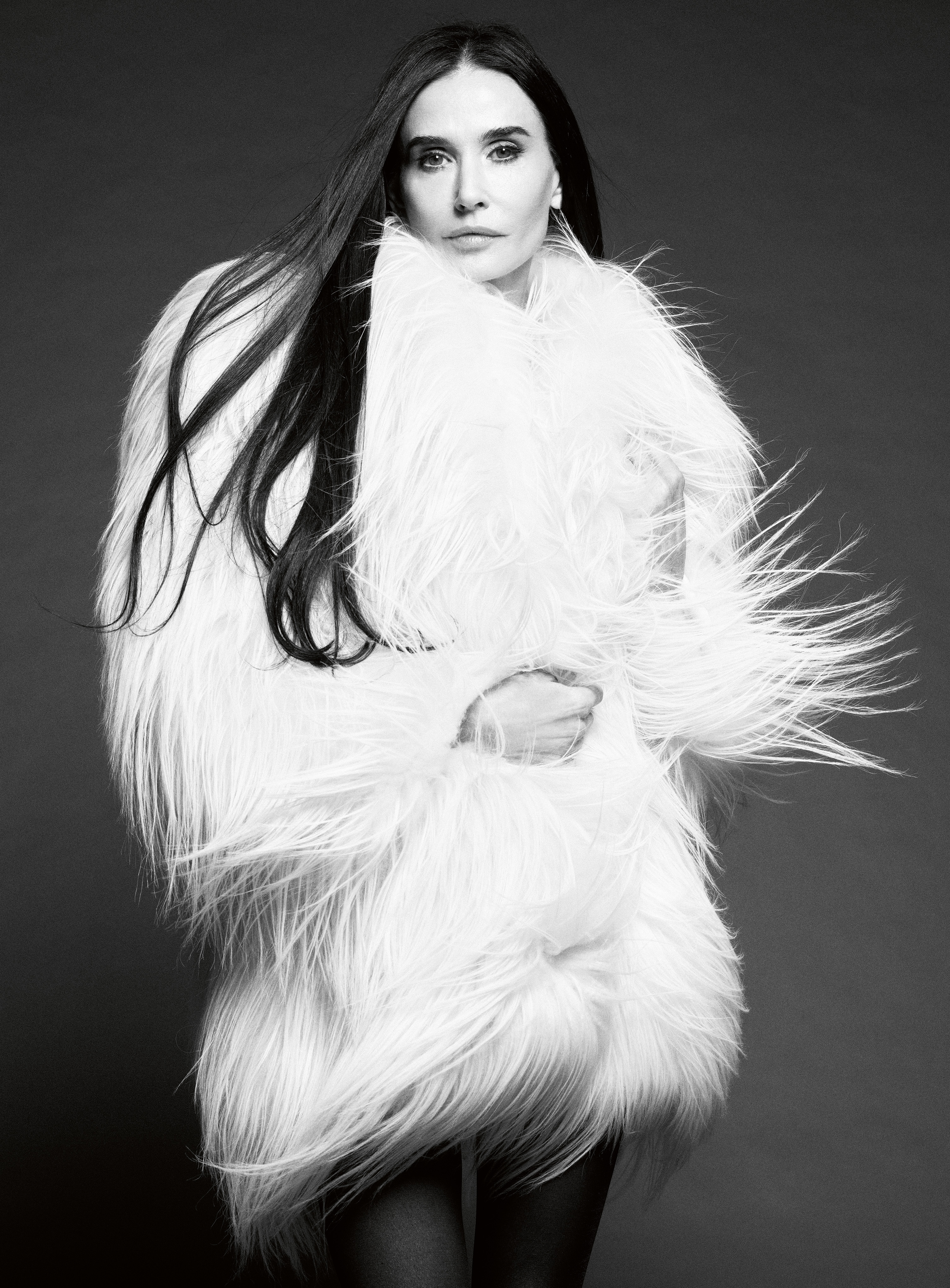
Hollywood’s spotlights made Demi Moore a star. The shadows beyond them kept her human
The Hollywood Hills with which Demi Moore is synonymous, did not shape her. Rather, she was born in Roswell, New Mexico, most famous for being the site where an alleged UFO crash in 1947 turned a quiet desert town into the center of a global alien conspiracy. Moore and her career are perhaps the second “biggest thing” to come from Roswell, but her background—hundreds of miles from the Dream Factory’s gloss—gave Moore an innate sense of disruption; of being an outsider to a system that, concurrently, she was the face of.
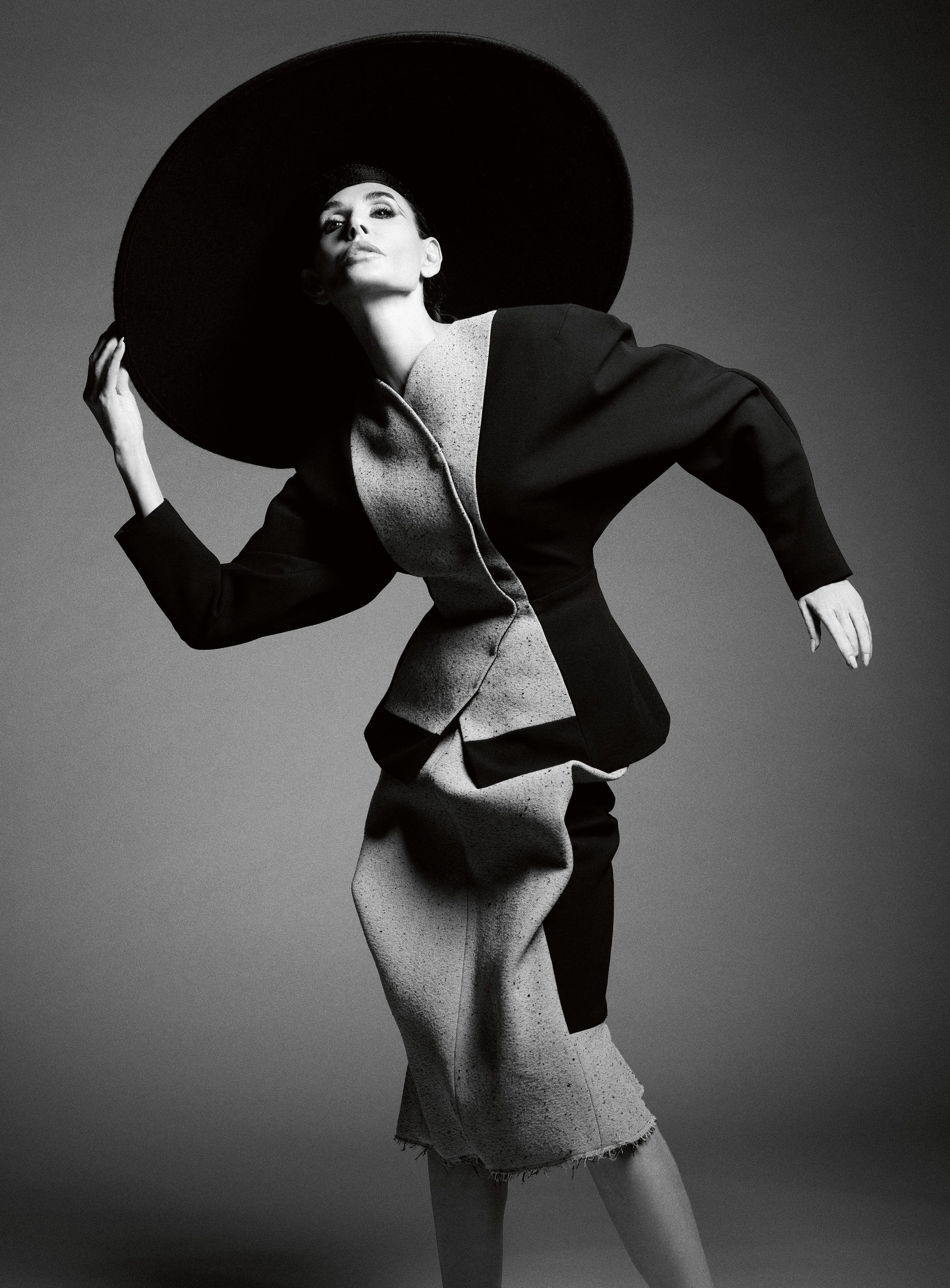
A true demimonde—defined by Merriam-Webster as “a class of women on the fringes of conventional society”—Moore focused more on her inner light than red carpet flashes for several years before returning with The Substance in 2024, a film that received a 13-minute ovation at the Cannes Film Festival, finally gave her a much overdue Oscar nomination, and recrowned her as Hollywood’s Queen of Subversion. Her next project? A surreal, fashion-infused film by director Boots Riley—I Love Boosters—alongside fellow demimonde and industry veteran, Keke Palmer.
MATHIAS ROSENZWEIG: Our Editor-in-Chief Stephen Gan’s concept behind this cover shoot is “demimonde,” so we can start there.
KEKE PALMER: What does that mean? What are you putting together there?
[Demi pulls out her phone]
DEMI MOORE: It’s the idea of someone who’s on the outside—who’s in the frame, who travels with the elite, but is also on the outside. Someone who doesn’t belong to one definition.
KP: That’s me, though. I’m definitely a “demimonde.”
DM: Someone who has freedom in how she exists and is untouched by convention.
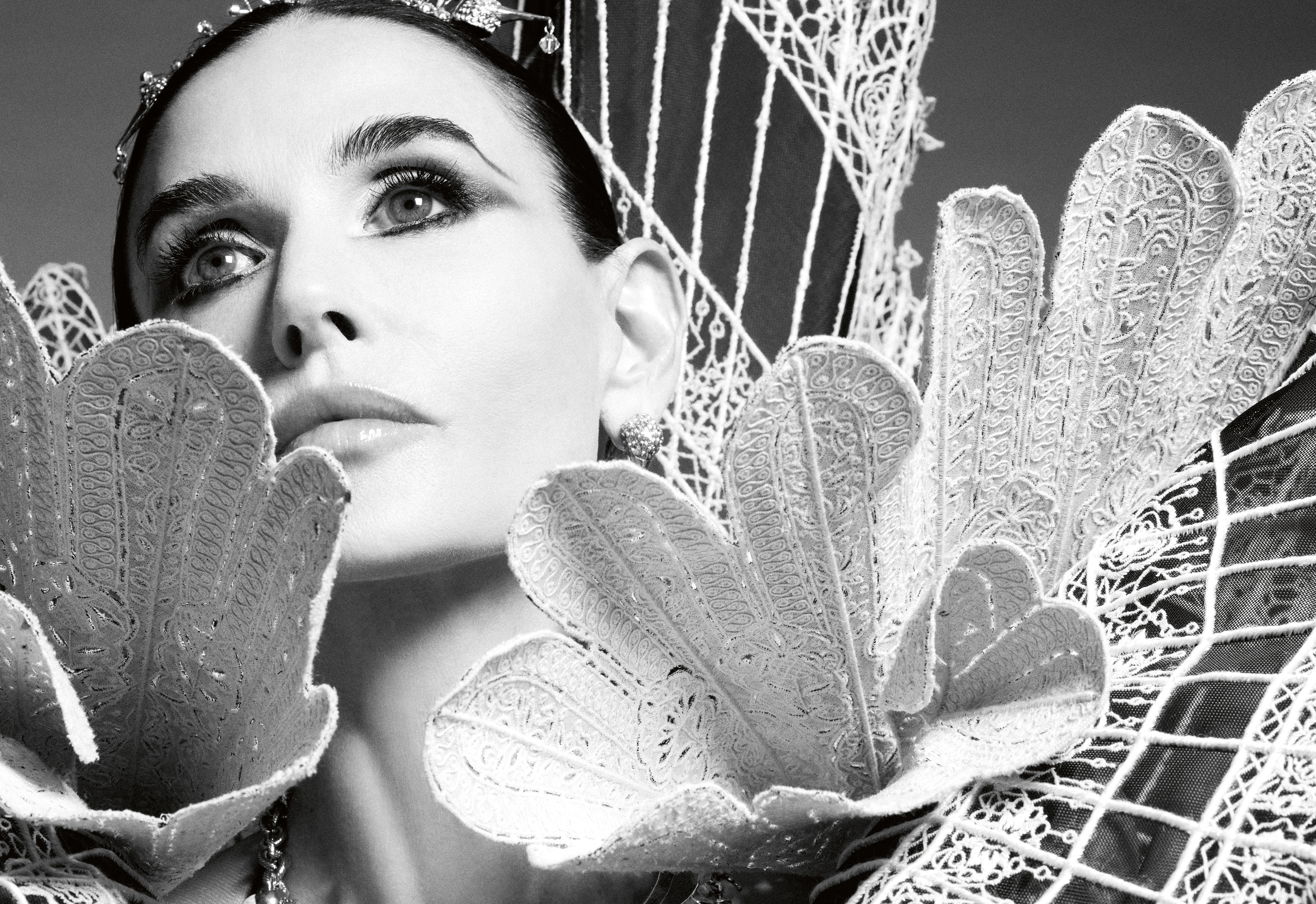
KP: And you, too, by the way, are a demimonde. I love that word now.
DM: You know, I was thinking about who from the past would kind of reflect that. One of the people who came to mind for me was Josephine Baker. I wrote about her in my book [Inside Out: A Memoir].
KP: Without a doubt.
DM: She was part of [everything], but also on the outside, [and] was defined by…not being entirely defined. Not pigeonholed, who also had certain dualities. Even Marlene Dietrich, whom I was just talking to Mathias about (before you came on), you know, these women who have kind of pushed the envelope of possibility. So I’m quite humbled to be kind of included in that [by Stephen]. And then I was thinking about modern women like that…like for me, Tilda Swinton.
KP: She’s incredible. And even collaborating with Boots [Riley]…
DM: I don’t even know if, after I read [the script for I Love Boosters], I fully understood it. But I understood that to go on the journey with him, when I got to the other side, I would have more of me. That there would be something more expanded in me, just from every respect.
KP: Is that how you pick most of your roles today? You’ve done so many different things. What are the questions that you ask yourself that make you say—’Yeah, I’ll do this’. This is engaging to me.
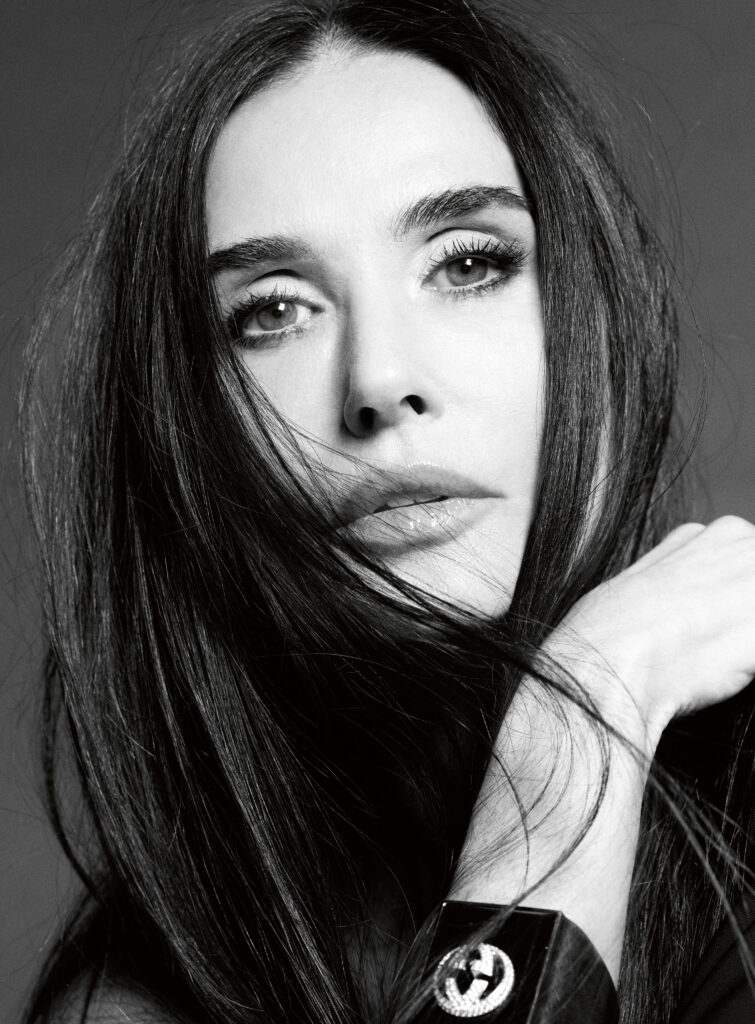
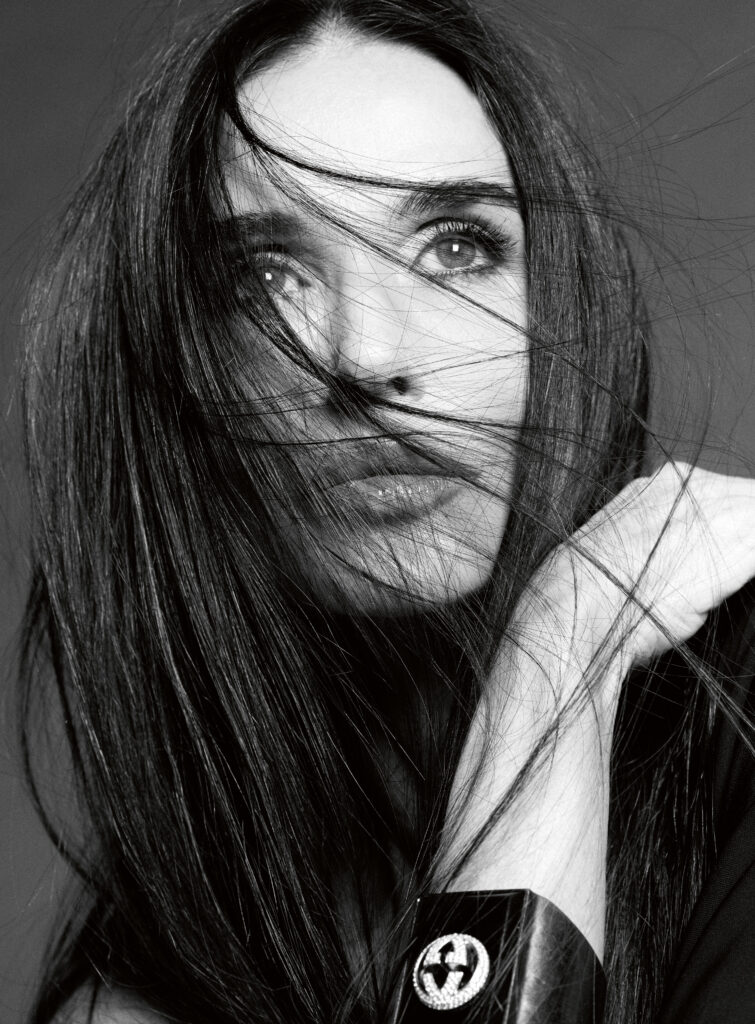
DM: You know, obviously, look at the role, because it’s a smaller role for me, but it was the company that I would be with, the material, what it’s saying, and is it pushing me out of my comfort zone? Is it gonna help stretch me professionally, and then also personally? I also try to think of things in balance. You know, it’s so easy in our industry to kind of be put in a box. Like, “This is who you are.”
KP: I’ve felt that. I feel like you could relate—we both started so young. And when you start that young and you’ve been doing anything that long, it’s very easy for people to project upon you. I’m curious—what do you feel that people get right, and what do you feel that people get wrong? Because everybody has an idea of who Demi is.
DM: Well, in some ways, it’s hard to answer that, because it’s other people’s view…there is a feeling I’ve experienced, whether it’s the truth or not—it’s just my feeling—the experience of being underestimated.
KP: I deeply relate to you.
DM: And look, particularly as film and television actors, it’s doing the work that gives us a chance to explore and find the different things that we can do. I’m trying to answer the question and be really quick and succinct, but yeah, I don’t know what people have gotten wrong or gotten right.
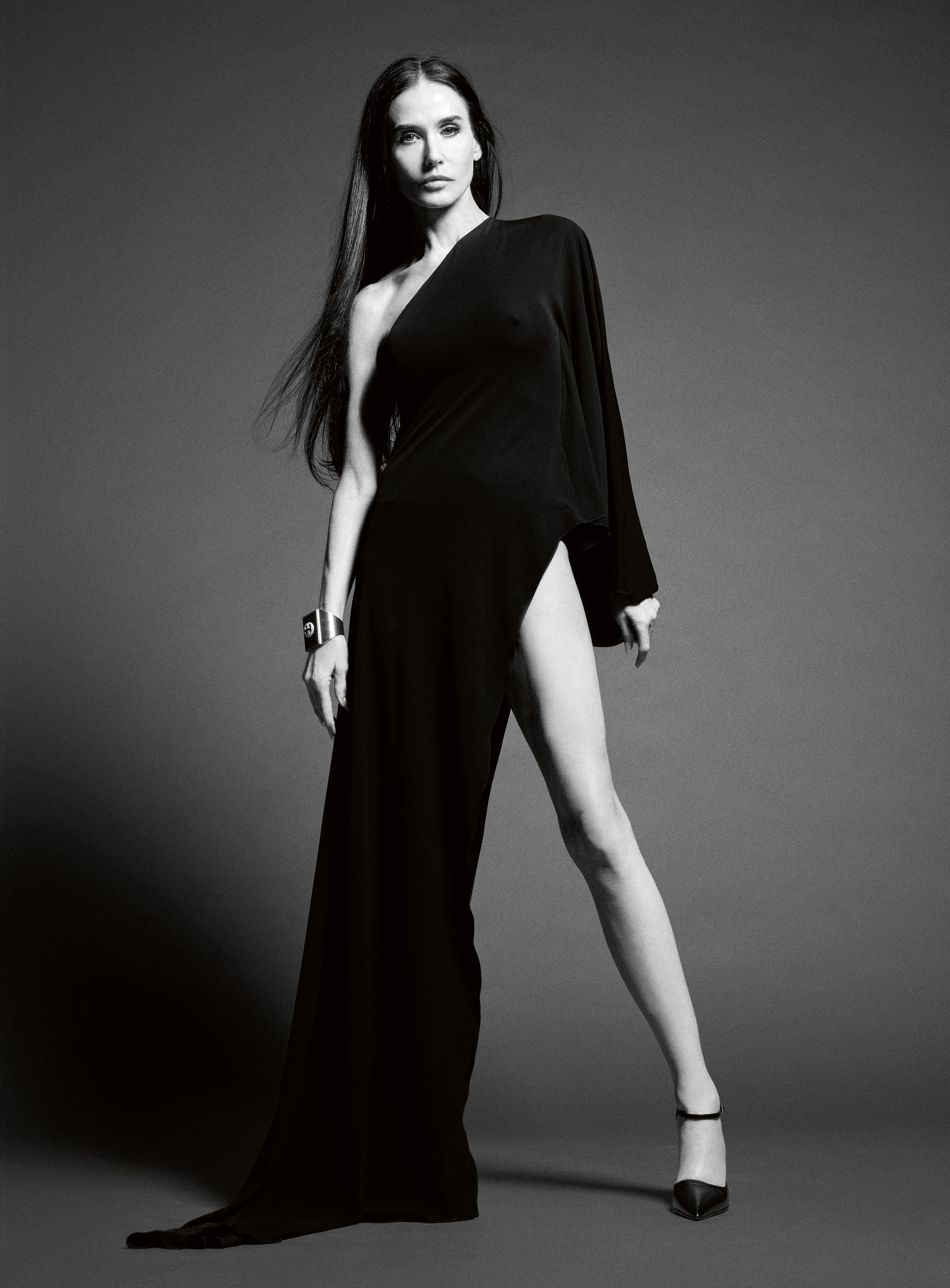
KP: Well, first of all, you’re so beautiful, and you do everything so effortlessly well. I find it interesting when people have that quality; when you cannot see them working at something. A lot of times, people assume that it’s not happening, but working with you so up close, and you know, I was in your face, and I’m watching it. I’m seeing the choices that you’re making and the differentiations that are happening between each take and the conversations that are going on between you and Boots. It’s probably a gift and a curse, you feel, because it’s something you’re very skilled at doing, but people can’t see the process. They just see the monitor.
DM: You know, the more appreciation and value I find for myself, I feel, the more that I get that reflection back in the world. So if there’s ever been limitations of perception about me, I think it’s because I’ve held doubt and insecurity. I feel like the universe has met me where I’ve been. I put a lot of stake (on thinking) that if I got it wrong, I would lose everything.
KP: That’s that survival instinct, girl. I mean, what would have been “getting it wrong?” What would that have even looked like for you?
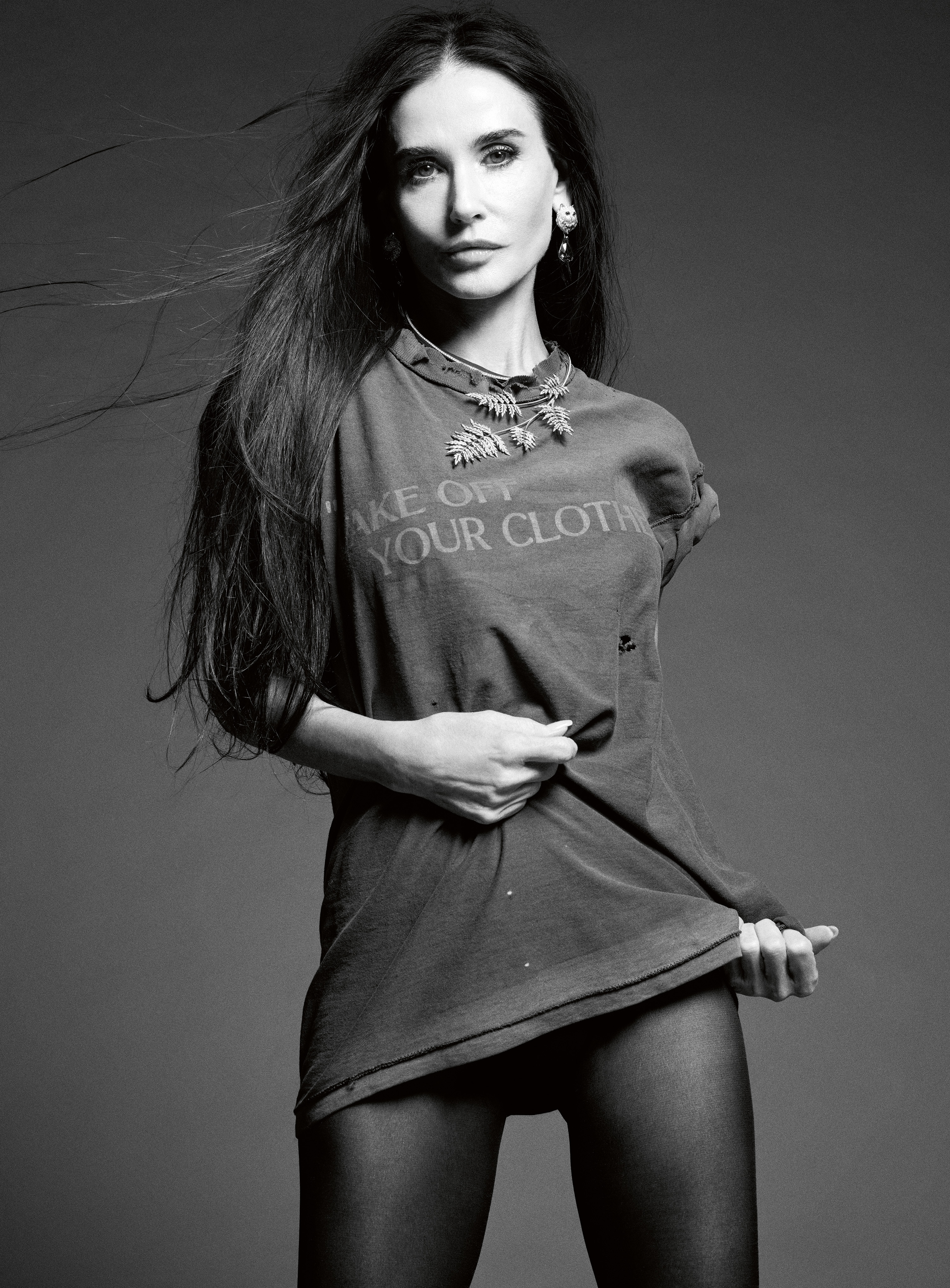
DM: That I wasn’t “good.” Because, you know, I didn’t come from a background of training, and I didn’t grow up in school doing plays. I didn’t have a foundation to fall on, like a barometer. I was flying by the seat of my pants, which can feel a little bit like, “Did I get it? Did it work?” This is when I was really young, I was almost afraid to be in an acting class, because I thought that if they told me I wasn’t any good, I’d be told that I couldn’t do it well. But if I went to an audition, in my mind, I could play the game of, “Well, there are all kinds of reasons. Maybe they wanted a blonde. Maybe they wanted someone taller.” I would go take the risk and audition. But if I went to a class and they were like, “You know what? This is really not for you. You’re not good.” So the arc of my own growth and learning has been to stop questioning why I’ve been chosen and just to step up and show up. Because, regardless of why, it’s not for me to question why. It’s just for me to show up and be of service.
KP: That’s like when we were talking about this whole Demimonde thing. There’s this idea that people exist outside of the rules. And I’m curious if you feel that your success placed you there, or if you were always there?
DM: You know, that’s a great question. I think I always existed in this energy, even though the outsides had not yet manifested, and that the drive I had was innate. The passion, the curiosity, was innate. I also understand, on an emotional level, that I was looking to feel like I belonged. I wanted to be a part of a community. For whatever reason, instinctively, this felt like a place to try to find that.
KP: When I hear you talk, I just hear somebody who really trusts their instincts. Even with imposter syndrome or questioning or doubt, how did you develop that trust?
DM: I think some of it was innate. When I started, I had nothing to lose, because I had nothing. I was on my own at 16, having to figure out how to pay rent, how to take care of myself, all of that. I had no safety net. I had no blueprint, and that makes you extremely vulnerable. And what I’m most grateful for is that in the process of what was quite difficult—coming out of my childhood—I never had any anger or bitterness from the difficulties. It was messy, but going back to what we were saying before—the survival—it’s why I really look at things through that lens. Everything is happening for me, not to me, and even if I don’t like it—if it’s hurtful, if it’s frustrating, painful—if I step back and go, ‘Okay, I don’t have to like this, but I can ask, what is this trying to give me?’ If I can look at it from that perspective, I can say, ‘Yes, I didn’t have a safety net, I didn’t have a blueprint. And that very thing is what gave me determination, courage, to step in and try and do something that I had no support to do, no background, no insights.’
I do think trusting my gut and trusting my intuition has been a huge factor. It’s like, when I read I Love Boosters, I thought of all the elements. I knew you were going to be in it. LaKeith [Stanfield] was going to be in it. I didn’t know all of the other girls. But I knew it was a yes. With the character, I knew I would really have to work to find a balance of not being one-dimensional to the best of my ability.
KP: Obviously, this is a hard question, because none of us know how anybody will feel about any of our movies, but thinking about being an artist and the kind of art we do, we’re making films that also reflect the topics that we want to discuss in the world today, whether it’s about the ‘90s or the early 2000s or the 2010s and now the 2020s. What do you think the importance of a film like this is, in this day and age?
DM: For me, it’s the deeper, and if I may say, almost spiritual message, which is the recognition of moving from the focus of yourself to the focus of the collective, of those around you. Of how you’re treating others. You see it through that lens of corporate greed, which is looking at what their net profit is over what’s happening to individuals. For me, this idea that againstness breeds againstness. And if we could get out of needing to be in a fight, [it could] shift our perception and language into taking a stand. Sometimes in our current climate, it’s really hard. There’s so much that I’m just not aligned with, and I have been working in certain areas that are, politically, very different from where I am. But when I stay out of the conversations about that, and I see just the person, it reminds me that we are all so much more alike than we are different. And this division is, I think, a tool to distort reality.
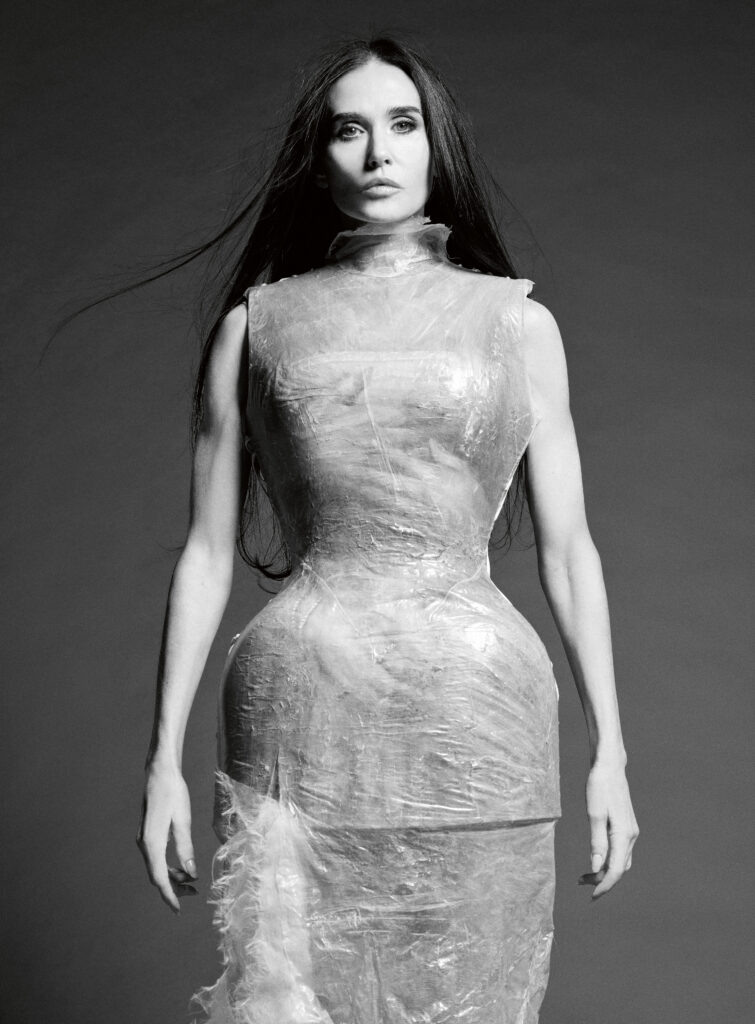
KP: I know this is a jump, but I do want to ask. First of all, we got to work together twice, and I’m so happy—The Tiger with Spike [Jonze] and Halina [Reijn], and Demna. So I want to just talk to you about your relationship to fashion. How do you view it? I mean, you’re very fashionable, but sometimes fashion can take itself quite seriously.
DM: It is serious in the sense of knowing how much goes into just the work of creating it. But I do love fashion. I love the art of it. I appreciate what a designer’s process is, of having their schedule. As hard as our schedules are, theirs are almost unfathomable—how fast and constantly they have to work, and how far in advance they have to be. But from a personal perspective, fashion for me is a place to play. It’s a place of self-expression, and it also allows me to tap into a lot of different versions of myself. I don’t think any of us is one thing, even though the world tries to make us believe we have to choose. We are all demimonde. This also wraps into the idea of I Love Boosters, where, in order to be all that you are and be validated, you have to be visible.
KP: What do you think visibility and desirability, or people projecting that onto you at any point, did to your demimonde nature?
DM: Having been around and doing this a long time, I understand that it’s not a straight line. It’s not a straight upward projection. This is much more of an up and down, where sometimes there are great highs and equally great lows. We work in an industry that can be very feast or famine, and finding your own grounding, being able to be more even-keeled regardless of what’s happening on the outside. I went through what I would say was a long period of feeling displaced, and things that I would really want to do weren’t really coming my way. I didn’t feel very seen. I know that there can be a cycle, that is: they want to discover you, to tear you down, to rediscover.
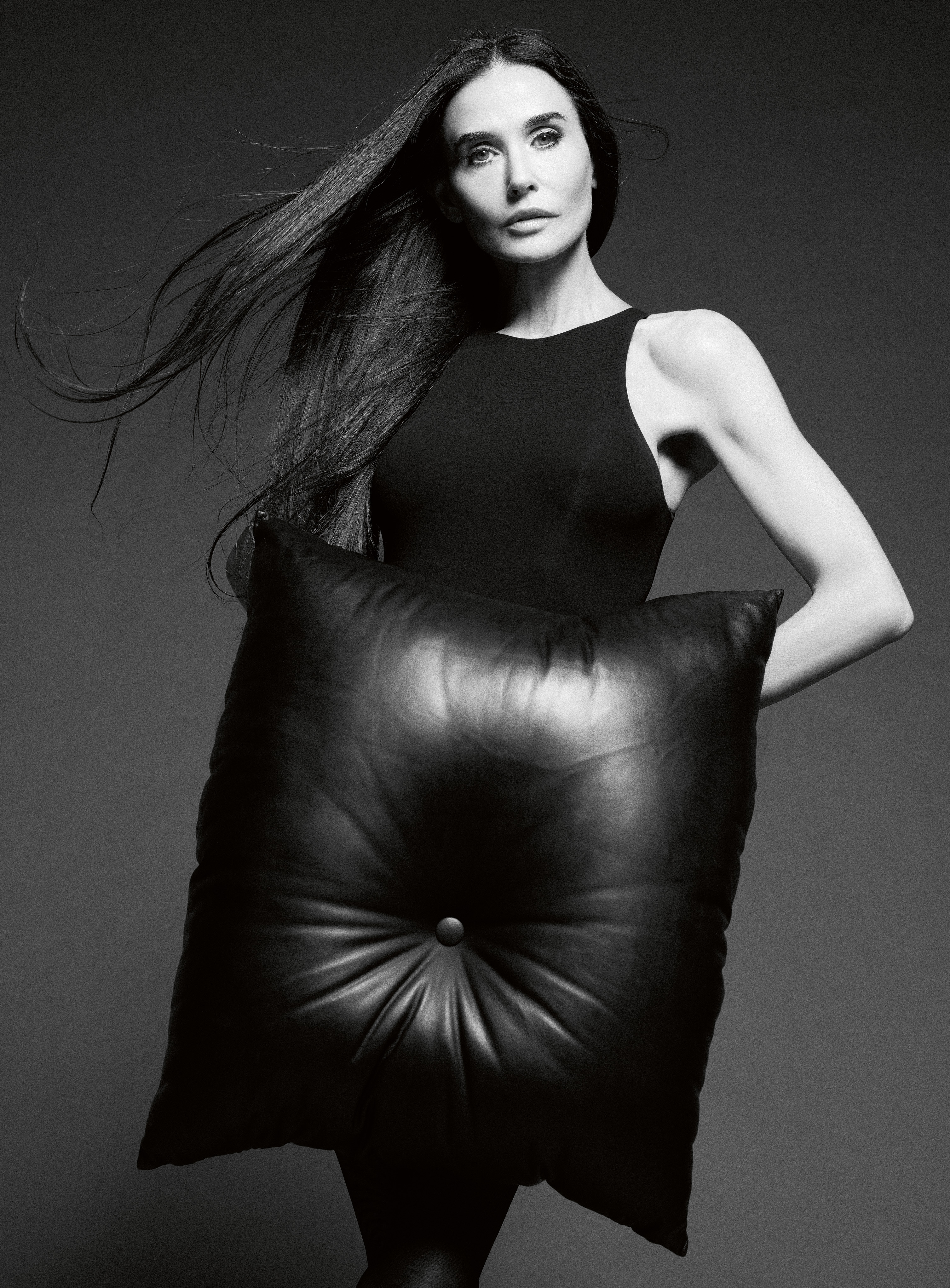
KP: I think the most painful thing is, you can be seen, but you’re never quite really known, at least in comparison to the massive visibility that you have. How do you grapple with that?
DM: I try to look at each day as making choices so that each experience, no matter how big or small, I walk away with it being meaningful and memorable. And hopefully, in some respects, spiritual, so that it’s deeply connected with the spirit. And from that, it’s separating that what I do isn’t who I am, it’s just what I do. I feel like having my family and being grounded in that is what brings me back to what I know is real and what’s important. Without that, as we know, success is lovely, but it isn’t unto itself. What brings you happiness is opportunities for real connection. I was thinking about Oscar night, and there was a moment at the end when it was kind of chaotic, and we were trying to navigate to get back to the hotel without getting crushed in the crowd. And there was another actress who was looking a little bit lost, and knowing that, I stopped to take the time to say, ‘Where are you going? Are you going this way? Come with us.’ And it gave me a real moment where I’m like, not just worried about me. Does that make sense?
KP: It does, because you had a real connection. It wasn’t just about getting where you’re going. At the Oscars, it was like, wait, I had a real moment. I was a human being. And it just grounds you, because you know you’re there, you’re alive, you’re not just a part of the mechanism, especially at the Academy Awards. At the same time, Autumn Durald Arkapaw won for Best Cinematography, the first woman ever. I thought, you know what? This is the reminder to get out of my own way; that the universe had a bigger plan for me, and I just need to stay in the flow.
When I got up and called her name, and when she walked up on that stage, before stepping over to accept her award, this huge moment, she stopped and had this whole exchange with me about us being in the same place. I was right there—and it was a human, woman-to-woman moment that made the entire night everything. So that’s what I mean. At the end of the day, it’s our human connection that we take away with us.
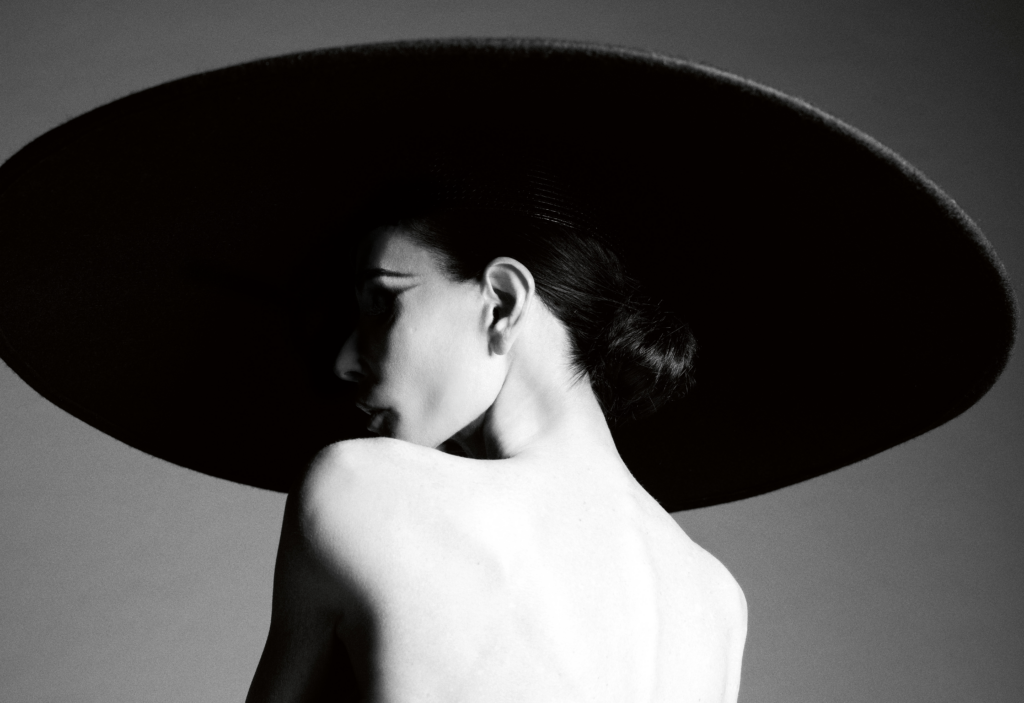
MR: Speaking of human connection, I actually wanted to ask you two if you could tell me about the first time you met.
DM: We met on set, and I felt the embrace. When you’re stepping into a group like that, you never know. You guys had already been working together for at least a month and a half, and I had done all my prep separately in LA. I didn’t really know anybody, but I was embraced as if I had known all of them forever. I felt lifted and safe. That’s what you all gave me. You gave me space and were so beautiful, welcoming, and loving that I immediately felt like I could fly. I could go anywhere.
KP: That is how we felt about you. First of all, we were so excited—’When is Demi coming? When is Demi coming?’ We were all huge fans. And I can say this for me, and I feel like it’s the same for the other girls, that we’re all kind of girls’ girls. We love women. So when you came on, we immediately were just like, ‘Yeah, this is our new girl.’ We totally loved you. And you were always talking to us about your life, and I had my son, and I had just recently separated from his dad. It was the confidence and empowering conversations that we had during that time.
MR: Well, it’s such an honor to be able to speak with both of you about the new film and also just your career, and to see your connection in action. Thank you for taking the time.
DM: Everyone, have a beautiful rest of your day.
KP: Thanks so much, everyone.
This cover story is featured in V160: now available for purchase!
Photography Mario Sorrenti
Fashion Nicola Formichetti
Interview Keke Palmer
Text Mathias Rosenzweig
Makeup Raoul Alejandre (MMXX)
Hair Dimitris Giannetos (Opus Beauty) using Kérastase
Manicure Zola Ganzorigt
Casting Greg Krelenstein (GK-LD)
Editor Kev Ponce
Fashion Market Editor Copelyn Bengel
Producer Katie Fash
Production Manager Layla Nemejanski
On-Set Production Steve Sutton
Production Assistants Jake Shepherd, Yumi Shimizu
Photo Assistants Kotaro Kawashima, Jason Hsu
Digital Technician Charles Meyer
Styling Assistant Gabby Buchan
Hair Assistant Miller Brackett
Makeup Assistant Isze Cohen
Discover More