Tania Franco Klein is Full of ‘Rage™’
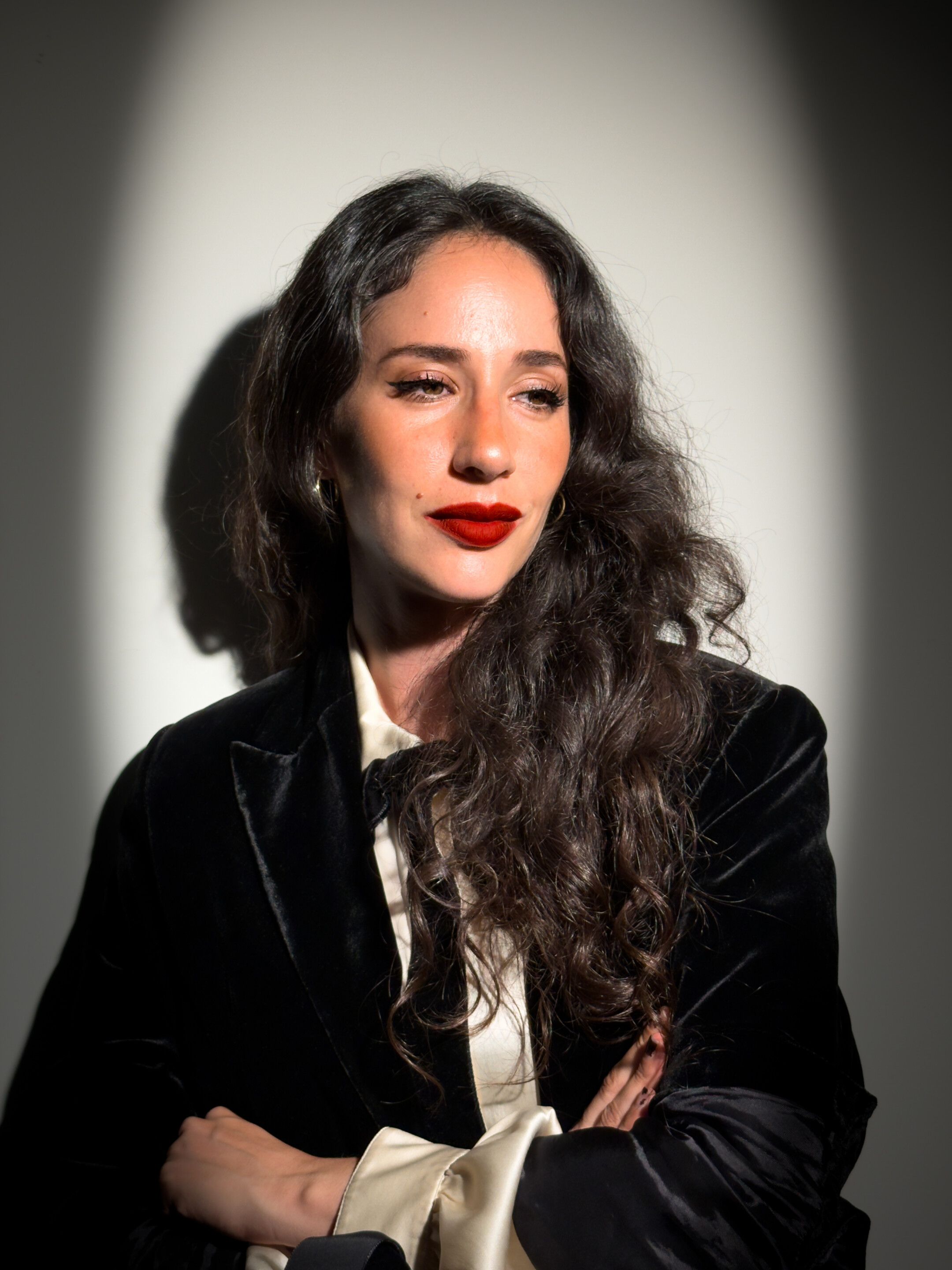
The artist develops her own visual language for unrelenting anger in a series up now at Yancey Richardson Gallery
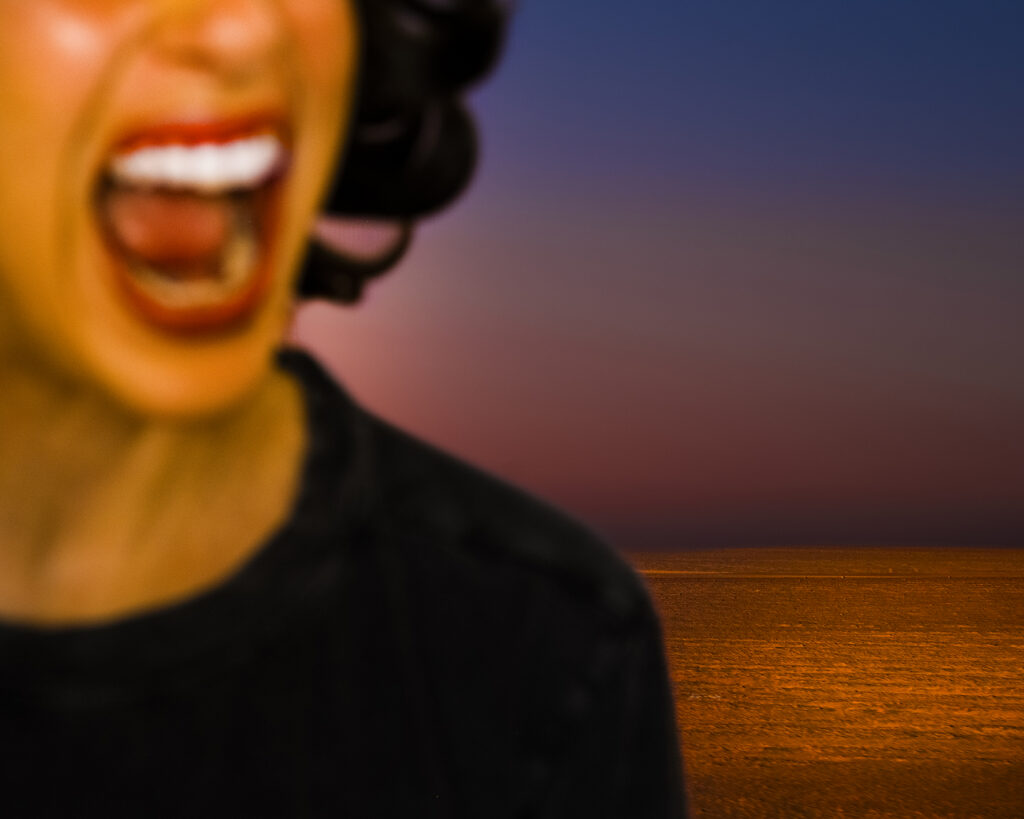
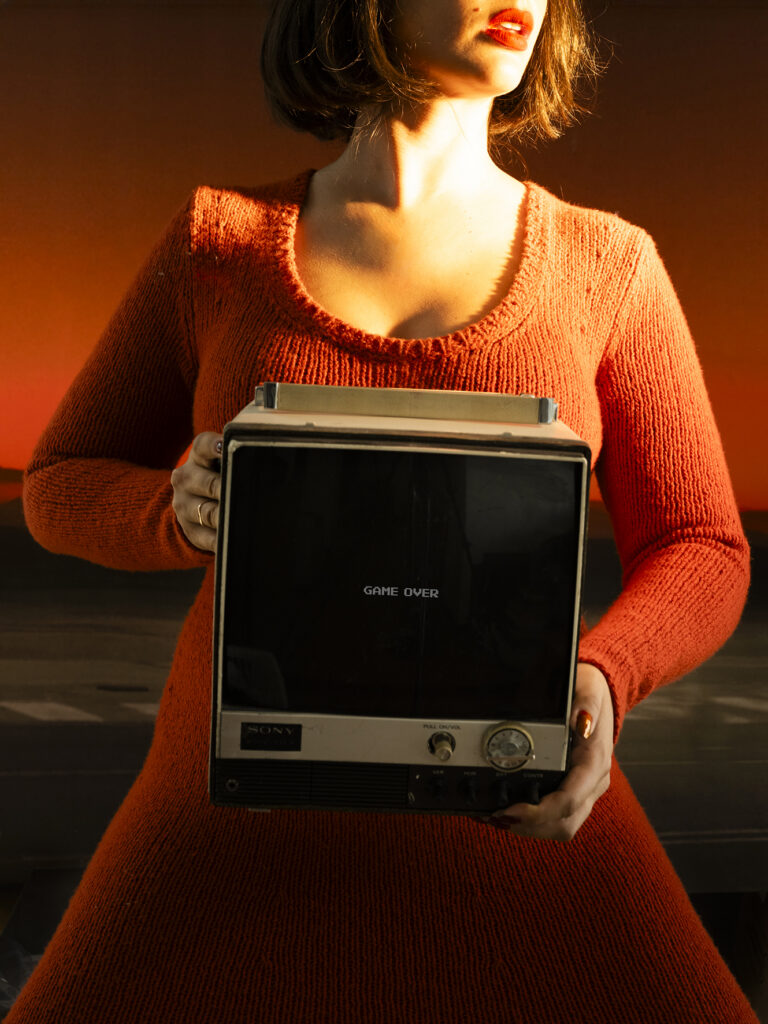
Incensed by the state of the world, artist Tania Franco Klein saw red, sometimes literally. Seeking to address how the presentation of global events can be manipulated to the point of emotional, capitalistic exploitation, she created the photographic series Rage™. In vibrant shades of deep crimson and splashes of crisp orange and yellow, she brings to life a study of anger as embodied by women, all through a knowingly, astutely co-opted commercial-style lens, a style that’s typically used to sell something. Embracing photography’s democratic presence, she reapplies that language to present her ideas. “Somebody’s claiming an emotion,” Klein says, “and that it’s one you can merchandise.” Rage™ is Klein’s debut exhibition with the Yancey Richardson Gallery, and it’s on view from September 10 to October 17 in New York.
Throughout the series, Klein was also curious about the way women are taught “acceptable” and “unacceptable” expressions of rage, and what it can look like–literally and metaphorically–when women embody typically masculine rage tropes in pop-style visuals. When Klein began working, she was often her own subject, in part because she was available. Her practice has since expanded to include more subjects–her Subject Studies series, now in the Museum of Modern Art’s permanent collection, is a prime example. Rage™, as she says, is half and half, and represents for her an interest in creating more collective experiences in and out of her work. After all, rage itself is often a collective experience.
Klein’s interest in presenting physical expressions of modern anxieties is present across her career. She finds inspiration in artists like Jenny Holzer, Tony Oursler, Wong Kar-wai, and David Lynch–accordingly, her work has an immersive, cinematic quality that’s also not afraid of surrealism. Klein is based in Mexico City and in addition to MoMA her work resides in collections of the Getty Center and the San Francisco Museum of Modern Art, among others. She has also collaborated on photographic projects for Versace and Dior.
Here, Klein speaks to V about her interest in rage, the experience of embodying it, reimagining pop commercialism, and more.
V: What first interested you in rage as a topic?
Tania Franco Klein: I’ve been working with emotions for the past 10 years. It’s grown and evolved naturally as a response to what’s happening in the context of the world, as more of a collective experience than an individual one. It’s a result of who we are as a society, saying that emotions are shaped by experience, culture, political gaze, many things, and not necessarily a neutral, individual personal territory. My emotions started bubbling up because the world has been getting a little bit wild and crazy. I became interested in rage because I think it’s shaping algorithms and headlines and constantly being exploited. We think of emotions as neutral territory, but for me, it’s more than that–emotions are a territory for capitalism to take over. A title like Rage™ already lets people know somebody’s claiming an emotion, and that it’s one you can merchandise. There’s media designing what a “good” type of rage, a “bad” type of rage, or an accessible, natural response. Someone behind the scenes is deciding what’s appropriate, what’s not. I was fascinated by that as a thought, as an experience. I realized that even when you’re experiencing an emotion, processing it comes with all these lines of thought already being shaped in cinema, literature, and more. For the show, I reappropriated languages I think shape culture in different ways.
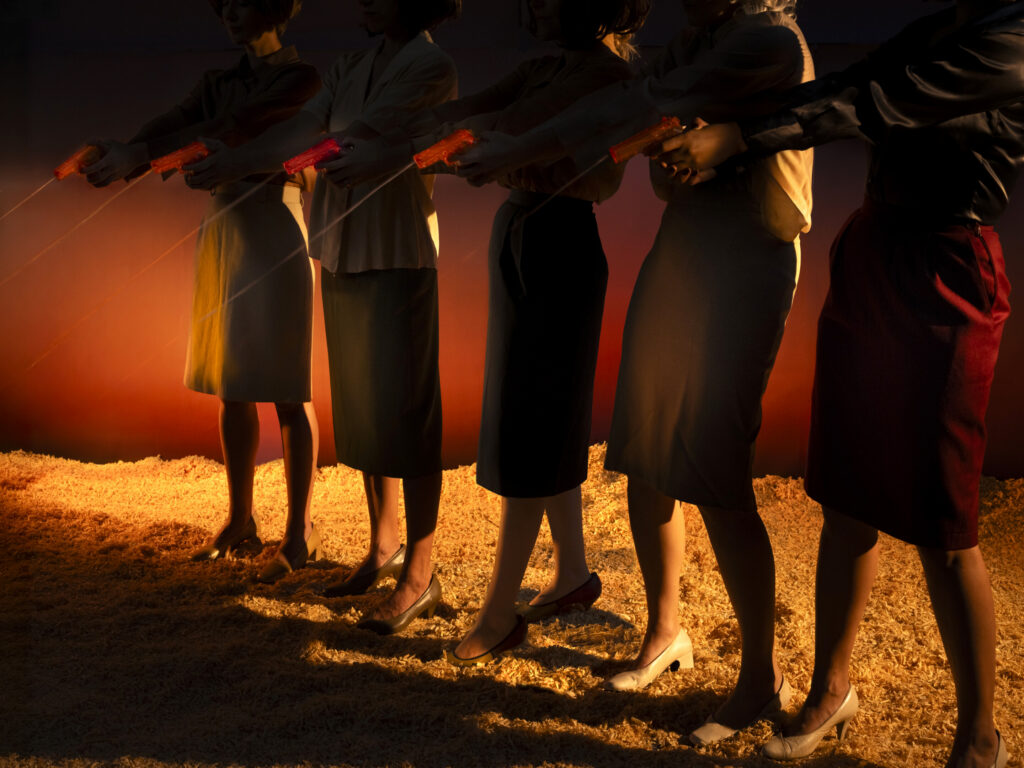
I have many visions of the classical cowboy shot that for me is a perfect type of rage that media loves, or at least it has for the past 70 years. It’s masculine, but it’s sexy and it sells. It’s beautiful on screen, and it’s repeated in many different films–you can see just a shot and understand so much about the context. It’s powerful and it’s empowering. But what happens when that same scene is taken over by a female? I was interested in how an emotion gets exploited by different forces.
V: How did working on the series affect the way you found yourself thinking about rage?
TFK: I became hyper-aware of how I experience my own rage. This gaze of experiencing rage also comes to a point of the personal experience of feeling shame, that “good” and “bad” rage. It’s filtered through all these social norms. When it finally comes to you, you’re like, oh wait, this is not the good type of rage, I should move on, fast. I shouldn’t feel like this. And other ones are like, oh yes, me and my friends all agree on this rage. So this unites us. I should hold on to this rage because I agree with my group. You know when a type of rage actually makes you feel excluded–like it’s actually not good that I’m outspoken about it or I should calm down. I realized there are so many filters going through your head, or at least my head, when I experience different types of rage. I became curious about that. Now when I experience it, I’m like, where is this coming from? Why am I trying to tone this one down? Is it because I feel my family would not accept this thought of rage? For me, rage is related to the idea of injustice, but it can turn into other things, too.
V: It was poignant to me that you chose a woman as the subject of this series because often the way women are taught, or not taught, to express rage is different from men.
TFK: I think most of my work has women, but because I do a lot of self-portraits. This year, not everything is self-portraits, but I think I gravitated to that because I am personally a female. I don’t think I was talking about the female rage person, but obviously, it’s one of the subjects. Going back to the cowboy shot for me, that’s exactly that. It’s so funny because rage is in my algorithm, and videos come up about that. The other day I was looking at this video this female uploaded that was interesting. She was like, guys have the Hulk, a superhero whose superpower is rage. And with females, rage is, you’re a witch. They burn you. [You’re] a hysterical, crazy lunatic. Going back to the vocabulary, of course it enrages you even more. Male rage has always been commercializable, and female rage has always been on the edge of not being something logical–your reaction is “improper.” That enrages you more, and I see it with all types of subjects, and not just females.
Right now, I think there are a lot of hierarchies of nationalities. I come from the Global South. We have a word in Mexico that’s malinchismo. It’s like if someone from a first-world country or the global north says something, that has more power than anyone else in the global south. It’s shocking to realize everything is hierarchical. I see it with people who have fewer privileges–people at the lower part of the chain are the ones who are gonna have an “improper” type of rage. I’m curious about that. I want to invite people to think about this. I’m not saying which one is the right one, I’m just saying think about the fact that your emotions are being manipulated and why we sometimes fall into that. Mexico is a very classist society. I think it’s starting to change a little bit in the past years, but it’s still ingrained in our cultural experience. I notice everything is separated by economical or cultural classes. It’s interesting to see how groups associate things, to observe and change my own experience or challenge my own gaze. But obviously I still fall into the algorithms.
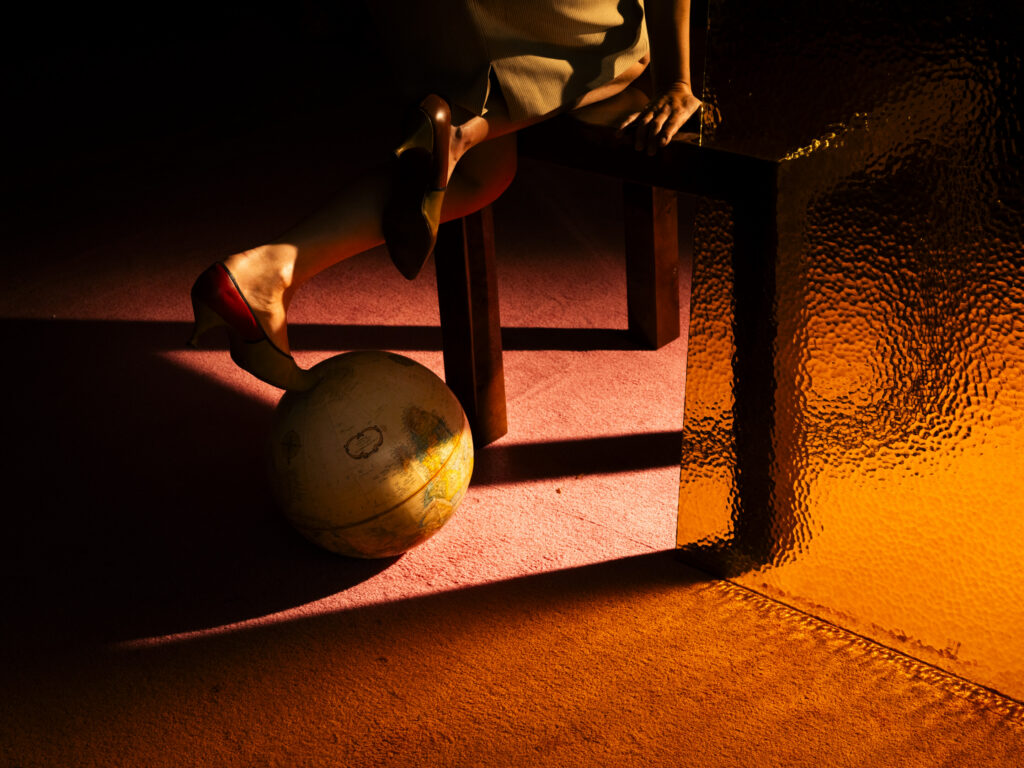
V: I know your work has been called cinematic, but the work is also an interesting use of visual play, almost through a fashion lens. Was that something you considered?
TFK: See, I don’t consider my work like fashion at all. My universe, or the visual language I’ve been using for the past 10 years, is very cinematic and influenced by general culture. I do use commercial visual language. I’ve always been interested in the fact that photography as a language is something people are not afraid of. It’s a language unlike other visual languages in art where sometimes I feel there is a big separation–people feel they need to be educated to understand them. I think photography is not one of those languages because we’re all trained visually in photography, even more so in cinematic or pop languages. Those are languages people are not scared to look at, to digest, to observe. There’s something tangible and friendly about them, and that is why I always feel connected to this language. I feel it breaks a layer of separation between people and my work, that even people who are maybe not super savvy on art or not interested in art can find a connection. At least there’s already an entrance. Once they enter, they’re like, wait, this is the opposite of pop. I love that because I think as artists, we want people to connect with our work. For me, the concept is always the most important part, and I want people to reach the emotional concept because people are smart. I start from that point, that you shouldn’t have to be educated in things to experience them. I feel like the language I use doesn’t feel alienating.
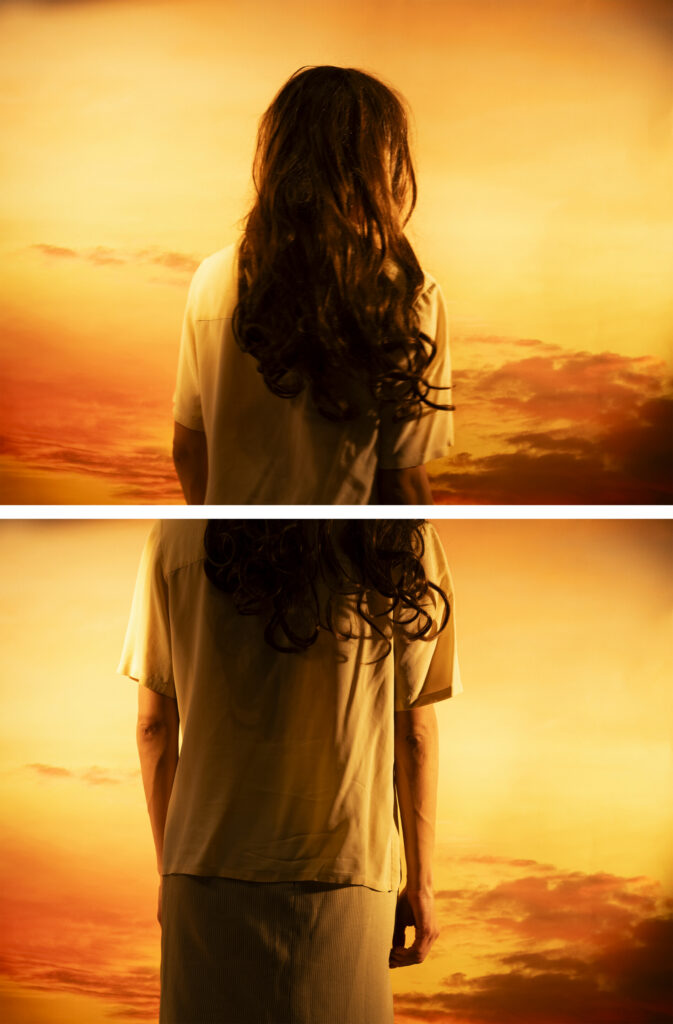
V: It’s the way a pop visual language might typically, and you talked about this earlier, be used to sell someone something. In this case, it’s being used to present them with an idea. With that in mind, what is the experience of using yourself as a subject and becoming part of that language?
TFK: So this one is half and half. I’m moving towards not doing that many self- portraits anymore. There was a breaking point, which was my project Subject Studies, which I had at MoMA. After that, I broke a spell I had about working with other humans. Now I love collaborating with people, which is something I used to hate, which is so crazy. All my first projects were basically self-portraits because that was the most relieving thing. I enjoyed not having to deal with anyone’s expectation of how the work would turn out or the expectation of themselves in my image. It was almost uncomfortable to have to work with people because it then became about them and about me trying to please them instead of doing the right thing for the project. Even choosing the works for the final project, it was like, how am I gonna take care of this person? I have this over-empathy and I’m always trying to take care of everyone. I was also hyper aware of the power position I have as an imagemaker over someone’s image, identity, and context.
It became so much easier for me to do self-portraits because I was available. I didn’t need to call anyone at three a.m when I can’t sleep and I can start working and it’s fine. Also it was liberating because at the beginning, especially with some of the first projects, you’re trying to discover how you work, who you are as an artist. Subject Studies changed how I approach my work, and it was invigorating to be around so many people. Now, how would this thing look with someone else? always pops into my head. It’s like one subject is not enough. I feel like now I have no rules because I know there’s no art police that gives a shit about how I do my projects. No one’s gonna come and say no, wait a second, you said you were doing self-portraits, how dare you. Literally nobody cares. Because my self-portraits were also not about myself, it was a tool. I found myself more inclined to be around people and collaborate. I think it’s also a reflection of today’s world because everything is pointing so much to individualism that community is such an important thing to combat all these crazy lunatics. I’m trying to make everything more of a collective experience in every aspect of my life, and it naturally has translated to my practice.
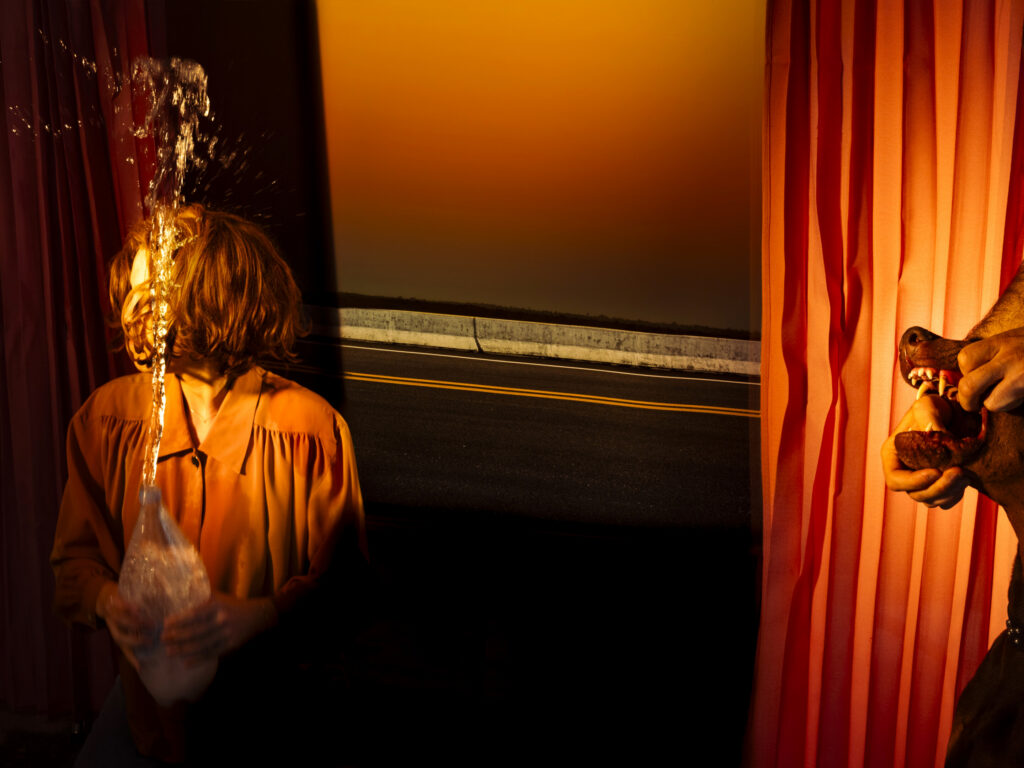
V: What was the experience of being the subject for a series about rage?
TFK: It’s super therapeutic. I’m interested in neuroscience and how the brain works. For example, I’ve seen studies on how, if you smile as many times in the day as possible, your brain takes the cue that you’re happy, even if you’re faking it, which is interesting. There’s something about being the subject of physical things that’s very expressive. Going back to the female rage experience, I remember I was doing some videos, and I spent like a whole week screaming. There was something liberating about this experience. So I do love that.
Discover More