Heroes: Jean-Marc Houmard
After 42 years, Indochine’s legendary restaurateur has no reservations no reservations
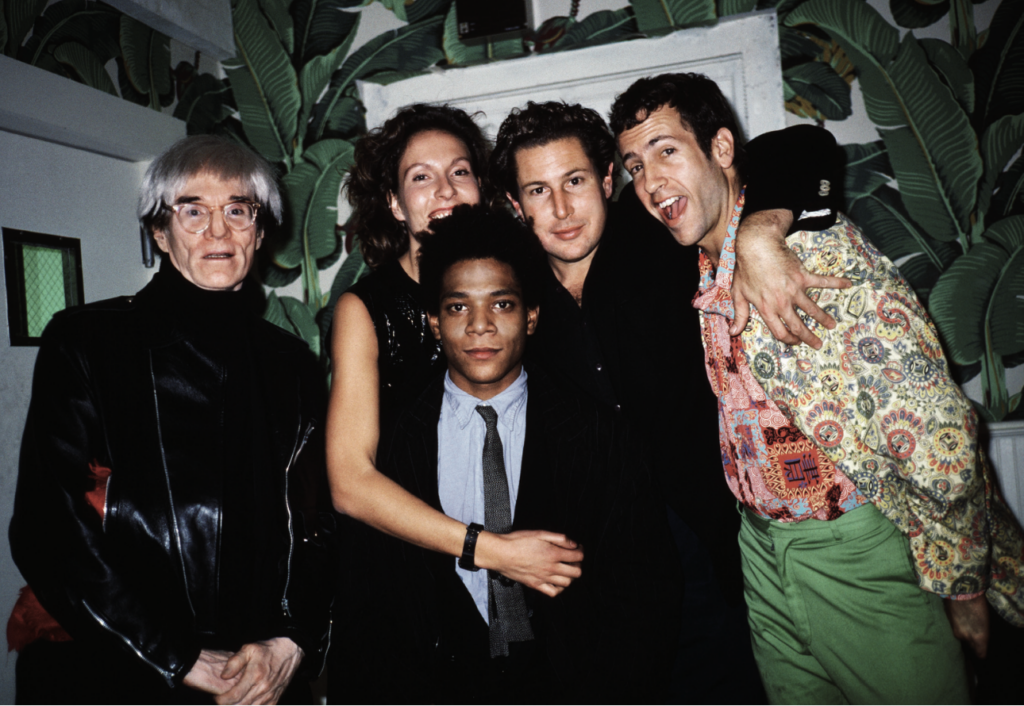
The restaurant’s red neon sign is buzzing when I get there, cursive letters forming its name: Indochine. Set back from a hallway inside a collection of 1830s row houses on Lafayette Street is the restaurant that’s known thousands of luminaries over its 42 years. It was the artists who came to eat–Andy Warhol, Thierry Mugler, Jean-Michel Basquiat, Grace Jones, and countless others. Those who were unafraid of a spotlight or a camera flash, or who had learned at least to appear that way over time; as well as the people who wanted to be around them and still do. Among them all was Jean-Marc Houmard, co-owner of Indochine with Huy Chi Le and Michael Callahan. Houmard began at Indochine as a busboy with Le and then became a maître d’. But when original owner Brian McNally wanted to leave the restaurant behind in the 1990s, Houmard, Le, and Callahan stepped in; they’ve owned it together ever since. Houmard, always in the front of the house, has become in that time the restaurant’s most recognizable face.
On the night I visit Indochine, Houmard floats cat-like in a dark suit, with stylishly tousled hair and dark beard. He passes the restaurant’s signature banana leaf wallpaper, its fresh plants, its gaggle of patrons in black leather jackets sipping cocktails from martini glasses. He says hello, he shakes hands. Seventies-era soul purrs overhead. The lighting is dark enough for privacy, light enough to wonder who you might see. Houmard greets me with a double kiss, one on each cheek. I’ve never been here before, I tell him. I felt I had to be invited. He raises an eyebrow and shakes his head no, absolutely not. “Well, now you are invited,” he says. And if anyone would know, it’s him. The nights, the stories, he alone must have known. But he’s willing to share.
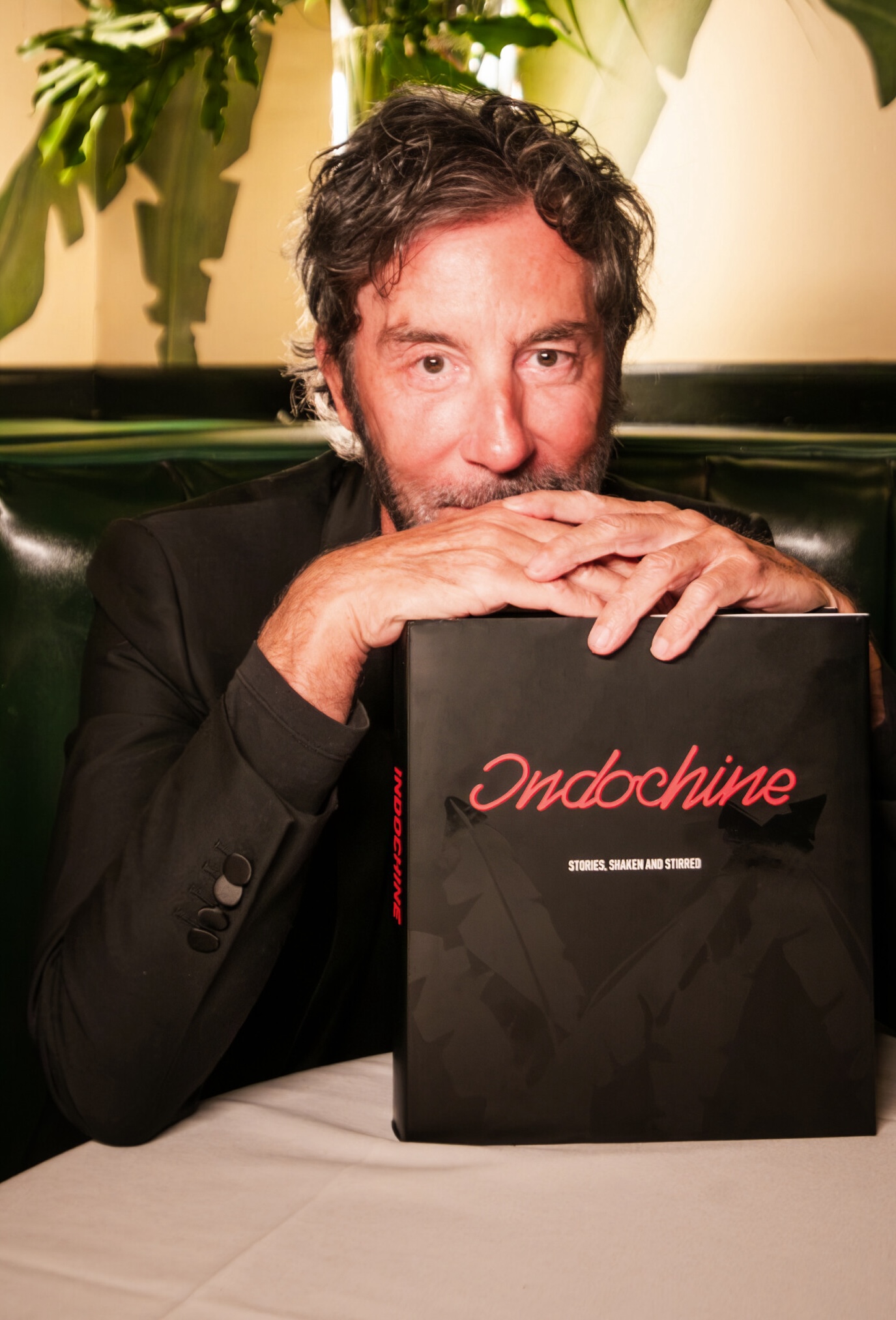
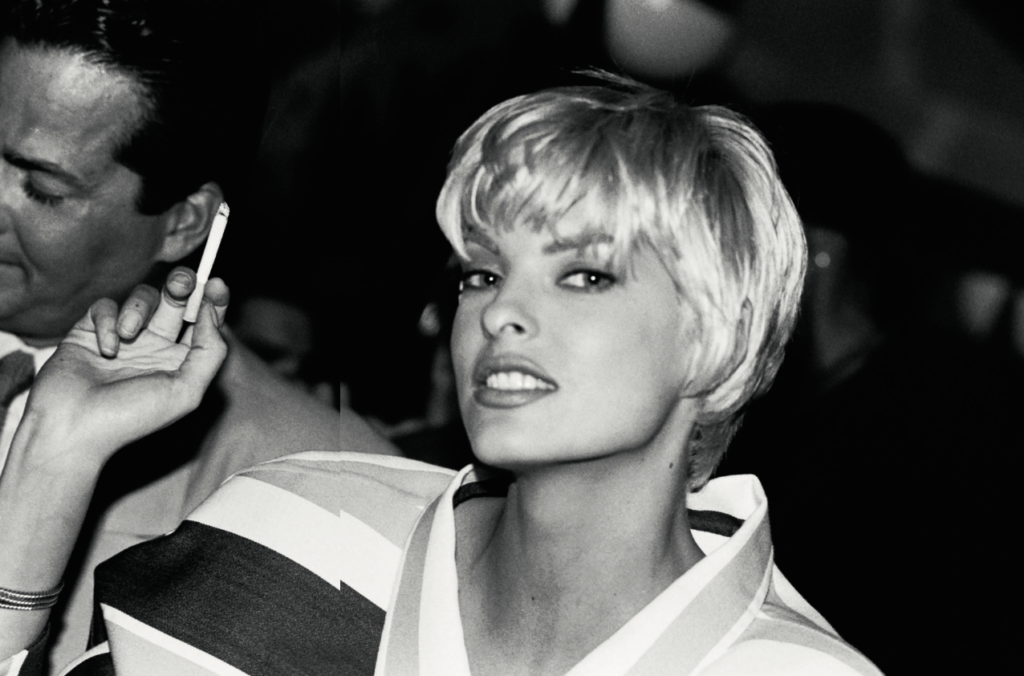
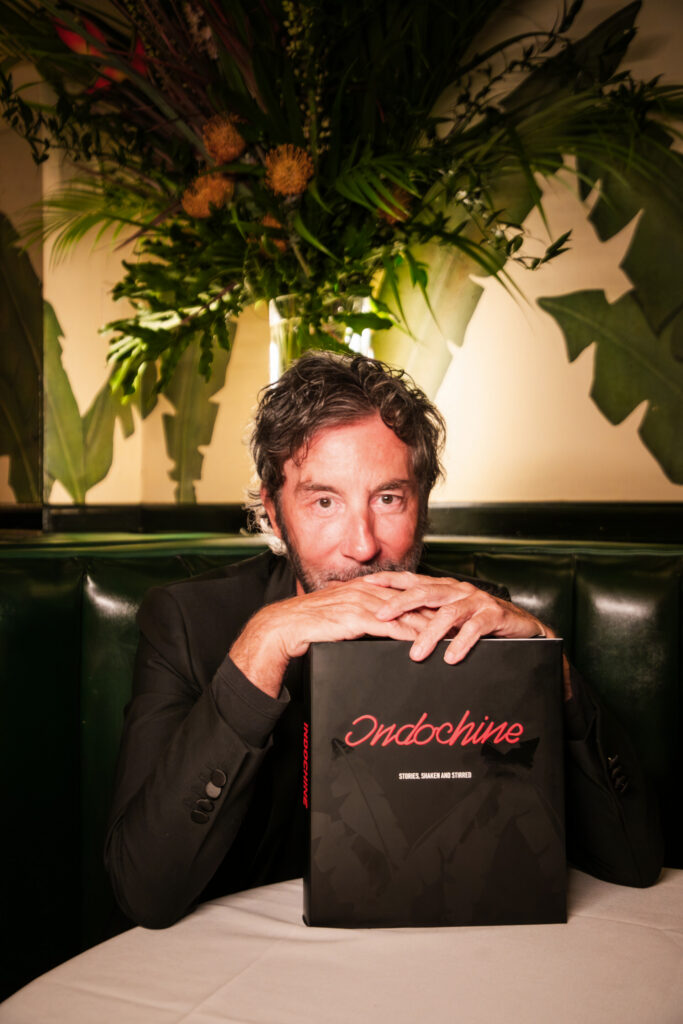
In fact, the restaurant is releasing a new edition of its 2009 book Indochine: Stories, Shaken and Stirred in a run of just 1000 copies, available for $50 in person at the restaurant. It comes in a dark black box printed with bamboo, a metallic red “Indochine” on the cover to match its signature neon, all secured inside with a black ribbon. The book is printed with new images from the last 17 years of the restaurant’s history, alongside new interviews with the likes of Linda Evangelista, Debi Mazar, and Dianne Brill, among many others.
It’s not a bad life for a self-described nerd from Switzerland who came to New York for a six-month law school internship and never left. Originally from “an industrial area with a lot of watchmaking which is, you know, not very pretty or interesting or chic,” he laughs, he went to law school in Geneva. This was after a stint in the Swiss military–required by all male citizens–as a topographer, no less. “I was not very good at it. I survived. I didn’t think I would survive because it’s so against anything that I believe in. The discipline, the marching in order,” Houmard said. “But I found it an interesting experience in the sense that I realized humans can adapt to any situation. My first week, I thought I would just faint, die, go to jail. And then I got used to it.”
New York called him to a different life, one that wasn’t meant for practicing international law as he had originally intended. “The reason I kept postponing my return was [New York] was a world that I didn’t know in Switzerland. Downtown New York, in the mid-‘80s, was just so vibrant and incredible. It was the opposite of what I had done in Switzerland. I just studied really hard [there], and I didn’t go out very much.” Even as a busboy, first at lauded art restaurant El Internacional and then at Indochine, he could skip lines and get into any club he wanted, legendary nightlife spots like Area, Palladium, and Save the Robots among them. “It felt like a life that I needed to experiment [with] for longer than six months,” he continued. “I’m gay, but I wasn’t out back then, and I think that was a factor for sure, to be in New York and be able to be who I was.” There are two great kinds of people in New York: people who come here hoping to finally be themselves, and people who learn who they are once they get here.
“It’s probably the case for many men of my generation who want to move away from where they were from and find themselves,” he says, adding that the freedom you’d find in New York then was quite possibly unparalleled. “All the clubs were very embracing. Studio 54 was very gay-friendly, and it felt like it was part of the culture. It was not just the gay bars. It was being able to be accepted in all the cool places, the cool clubs. That was a big factor of my finding my roots in New York.”
By 1992, Houmard, Le, and Callahan–then busboy, maître d’, and manager, respectively–purchased a struggling Indochine from McNally. There was a recession, and the spectre of the Gulf War still loomed large. The East Village was still industrial, a place for many artists because it was affordable, and it could be unsafe. Houmard remembers getting mugged more than once walking the few blocks back to his apartment nearby. To make the restaurant work, they were there around the clock. He took reservations by phone during the day and changed into his suit at night for work; they washed tablecloths at the laundromat down the street and ironed them the next morning. But eventually they didn’t have to struggle anymore. Calvin Klein threw a birthday party for his then-wife Kelly, and everything, everyone came roaring back. They haven’t left since.
Houmard’s pursuits also extend beyond Indochine. His other New York venues past and present–some with his Indochine partners and others–have included the renowed drag bar Bar d’O, home to the great artists Joey Arias, Raven O, Sherry Vine, and more (who still have their Bar d’O reunion at Indochine); as well as ACME, Kittichai, Tijuana Picnic, and The Nines. There’s an Indochine in Istanbul now, and soon he and his team will be doing the food at Bar Marmont at the Chateau Marmont in Los Angeles. Houmard also opened the Tribal Hotel in Granada, Nicaragua, and designed their accompanying villas. The design–interior and exterior–is “somewhat of a side hobby,” he says: he designed his home on Fire Island as well.
By now, Houmard is sitting with me at the bar. A plant vibrant with lush fronds towers above us. He likes to sit here, he tells me. You can see the whole restaurant– people chatting, laughing, drinks shaking, chopsticks ready to slide into their signature spicy beef salad (it is, in fact, delicious). Being a restaurateur means creating a place you’d want to visit every night, especially if you describe yourself as a more introverted person, as Houmard does. Because he’s social for work, he sometimes prefers a quiet night at home with a French film and his dog, Milo, a black Cavapoo. So Houmard’s fingerprints remain all over Indochine: the music choice; the lighting; the creative clientele. The comfort of having someone know your name if you’re a regular. Margaritas with fresh lime juice at the bar. How it feels “chic, but not fancy,” and the list goes on. Perhaps those are some reasons Indochine has been so successful for so long: it hasn’t changed, but in a good way. It’s a place you can consistently return to for a fabulous night out–as Houmard says, if it ain’t broke, don’t fix it.
He’ll keep going until he doesn’t want to anymore, he says. But that day is far away for the moment. “If I can keep doing this, and still enjoy showing up and having fun, I think that’s my goal. Sometimes I wonder if I should, I don’t know, move somewhere, but where would I move?” Houmard laughs. “I’m very lucky that things turned out as well as they did, because it was not certain. To be able to enjoy it after all these years, there’s no reason to not do it anymore.” The joy he sees on a regular basis makes him stay. “They don’t know who I am, but when I walk in and I hear a table saying, ‘Oh, thank you for taking us here. It was such an amazing place and was such a good time for me,’ that’s why it’s still worth it for me to show up.”
Discover More