Corey Fogelmanis’s Next Chapter Is Here
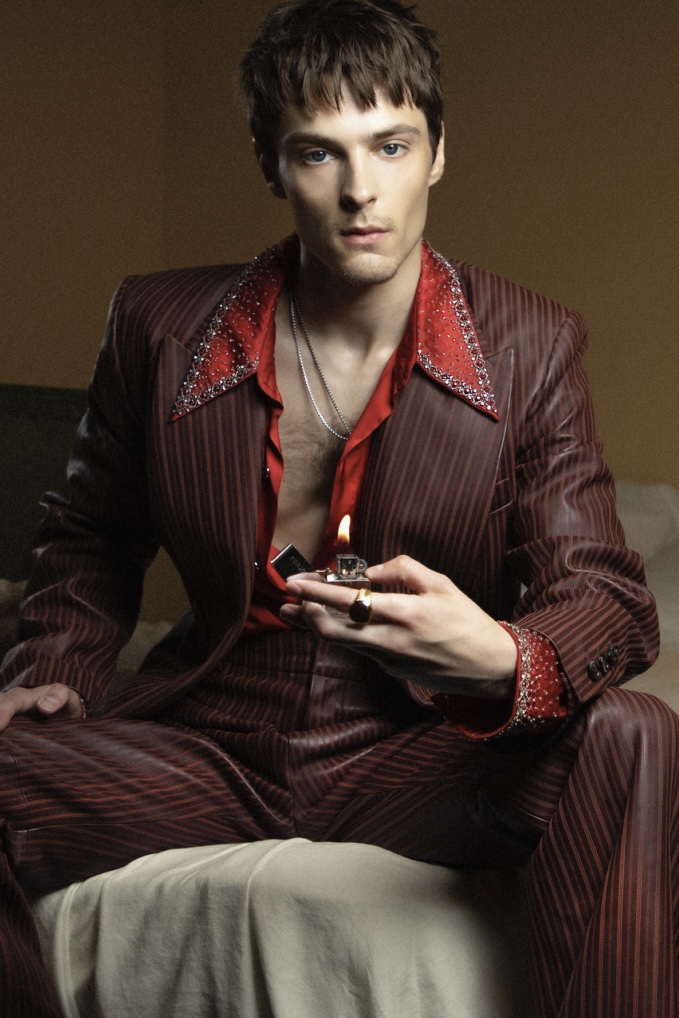
As the actor develops a new stage of his acting career, he’s making his own way forward
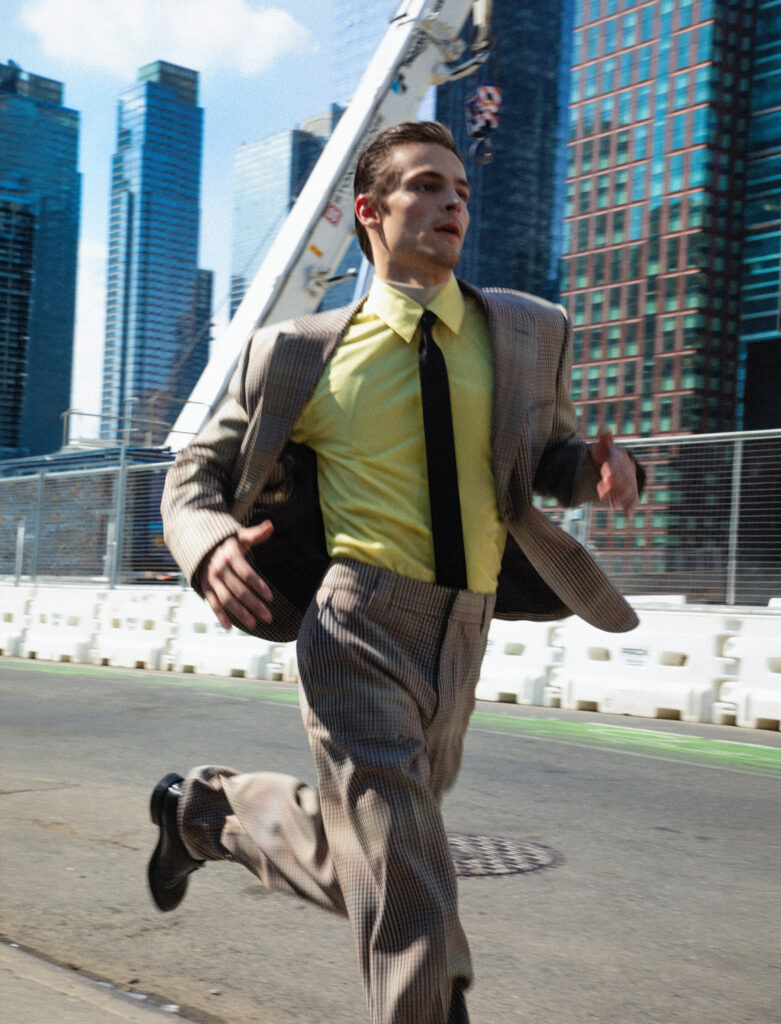
Camera pans left. The sky is a clear blue, and it’s warm but not too hot, one of those gifts from a New York summer. Corey Fogelmanis turns the corner in front of the Roxy Hotel in TriBeCa, in long jean shorts and mustard yellow Converse high-tops. His shirt is from Le Vidéo Club de la Butte in Montmartre, Paris—a cinephile’s dream film rental shop. He was there a few years ago, he’ll tell me later, saw the shirt, and loved it. In the same breath, he’ll bring up the 2001 classic Amélie, which also takes place in the Parisian neighborhood, one of my favorite films of all time. “Did you know you can go to the café?!” he asks me, his blue eyes glimmering. Indeed, Café des Deux Moulins, where the bulk of Amélie takes place, is a real cafe. I had no idea. But given Fogelmanis’s own cinephilia, I’m not surprised he knows.
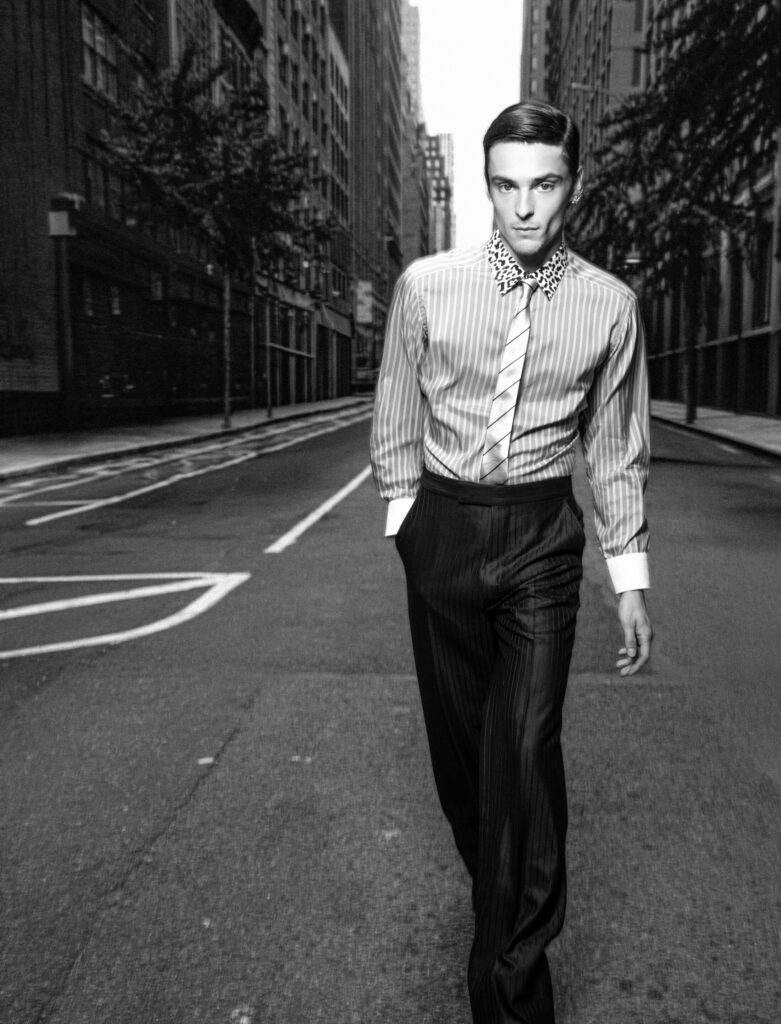
And cineaste though he may be, this is not what many first think of when Corey Fogelmanis comes to mind, by his own description. Indeed, it’s a distance from where his career started–on Disney’s Girl Meets World, a multicam teen sitcom with a laugh track—and by design. That’s not who Fogelmanis is anymore. Nobody’s the same person they were as a teenager (hopefully, anyway). His focus is on building a life as an actor with his own standards in mind. “The person I am today is not the one that most people know, and sometimes I’m really overwhelmed by that,” he says. He wonders how to show people there’s more to him as an actor.
It’s fitting, then, that Fogelmanis’s next appearance on the big screen will be alongside Brad Pitt and director David Fincher this fall, in The Further Mis-Adventures of Cliff Booth, the sequel to Quentin Tarantino’s Once Upon a Time… in Hollywood. And while Fogelmanis is busy aside from Cliff Booth—starring as Nathan on the Netflix My Life with the Walter Boys, which had its season three premiere on August 6; in independent film, like the drama I Wish You All the Best, directed by Tommy Dorfman; in a famed series of music videos with Conan Gray, and more—he also saw the self-tape he made for The Further Mis-Adventures of Cliff Booth as one with a potential for metamorphosis.
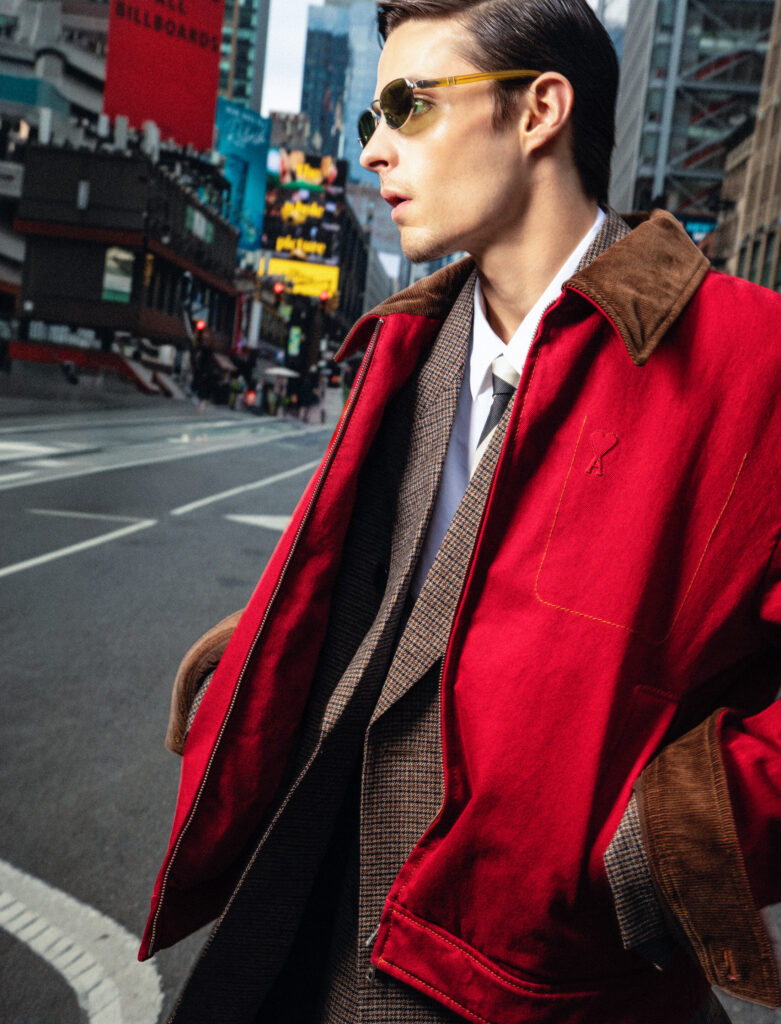
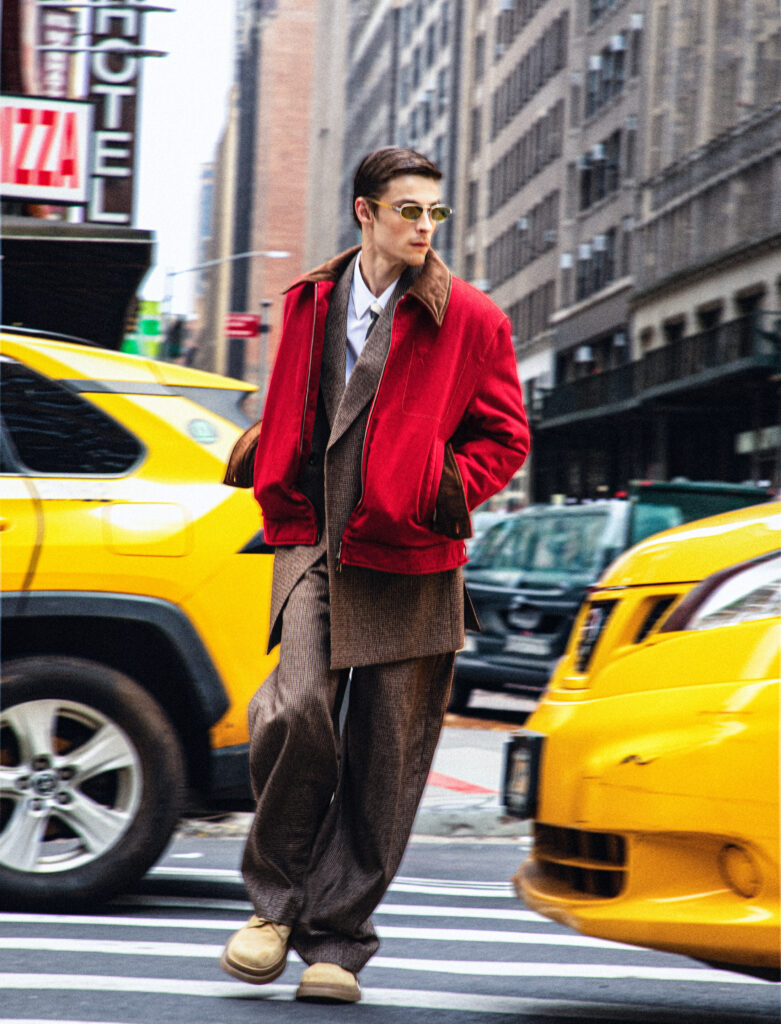
Fincher is known for his dedication to realism and authenticity. Being on set, Fogelmanis felt his skills expanding. “I want to be working with people who are just better than me,” he says. “I really did go home every day like, I have to be better. Everybody’s at the top of their game.” Fincher is also known for a multitude of takes to get each shot just right—Fogelmanis remembers doing approximately 50 takes of one scene (it’s a scene where he turns halfway, so some 30 takes from one side, and 20 from another). But he appreciated the opportunity to give everything he had to a moment, to leave wonderfully depleted after doing something he loves. “I really like finishing a scene and being like, okay, I literally gave everything I have,” he says. “[Fincher] also really knows what he wants, and that’s fun for me because I like to fulfill someone’s vision…it was inspiring, and it made me want to do it forever.”
This knowledge alone becomes a gift for a young actor who’s continuing to audition and self-tape. “Regardless of how [the film] comes out and how it’s received, I know I just want to do that [kind of work]. It made me so happy. It’s really hard to put yourself out there time and time and time again, and not feel like it’s working,” he says. “Then luckily something comes and buoys me, and I’m like, oh, I do love this.” As Fogelmanis continues to build his career, an interest in the idea of reality as presented on the screen has been inspirational in general.
Indeed, we’re meeting at the Roxy Hotel—now nestled into oversized but cozy leather chairs, sipping various versions of ice and caffeine—because it’s home to the Roxy Cinema. It’s here that Fogelmanis saw a movie that changed his life, and it’s not Amélie (though he loves it, too). Rather, it’s the 1990 documentary Central Park by Frederick Wiseman. The lauded documentary filmmaker, who passed away earlier this year, was known for his cinéma vérité studies of cultural phenomena in all of their mundanity. In 1990’s Central Park, there are concerts in the famed public green space alongside the staff meetings to maintain the park’s operations. In 2009’s La Danse, it’s the life of the Paris Opera Ballet. Fogelmanis has now seen many of Wiseman’s films, but he credits Central Park in particular with his own artistic revelations. “The thing that amazes me the most about him is people are so disarmed in front of his camera,” Fogelmanis says, his voice soft and mellow. “There’s no self-consciousness or even awareness of the camera…that’s something I want in my work.” He’s learning not to force a performance to be any one thing, he says, another lesson he’s taken from Wiseman’s films, among others.
When Fogelmanis moved to New York in 2019 for college, he had a lot of time to kill. It was several months before he’d start school and, fresh from California, he didn’t yet know anyone in town. So he went to the movies. And he went, and he went, and he went. It became an education in itself, tracking down films he hadn’t seen like David Lean’s 1962 epic Lawrence of Arabia, trekking to theatres across New York to see any of the classics playing on a given week. He never stopped, and seeing films like these has become a staple of his time in the city. It also helped him understand what he wanted his life as an actor to look like moving forward.
From the Roxy Cinema, we walk up 6th Avenue to Film Forum in Greenwich Village. Fogelmanis looks at people making their way up and down the avenues. Everywhere in New York feels like a Wiseman film to him now, he says. The city is just filled with people doing their thing, and it makes him feel like he has the space to do the same.
Soon, the Film Forum marquee is in our sights. We’re among the first outside, ready to enter before the doors open at noon. He marvels at the small crowd of dedicated New Yorkers. It was at this theater that Fogelmanis made his way through an Agnès Varda retrospective and found the director’s 1969 film Lions Love (… and Lies) especially moving. “With her, everything is the movie, so nothing that happens has to be cut out, or at least it seems that way,” he says, recalling a scene where Varda enters wearing a wig because the actress intended for the role became uncomfortable with the scene. Varda captured everything, and it’s all on screen–the discomfort, the wig, all of it. “The process of making the movie can be as much of the movie as you want it to be,” Fogelmanis learned, he says, captivated by Varda’s decision to not hide the film’s production process. “It expanded my horizons in the sense that anything can be a movie.”
He had a similar experience watching the 1974 John Cassavetes film A Woman Under the Influence for the first time. The woman in question is Gena Rowlands as the housewife Mabel Longhetti, who faces her own undoing in a performance now considered among the greatest and most challenging in film history. “It was the most unsafe thing I’ve ever seen,” he says. “It’s very rare that I personally am scared for someone. Maybe it’s because so much of the time I’m watching something, I’m thinking about how they did it. I have absolutely no idea how she did that and how they were able to capture that.” What he also found stirring was the net that’s created when performing in front of people you know—Cassavetes and Rowlands were married, after all, and the film features a cast of many actors who were also their friends. “There’s something about just setting a camera down and letting a dinner scene run for 20 minutes, that’s just life. It’s just life on screen,” he says.
He also mentions Kristen Stewart’s The Chronology of Water and the films of Sean Baker, how the directors and actors make the films so candid, so raw. Throughout our conversation, it’s clear this is something Fogelmanis is looking for, maybe not unlike Wiseman or Varda or Rowlands or Cassavetes or Stewart or Baker: how do you make room for yourself on the screen, and tell the truth while doing it?
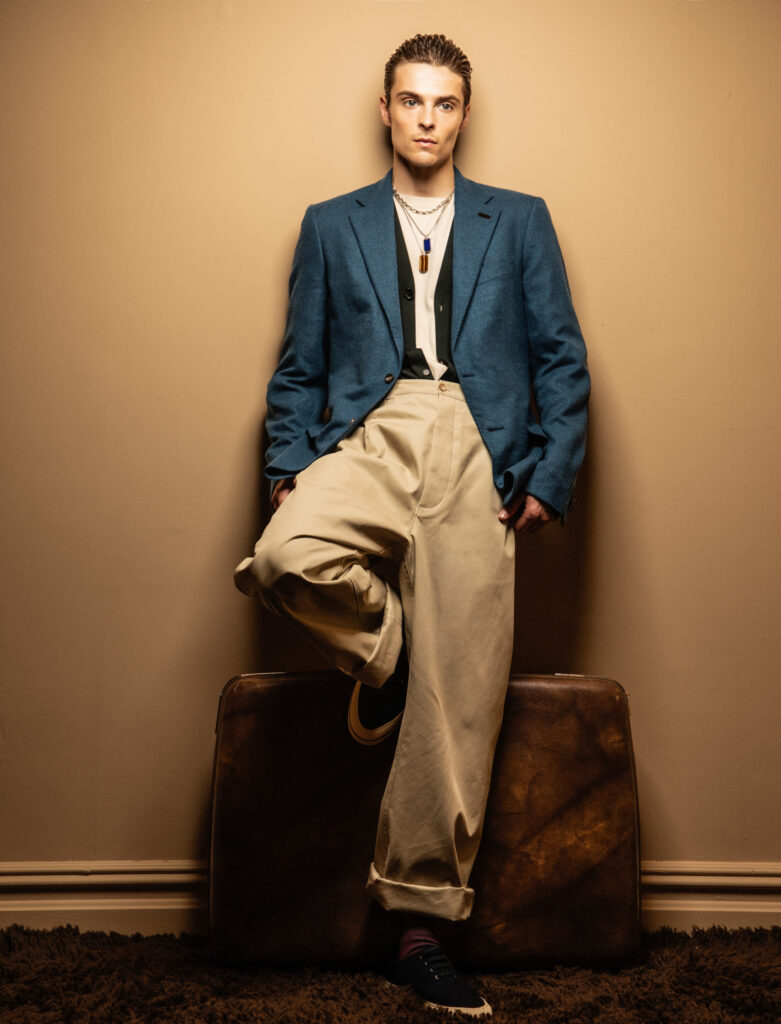
The nature of what’s real and what’s fake, and what feels real or fake, comes up often when we talk: how a location shoot can drum up connectedness to one’s setting, as in the music videos he filmed with Conan Gray in Texas; or how a costume can feel false the second it comes out of the bag. He’ll purposely scuff up a costume’s shoes, he says, “unless like this person wears a brand new pair of shoes every day…I just want it to feel real, so I’ll be on the first day outside of my trailer like scraping my shoes across the concrete.” It’s not about hiding that something’s fake; it’s about making the experience as real as possible. “When you’re trying to conceal something…it always feels like making yourself smaller rather than expanding into a space,” he says. And Fogelmanis is only looking toward expansion.
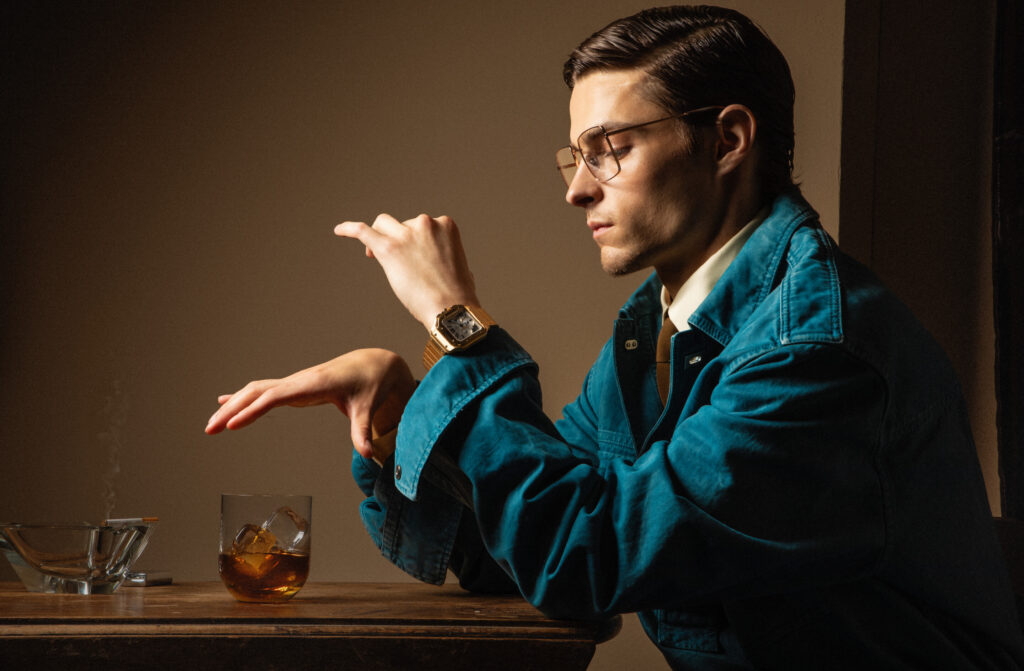
Coming up, he will star in The New Group’s world premiere staging of Patrick Hamilton’s Rope, the play that inspired Alfred Hitchcock’s classic film of the same–performances begin October 13, with opening night November 3. The play will run through December 6.
The Further Mis-Adventures of Cliff Booth won’t arrive until November 2026, but Fogelmanis says being in it has already affected him internally. “It was incredibly clarifying about how I want to be working and what types of things I want to be working on and how fulfilling it can be when there’s an alignment,” he says. In the meantime, he stays curious. He wants to know about your favorite documentary, how the projection room at the Roxy Cinema works, how Sean Baker makes his films so truthful. He makes time to get to know himself and craft his own experience. He just happens to do it at the movies.
This story appears in the pages of VMAN 57: now available for purchase!
Photography Petros Kouiouris
Fashion Fani Polychroniou
Creative Director / Editor-in-Chief Stephen Gan
Makeup John Wilger (Opus Beauty) using Fara Homidi Beauty
Hair Andrew Dylan (Opus Beauty) using Oribe
Editor Kev Ponce
Fashion Market Editor Copelyn Bengel
Set Designer Colin Phelan
Production Dakota Griffin
Set Producer Sneha Mendes
Lighting Director Vasilios Smaragdas
Photo Assistant Beka Maglakelidze
Set Design Assistant Chancey Bridges
Styling Assistants Liz Wood, Adlet Bermukhamedov, Irene Crespo
Production Assistant Juliet Lloyd
Director of Editorial Film Mynxii White
Discover More