Artist Zach Teplin Considers Ambiguity and Vision in His New Series ‘Copy Cat’
“By making them, I was able to spend time with them, face them, surrender to them, and not question them.”
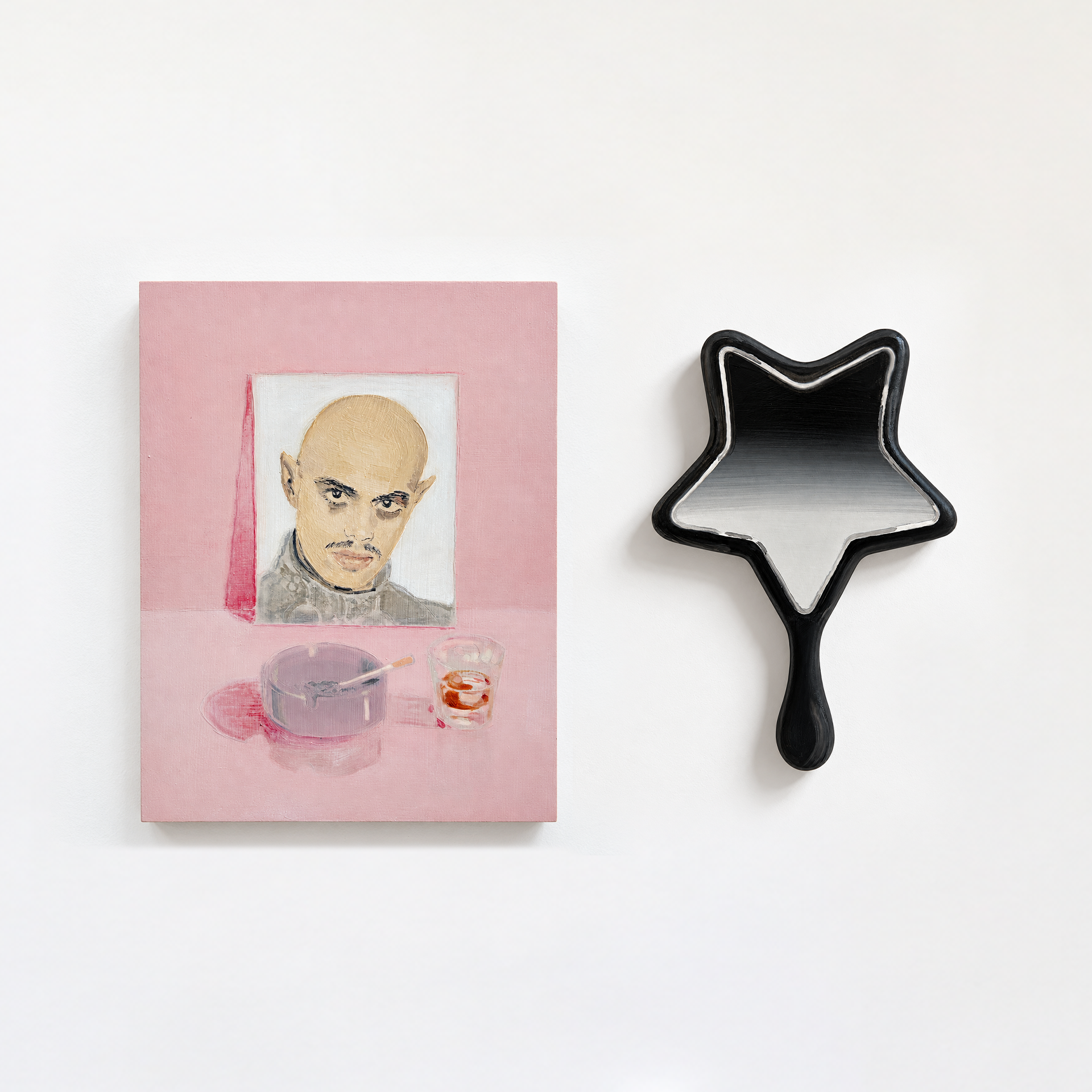
In artist Zach Teplin’s new series of paintings Copy Cat, which opened November 14 at Induction Gallery in Los Angeles, he contemplates the aftermath of ambiguity. Influenced by and inflected with the timbre of nightlife, the New York-based artist finds in his work a way to move forward from uncertainty, even if certainty never arrives.
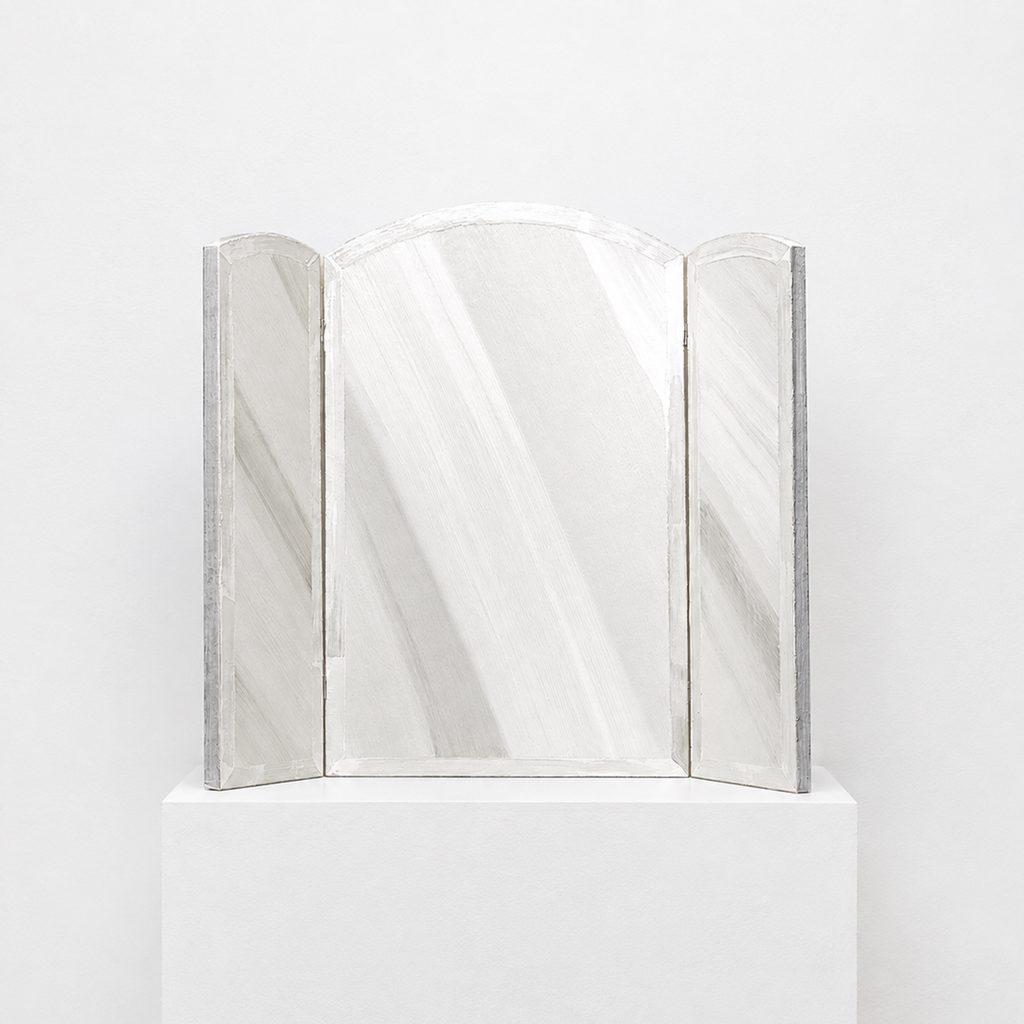
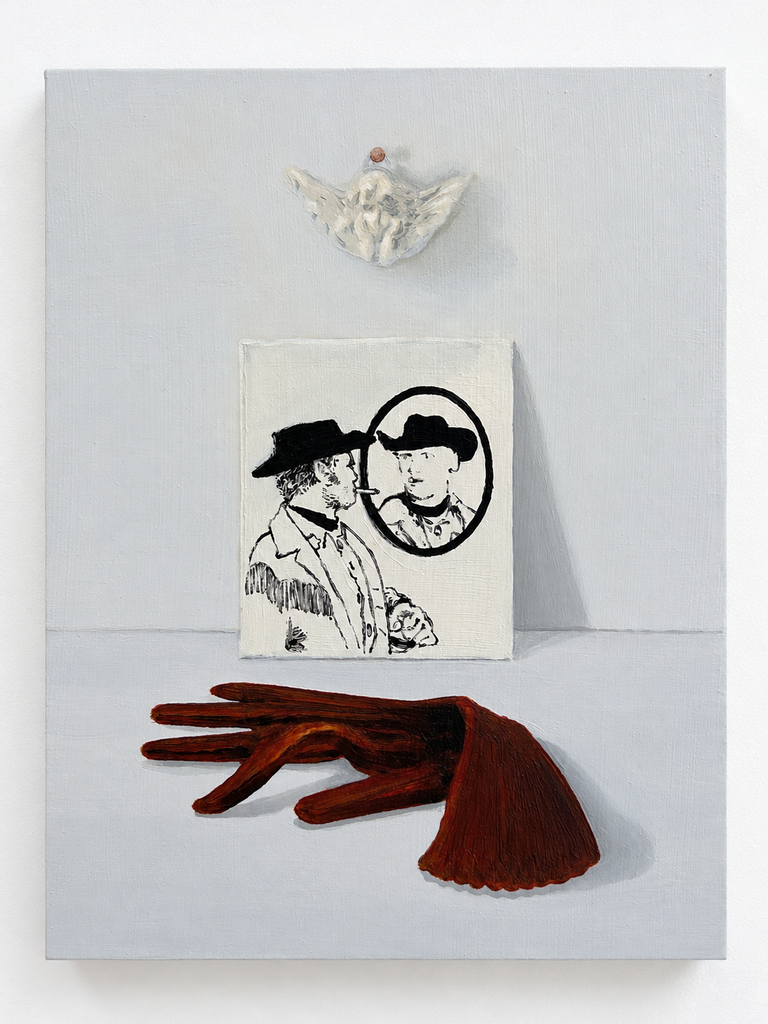
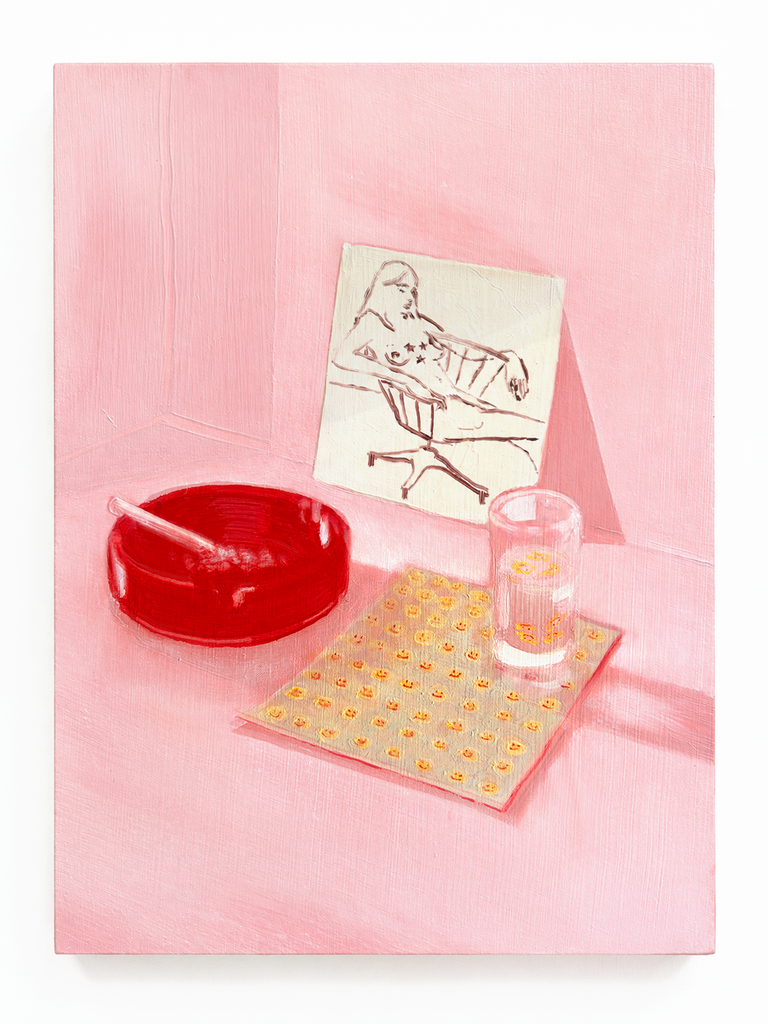
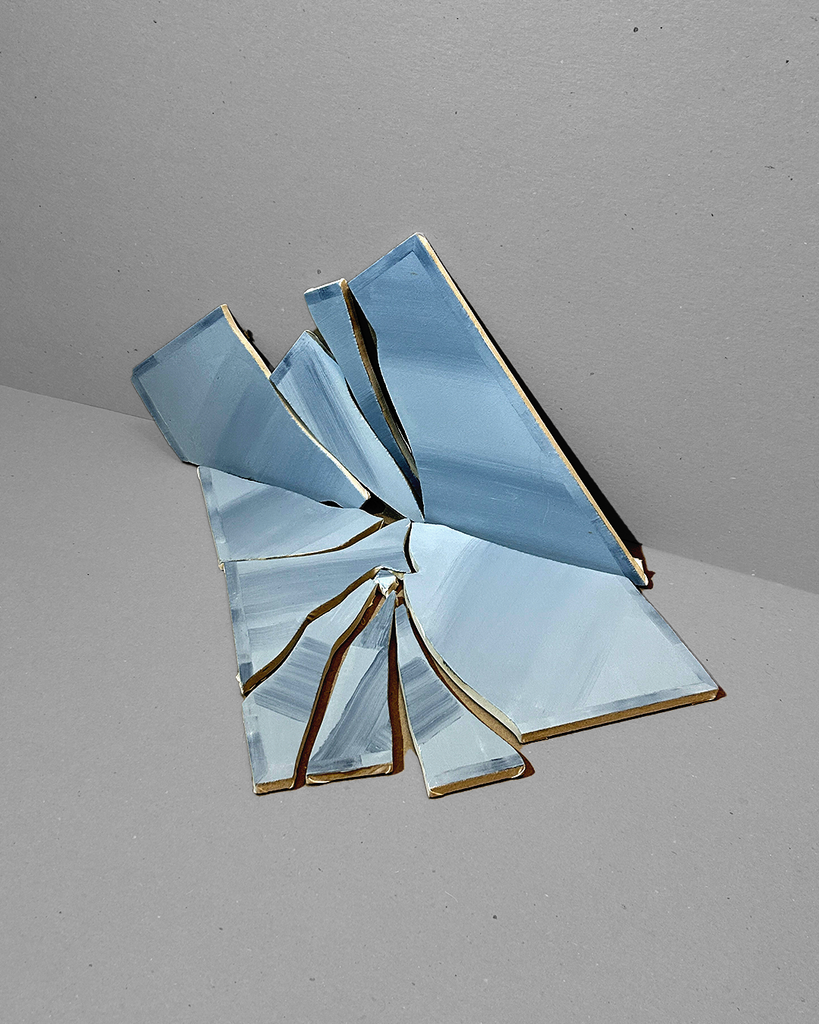
The title itself stems in part from Teplin’s own artistic practice, reimagined for a way to look at the world. He finds he learns by continually revisiting and recreating works from the Old Masters, among them Caravaggio’s painting The Cardsharps. “There’s all sorts of little moments whenever I draw it again where I go, oh my God, there’s so many different things going on here that you can look at,” he says. “Copy Cat came about from many, many repetitions and different delineations of recreating works that I thought contained more than I could understand just by looking at it and by copying it.” It became a way to consider and question experiences from his own life, too, in the works he made for the show. Some of these are shrines, which pay homage to lives cloaked in unknowability–a man he learned later was murdered by a former lover, for example, or a friend dealing with psychosis. Some are mirrors begging us to question the stories that are or aren’t looking back at us. But by recreating something he knows, and we know, in multiple forms, Teplin is able to show us the potential for understanding that exists in seeing beyond what’s in front of us, and maybe how we too can see something new every time.
Here, Zach Teplin talks to V about John Keats, confusion, life on the dance floor, and more.
V: How did this series come to be?
ZACH TEPLIN: I’ve been painting some of these for a long time, and some of them were drying in time for the show. I had to reconcile all of the bad work I had been making and work I was never going to let see the light of day. Showing work is inherently a little embarrassing, but it took about a decade to put together this body of work that I am happy with. Bad work, in my opinion, is something you can’t really get behind. It can be authentic work. It can be beautiful. It can be technically impressive. But if it’s not really contributing or adding to the conversation, then I don’t…there’s so many images now. I think any artist is reconciling with the necessity of their own work and whether or not it really deserves to be seen. So maybe it wasn’t bad work that I had been making, but I didn’t think it was necessary to share it.
I guess sometimes artists are tempted to apply what their work is about on a macro level, which might be applicable here. I think lots of people are struggling to see things as they really are, to have good conversations with people who are not like-minded. For me, this was not a commentary on the times or any larger themes. I had some very internal, longstanding confusions I needed to therapize. When I talk with people about the work, it’s surprising how it resonates and translates because for me this is so hyper-specific. I wasn’t going to share it because I felt like it was so inaccessible. Once I did share it and began having conversations with people about the work, I realized how much people are going through that’s similar to what I’m going through. There’s a need to unpack and inspect things. There seems to be a widespread illiteracy in how we’re all dealing with our own feelings, which are so complicated and not so interesting to be the premise of movies and books and songs, but things like sickness, which we all have to deal with and then move on from, and maybe not get a chance to process.
V: What made you feel this was work you can get behind, that it was necessary to share?
ZT: It had done something for me that felt very real. I am interested in all sorts of rabbit holes and niche concepts that are entertaining to me, that excite my intellect and internal worlds. Growing into adulthood and finding concepts like antinomianism [“The antinomians rejected the very notion of obedience as legalistic; to them the good life flowed from the inner working of the Holy Spirit,” Brittanica shares], and myself living in New York City, going to clubs, seeing the dance floor as a religious experience and the spirituality that can be accessed through vices–those are some of the rabbit holes that this work explores. They mean a lot to me. As I speak with people, I’m learning more about how this world that artists have always described, whether it was Cy Twombly, Caravaggio, or Louise Bourgeois, there’s another way of life that artists have always seen and tried to visualize. Accessing those ghosts and concepts is something I think I’ve finally been able to drop into as an artist.
V: How do those ideas live in your Copy Cat series?
ZT: Growing up, I had as a child had a lot of visions of things that weren’t there that I would tell my siblings and parents about. These really interesting hallucinations and visions that stayed with me. There was just nothing to show for it, no result, no good or bad effects. Some of those visions were things I painted, and making these shrines was not really for anyone else. I wasn’t expecting to share those pieces, but by making them, I was able to spend time with them, face them, surrender to them, and not question them. Through that, I was able to recognize real forces we all deal with that there isn’t a way to write down because they might not have cause and effect. The paintings were a way to work through that. In the nightlife scene, I had worked as a go-go dancer and hustler in New York City when I was young, encountering people in all sorts of states through the dance floor. New York City is a place, and I did this myself, where you can go as deep and dark into the depths as you like. It’s available on a Wednesday night if you’re in the mood. Some people get lost in that, and it’s not a bad thing. It’s a life some people are living right now, and that’s inspiring to me, how it’s confusing whether this is good for them, bad for them. Are they okay? Going to bars and places where you’re not sure if everyone has a support system, and you’re not sure if this person is acting out of unresolved traumas, or if they’re having the time of their life, or in the moment they’re feeling ecstasy, and you don’t know the context of the rest of their life before and after this moment.
The mirrors are more visually closely connected to those experiences, breaking things, things that are dangerous to touch, but you play with [them] anyway. Finding comfort in things that are at first disturbing, I think, is a natural part of nightlife. When you’re first introduced, you might be shocked by some things. You might be a little freaked out, but quickly you sense that everyone’s okay, this is all consensual, and everyone’s choosing to be here and do this. You learn how comforting this is to people, and it’s very oceanic in that sense.
V: How does your relationship to painting work for you as a way of understanding or working through a moment or experience?
ZT: In general, we really want to have a conclusion, to say I went through that and it was good or bad because it led me to X. One painting in the show I think is a great example of that not always being available. In Shrine for A.M., it’s a portrait of someone I never got to meet, but in a way, I think that’s an example of a very strange hand dealt to me that I so badly wanted to make sense of, to know if it was a good thing or a bad thing, or where exactly in between could I classify this so I could move on. And I had read [poet John] Keats on negative capability by that time, so I just thought I don’t need to know, I can just move on, but it’s so hard in real life to do that. Sometimes you go through a trauma, or you experience something [where] you don’t know, was that consensual? Was that not? Did I experience something that I liked or didn’t like? You can go back and forth for years. You want to be able to say to yourself, “I liked that. That was okay.” Or you want to be able to say to yourself definitively, “I did not like that. That was not okay.” Then you can do something about it. But for the most part, at least in my life, there have been so many ambiguous experiences I have to live with. For me, a lot of these paintings were ways of sitting with that and letting it remain open. A lot of these portraits are of people who I am still very confused about our relationships and people who I have unconditional love for, but only because that is my only option.
V: You’ve discussed the idea of living in a corporatocratic body and being able to create your own artwork while also working as an art director for brands. How does your work as an art director affect your personal artwork?
ZT: They’re hard to separate. But when I look back and see how many artists I love who–like Magritte had a booming graphic design studio, and did work for Alfa Romeo. You see in his work the influence of graphic design. And James Rosenquist, of course Andy Warhol, and so many artists learned how to make images through the machine of advertising and marketing, then attempted to separate their day job from their night mind and creative process. I can recognize [that] struggle in their work. We’re all really fascinated with the processes of artists we love. How did they make the masterpiece? I think even if you are deeply enmeshed into the advertising and marketing machine, it is only a tool of image-making that you can use to exercise whatever ghosts haunt you. It’s really educational. During the day I can try to make something as beautiful as I can for a hotel and a successful image is a successful image. Even if it’s something as silly as advertising–“free French fries when you book before two,” or whatever–it’s still working on your muscles and making a successful image.
Discover More