A Look Inside the Best of Salone del Mobile
Salone del Mobile 2026 gave Milan its annual takeover
Salone del Mobile 2026 gave Milan its annual takeover, with maximalism, restraint, and everything in between crowding the city for one week each April. The city doesn’t just host design week; it hands itself over to it, transforming from trade fair to theater, from product launch to cultural statement, from showroom to social stage.
This is our guide to what mattered, who showed up, and why it’s still echoing.
THE FAIRGROUNDS
Salone del Mobile — The Mothership
Fiera Milano, Rho — Multi-Pavilion
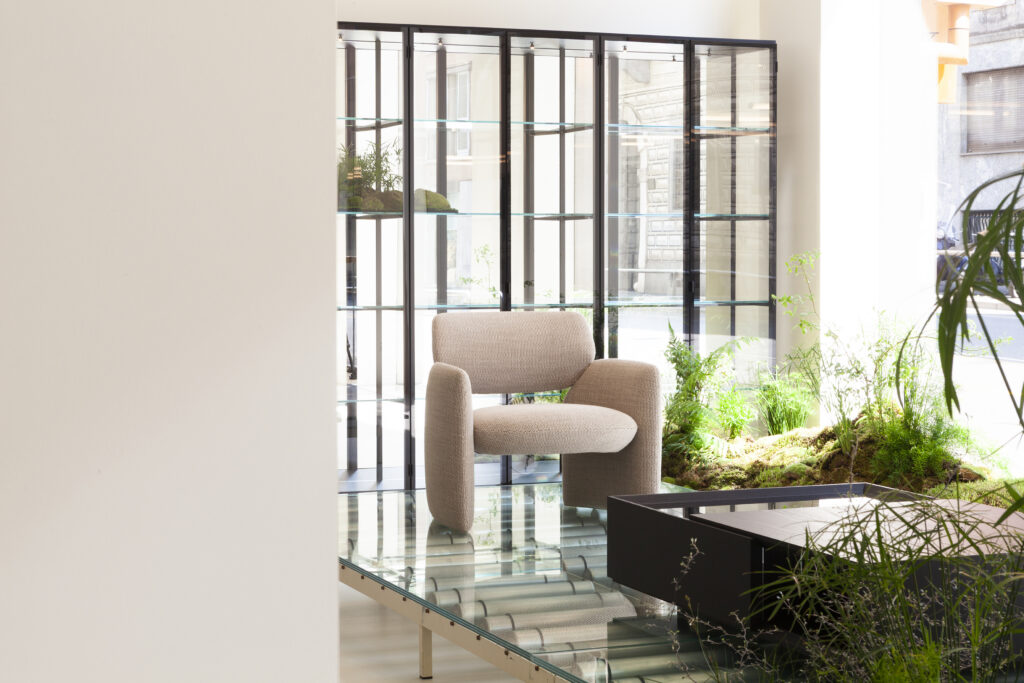
It has always been overwhelming by design — literally. The original megafair sprawls across pavilions in a way that makes navigating it feel less like a trade show than a minor expedition. Spend four hours and you’ve barely grazed a fraction of it. The scale is the point: nothing captures the breadth of the global design industry quite like arriving early morning and leaving dazed by dinner time, still having missed entire categories and pavilions (nearly 20 in total).
Furniture empires, lighting laboratories, material experimenters, and debut graduates coexist in a dense, slightly delirious democracy of form. Come with comfortable shoes, a loose agenda, and absolutely no plan to see everything.
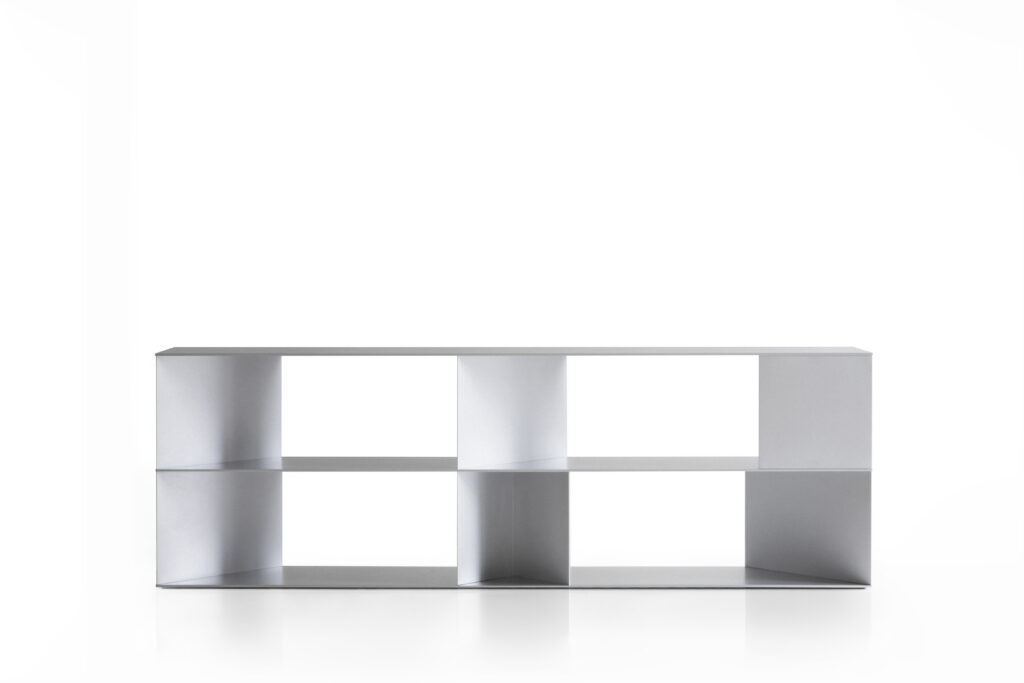
One highlight was speaking with Maria Porro at Porro’s booth, discussing new works by Yabu Pushelberg, Nao Tamura, and Piero Lissoni. Maria is also the President of Salone del Mobile.
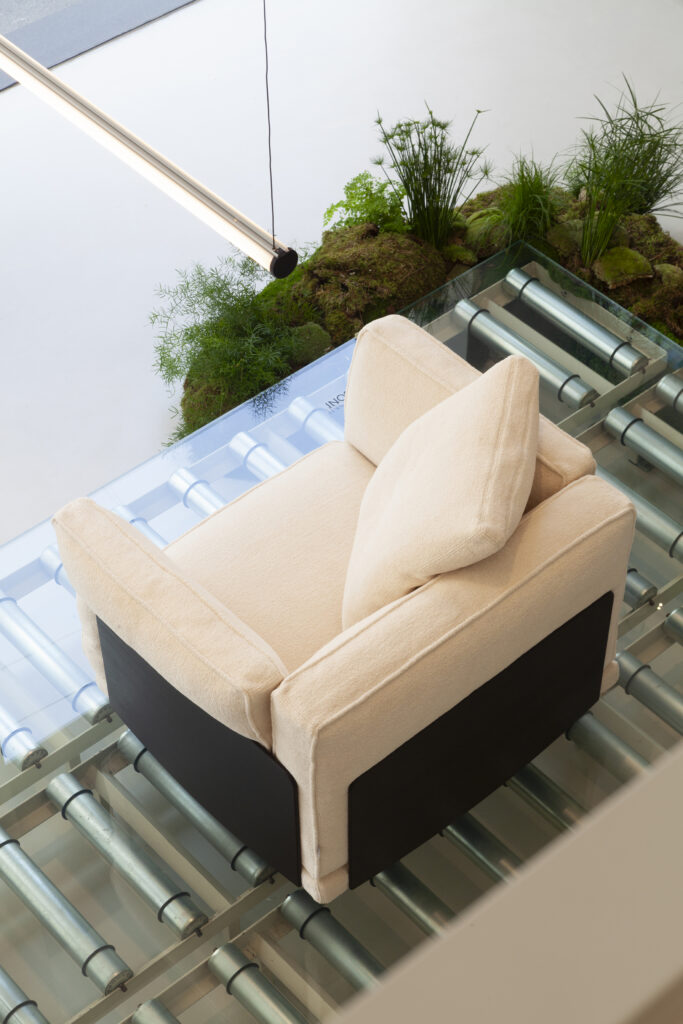
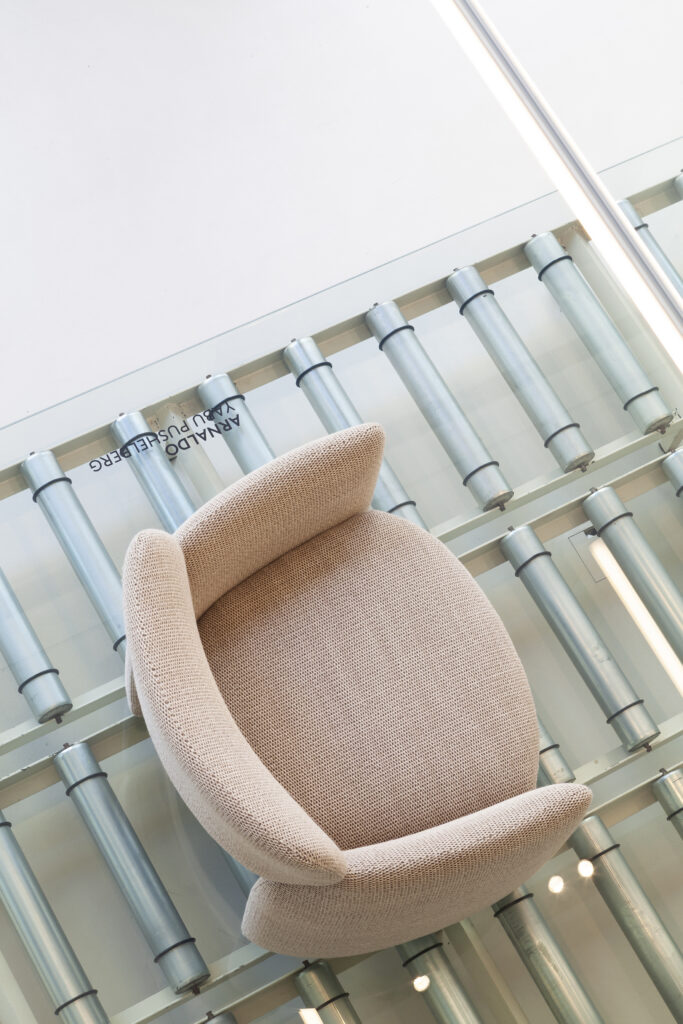
Courtesy of Salone del Mobile
SALONE RARITAS—THE CONNOISSEUR’S ROOM
Introduced in 2026
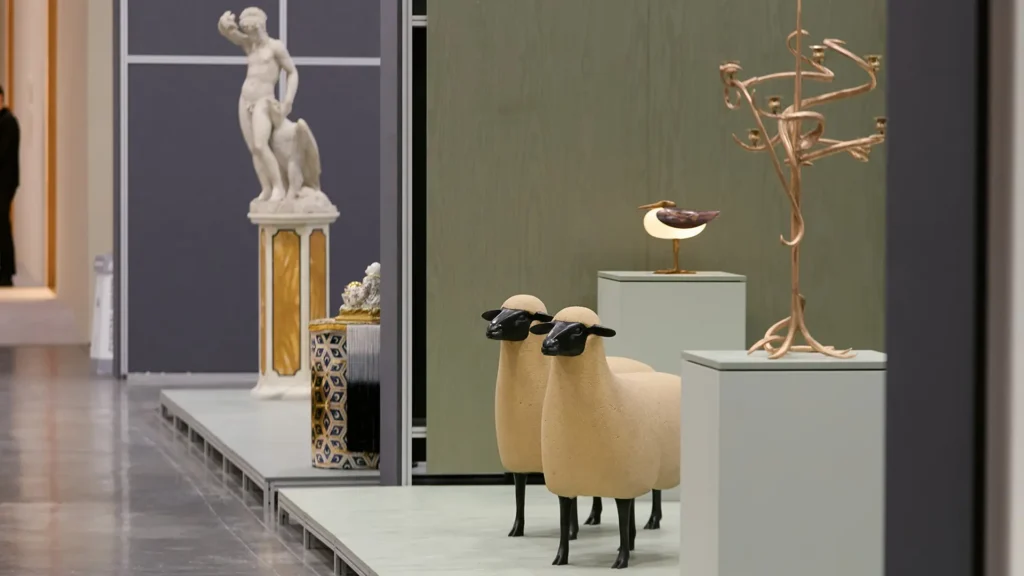
The newest addition to the Salone universe moves differently from the main fair. Where Salone del Mobile overwhelms with volume, Raritas cuts the noise— presenting limited-edition works of design, and artisanal objects with the quiet confidence of a gallery that knows exactly what it has. The atmosphere rewards slowness. This is where you stop, rather than pass through.
What emerges is a subtle but important shift: the luxury object is no longer simply decorative, but collectible. In its debut edition, 26 galleries participated, framing design as something both lived-with and collected as seriously as art.
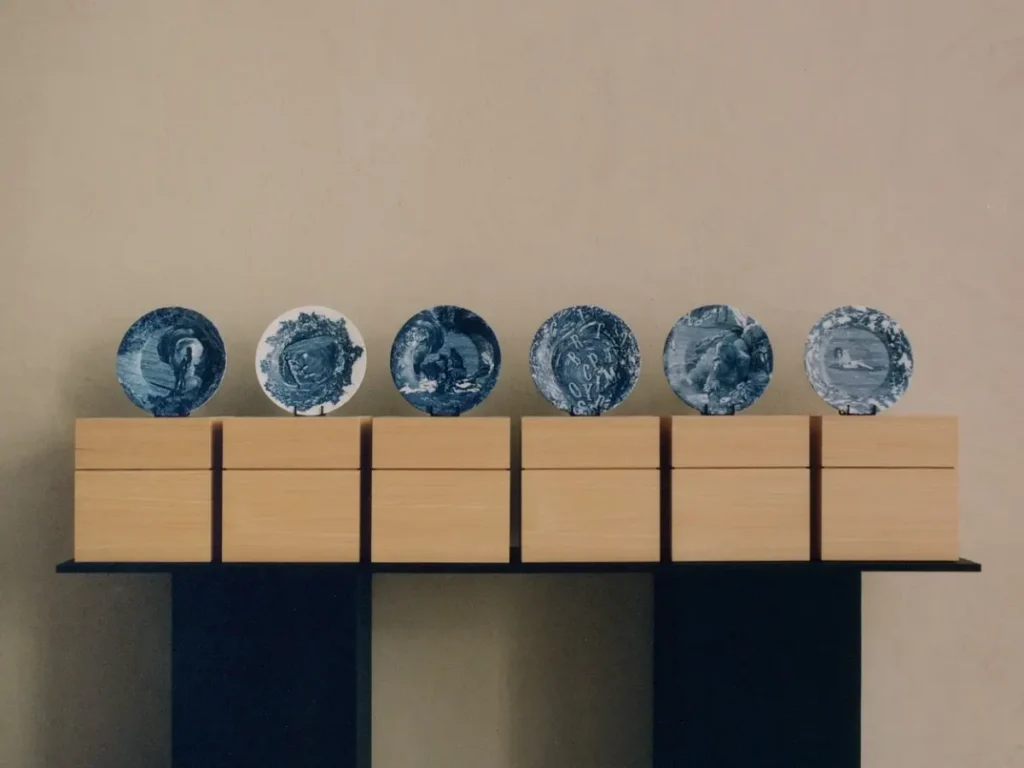
A standout: Equinox, a collaboration between master porcelain designer Stefanie Hering and Austrian artist Hans Weigand, whose dark, psychedelic imagery transforms Hering’s puristic bisque forms into functional sculptures — collector’s objects that sit precisely at the intersection of craft and fine art.
A particularly unexpected moment came from Galerie Mitterrand presenting Lalanne sheep — a surreal and knowing insertion into the design context that stopped the room completely.
Courtesy of Salone del Mobile
ALCOVA—THE ART FAIR OF THE MOVEMENT
Ospedale Militare di Baggio & Villa Pestarini, Milan
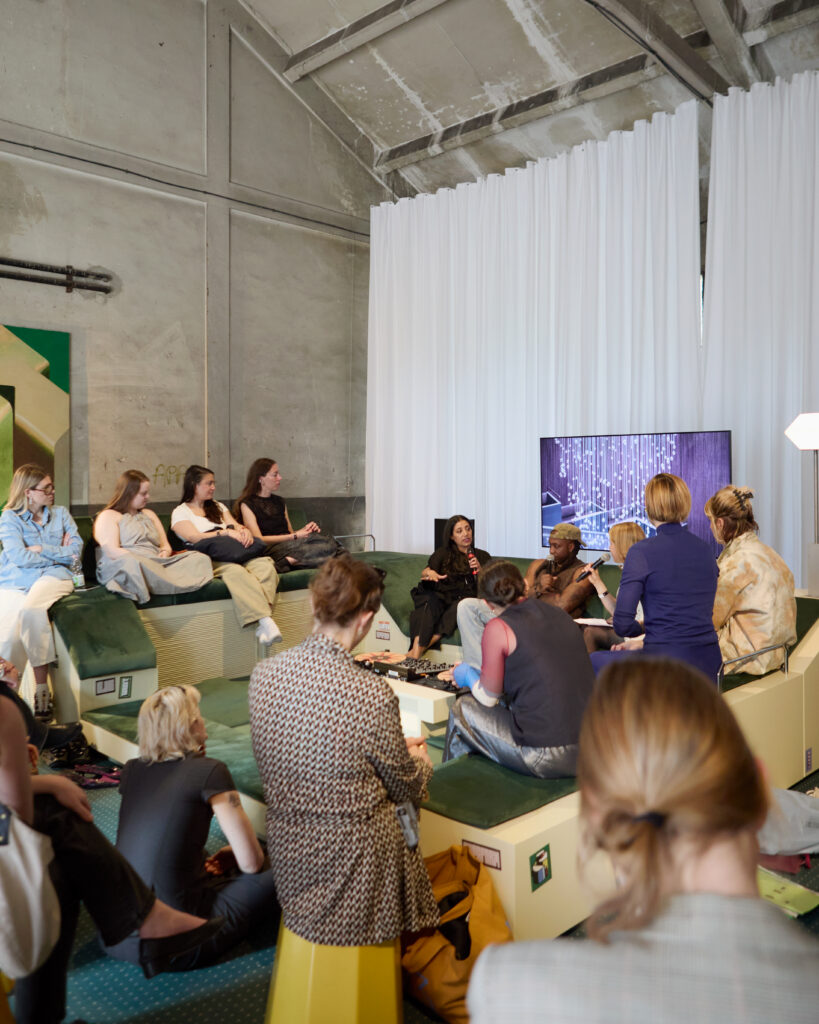
Alcova has become the fair that serious collectors and designers quietly prioritize over everything else. This year it took over the Ospedale Militare di Baggio — an abandoned military hospital on the outskirts of Milan whose crumbling grandeur and echoing corridors provided one of the week’s most atmospheric settings. The decay wasn’t a backdrop; it was a collaborator, lending every presentation an urgency and poetry that a conventional venue simply can’t manufacture.
Among the standouts, Venezuelan-born designer Rodolfo Agrella presented at Shakti Residency with considered confidence, while heritage Japanese porcelain brand Noritake used its Alcova platform to present new work by Michele De Lucchi. The pairing of one of Japan’s most storied ceramic traditions with one of Italy’s most celebrated design minds produced something genuinely rare — objects that felt both inevitable and completely fresh.
Courtesy of Alcova
FASHION MEETS SPACE
What became clear across Milan this year is that fashion houses are no longer just adjacent to the home — they are defining it from within. These presentations increasingly function as extensions of the wardrobe, shaping not only how clients dress, but how they host, collect, and inhabit space. The object, in this context, begins to speak the same language as fashion: identity, taste, and permanence.
KELLY WEARSTLEr FOR H&M
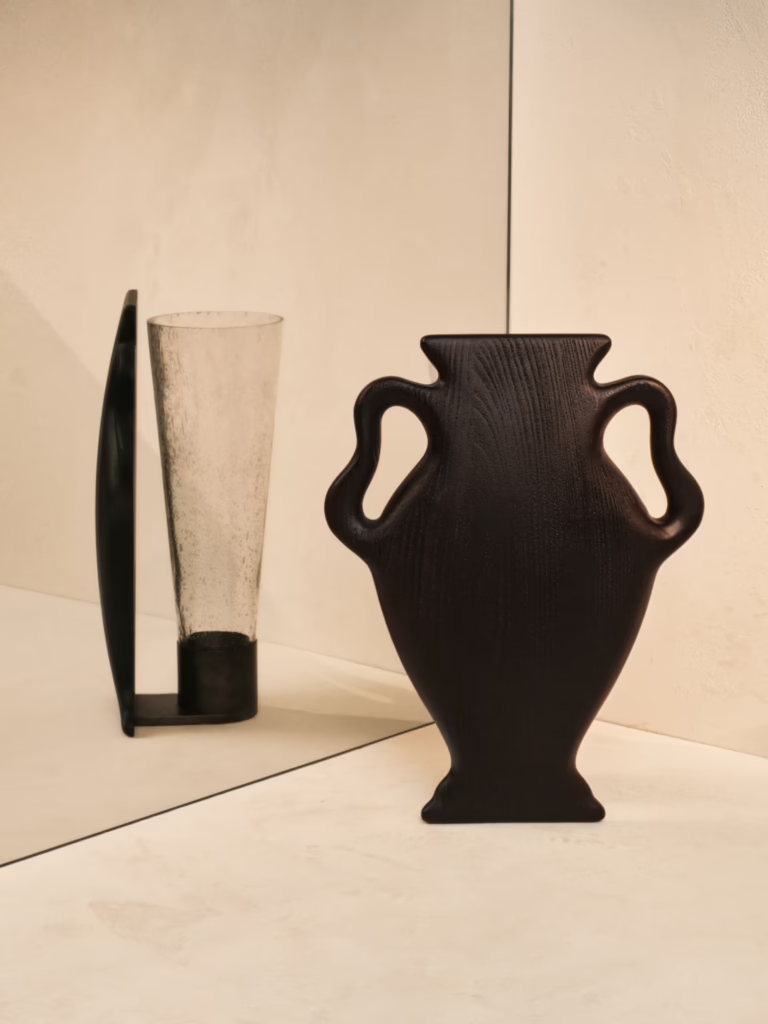
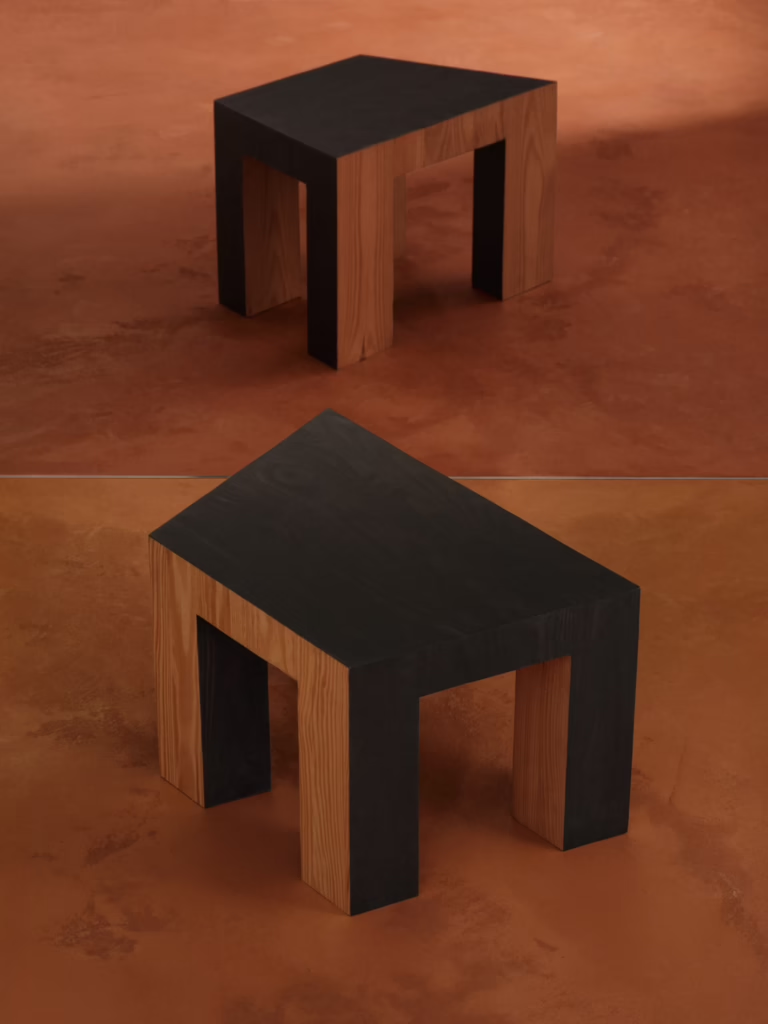
The Los Angeles design icon brought her signature maximalist-but-knowing sensibility to H&M’s Milan presentation — a collaboration that confirmed what the design world has long suspected: Wearstler’s visual language is genuinely populist at heart, even when executed at the highest level. The installation featured large-scale furniture at accessible price points with the same layered, textural opulence she deploys in her most celebrated interiors. Arriving in the same week as the city’s most rarefied presentations, it underscored a widening spectrum: design is being democratized even as luxury pushes further into scarcity.
Courtesy of H&M
LOUIS VUITTON
The house arrived with expected architectural confidence, taking over the historic rooms of Palazzo Serbelloni to present its new Objets Nomades collection alongside iconic trunks in an exhibition exploring Art Deco and contemporary design. The presentation favored scale, precision, and polish over ornament, which made its luxury feel even more assured. For those who found it, a secret room hidden on the top floor offered something more intimate — a single blue-grey LV monogrammed chair lit in near darkness, inviting a rare moment alone with the house’s mythology.

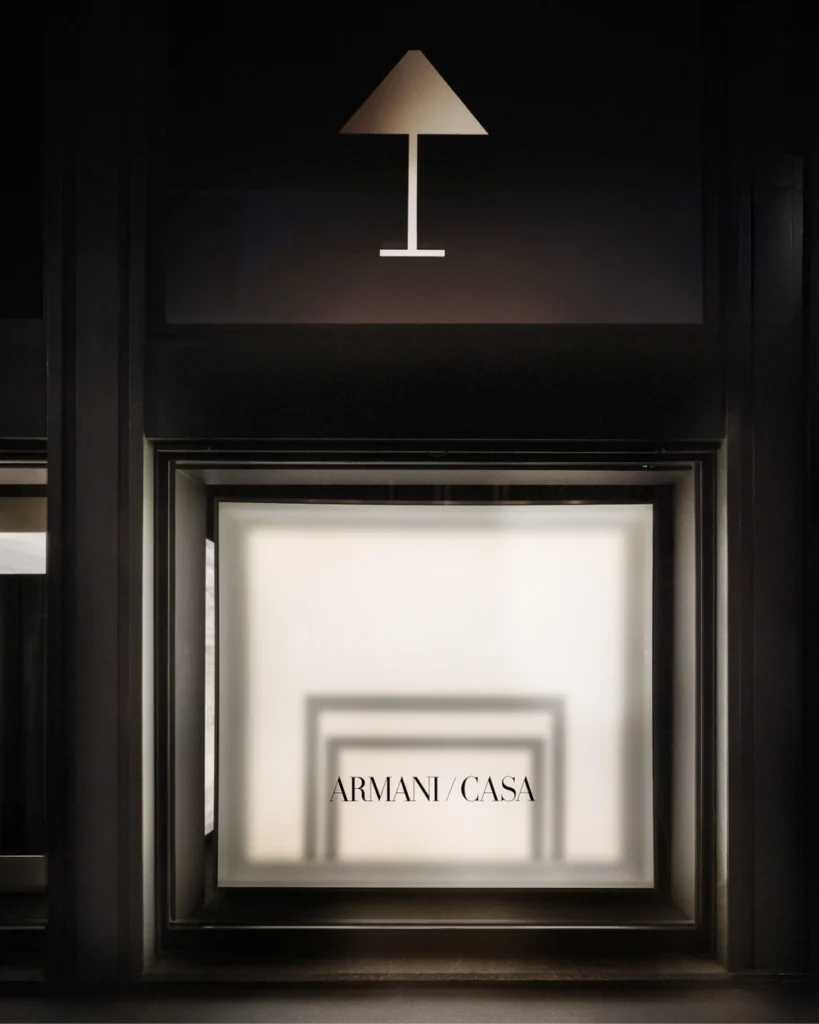
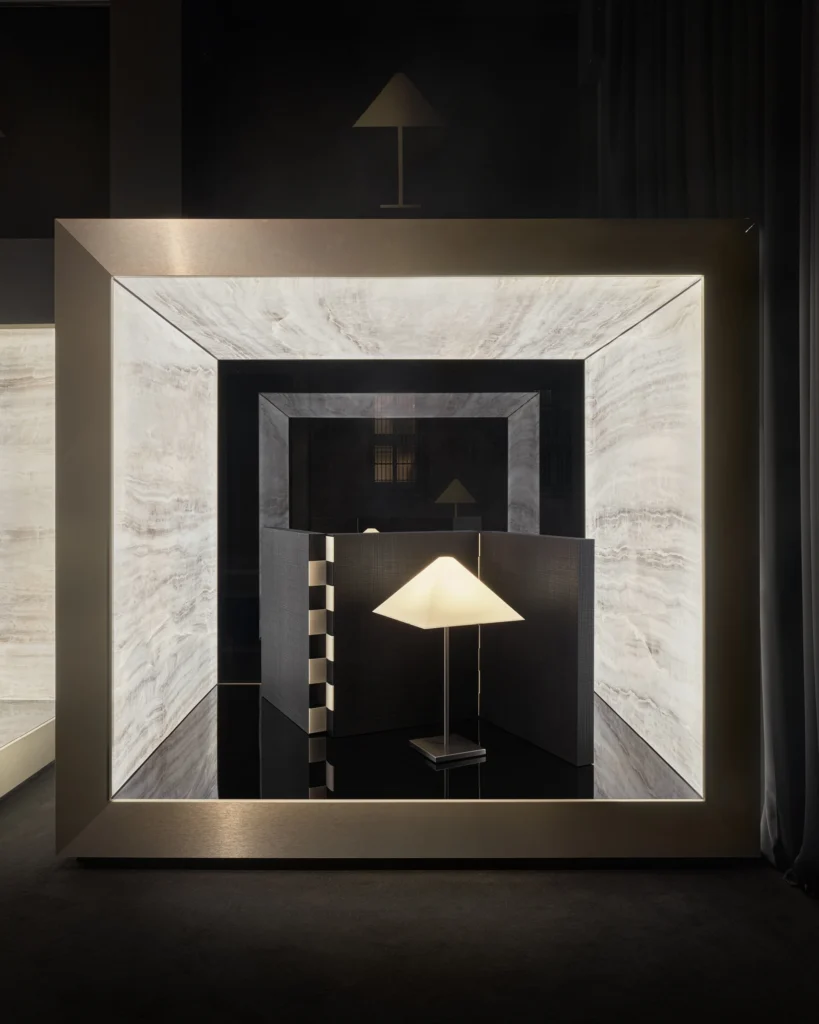
Armani / Casa
Giorgio Armani’s home universe showed in characteristic restraint — a masterclass in the edit. Neutral palettes, exact proportions, materials that age beautifully. Eight signature pieces are displayed alongside updated versions, creating a dialogue between past and present that highlights continuity and transformation. In a week prone to extravaganza, Armani / Casa reminded you that the quietest room in the building often has the most to say.
Courtesy of Giorgio Armani
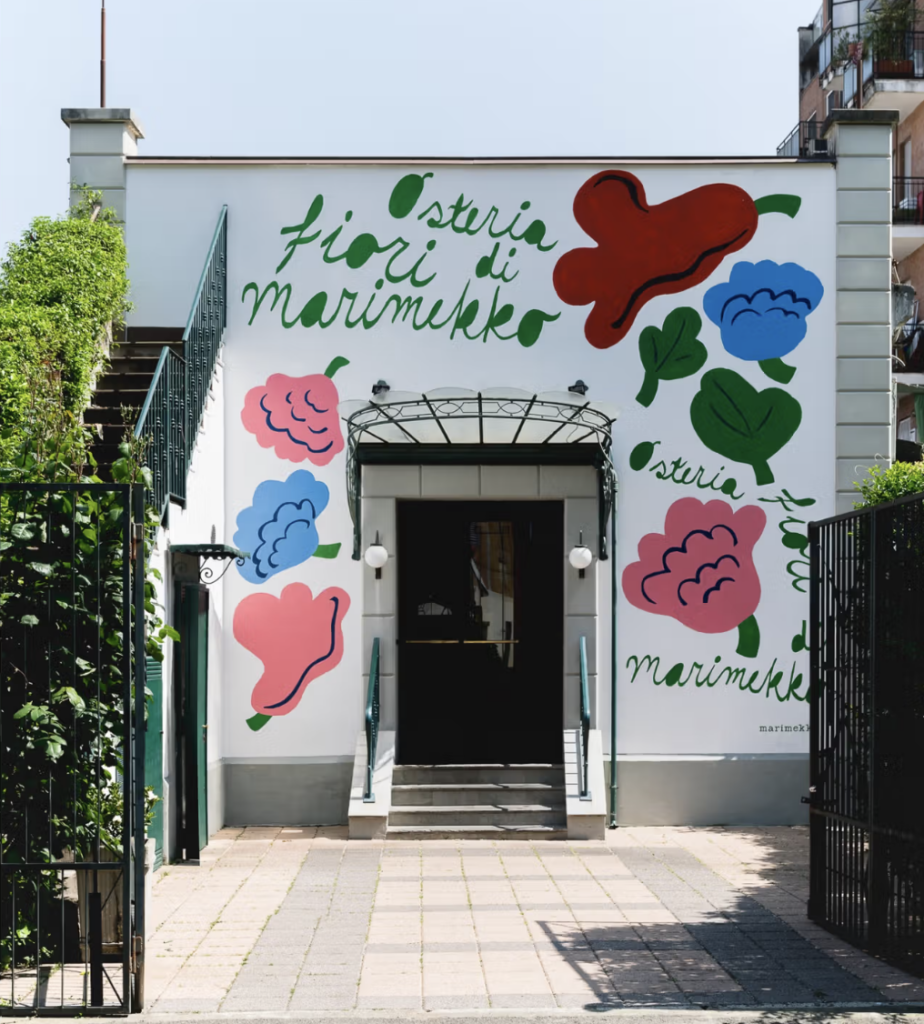
marimekko – a world you step into
The Finnish design house didn’t simply present a collection — it built an environment. Bold prints and immersive color transformed the space into something between showroom and social hub, functioning as both bar and restaurant, making the whole pop-up feel lived in rather than staged.
the moments
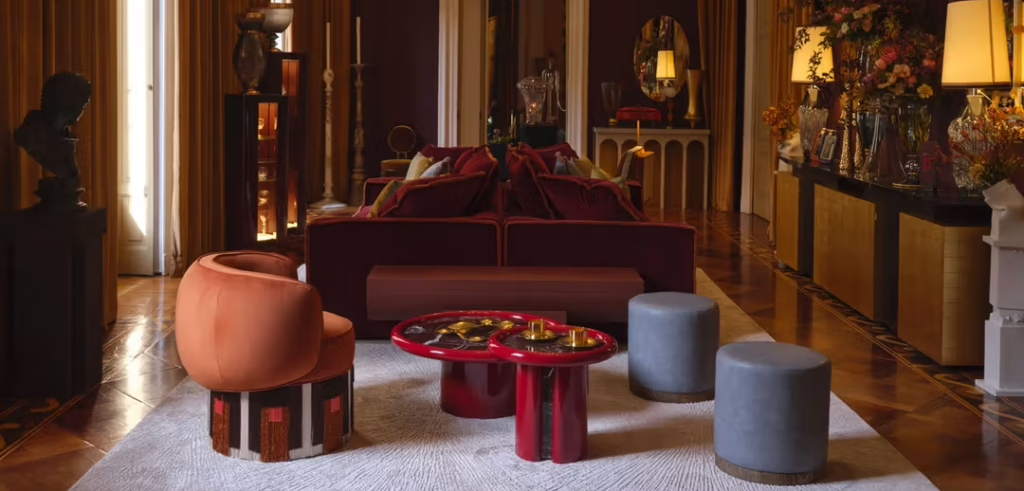
artemest-the palazzo as stage
Set within a historic Milanese palazzo, Artemest’s “L’Appartamento” was among the week’s most visually compelling — and most densely packed — destinations. Each room was conceived by a different designer, including Adam Charlap Hyman, transforming the residence into a sequence of immersive environments that blurred the line between exhibition and lived space. The overflowing only added to the sense that everyone had arrived at exactly the same must-see moment.
RH FLAGSHIP—YEARS IN THE MAKING
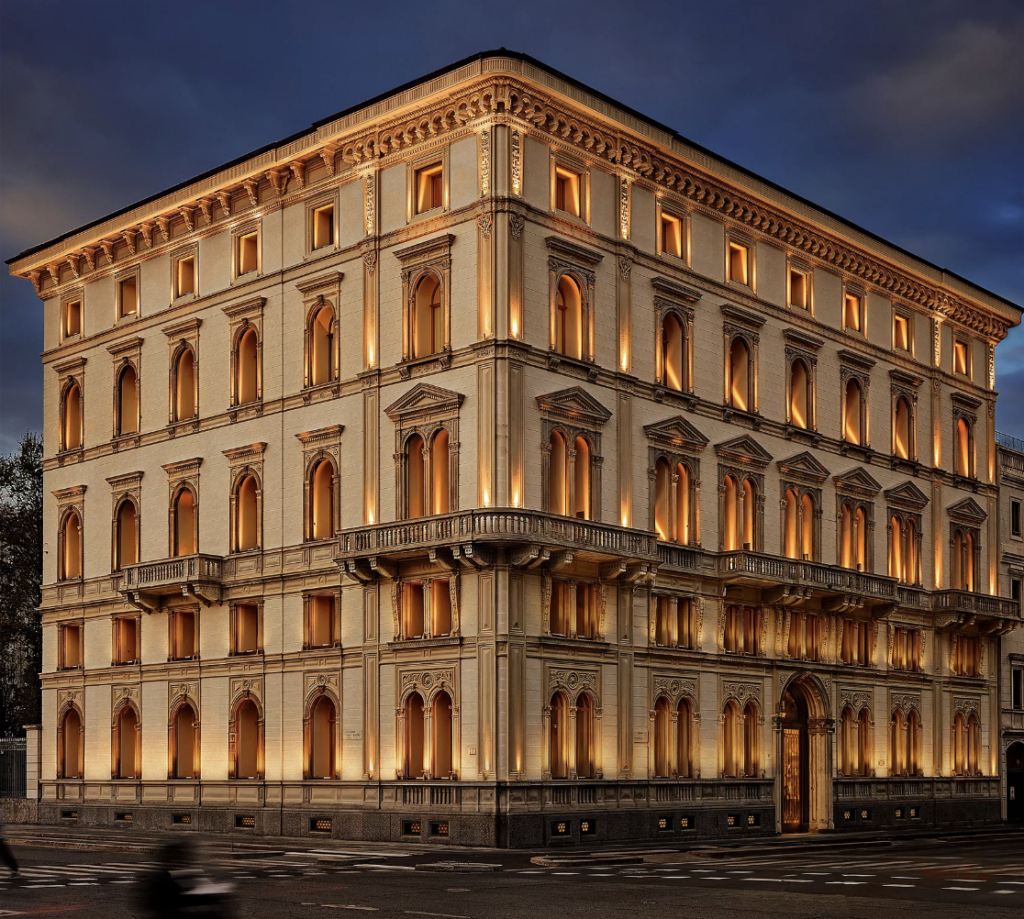
RH’s Milan flagship opened after years of restoration of an 1880 Neo-Renaissance building — and a multimillion-dollar investment. The result is one of the most ambitious retail environments in Europe, operating as store, restaurant, and manifesto.
Opening moments bordered on spectacle: the top-floor sushi bar was packed, as were the floors below, where caviar and oyster service signaled that RH was not making a quiet entrance. Guests included Brunello Cucinelli, Zoe Saldaña, and Margot Robbie.
THE FLAMINGO ESTATE BATHHOUSE by kohler
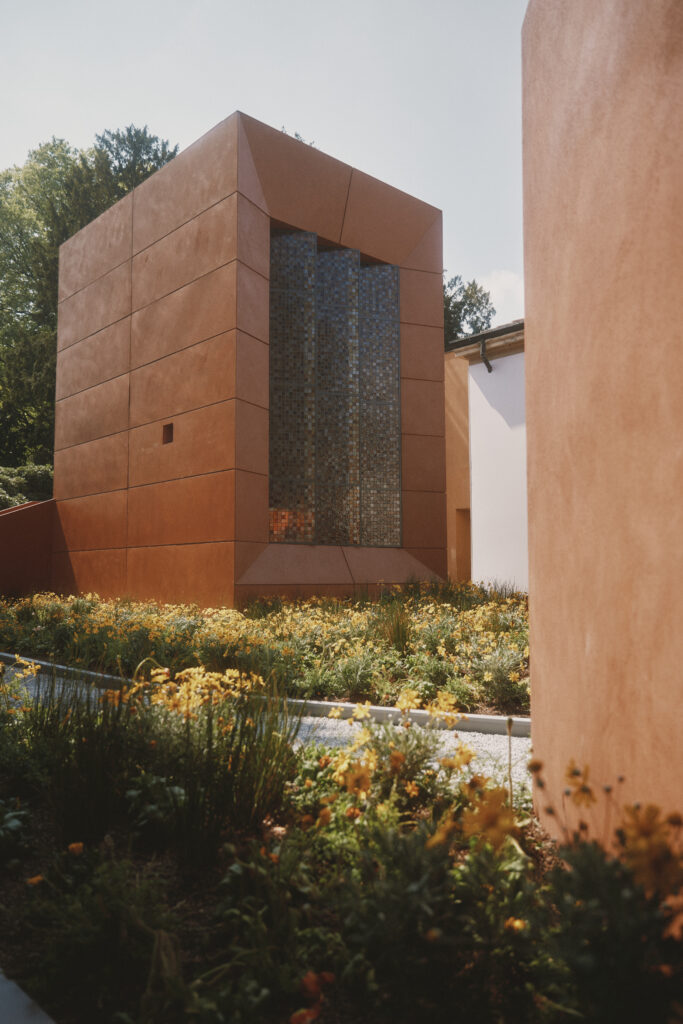
This collaboration produced one of the week’s most talked-about installations: a Brutalist bathhouse set within the courtyard of the historic Padiglione d’Arte Contemporanea, equal parts sacred space and product theater. The new copper-clad Reverie tub anchored the raw concrete structure and was surrounded by wildflower meadows and custom pollinator baths that drew bees within minutes of opening. Light filtered through oversized stained-glass windows transformed the functional into the spiritual. Martha Stewart was among those drawn in — which tells you everything about the crowd it attracted and the mood of the space.
The Future Perfect x Volker Haug’s Late Night Dance Party with Honey Dijon
The design gallery, long known for programming that blurs the line between art space and social event, was one of the week’s hardest after-parties to get into, capped by a surprise late-night performance by New York DJ Honey Dijon. Co-hosted alongside Volker Haug.
villa necchi-two lives, one week
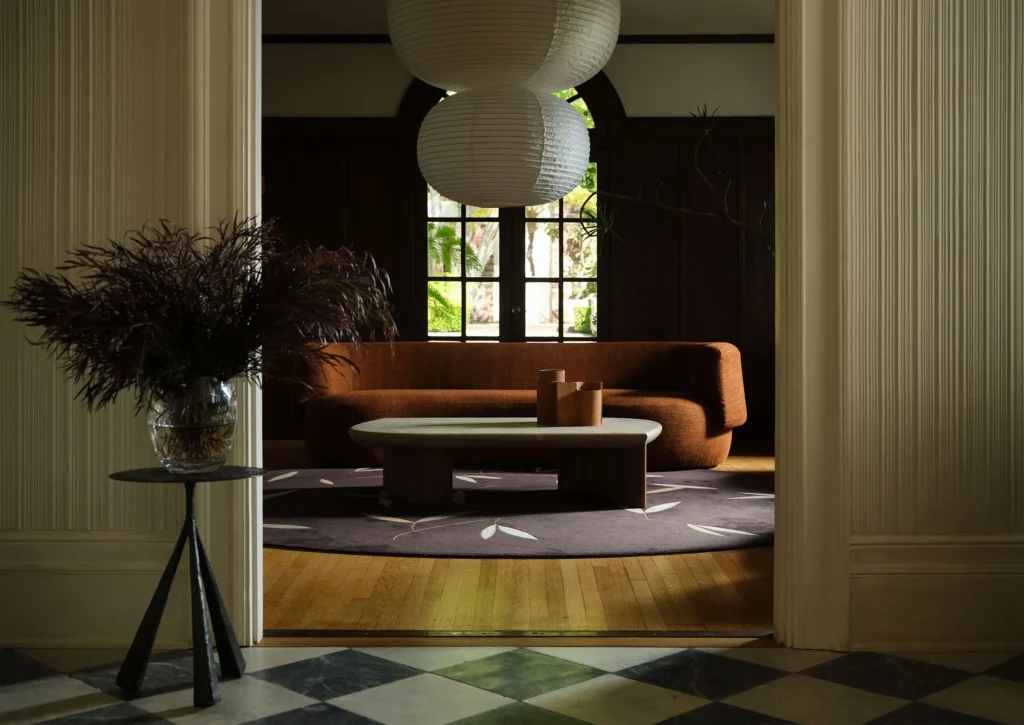
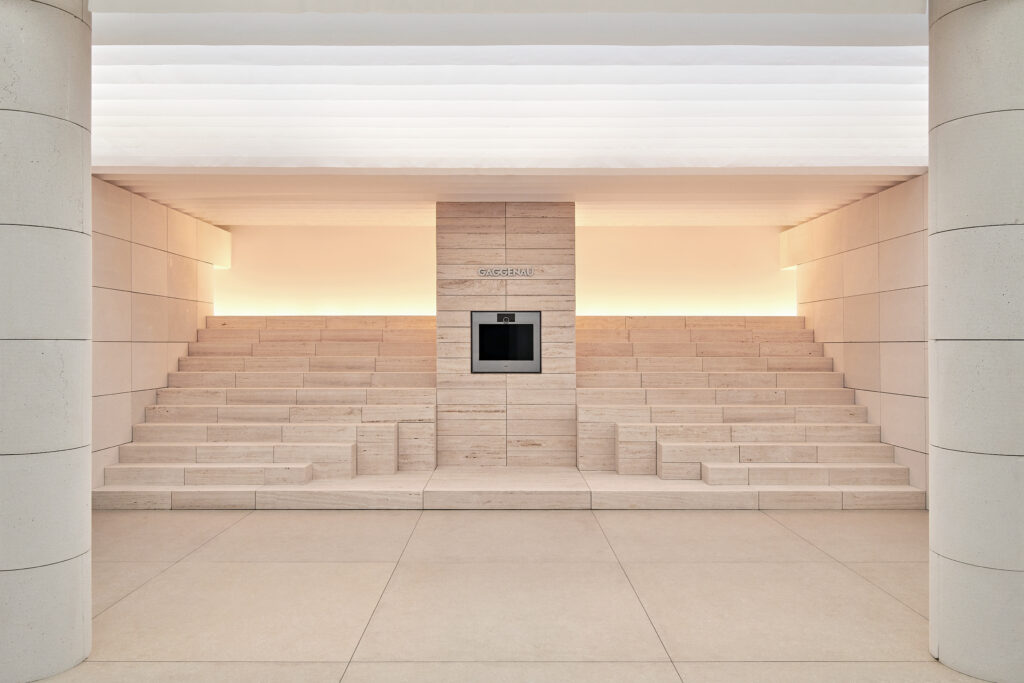
The Piero Portaluppi masterpiece lived a double existence. By day, Gaggenau transformed it into a minimalist installation titled Presence, where appliances entered into quiet dialogue with the villa’s interiors. By night, T Magazine hosted a cinematic opening to Milan Design Week that leaned into the house’s glamour. Two atmospheres, one extraordinary setting.
IMPERFETTOLAB—FIND IT IF YOU CAN
Navigli Canal District, Milan
Hidden in the kind of address that circulates via text message rather than press release, this gallery opening was one of the week’s most rewarding detours. Tucked in a district that has been quietly absorbing creative energy for years, the work spoke with understated confidence — no pageantry required.
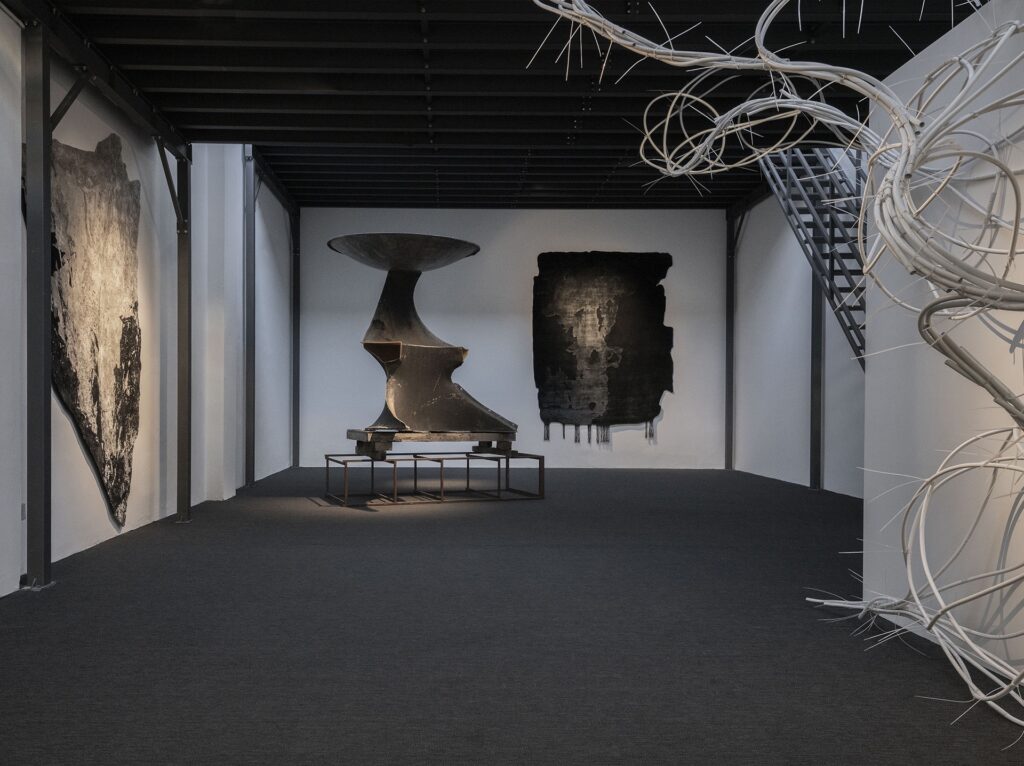
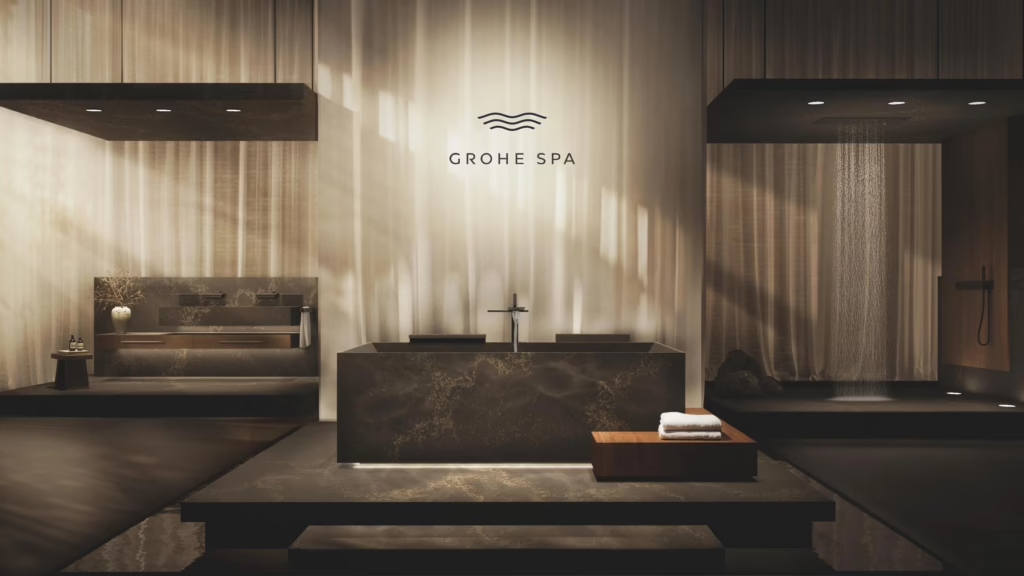
GROHE—A STUDY IN BRAND HOSPITALITY
Grohe’s Fuorisalone pop-up demonstrated how a brand can act as a cultural host rather than an exhibitor. In a week saturated with launches, thoughtful hospitality emerged as the rarest and most persuasive luxury.
Elie Saab — Couture for the Home
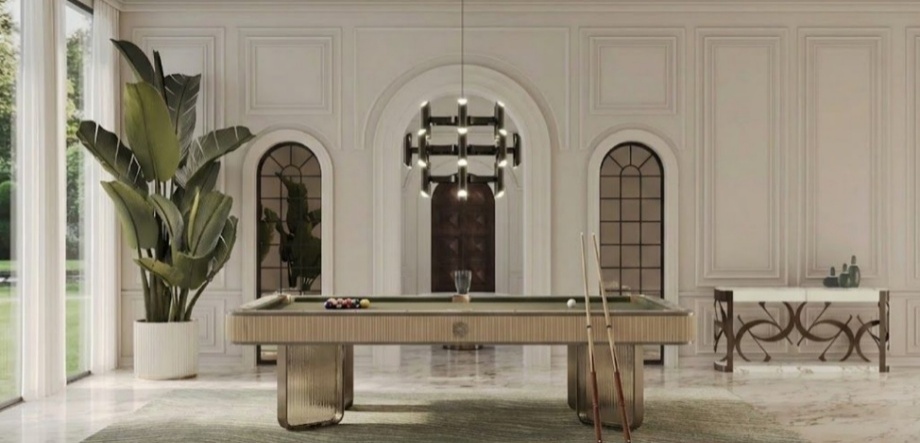
At Via Pietro Mascagni 2, Elie Saab Maison presented its latest furniture and interiors collection as a moody, almost cinematic domestic scene. Conceived under Carlo Colombo, the installation leaned into the atmosphere of a Milan apartment after midnight, where plush surfaces, tailored forms, and precise craftsmanship do most of the talking. The Mascagni Sofa and Onda Armchair anchor the new collection, translating Saab’s couture vocabulary into pieces that feel refined, tactile, and distinctly lived-in.
WHERE TO STAY
CHÂTEAU MONFORT—HOME BASE
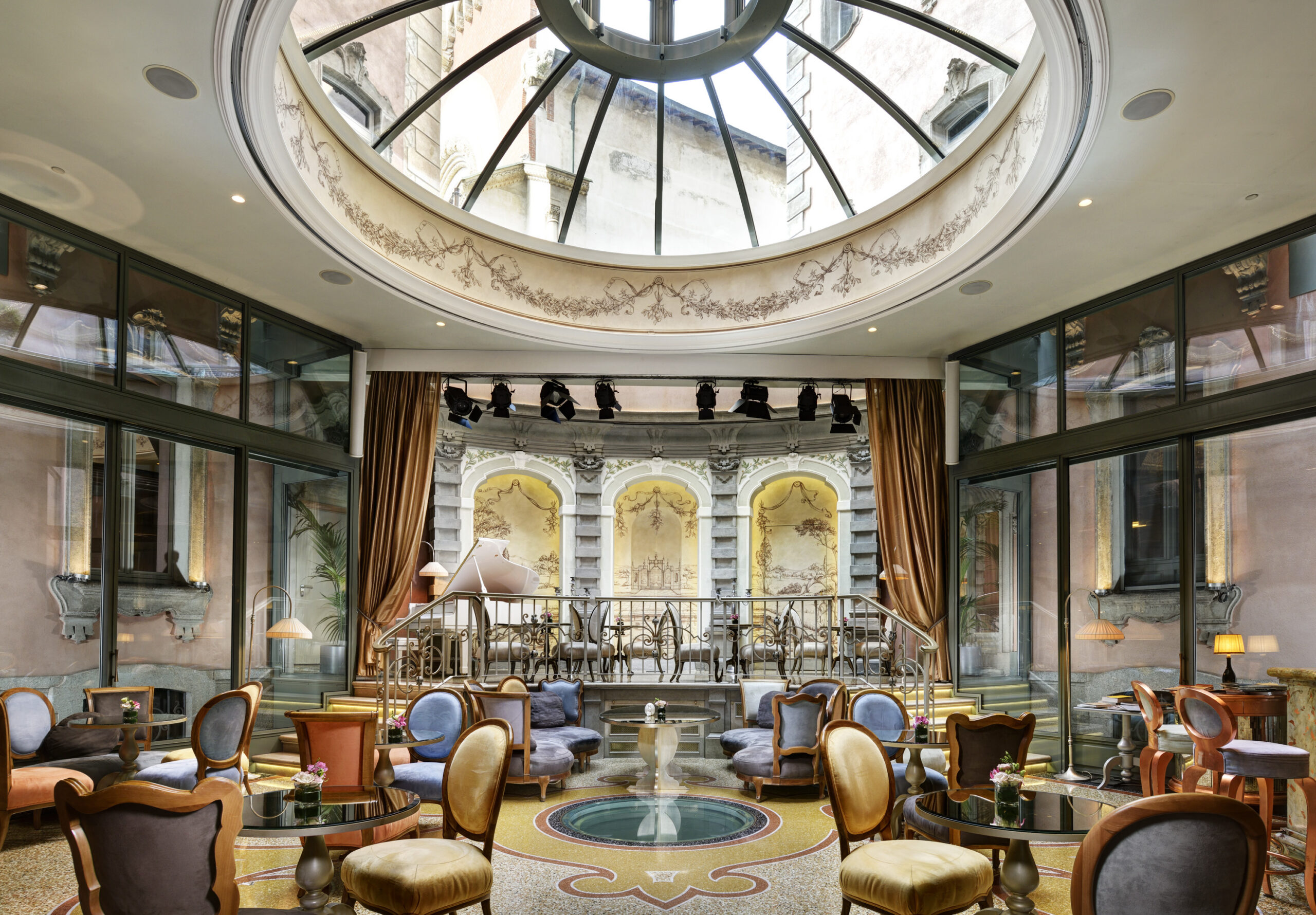
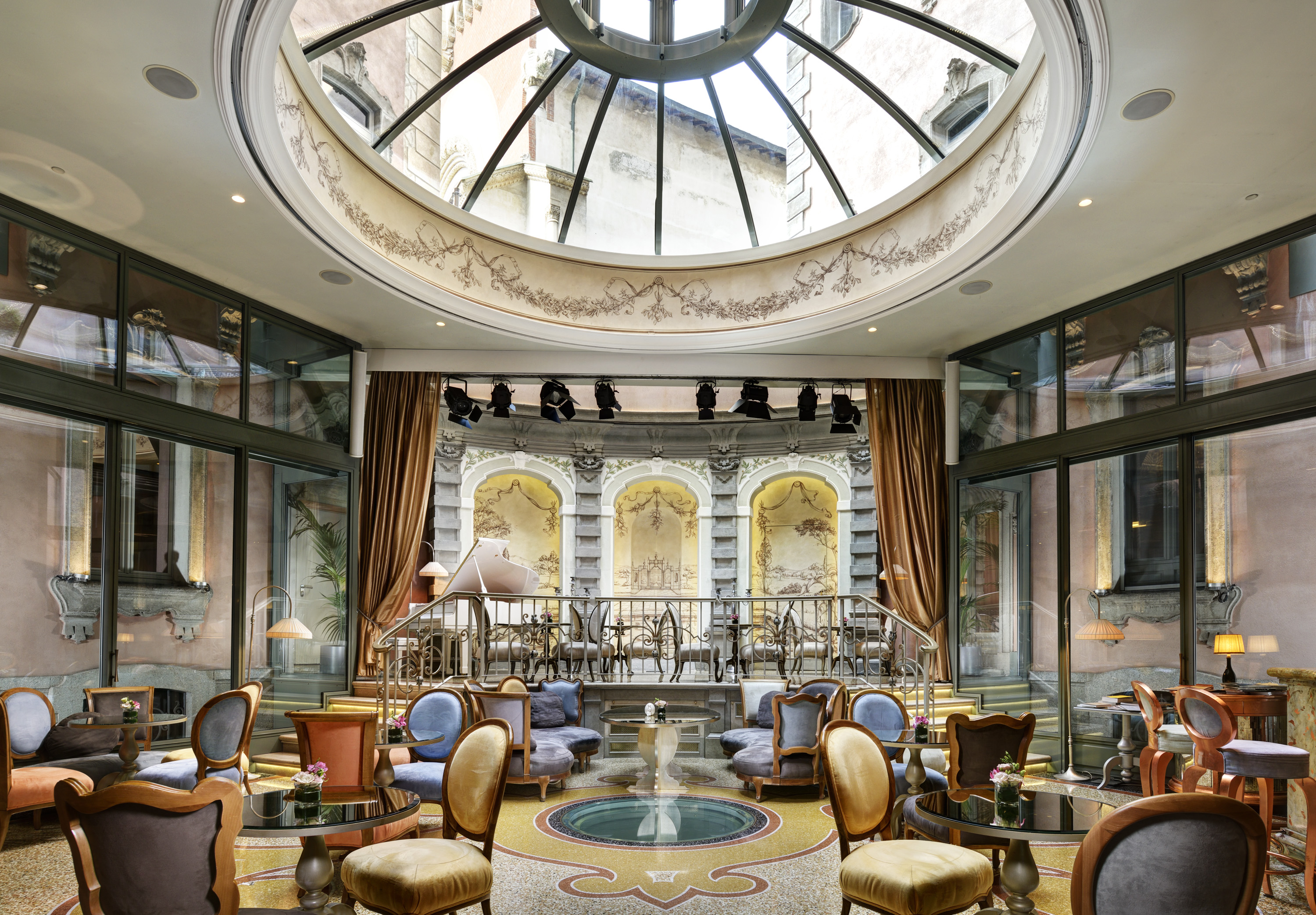
To cover Milan Design Week properly requires a hotel that functions as sanctuary. Château Monfort delivered precisely that. Tucked in the city center, it offers a romantic, theatrical counterpoint to Milan’s often restrained luxury.
The interiors feel curated rather than decorated, with a warmth that makes returning each evening restorative. In a week defined by other people’s visions, it became a welcome space of one’s own.
Together, these worlds — collectible, immersive, accessible — map a new definition of luxury: one that lives not just on the body, but fully, and deliberately, in the space around it. Milan Design Week’s great achievement is making that shift feel not theoretical, but already lived.
Discover More