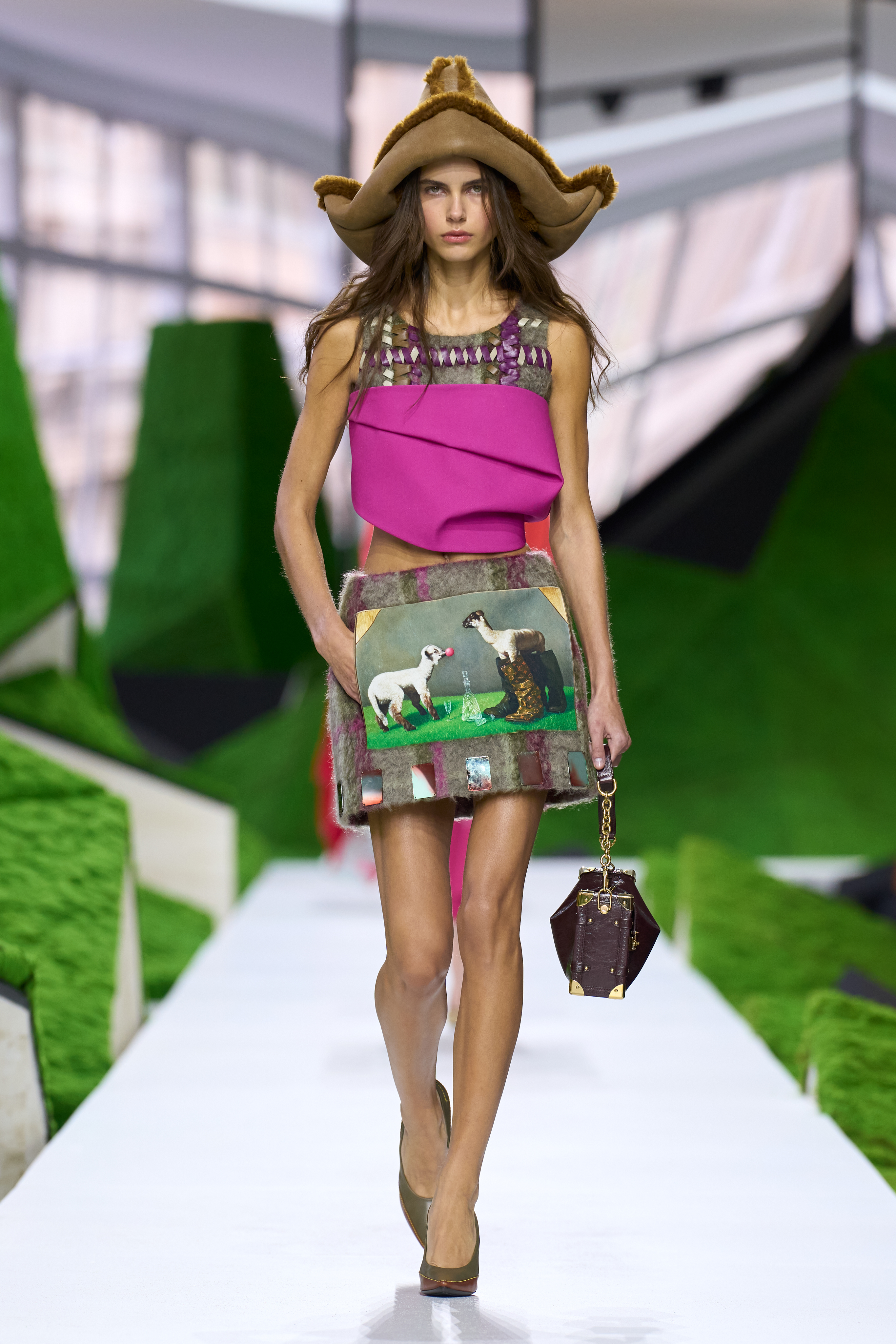
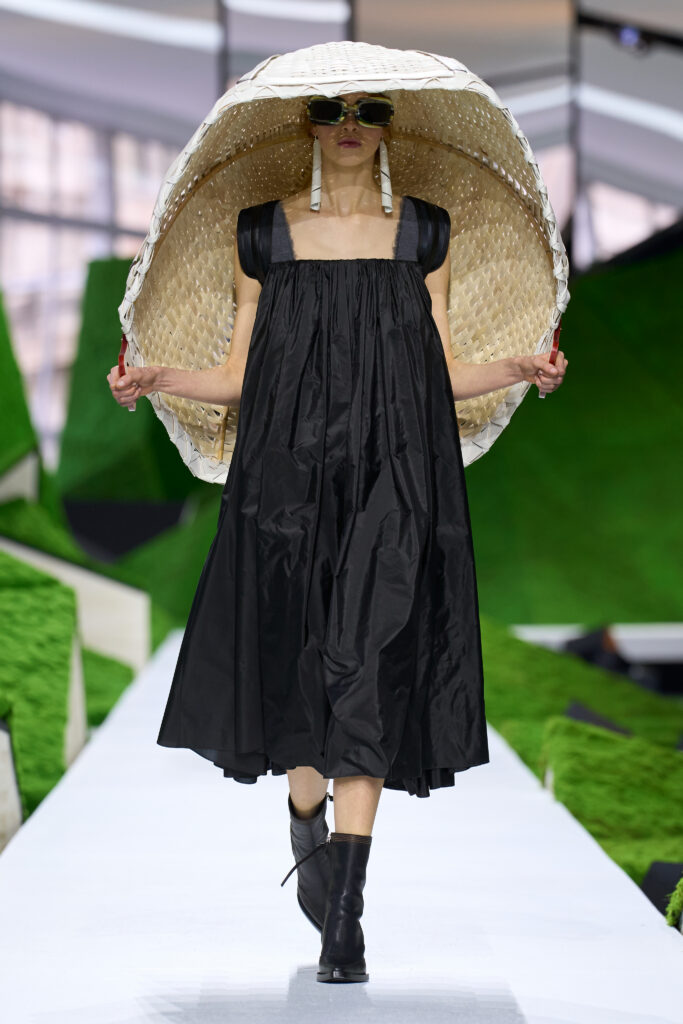
For the Louis Vuitton Fall/Winter 2026 Collection, Nicolas Ghesquière brought to life what the maison called “Super Nature.” The collection imagined clothing shaped by landscapes, climates, and the instinctive relationship between the human body and the natural world. Staged in the Cour Carrée of the Louvre, the show unfolded within an abstract landscape designed by production designer Jeremy Hindle. The set transformed the space into a futuristic pastoral environment where natural imagery was filtered through a science-fiction lens. Within this setting, the movement of the models became part of the narrative. Their progression across the space resembled a journey through terrain, turning the runway into a “living pastoral painting.”

Historically, garments evolved in response to climate and landscape, and in this collection, those practical origins became a source of aesthetic language. This relationship between environment and clothing recalled traditional dress, where garments reflected local histories and ways of living. Yet Ghesquière reframed this concept by proposing a “new folklore for the future,” where references to landscape and tradition were filtered through contemporary design and digital culture.
Courtesy of Louis Vuitton


Courtesy of Louis Vuitton
In this way, material became the primary tool through which this engagement with nature unfolded. Fabrics and surfaces were adorned with animalier patterns reinterpreted across canvas and denim. Likewise, leather flowers were taken as recurring decorative forms. Taken together, the collection brought together diverse textures and references within a single garment. Through this layering, clothing began to map the body the way terrain maps the earth.
Central to the collection was the concept of “hyper-craft.” Here, traditional savoir-faire was combined with contemporary techniques to create materials that evoked the natural world while remaining artificial. Three-dimensional printing and resin techniques produced buttons that resembled minerals and heels shaped like antlers. While leather was treated to mimic the surface of wood, and vegetal furs added new tactile textures.
One of the most notable returns in the collection was the Noé bag, presented in its original 1932 proportions and color. Furthermore, a reinterpretation of a Man Ray-inspired modernist parure appeared through earrings, rings, and necklaces studded with the nail heads of Louis Vuitton trunks. These pieces transformed the brand’s iconic travel hardware into ornamental language, carrying fragments of the past into the present.


Courtesy of Louis Vuitton
Discover More
