At Frieze, A Legendary New York Art Restaurant Gets a New Life
Once a hangout for Warhol and Basquiat, Antoni Miralda and Montse Guillén created an iconic immersive art experience
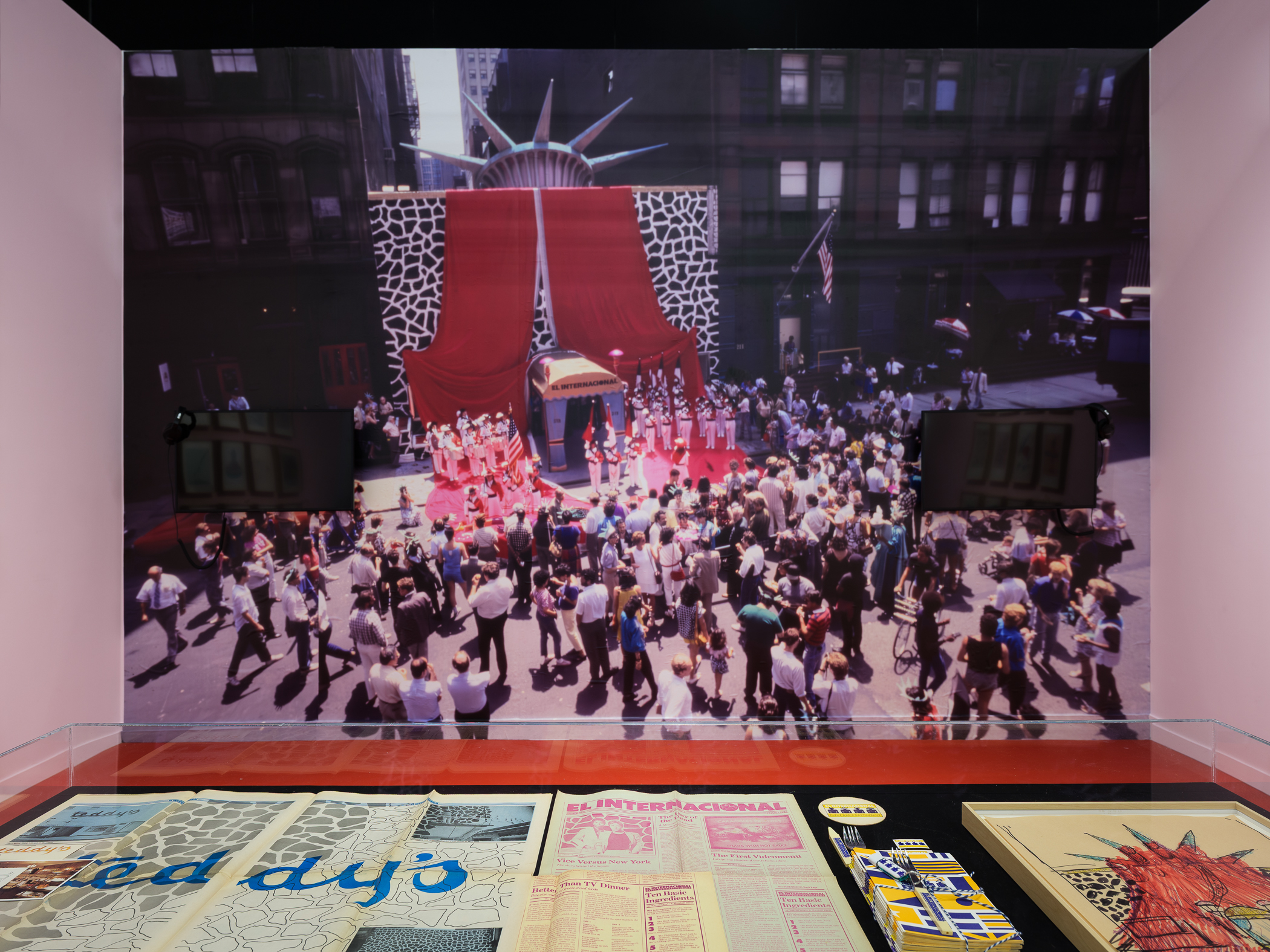
Nestled in the Galerie Champ Lacombe booth at the Frieze Art Fair sits a vibrant recollection of 1980s New York in all of its grit, glory, and… mosaic tile. Blown up on one of the walls is an exterior shot of El Internacional, a two-year long art project that took the form of a working restaurant, with its black and white mosaic exterior, giant Statue of Liberty crown, and yellow awnings. It was designed by artist Antoni Miralda and featured food by his then-partner, Chef Montse Guillén, who made it one of the first tapas restaurants in America. In its short time, El Internacional became a vibrant downtown destination that drew the likes of Jean-Michel Basquiat, David Byrne, Julian Schnabel, and Andy Warhol.
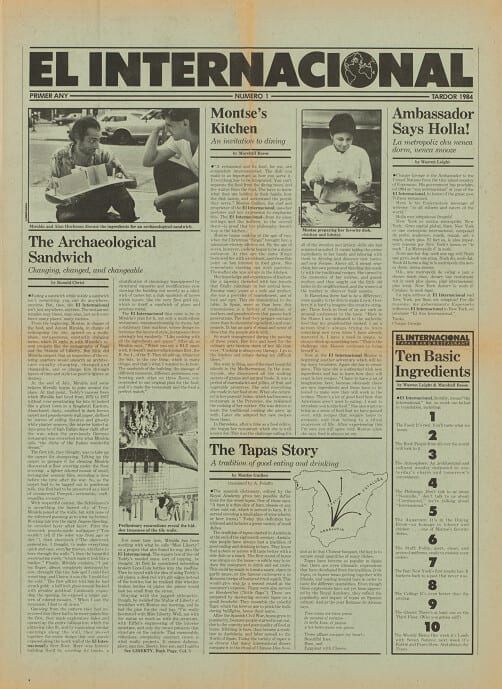
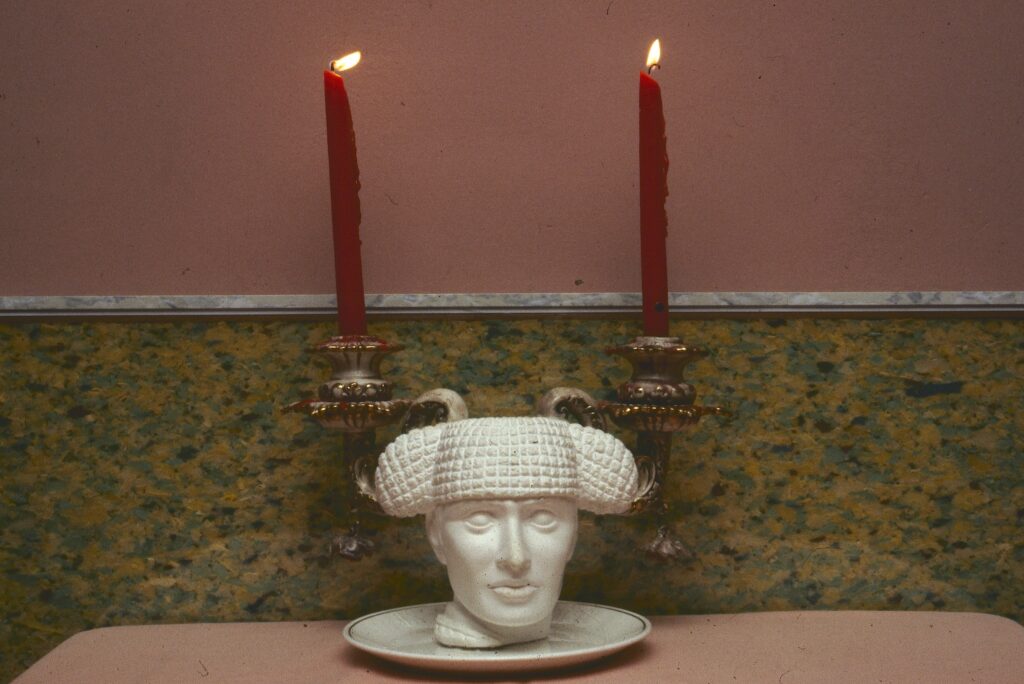
Each element of El Internacional’s design was specifically chosen by Miralda, from its vivacious exterior to the installations that became dining rooms, with sculpture in the walls, in the windows, in display cases, and even the floors. The crown was added later when the Statue of Liberty was being repaired, Miralda said, so people could still see it for photos. Graphic design also became a huge part of the restaurant through its geometric yellow and blue menu, coasters, and even forks that became pens once separated from their tines, not to mention a newspaper printed in bold hues. Miralda embedded smashed soda cans in the sidewalk in front of the restaurant and later coated the whole thing in a layer of turquoise paint; the nearby fire hydrant followed soon after. Candelabra hung from the ceiling. Tablecloths were plastic and fruity by the bar, tan and ruffled in the dining room. Walls were painted in colorful and quirky pairings. During construction, the discovery of an elegantly tiled bar underneath the restaurant dating back to the 1920s became a space of ivory banquettes and pale blue tablecloths. Their video menus–“video tapas,” like video tapes–also became some of the first ever in use. e
Miralda, now in his eighties, is on site at the fair, with a pale purple trench coat, matching glasses, and an impish laugh. He arrived in New York in the 1970s after moving to Paris, seeking freedom from the dictatorship that had taken over his native Spain in the 1960s. He speaks in an accent inflected with both French and Spanish.
Before El Internacional, Miralda’s work as an artist had already incorporated the relationship between food and ritual. Artworks like 1977’s Breadline featured loaves upon loaves of Miralda’s “Coloured Bread” stacked in a line–by the Kilgore College Rangerettes, the university’s famed cheerleaders–running through a gallery at the Contemporary Arts Museum Houston. In some ways El Internacional was a logical extension of illustrating the relationship between food, ritual, and culture, he says when we speak at Frieze: “I think eating is exactly [the relationship between food and art] that links art and culture because [of] what you’re eating, where it comes from, what you are not eating, what you can’t eat, what they make you eat, so a restaurant is just the most ceremonial or ritual setup.” The idea with El Internacional was that if he placed “different stimuli inside [the restaurant], then people will understand food is connected to everything. It isn’t just about the stomach, it’s about life, it’s about rituals, it’s culture,” he continued. “For this, the idea of having so much information on the menus, to have the newspaper, to also have a few objects that made people link and understand that this is not a restaurant, it was something else.”
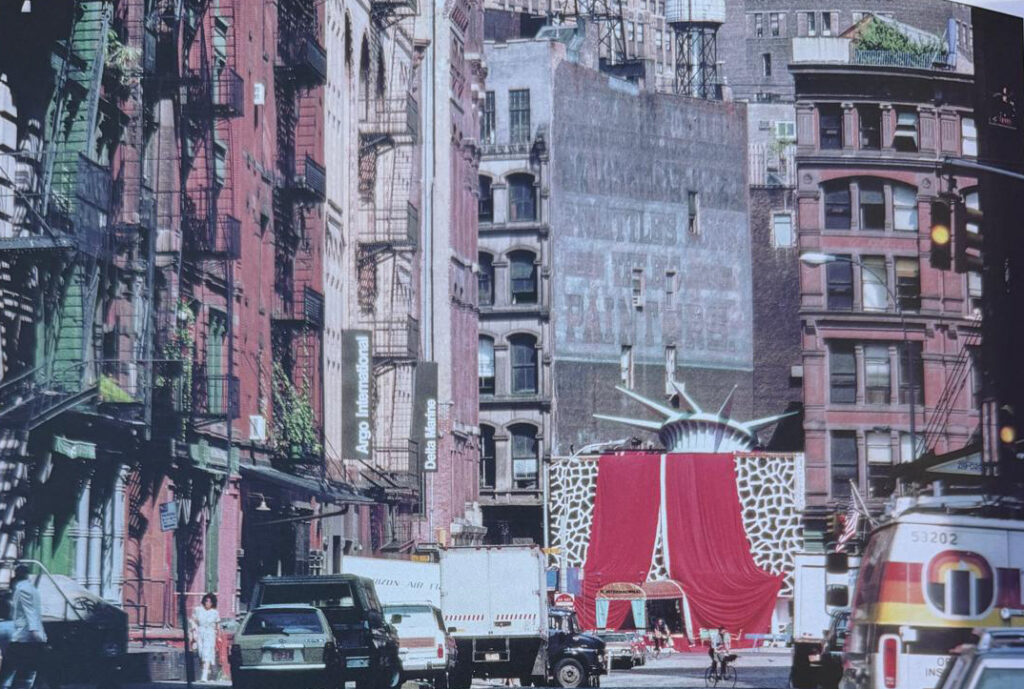
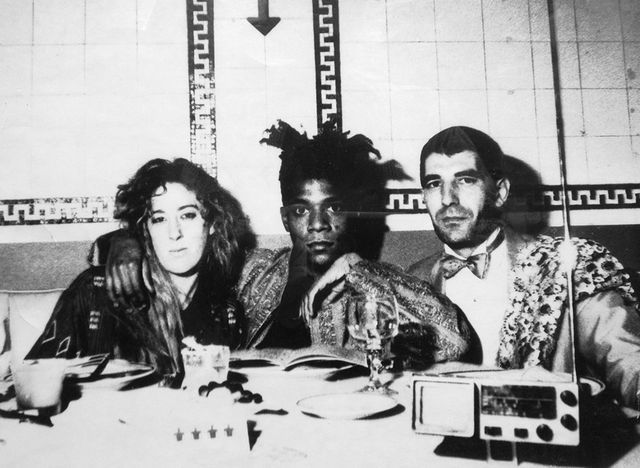
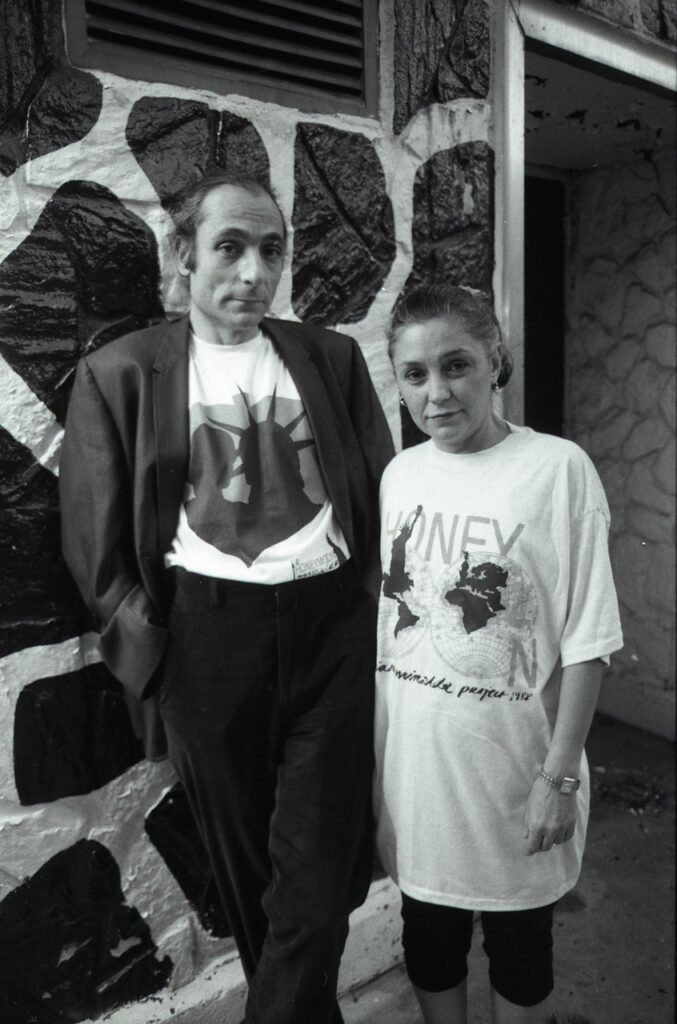
The location helped make the connection. El Internacional was located at 219 West Broadway at Franklin Street in what’s now known as TriBeCa. It had previously been a restaurant called Teddy’s, first a German restaurant, then a steakhouse supposedly frequented by the mob, that had been open since the 1920s–hence that aforementioned bar. A gritty industrial neighborhood, TriBeCa had been embraced by artists who were moving in to make the neighborhood their own. Miralda was among them, as were his customers. Upon the restaurant’s opening, The New York Times described the crowd as “a colorful mixture of artsy downtown types with severely mowed hair and provocative outfits, young professionals delighted at having fallen into one of Manhattan’s newest hot spots and a good number of homesick Spaniards who sit at the counter and banter with the Catalan barmaids.” It became hot, and quickly, especially as Miralda himself noticed crowds of people in bold patterns coming in. “People came because they thought this was an experience more than a restaurant,” he said. “The whole thing was just an intention of making art close to people.”
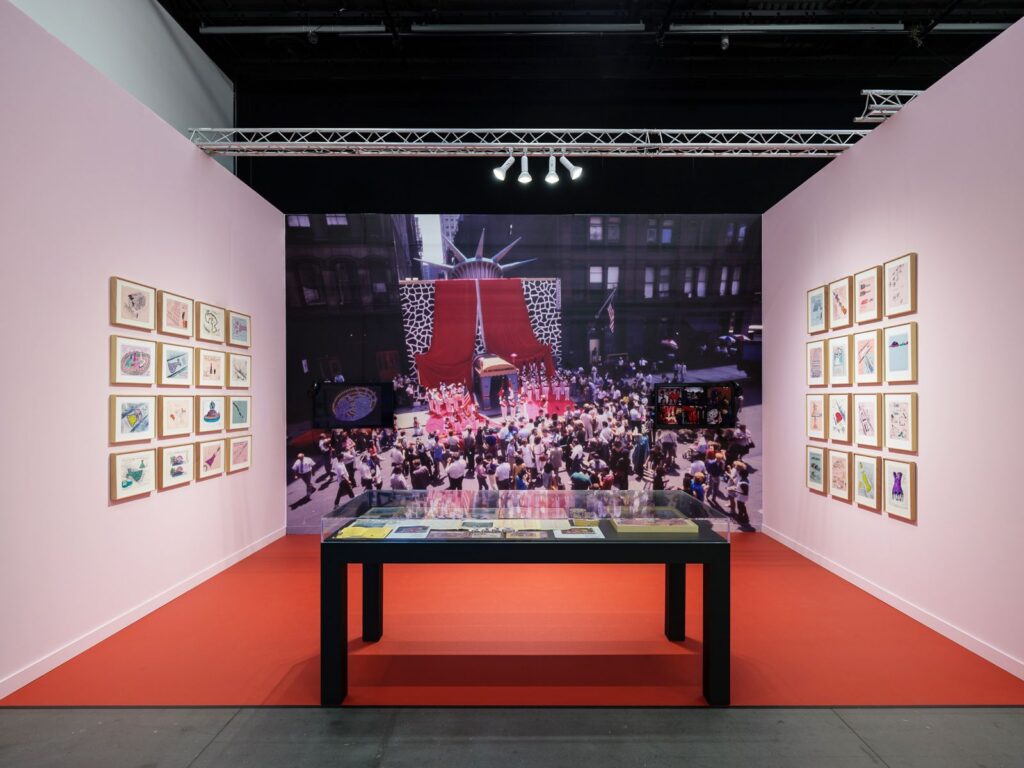
But it was always an experience, a project, that was supposed to end. Miralda was, and remains, unsentimental, he says: “In two years and three months that’s enough, move on to another project.” Some of the restaurant items went with him–some of which were displayed at Frieze, like the menus, newspapers, forks, napkins, and drawings of the Statue of Liberty crowns–and some stayed as it became another restaurant.
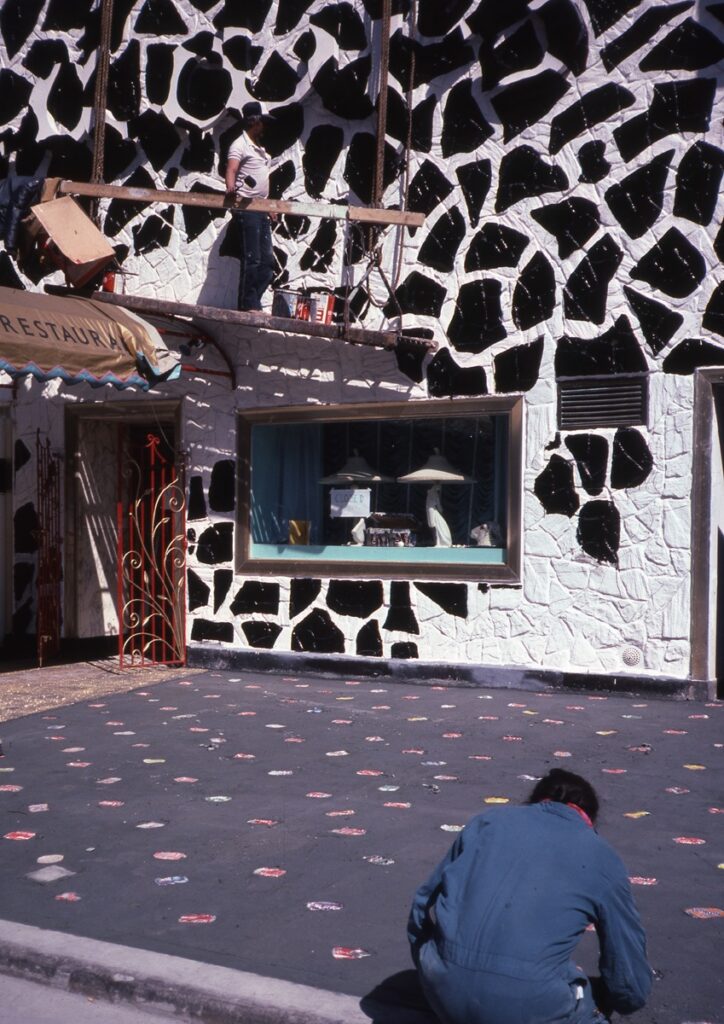
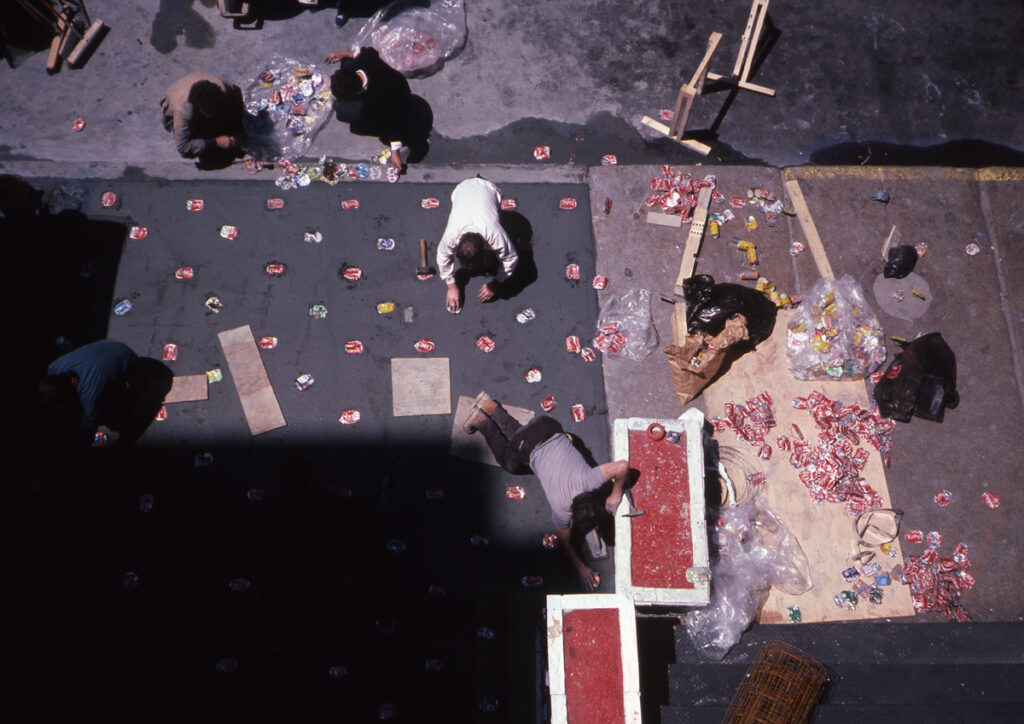
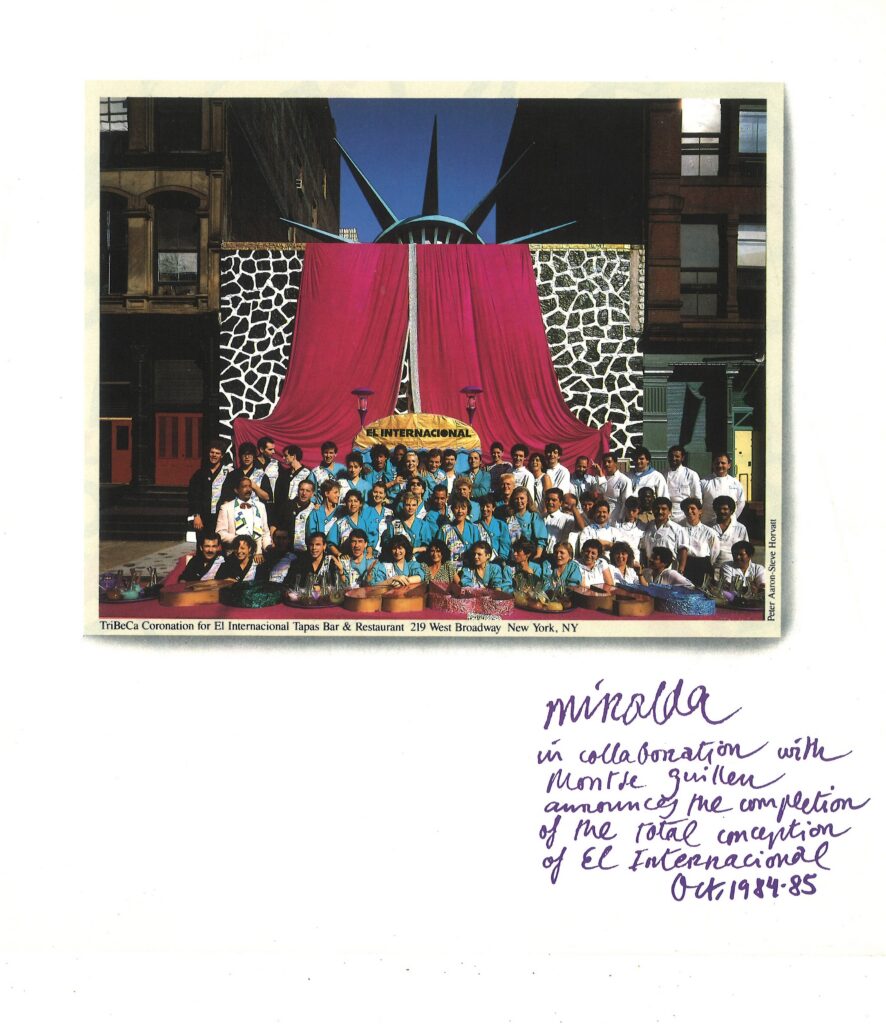
While little, if anything, of the El Internacional building remains–even the restaurant that it became was razed some twenty years ago–El Internacional’s legacy continues. Champ Lacombe owner Lucy Chadwick believes Miralda is an artist at the forefront of making such extensively immersive environments. “The legacy is, I would hope, in showing the power of the experimental in its truest form. It shows what is possible when constraints are removed and imagination is given the space it deserves,” she said.
So here, at the Champ Lacombe booth during the Frieze Art Fair, people are able to learn a little more. They peer into the clear vitrine at the restaurant’s ephemera, stand in front of the giant photograph of the building’s bold exterior, and look at drawings of that giant Statue of Liberty crown. It’s not the same as being there, and nothing will be, but it’s a start to understanding El Internacional in all of the design, delirium, and deliciousness Miralda and Guillén created.
Discover More