V161: Avant Angel
Nick Knight and Yu-Chi Lyra Kuo’s Couture Fantasy
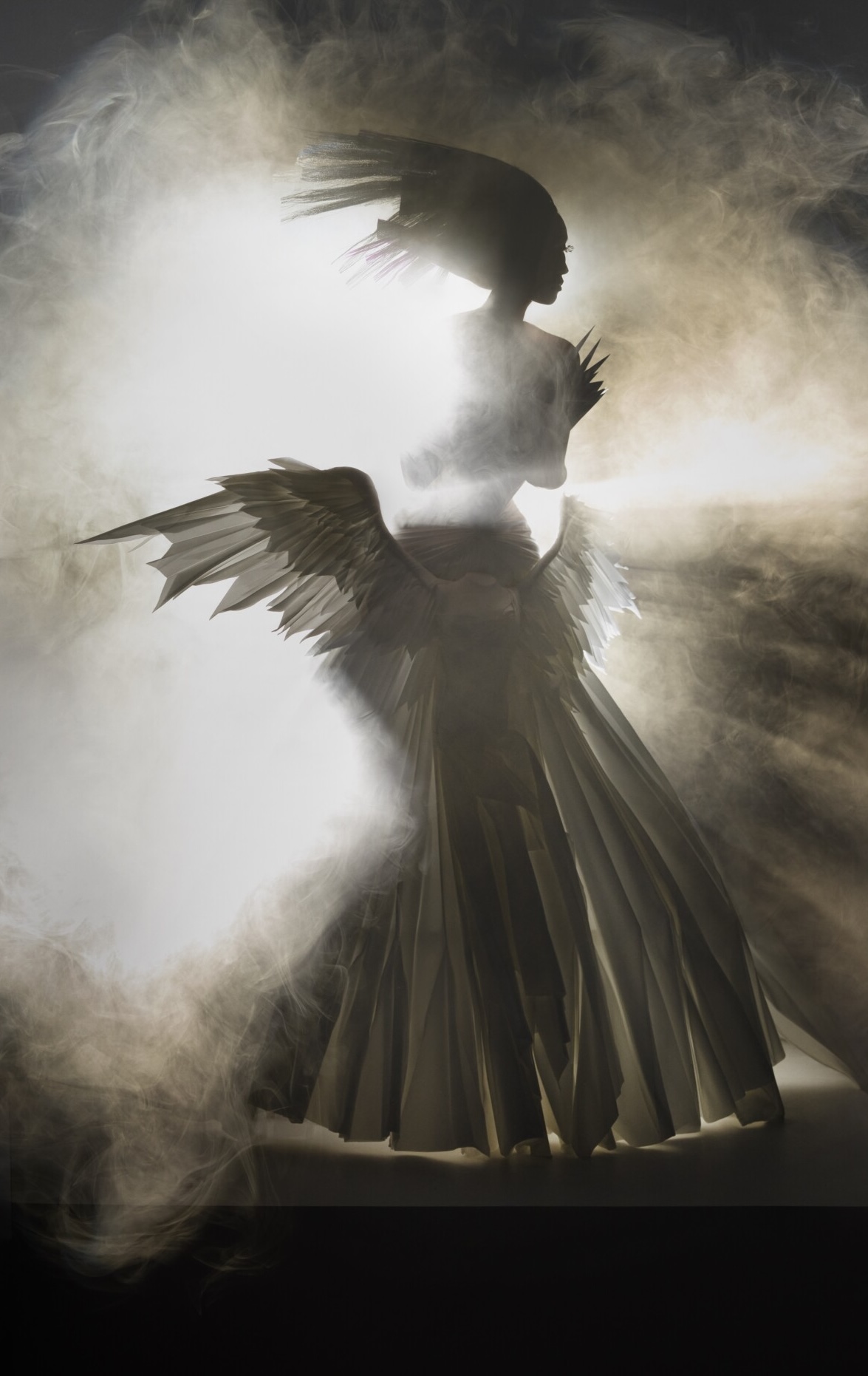
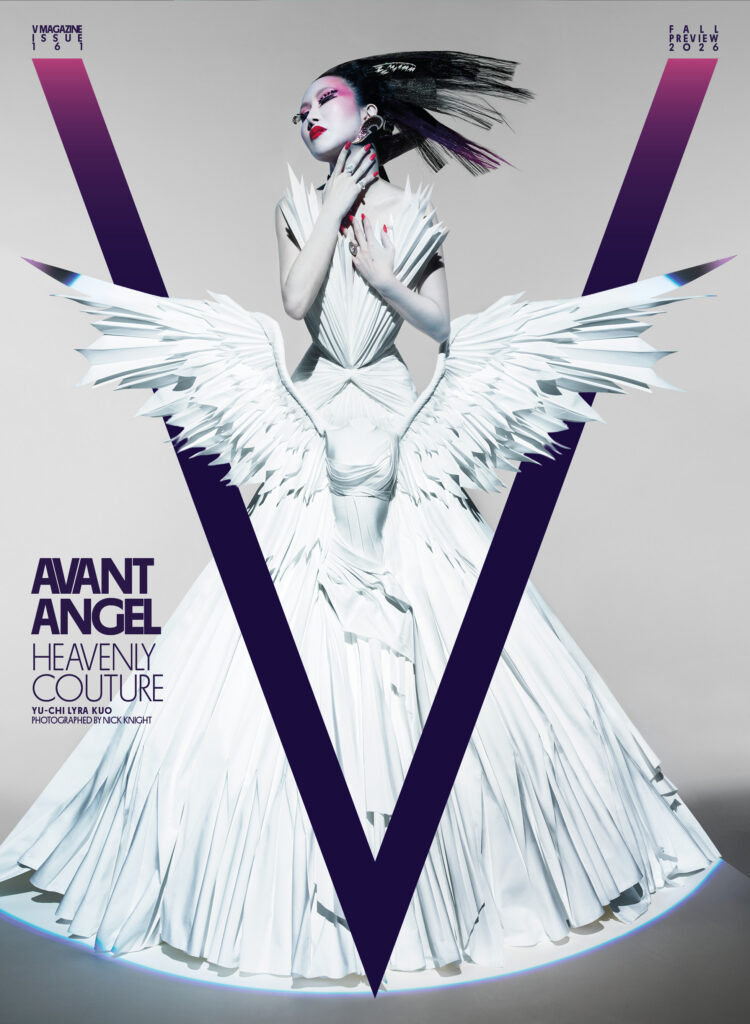
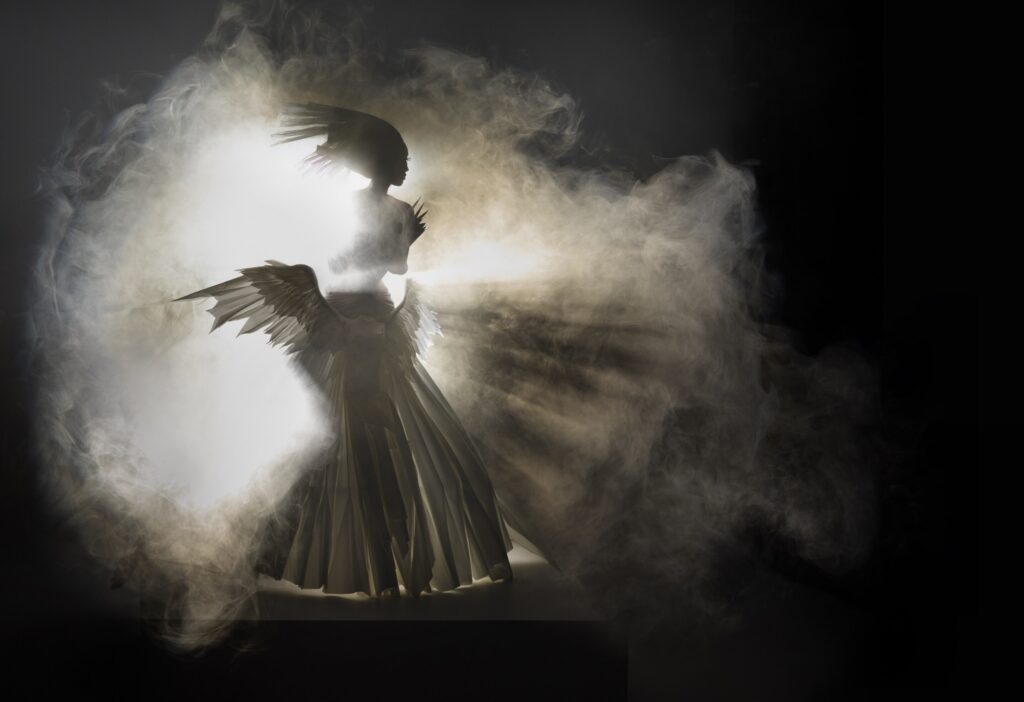
Yu-Chi Lyra Kuo possesses a rare capacity to inhabit entirely different worlds. She was, among other things, a classical pianist. So when it came time to envision and orchestrate her Met Gala dress, it felt only natural that one key element would be piano string—more than 43 yards of steel boning and piano wire threaded through the gown’s elaborate origami folds to hold them in ethereal suspension. That gown, a custom Jean Paul Gaultier haute couture masterpiece, required more than 900 hours in the atelier and incorporated 142 yards of cotton poplin pleated and custom-developed in an origami technique by Chanel’s Les Ateliers Lognon. It is what Kuo wore to the steps of the Metropolitan Museum of Art for the 2026 Met Gala, where the dress code was “Fashion Is Art.” And in one of the rare instances in Met Gala history, the woman in the dress had not only worn the piece but designed it herself, collaborating intimately with the fashion house and artisans behind it and erasing the usual dissonance between the body in the couture and the minds that created it.
The tech world has never been short of visionaries, but it has seldom produced someone who moves as fluidly through technology, creativity, and artistry—including the hard-to-please world of high fashion—as Kuo. While her peers are celebrated predominantly for disruption and feats of engineering (she has had no shortage of her own, having also become one of the most important names in frontier tech and new media art), Kuo brings something the industry doesn’t often prioritize: aesthetic taste, an increasingly scarce and powerful resource in a world where AI can generate nearly anything, and a deeply intrinsic understanding of the creative sphere. The dress is just one example of her finding beauty in many places. “I’ve spent a lot of my life up in the clouds thinking about the pure beauty of philosophy, in unexpected places like number theory and pure math,” says Kuo, who comes from a long line of academics and entrepreneurs in Taiwan. “Fashion and art bring me down to earth to find beauty in embodied things. It grounds me and orients me as a human.”
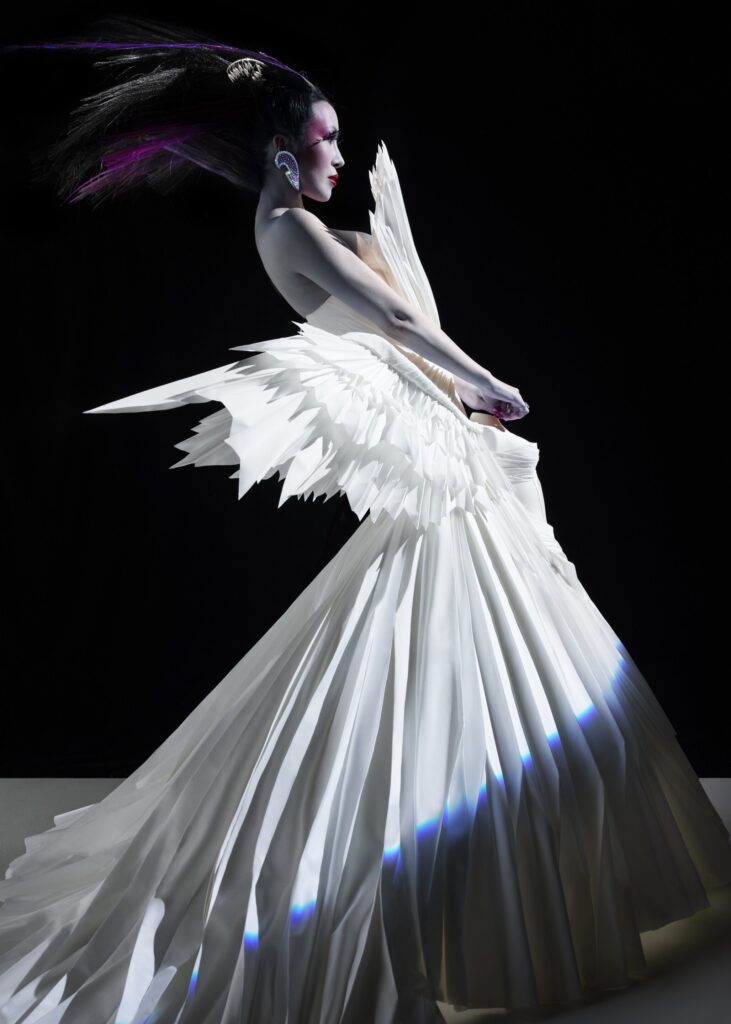
Deeply inspired by John Galliano’s Madame Butterfly collection since she was a young student, Kuo sought advice from the legendary designer to learn more about the craft of making origami-inspired haute couture. “He remembered details from 20 years ago about draping rigid origami to allow for graceful movement like it was yesterday,” she notes. That tension between rigidity and grace found its ultimate anchor in the Winged Victory of Samothrace—the ancient Greek goddess of triumph chosen to sit at the dress’s sculptural heart. “I specifically picked Winged Victory because it is a symbol of feminine strength that also guards the Louvre,” Kuo explains. “As the Costume Institute debuted its first permanent galleries inside the Met this year, I wanted to honor that moment on opening night. It’s about the importance of presenting fashion as art and preserving it within these institutions.”
What makes the collaboration singular is not just the dress but the relationships behind it. Kuo speaks of the Jean Paul Gaultier atelier with the affection of a family member rather than a client, describing the team as “an extraordinarily talented team that blends top craftsmanship with a high standard of efficiency, all the while never taking themselves too seriously. They are fun. They are irreverent, and they are deeply joyful.”
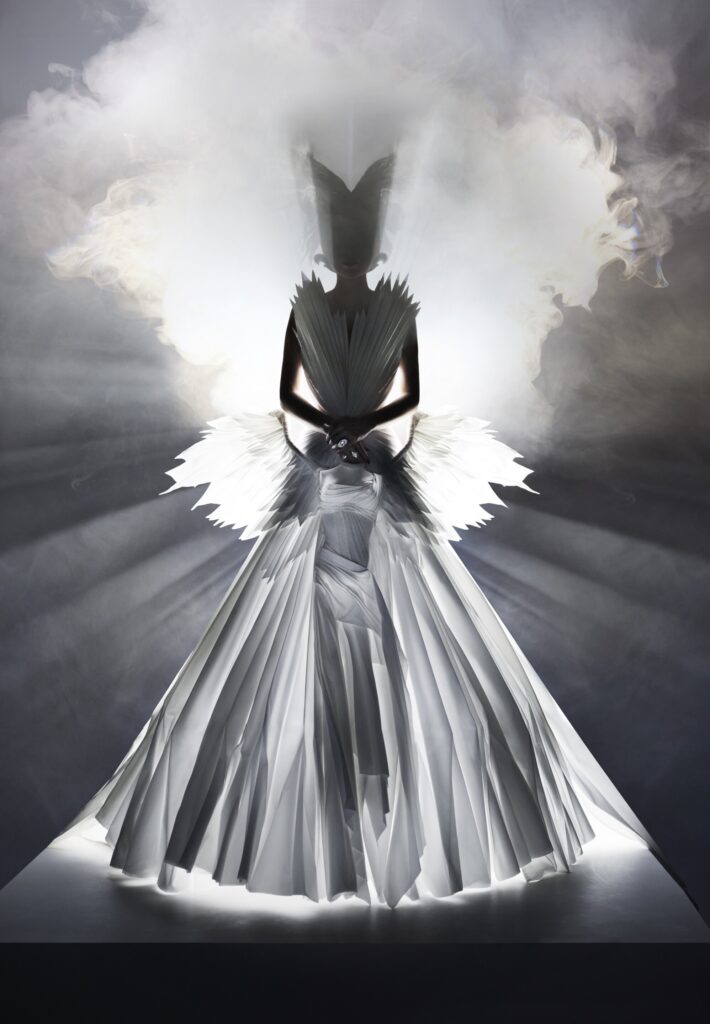
Shot for a creative collaboration between Kuo and legendary photographer Nick Knight, these images mark the closing of a circle that began when Kuo first encountered his work in the early 2000s. “Nick was creating the world’s first examples of digital fashion, long before there were machines capable of dreaming it,” she says. “He invented the category that the best generative AI and digital-native artists are reaching for in fashion imagery today—and he’s still, by far, the best.”
The experience of seeing his work for the first time left an impression she has never forgotten. For the shoot, she stood in a corset and 20cm heels for ten hours without moving. “Because I understood his style and the flavor of his vision based on his decades of image-making,” she explains, “I felt like I was stepping into a world that was deeply familiar to me.”
Knight, for his part, saw the shoot as more than just a portrait session. “This series of images felt both important and exhilarating to create. Yu-Chi has the sensitivity, culture, intellect, and courage to dare to offer a new vision for the 21st century.
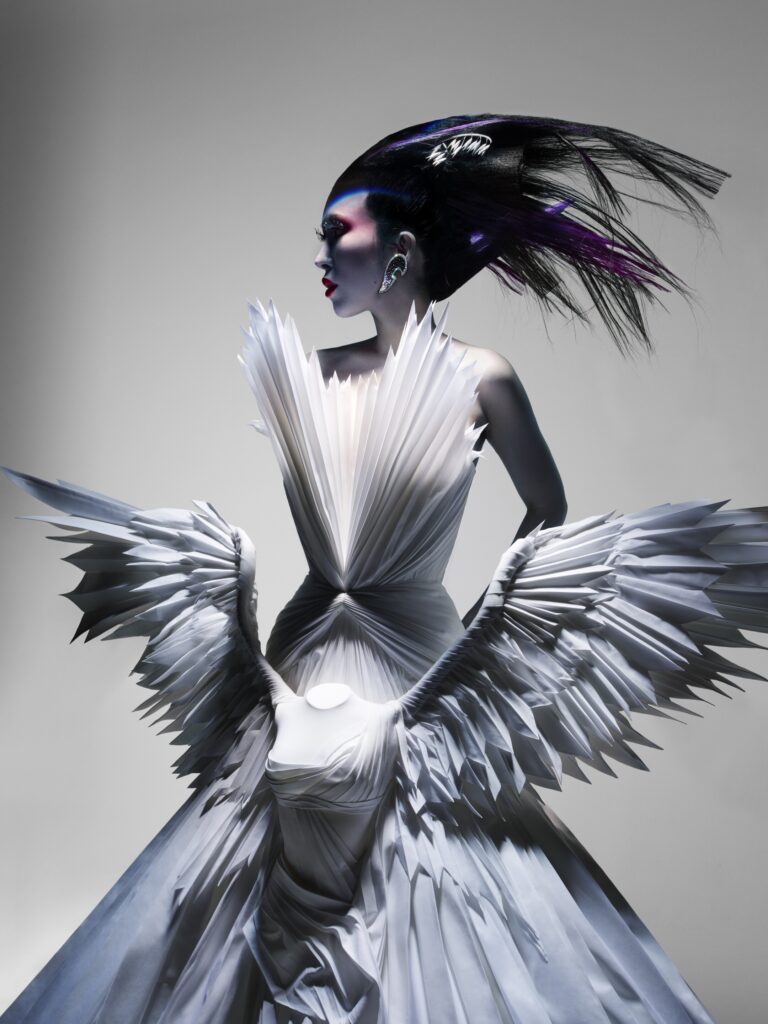
“We cannot keep looking backwards with rose-tinted glasses and revisiting the ideas that formed the last century,” he continues. “This is a new era, and we need to take joy in the conviction that we will create a brilliant future. We need to be brave.”
The dress he photographed has, in its way, a chronology that mirrors what happened to the Winged Victory herself—unearthed in fragments on a remote Greek island in 1863, seen first only by the few hands that pulled her from the earth before Paris reassembled her wings and gave her to the public. The dress had its own version of that moment: known first only to Kuo as a dream, then the atelier, the artisans, Knight’s lens—and then, under the flash of hundreds of red carpet cameras, the world.
Photography Nick Knight
Makeup Petro Petrohilos (Streeters)
Hair Franco Gobbi (Streeters)
Nails Adam Slee (Streeters)
Set Design Andrew Tomlinson (Streeters)
Photo Assistants Lara Sugar Hughes, Gil Warner, Jed Barnes
Photo Intern Oldnightkid Wang
Digital Operator Joe Colley
Retouching Epilogue
Production Liberte Productions
Special thanks John Galliano, Mouna Ayoub, Casey Curran, Franck Duquenne (Haute Couture Director, Jean Paul Gaultier)
Discover More