Behind the Scenes of ‘Your Fault: London’ with Charlotte Fassler and Dani Girdwood
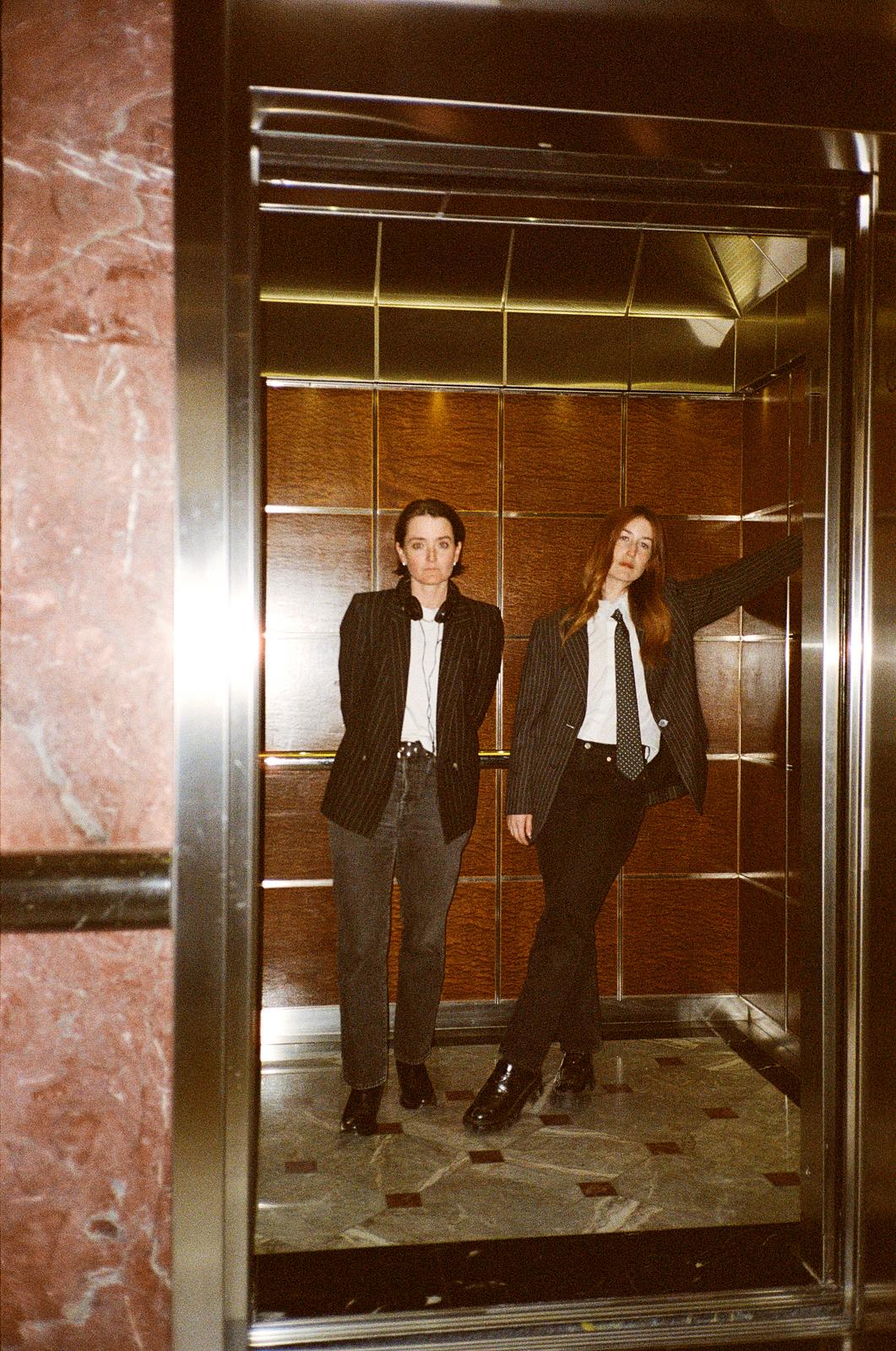
The women behind Prime Video’s international hit return with the trilogy’s second chapter and open up about distance, desire, and letting their actors take the wheel
It’s been a year since Noah and Nick stopped hiding from their families. Now they have to survive everything else. Now, Noah (Asha Banks) is 18 and away at Oxford for the first time, figuring out who she is, while Nick (Matthew Broome) is stuck behind a desk at his father’s company in Canary Wharf, trying to become someone he’s not sure he wants to be. The thing that was supposed to tear them apart, being step-siblings, never did. What might is just… life.
Directed once again by British filmmaking duo Charlotte Fassler and Dani Girdwood, Your Fault: London had its world premiere in Leicester Square on June 11 before launching globally on Prime Video on June 17. The pair are following the strength of My Fault: London, which last February became one of Prime Video’s most-watched international original films, hitting #1 in 103 countries and racking up 2.2 billion TikTok views within 60 days of release.
Below, Fassler and Girdwood talk through building Noah and Nick’s separate emotional worlds, staying faithful to the female gaze, and letting Asha Banks and Matthew Broome rewrite one of the film’s most talked-about scenes themselves.
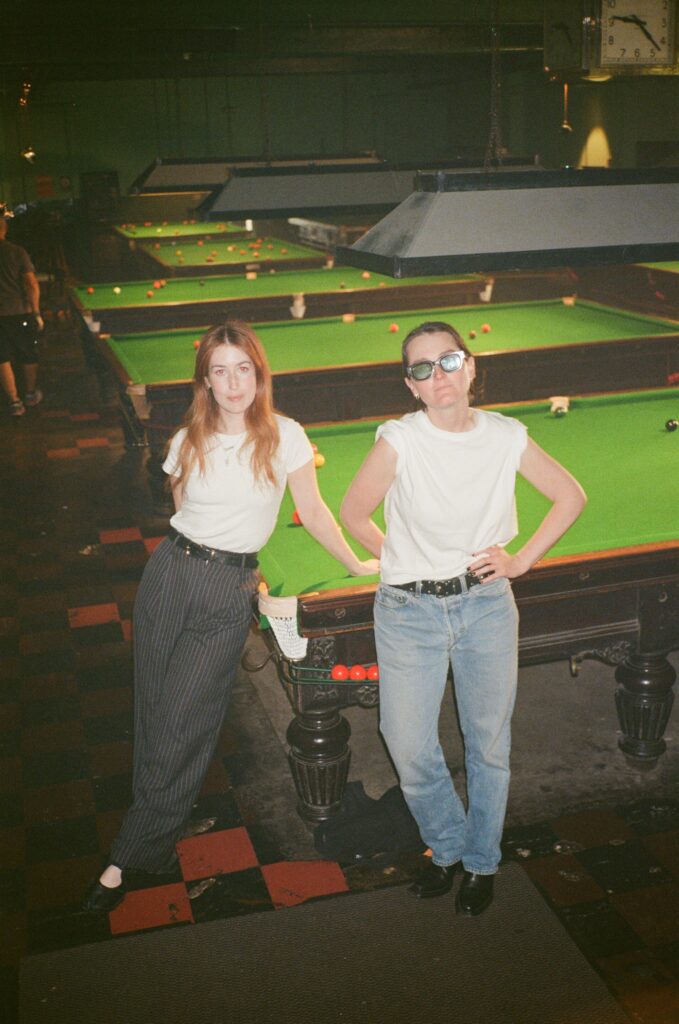
V: Women are so often sexualized or shot for the male gaze. How does having two women directing this material change what the camera lingers on, and what it chooses not to sexualize or exploit?
CF: We love this question, honestly — it’s one of the layers we’re most proud of in these movies. For us, the female gaze was never about avoiding sexuality. It was about being intentional with perspective, and centering female desire.
DG: We were completely locked in with Adelaide Waldrop, our intimacy coordinator — the three of us became this little trio of champions for female desire, working through in rehearsals what the turn-ons, the flirtation, the teasing and power dynamics should look like for Nick and Noah. What does Noah want, and how does she assert it? How do Nick’s instincts complement that? That push and pull became the foundation for every intimate scene.
CF: Once everything is anchored in her point of view, it naturally changes what the camera lingers on. There are plenty of moments where we’re unapologetically studying Nick — the slow motion, a shirtless beat, a cheeky look — but they’re subjective, because they exist through Noah’s eyes. We’re inviting the audience to experience attraction alongside her.
V: How did you show the cinematic contrast between Noah and Nick?
CF: With the sequel, we had much more room to define them as individuals, because the real question became how they hold onto each other while the world keeps pulling them apart. Noah is experiencing the freedom of university and discovering who she is outside the relationship, while Nick is working for his father in this colder, more corporate world. We wanted their two worlds to feel emotionally and visually distinct, so the audience could feel that growing distance.
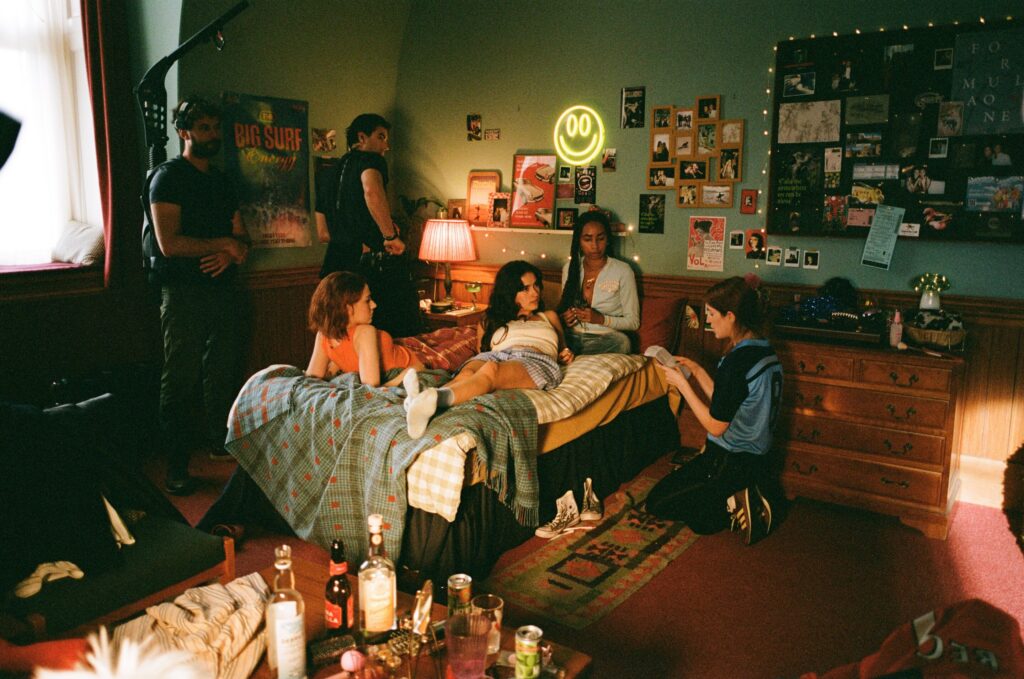
DG: That contrast informed every creative decision. Noah’s dorm room is filled with personality — photos, color, objects collected over time — it feels lived-in and constantly evolving, the same way she is. Nick’s apartment is modern and minimal, reflecting someone who’s built walls around himself and is trying to maintain control. Every design layer became another chance to tell the story.
CF: Music is one of our biggest storytelling tools. We build endless playlists — for the film as a whole, and for each character individually — to find their emotional language. The commercial soundtrack tends to live inside Noah’s world, so it leans toward artists she’d genuinely listen to, whether that’s Avril Lavigne, Wet Leg, or Charli XCX. But we also love using a duet to bridge both perspectives at once — we used The xx’s “Crystalised” over an intercut sequence between them, and it became this unspoken conversation. That lyric about things drifting closer to the sun carries this inevitable sense that everything’s about to combust.
DG: That cue was in our very first cut and never moved. For Nick, there’s always tension between the polished version of himself he’s trying to become and the reckless, impulsive side we met in the first film. Whenever that side breaks through, the filmmaking shifts with him — more kinetic camera movement, more handheld energy, moments that feel like they’re slipping out of control. Because Noah and Nick spend so much of this film apart, we had the chance to fully establish their separate emotional worlds instead of only defining them through the relationship.
V: How do you build performances and create an environment where actors feel comfortable bringing so much vulnerability?
CF: We take that responsibility seriously, especially with young actors who bring this incredible curiosity and hunger. Our biggest philosophy is to trust the people we’ve cast. We cast them for a reason, so if they have a strong perspective on a scene or their character’s backstory, we’ll always hear them out.
DG: A lot of that happens in rehearsals, which often turn into real character dives. There’s so much heightened drama and tension in these films, and we spend a huge amount of time unpacking the emotional logic underneath it. If a choice feels impossible on paper, our job is to figure out together why it feels completely inevitable to that character. Once an actor believes it, the audience will too.
CF: We always love talking about Asha and Matt, because they’re two of the most collaborative actors we’ve ever worked with. We’re not precious people — we gave them a huge amount of freedom, and they constantly surprised us with ideas that made the material richer. Matt is a brilliant improviser, and Asha can communicate an entire emotional shift with the smallest flicker across her face. They know their characters better than anyone, and we let them run when they have an idea.
DG: We’re obsessed with the audience reaction to their fight scene in Your Fault, the one where Nick says “you’re mine” — because the version everyone’s talking about actually came from Asha and Matt. They spent a weekend rehearsing together on their own, reshaped the dialogue until it felt completely true to Nick and Noah’s voices, and sent us a tape shot in Matt’s kitchen. The second we watched it, we knew: that’s the scene.
CF: That trust was born on the first film, when all of us were learning together and building a creative language from scratch. We always say the best ideas can come from anywhere — our job as directors is to create an environment where people feel safe enough to bring them forward.
V: You work as partners. How do you divide your workload and determine who’s in charge of what?
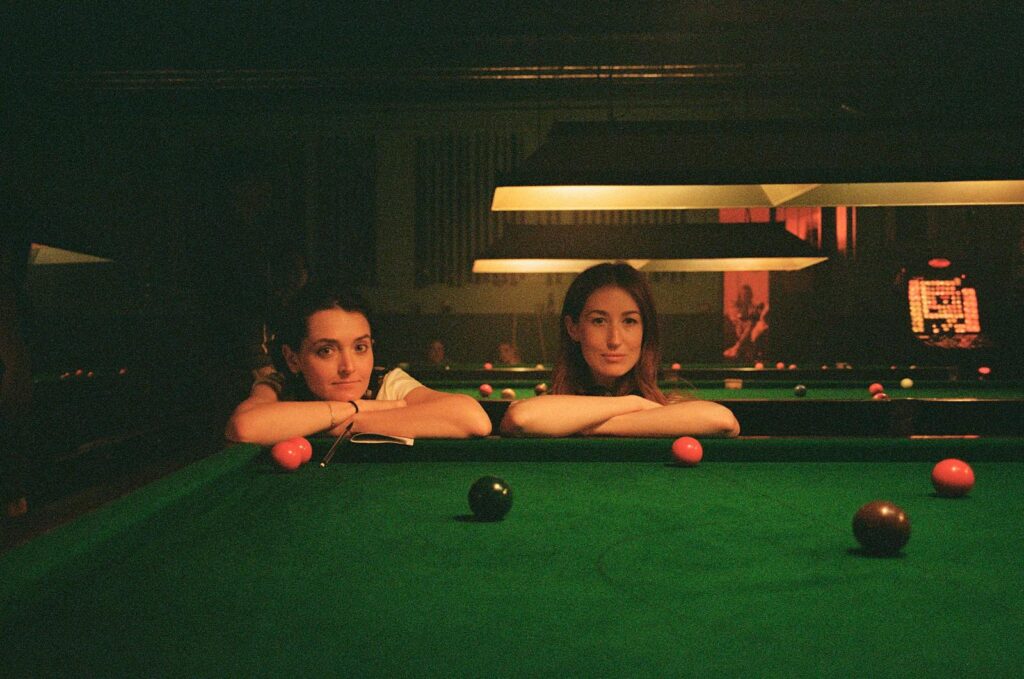
DG: We’ve been working together for almost ten years now — a literal decade, all over the world and back, doing campaigns everywhere from parking garages in Warsaw in January to tennis courts in Miami in July. At this point it really does feel like creative telepathy. Our process is fluid rather than built around fixed roles.
CF: We both touch every part of the filmmaking, from script to edit, and we talk through ideas so much that by the time we get to set, we’re usually operating as one creative mind.
DG: Some of the most interesting moments in a partnership are when one of us has a particularly strong instinct about a scene, a performance, or a shot. Because there’s so much trust between us, there’s real encouragement to let the other run with it or take the lead. We always take the time to understand why the other feels so strongly, and more often than not, that conversation leads to a better idea than either of us would’ve found alone.
CF: That’s the real strength of directing as a duo. You’re constantly challenging each other, but from a place of complete trust and a shared vision. We never have to protect our egos, because we’re both ultimately trying to make the same film.
DG: Our producer, Erica Todd Steinberg, always says it best: “These two? They are four eyeballs and one mind.”
V: How did you get into filmmaking?
CF: When we first met, we each brought something really different to the table. Dani had come up in indie film, working under her mentor Reed Morano, who directed The Handmaid’s Tale.
DG: And Charlotte got her start in the fashion space — the 2010s blogosphere — as a visual designer and photographer. We had a bizarre start as a duo: we began making fashion content for an “Anna Delvey”-like figure. No naming names. We traveled all over the world making these abstract video and photo projects for him.
CF: Arguably, we were his personal paparazzi.
DG: It’s a far cry from what we’re doing today, but it was almost like Amazing Race: Fashion Week edition, or a creative-duo boot camp. We learned we could problem-solve anything together, and how to think on our feet as a team.
CF: But mostly it gave us so much time on the road to talk about our taste, the movies we grew up on, the music we loved, and to start scheming about what we could make together.
DG: We really found our voice once we started making music videos and crossed over into commercials — working on global campaigns for brands like Spotify, Diesel, Google, and more.
V: Once you got into filmmaking, were there directors or writers who shaped your artistic vision?
CF: More than any single filmmaker, we’d talk about the feeling of a certain scene — a song that played once on The O.C. and forever changed our DNA. Those small moments a great director creates that serve the story and make you feel something, or that are just pure escapist fun. We talked a lot about films we grew up on, whether it was a moment from Titanic, Hook, or gateway indies we found in our teens, like Fish Tank or Garden State.
DG: Once we started directing, it fundamentally changed how we watch movies — you start seeing the collaboration, all the layers coming together. Sometimes that ruins the experience, but sometimes it fills you with awe. We rewatched Matilda together recently, and honestly, Danny DeVito is a genius.
CF: Rewatch Matilda.
V: How did you adapt the Culpa Mea series into your own style?
DG: We were fortunate that the original Spanish films already existed and had done such clear work adapting Mercedes Ron’s books for their audience. Our goal was to preserve what people loved about the Culpables series — the emotional intensity, the romance, the high-stakes drama, the sexiness — but filter it through our own cinematic language.
CF: We wanted London to feel like a character in the story, and for the films to have an edge drawn from everything we grew up loving — the energy of Skins, the emotional honesty of British independent cinema, the wish-fulfillment of great ’90s and 2000s coming-of-age films. It’s validating that the interpretations that felt most specific to our voice are what audiences responded to and talked about. Even with characters we knew audiences would find villainous, we worked hard to make them three-dimensional, with real humanity, because that’s what creates more dynamic conversation.
V: Now that the second film is out, you’re moving on from the My Fault/Your Fault franchise. What’s next for the two of you?
CF: We’ve got a lot up our sleeve, and while we can’t share specifics yet, one thing is very clear after making these two films: making movies for young women is the dream. It’s the most engaged, most vocal, most passionate, most detail-oriented audience we could have ever asked for.
DG: They don’t miss a thing. That level of thoughtful reception and analysis feels like being back in a film-class discussion section. Sign us up.
V: Any advice for aspiring young female directors?
DG: We’ve been trying to share more behind-the-scenes this time, and it’s been so cool to see the audience’s response to the two of us behind the lens. We’ve been lit up by comments and DMs from young women saying “wait, I think I want to be a director now?” — or my personal favorite: “so directing is just playing with human Barbies, isn’t it?”
CF: They were also shocked at how many people are on set for crew and rehearsal, and how many people it actually takes to make these movies happen. Filmmaking is such a team sport, and there are so many jobs people don’t realize exist.
DG: If you’re just film-curious, take a closer look at the movies, TV, or music videos you love. What stylized layers do they have in common? What’s actually working for you — the writing, the cinematography, the pacing of the edit?
CF: We always tell young filmmakers to reach out to as many people as possible, including department heads or assistants, because you never know who might take a chance on you or invite you onto a set. Filmmaking isn’t just about talent — it’s about relationships, strategy, and putting yourself in the right rooms with the right people.
DG: One thing we learned early is to know why you’re reaching out. Are you hoping to shadow a director for a day? Do you want to understand how a production company works? Are you looking for advice on commercials, music videos, or post-production? The more specific you are, the easier it is for someone to say yes and genuinely help.
CF: We were deliberate about studying the careers of directors we admired — the path from music videos to commercials to features — watching as much work as we could, paying attention to brands, cinematographers, production companies, and agencies, trying to understand how people were building sustainable careers.
DG: And the other thing: just make things. We all have smartphones in our pockets. Write an idea that makes sense to shoot on one. Make a music video for a friend’s band, or reach out to an artist you love who’s just starting out.
CF: You don’t need permission, a huge budget, or even film school to become a filmmaker. Some of the most valuable lessons come from grabbing your friends on a weekend and figuring it out together. Every project teaches you something, and every project becomes the calling card for the next one — and lets you work with new people who become your team.
Discover More