Bodies of Desire in Mowalola Spring/Summer 2027
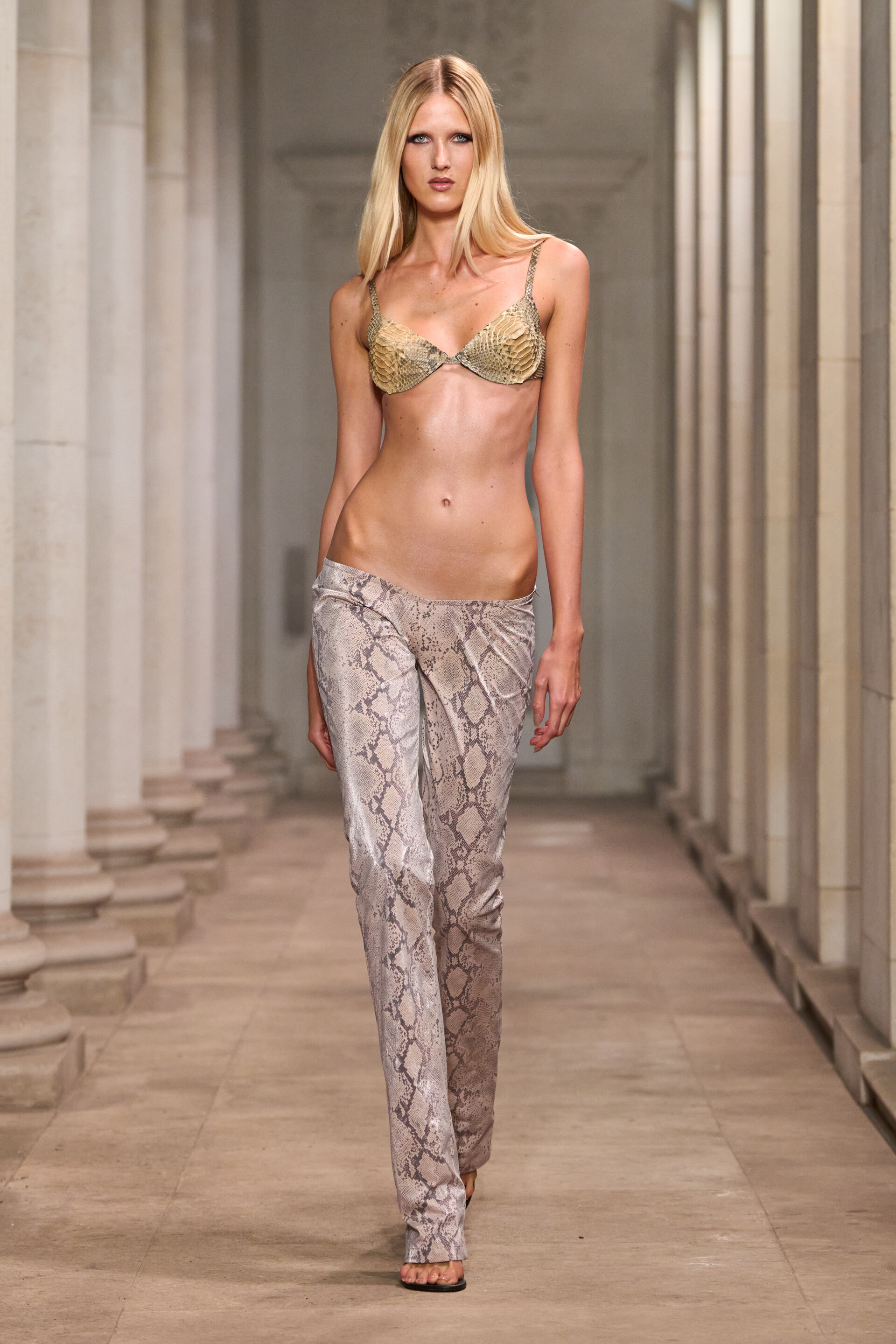
Mowalola’s lat’est collection turns hunger into a language of the body
Bodies. At first glance, Mowalola Spring/Summer 2027 is a flourish of them: some smothered in gold dust, others draped in sheer fabrics, exposed and suspended somewhere between concealment and revelation. Titled “The Hunger,” the collection took to the runway with the body laid bare as both subject and source of power.
Mowalola returned to the runway with one eye on the codes that first defined the brand: autonomy, sensuality, and a radical liberation of the self. The other remained fixed on a newer proposition—reduced, refined, and reconsidered. Those original codes were stripped back to reveal a newfound clarity, driven by an insatiable hunger for self-discovery and expression.
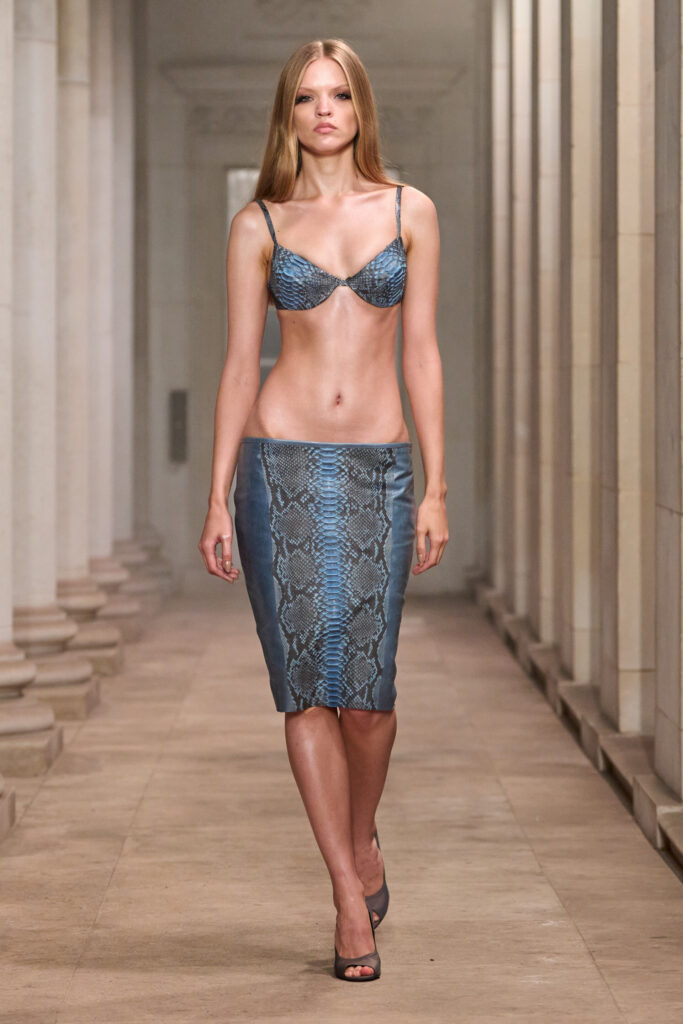
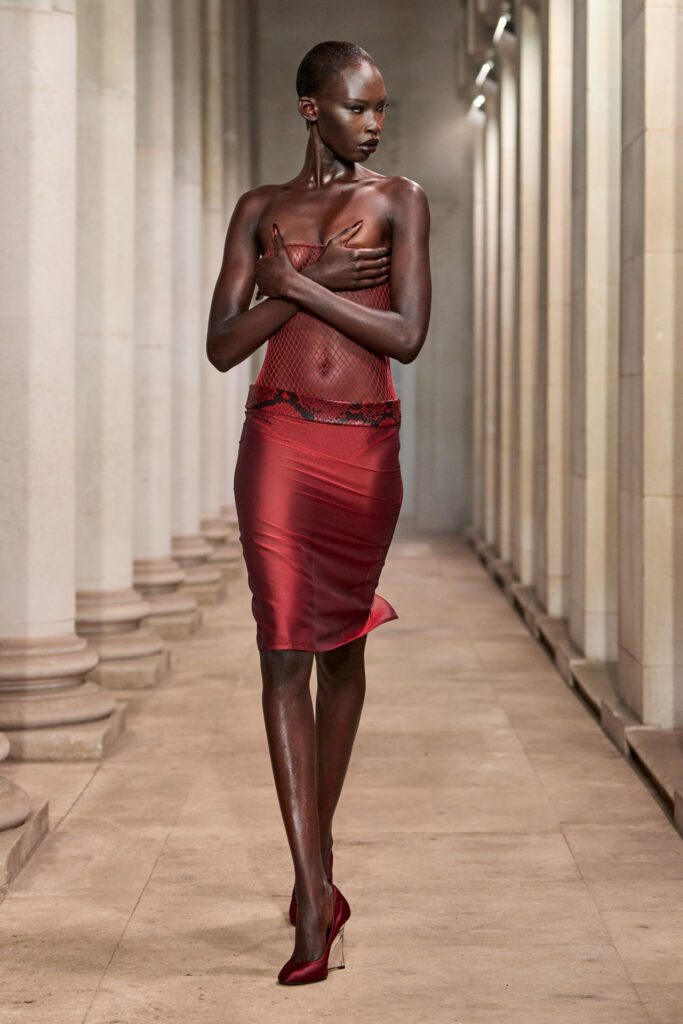
Central to this pursuit was the female body. Chiffon operated like a second skin, while leather cut, framed, and accentuated the figure. The distinction between the body and its decoration blurred through a skin-toned palette, with garments intentionally matched to each model. Each look, already singularly striking, became something more when worn: garment and woman seemingly calibrated to one another.
Texture and materiality played a key role. Low-slung organza pencil skirts stood in stark contrast to snakeskin waistbands, while suede underwear was paired with glossy leathers. Across the collection, repeated sheerness transformed lingerie into something almost office-like, collapsing the distance between intimacy and the everyday.
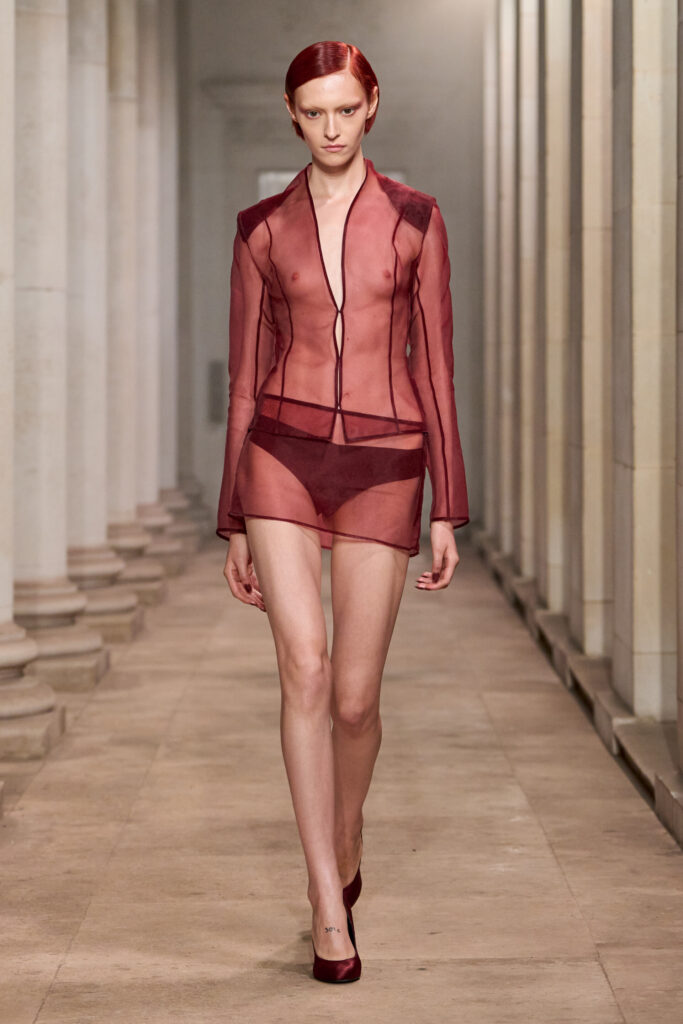
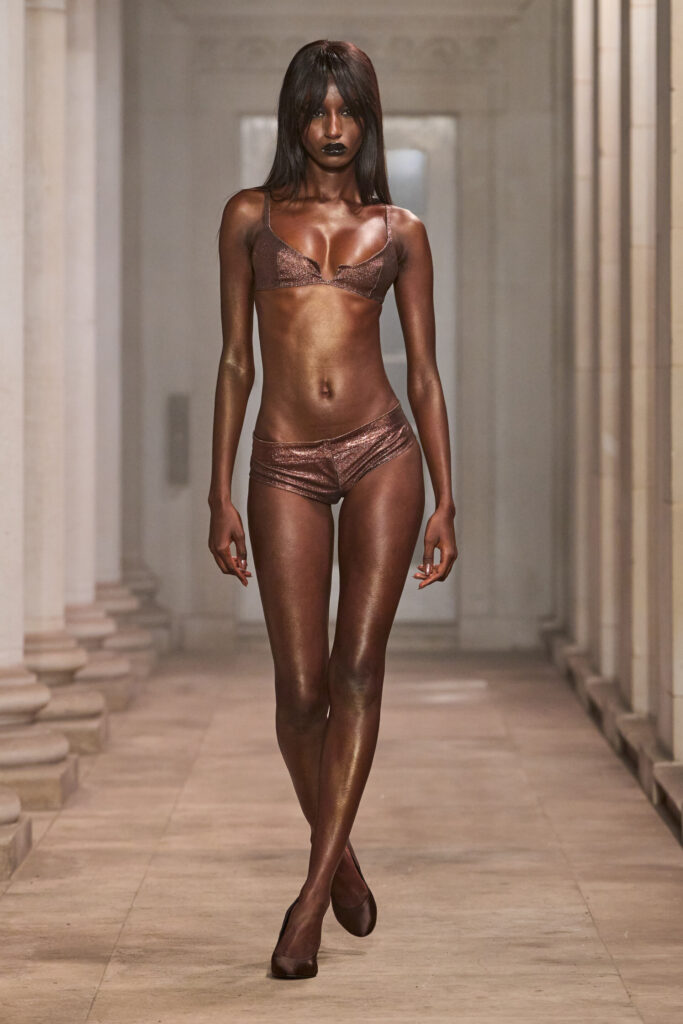
“I’m running my company, and I wouldn’t dress like a ‘CEO,’” said Mowalola. “This is how I show up—and these are the women like me: other women who enjoy, and find power, in their sensuality.”
Where the everyday wardrobe was untethered from conventional notions of dress, raw glamour emerged through glitter-coated canvas bras, eelskin dresses, and gowns hand-beaded in Nigeria.
This “hunger” was examined from both sides. In womenswear, desire became power: the body asserted itself through shifting textures and fabrics. In menswear, that same desire became surrender. Both, however, existed within a shared world of seduction.
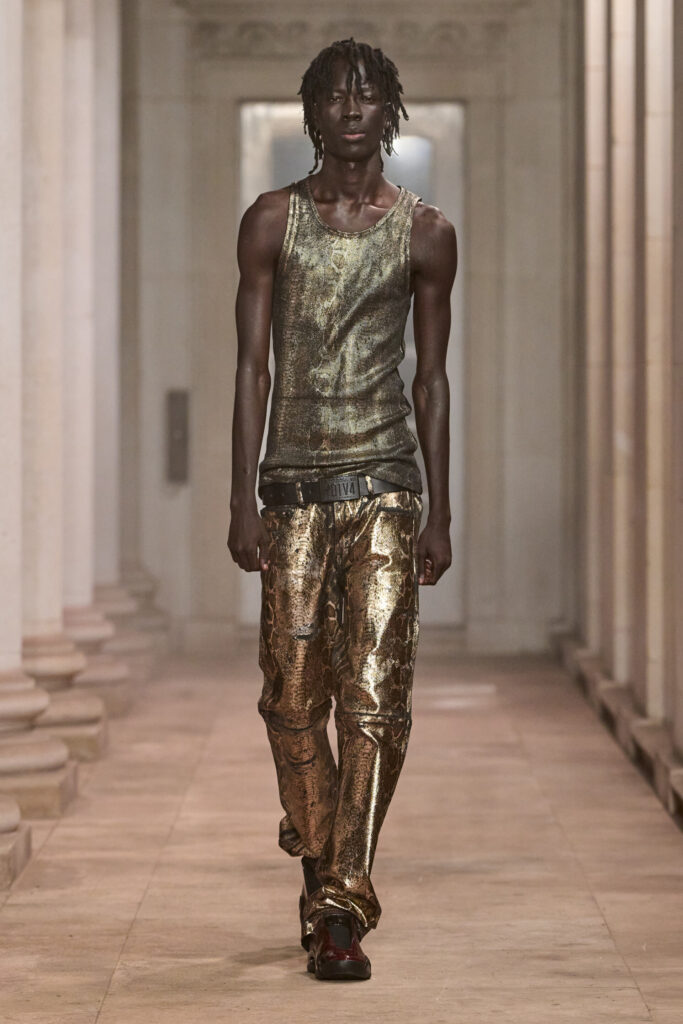
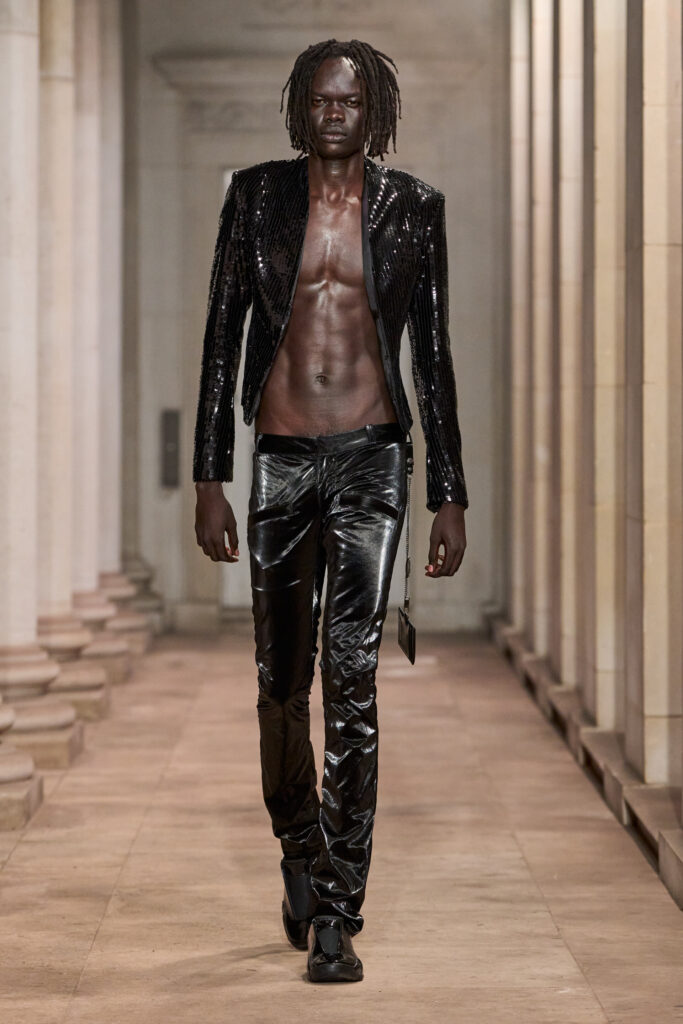
Menswear appeared disciplined in silhouette but was disrupted through surface: glossed, colored, sheer, and revealing skin. Familiar codes of masculinity were thwarted, softened, and unsettled, rendering the body more vulnerable, delicate, and, ultimately, beautiful.
Through “The Hunger,” bodies became vehicles for expression. The collection was raw but considered, sensual yet deliberate, grounded in the physicality of the self and an ongoing appetite to discover what it might become.
Discover More