Brokeback Mountain Makes Its American Theatre Debut
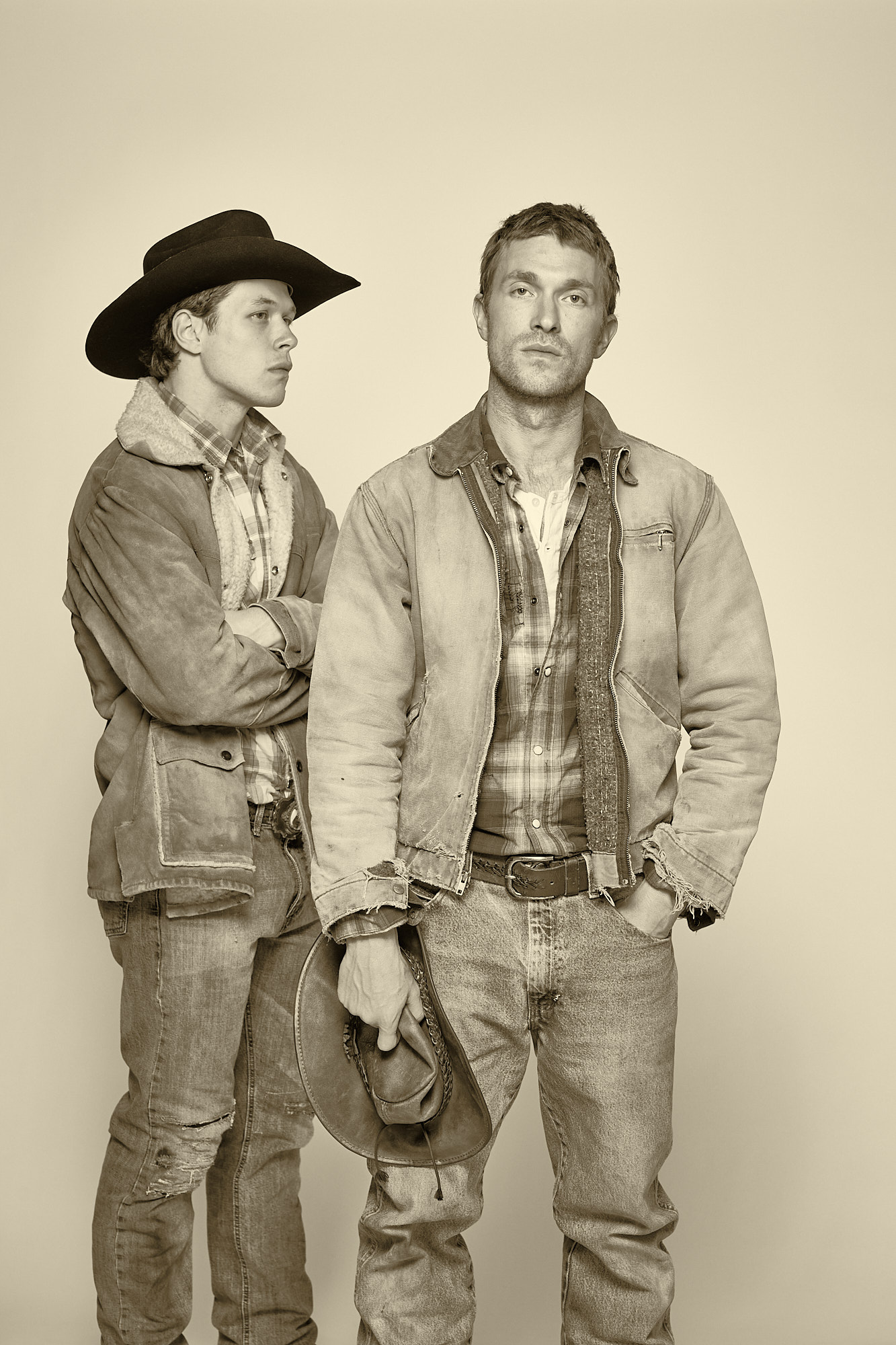
Now open at the Chicago Shakespeare Theater, the classic story leaps from the page to the stage with two bright new stars
Brokeback Mountain became a cultural sensation upon its cinematic debut in 2005. Directed by Ang Lee, the film starred Heath Ledger and Jake Gyllenhaal as the fated Wyoming ranch hands-turned-lovers Ennis Del Mar and Jack Twist, respectively. But the short story it was based on, of the same name, was written by the brilliant Annie Proulx and originally published in The New Yorker in 1997. Brokeback Mountain has since become a classic American love story, equal parts tender and heartwrenching, as much about desire as it is about class.
It’s the short story that playwright Ashley Robinson adapted for the stage with music by Dan Gillespie Sells. Directed by Jonathan Butterell, Brokeback Mountain makes its American theatre debut this week at the Chicago Shakespeare Theater and runs until June 28. Its world premiere was in London’s West End in 2023, starring Lucas Hedges as Ennis and Mike Faist as Jack.
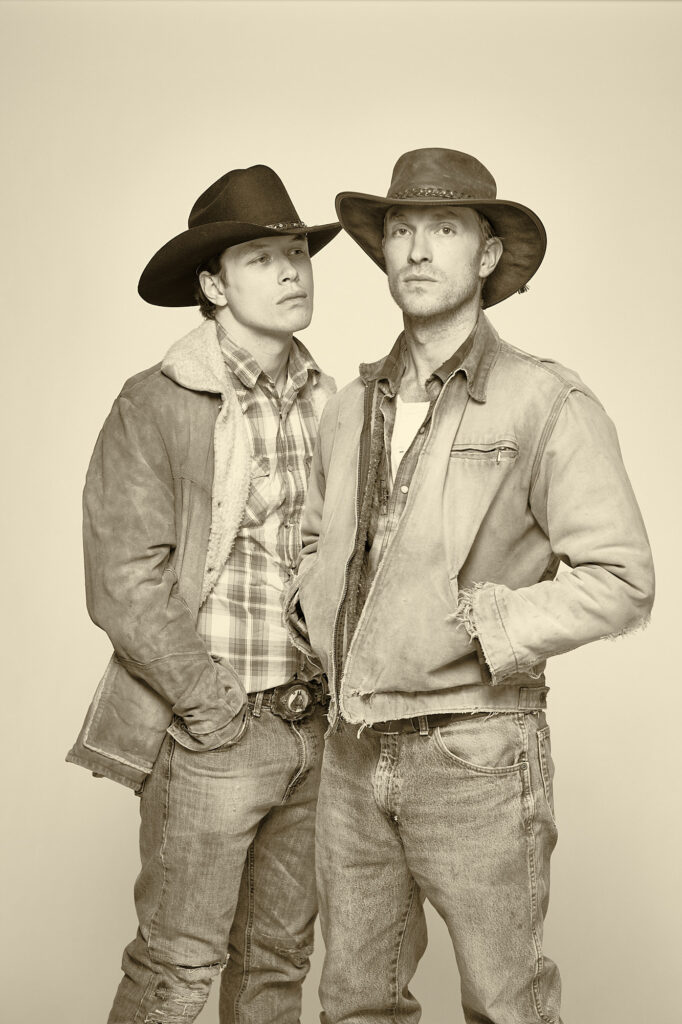
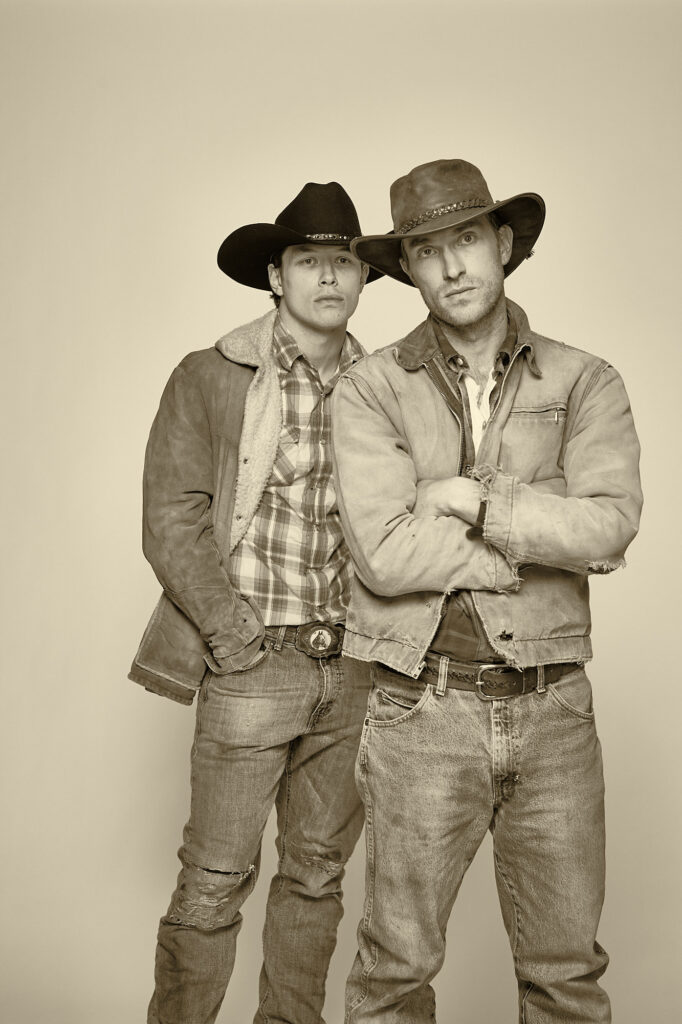
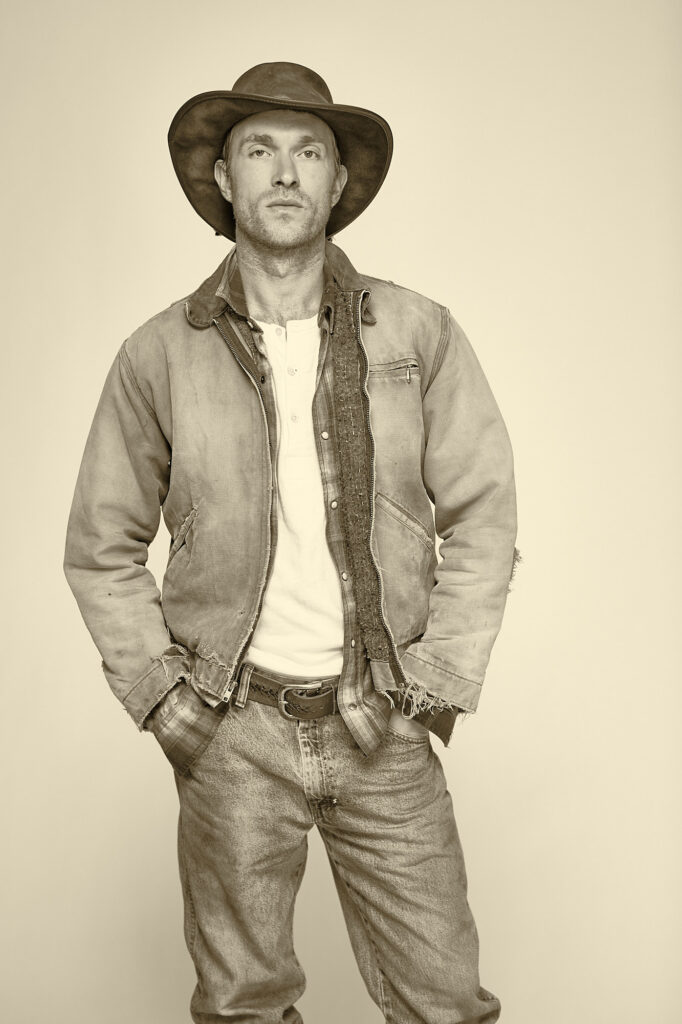
In the first American production, the roles of Jack Twist and Ennis Del Mar are played by two new stars: Jack Cameron Kay, fresh from the Netflix series Boots; and Harrison Ball, a former principal dancer with the New York City Ballet. It is the first professional stage acting role for both. VMAN spoke to Robinson, Kay, and Ball about how the play took shape, their experiences bringing the characters to life, and how it affected their artistic development along the way.
Ashley Robinson, Playwright
VMAN: How did this project come to be?
ASHLEY ROBINSON: I saw the film, got a copy of the novella, and read it aloud that night. Many years later I wanted to reread it. It’s so compact and amazing, and I was like, Jesus, I think I know how to make this a piece of theater, and I think I’d love to make it. I realized we’d have two issues: an interior life of a character who doesn’t speak, and an exterior life of a vast, powerful landscape that’s impossible to get on stage. I was like, how do we get this exterior and interior that are virtually impossible in a theater? Oh, music. I asked [musician] Dan Sells, and he wrote songs with country elements. Then we have this ethereal, omnipresent Annie Proulx-esque character who’s our balladeer. She takes us through a scope of 20 years. I had just seen Man from Nebraska by Tracy Letts when I started this, and I remember it being very linear, but it had small scenes that snowballed, and I realized that’s how I could approach this to fit it into 90 minutes. I wrote a treatment for Annie Proulx, and she had not really approved anybody, but she got back from reading it a couple of hours later and said, this is our guy.
VMAN: What initially led you to want to make it into a work of theater?
AR: It was the first piece of media I saw, read, anything where I saw myself in it, a rural working-class queer story. I grew up in a mill village with no stoplights for 13 miles. Generations of families came from the hills of Appalachia to work at the mills. It was a beautiful place, but it was very religious, Southern Baptist. It has loosened a little bit around homosexuality, and only probably in front of me when I’m back. The struggles of Brokeback Mountain, that’s not only something of the past, just as it wasn’t then.
VMAN: What was the process of adapting the work for the stage?
AR: It’s tricky. You have to fill it out because the short story will have a whole five years in one sentence or half a sentence. As a playwright adapting pieces, you have to honor the original material, but throw it out of your work and be brave enough to do that. You have to know what you want to say about it. I wanted to say that this experience is not over. This lovely sentiment that producing work that’s what we want to see in the world propagates what we want to see, that’s a false narrative. I think theater, film, everything should tell things like they are. If you set this play down in Lockhart, South Carolina, where I’m from, boy, would it stir up some shit. People are still repressed, in the closet–hell, it happens in Chicago and New York. I want to show that this is still relevant, because when I picked up that book, it wouldn’t have affected me in such a deep way if it wasn’t. I’m watching these runs [of the show] and I’m going, Jesus, it’s such a tragedy, but I do want to give it hope, because it spoke to me in such a deep way.
VMAN: What did you want to make sure that this adaptation had that others didn’t?
AR: It’s definitely in the short story, but rural people have wit and humor in the darkest of situations. As a story, Brokeback Mountain is so compact that opening the heart with humor gives the audience a surprise gut punch–it’s like making an audience feel safe in a horror movie so you can do a jump scare. It’s not a knee-slapping farce, but these people are funny and witty; it’s not dirgy or solemn. It’s like Chekhov–if you play Chekov wallowing, you’re fucked. It’s so boring, because those people are not wallowing, they’re fighting, scrapping, trying to solve their problems. That’s what these people in Brokeback Mountain are doing. These working-class people are trying to get by. And then, holy shit, what is happening to the two men and the women in their lives? The women in this play are so important. They all have so much they don’t say until they absolutely explode enough to say it. Because of the weight of that, we need a little humor, and they use it.
VMAN: How do you think being a queer person working on this play affects its tenor?
AR: It means everything. It’s not only being a queer person, it’s being a working-class person. This is heresy, but it’s Annie’s truth, it’s my truth as a queer man, and we believe the same thing: it’s not a gay story, it’s a story about class. We talk about identity politics until we’re blue in the face, but we don’t include class in that often enough. It was important to have those two perspectives in the piece. The casting, in the English language, that really works is when at least one of the male leads, Ennis Del Mar or Jack Twist, is queer. You have this chemistry, this hunger and longing. With Harrison Ball and Jack Cameron Kay, the chemistry is out of this world. There’s a different thing in the air, in their cells and their blood. I do believe that both the cast and the creatives having that experience is invaluable, and I’m not even someone who’s like, oh my god, it’s a plumber, so it’s got to be played by a plumber and written by a plumber. I think when it comes to something this fundamental, it just makes the piece soar in a different way.
VMAN: What did working on it teach you about yourself as a writer?
AR: Forgiveness–of self, of bigoted people I actually love, of my parents when I came out, of people in my life. And grace is what this taught me, or what it pointed me towards. Hell, I wish I could be taught that, but I think it’s something we have to work on throughout our lives. It definitely was a huge reminder of both those things.
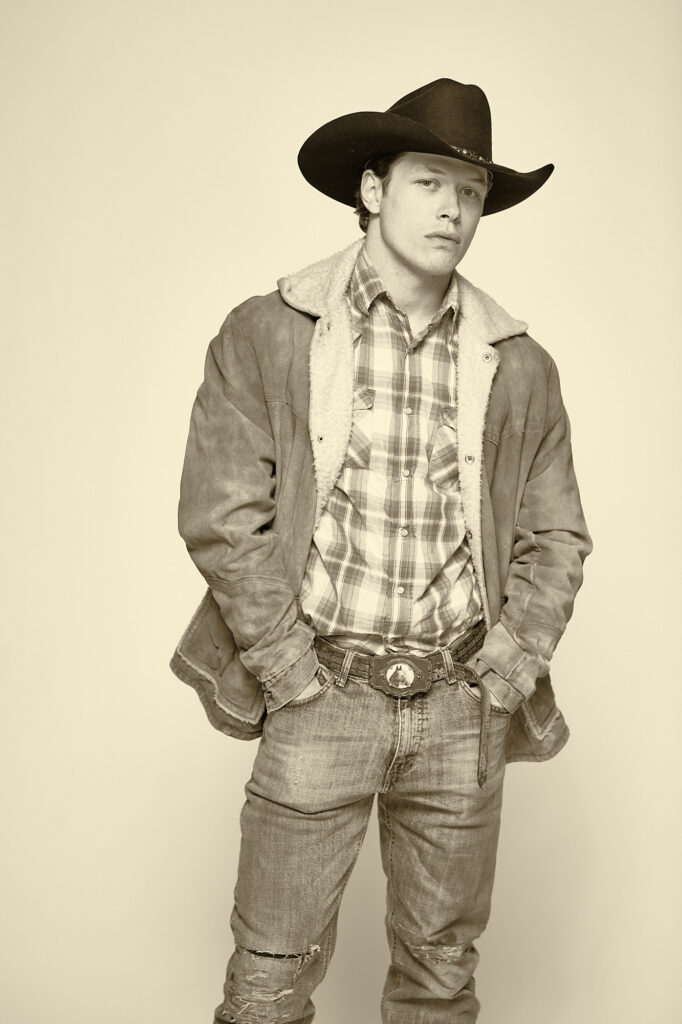
Harrison Ball & Jack Cameron Kay, Actors
VMAN: What was your experience with Brokeback Mountain before the show?
JACK CAMERON KAY: I loved the film. It’s an early 2000s classic with incredible performances, a tragic, timeless fable akin to Romeo and Juliet, Tristan and Isolde. I think it’ll always be a relevant story, especially now, for unfortunate political reasons. But humans will always yearn, love, and be forced to make decisions against their innermost desires based on pragmatism and practicality. It’s a universal story.
HARRISON BALL: I saw the movie with my mom in theaters, and I must have been 12. My mom used to go see movies like this because she was trying to give me a gay education early on. I watched it earlier in this process, but our director Jonathan Butterell is clear that it’s not the film. Audiences come in with this preconceived notion that it’s the movie, but it comes from Annie’s short story.
VMAN: What was the process of bringing these characters to life while making your stage debut?
JCK: For actors, I think theater separates the boys from the men [laughs] so it’s inherently intimidating. Jack Twist is extremely animated, activated, and gregarious, but also petulant and a little immature. He’s very alive and it’s a fun persona to inhabit, based on my own personal qualities. Whenever I’m approaching a role, I try to be methodical in how I flesh out this person’s backstory. I like to have visuals for everything they reference in the play; a clear idea of what I think that person’s childhood was and his relationships with his parents. I try to conjure a number of life-changing moments that, for better or worse, shaped this person, informing their behavior and the decisions they make. What’s important for me is trying to figure out what’s happening in every scene. I don’t bring a ton of my own experience to derive emotionality because it can get a little ugly for me. I believe if I sew the fiber of the character’s reality together, there are pieces of myself all over it. It’s inherently personalized without having to reach for some past experience when I’m on stage. You can only play one thing at a time, so I’m trying to focus. The less I try to hold the weight of the five years that have passed in every moment of the play, I feel it reveals itself through our choices, and through our behavior.
HB: I’m a former principal dancer in New York City Ballet, so my body is my thing. A wonderful acting coach named Greta Seacat asked me, “Well, how did you prepare for your character roles in ballet?” And she told me to do that. I went to LA and worked with Joy Ellison, who Jack worked with too, and was the onset dialect coach for the film. She worked closely with Heath, Jake, and Ang, so that was special, being connected to the heritage of this storytelling. At this phase in my career, I feel drawn towards total transformation in character, as I was with dance. Jonathan, Jack, and I sat around a table for a week discussing what was going on with the characters on each page. We got deep into their stories. A big cue was the environment and time period. Putting all those elements into this character helps ground you in their reality. You’re prepared enough to inhabit the world. There’s a lot of real shit coming up whether I like it or not. It doesn’t serve me to avoid it. I don’t feel unsafe and I’m prepared for that work. If something happens to me based on the imagination but it’s a real reaction from a real place, the trick is maybe to not suppress it.
I have to stay grounded, and allow the set, the lighting design, my costume, and who’s on stage with me to help tell that story. You don’t have to carry all of that. I’m also trying to be aware of how time in that landscape and occupation affects one’s body. The double edged sword of this being our first play is that ignorance is bliss. I’m trying to keep that in mind, keep that playfulness and child-like approach, but at the same time, bring my past experience as a stage performer. If you call me in a month, I’ll probably say completely different things. But that’s the beauty of this, right? It’s evolving, it’s live, it’s ephemeral.
VMAN: What did you learn about yourself as an actor and as a person while working on the show?
HB: I’m realizing how much I know and that I don’t need to keep looking for assurance to validate where I am in my life. It’s hard to come into work this profound and feel I deserve it, but I look at my past and what I’ve accomplished as a stage performer, I feel ready for this. I’ve always wanted to do it, so I keep going back to my little boy self and say, you did it, you’re doing it. To be essentially a beginner in an advanced arena feels exciting for me, because there’s no better way to learn than to sink or swim. I’m hoping I swim well, quickly, and strongly. I couldn’t be more grateful to have this outlet, and to be in a space telling a story that’s significant at this moment in history. Theater does this amazing thing to your body and spirit: you realize you’re a human being. Time stops when you’re working in a play, and you go into this vortex. You realize we’re all the same, life is a piece of shit, and you’ve got to make the best of it.
JCK: I enter into a lot of creative processes with a lot of self-doubt. I’m prone to insecurity about my own abilities, and what I’ve learned through this process is, the only person putting a ceiling on what I’m capable of is myself. You’ll shock yourself with what you’re capable of, what you discover you’re capable of through trying, and being given the opportunity to apply yourself in a new environment.
VMAN: Many adaptations of the work haven’t featured queer actors. How do you think this affects the performance here?
JCK: This is no shade to any straight guys who ever played gay guys, but there is a phenomenon where they don’t know how to kiss each other [laughs]. Of course I’m being silly, but there’s a reality and a lived experience we can bring to these roles that has real value. We have a comfortability with one another, exploring the intimacy and physicality with one another. There’s an ease we bring to that, which can help convey the depth of these two characters’ connections. I also think when stories of this nature are told, it’s very satisfying to see queer people at the center. I was in a show called Boots on Netflix and the Trump administration directly commented on our show–the Pentagon released a statement decrying it–so I have lived experience of this administration actively suppressing queer entertainment I’m involved in. Thankfully we’re in Chicago, which has such a vibrant theater scene, and during Pride month. I feel very held by that. It’s important we carry on.
HB: It’s almost less of a gay story–I don’t think it’s as cookie cutter as it seems. I saw an interesting interview with Heath Ledger and his description of it was, it’s about a homophobe who’s in love with a man. They’re both married, each character has a different relationship to their sexuality, and it’s more nuanced than it seems at face value. Nothing’s new here. These are normal people problems: you’re in love, but you love someone else, and you have a family, and it’s complicated. The film was made in 2005, and we were in a different landscape. Gay marriage wasn’t even legal yet. These were incredible actors, and I think Ang and everyone involved made the film in a very sensitive manner. I think today, with where we are in 2026, this story has to be told by queer people. We don’t have to concoct that story, it’s there, it’s in our instruments. We have a queer director, a queer writer, several queer actors, so this is magical. I think what we’re accomplishing here is brave in today’s political landscape. It’s a little scary, but at the same time it’s pretty fucking epic. It’s a great honor to convey this story as the people we are.
Discover More