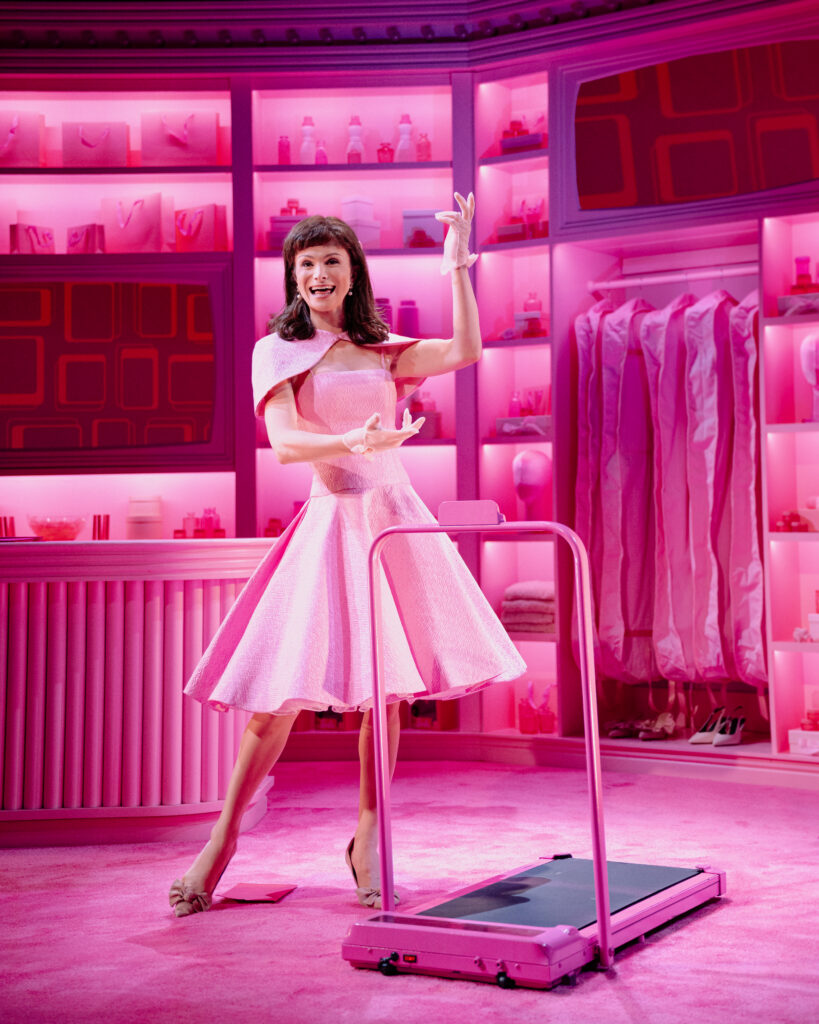
In The Least Problematic Woman in the World, influencer and cultural fixture Dylan Mulvaney explores how self-awareness can also lead to (at least some) transcendence. Written and performed by Mulvaney at the Lucille Lortel Theater, the show is a hyperbolized version of her life and its various formative episodes, mixing in new stories with those that made Mulvaney a known figure in the first place.
In revisiting and retelling her life, Mulvaney sheds additional light and context on her childhood, thrust into the spotlight, and beyond—with some bits echoing her book, Paper Doll: Notes From a Late Bloomer. All in all, the show pokes fun at the fact that, yes, Mylvaney is the drama, perhaps most of all when she’s trying not to be.
Photography by Andy Henderson
Below, we spoke with the starlet about reclaiming her narrative through humor, the chaos of being everyone’s favorite “problem,” and what it means to find grace—and a good punchline—in the spotlight.
Mathias Rosenzweig: Last time we spoke, you were doing the play at Fringe in Scotland, and it was called FagHag. Why the name change to The Least Problematic Woman in the World?
Dylan Mulvaney: It was such a hit over there, but that title is technically a slur here, and so everyone wanted to make sure it could have the impact they wanted it to and not get flagged by social media. Especially since it feels like conservatives are taking over TikTok right now, it’s just crazy how, even since I last saw you, the world has changed for trans people, and for all kinds of people, really.
But I waited until the last possible second to change it to The Least Problematic Woman in the World. And I think how I ended up landing on that was sort of like—it’s so extra, it’s so camp, it’s big. It’s probably the most over-the-top version of a one-person show that could exist, just because, not only my personality, but my desire to overcompensate for anyone coming into that theater with a preconceived notion of me.
MR: What do you want those people with preconceived notions to see?
DM: My goal is to show them something else they’ll be able to enjoy, even if they haven’t been able to enjoy me in the past, which isn’t really the healthiest version of creating something. But I do think the title now represents how I try to live my life. I end up being problematic by trying to be unproblematic. It’s gotten me in trouble in the past, but it feels fun and tongue-in-cheek. Especially since conservatives have loved to paint me as this Antichrist for the trans movement.
MR: Tell me about the actual show, and the setup. How many characters do you play, for example?
DM: I play 20 characters throughout the show. There are 46 total, and most are voiceovers from different trans women. Miss Benny and Josie have two small characters in there, but Ts Madison is also part of it, and Our Lady J. Then there’s audience participation. During the show, I cast a straight man from the audience, which can be rare because it’s mostly women who come. I also bring up a gay man each night. Chris Colfer plays my coworker and also appears.
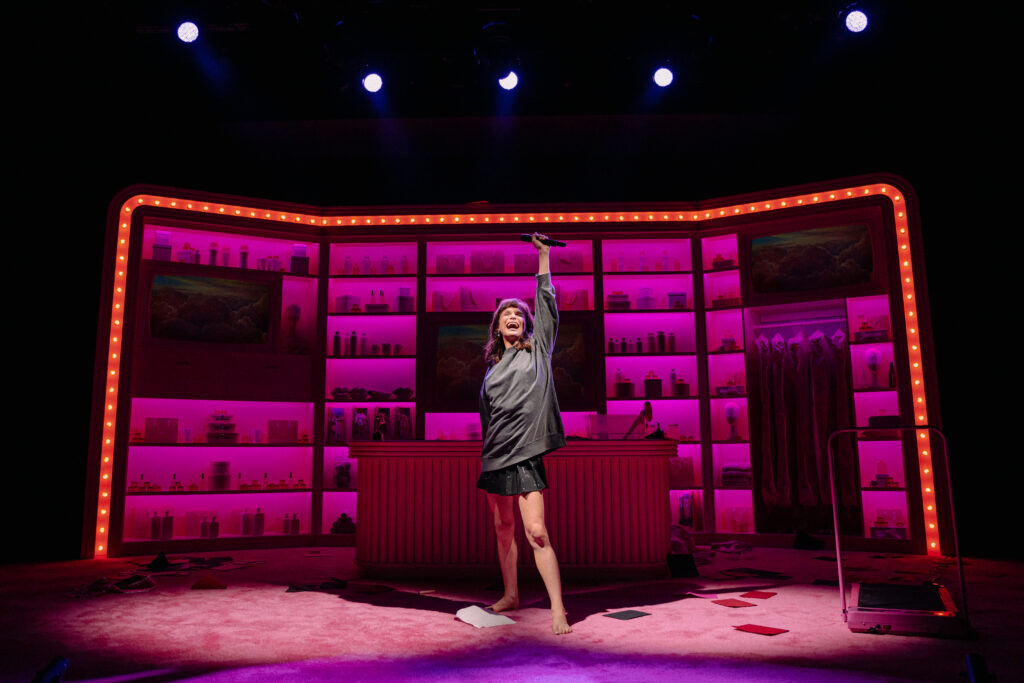
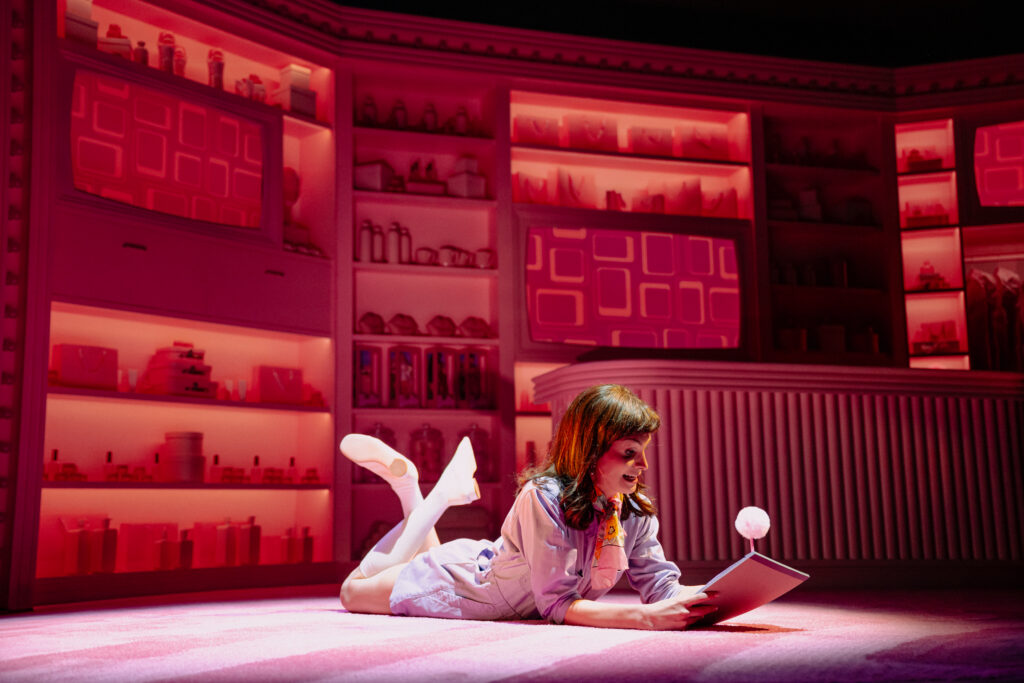
But the setup kind of feels like a QVC shopping network show: everything’s pink and full of stuff. It’s meant to push this idea that I’m selling parts of my identity to be liked by the media and public. I try to take the piss out of myself in so many ways, including the set.

Photography by Andy Henderson
MR: Your book was of course autobiographical, as is this show. What are some of the differences (apart from the medium)?
DM: The show’s built from heightened versions of my reality. The first third covers my time in Catholic school. That’s a small part of the book, but here it’s expanded. The show starts in Heaven, where I play Angel 666, an angel constantly tasked with the most problematic women. The opening number, written by the writers of Six: The Musical, is wild. I was O.J. Simpson’s mom, Anne Boleyn, all these figures.
Then there’s gender-affirming care at a Costco Minute Clinic, and Mother and Gay Son Wrestling—a family counseling parody. It starts campy, then becomes more real. There’s a long scene called Killing Time with Kelly, where a TERF-style religious host interviews me about bottom surgery, making me the new face of trans palatability. That character’s based on women who’ve interviewed me and asked things I should’ve never been asked. But I just let it happen because it felt palatable.
What’s been fun is fictionalizing those experiences while keeping the emotional truth. By the end, we strip everything away, it’s just me talking to the audience and to God. God’s a big part of it, since I question whether I’m entitled to a higher power. I talk about that in the book too. There’s a chapter on going back to church. But the show ends on a high note; it’s a full sing-along, an insane, gay extravaganza. It’s raunchier than the book; some jokes push the limit, where people go, ‘Oh my god, am I allowed to laugh at that?’ I love that tension.
MR: Art and performance are always therapeutic in some way. Tell me about the cathartic aspect of doing a show based on your own life.
DM: The Costco Minute Clinic scene, for instance. When I came out to my mom as a girl at four, maybe she took me to a counselor. I imagined what that would’ve looked like in 2001 at a Minute Clinic. I play an 80-year-old man counseling a mom about her trans kid.
There’s vulnerability, but I also get to make people laugh, so I don’t have to relive the trauma deeply every night. If I say something too vulnerable, I quickly flip to something silly or absurd, like a fart gag. Jim Carrey inspired that, since I grew up watching his movies, and he’s somebody who is never afraid of making himself look ugly and weird. And I wanted to find the female version of that energy.


Photography by Andy Henderson
MR: It can be hard “finding the ugly” when we all want to look hot and sexy.
DM: You’ll appreciate this: there’s a Charlie XCX-type number called Quick Fix where I’m running on a treadmill in stilettos. I wear these Mugler sunglasses. It’s very over-the-top, then suddenly the lights go strobe, and I’m shouting, ‘Unplug cock!’ seven times. It’s wild. I even strip to my bra and panties! Not full nude, but close enough. Definitely worth the ticket.
MR: And besides potential full nudity, what’s next for you?
DM: We’re finishing this run, hoping to bring it back soon. Maybe L.A. or London next. And next year, I really want to do a rom-com. I’m starting to read for some. It’s a weird time to be a doll in the industry—doing this show at the Lucille Lortel, where Oh, Mary! started—it’s a dream. I’m just trying to enjoy it while I can, because I feel it’s going to get harder for the dolls to do stuff like this. So I’m soaking it in for every drop it’s worth.

Photography by Andy Henderson
Discover More