
New York-born and Central Saint Martins-trained designer Conner Ives has always understood that healing the present rests in the past. Known for his “Protect The Dolls” tee as well as his sustainable approach to modernizing Americana tropes, Ives sews with a political thread.
Inside the doors of the Art Deco ballroom of Claridges, models, including show closer Dominique Jackson, hip-sway across the black and white floor to turn of the millennium type house music—transporting the audience to a simpler time of the industry.
The looks contend with various notions of American glamour through the decades, decorated with orientalist silks. The wearer collects trinkets from transatlantic travel, jet-setting from club to club. Showcasing an ambit of generations through the beauty of gender ambiguity. Pairing glamour with tongue-in-cheek t-shirts further conveys a tire of modernity while feeling the need to participate to survive. “I work nights,” deliciously tossed under Qing Dynasty tapestries, mixing irony with decorum.

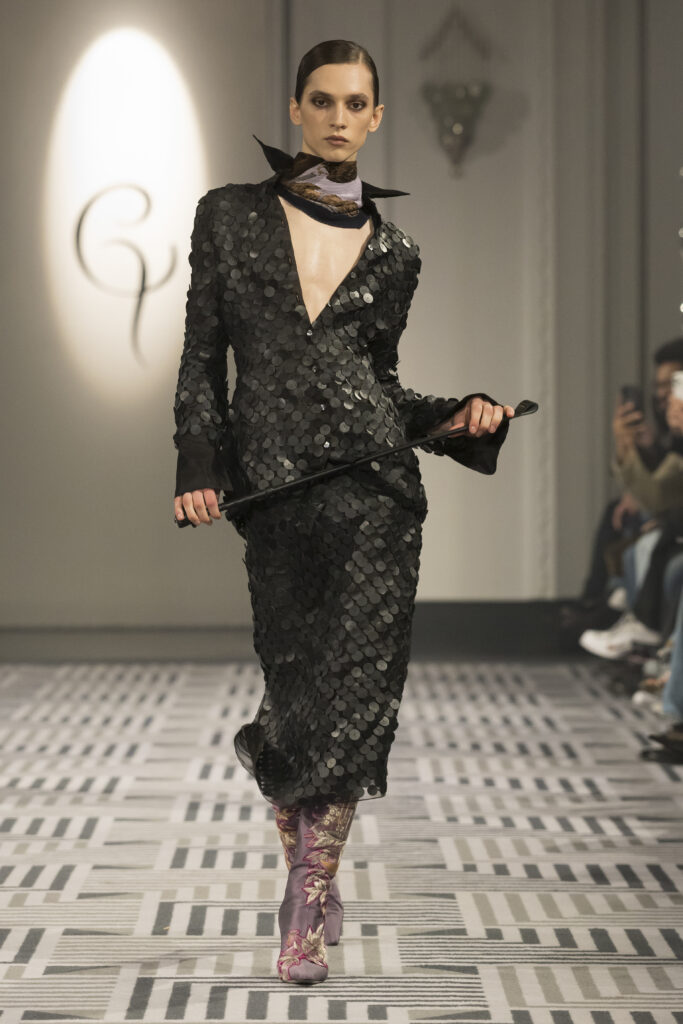
The following look is black and sequenced with a well-oiled whip. The jacket cuts deeply into a hard V, with a scarf around the neck showing a wet, bare chest — leading the eyes directly to the heart. A look ready for the secrecy of the dark. For the first time, Ives formally introduced menswear, satin slippers, and a dog in hand. Baseball caps with fedora feathers and waist-accentuating satin belts, once again reiterating the balance of femininity through masculine proportions.


The show was titled Eldorado, referencing the 1920’s trio of Berlin cabarets that centered queer culture prior to the Nazi regime and WWII. These clubs were famous for their drag shows. Clubs like the Eldorado offered queer and trans people spaces to meet and socialize with other members of the LGBTQ community. However, these venues were also enormously popular with straight cis tourists who wanted to catch a glimpse of LGBTQ life, sounds familiar, no?
Conner Ives’ collection is a broader commentary on the sanctuary of nightlife that the populace receives during times of peril. His genius referential work through textiles while keeping silhouettes modern is refreshing in a time when culture feels stagnant. While culture may feel stuck, in actuality, life is complex, making living feel far from normal. So why not return to the dance floor?



Ives does not romanticize the past without acknowledging its fragility. The glamour is deliberate, but so is the tension. A whip, a slogan tee, a satin slipper — each becomes a relic and a warning. Eldorado was once a haven until it wasn’t. The ballroom at Claridges may feel decadent, but history reminds us how quickly decadence can be dismantled.
And yet, there is no cynicism here. Instead, there is insistence. On beauty. On fluidity. On community as couture. By threading together Americana, Berlin cabaret, club kid insouciance, and domestic craft, Ives proposes that fashion can be an act of preservation. That nightlife is not frivolous but foundational to identity before identity is legislated.
If the industry has been yearning for meaning, Eldorado offers it without didacticism. It asks who gets to participate in glamour, who is merely observed, and who is protected when the lights come on. In Ives’ world, the answer is collective. That culture survives because people gather. Because they dance. Because they dress for the world they want, not only the one they are given.

Discover More