Elie Saab Brings Four Decades of Couture to H&M
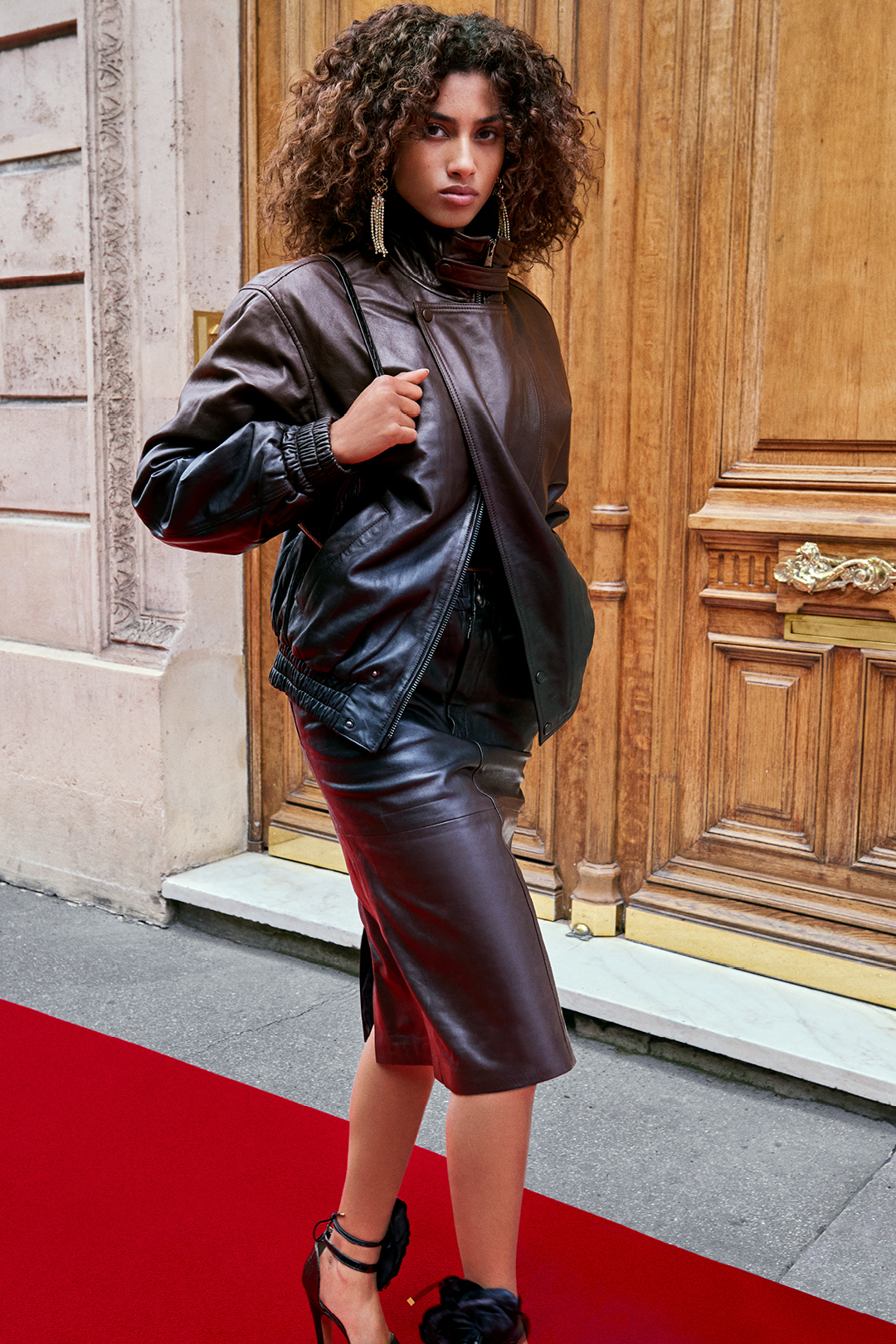
Like the gradient itself, the collection leaves no hard line between couture and everyday
Elie Saab has spent 40 years designing for red carpets and galas that very few actually get to attend. It is thus quite electrifying knowing that his H&M collection will be arriving in stores on October 22nd, bringing his high-end sensibility to a larger audience, both male and female, for the very first time.
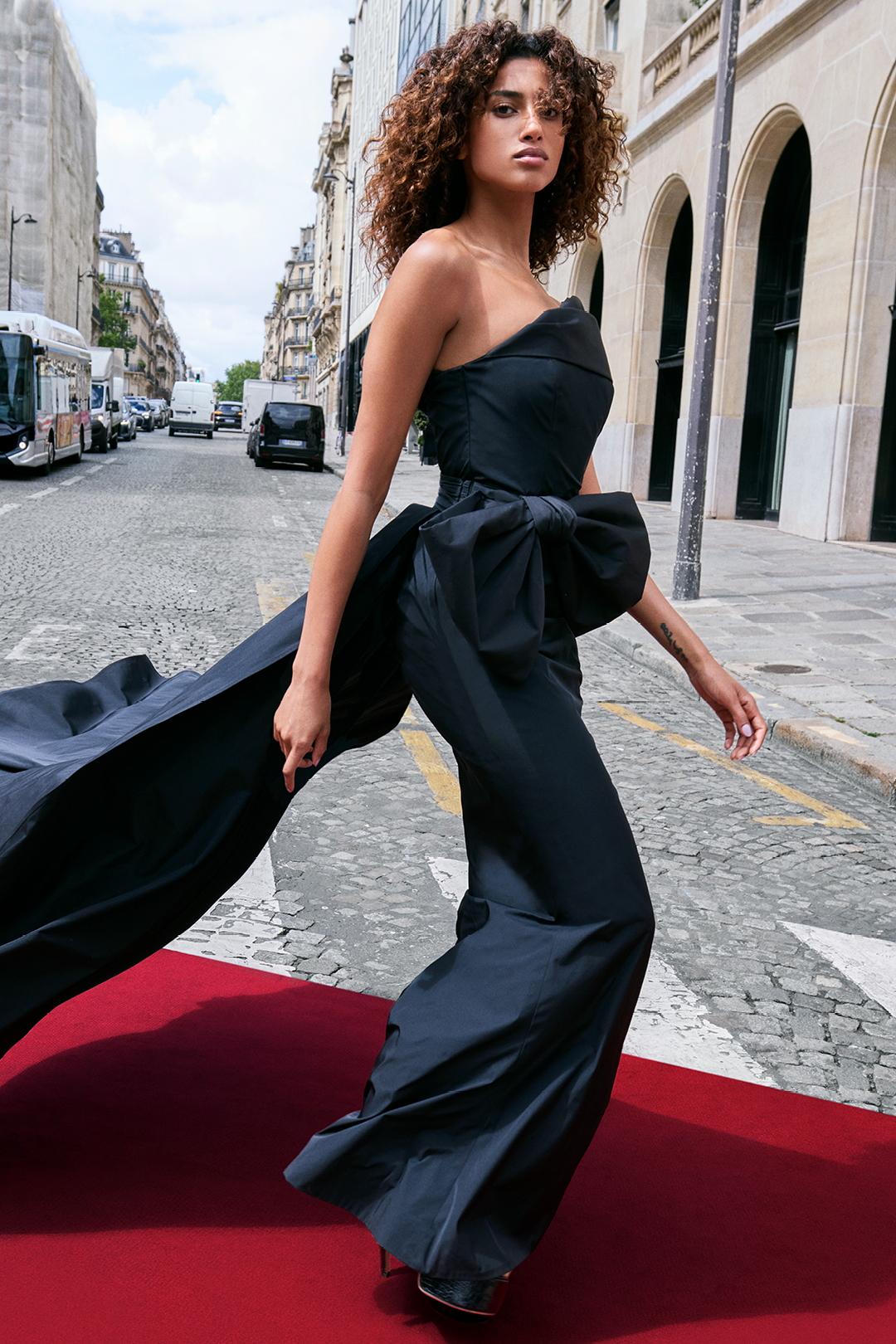
Courtesy of Elie Saab & H&M
For a designer this associated with the rarefied, Saab is unusually clear that his eye was trained somewhere rather far away from, say, the steps of the Met Gala, having opened his first atelier in Beirut at eighteen. “Everything was done with instinct, observation, and respect for the women around me,” he says of that time. “Lebanese women have always been my first inspiration. They carry themselves with a natural elegance, but also with strength and determination.” What he took from them, he says, is that “beauty is never superficial. It is something lived, something embodied. It is in how a woman enters a room, how she speaks, how she carries her story.” Now with H&M, he’s drawn inspiration from a different demographic, bringing us a fresh take on a heritage brand.
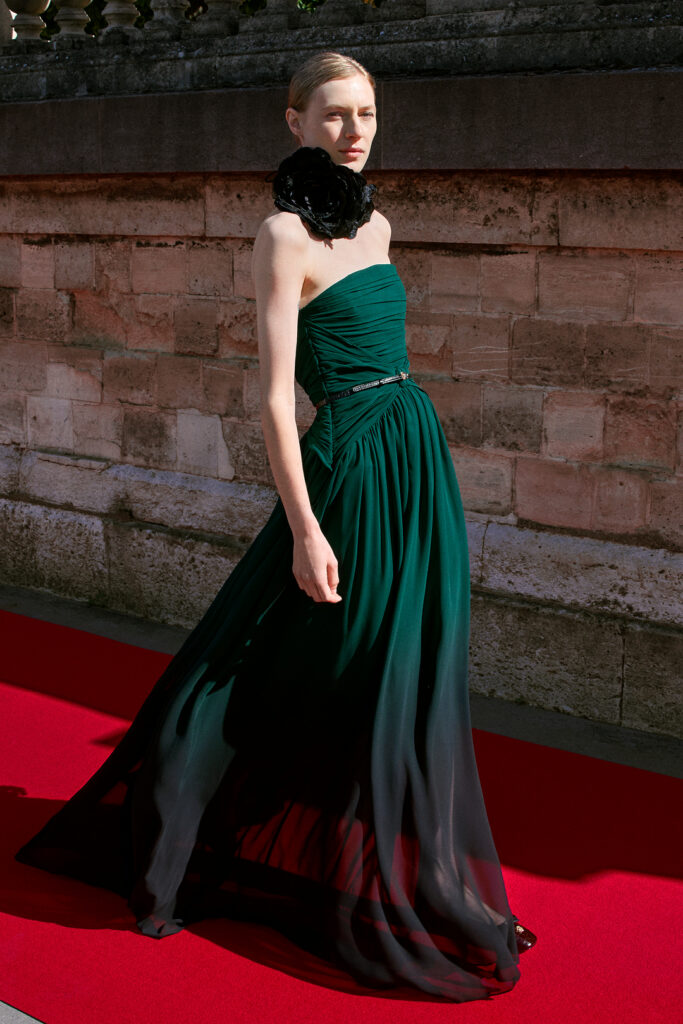
The clearest expression of that idea in the collection isn’t a specific gown at all, but rather a unifying technique. The dégradé—the “gradient”—is Saab’s signature: sequins that begin bronze at the shoulder and dissolve into black by the hem, or a bodysuit that shifts from copper to shadow as it drops down the torso. He talks about it the way other people talk about music: “Dégradé is, for me, a way of translating emotion into fabric,” he says. “[It’s] the art of allowing colour to evolve gradually, from light to depth, from one tone into another, creating a seamless transition that feels almost weightless.”
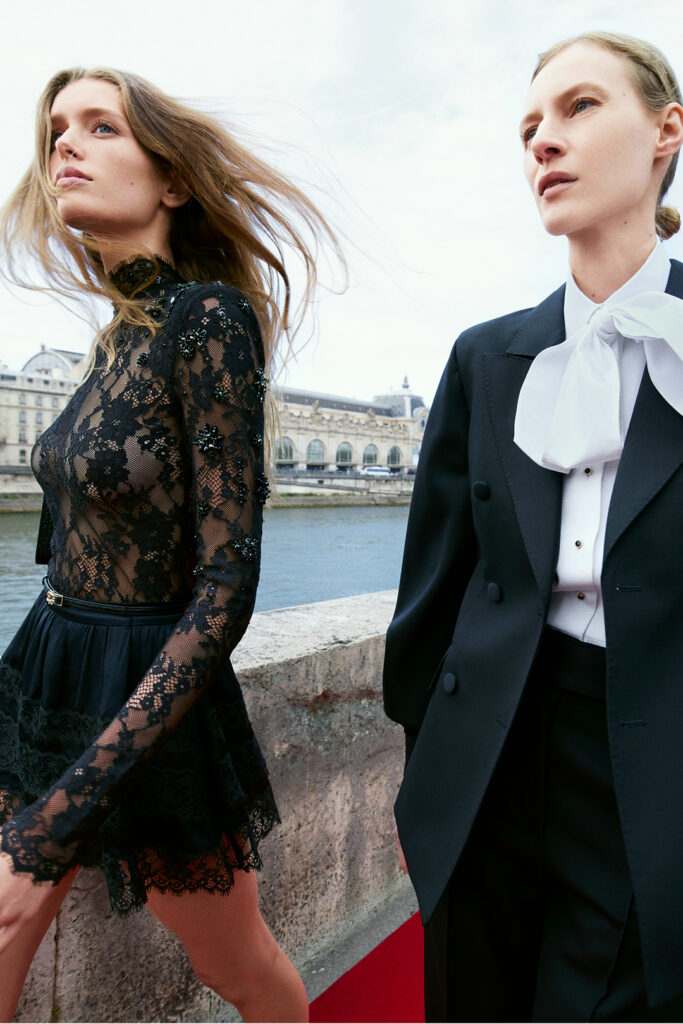
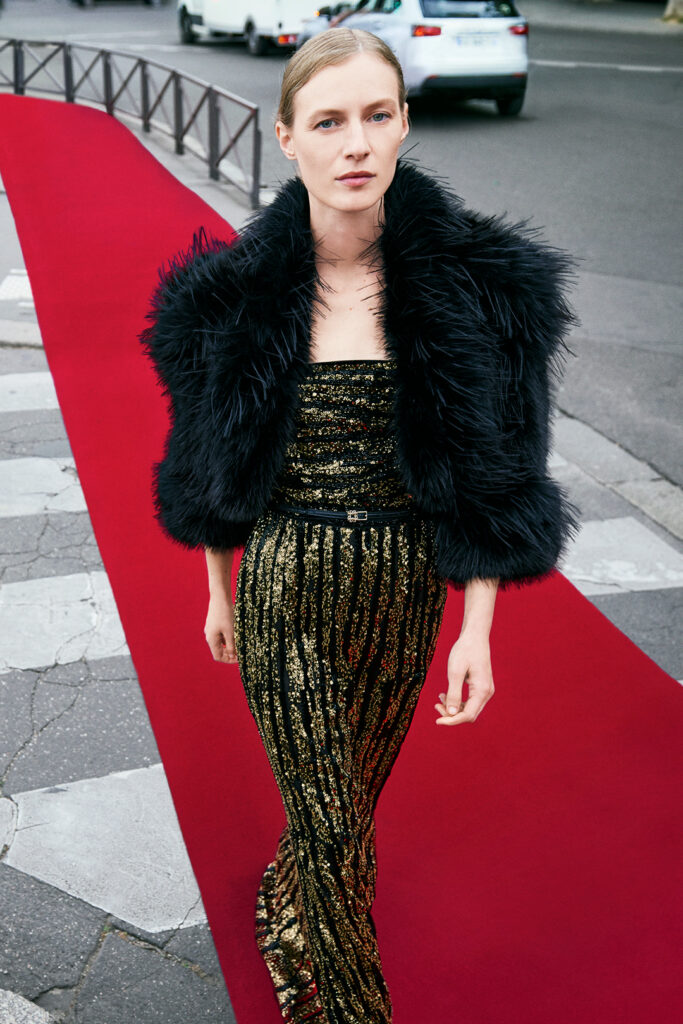
Courtesy of Elie Saab & H&M
It’s also, if you let it, the neatest available description of what a couturier is doing when he agrees to a project like this. A gradient has no clean edge, no point where you can say: here is where one thing ends, and the next begins. The collection runs on that principle. At one end, the world of the made-to-order gown; at the other, a rack you can reach without an appointment.
Saab would rather you didn’t look for the seam. “Elegance is personal,” he says. “It is about how each woman connects with a piece, how she makes it her own.”
There’s a black tuxedo, cut for women and men, of the kind H&M’s Ann-Sofie Johansson says she’d wear “with jeans for an everyday look,” a faux-fur jacket scaled for a normal evening, atailored coat she calls “a staple that makes you feel strong, smart, elevated,” and a cape she’s already claimed for herself—”so dramatic, but timeless, cool and super wearable.” And the gowns, including the floor-length black one with the oversized bow that Saab draped by hand onto a fit model in the studio, watched, Johansson says, by a team thrilled at his insistence on being “super specific and intentional with every detail.” It’s the collection’s most couture gesture, and the one no one at H&M will get to keep.
Saab calls the whole thing “an invitation into the Elie Saab dream.”
Discover More