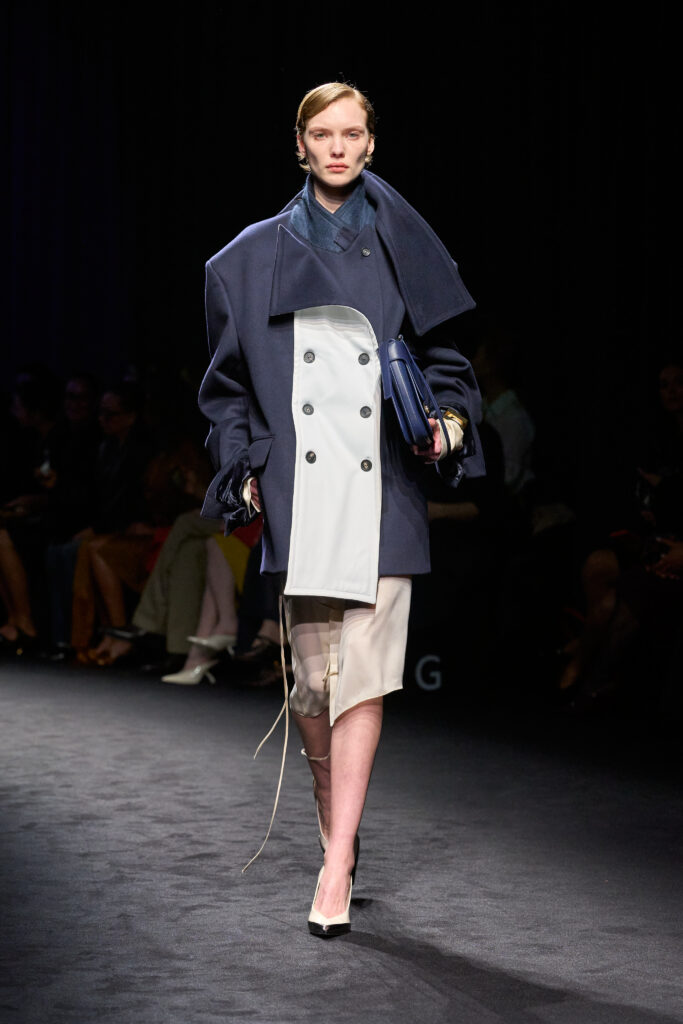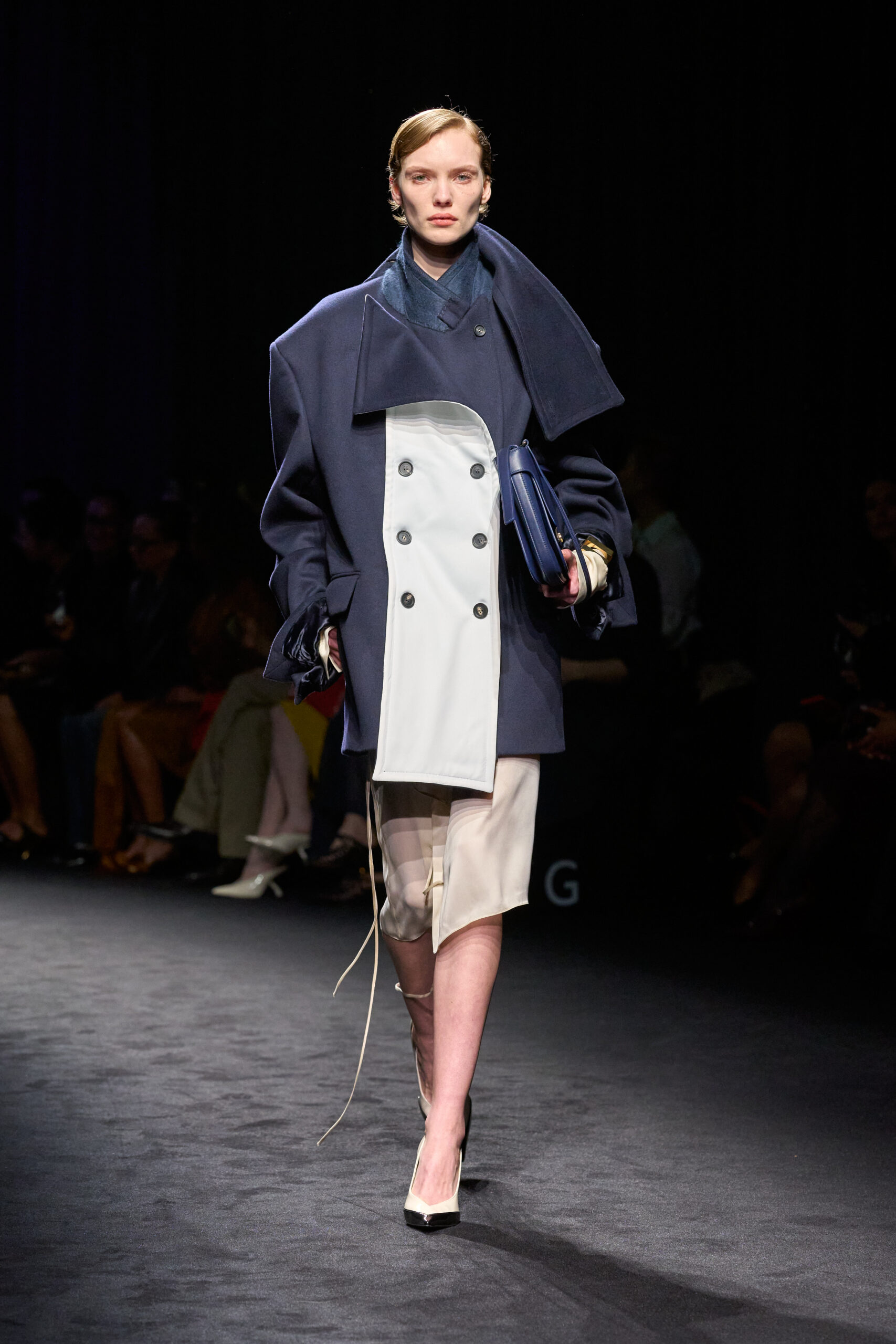
In the 1920s, Salvatore Ferragamo built his name in Hollywood before returning to Italy to establish his brand. That decade of migration and modernity continues to preoccupy Ferragamo today. For Fall/Winter 2026, creative director Maximilian Davis refined the conversation he began last season, shifting from the overt liberation of the Jazz Age toward something more interior: the discipline of tailoring.
Where his spring collection examined release with the ease of widened silhouettes, autumn considers what comes after emancipation: structure and authorship. Davis avoids the easy decadence of Gatsby-era pastiche. Instead, he is drawn to the speakeasy as an equalizer: a charged, liminal space where hierarchies blurred, and identity could be renegotiated.
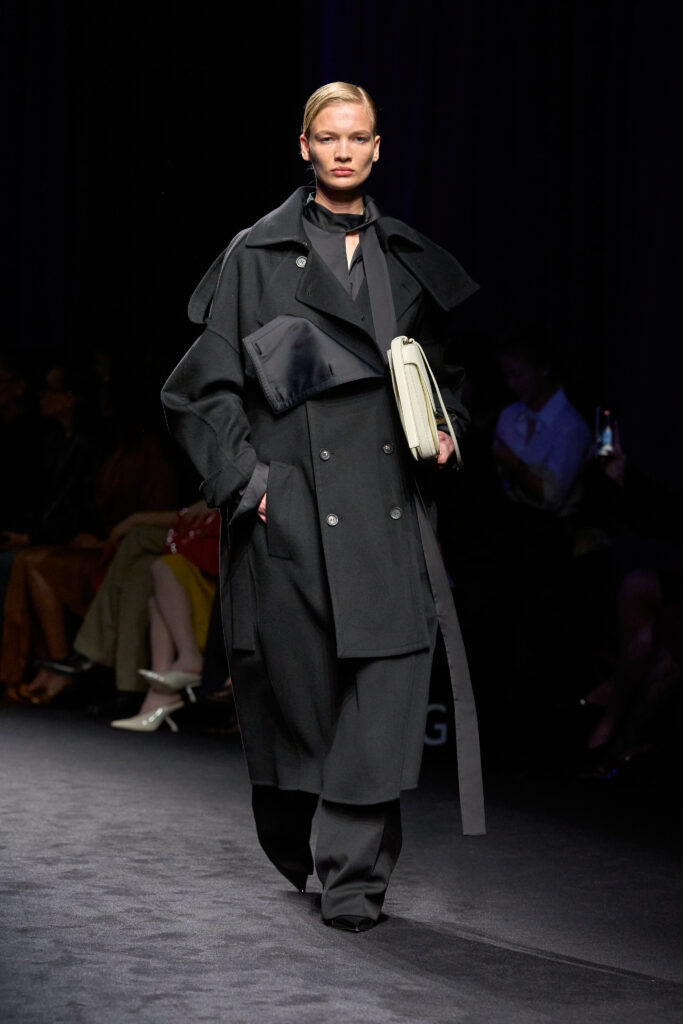
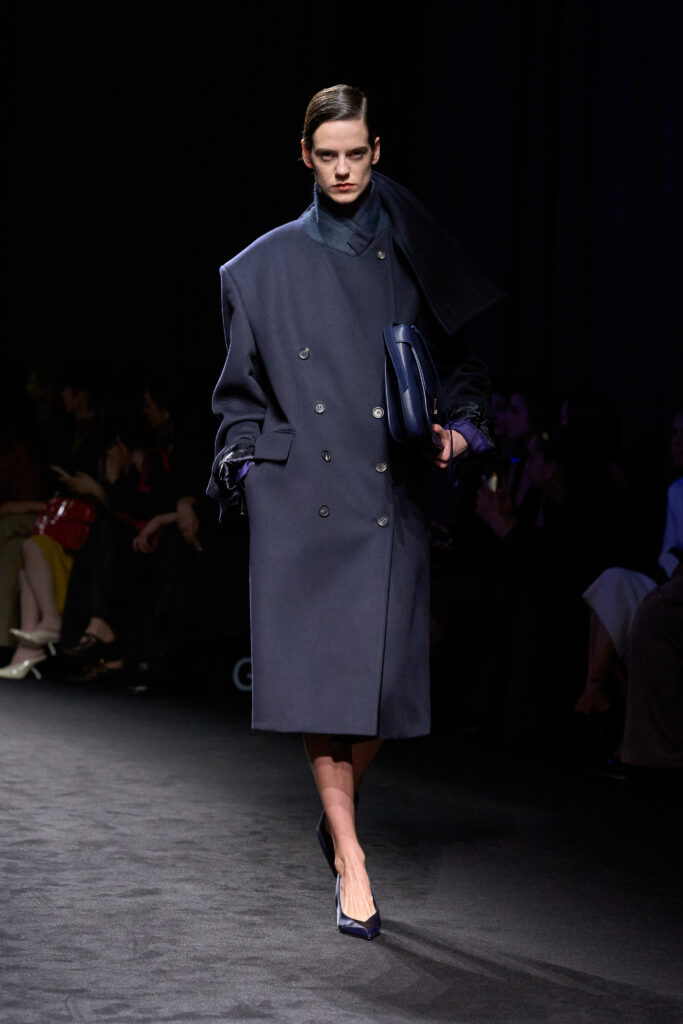
Staged within the darkened halls of the Triennale di Milano, the show was presented with deliberate restraint. The opening looks carried a severity that felt almost architectural: enlarged peacoats with vestiges of their naval origins; silk shirting gathered high along the neck; double-breasted coats cut with generous proportion; suiting fractured and reassembled. There was a subtle cubist undertone, yet everything remained grounded in exacting Italian technique.
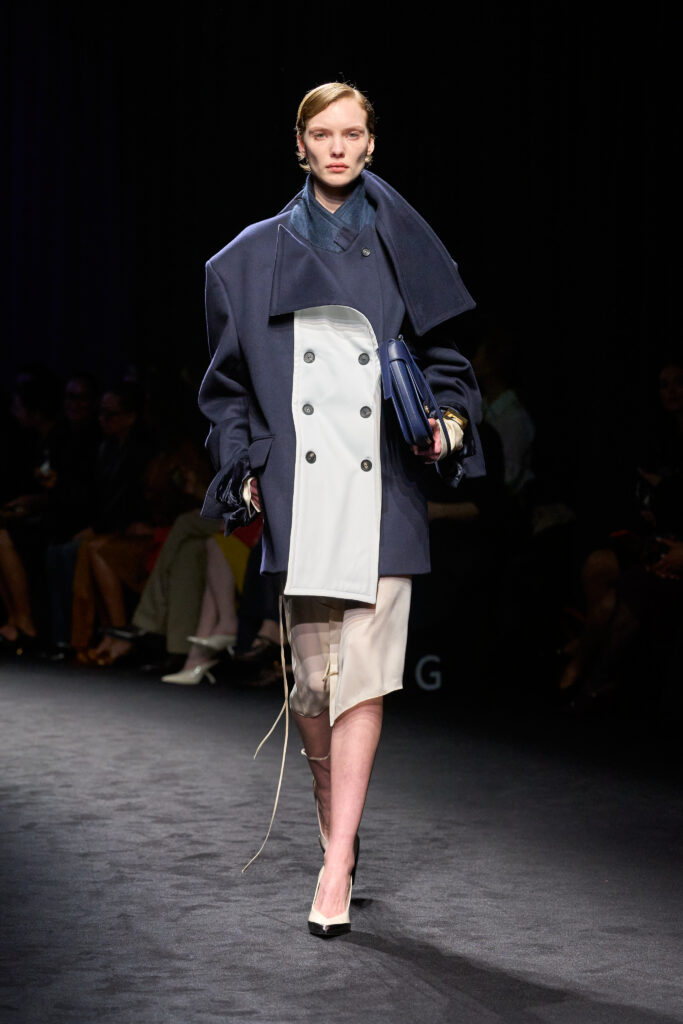
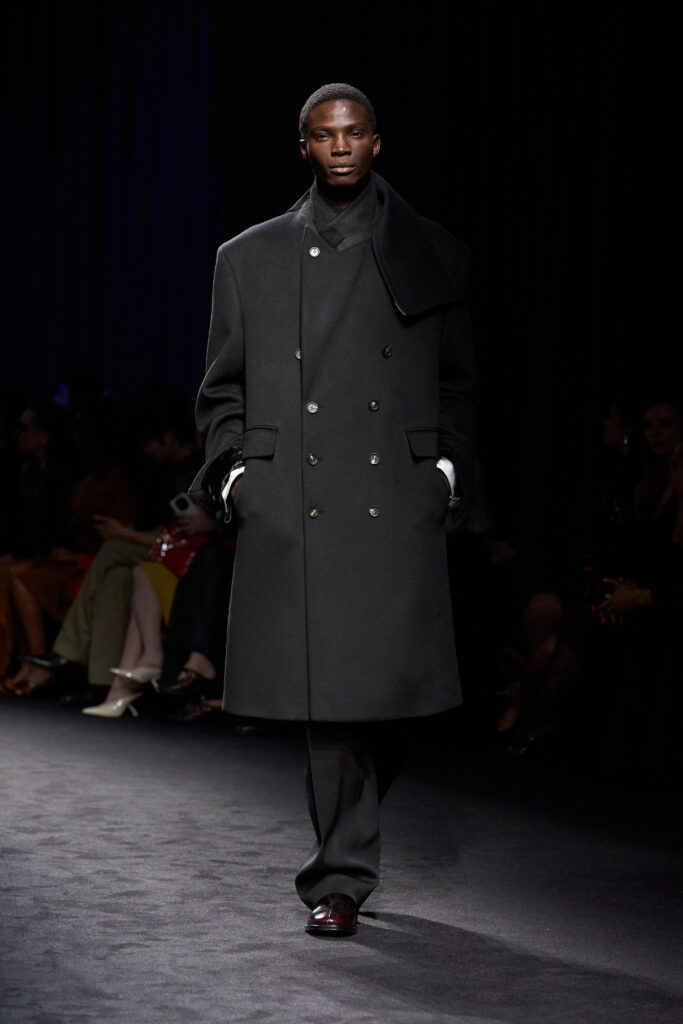
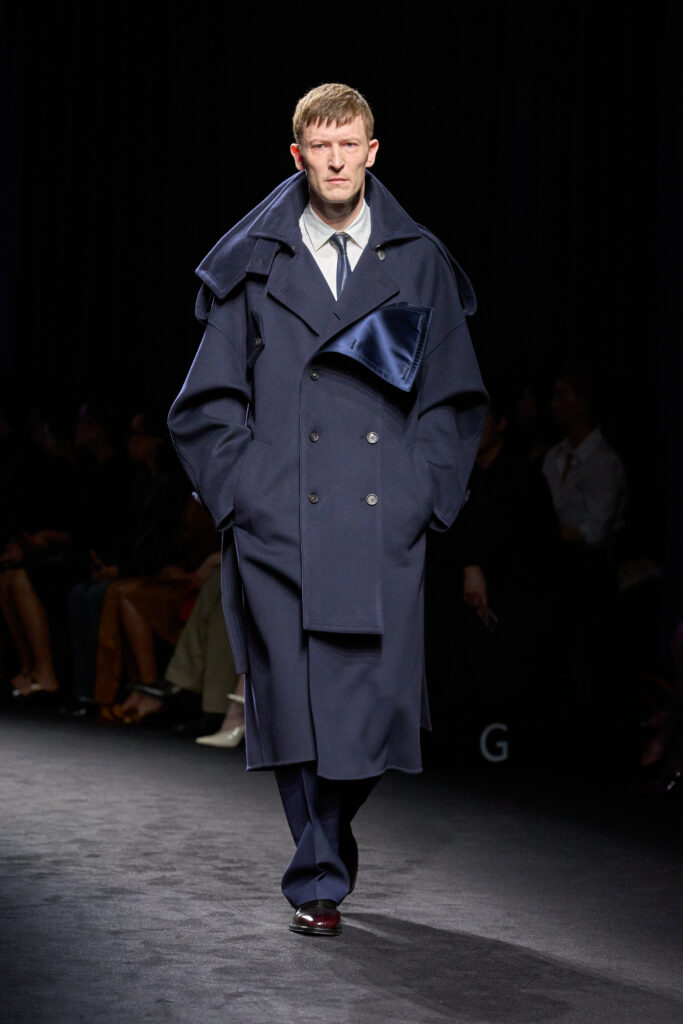
Buttons emerged as both device and metaphor. Sweaters opened along the collarbone. Dresses and skirt suits were modular; their panels connected or disconnected at will. Tailoring was treated not as a fixed structure but as something mutable, responsive to the body. Davis has long understood the tension between refinement and seduction; here, exposure is not gratuitous nor ornamental. It is considered.
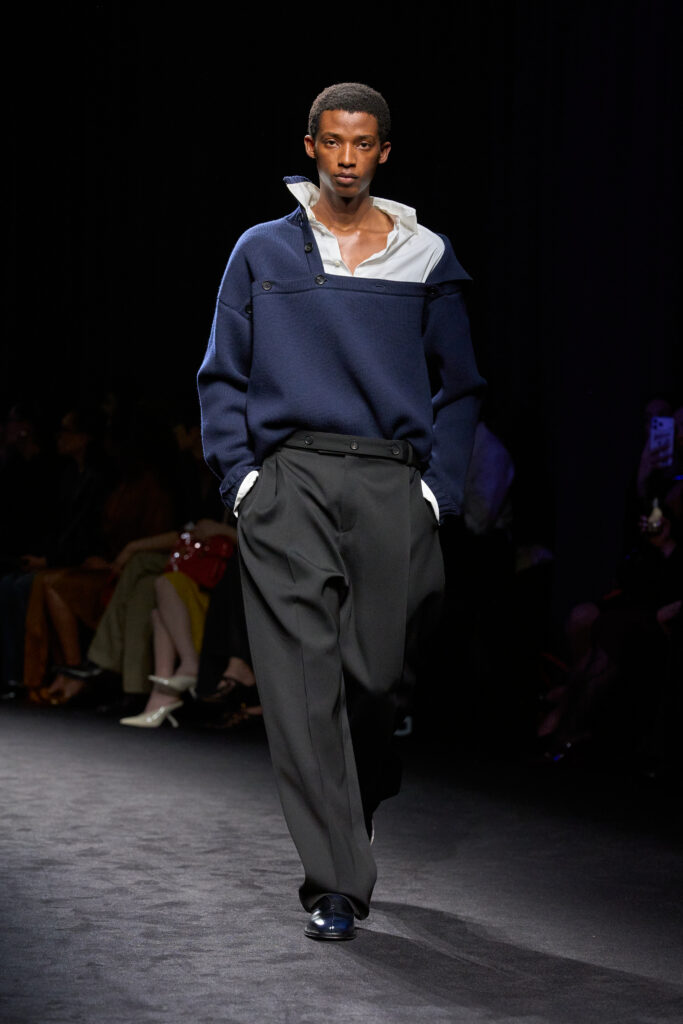
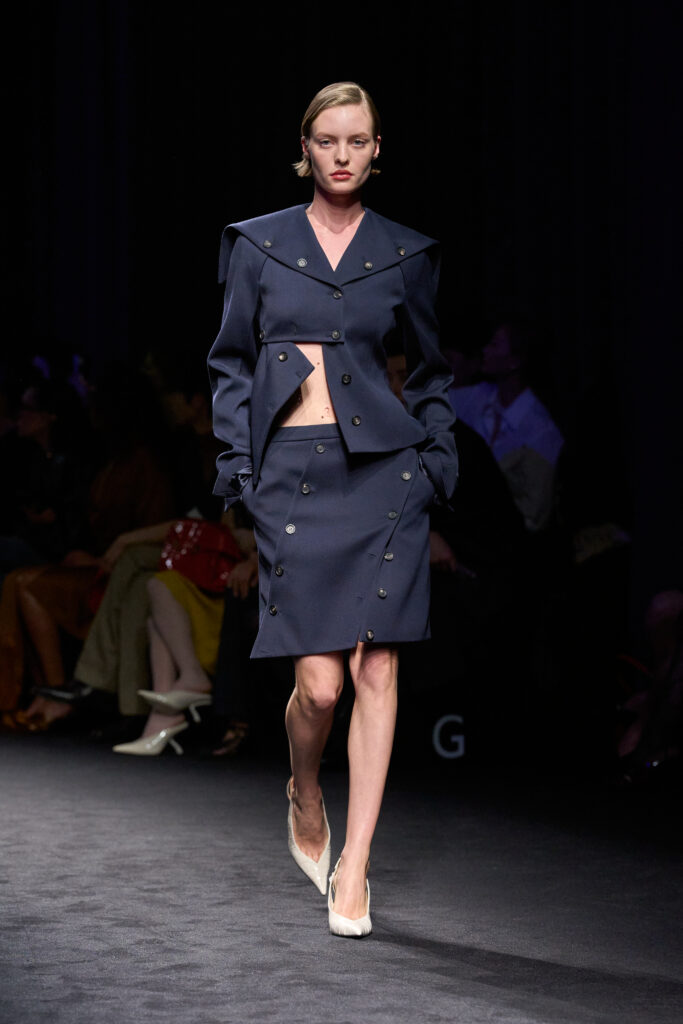
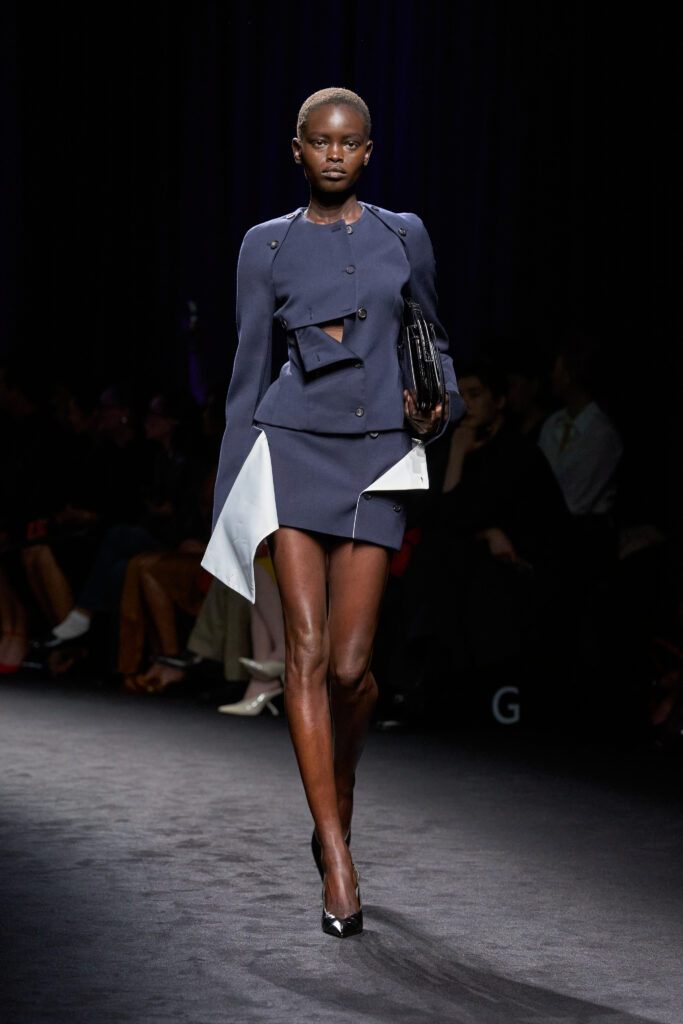
The palette began in sobriety — black, navy, cream, charcoal — before deepening into jewel tones: saturated purples, lacquered reds, inky blues, sudden flashes of tangerine. Garment-dyed gabardine provided graphic interruption, while quilted leather introduced a contemporary density. As the show progressed, those contrasts softened. Muted greens and faded oranges emerged, as though the vibrancy of the 1920s was glimpsed through a patina of time.
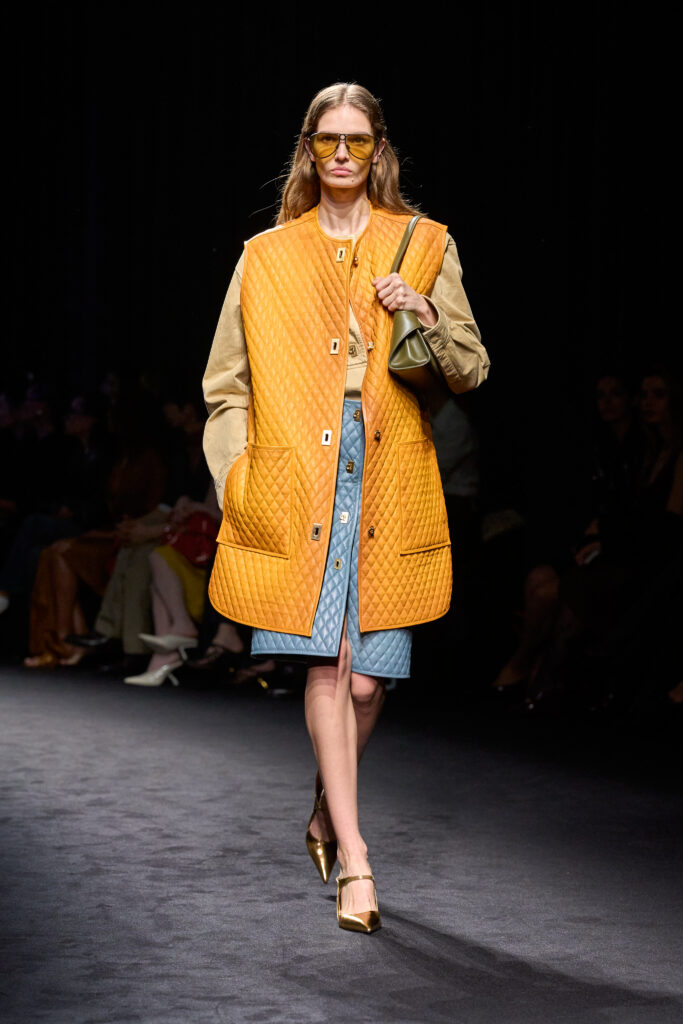
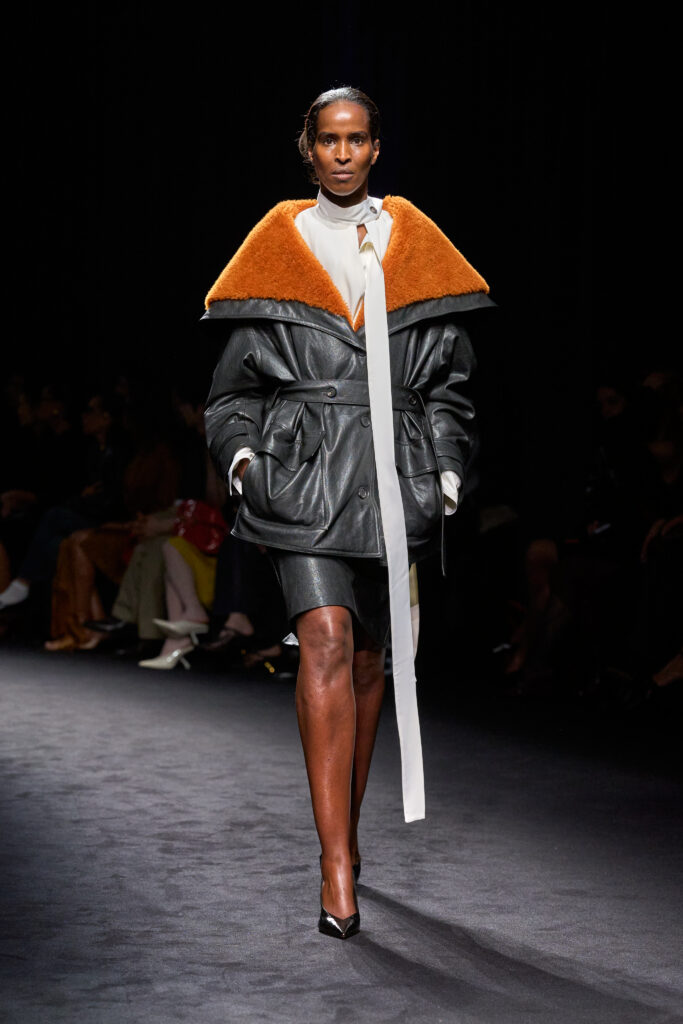
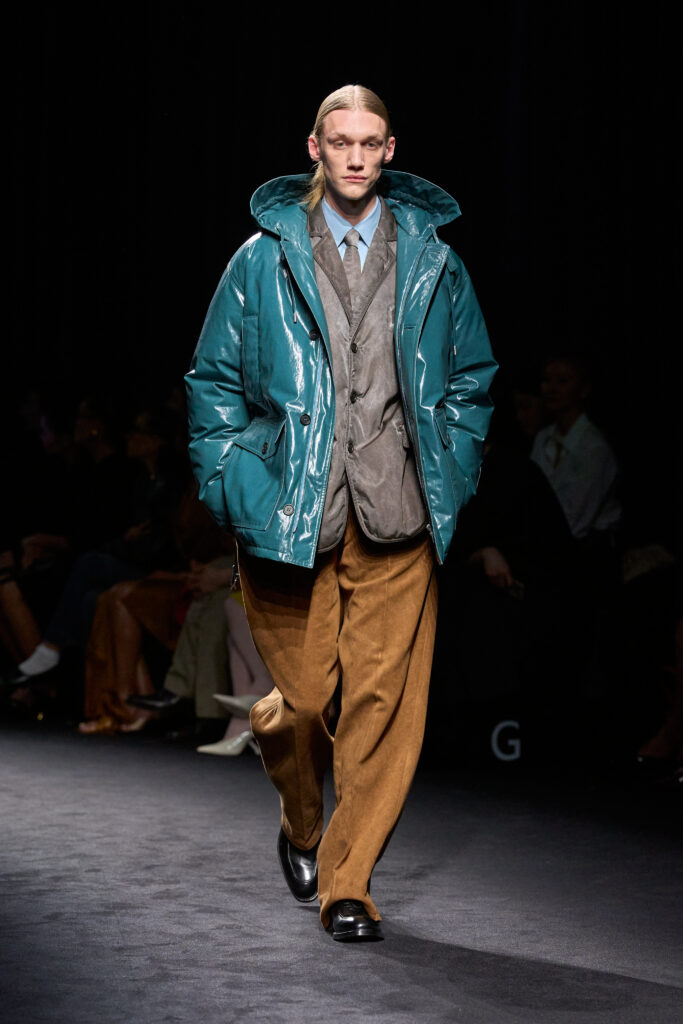
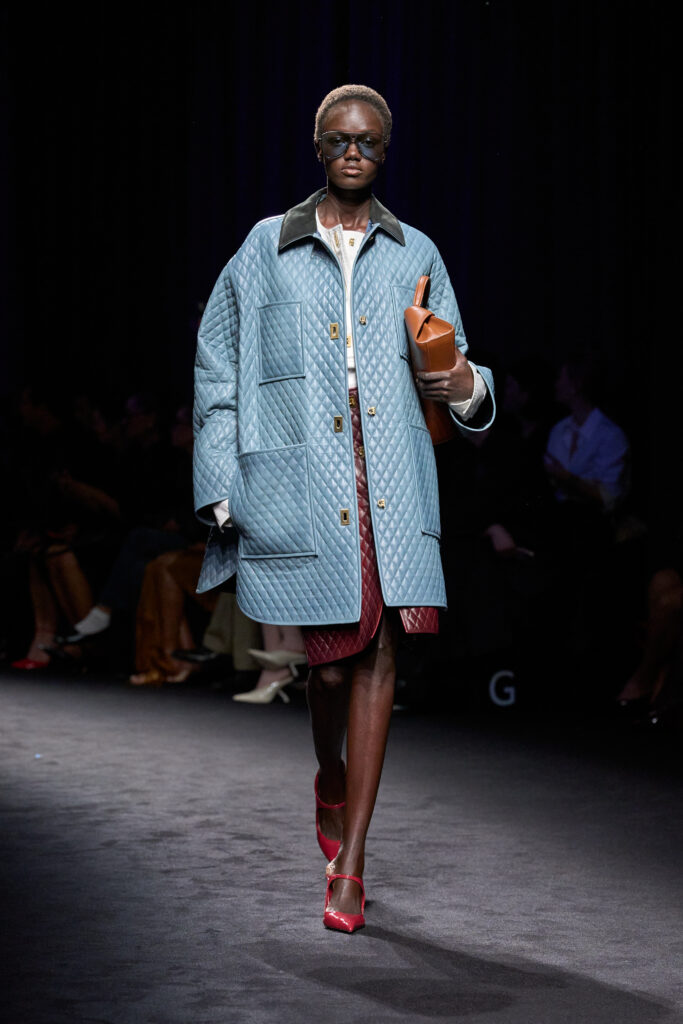
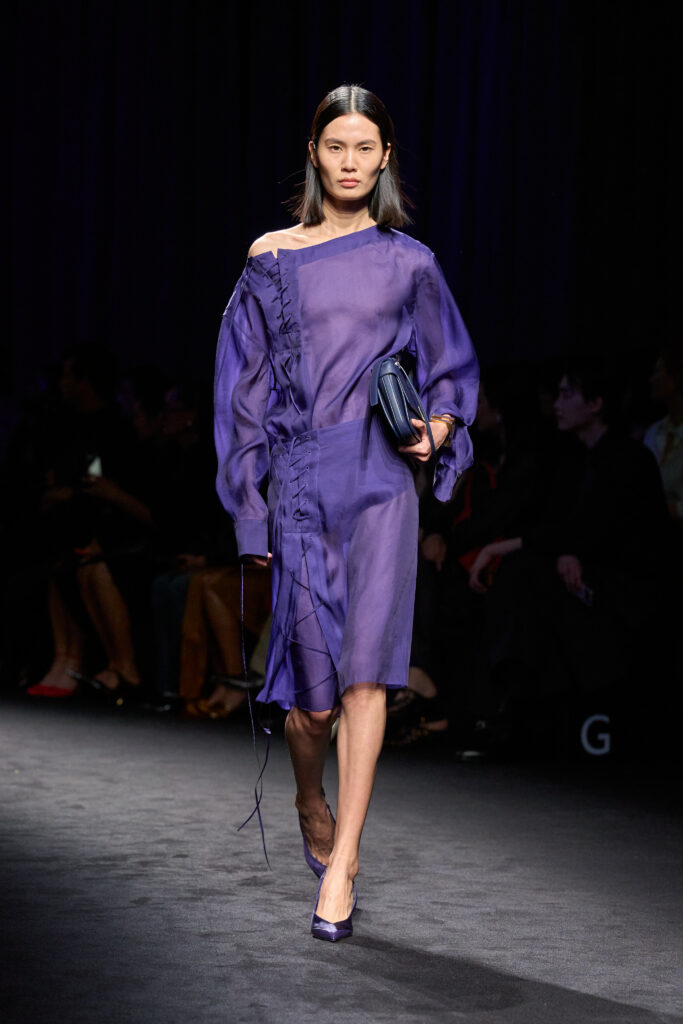
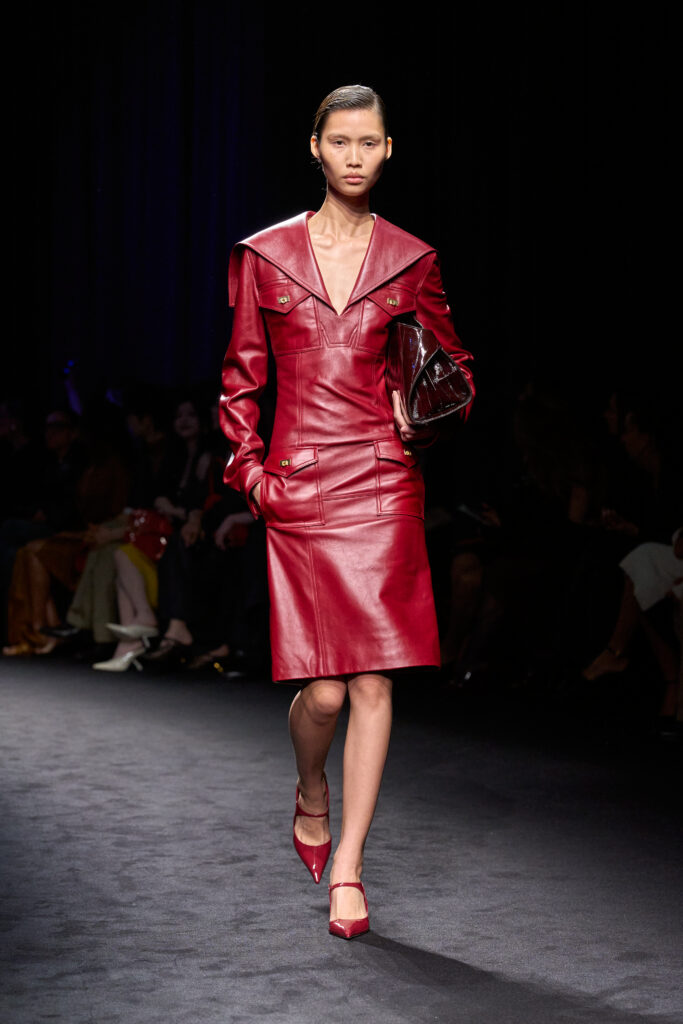
The collection shed its austerity, becoming fluid and gold surfaced. Lamé in foiled velvet caught the light with liquid intensity. Silk slips in floral jacquard hovered below the knee, but between remembrance and modernity. Pleated gowns, sheer through the waist, gathered at the ankles and wrists. Controlling sensuality.

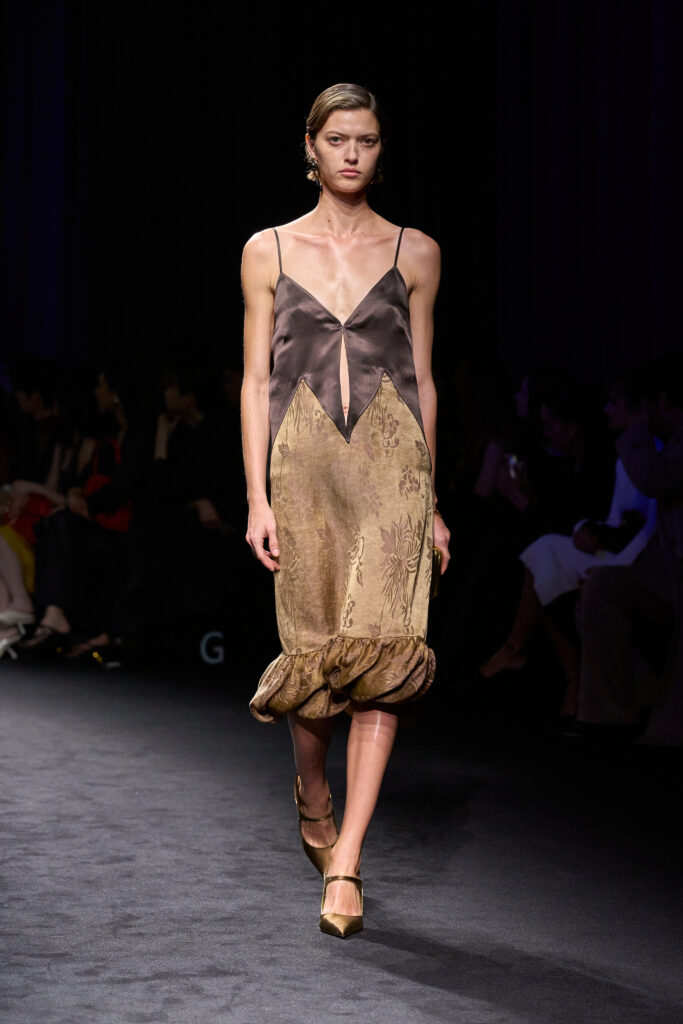
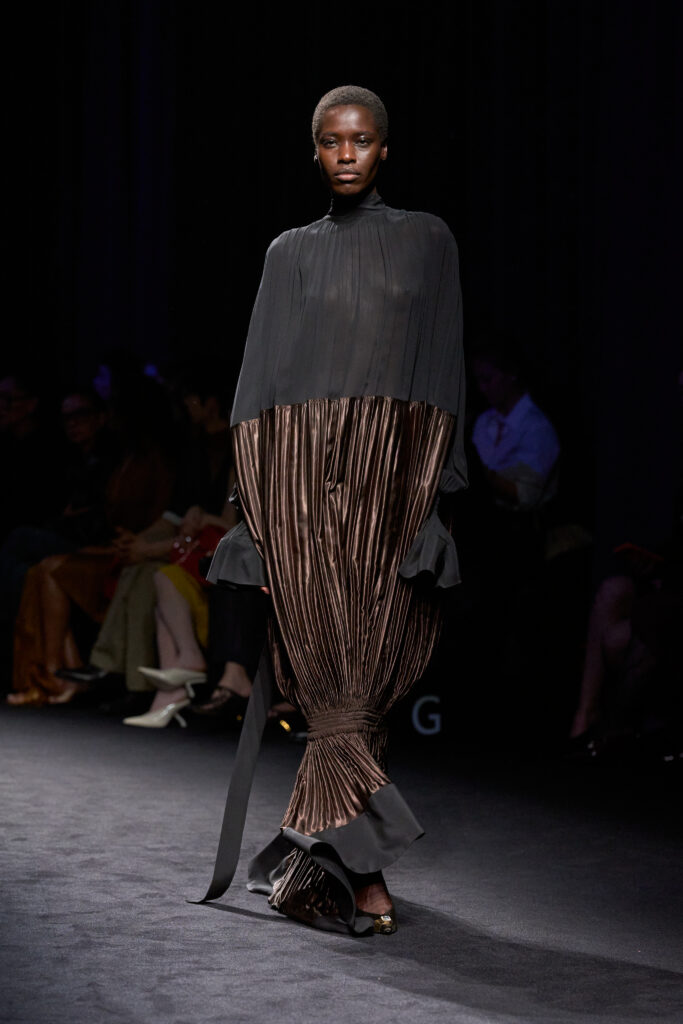
Davis resists the current nostalgia culture. His 1920s are not kitschy but are a study of turbulence, reinvention, and fragile optimism. The collection moves from structure to fluidity, mirroring a world negotiating its own instability. In that progression, Ferragamo Fall/Winter 2026 is a proposition that elegance can still articulate freedom.
Discover More