Through Robin Galiegue’s lens, fashion is pulled out of still life and dropped directly into the language of movement, engineering, and performance. What began on the SS26 runway continues here with sharper focus, further dissolving the boundary between machine and wardrobe.
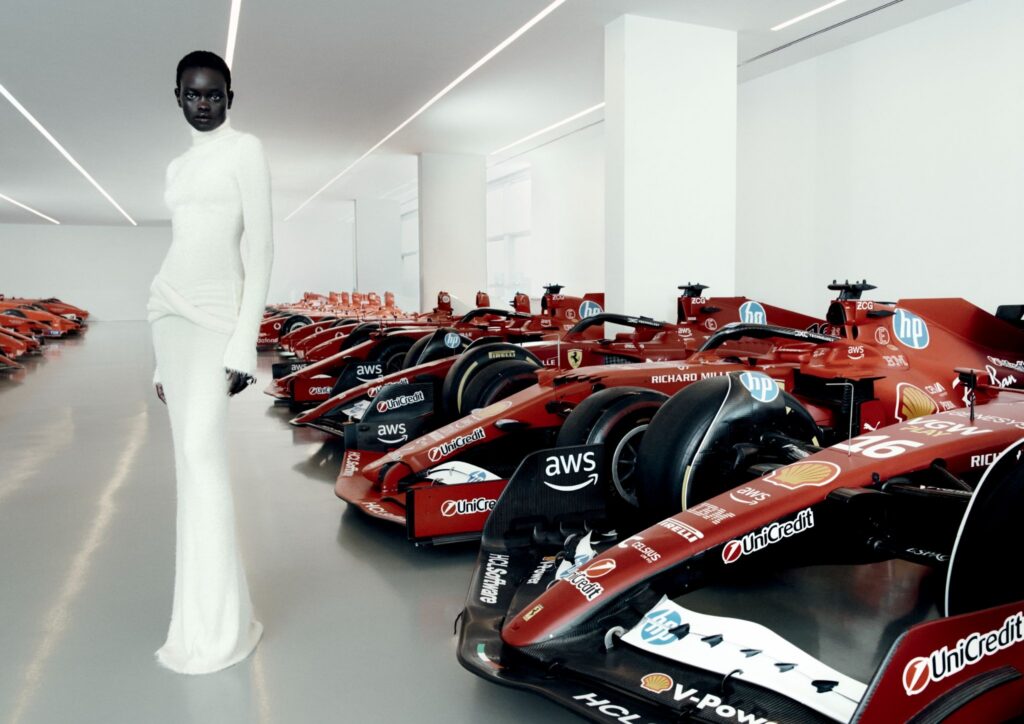
The campaign unfolds in the brand’s spiritual home, Maranello. Shot inside the building that houses Ferrari’s Endurance and Corse Clienti divisions, and extending to the nearby Fiorano Circuit, the setting does more than frame the clothes—it structures the narrative itself.
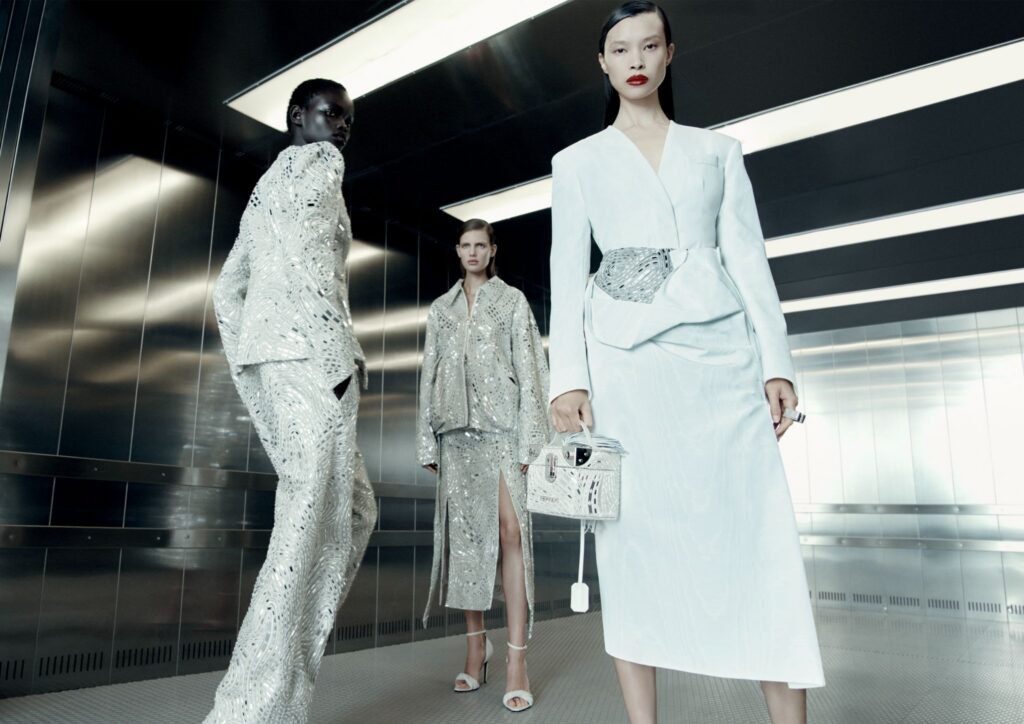
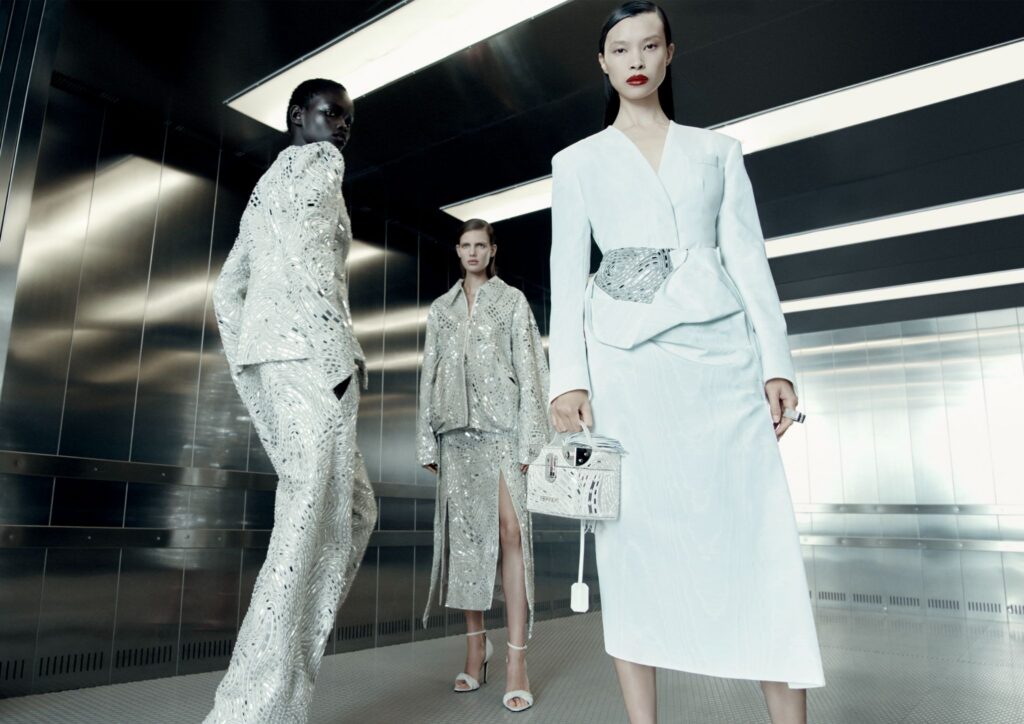
The story opens inside pristine white chambers that resemble a vault, where clients’ Formula 1 cars are stored with near-ceremonial care. From there, the camera moves into the raw, metallic belly of a freight elevator before finally emerging onto the circuit, where performance is no longer theoretical, but tested.
The choice of location is deliberate. Ferrari’s Endurance division oversees the brand’s long-distance racing programs, while Corse Clienti offers elite customers access to Ferrari’s racing ecosystem and heritage machines. By staging the campaign within this environment, Ferrari fashion speaks directly from the core of the company’s competitive DNA rather than merely borrowing its symbolism.
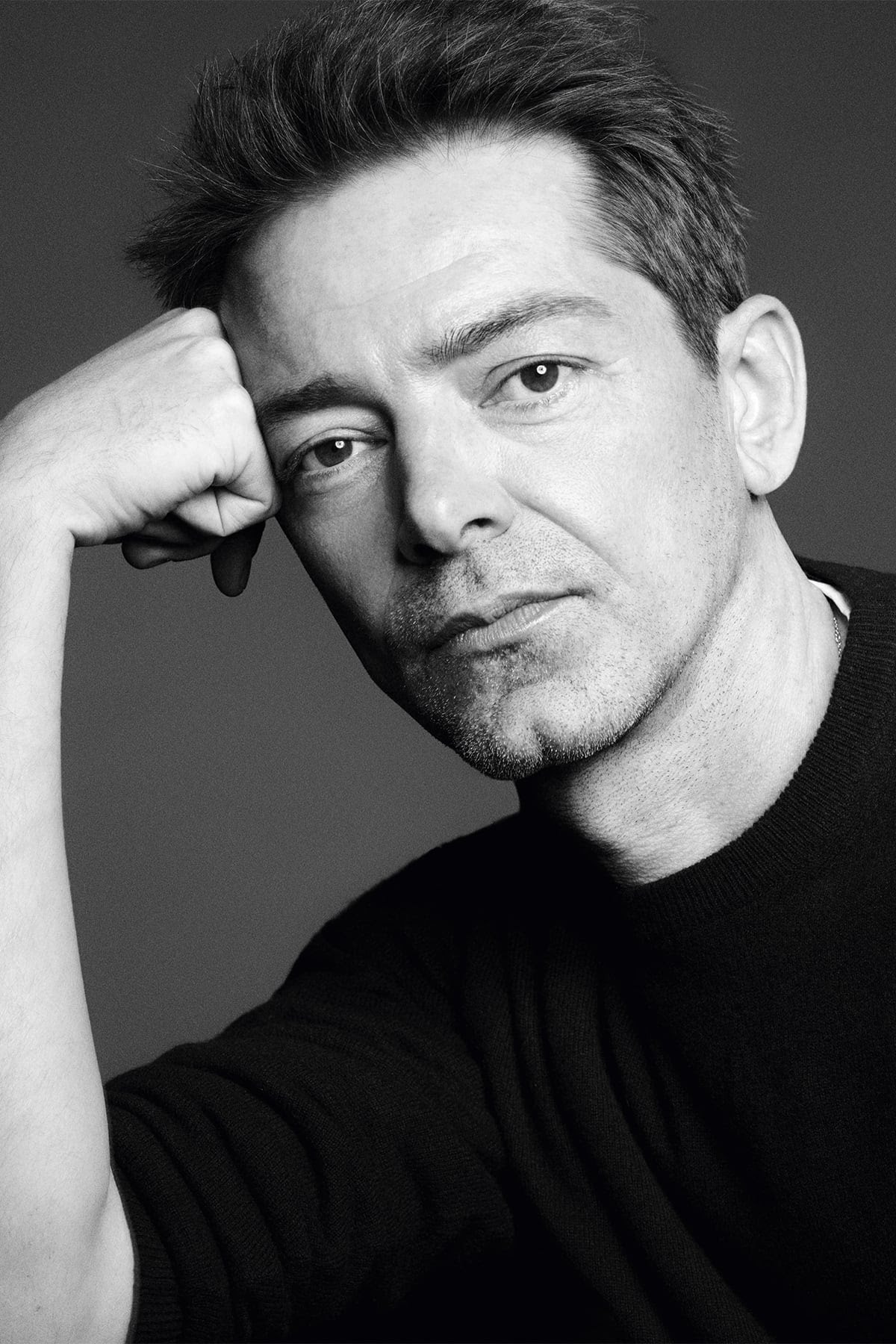
Guiding this visual language is creative director Rocco Iannone. Born in 1984 and appointed to lead Ferrari’s fashion arm in 2019, Iannone has steadily refined the house’s aesthetic vocabulary. His earlier tenure at Giorgio Armani and Pal Zileri is evident in the discipline of his tailoring and the clarity of his silhouettes.
The Ferrari man and Ferrari woman introduced on the runway return here with added dimensionality. They are no longer simply dressed figures but individuals who regard their cars as sculptural objects, as pure inventions to be contemplated and then experienced at speed. There is an almost inevitable elegance to them, a presence that feels engineered rather than styled. Interpreted by Rosalieke Fuchs, Diane Chiu, Athiec Geng, Vasko Luyckx, and Bai Ruien, these characters pursue the same principle whether behind the wheel or inside the wardrobe: form must serve function, and function must remain beautiful.
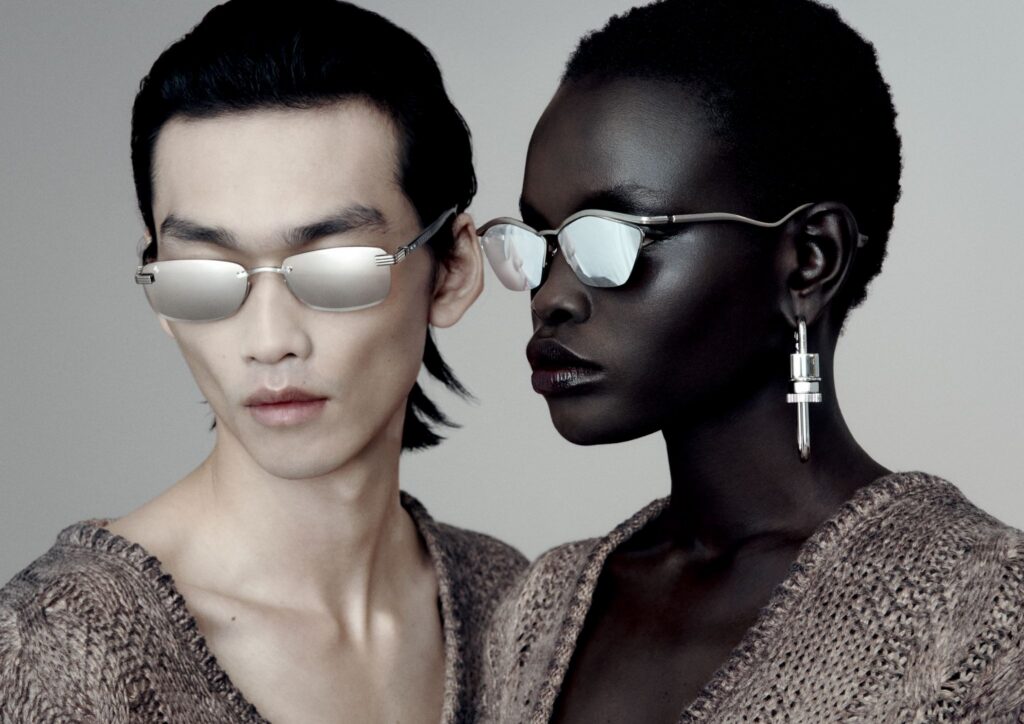
One of the campaign’s most striking close-ups makes Ferrari’s accessory strategy unmistakably clear. Narrow mirrored sunglasses reflect light with the cool precision of automotive bodywork, their minimal frames reinforcing the collection’s aerodynamic intent. Nothing feels ornamental. Everything points back to performance. Equally compelling is the cylindrical metal earring, which reads less like traditional jewelry and more like a distilled mechanical component. Its industrial finish catches and rebounds light, shifting the accessory from supporting detail to focal point.
Throughout the collection, the design language remains rooted in engineering logic. Silhouettes are clean, vertical, and streamlined, projecting authority without visual noise. The purity of the cuts allows material tactility to surface, while controlled lighting skims across textures to emphasize their technical character. Monochrome looks sharpen the focus further, and the palette reinforces Ferrari’s cultivated restraint. White, grey, red, silver, and black assemble into a spectrum that feels almost aristocratic in its discipline.
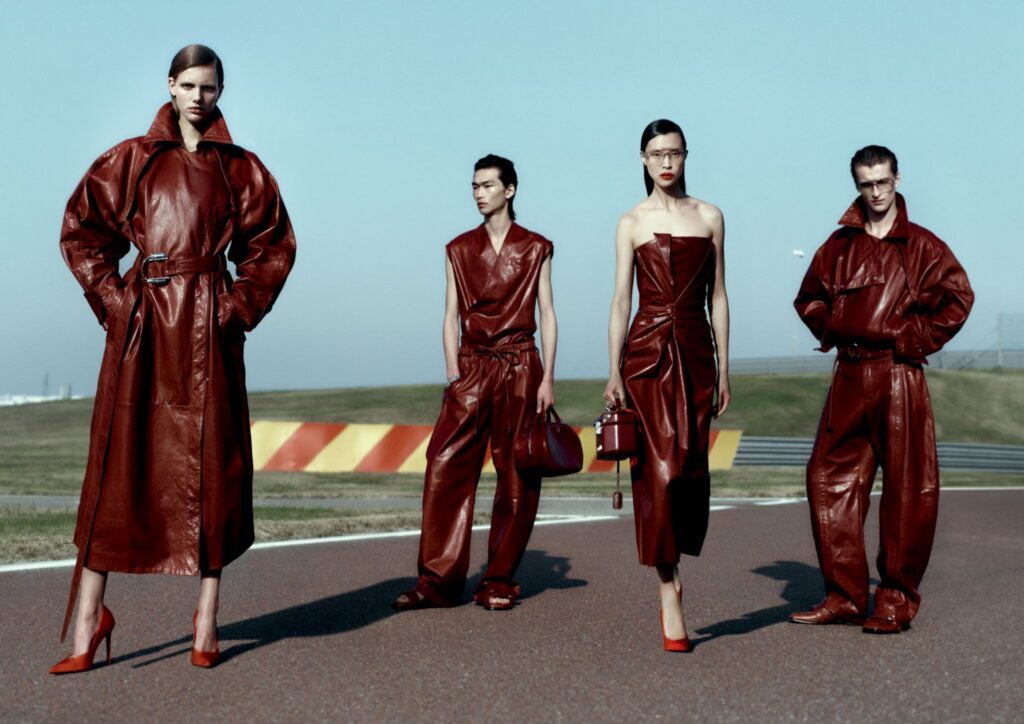
Head-to-toe deep burgundy leather looks translate Ferrari’s signature high-gloss automotive finish into clothing with remarkable fluency. The long belted trench in particular balances volume and control with precision, its structured shoulders and cinched waist revealing the collection’s engineered backbone.
At the center, a strapless leather dress demonstrates Ferrari’s ability to sculpt rigidity into elegance. Directed gathers and controlled folds guide the material around the body with an almost aerodynamic flow. The compact handbag and cylindrical mini carried alongside it reinforce the sense that these pieces have traveled directly from the paddock into an urban luxury wardrobe. Meanwhile, the menswear silhouettes, with their relaxed wide trousers and sleeveless leather top, suggest that Ferrari’s expression of power is shifting away from rigid tailoring toward something more fluid yet still disciplined. What ultimately binds the looks together is chromatic control. The deep burgundy reads as a matured evolution of Ferrari red, more restrained but no less commanding. By the final frames, the circuit no longer functions merely as a testing ground. Here, asphalt becomes a runway in its own right. Ferrari reminds us once again that, in its universe, speed is not only a performance metric but also an aesthetic condition.
Discover More