Finding Perfection at Paris’s Wonderland Pâtisserie
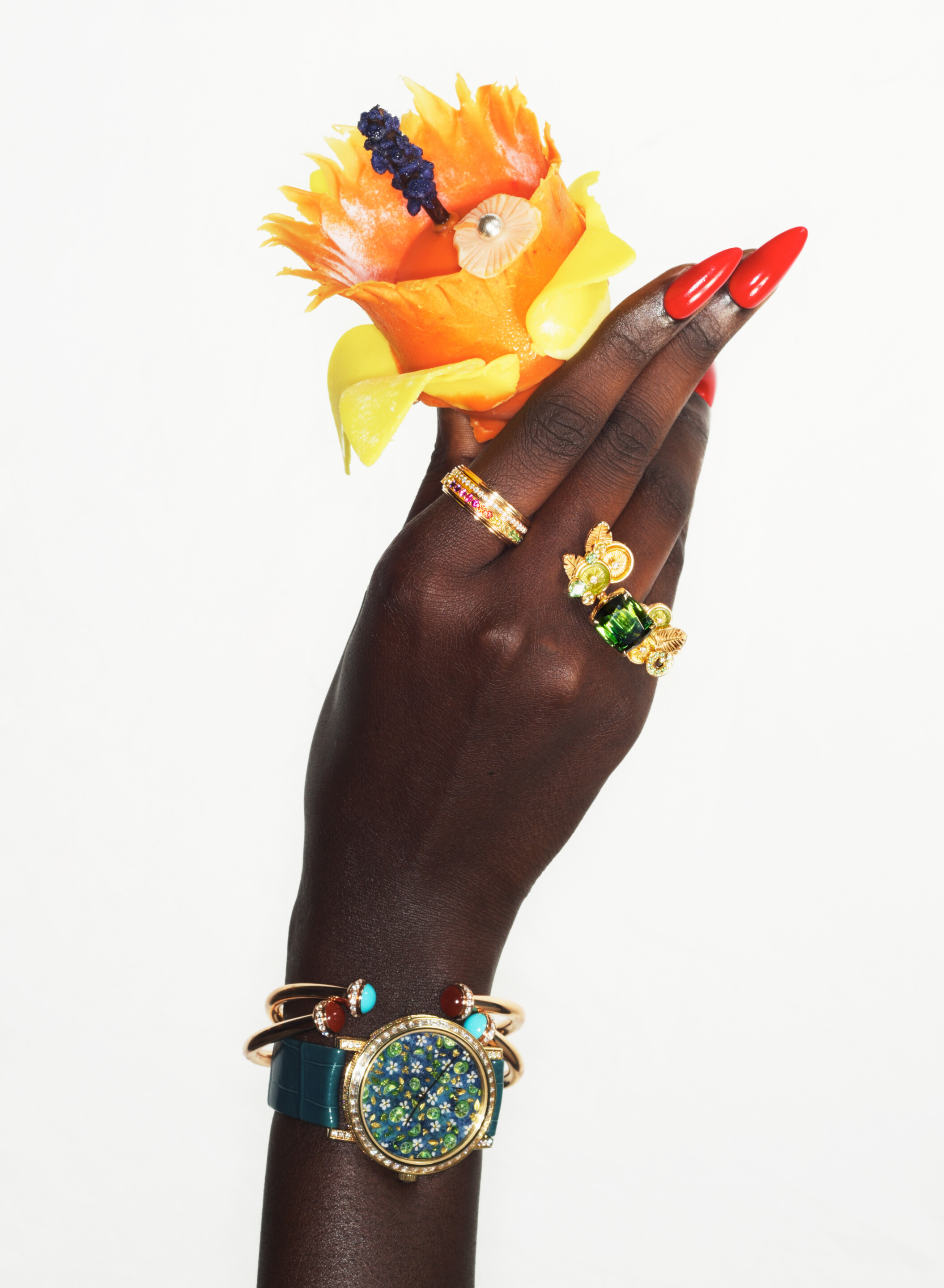
For our V162 Fall 2026 issue, we enlisted the Parisian pâtisserie to bring our latest editorial to a sweet new level
When V were given the opportunity to photograph Piaget’s delectable new Cocktail collection for our latest issue, we knew we had to make it look good enough to eat (even more than it already was). What better way to do that than by adding magnificent pastries? As I traversed the internet in search of fabulous pastries for the shoot, Chef Rodolphe Groizard’s creations at Wonderland Pâtisserie in Paris stood out to me immediately. How did he make that trompe l’oeil rose? The jonquil? I wanted to know everything, I wanted to look at everything, and I wanted to eat everything immediately. So we called upon his skills of the great to make these jewels really pop. True to form, Groizard also crafted jewels of his own in the form of vibrant, totally distinctive pastries. And one day I will go to Paris and eat them!
Groizard had never been on a fashion shoot like this before; he told us—his work was usually photographed in a strictly culinary context. But he found it an inspiring experience—as did V! Exploring more on Chef Rodolphe Groizard’s life and work, we spoke to him about his start as a pastry chef, his work in pastry design, his creative goals, and more. (Plus, there’s a recipe for his very own Jonquille pastry below if your stand mixer is ready to roll.)
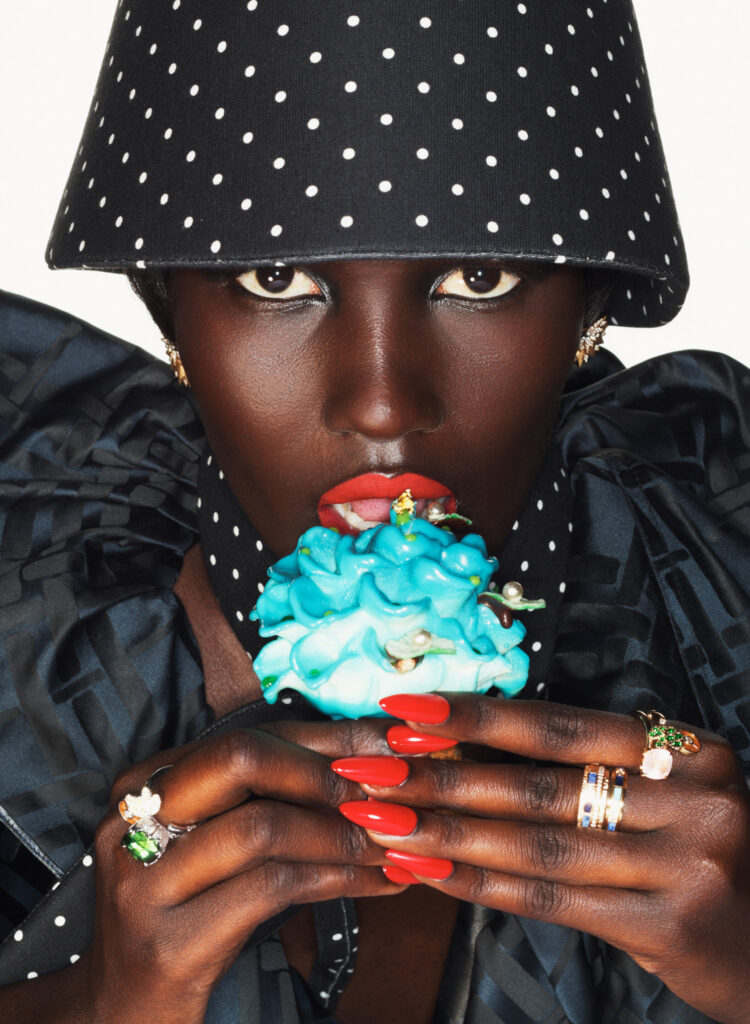
Sunlight Decor Palace earrings, cocktail “Lychee Twist” ring, Possession Vibrant Palace ring, Possession Vibrant Decor Palace ring (left hand), cocktail “Minty Zest” ring (right hand) PIAGET Coat BURBERRY Hat and scarf ROMAIN KREMER
Photography Adrien Toubiana (Mirror Mirror)
Fashion Rúben De Melo Moreira
Creative Director / Editor-in-Chief Stephen Gan
Model Nyachuol Kuon (Select Models)
Makeup Ugly Roscino
Hair Yuri Napolitano (Interlude Project)
Manicure Magda S. using Byredo hand cream
Pâtisseries Wonderland Pâtisserie Chef Rodolphe Groizard
Casting Ikki Casting
Editor Kev Ponce
Fashion Market Editor Copelyn Bengel
Photo Assistant Marine Grandpierre
Production Sara Murru (Interlude Project)
Digital Operator Marie-Amélie Martin (Dope)
Food and Set Designer Alina Prokopenko (Aprís)
Set Designer Victor Komskii (CENTÁ)
Set Designer Assistant Emilia Bieniek
Pâtisseries Assistant Samia Ourti (Wonderland Pâtisserie Manager)
Location Studio Zero
V MAGAZINE: What first made you want to become a pastry chef?
Rodolphe Groizard: At the age of 15, a visit with my mother to [artisan organization and school] Les Compagnons du Devoir et du Tour de France training center sparked my passion for this profession. Seeing a magnificent sugar showpiece inspired me to pursue this career, and I subsequently trained with Les Compagnons du Devoir.
V: When did you realize you wanted to own your own bakery, and how did you make that happen? How did you decide what Wonderland’s specialties would be?
RG: As the son of entrepreneurial artisans, I had always dreamed of owning my own establishment. However, gaining years of expertise and craftsmanship was essential to me. After working with various artisans across France for 11 years, and then spending 12 years as Head Pastry Chef in a Michelin-starred restaurant [La Mare aux Oiseaux] in Brittany, the project finally came to life when I met my wife. Together, Wonderland Pâtisserie found its true meaning. My pastries are inspired by a very distinctive universe, one that tells a story on the plate. But I also wanted our customers to be able to take that experience home with them. That is how our signature specialties were born.
V: What are your creative goals as a pastry chef?
RG: My creative ambition every day is to inspire wonder and emotion in customers of all ages. Each person rediscovers their inner child when they encounter my pastry creations.
V: What was the process of coming up with Wonderland’s specialties like the Rose and the Jonquil? How are they made, and what interested you in this kind of pastry design?
RG: I have always been deeply inspired by nature, and I have never lost my childlike sense of wonder. Whenever an object or a natural element captures my attention, my goal is to transform it into a pastry creation. The rose and the jonquille are perfect examples of this approach. Every detail is crafted by hand. I only use spherical or other molds as a starting point, then I build each dessert by piping techniques and sculpting chocolate by hand. This artisanal process allows me to bring my vision to life and create pastries that are both artistic and unique. Rather than creating illusions, I like to think of my pastries as telling little stories.
V: What is your process for creating a new pastry from start to finish?
RG: My creative process begins with a form or an idea. The structure of the dessert gradually comes to life in my imagination, after which I consider the ingredients and flavour combinations, guided by the seasons and by what I believe will bring pleasure to my customers. I then create a prototype, fine-tune and validate the recipe, and once everything meets my expectations, I begin production.
V: What were all the pastries you created in the Piaget shoot, and what were they made of? How were they made?
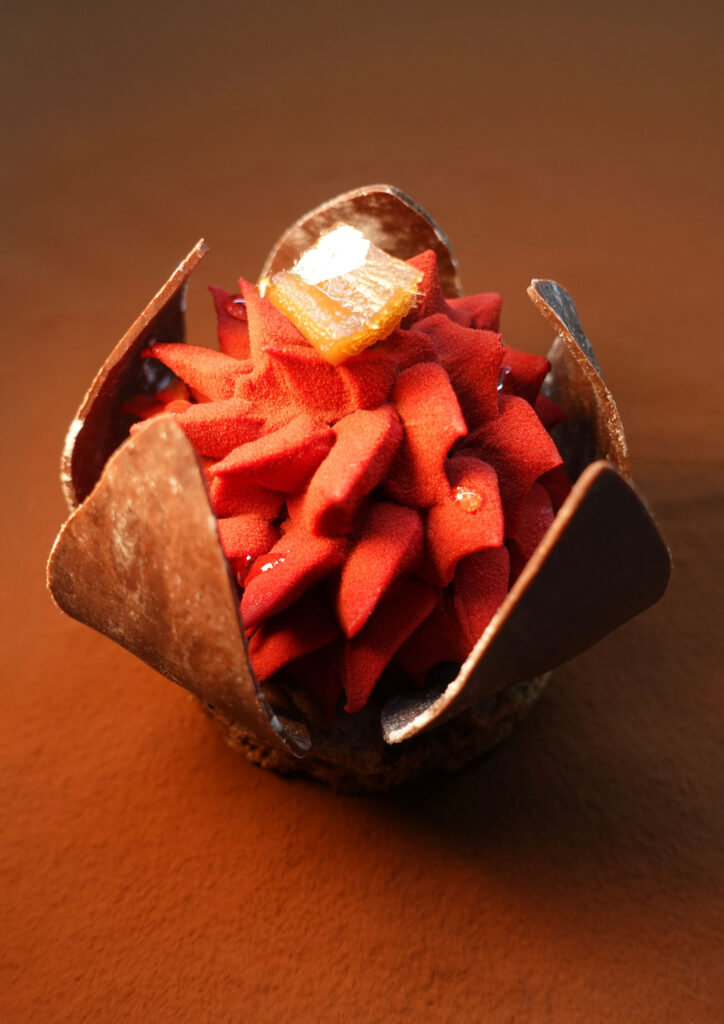
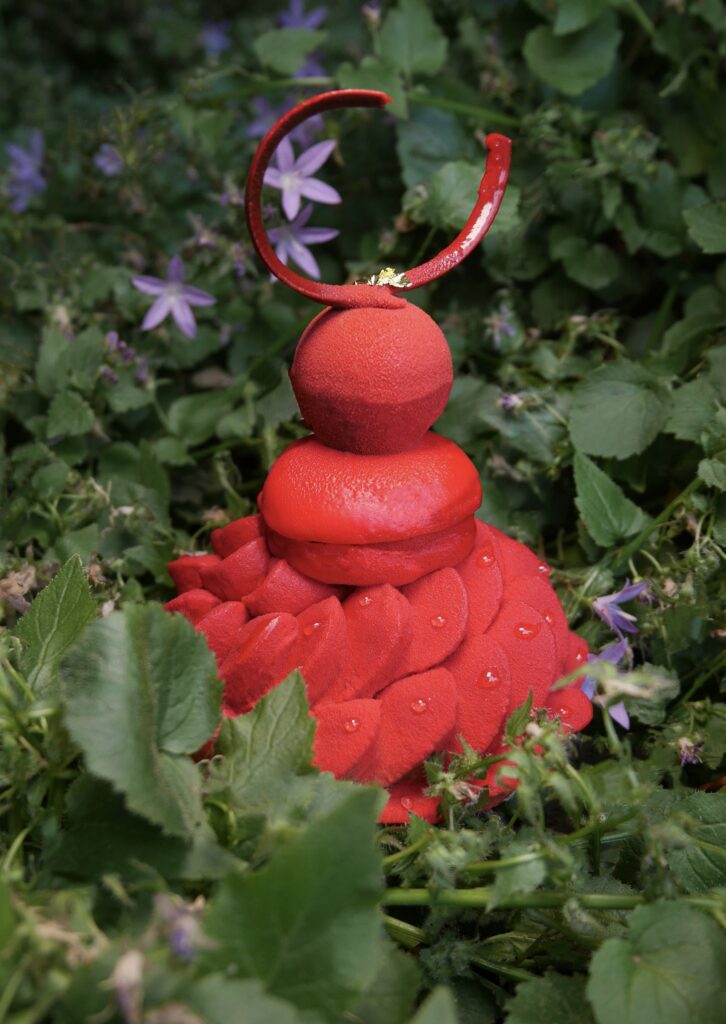
RG: La Jonquille is composed of a blackcurrant and violet flower centre, surrounded by a strawberry mousse and set on a Breton biscuit with toasted almonds. Armelle is a dessert composed of several elements: a chocolate pearl enclosing a passion fruit caramel, a chocolate-filled macaron, a passion fruit and caramelized apple centre, an apple mousse, an almond ganache, and an almond dacquoise sponge. The Lotus features a passion fruit centre and a passion fruit mousse, complemented by pieces of caramelized pecans. It is coated in a rich, 70% dark chocolate cream and rests on a chocolate Breton biscuit with pecans. The Rose is composed of a mandarin centre, a pear mousse, a rose whipped cream, and a Breton biscuit with toasted almonds. The Dahlia is composed of a calamansi centre, an orange and carrot mousse, and a lime ganache, all set on a carrot cake base coated in chocolate.
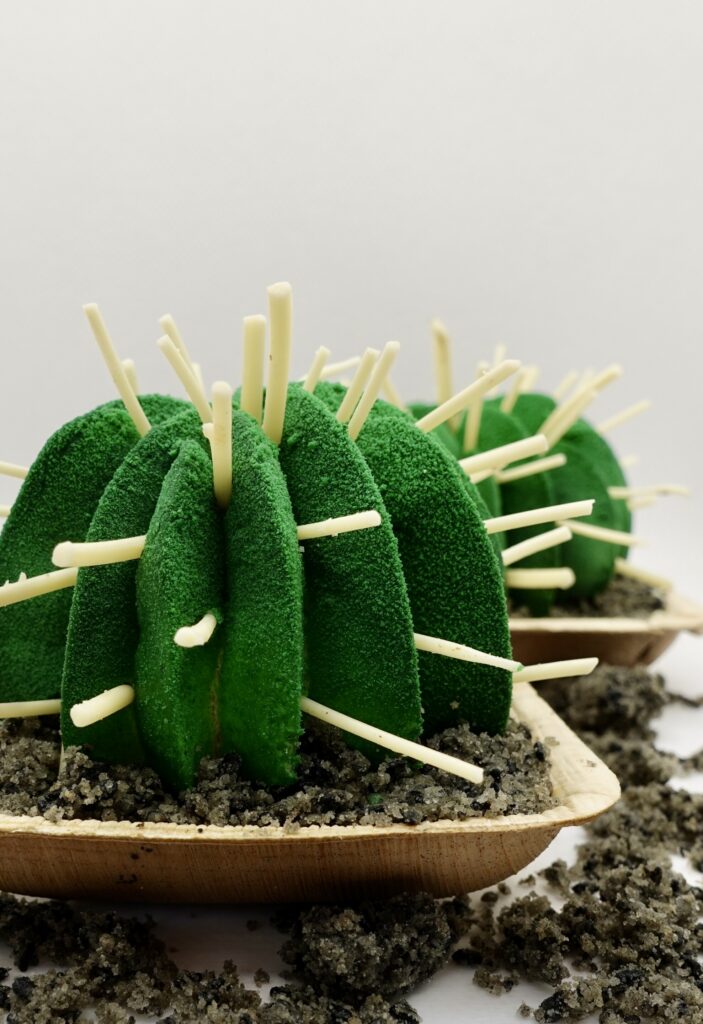
V: How did you come up with the ideas for the original pastries used on the Piaget shoot? What about the jewelry did you find inspiring?
RG: For the Piaget collection, I envisioned desserts that were elegant, vibrant, and floral, echoing the colours and brilliance of the gemstones. My inspiration came from the way these precious stones seemed to come alive through the artistry of the jewellery.
V: What was it like being on set that day, seeing your pastries used in the photoshoot?
RG: This was a completely new experience for me. Until then, every photoshoot and filming project I had taken part in had been connected to the world of gastronomy. What I particularly enjoyed was being surrounded by people who are genuinely passionate about their profession. There is always something inspiring about that shared dedication and enthusiasm. Seeing my creations presented alongside Piaget’s extraordinary jewellery masterpieces of precision and craftsmanship was both a joyful and humbling experience. Like Piaget’s artisans, I work with raw materials and transform them into something alive, drawing on years of expertise, patience, and meticulous attention to detail. Ultimately, our two worlds share the same values: craftsmanship, creativity, and the pursuit of excellence. It was a great honour for me to create desserts inspired by and associated with the House of Piaget.
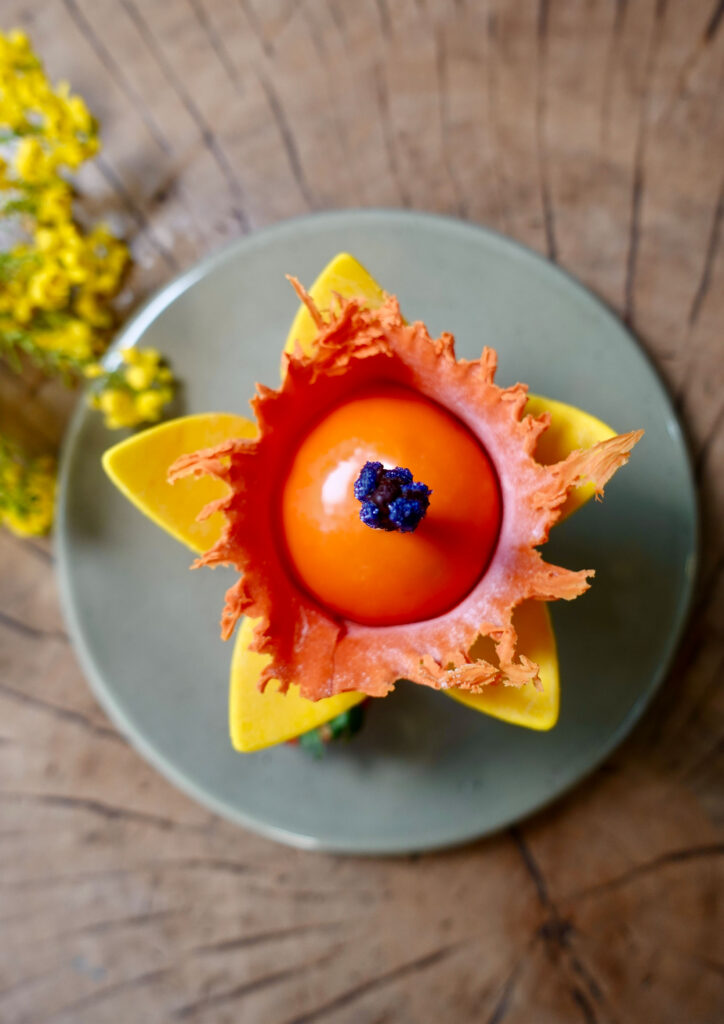
La Jonquille
Recipe by Chef Rodolphe Groizard, of Wonderland Pâtisserie, Paris
Blackcurrant Insert
Ingredients
100 g blackcurrant purée
5 g candied violet petals
1 sheet gelatin
Method
– Place the blackcurrant purée in the Thermomix and heat at 50°C, Speed 3. Add the gelatin sheet, previously softened in cold water, followed by the candied violet petals. Blend at Speed 8 until the mixture is smooth and homogeneous. Pour the mixture into 4 cm diameter silicone moulds.
– Freeze until completely set.
Strawberry Mousse
Ingredients
150 g heavy cream (35% fat)
200 g Mara des Bois strawberries
2½ gelatin sheets
40 g egg whites
60 g caster sugar
6 g water (10% of the sugar weight)
Method
– Whip the heavy cream until it reaches a soft whipped consistency. Transfer to a large mixing bowl and set aside. Whip the egg whites to soft peaks. Meanwhile, cook the sugar with the water to 118°C. Gradually pour the cooked sugar over the whipping egg whites and continue whisking until the Italian meringue has cooled completely.
– Place one quarter of the strawberries in the Thermomix and heat to 50°C. Add the gelatin sheets, previously softened in cold water and drained. Blend for a few seconds at Speed 10, then add the remaining strawberries and blend again until smooth.
– Gently fold the strawberry purée into the whipped cream. Then carefully fold in the Italian meringue using a rubber spatula until the mixture is smooth and evenly combined. Pipe or pour the mousse into 6 cm silicone moulds, then insert a frozen Blackcurrant Insert into the centre of each mould. Freeze for 24 hours before unmoulding.
Coating
Ingredients
100 g white chocolate
15 g grapeseed oil
10 g cocoa butter
Natural food colouring
Method
Melt all the ingredients together to 40°C, then blend until the mixture is smooth and homogeneous. Unmould the frozen spheres and dip each one into the coating using toothpicks. Allow any excess coating to drain off, then refrigerate until ready to use.
Toasted Almond Breton Shortbread
Ingredients
60 g butter
60 g icing sugar
1 egg yolk
1 pinch of Guérande fleur de sel
4 g baking powder
95 g plain flour
50 g toasted chopped almonds
Method
– Using a stand mixer fitted with the paddle attachment, cream together the butter, icing sugar, and egg yolk until the mixture is smooth. Add the Guérande fleur de sel, baking powder, flour, and toasted chopped almonds, then mix just until a homogeneous dough forms.
– Transfer the dough into silicone moulds and bake at 140°C for 35 minutes.
Assembly
– Using melted chocolate as an adhesive, attach each frozen sphere to a Toasted Almond Breton Shortbread base. Create the desired decoration using modelling chocolate or fondant (sugar paste), according to your design.
– Keep refrigerated until serving. And then bon appétit!
Discover More