Heroes: Alanis Morissette
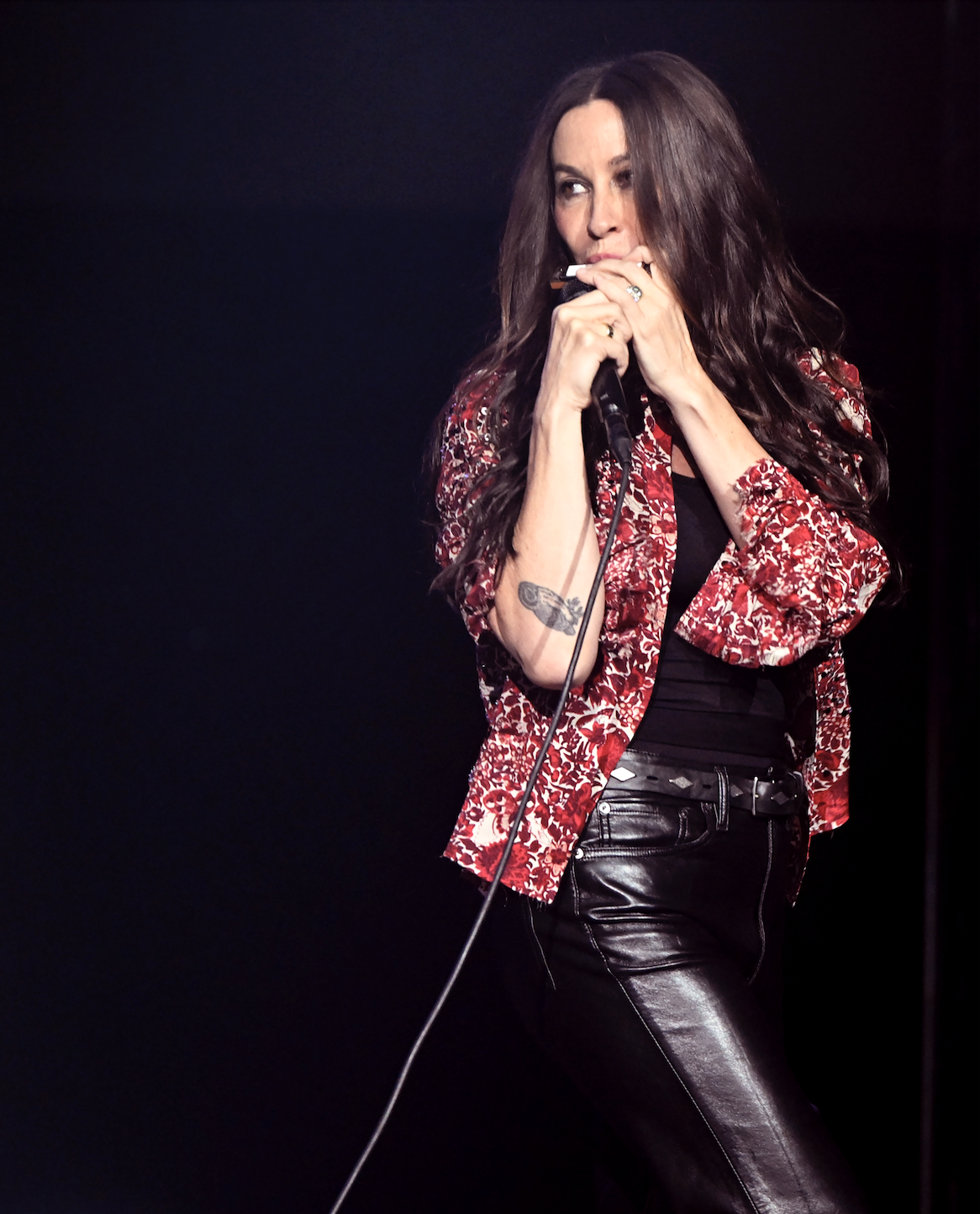
The music icon reflects on her artistic evolution and newfound creative freedom ahead of her Los Angeles residency, ‘Butterfly with a Machete’
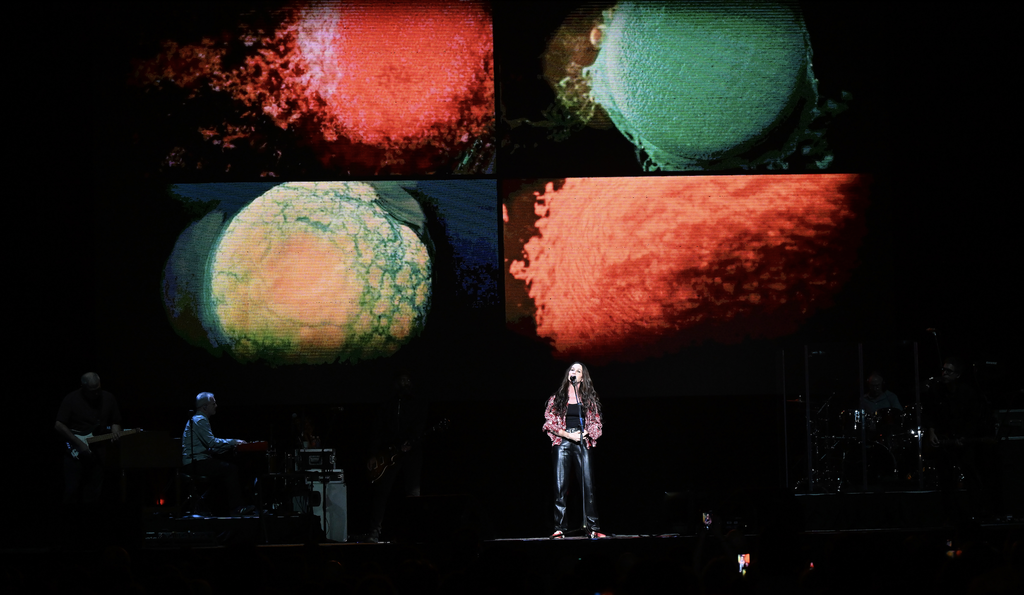
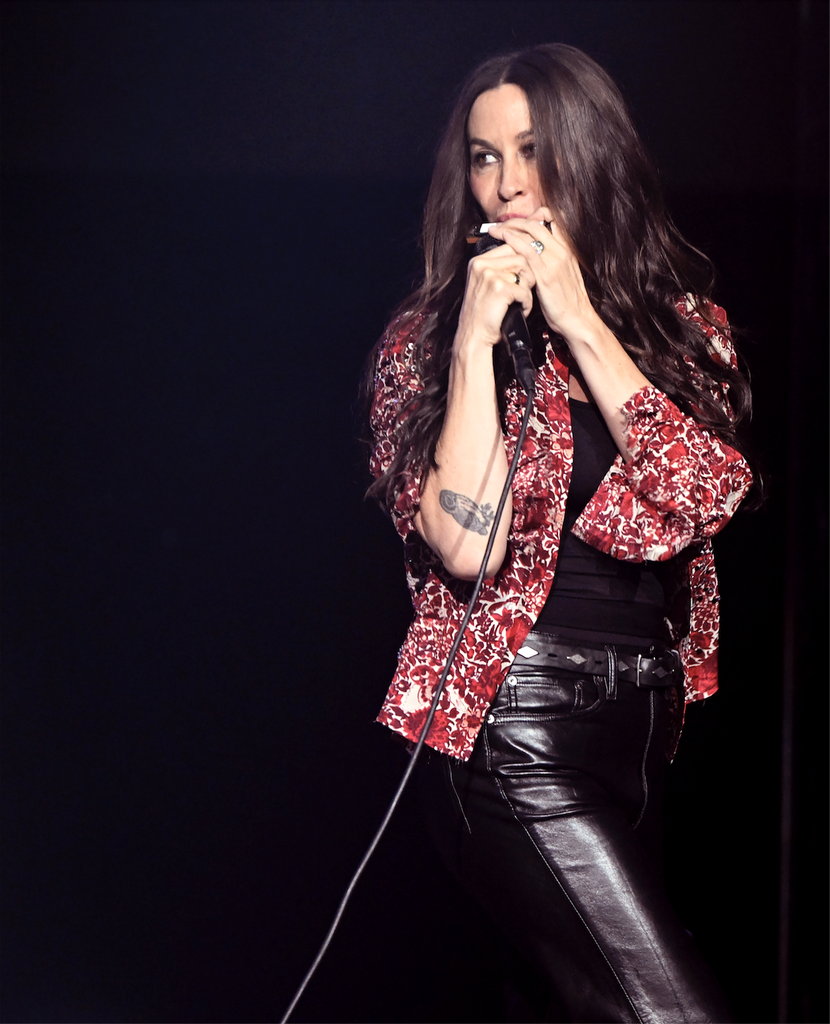
The stage goes dark and the sound of a disembodied harmonica courses through the Mohegan Sun’s arena. I’ve heard its notes uncountable times. Da da dum da da da. A silver moon rises on a projector, followed soon after by Alanis Morissette, that harmonica on her lips, playing the opening notes to “All I Really Want.” It’s the opening track to her album Jagged Little Pill–released in 1995, the album celebrated its 30th anniversary last year. The album, her third, became the foundation of a decades-long career in music, from the time she won multiple Grammy Awards for her work on the album to her induction into the Songwriters Hall of Fame this year. In all of its rage, melancholy, hope, candor, and even humor, it became a sacred text to generations of people. Yours truly included.
And there she is at Mohegan Sun, in leather pants and sneakers, a top of red flowers glistening with occasional swaths of rhinestones. There’s that signature hair and that voice and “Do I stress you out? / My sweater is on backwards and inside out” as she crisscrosses the stage back and forth somehow keeping her breath engaged. I only cried twice. It’s quite an experience to witness an artist you never in your wildest dreams thought you’d get to see in person, whose catalog and presence have shaped so much of the way you live in the world. I’m probably not alone in saying that, even from a young age, Alanis showed me an example of what it looked like to wield your voice like a weapon. I don’t think I would have had words for it then, but anyone who’s ever sung along to “You Oughta Know” has felt it in their blood, that pumping of wrathful proportions best channeled by screaming the song at the top of your lungs. Morissette allowed us an exorcism of sorts with each listen. And we loved it. Most women didn’t sing things like “Would she go down on you in a theatre” and “And are you thinking of me when you fuck her” on the radio. It was decades before #MeToo, and men weren’t always called publicly for their wrongdoing; Morissette did so, though, and often to great criticism.
And while Alanis fans like myself are myriad at this point, her detractors in the 1990s were as well. Some of them were women with the biggest names in rock, writing her off as more of a product of the industry than an artist in her own right. There was not a place for her then in the so-called sisterhood, she says. Today, though, artists ranging from Taylor Swift to Beyoncé to Olivia Rodrigo–who recently invited her onstage at the first ever Daisy Chain Fields for a duet of “Ironic”–have found inspiration in her work. It was a touching moment, Morissette says, and she loves showing up for young artists, especially in ways people didn’t show up for her. “It’s quite heart-melting for me to feel like this is a whole other era where there is an actual sisterhood, not a performative one,” she says. “It’s reparative for me, too….It’s kind of cool to be a woman now. It wasn’t so cool in the ‘90s.”
Morissette has primarily been known as a musician throughout her career, releasing a total of 10 studio albums since her first as a teen popstar in 1991, but that’s never all that she was. Her artistic pursuits have been numerous across culture, from acting to comedy to meditation to journalism and more. Perhaps you’ll remember her as God, grabbing Linda Fiorentino’s nose in Dogma? Her column in The Guardian? Kissing Carrie Bradshaw on Sex and the City (it was her idea, too, by the way)? Covering the Black Eyed Peas’ “My Humps” as a melancholy ballad, wearing electric blue booty shorts in the music video, comedy chops fully intact? Releasing a meditation album? Guest-starring on Curb Your Enthusiasm? She was never not a multihyphenate–it’s only that being one wasn’t quite acceptable in the ‘90s, she said. Rather, “it was not encouraged, and actually, it was called Career Suicide.” Even the dancing she did in her 1998 music video “So Pure,” from the album Supposed Former Infatuation Junkie–which took us through different eras of dance, Alanis embodying each–was derided; but with a 2026 lens, it’s fabulous, and Alanis is a great dancer. At the concert, even, she spins wildly, leaping, thrashing her head, her hair floating behind her like a propeller.
It’s with phenomena like these in mind that Morissette’s new show Butterfly with a Machete floats into its residency at the YouTube Theater in Los Angeles on November 5th. The show’s first life took shape in a sold-out Caesar’s Palace residency in Las Vegas last fall, but it will be the first artist residency ever at the YouTube Theater. Created by Morissette with theatre artists Ann Randolph and Patti Guggenheim, Butterfly with a Machete “is a confessional and multimedia, multi-disciplinary musical stage play set to her music, blending her songs with storytelling, therapeutic insights, and a radical look at fame and trauma.” Billed as “a rock traumedy,” the show arrived in Morissette’s life almost by accident. “I had thought that I would write a one-woman play off-Broadway or Broadway in about 10 years, so I sort of had that in my back pocket, unconscious,” she said. “The funny thing about life is it kind of tells you the timing of stuff, no matter how much I think I know.” Despite the largely autobiographical nature of Morissette’s work, however, she had to be taught to care about her own stories. “I think part of me just hated myself so much because I was taught to hate myself. Everything about me just seemed unsavory to culture. Not anymore, by the way,” she says. “Somehow people are really open now, and I make a lot more sense. But I think for a long time, my survival strategy, having been raised by narcissism, was to just be other-oriented, like make sure everyone around me is okay, and then that’s the end of the story.”
Morissette says Randolph taught her just how important it can be to tell your own story, whether or not you believe it’s important. “I’m still working on caring about my story,” she says. “[Ann] taught me to just freaking do it anyway…by the way, what is songwriting other than telling stories? So clearly, I love storytelling. It’s just a part of me that hates my story, probably because it’s riddled with pain, bro.” She laughs. “One part of me, of course, cares about my story and weeps, right? And then another part of me is like, oh, shut up! I don’t want to hear it. So all these parts are just having their parties, and the ones that need my attention the most –in therapy, tons of therapy for me, or journaling or whatever–[I] just really get in there and see what they need.”
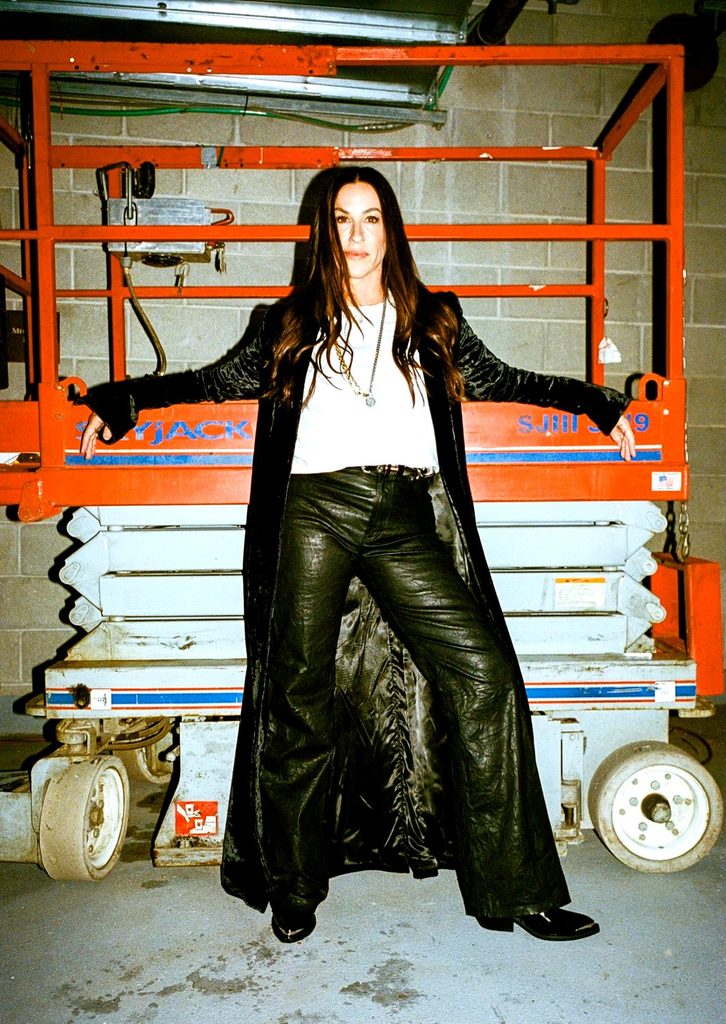
And though the era of the multihyphenate is fully upon us, and Morissette has really been combining these interests for years, she says she still had to convince people the show was a good idea– this blend of “acting, comedy, rolling around with the choreographer,” she laughs. “‘Wait, where’s Alanis? She’s rolling around…Okay, usually she’s here with a guitar and a microphone.’ It was quite disorienting, but also I like to think in a fun way.” She just asked to be trusted. “‘Have I ever not been trustworthy in the 27 years of knowing you?’” she’d say. “And some of them were like, ‘You’re right. We just have to hold our breath here and keep showing up,’” she said. It worked out. “I think maybe a couple people were a little freaked out, but everybody really got what we were doing when we landed in Vegas.” And with that residency sold out, and a new residency underway, it’s possible their fears were allayed.
Morissette continues to follow her creative intuition, and feels more freedom and encouragement than ever to do so. “Being an artist 30-some odd years ago was almost a recipe for being misperceived,” she says. “Whereas now, 2026, what I’m writing about is resonating in a way that perhaps it hadn’t done, and I didn’t expect this.” She also has a new album in the works, in addition to a television show, and the 2027 launch of The Deeply, her platform for users to connect and learn about mental health, art, recovery, and more. “I’ve been anchored since I was 12,” she says. “Interestingly, when it comes to art and artists, there is a fire and a power that has never abated.”
This story appears in the pages of V163, our upcoming Winter 2026 issue
Discover More