Hiss & Tell: Bvlgari Unveils Its New Icons Minaudière Collection
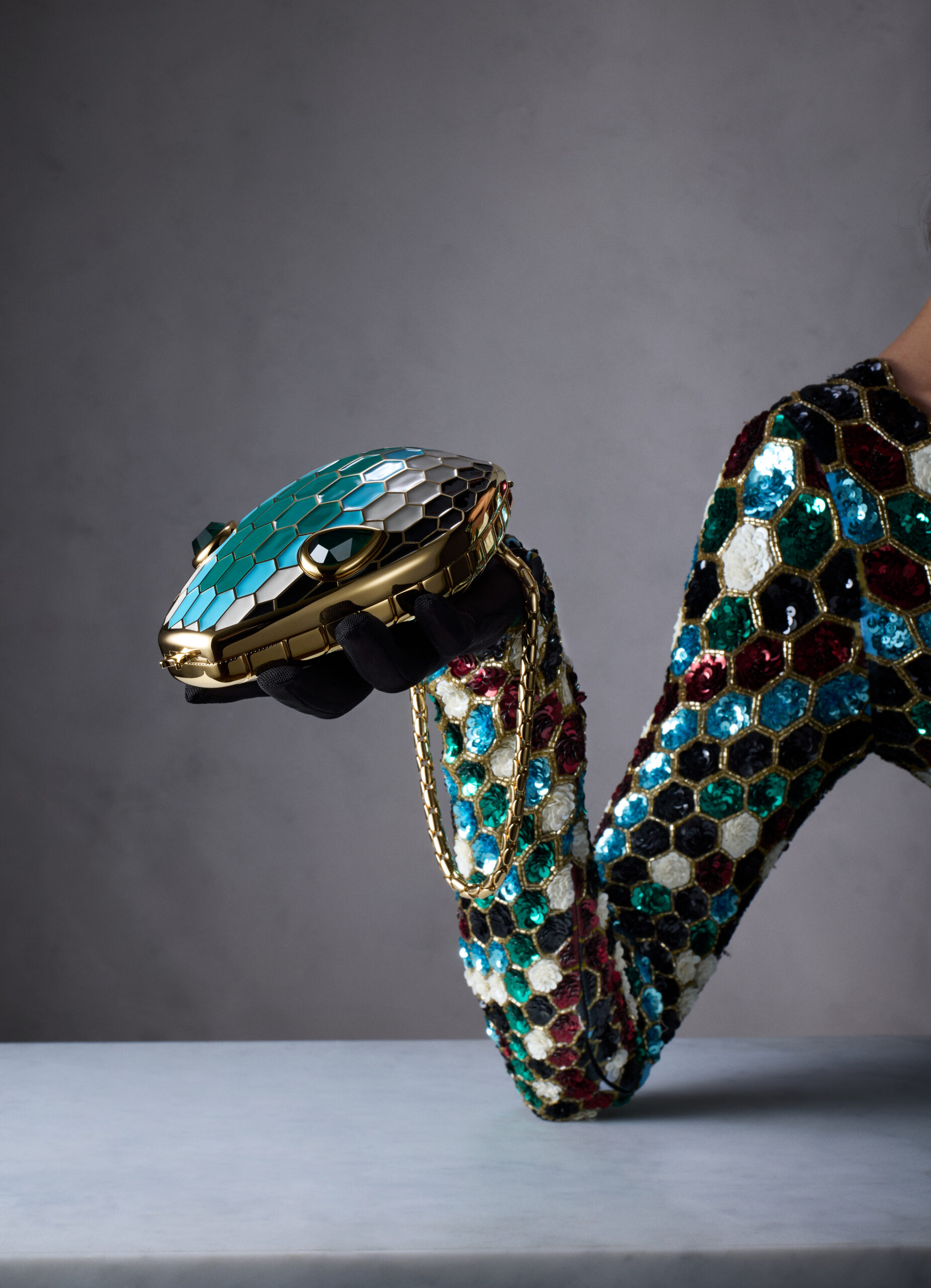
All about Bvlgari’s Icons Minaudière Collection
As Bvlgari unveils its new Icons Minaudière Collection—where culture, heritage, and personal narratives replace the usual essentials—V’s Editor-in-Chief Stephen Gan sits down with supermodel and Serpenti muse Linda Evangelista and Mary Katrantzou, the house’s Creative Director of Leather Goods and Accessories, to explore how the sculptural objets d’art, which encase mini books by five incredible women, including author Chimamanda Ngozi Adichie, actor Kim Ji-won, actor and model Isabella Rossellini, architect Sumayya Vally, and Evangelista herself, came to life.
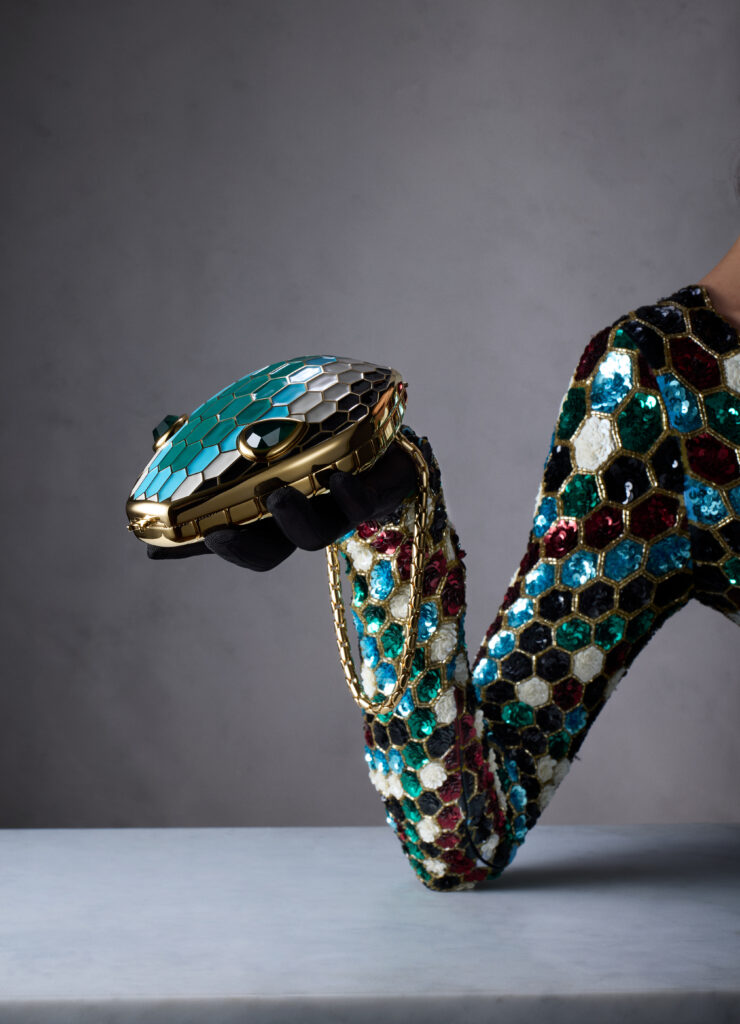
LINDA EVANGELISTA: I love the Serpenti snake because in Chinese [zodiac], I’m the snake. [It’s also the Year of the Snake], so it feels like it’s my year.
STEPHEN GAN: What did you end up writing about for your book?
LE: We were discussing our stories, what our passions are, and what my hobbies are, just what I could contribute. When I think of Bvlgari, because it’s Italian, I think of my parents automatically. They were both born less than an hour away from [Rome]. I thought of what they have given me and what I have inherited as an Italian. I think of friends and what they’ve gotten from their parents, maybe like paintings or some Bvlgari jewelry, and yet I got a recipe for a tomato sauce. *Laughs*
SG: That’s amazing!
LE: One of the things my grandmother brought over [from Italy] was this hammered pot that she would make Sunday pasta in—and I have it. Somebody had also carried over this machine to take the seeds and the skins out of the sauce. I scored it against all my cousins; it’s crazy to know I have it. My grandmother gave it to me while she was still alive, along with her wedding ring [that I also scored]. That’s part of my story: about every Sunday, the family comes together, and my [own type of] inheritance. I just saw all five bags [designed by Mary], and they’re all so beautiful. I’m happy I got the snake [for my minaudière].
SG: I love it. You know, recently, I was kind of surprised to read that 15 brands have new designers; it’s such a period of change, and yet the harmony that I feel between you, Mary, and Bvlgari is so good—I hope this marriage lasts forever.
MARY KATRANZOU: You know, I married my husband after dating him for 19 years. Now we’re 23 years together. I am one for long-term relationships. And I was very lucky to work with Bvlgari before I got appointed to creatively direct this category. I think that’s the difference. Of course, I [always] admired and appreciated Bvlgari as a brand, but I worked with the team for five years before being approached for this role, and I think on both sides that creates a natural evolution of a relationship. Even on the design team, they knew how I work, they knew my vision for the brand. There was a sense of joining a family that I already knew and loved. I think [this all] wouldn’t be the same had I not had the opportunity to collaborate with Bvlgari on a few different occasions before taking on this role.
SG: That’s great, I love that. You and I have a lot in common, which was obvious even when we first met. I was shocked at how much you knew about Visionaire.
MK: I think your Visionaire issues are [in my archive]. I need to get them back to Athens and rediscover how I would look at them today.
SG: The idea was almost like a piece of treasure in a box. That was the concept behind it, back in the mid- 90s, and that’s when I first met Linda. I spoke to her agent to request a gold fingerprint from her for our 17th issue of Visionaire called Gold.
MK: It was really about the tactile quality of it. It was a whole world in a box. There was an emotional response to it. I feel that narrative is so different today, in terms of how people dissect narratives and how you feed them that narrative.
SG: I think now people actually want the antithesis, where they don’t want something that they just scroll through really quickly. They want to sit with like an actual object. So there’s a wave of it really coming back.
MK: I feel when we designed and completed the idea of the minaudières [which carry mini books], and when we realized they can’t fit a phone, it was something that I had to fight for and say, ‘It’s okay to do a minaudières as something you collect as a piece of jewelry’. It is a cultural statement; the whole idea of fitting culture in your bag came through the [realization] that it couldn’t fit a phone, and that started the whole conversation that the urgency and the immediacy with which we lead our lives is what makes the moments of being offered something different so much more appreciated. Certainly, in this project, we’re making a whole conversation around the idea of distilling women’s wisdom in a book that is specifically written for these minaudières that are a kind of keeper of these women’s wisdom. I hope that these layers that exist in the project come through. It’s interesting—when you tell the story right, people feel it’s authentically something different. It’s nice to see that people are craving it again.
SG: They teach you fashion is not about necessity, but rather driven by desire, and you need to create that craving for it, where there’s an idea of something rare, something beautiful, something one of a kind.
MK: I think [Linda’s Serpenti Minaudiere] is so important because she talks about tradition bringing her whole family together; distilling this idea of a woman as a keeper of culture, passing it on to future generations. I don’t think there could be a better analogy for a woman taking the recipe from her grandmother and then passing that on literally and figuratively. I think her book is very special because there’s an authenticity in the fact that she is that woman in her life, and that is something very universal in a certain sense. I am very grateful to her for writing something personal that maybe is not what she talks about [often].
Photography GREG DELVES
Interview STEPHEN GAN
Discover More
