How Martine Gutierrez Became a ‘Wunderkind’
The lauded artist opens a survey of her life’s work in Amsterdam
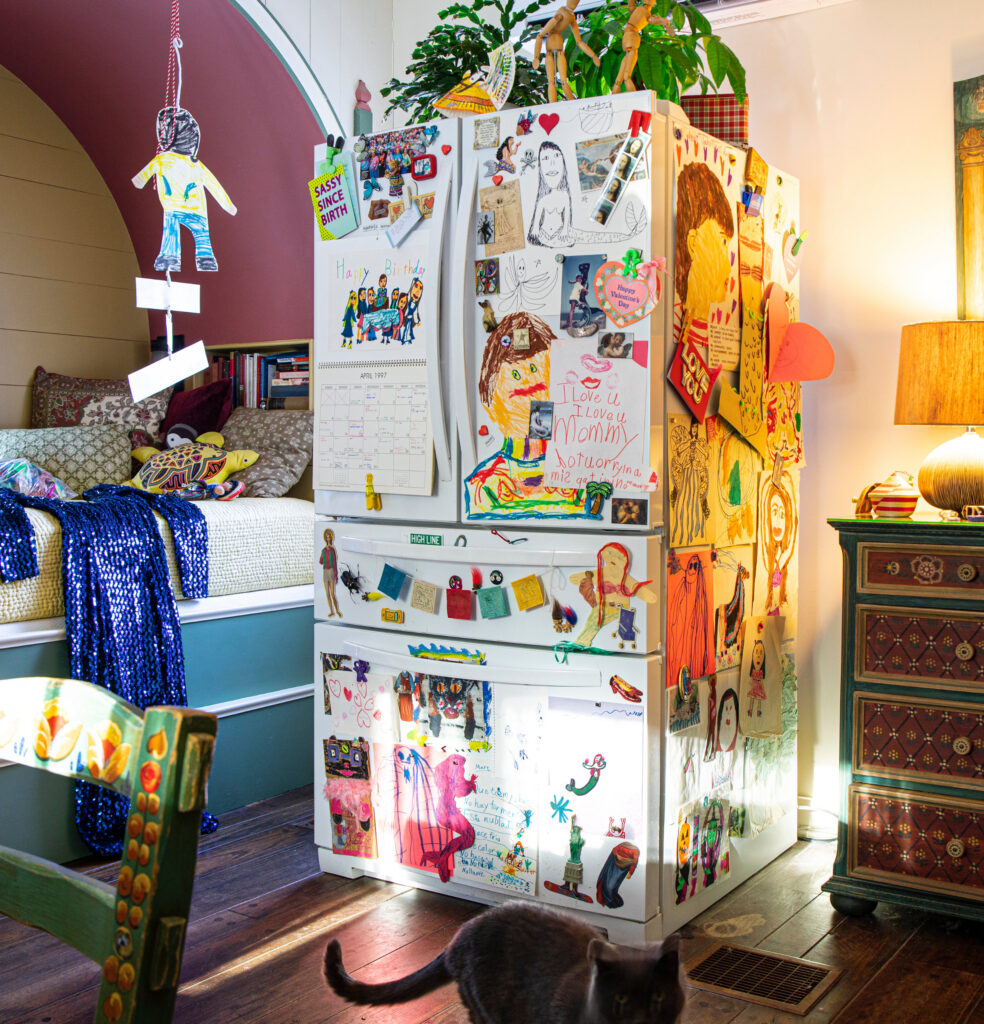
The first photograph that caught my eye was the refrigerator. It was laden with images from Martine Gutierrez’s youth, drawings scrawled with “I Love You Mommy” and mermaids upon mermaids, hearts and happy birthdays. A ghostly cat snuck past the frame, an indigo sequin dress rested on a bed nearby. It was a moment I knew from my own past–different fridge, different drawings, different cat, fewer sequins, but still. As the complexities of our own lives increase with adulthood, returning to a time when creativity and love were so easily expressed is a gift on its own.
“Mom’s Fridge” is one of many images Gutierrez created for her new exhibition Wunderkind, a survey of work from her entire life on view at Amsterdam photography museum Huis Marseille from June 27 to October 18.
Gutierrez sees Wunderkind as a salute to her mother, who saved much of Martine’s work from childhood, thereby making the exhibition possible. She sees her successful magazine/artist book Indigenous Woman, centering her Mayan Indian background–images from the series were acquired by the Museum of Modern Art in 2024–as a project for her dad, who recently passed away. In fact, it was in part because of his passing that the exhibition came to be, she says. She had always wanted to collaborate with her mother in some way, and you know what they say about time and the present.
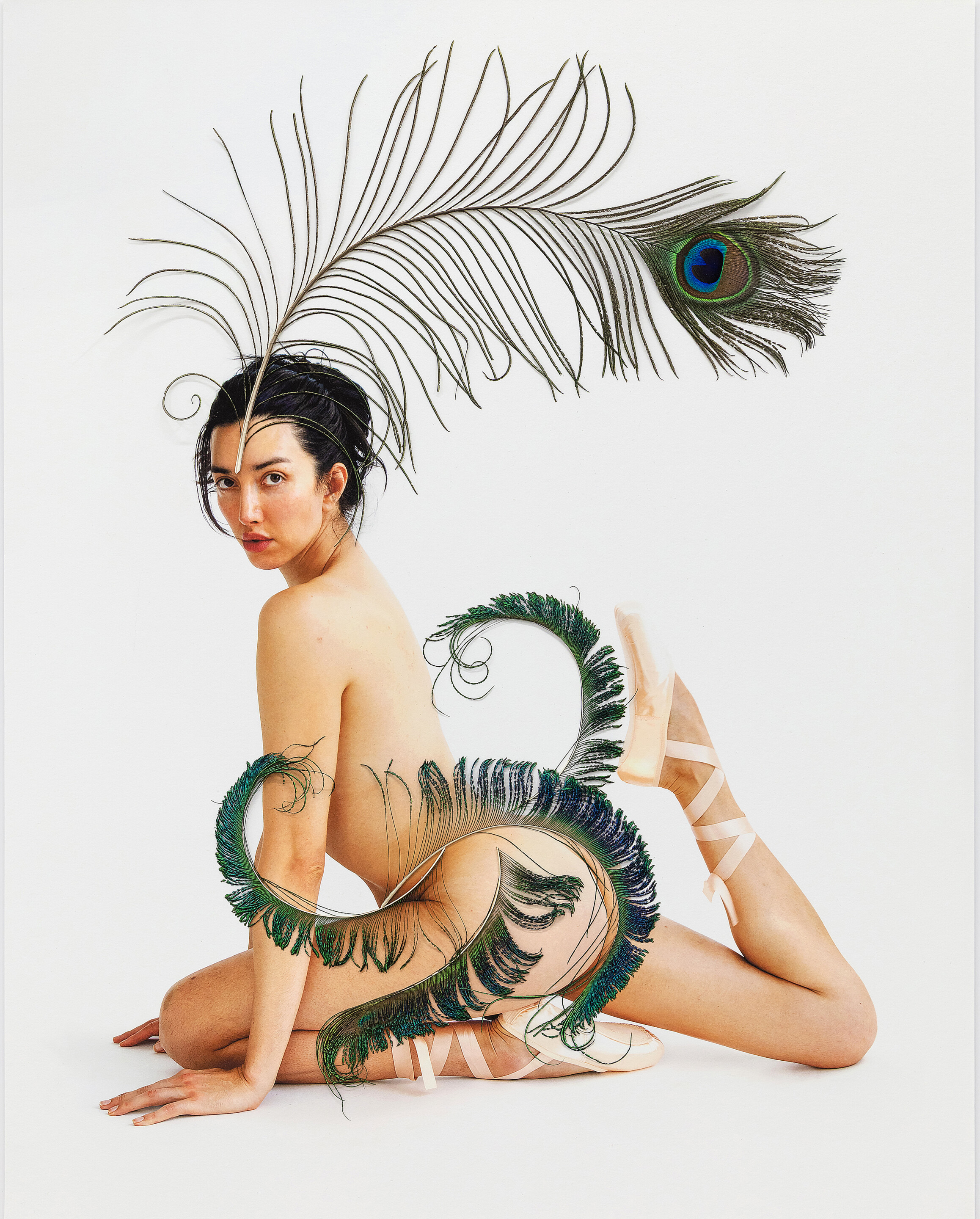
After a fruitful spate of acting work–most notably Fantasmas, Problemista, and Los Espookys with comedian and writer Julio Torres–Gutierrez sought to refocus on her own artistic practice. Her work had previously been shown at the Venice Biennale, the Smithsonian American Art Museum, the Whitney Museum of American Art, and more. It’s also forthcoming at the Whitney Biennial. Gutierrez won a Guggenheim Fellowship in 2025 and began work on the show that became Wunderkind. While Gutierrez regularly uses her own face and body to explore identity in her artwork, she sees Wunderkind as her most personal project yet.
V spoke to Gutierrez about childhood dreams, The Little Mermaid, artmaking, and what it means to become a swan after feeling like an ugly duckling.
V: How did this show come to be?
Martine Gutierrez: This is the biggest show I’ve ever had. It’s been a real undertaking. It started as the seed of an idea without a root system or a home. I visited Amsterdam. The [museum] director, Nanda [van den Berg], is amazing, and she kind of twisted my arm and said, you’ve got to do something here. I had nothing to give–this was after Fantasmas and I had done all this acting and TV. You don’t understand until you do that stuff that your life becomes about promoting these projects and being on these red carpets for these awards. It’s all this fanfare, and it’s so not art–the art world, I guess they have their galas, fundraising–but I felt really spent. Nanda said, “Well, what if you could do anything?” Well, when you put it like that. I got the Guggenheim Fellowship, and that whole period of time I was already working–I was going to do this either way. It gave me wings. I got this gorgeous studio space in Chelsea, and I locked myself away in my tower like Rapunzel, and I played with dolls. I had the promise of this venue. It was a secret, and now it’s real, and we’re down to the wire. The exhibition feels like such a big share because I understand that I have a certain mystery around me, and it’s so personal.
V: What made the show such an undertaking?
MG: It was digging through my archive of everything I’ve made since I was born. There are works I’ve chosen not to share, because we only have so many rooms, but my life has been recorded. The 21st century child. My birth was filmed by my father on VHS, and my mother used to watch it on my birthday every year. I didn’t even know it existed. It’s been this onslaught of media for me to decide what is mine, what do I keep as personal and interpersonal, and what can I share that can inspire people to support their children. I had such a beautiful childhood, and I want other people to have that. I wanted to invite people inside my doll house. It’s an introduction for all the people who don’t know me. Now they will, and it feels a little daunting, but art has always served me by bringing me out of my comfort zone. My art taught me to accept myself before the world could.
V: In a lot of your work you talk about the importance of control, of total authorship and possession of your image. At the same time, there also seems to be this intense vulnerability, especially here where you talk about your childhood and your beginnings. How do you employ control and vulnerability together when you’re crafting your work?
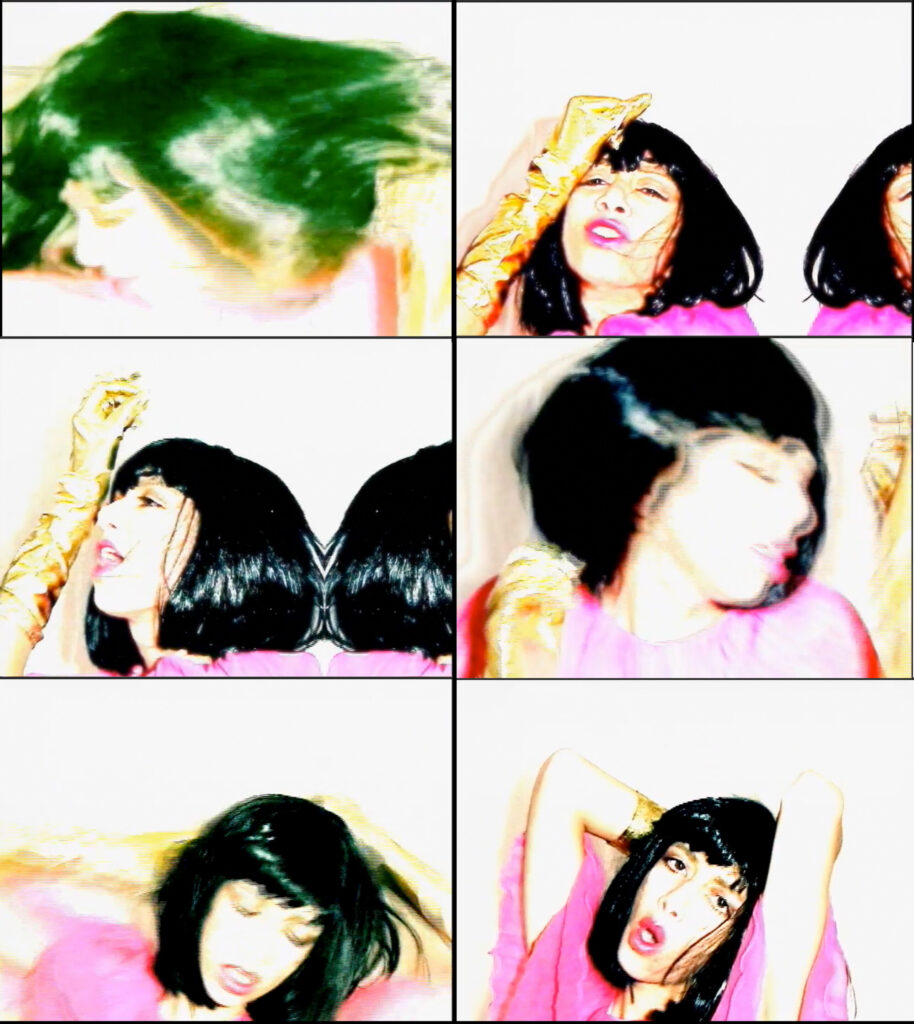
MG: Control came from feeling like I wasn’t seen. I also think of seeing my image, an image of myself that other people take, whether it was the school yearbook or modeling when I moved to New York, that was my first job here. I always had such a strong opinion about what needed to be different–“This could be better this way, I should not be wearing that. I would never wear that. This isn’t me.” I think most people, whether they’re trans or not, have this idea of self-image when you feel the world doesn’t see you how you see yourself. It makes you go inside yourself, whether you become a loner, an incel, or a cosplayer, a performance artist [laughs], you’re looking for an avenue in which people recognize you, you feel recognized. Often that means finding community, finding people who are like-minded, and whether they share this struggle or experience, or sometimes it’s as simple as they also believe in mermaids.
V: You mentioned the show is a big share–why is that, and why did you want to share that way now?
MG: I was always going to make this show. I’m a huge fan of Mom. I’m obsessed with Mom. She really has been my lifelong cheerleader, number one fan since day one. She’s the reason this archive exists. She saved everything I made her. She’s a collector, like Ariel. I have the task of deciding what it is we keep and what it is we let go of in general. I knew this would be something that would happen after she passed–I was gonna have to endeavor this, it would be cathartic, and it would be celebrating her. Then my father passed away before Christmas this past year, and I didn’t want to wait, I wanted her to be there for this. I wanted to collaborate with her, and I wanted to feel it. With death, we have to contemplate our mortality, and everyone grieves so differently. It has offered me perspective about my apprehension of things I put on the back burner in my personal life, thinking I have all the time in the world, and that I’m gonna be forever young.
V: How was the show collaborative with your mom?
MG: I have to go to her house constantly, and there’s images that are from our home. Her refrigerator was my first gallery show, and I photographed that. It’s been hanging as a proof [in the museum], and it’s a big crowd pleaser for moms. There’s other images of my nursery, costume box, visual landmarks for us and drawings I made for her. She’s present everywhere, and yet physically, it’s so funny, she’s so shy, and she doesn’t want to be on camera, but she’s coming to the opening in Amsterdam. I’m so excited to see her light up, and hear her memories, and for her to share them with other people. She was always my audience. She loved being that support, being kind of unseen. I’ve tried to make the show in a way that still gives her all that privacy. It’s shifted my work too, because I feel like I’m known for self-portraits, and I would say there’s still self-portraits in the show, but I physically am not in many of them.
V: What were some other ways the show affected how you look at your own work?
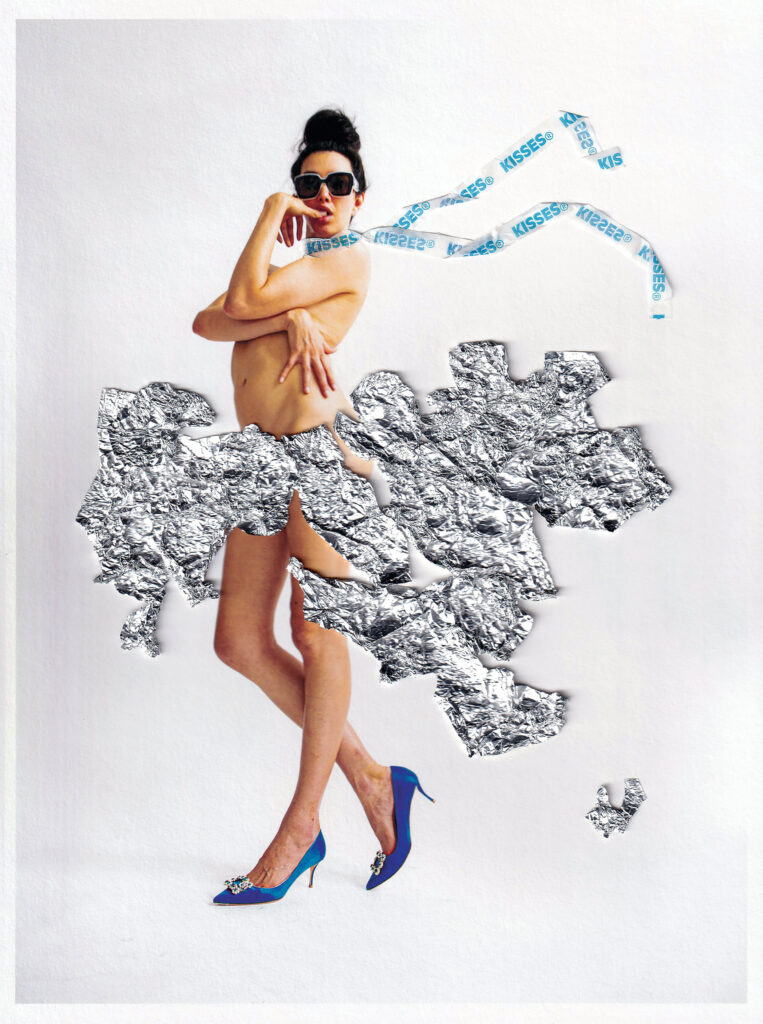
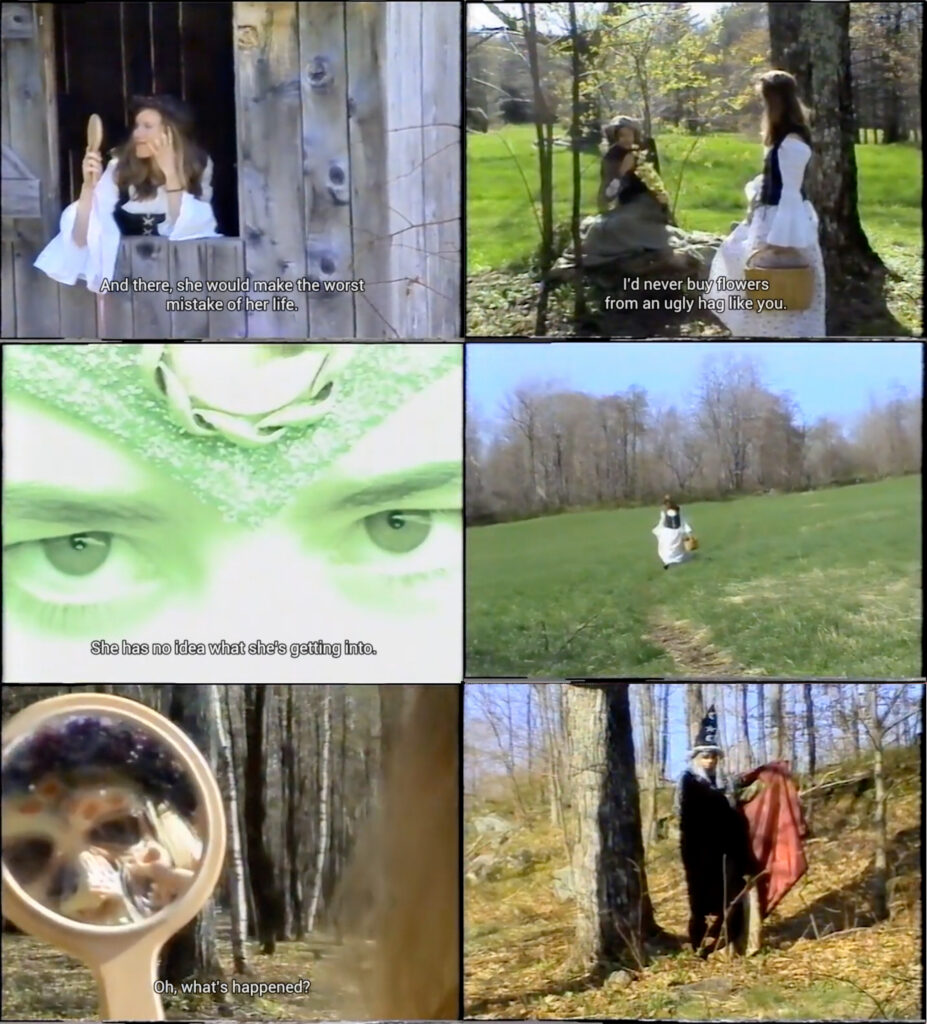
MG: Whatever I make, I’m sick of it by the time the world sees it. My obsession, my limerence, passes and then it has a life of its own. I only understand the thread once I look back. Oh, you’re unwell. Oh, you’re really over sharing today. And it’s easier to do when I’m not there. I’m much more comfortable with photography over performance because you don’t have to be there. I don’t know if it’s more honest, but it feels like less of a performance, even though it maybe it’s more of one. Because I don’t have to feel the projection of someone else. It’s just me and the eye of the camera. What makes that different than being an ingénue, trying to dig up an authentic emotion or ask? I’m much less self-conscious because it’s just me in a room with my dolls.
V: What did you see in work you made as a child that’s in conversation with work you make now?
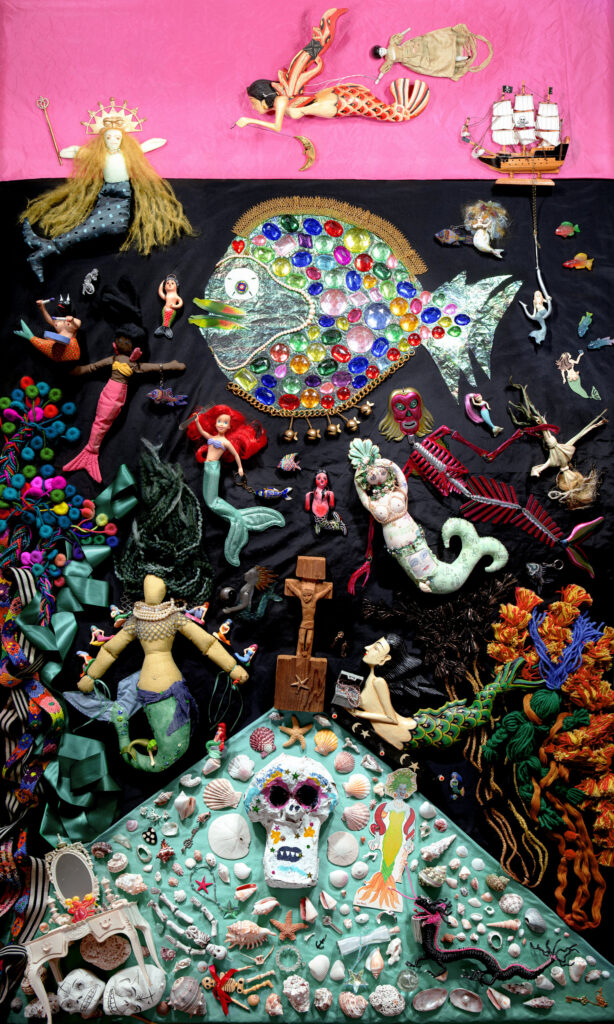
MG: There’s the same narcissism [laughs]. Martine, Martine, Martine, pages and pages of what Martine did today and tomorrow. And the mermaid. I still am obsessed with mermaids. I didn’t even know I was obsessed with The Little Mermaid. I’ve never known a world without it because the film came out the same year I was born. Ariel is such a companion, and she’s also such a narcissist. She just wants more. The longing. I identified with that feeling of being an outsider. I was always a foreigner because Mom and I moved around so much. That’s why I really do feel like a citizen of the world. In a way, that’s part of the identity crisis, where do I belong. I’m definitely a consumer, which makes me an American, like I love bottled water. I had to do that when we lived in Latin America. There’s just these funny little perspectives, and I guess that’s what happens when you are at a distance.
V: You’ve talked about identity as performance–are there aspects of identity you’re performing in these new works that are influenced by your experience as a young person?
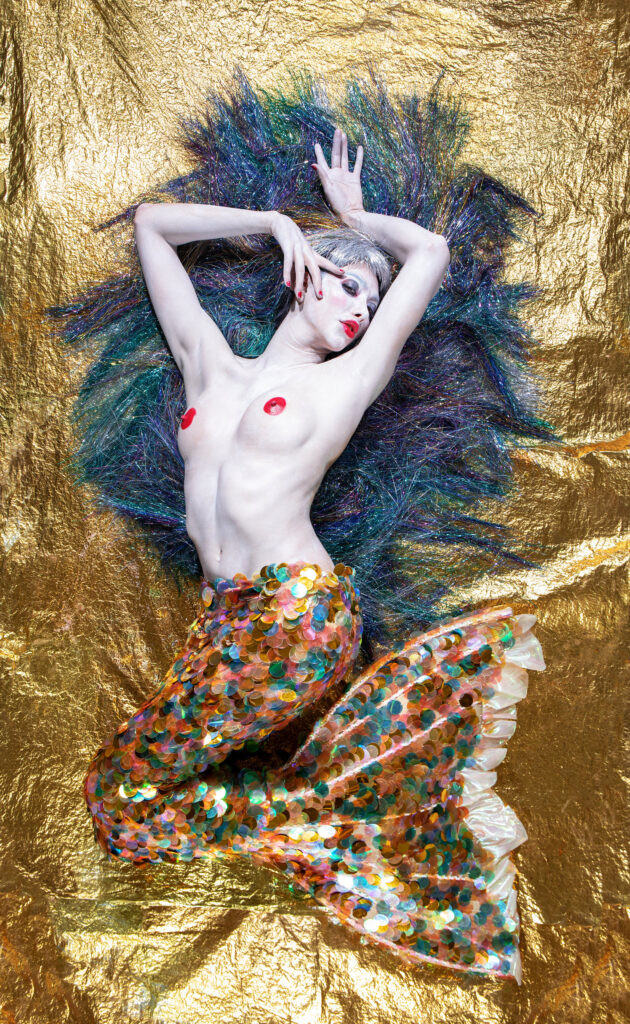
MG: There are definitely archetypes, which you could argue was brain rot from Disney. I was so Disney-pilled. There was no getting away from the princess, but then you get to choose what princess you are, and that has everything to do with physicality, right? I wouldn’t say there’s a princess that’s an anarchist, but the girls that push back, the princesses that have “a mind of their own,” those were always the girls I was excited about–Mulan, Jasmine, Pocahontas. I guess they all have black hair and brown eyes, that’s also part of it. But the lineage of fairy tales is a better way to talk about it. Writers like Hans Christian Andersen–I’m a huge fan of “The Ugly Duckling.” I think that’s partly why I’m interesting–I had to manifest the swan. She wasn’t going to have it on her own, I had to show people I was one. To this day, when I meet people and they tell me I’m beautiful, I have to remember to say thank you. I don’t handle it well. It becomes really awkward. I’m somehow triggered. I trigger myself. I sit down with so many dolls, friends who have gone through the same experiences I have–we have to be mirrors for each other to be like, girl, you are calm, you are so powerful and so smart and stunning and embodied. It’s so crazy that we can recognize that in other people, but to recognize that in ourselves is such a challenge. That’s why mermaids gotta stick together.
V: You often talk about the nature of self-invention in your work, and in this show I noticed it in relation to toys as avatars. I wondered, what doesn’t become a toy in crafting identity as we age: beauty products, clothes, everything is an object that lets us play out some kind of fantasy or identity. Do you see the concept of the toy as avatar extended throughout your life as a way to continue building narratives for yourself?
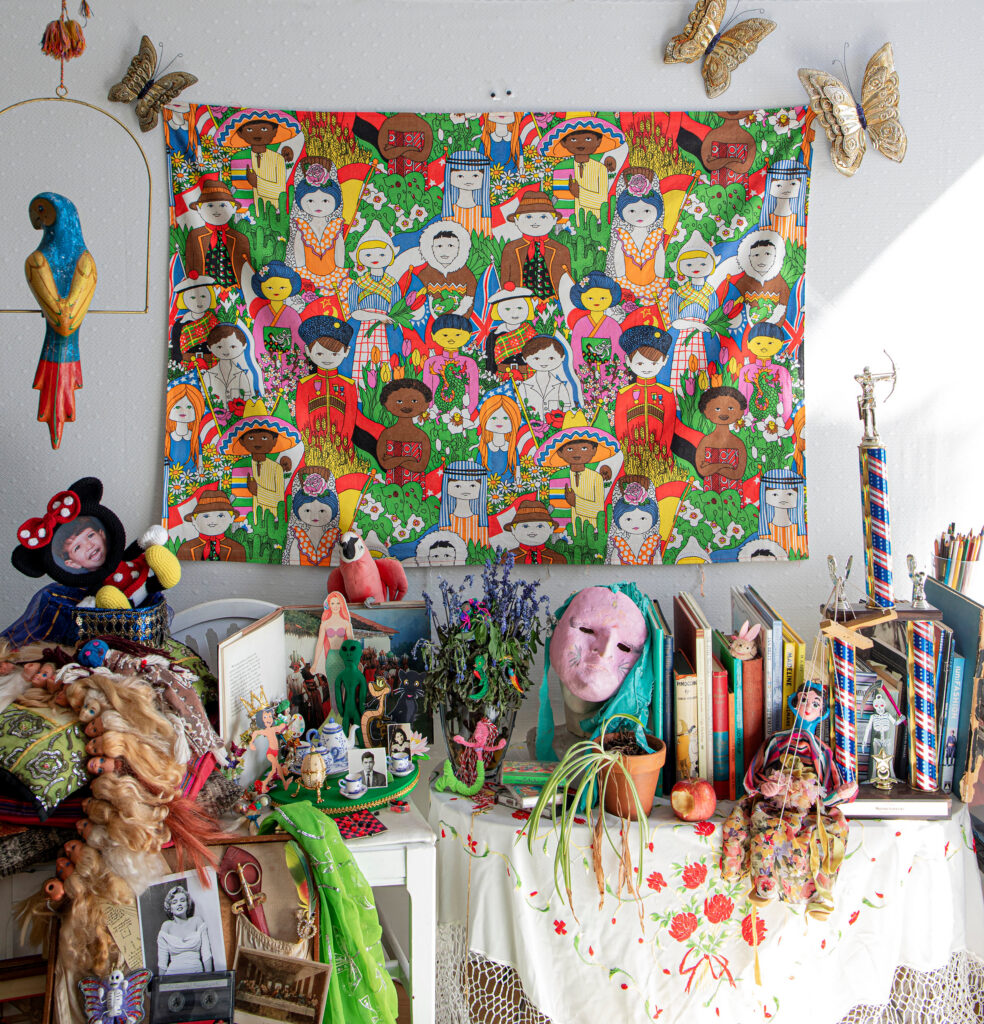
MG: I think it’s the same as searching for some semblance of physicality that is me. It’s as simple as long dark hair, or a personality trait, or the region of ancestry. A lot of these toys belonged to members of my family. I’ve inherited dolls from my mother, and she from her mother, and her mother. I’m a steward. I think part of that comes from really not looking like my mother. I mean, really not looking like either of my parents. I’m this Amazon, I’m taller than both of them. My mother has bright blue eyes, and was blonde as a child. I am an only child from her, but I have step-siblings with different mothers and we look more alike than our parents. Growing up, people used to think my sister was my mom, that I had one of those hot teen mothers. She’s 16 years older than me and would come to pick me up after school, nose piercing, dyed hair, different colors, belly button ring. Very alternative. There was a boyfriend on a motorcycle at one point, of course, then I had to have a boyfriend on a motorcycle. She was a leading punk force, also an artist, a painter. My mom was an art historian and an architect. My dad worked in construction, and they used to build stuff together. Life is what you make it feel like, that’s a big takeaway. I’ve also been listening to the Go-Go’s a lot–that one song, “Beautiful,”–there’s the second verse, “My life is really quite simple / My life is just what I make it / I think you think I’m seeing / Only things I want to see / The truth is that I’m being / Who I wanna be.” It really is that.
V: Was this self-invention something explored more in this show than your past work?
MG: Indigenous Woman was for dad, and Wunderkind is for mom. Especially as Indigenous Woman took off, she was like, where am I, what about everything that I’ve done? Mom, you’re here too. My dad just couldn’t handle how fabulous I was. I think somehow my daddy issues are part of why I felt like sharing in that way, being like I’m an art star, let me convince you, and it was to convince him. My sister told me that he had a copy of the magazine, and he would show his friends and was so proud but he wouldn’t tell me. After he passed, there’s so much I’ve had to resolve on my own. Psychologically, anyone who has beef with their parents, it’s about being at peace with whatever baggage or burden you feel you gotta carry around. My dad gave me my first video camera. He loved the new thing–the new stereo system, the new camera, the new car, very machismo. Mom was like, what do you want to do? You want to take a dance class? I’ll drive you there. You want to be in the school band? What instrument are we getting? Whatever after school program, she found a way to put me in a carpool if she couldn’t do it, she made it happen. I think that’s why we moved: she understood that I was bigger than our little town, and she took me around the world. I think that’s also why she left her little town in upstate New York, a middle child, the only girl. She went to school in Paris. She saved up money babysitting, bought the Vogue patterns, and sewed her own clothes, and I got the benefits of all of that.
Keep an open mind–people can live in a third space, which is childhood. Self-image is something we all contended with before we were reading this article, before we were going to work, before we decided that’s the box we’re in now. I’m usually so indirect–I love misdirection. It’s part of my magic trick, it’s how magic works. But this show is so not that, it’s so direct, it’s so open. It’s causing me to feel like it’s new territory. Which is why I guess why you do it.
Discover More