In ‘Cecil Beaton in Love,’ The Great Artist’s Love Life Takes the Spotlight
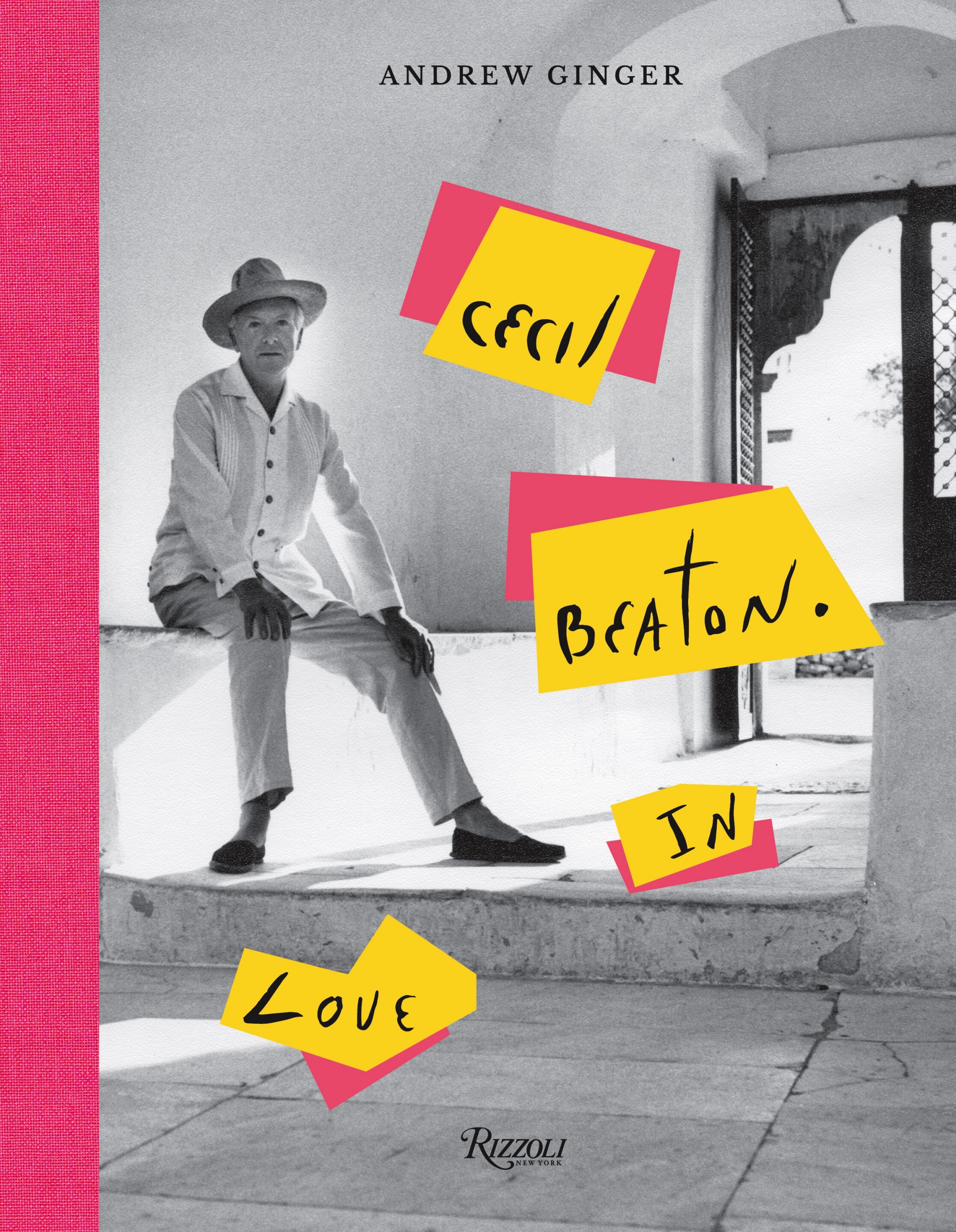
How the legendary photographer and designer found his great romance, against all odds
In Cecil Beaton’s lifetime, there was almost no creative field he left untouched. From photography to costume design to writing to art direction, he seemed to have conquered any outlet for self-expression possible, whether he was photographing Marilyn Monroe or Queen Elizabeth II; winning of Tony and Academy Awards for Costume Design or Art Direction; publishing books about art and design; having images of his lushly designed interiors published in magazines; or countless other achievements. But he couldn’t always be himself.
England did not decriminalize homosexuality until 1967, and thus the England of Beaton’s youth was not welcoming to queer people. In fact, many hid their sexualities throughout their lives lest they risk imprisonment; for decades, there was even a high suicide rate among young men for this reason, whether they were being blackmailed or otherwise found out, their lives facing ruin. While Beaton courted women throughout his lifetime, among them Greta Garbo, he found his truest love while visiting a leather bar in San Francisco in 1963, an art history scholar and former Olympian named Kinmont Hoitsma. The story has appeared in other texts, but lives again now in author and scholar Andrew Ginger’s new book Cecil Beaton in Love, out September 29, built in part from papers in Kin Hoitsma’s estate after he passed away in 2013.
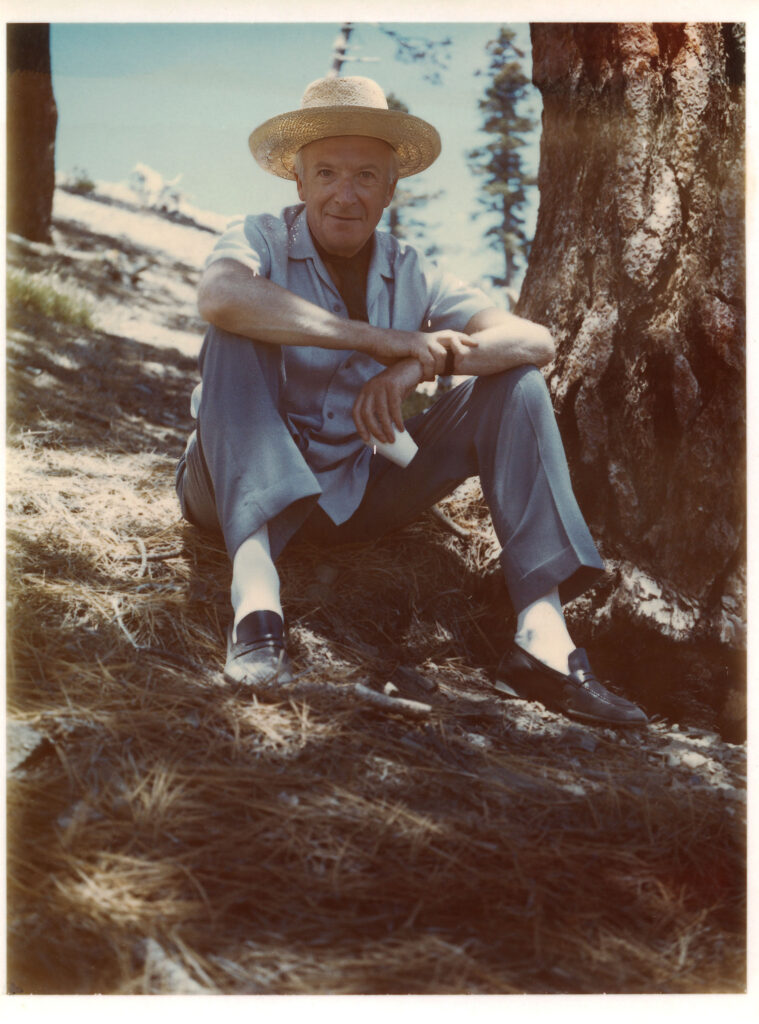
Going through a journey of Beaton’s life, we learn how the artist’s romantic travails shaped his work alongside them. Indeed, Beaton was working on the film version of My Fair Lady, for which he later won Academy Awards for Art Direction and Costume Design, when he and Hoitsma met. These stories live alongside beautiful portraits Beaton made of Hoitsma, some of which, Ginger says, impart the love they had for each other in a single look.
Here, V spoke to Andrew Ginger about the secret life of oil paintings, building an archive, and documenting queer history.
V: You wrote another book about Cecil Beaton–what first interested you in his work?
Andrew Ginger: He’s been a bit of an obsession for about 20 years. I first encountered him when I was at university at Cambridge back in the 80s. I read the authorized biography by Hugo Vickers, and was profoundly impressed and intrigued by Cecil, his life, and work. Later, I bought a house in the country, which was not far away from Ashcombe, where he lived from 1930 to 1945. That reignited it to a different level, and I started to take a passionate interest in him. I read all the books he produced, and I went to all the places in the story. Then I had the idea of putting on an exhibition about him at the museum in Salisbury, which is the local town to Ashcombe, in 2014. It was the story of his life told through his two houses, Ashcombe and Reddish House. It led to my previous book, Cecil Beaton at Home. Someone once said he was stuck in the public eye like a cinder. He refused to go away, to be anything ordinary. He was determined to be completely original and extraordinary the entire time. I’ve always felt he was such a pioneer or a man completely out of his time. He’s somebody who has such a modern interpretation of how to live and how to have a career. He lived in a time when people were ashamed to be in the press, embarrassed about it, and he was never out of it.
V: How did Beaton in Love come to be?
AG: In telling that story [in Cecil Beaton at Home,] I came across his relationship with Kin Hoitsma, his lover and partner. It suddenly occurred to me that the story had not been told in full. It transpired that all the letters they’d exchanged had been sent back to Kin on Cecil’s death. Hugo Vickers was aware of them, but they decided in 1980 that it was an invasion of privacy. There was a great deal of hypersensitivity about a homosexual relationship, and so all 600 letters, and they are substantial letters, were sent back to Kin, who already had all the photographs that Cecil had taken of him. That extraordinary archive was left on Kin’s death to his nephew, who lives in New Jersey, and I got to meet him in 2014. He’d only just inherited the collection. Kin died in 2013. His nephew brought them into New York for me to see at a cafe in the Village. He laid out across a large table this extraordinary cache of letters, cards, telegrams, and these extraordinary photographs of exceptional beauty. It told the whole story of this intense and passionate relationship, which had always been portrayed as being a failure because they only cohabited for a year in 1964 to 1965. In fact, it transpired that the relationship endured from the moment they met in March, 1963, until Cecil died in 1980. They both had things to overcome, in their own experience and character. The process of cohabiting and living together was just too complicated for them to overcome. The letters are the most extraordinary testament of this highly unusual relationship. I was overwhelmed. I didn’t have the space to explore that in the previous book, and the family who just inherited the letters weren’t terribly keen on me having complete access to them until they decided what should happen to them. It took another 10 years to bring that about. Finally, we have that whole part of the story, and how extraordinary and exceptional it is to be able to bring completely new material to the subject of Cecil’s life. You see somebody who is extraordinarily brave. This is a time when gay relationships are still completely illegal, and they carry a risk of exposure, shame, and potentially prosecution. Cecil was always afraid of exposure and ruin all his life, all his working life. And yet, after meeting Kin and getting to know him so closely while he was working in Hollywood through the making of My Fair Lady, he decides he has to take the leap. He has to ask him to come and live with him. Although he’s aware there’s this massive step, and it takes great courage on both sides, give it their best shot. There is this big age gap between them. Kin is 30, Cecil is 60, and they manage that extraordinarily well. All of this is talked about in the letters. They are so different in so many ways. But they are completely connected emotionally and spiritually.

V: How were you first connected to Kin’s nephew?
AG: It’s quite intriguing. When Kin died, his executor sent to auction almost all of his possessions, including three portraits of him by Cecil. A pencil drawing and two oils went to an auctioneer in Oakland, California, and in 2014, auctions were just starting to be shown online. I just happened to notice that his portraits were there online. I was very overexcited and attempted to buy them, but the pencil portrait I didn’t get, and the larger of the oil studies I didn’t get. But the portrait of him in oil that we have in the book, which is against a warm brown background, for some reason didn’t sell. I contacted the auctioneers, and they put me in touch with his executor, and he was very charming. I was able to buy the painting, and it started a discussion about Kin’s possessions and the fact that the letters and the and the photographs existed. And he put me in touch with Kin’s nephew. It all started from this painting, which is a fantastic painting. I was so glad to be able to include it in the book. There’s something about the eyes. You can tell it was painted with a great deal of emotional intensity.
V: How did working on the book affect the way you understood Beaton and his work?
AG: I’ve been living with his work for a great deal of time, and it certainly did bring a far greater insight. Because I went back through all of his diary–there are 145 volumes of handwritten diary that he left behind, from the age of 18 until he died, and it’s the most extraordinary document. Only a tiny amount of it has been published. But he would often record dreams a great deal. What they tell you is that this is a man living with a huge amount of stress, and a large part of that stress is the fact that he cannot be himself. He is terrified of being exposed or of ruin, and he’s seen that happen to other people. I was keen to put into the book that part of the journey, that he didn’t feel safe for a large part of his life, and it took him such a long time to accept his sexuality, right up into middle age. That displayed itself in a certain amount of harsh judgment against people who were more open about it than he was, which is not uncommon amongst gay people. If they’re not comfortable with themselves, they will be quite harsh and judgmental about others. That journey, I think, is informative, but also this great anxiety that he carries because he’s a walking paradox. He is this person obsessed with celebrity and public attention, who is also deeply terrified of being exposed. These two things are working against each other the entire time. He builds up this public persona, which is widely thought to be highly flamboyant, and yet at the same time, he is able to deny being homosexual. It’s a very stressful place to live. Once you’ve spotted how his sexuality is affecting his life and work, you see it in everything he does. I felt a lot of sympathy for him. One of the things that Kin said to Hugo Vickers when he interviewed him in ‘83 was that he was such a different man to the man he presented to the world, and that is very true. So this person who appears to be supremely himself is both is and is not. That is the strongest thing that comes out that you see in his work.
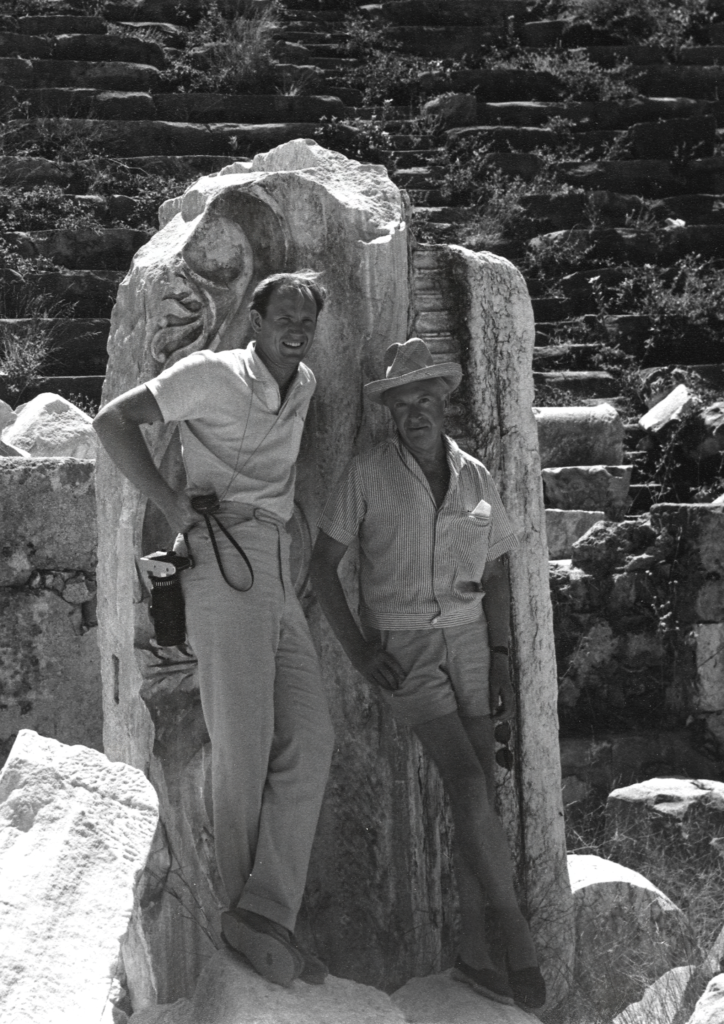
V: I really loved how this book also became a chronicle of what “alternative” relationships have looked like throughout history. We don’t have nearly as many examples as we should. Not only is this a queer relationship, but it’s a queer relationship that thrived when these people lived on different continents for decades.
AG: It was very much in my mind, completely. You look at the other relationships we know about, and there aren’t so many, as you rightly say. Christopher Isherwood and Don Bachardy, of course, were a very immediate example. Cecil and Kin saw a lot of them, and they had the same age difference between them. That was important to the development of the relationship. I went back through Cecil’s past, his gay friendships, all of the visitors’ books of the people who were coming to [Beaton’s homes] Ashcombe and Reddish–how many gay relationships did he encounter? The answer is not very many. The vast majority of gay people he had as friends were largely single. If they were a couple, they had to live abroad. There were some in America, but hardly any in England, where it was substantially more difficult. Close friends like [artist] Oliver Messel didn’t get with his ultimate partner until a lot later, and then he moved because it was just too difficult. The risk of prosecution was still there until 1967 [when homosexuality was decriminalized]. It was very much in my mind how hard it was to establish a relationship, how impossible it seemed to cohabit, and how few people in Cecil’s experience had made that leap. That gradually improved, but for the majority of his life and for his generation particularly, it seemed a near-impossible dream. The effect of the oppression is cast into every area of life and experience. That is very sad. I hope people will see that and appreciate the progress we’ve made.
Discover More