Yes, anyone with a Wi-Fi connection and an Instagram account knows that Demna chose to do a fashion film—not a runway show—to debut his first Gucci collection in Milan this fall. But did you know that Kering, in partnership with Vogue Italia, organized a “Cinemoda Club” during Milan Fashion Week, too? And did you know that none other than Meryl Streep (in town filming The Devil Wears Prada 2 and seen at the Dolce&Gabbana show, which anyone with Wi-Fi and Instagram also knows) was spotted going in to watch the documentary Diana Vreeland: The Eye Has to Travel? I loved the idea of Cinemoda! (Great name, too.)
Lately, I’ve been concerned that new generations of fashion fans may have forgotten how deeply films of the 1950s, ’60s, and ’70s shaped the fashion world we live in today. We all know Sofia Coppola invented filters before social media with The Virgin Suicides and Marie Antoinette; we can spot a Wes Anderson frame from a mile away, thanks to The Royal Tenenbaums and The Grand Budapest Hotel. But what about the films that came before them? Take out your notebook (or your Notes app, I guess) and write down these eight movie titles. Class is in session.
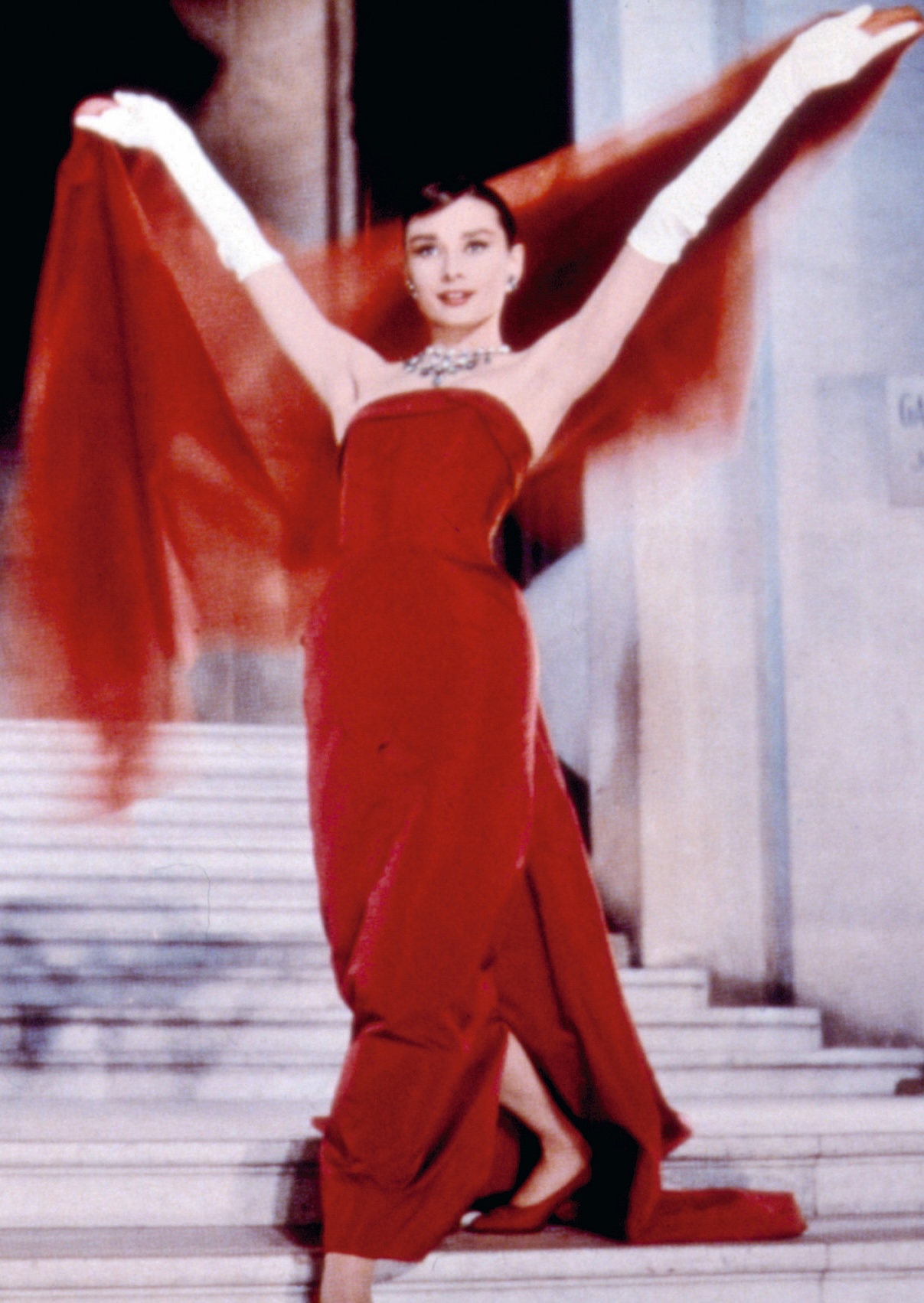
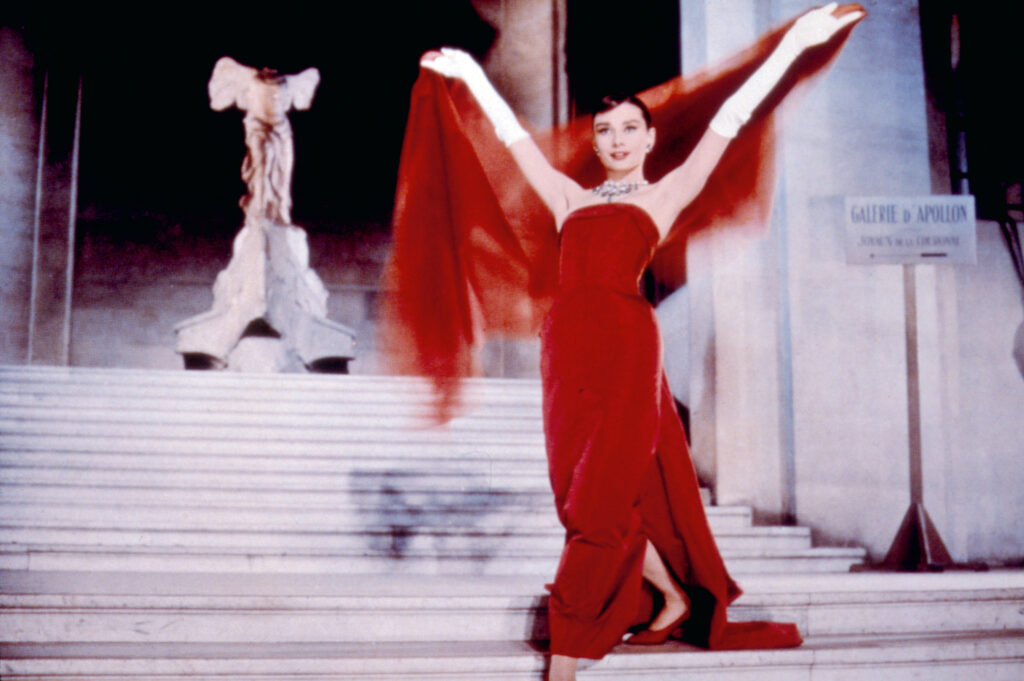
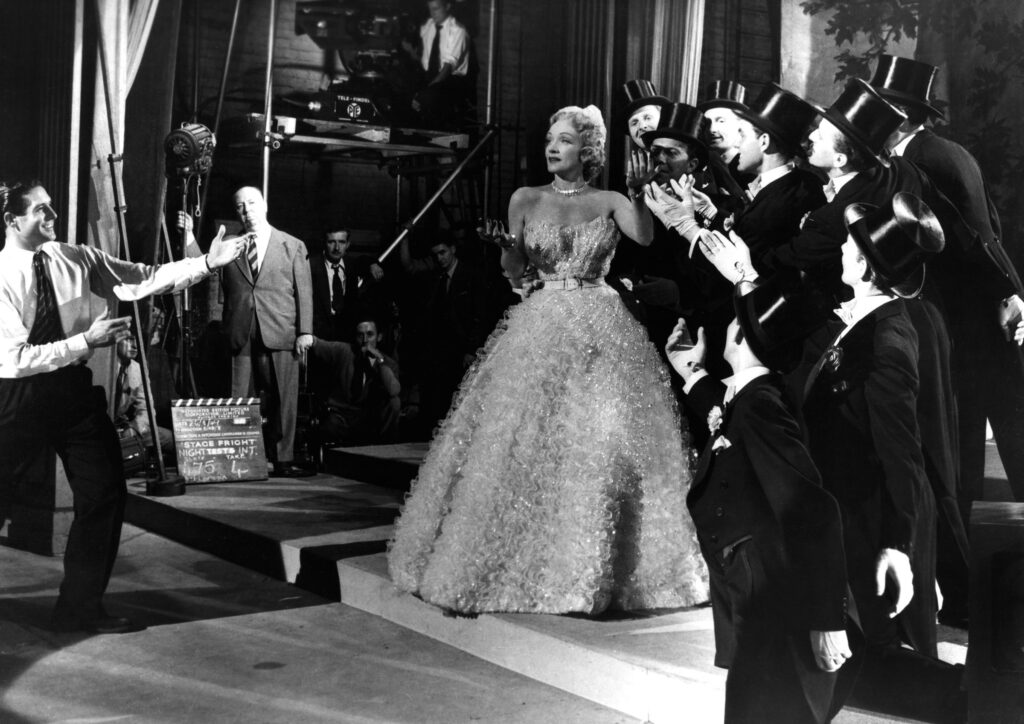
Let’s start with Alfred Hitchcock’s Stage Fright (1950). Marlene Dietrich, portraying a glamorous actress entangled in deceit, wears custom gowns by Christian Dior. His “New Look”—cinched waist, full skirt, careful tailoring—wasn’t mere costume: it was commentary, a visual shorthand for postwar elegance and authority. Fun fact: this was the film Jonathan Anderson clipped into the short documentary that played before his first women’s collection for Dior in Paris this season. A few years later, Funny Face (1957) gave Technicolor its first deep breath. The plot: Fred Astaire plays a photographer (based on my favorite photographer ever, Richard Avedon) who discovers Audrey Hepburn, a shy New York City bookshop clerk turned Paris model. The costumes by Hubert de Givenchy make it soar. Cigarette pants, bateau-neck dresses, and sweeping gowns—especially that giant crimson chiffon number cascading down a staircase—turned Hepburn and Givenchy into the ultimate designer-muse duo.
Roger Vadim’s And God Created Woman (1956) introduced a different kind of cinematic seduction. Brigitte Bardot, in off-the-shoulder frocks and gingham skirts by Pierre Balmain, embodied a new feminine freedom. Her charm was casual yet electric—barefoot in the sand, wind blowing through her hair. Today, this Riviera sensuality pulses through the work of Jacquemus, who channels Bardot’s Saint-Tropez spirit in every collection.
In 1961, Last Year at Marienbad offered something colder and dreamlike. Set in an opulent, labyrinthine hotel, it collapses memory and desire into eerie repetition. Women glide through mirrored halls in Coco Chanel–designed column gowns and sleek black dresses. That calm minimalism set against baroque excess fascinated Karl Lagerfeld, who revisited the film’s visual lexicon throughout his Chanel tenure. Even now, designers who prize poise, restraint, and mystery—from Phoebe Philo to Mary-Kate and Ashley Olsen—still invoke Marienbad’s mirrored austerity.
In the same year, but in quite a different aesthetic vein, Breakfast at Tiffany’s, another pairing of Hepburn and Givenchy, turned fashion into folklore. Holly Golightly’s opening silhouette (black sheath dress, pearls, and oversized sunglasses) etched itself instantly into the collective imagination—and a zillion Halloween costumes. The film fused couture, branding, and aspiration; the “little black dress” became more than fashion—it became shorthand for cosmopolitan elegance. Impress your friends by pointing out that the movie’s ending differs from Truman Capote’s novella, which was decidedly darker and far less romantic.
By the mid-1960s, cinema and fashion began interrogating style itself. Michelangelo Antonioni’s Blow-Up (1966) follows a London fashion photographer—inspired by David Bailey—who believes he may have photographed a murder. With appearances by Veruschka and other top models, the film blurs documentary and fantasy. Its mod geometry, saturated color, and visual ambiguity influenced designers like Raf Simons, Prada, and Hedi Slimane, making Blow-Up the foundational text of fashion’s cool detachment.
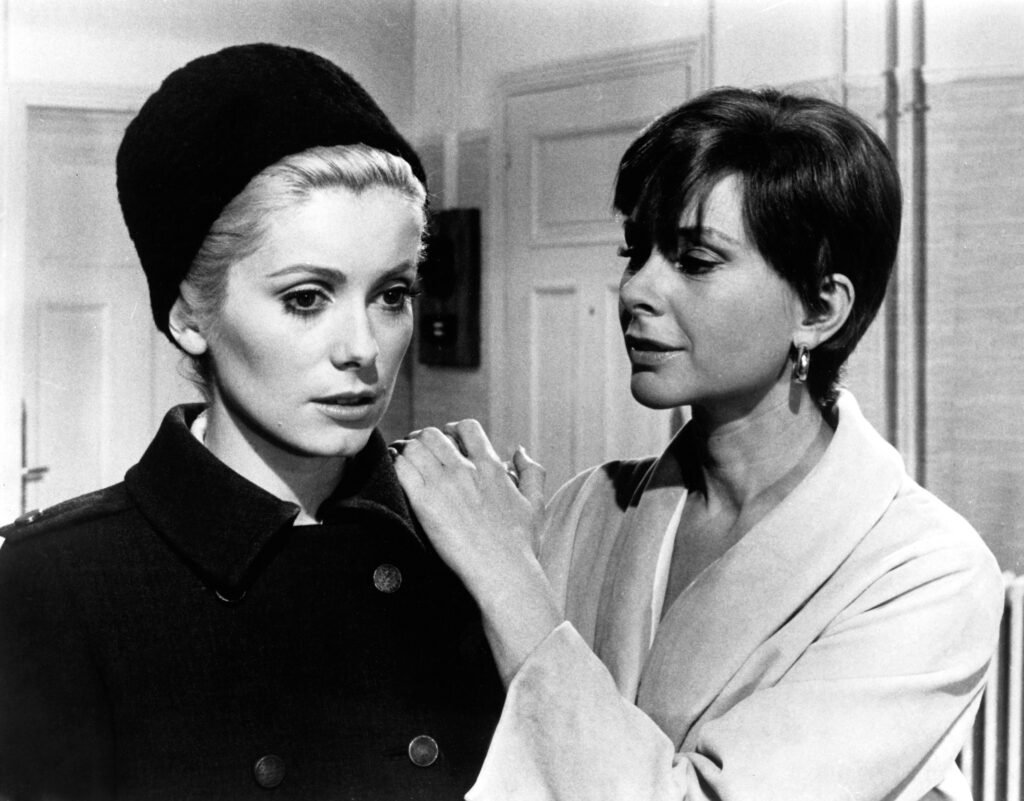
Luis Buñuel’s Belle de Jour (1967) sharpens that detachment into erotic discipline. Catherine Deneuve plays a bourgeois housewife who moonlights as a prostitute; her daytime wardrobe—tailored by Yves Saint Laurent in trench coats, bows, and patent heels—is immaculate. (YSL and Deneuve remained close friends until he died in 2008.) That collision of elegance and hidden desire became an enduring reference for Tom Ford’s era at Saint Laurent and for every designer exploring “virtuous vice” in fabric.
Lastly, this one may be my favorite: Rainer Werner Fassbinder’s The Bitter Tears of Petra von Kant (1972). Set entirely inside an apartment filled with mannequins, wigs, and bolts of fabric—a true sartorial playground—it follows a fashion designer’s obsessive relationship with a younger woman. Every drape, every silk robe, every glove becomes emotional currency. The film shows that fashion is never neutral; it’s emotional, psychological, and often cruel.
To be honest, we’re only scratching the surface here. Now I’m thinking of all the films that came before the 1950s, like Marlene Dietrich in Morocco (1930)! I maintain no woman has looked so powerful in a tuxedo since—not even Yves Saint Laurent’s original Le Smoking suits of 1966, which tipped their hat to Dietrich’s daring androgyny.
And what about the documentaries? Grey Gardens, The Last Emperor, Paris Is Burning, Catwalk—films that surface style from biography, spectacle, and subculture. I could go on forever. I may be. The relationship between fashion and film is as ancient as celluloid—and each industry has made the other infinitely better for it.
This story appears in the pages of V157: now available for purchase!
Text Derek Blasberg
Editor Kev Ponce
Discover More
