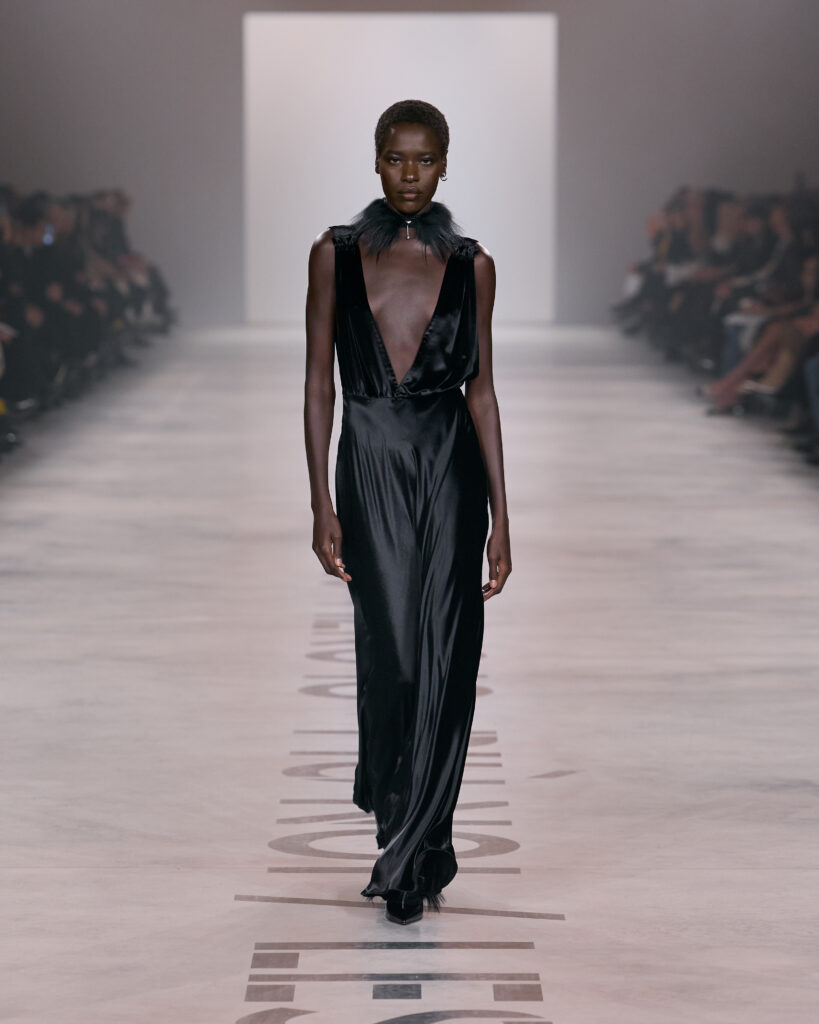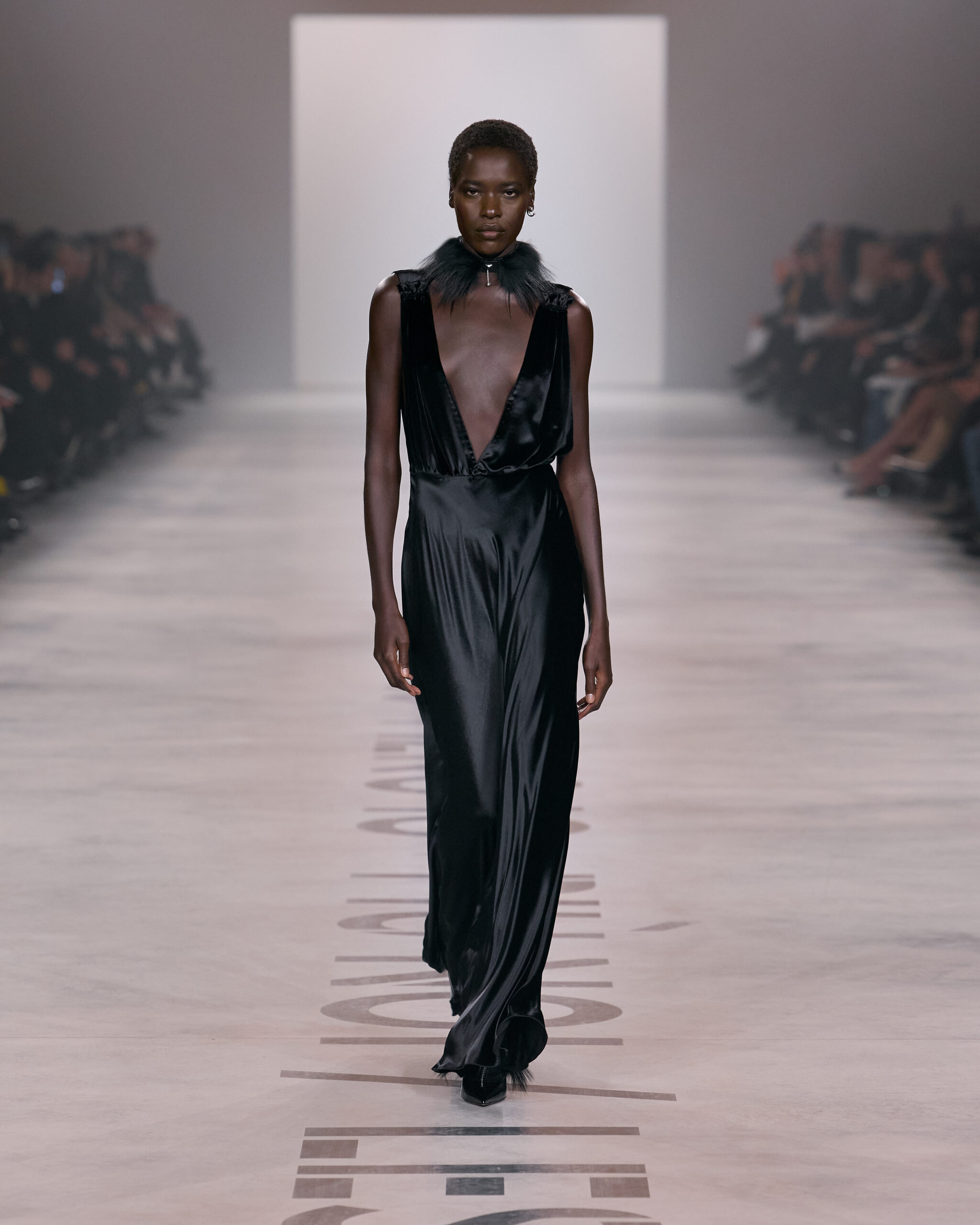
Coming from her tenure at Dior, Maria Grazia Chiuri enters the Fendi house with a mantra she feels grounds her first Fendi season (literally, as it’s written on the runway floor) and the House’s heritage: “Less I, more us.” Intention is more necessary than ever, placing values, acceptance, and togetherness at the forefront of the Italian fashion designer’s debut Fendi collection for Fall/Winter 2026/27.
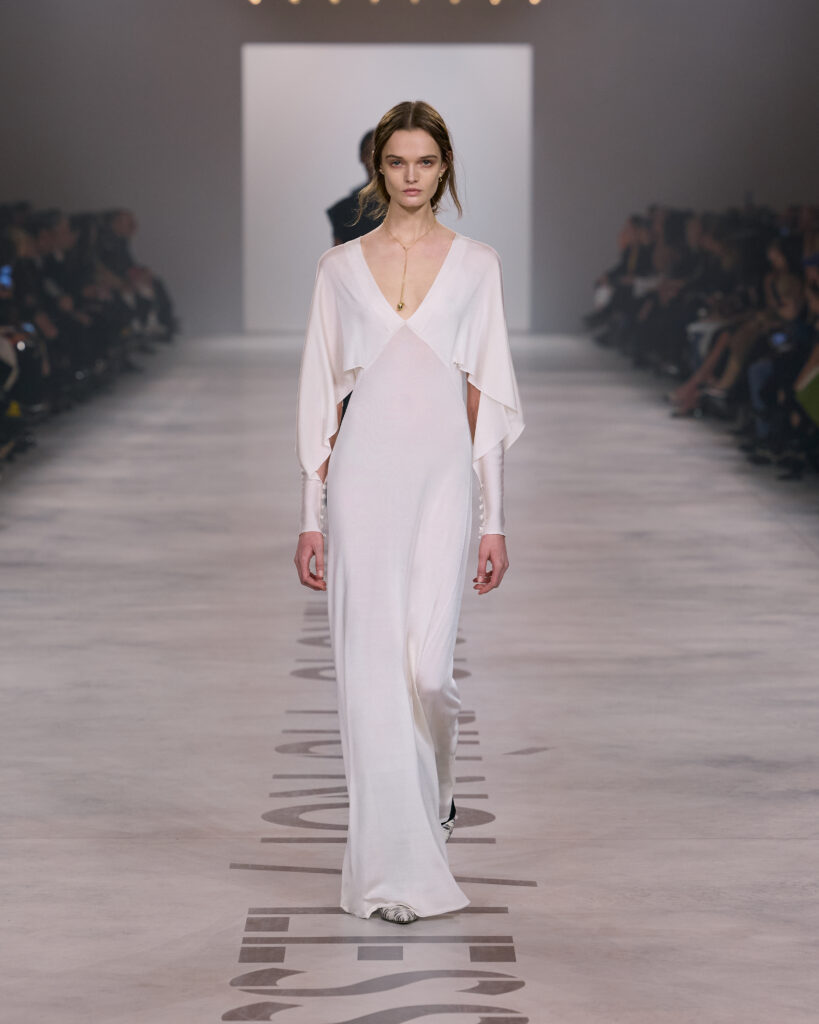
But togetherness doesn’t just mean working in tandem with other humans, but also with the body. Chiuri emphasizes meeting the body’s needs, fulfilling physical desires as well as shared ones, without negating the individual. All of this translates into a collection that is tactile and considerate.
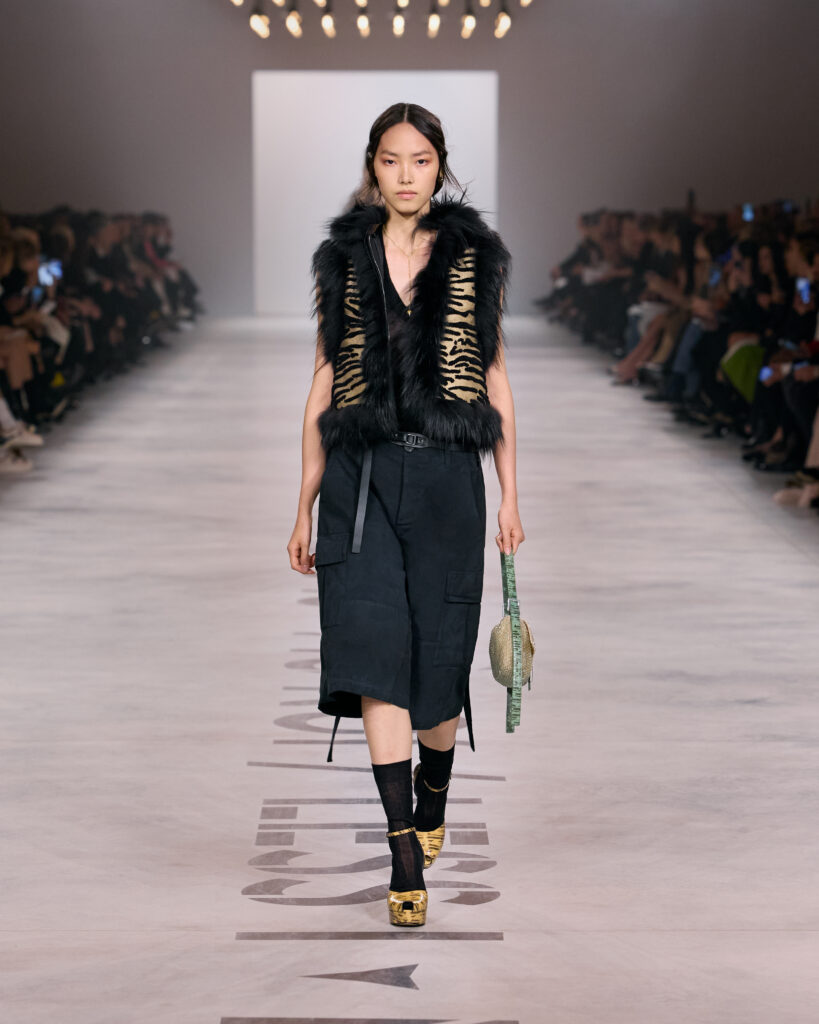
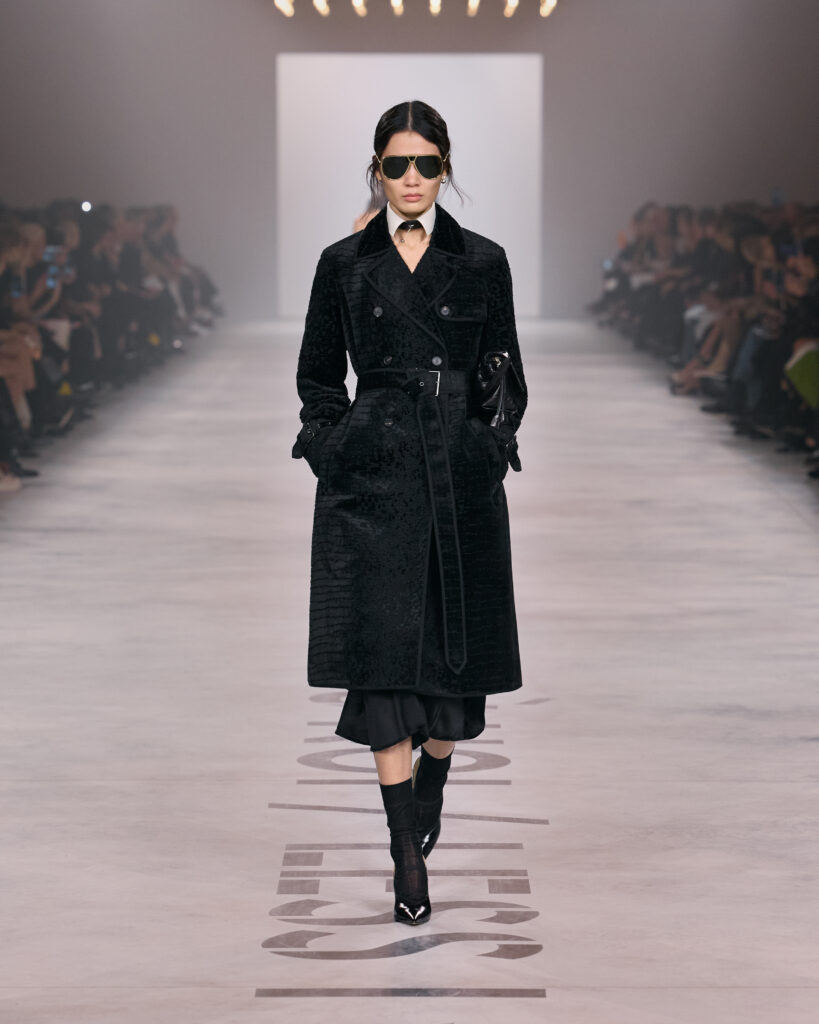
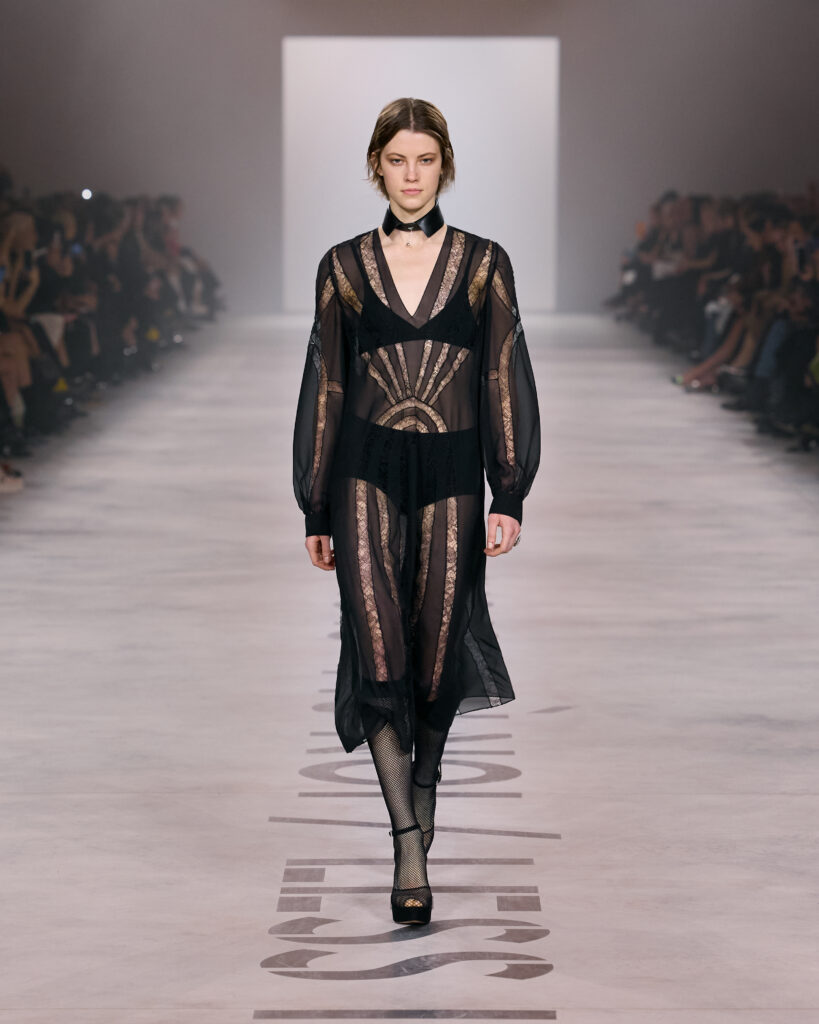
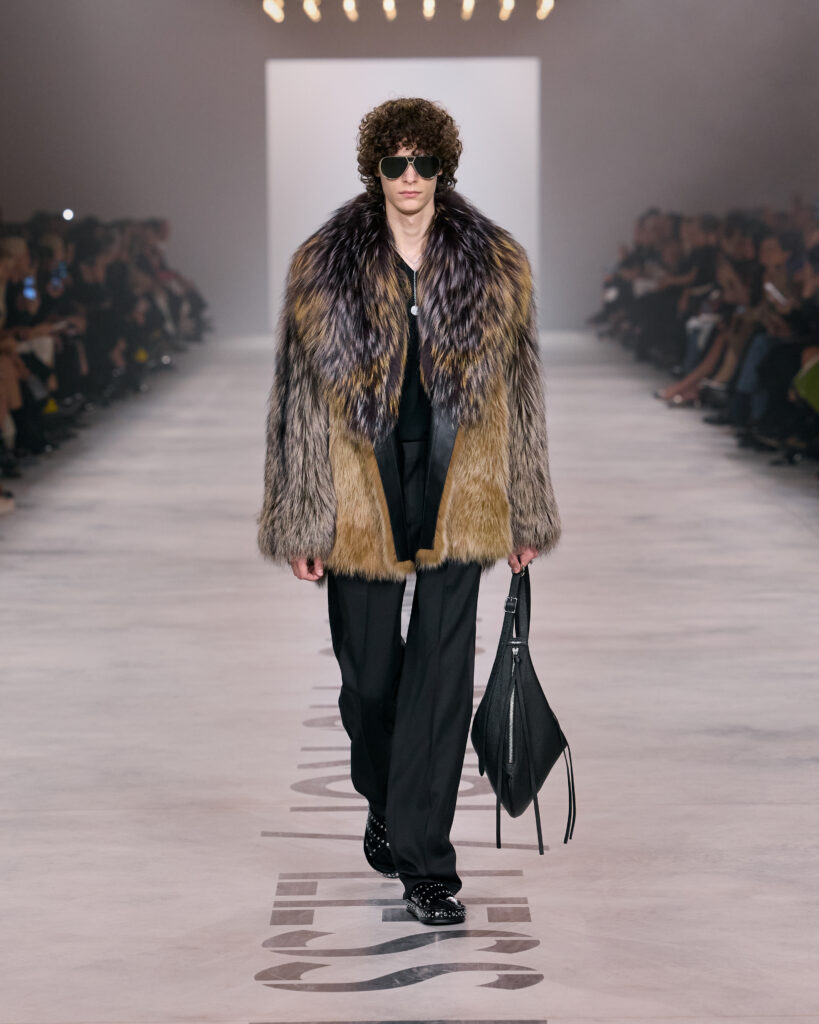
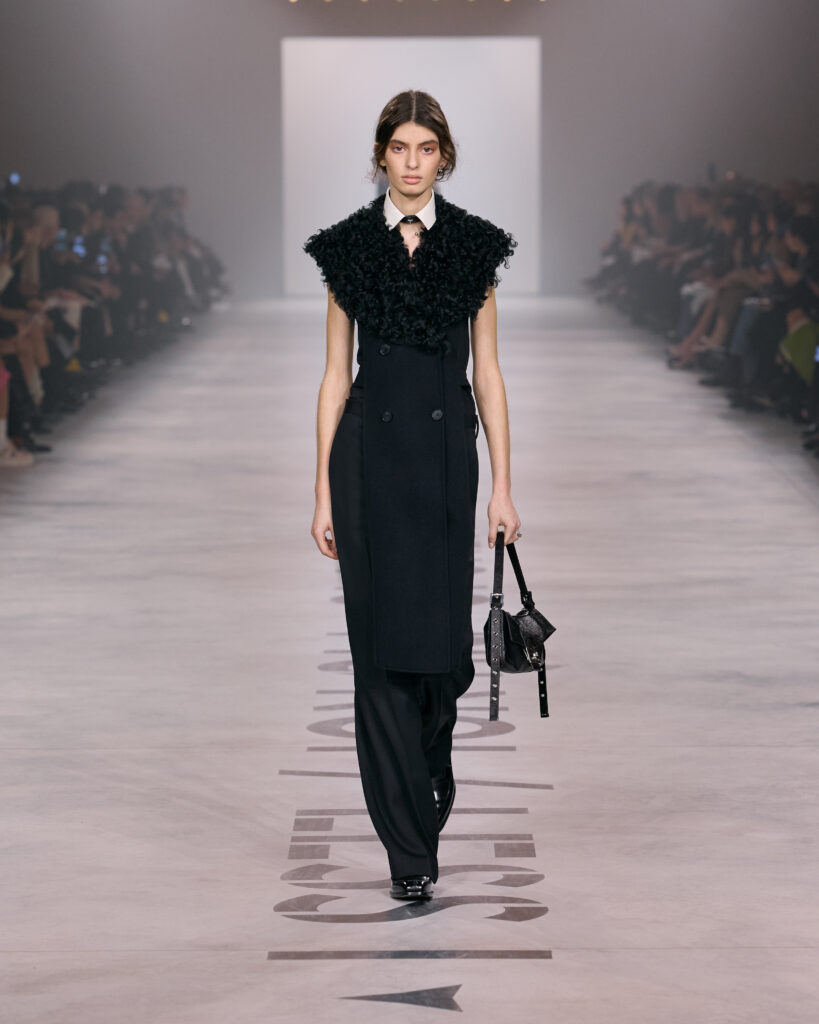
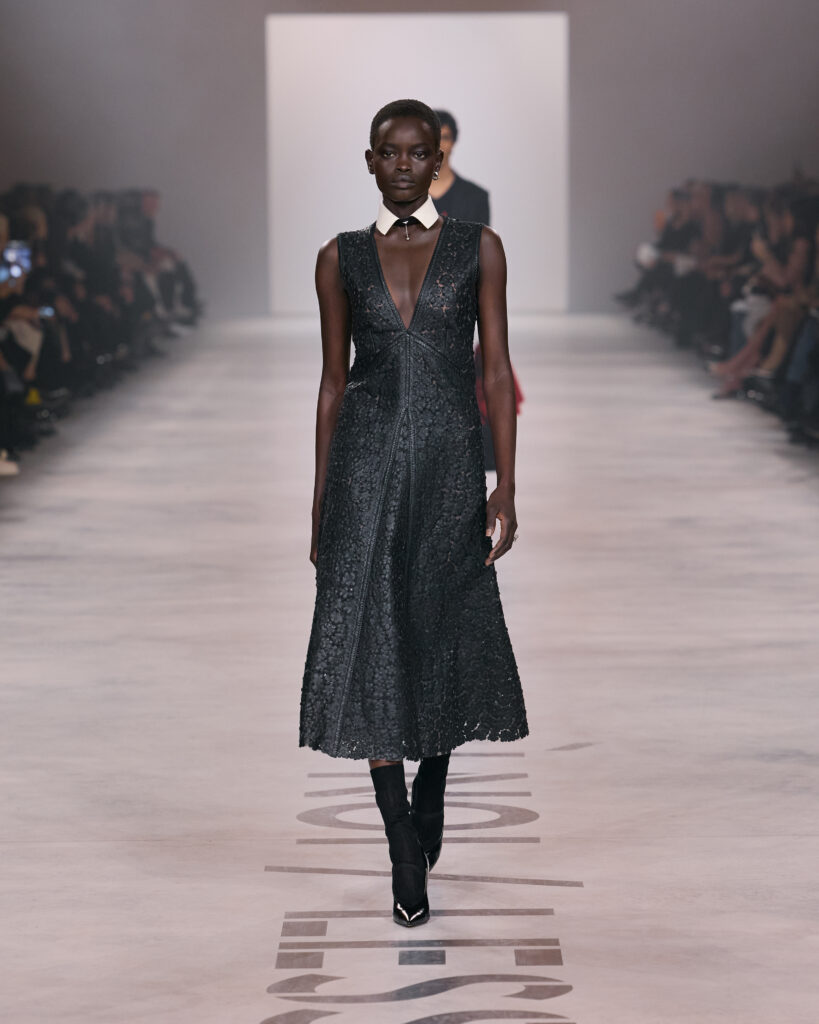
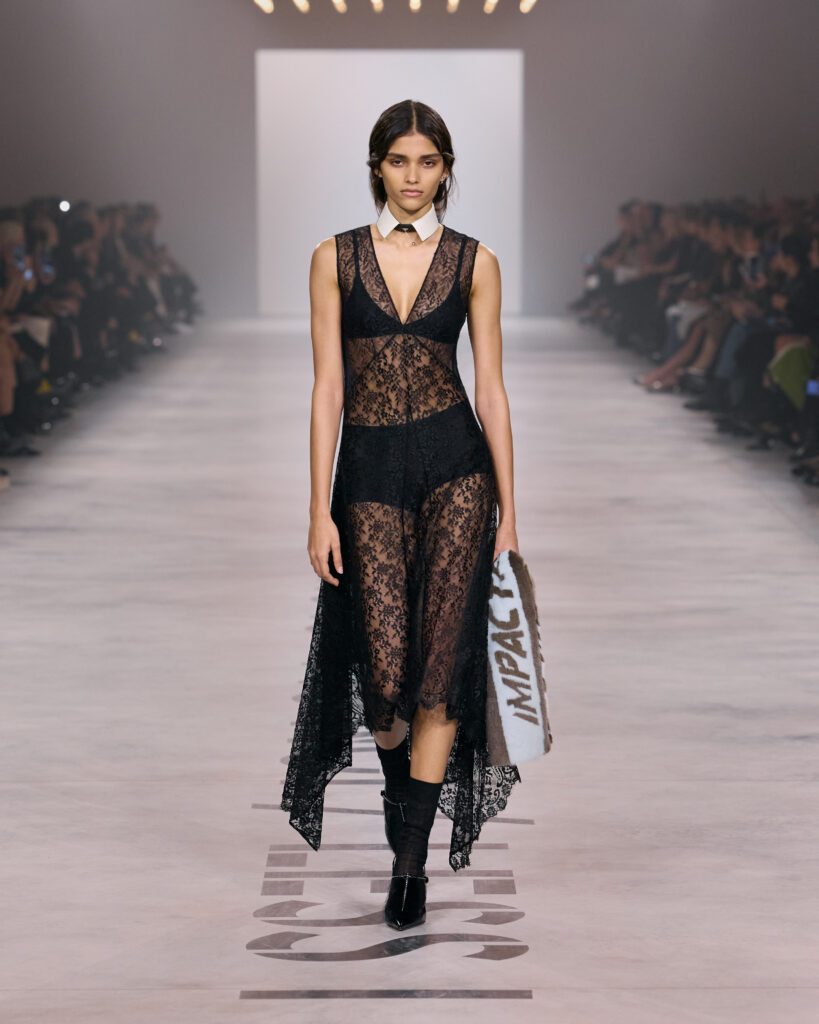
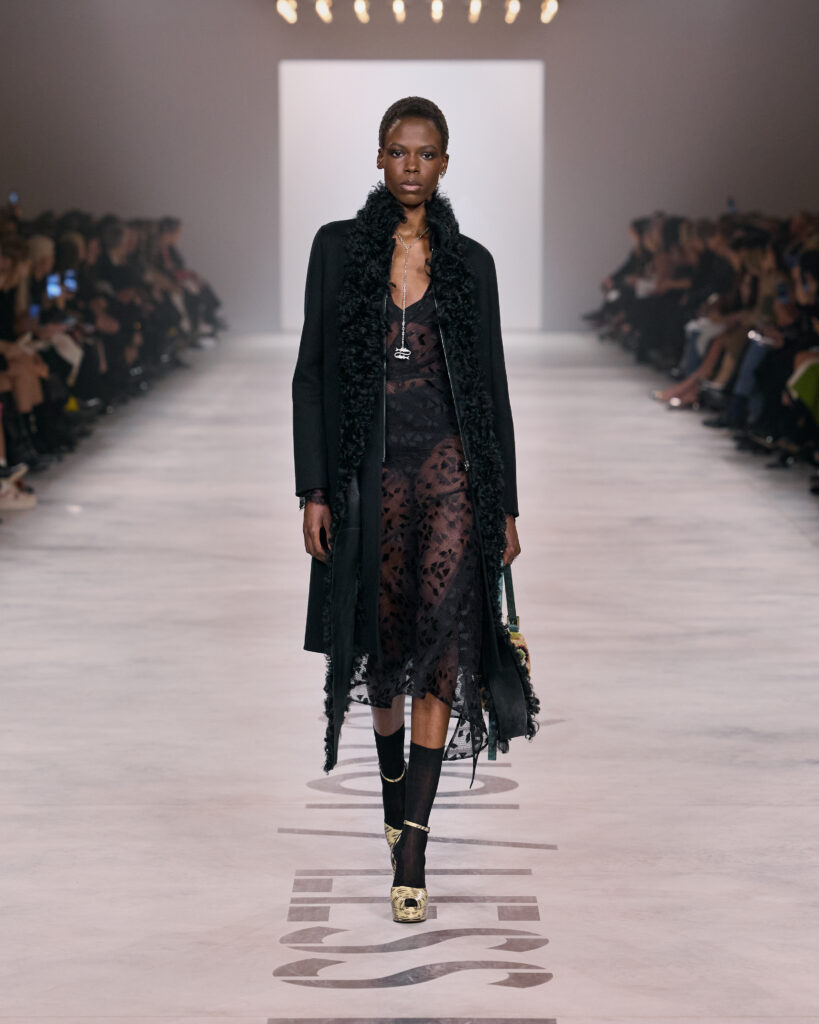
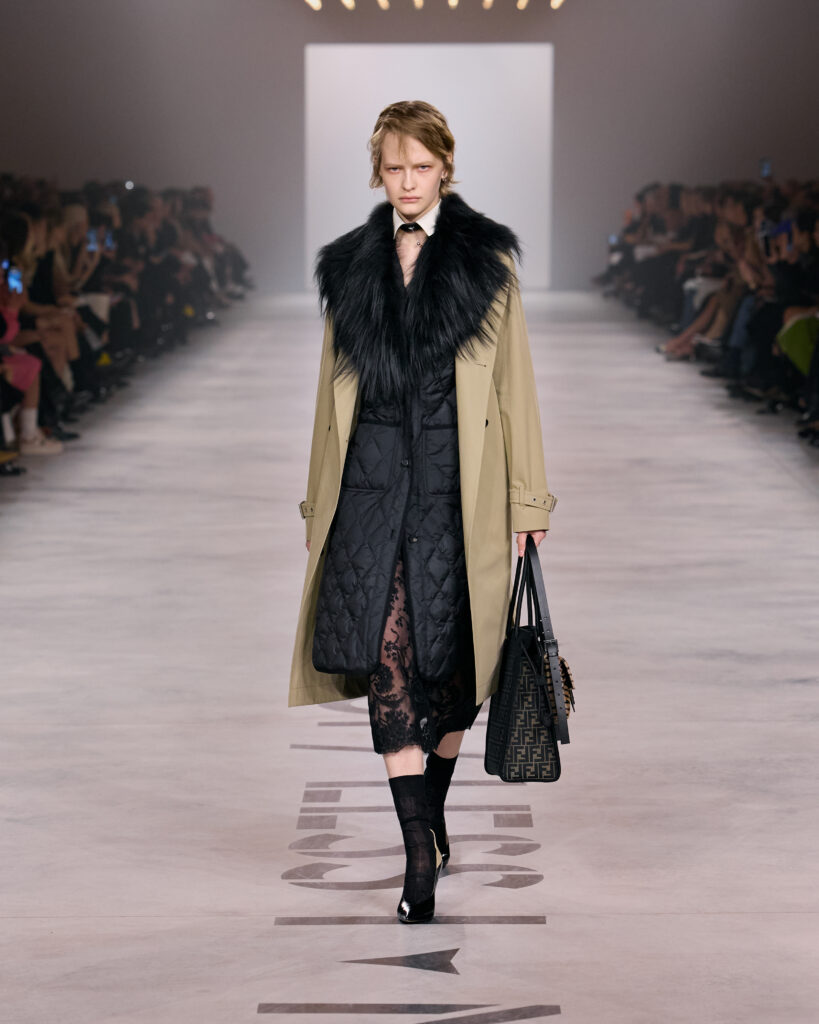
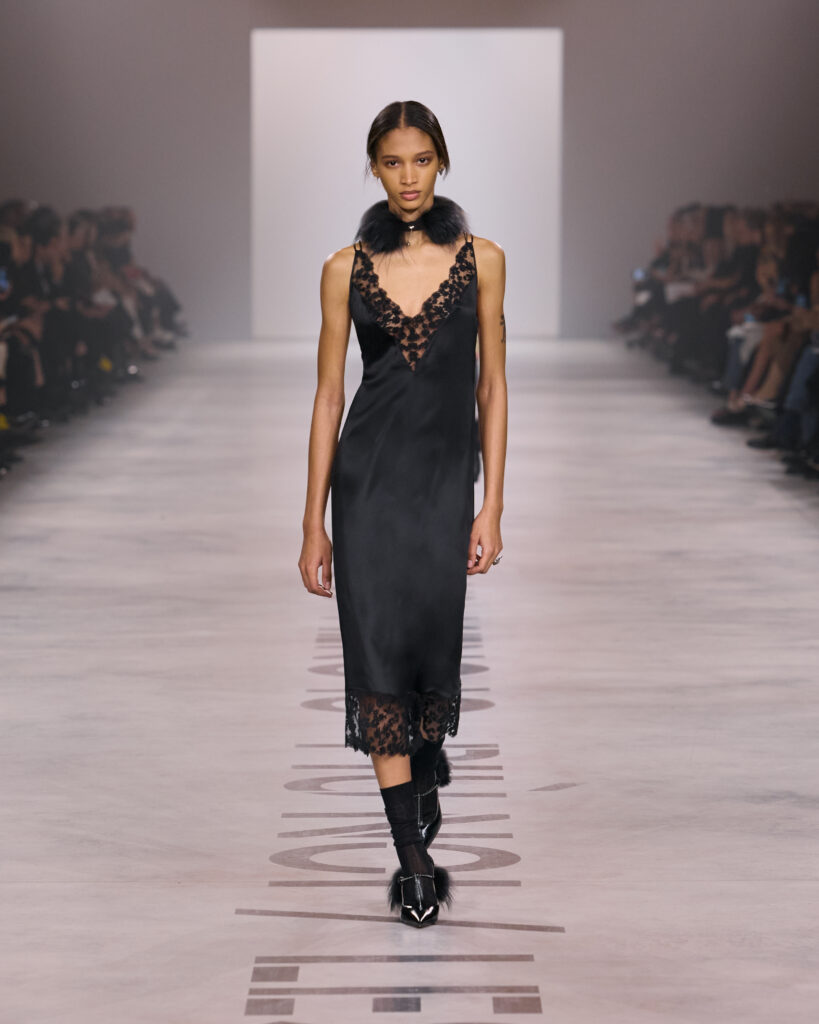
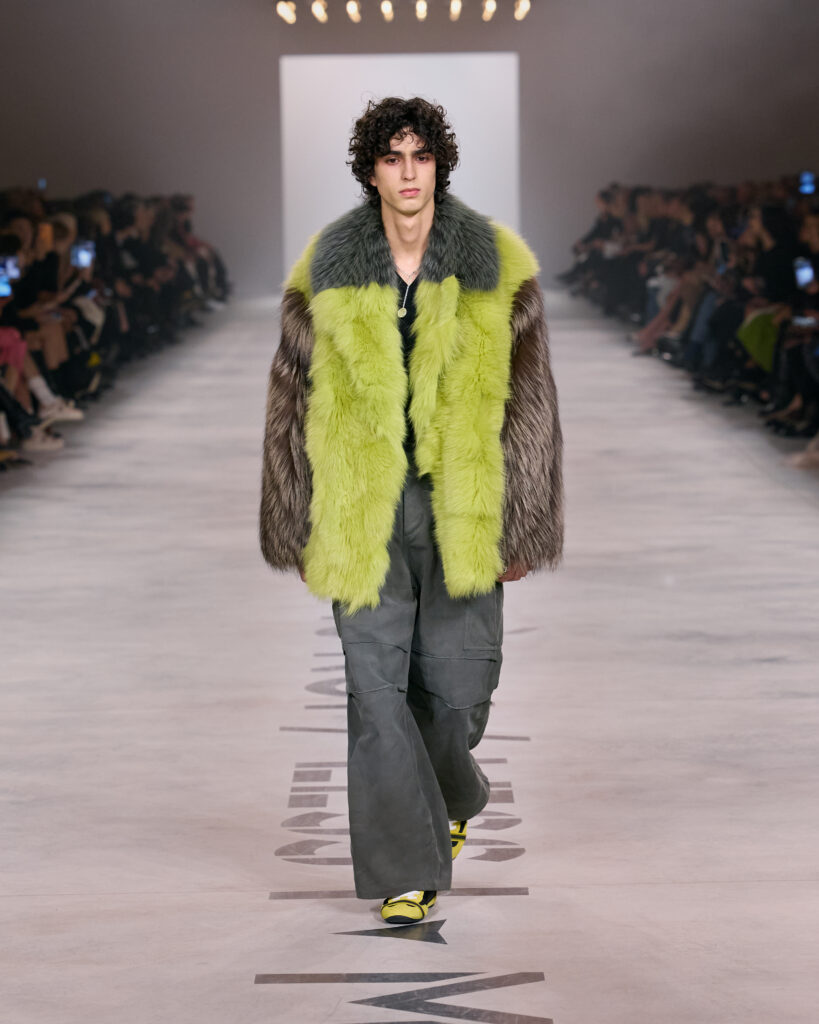
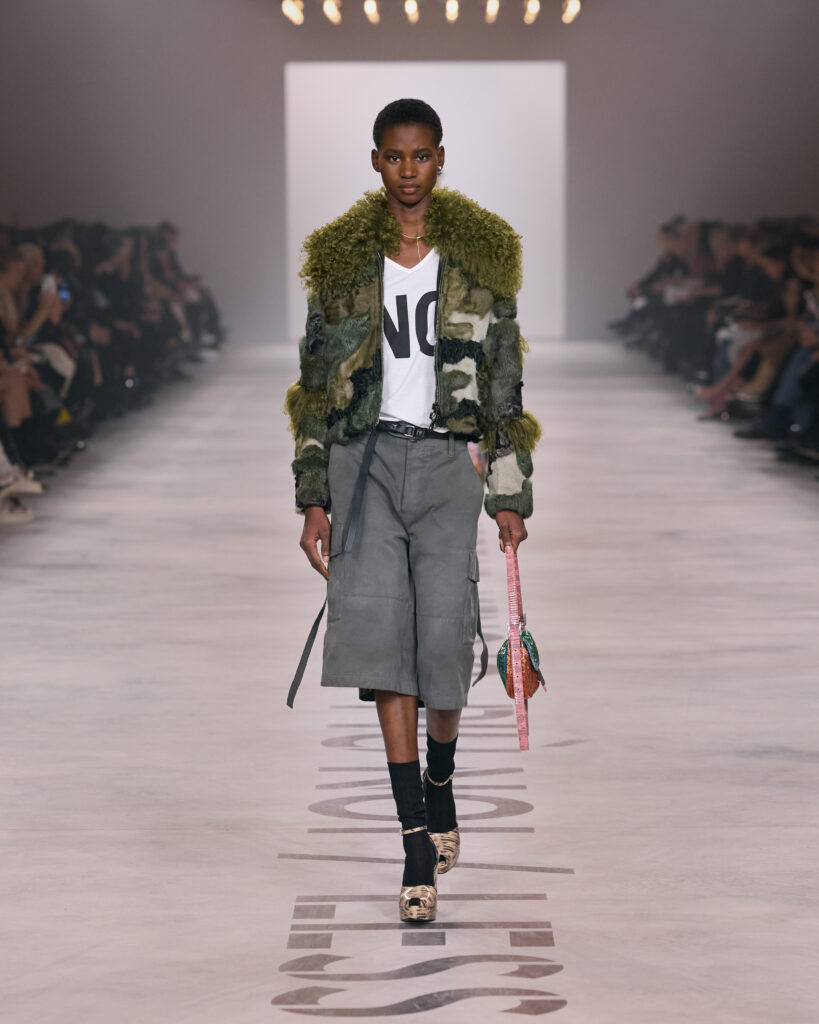
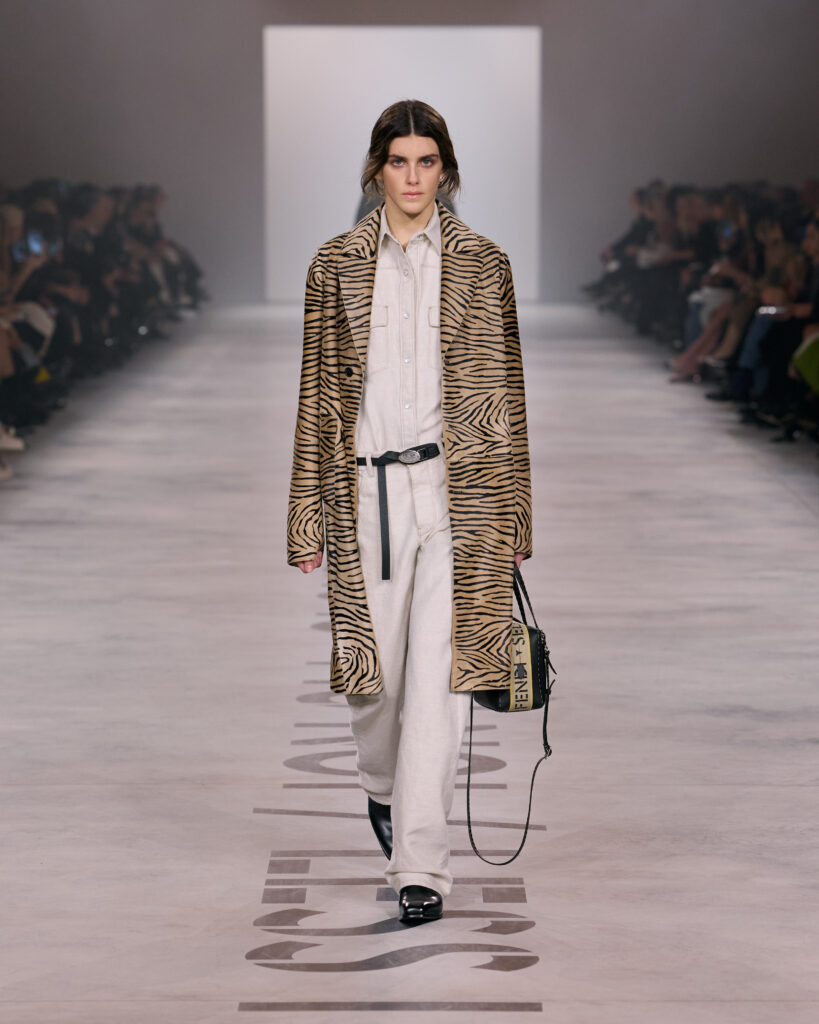
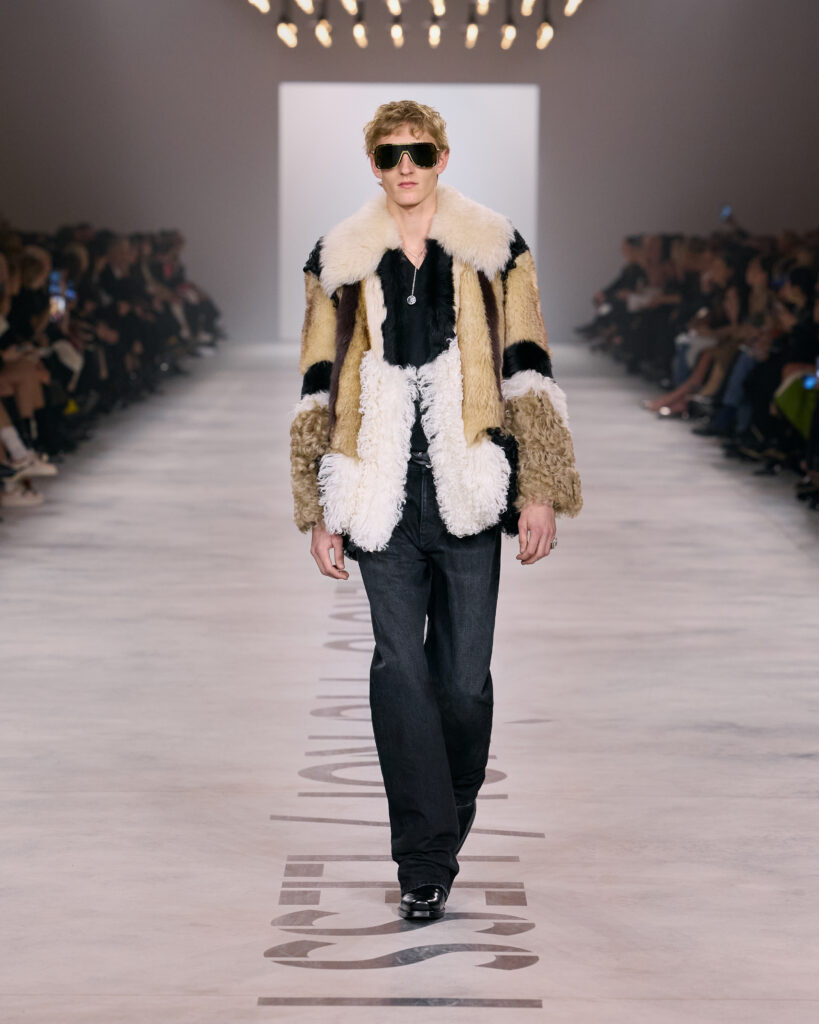
The little black dress is a pinnacle pattern of the collection, transforming from delicate mesh lace to lace-leather a-line dresses. Meanwhile, fur in the form of pelts, coats, collars, and vests is renewed from Fendi’s archives, remodeling outdated garments and reassembling them into contemporary pieces.
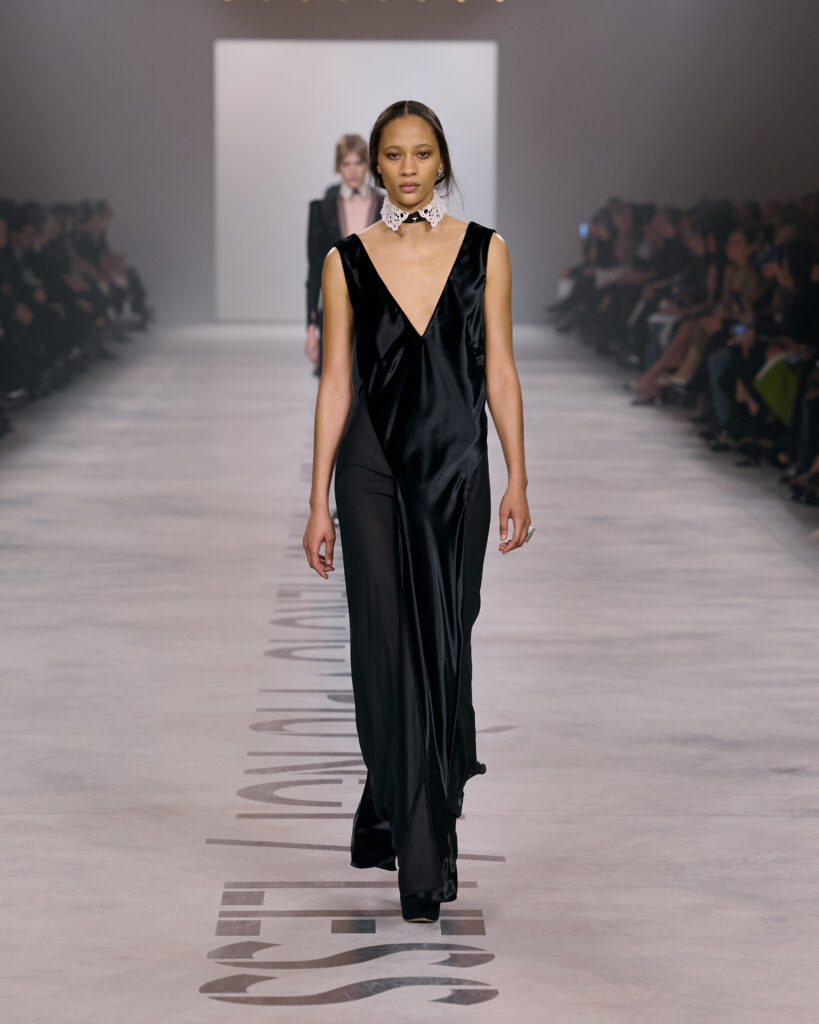
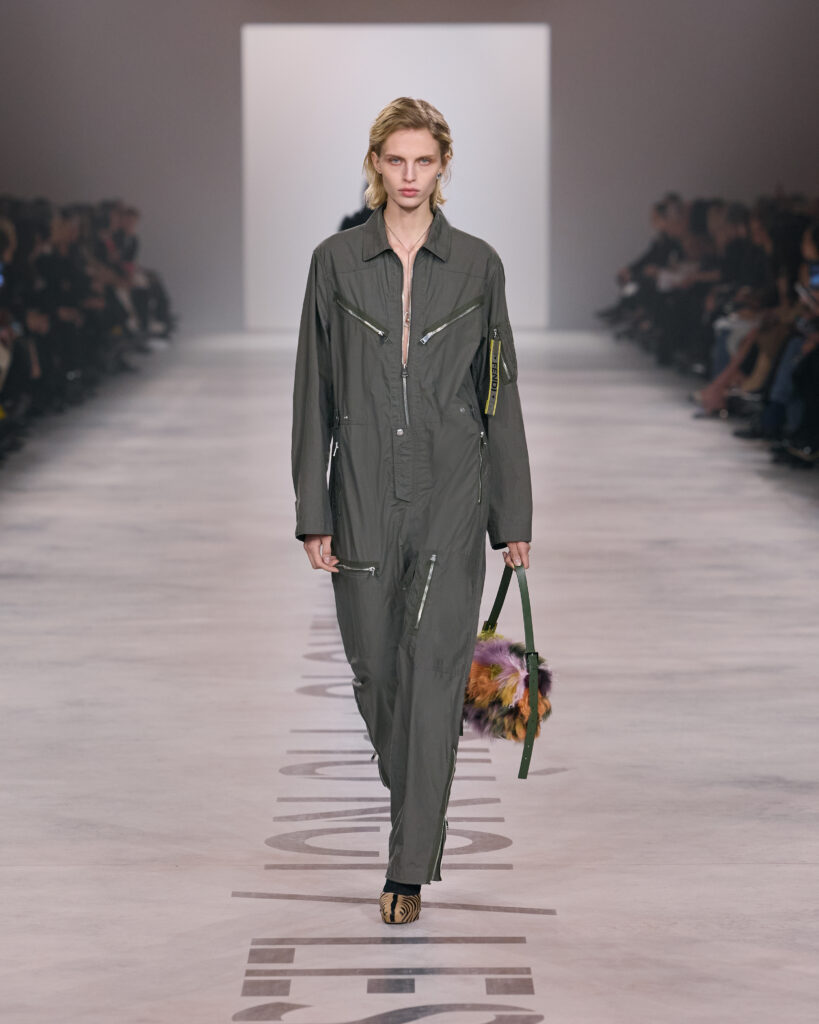
In accessories, solitary, unattached choker-collars are dispersed throughout the collection, styled unanimously—in lace with a classic deep-V slip and in cotton with a velvet-y black alligator trench. On par with the quiet-luxury, no-logo-less current, instances of the Fendi branding are subtle and few. A petite written logo on the oval buckle of new, simple leather belts. The ubiquitous FF buckle returns to the classic Fendi Baguette of all kinds—not unfamiliar to Chiuri, who began her career at the label as an accessories designer in the ’90s, creating the iconic Baguette we know today.

Courtesy of Fendi
The collection’s more literal representation of the season’s motto is expressed in phrases—“Rooted but not stuck,” “Present but not dependent,” “Loyal but not obedient,” and “Committed but not consumed”—spelled out on football scarves and T-shirts by multidisciplinary artist SAGG Napoli. Following the theme of unity, Chiuri also collaborated with Archivio Mirella Bentivoglio, reinterpreting the late Italian sculptor and poet’s archives into thoughtful pendants and double-entendre phrases spelled out on clothing.
Intentional design in the context of the social climate is not lost on Chiuri. While overconsumption remains a pivotal concern in the industry, in addition to reimaging fabrics from the archives, Fendi takes strides toward “radical resistance” by imposing emotional connection, “emotionally durable design,” positioning garments as “memory archives.” Chiuri’s vision of Fendi is collaborative and multi-conscious, and champions the technical integrity of the house codes.
Courtesy of Fendi
Discover More