Next Stop: MM6 Fall Winter 2026
All aboard the MM6 express
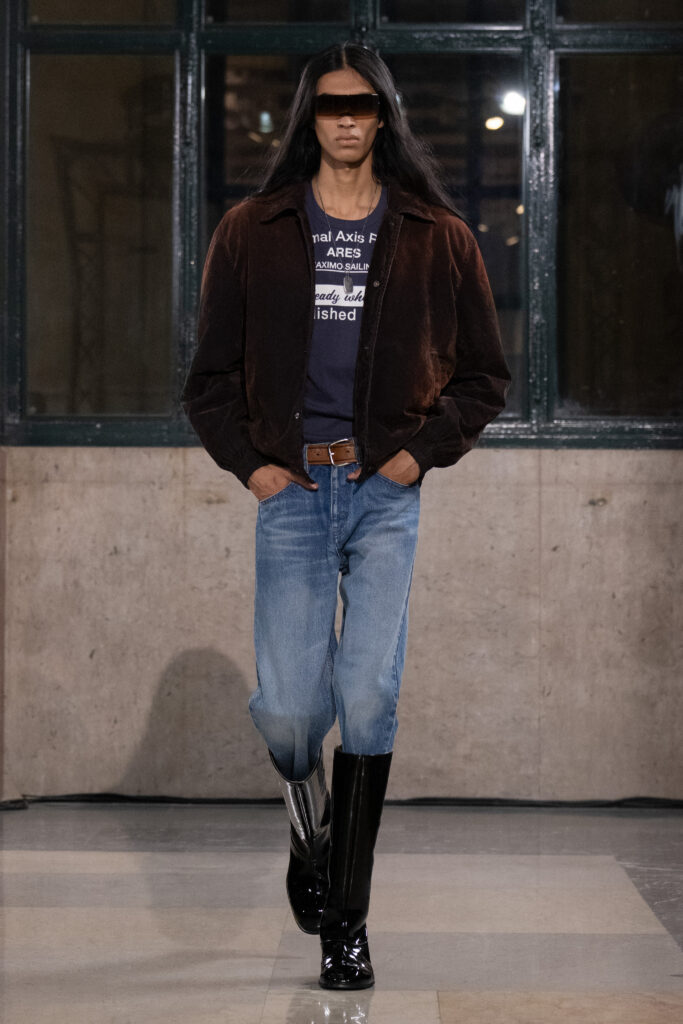
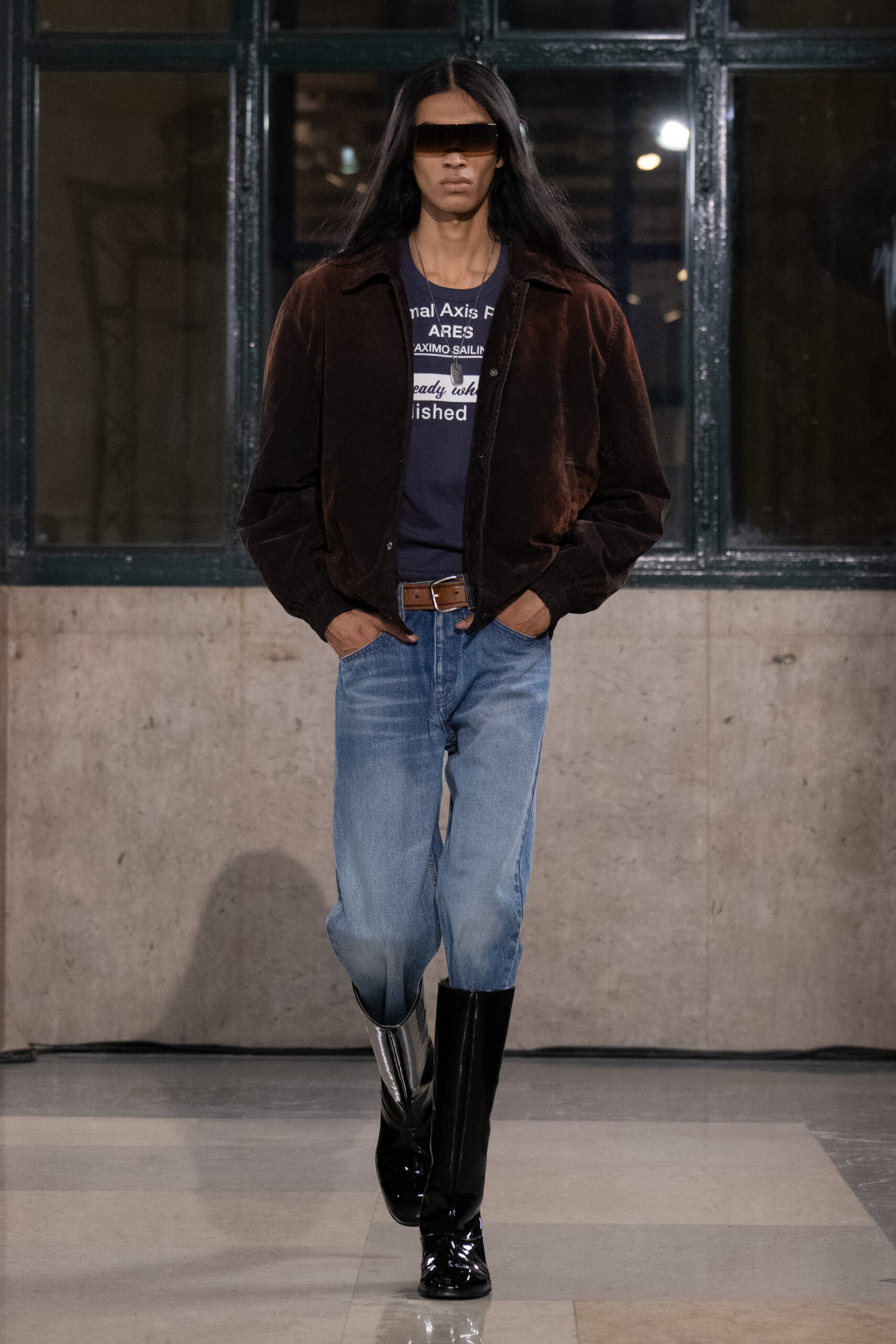
Staged beneath the iron ribs of Milano Centrale, the MM6 Maison Margiela Fall/Winter 2026 show leaned into the poetry of transit. Bodies in limbo, and clothes caught between departure and arrival. If the main line of Maison Margiela has long deconstructed bourgeois codes from the inside out, MM6 continues to filter that ethos through the street: quicker, sharper, attuned to the choreography of the living.
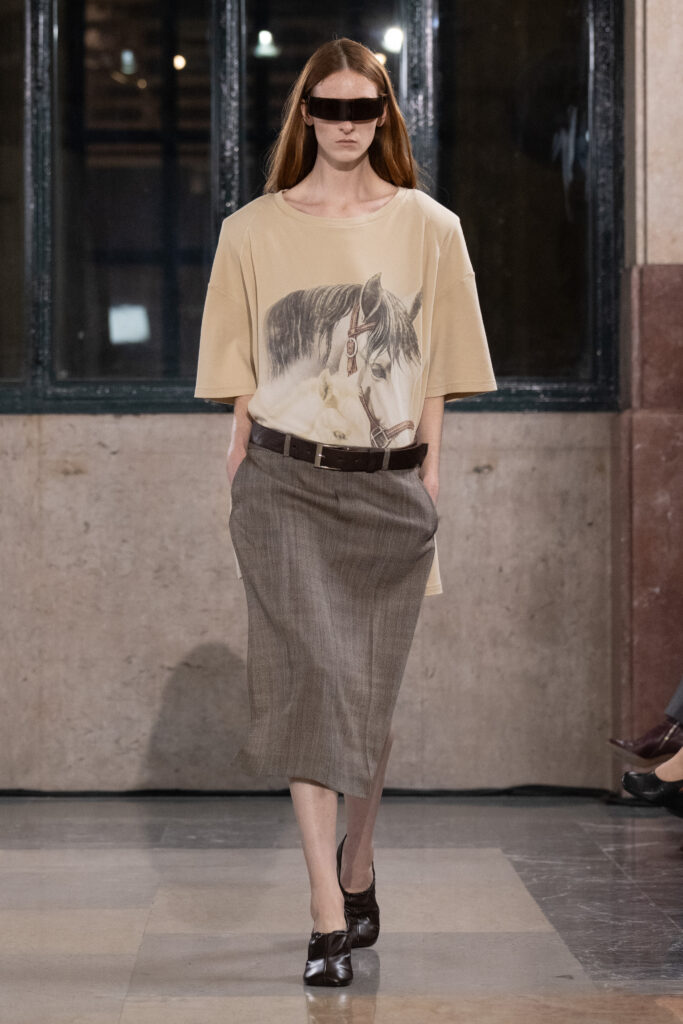
Public transportation, the great equalizer, framed the collection’s fascination with archetypes. The star, the commuter, the insomniac intellectual, the office drone—each appeared through Margiela’s vocabulary of distortion. Normality was abstracted into suggestion. A double-waisted jean undone and slouched just enough to imply disobedience. Stained, high-cut, ankle-biting hems exposed heels grimy with imagined city slush. Pencil skirts reimagined as backless aprons, censored beneath oversized T-shirts that skimmed the body.
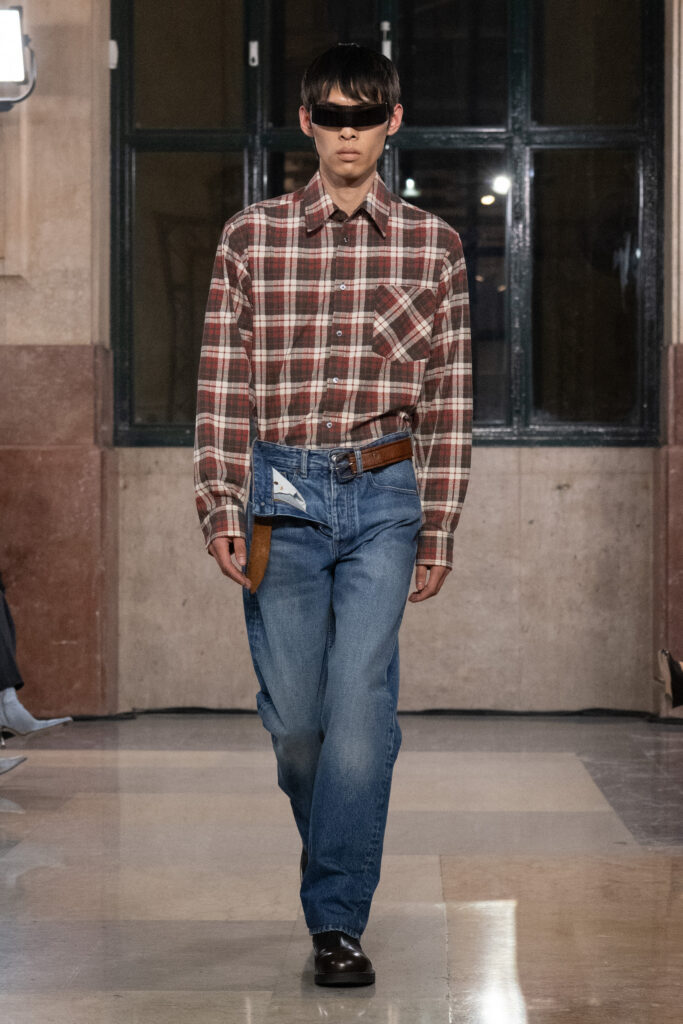
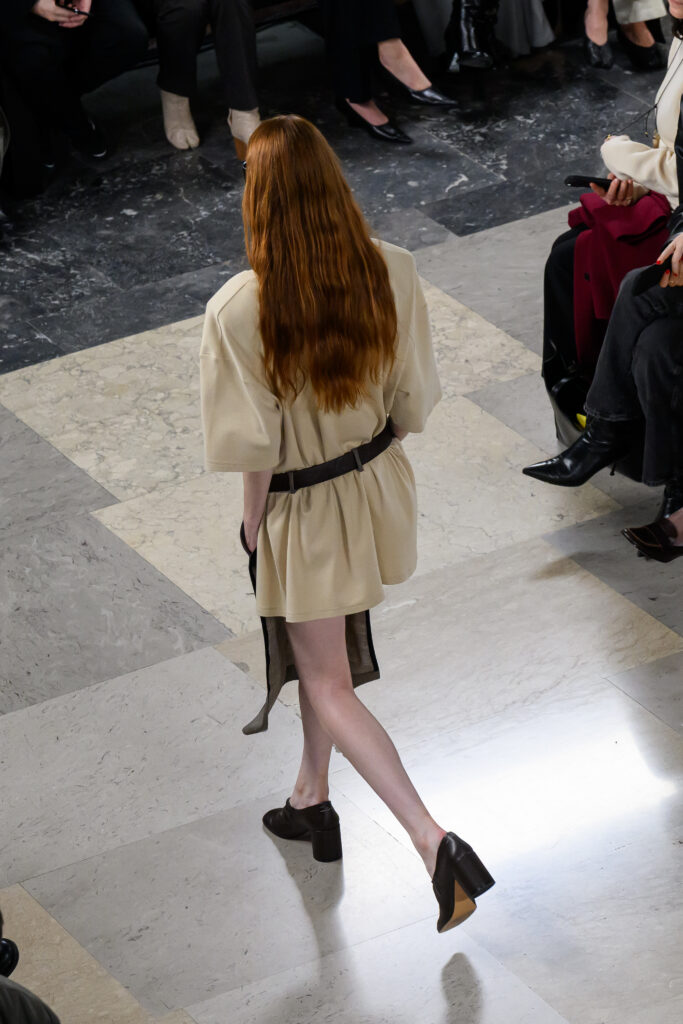
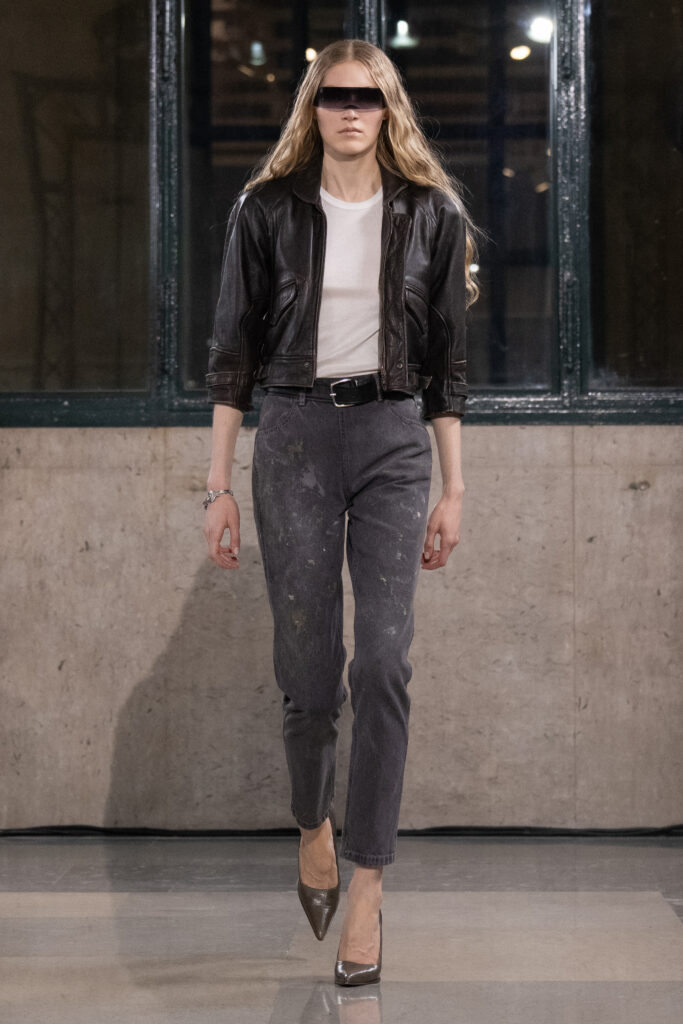
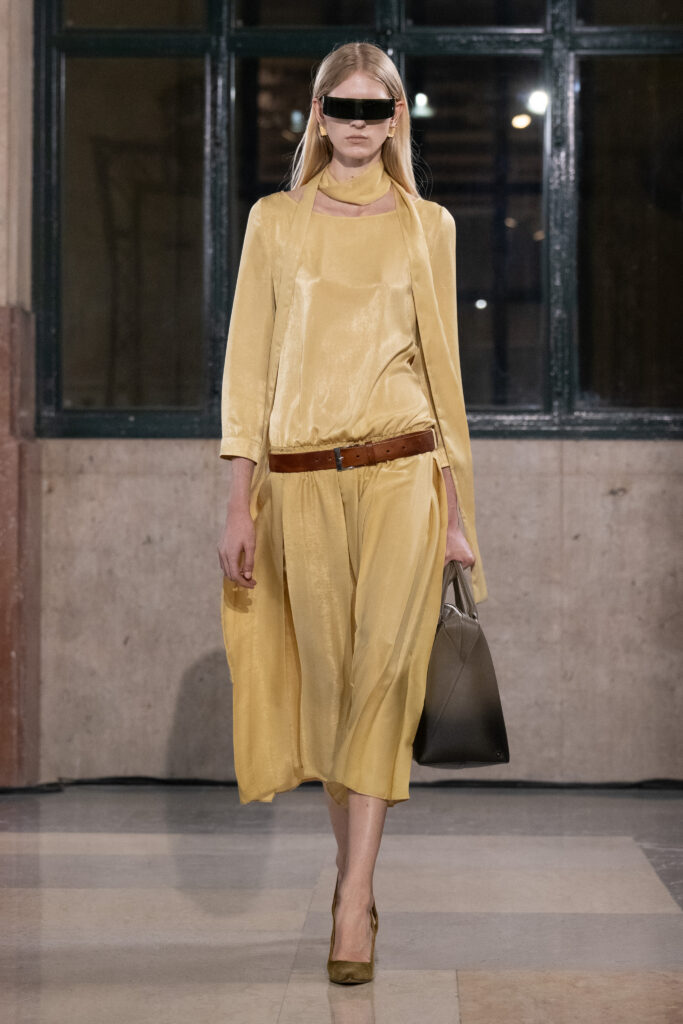
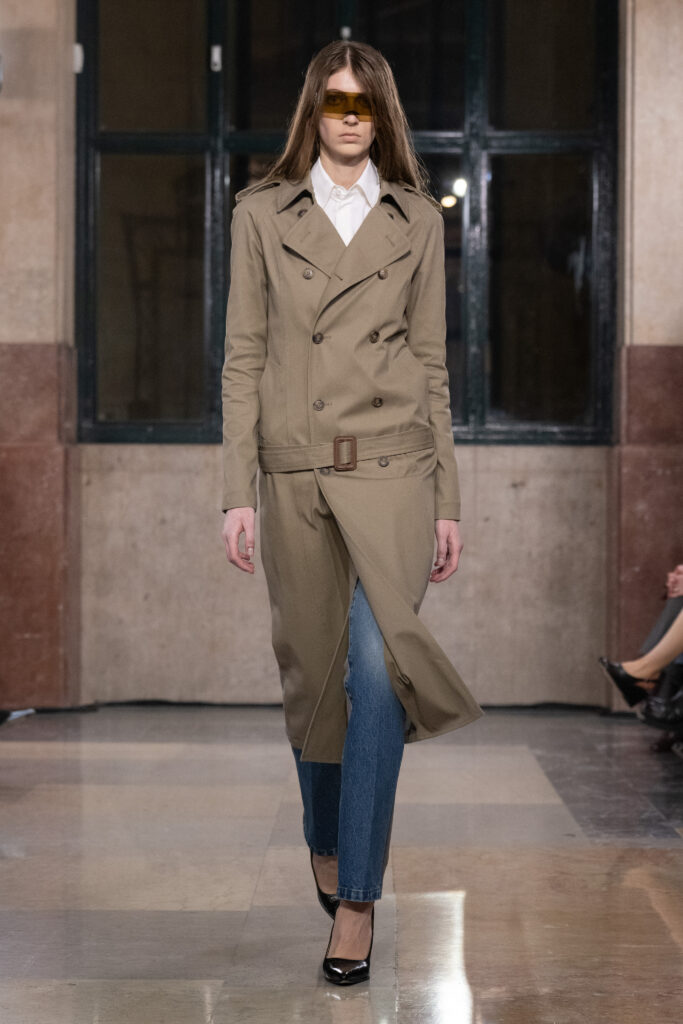
The ‘80s references threaded through the lineup were less nostalgic than infrastructural. Full skirts with softened, whimsical hems swayed past in conversation with farmstead flannels and mohair turtlenecks, and pieces alike. Fleece quarter-zips and track jackets disrupted tailoring; office shirts were spliced, loosened, and re-proportioned. Corporate archetypes were gently undone—lapels relaxed, shoulders slipped, trousers cropped mid-calf, and tucked into boots with deliberate awkwardness.
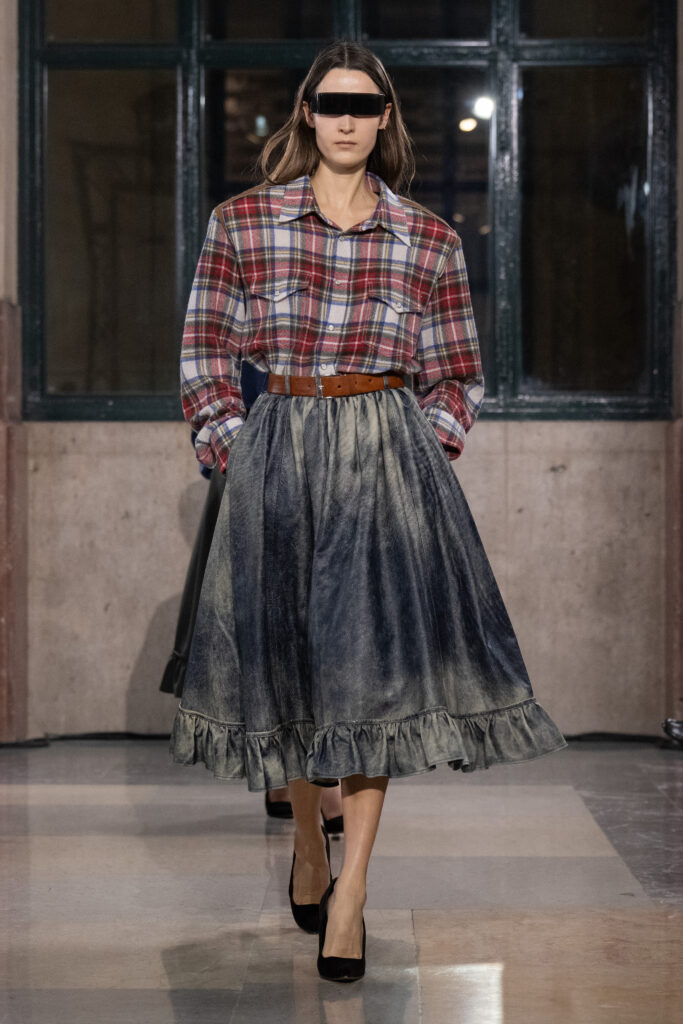
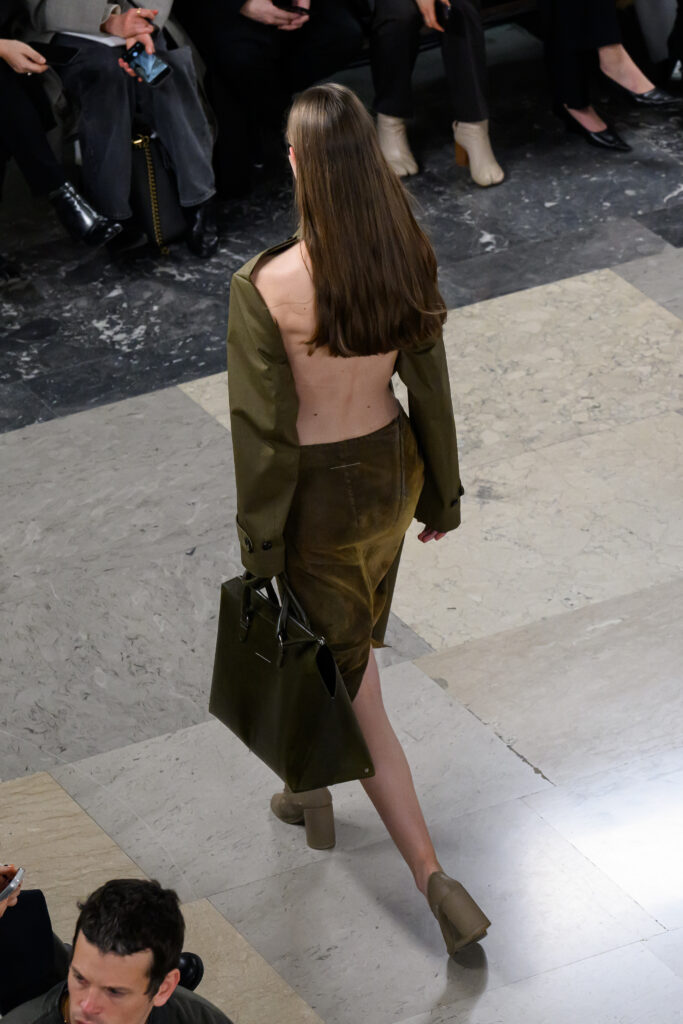
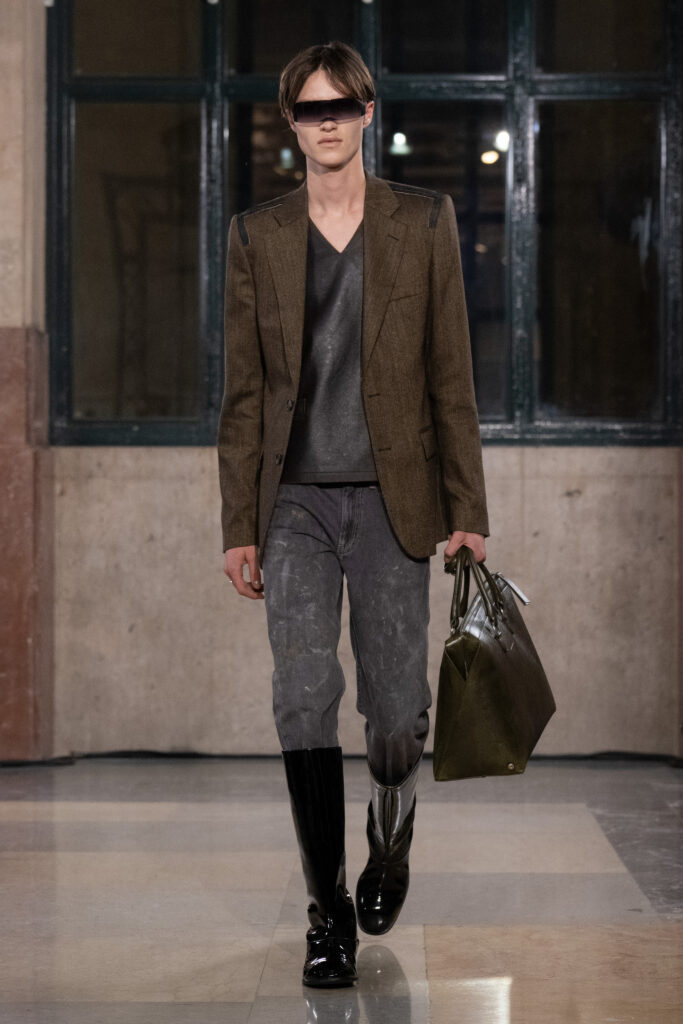
Silhouettes were the true protagonists. Pants ballooned or narrowed with architectural intent, hems hovering at transitional lengths that made the wearer appear perpetually mid-stride. Layers clung and peeled away from the body in equal measure. Trenches belted at the hips rather than feminizing the waist, allotting a confident form of androgyny.
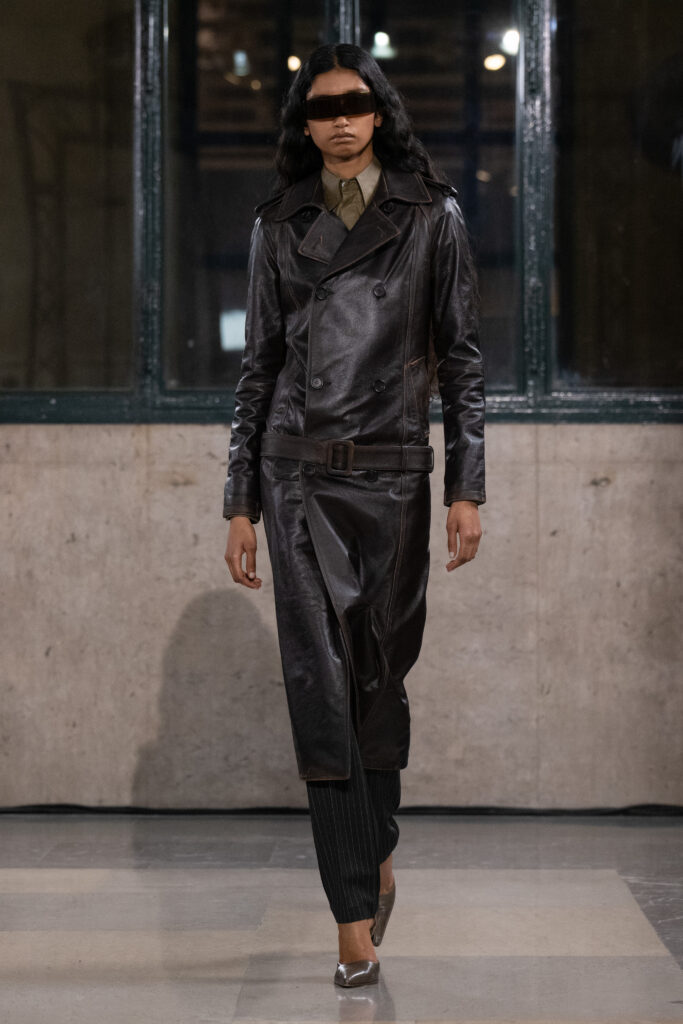
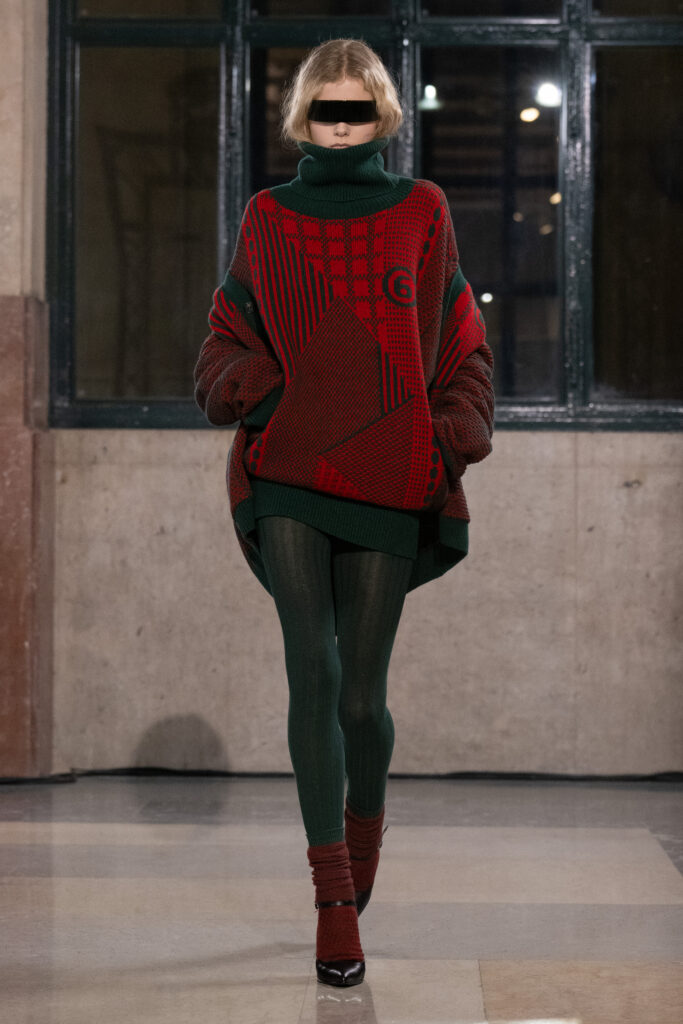
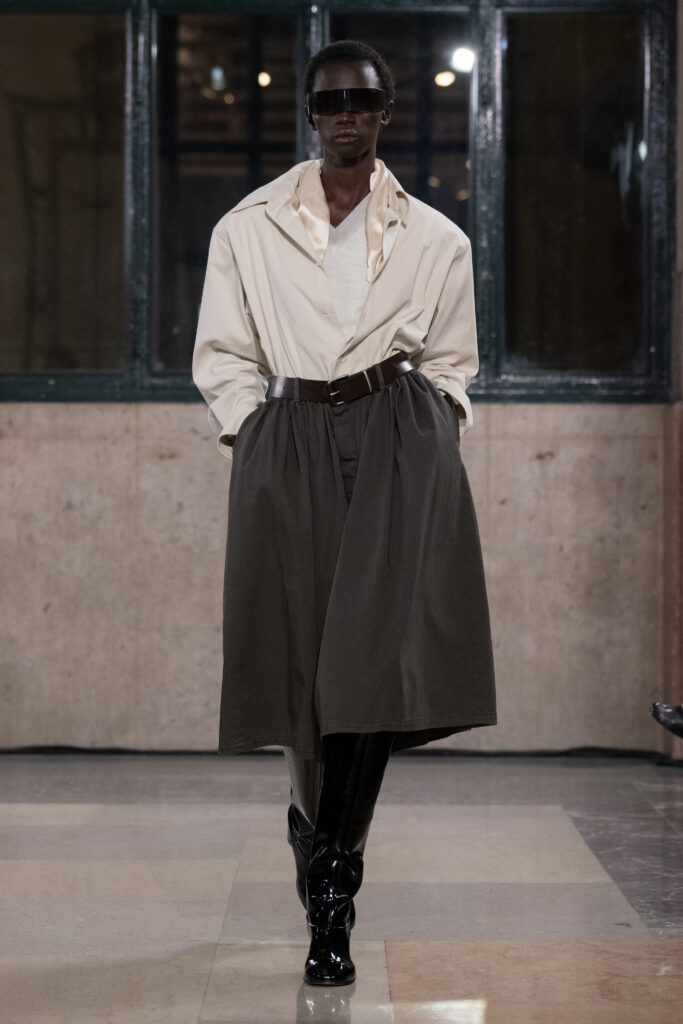
These are clothes for those who study others on train platforms; for those who understand that identity is assembled and restitched daily. Trends arrive, depart, return under new names. But the Margiela instinct—to question the obvious, to elevate the overlooked—remains constant. And as the models dispersed like commuters into the city, the message lingered: normal is merely a starting point.
Discover More