Read the Room: Hugh Ryan’s ‘My Bad’ Revisits a Life of Gloriously Queer ’90s Chaos and Empowerment
In his newest book, the award-winning historian chronicles a journey of self-discovery that predates digital saturation
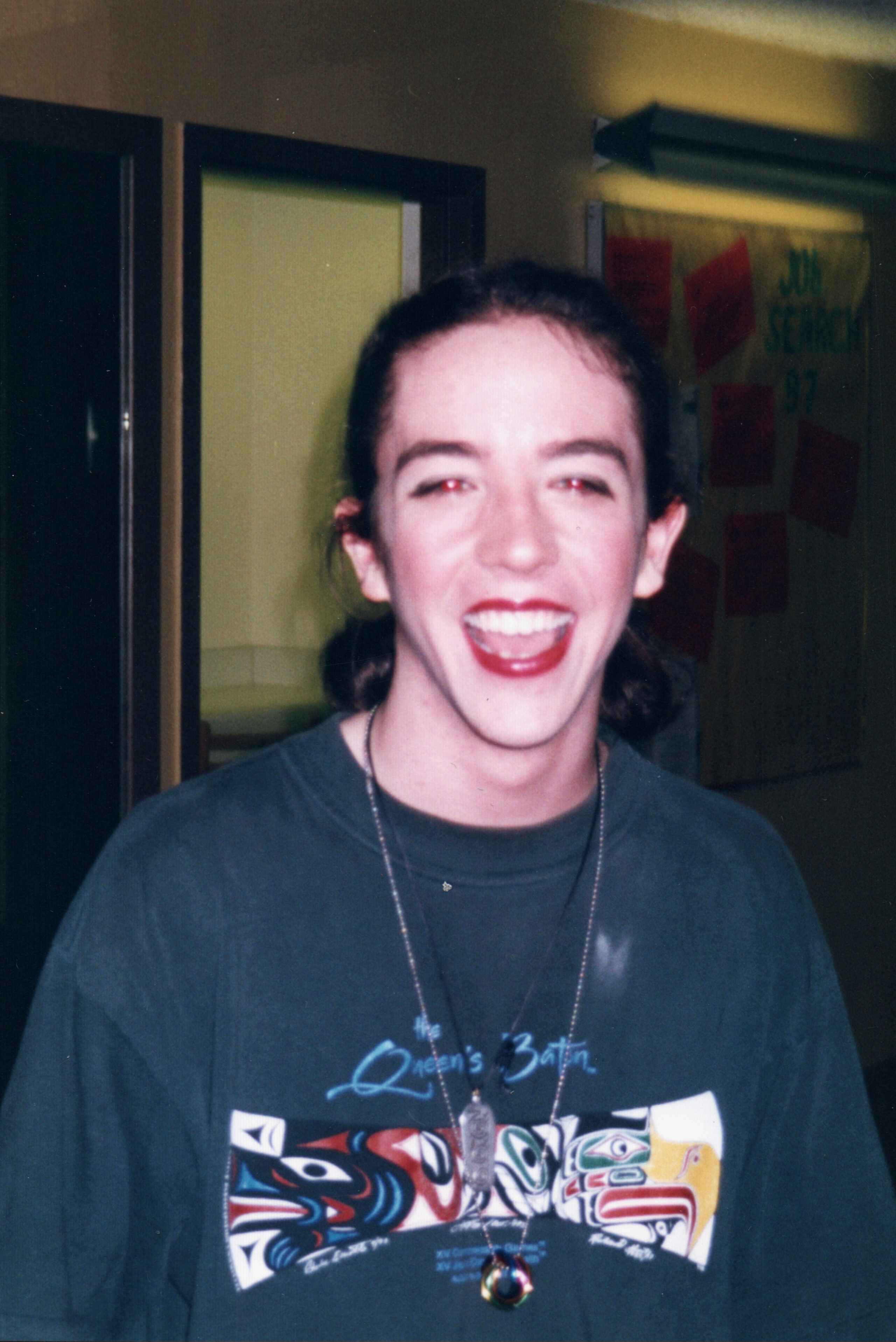
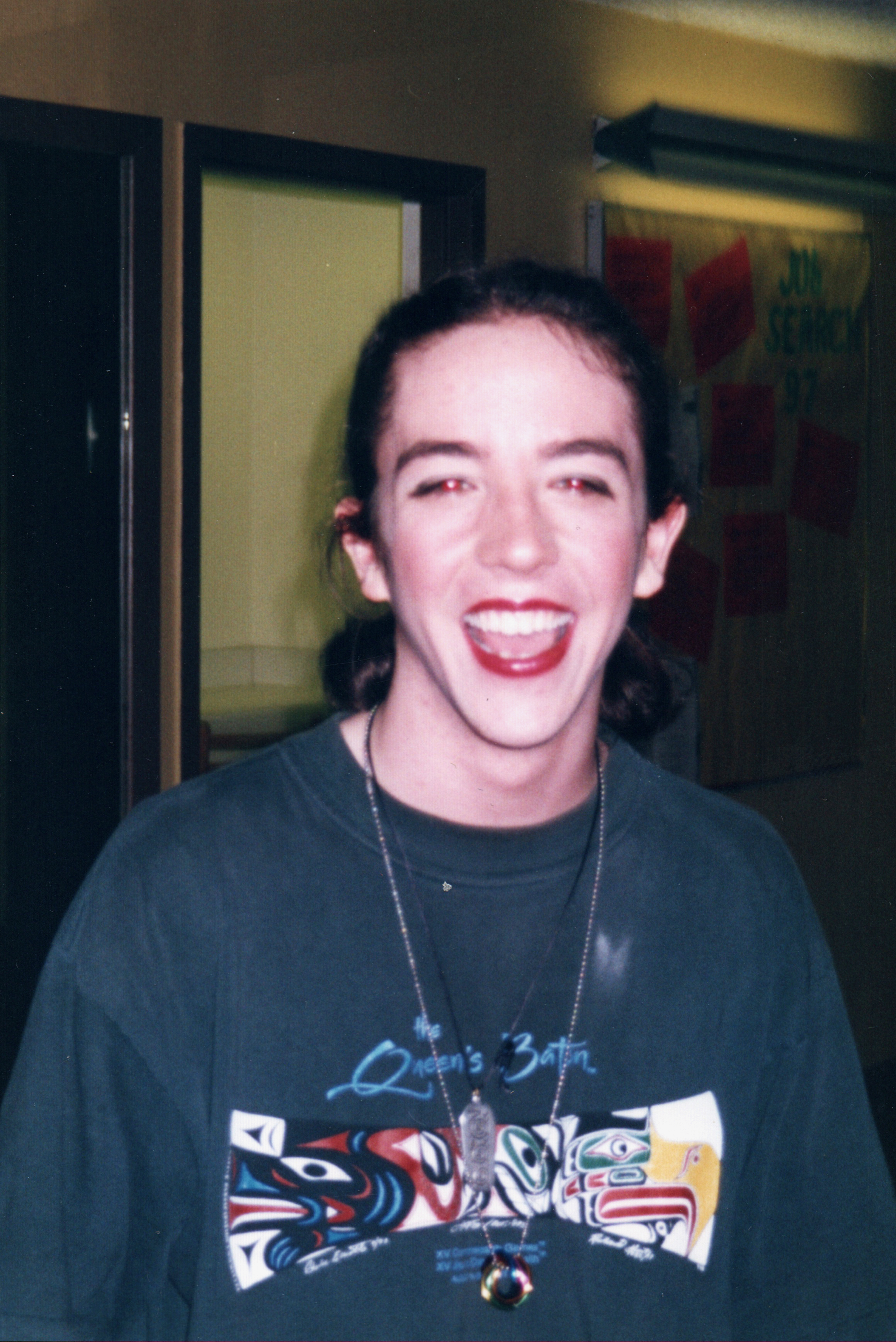
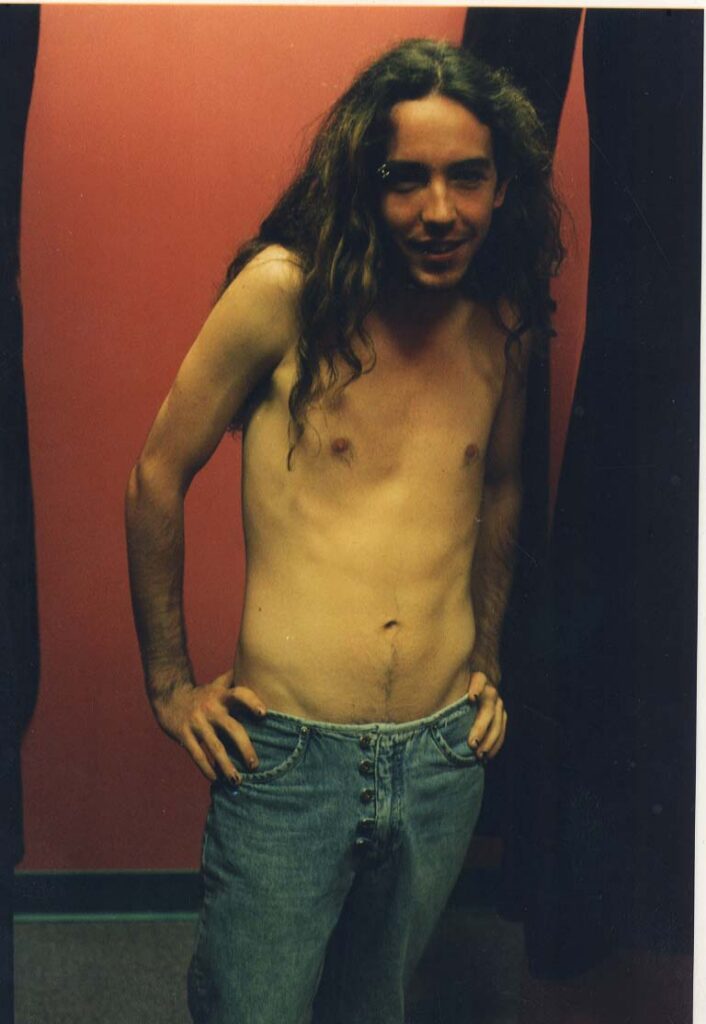
“My look that year was baby-faced fetishist, anarchist himbo, ragamuffin slut.”
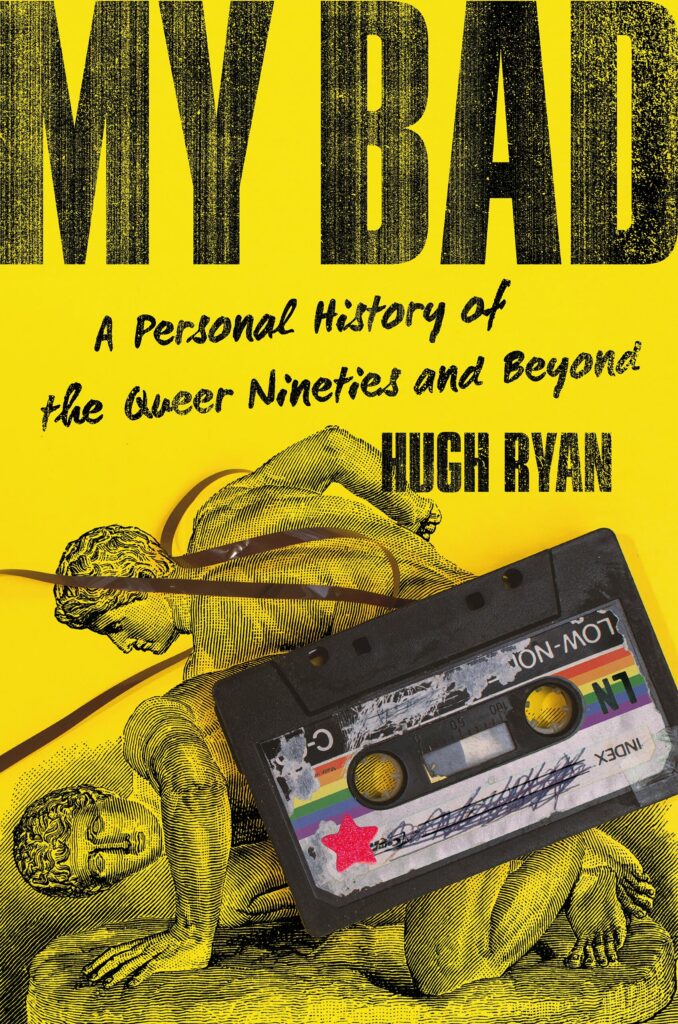
When you ask me why I come to literature, it’s for sentences and experiences like this. Luckily, they proliferate through Hugh Ryan’s newest book, My Bad: A Personal History of the Queer Nineties and Beyond, released May 26. Ryan is an award-winning chronicler of queer history, known for his books The Women’s House of Detention: A Queer History of a Forgotten Prison and When Brooklyn Was Queer. In My Bad, however, he turns his lens on himself as he comes of age as a young person in the 1990s and 2000s. His journey takes him from his early teens through college to adventures across the clubs of New York, the streets and squats of Berlin, the secret queer enclaves of Tennessee, and so much more, including his arrival at the desire to share queer history.
I’ve had the pleasure of knowing Hugh for several years and have been continually inspired by his work, dedication to activism, community building. But I knew little about his life before we met. What follows in My Bad, however, is a candid memory and query of his own past that also provides insight into how the world changed at the end of the 20th century and beginning of the 21st. Multiple times while I was reading I wanted to text him, thank you for sharing your wild and wonderful life with us. But I didn’t, so I decided to write it here instead.
Hugh Ryan spoke to V about history vs. memoir, importance of queer memory, life on the ’90s dance floor, and what excites him about queer futurity.
V MAGAZINE: Your past work was primarily history. How did this book come to be, and why were these stories you wanted to share?
HUGH RYAN: It had a long journey. Part of it was that I teach in the same place where I got my MFA, Bennington College, which is a wonderful program that’s primarily focused on memoir and personal essay. I’ve always loved doing that. When I was a student, though, I realized I didn’t necessarily like sharing information about myself that way, though I’m happy to share it in person. It felt presentational, not interactive, and I didn’t feel comfortable with that. But that’s what most of my students are doing. I was inspired by them and also had to put up or shut up. I couldn’t tell them to share their stories without doing it myself. The other inspiration for doing this is, through all this historical work I’ve been doing, I’ve come to see the ’90s as a hinge decade in queer life, in American life, in life generally.
Two moments in American history form a fundamental change in how we live: urbanization at the end of the 19th century and the internet at the end of the 20th century. They reorganize everything–they have such a global effect because 80% of people live in cities now. Those shifts had huge ramifications for what it meant to be queer, what we think about queerness, how we experience it, who comes out, who identifies under the umbrella, who doesn’t. That felt so essential to understanding where we are now that I knew I needed to write about it. I felt I couldn’t write about that period without writing about myself. I was too implicated, had too many opinions. I wanted to stretch my legs. I love writing history, but I’m not a trained historian, I’m a trained writer. I wanted a new challenge, and I think differently for every book. I organize myself differently, which leads me to different conclusions. That’s part of the fun and what I love about writing. I’m constantly hungry for a new experience.
V: As a historian, what was the experience of revisiting your life?
HR: As the book developed, I honed in on moments that stayed in my mind and why. I began to see the arc was about becoming a queer historian, which was about finding queer community and myself as a queer person; the values I learned through those experiences; and how those values both replicate the ones I grew up with and differ from them. If I approached this the way I had my historical work, where I was triple checking everything, the book wouldn’t get written–it would fall apart under that weight. This book was about capturing something subjective, so I walked an almost dangerous line. I didn’t want to talk to too many other people, or do too much research. I did some, but I wanted to preserve this as a record of what I thought, even if what I thought was wrong. There are aspects of the historical work that bolstered the process. In my historical work, I’m so used to moving back and forth between a person’s story and its broader context, or how it’s representative of it. It became easier to look at my own life and pinpoint a moment where my experience relates directly to a broader experience I want to talk about.
V: How do you see your experiences coming of age in the ‘90s in relation to young queer people today?
HR: One of the book’s theses is that the internet, social media, and cell phone technology change not just queer life, but everyone’s lives. I think that’s particularly true for young people who never knew a time before. I see many ways it’s different, but some core struggles remain the same, like finding community, understanding yourself. The paths young people are taking to do that is different. When I was touring with When Brooklyn Was Queer, I went back to Cornell, my alma mater, talking to young people living in a queer dorm. I’d been brought there by the campus LGBT center, where I had worked; it was much bigger now, with more staff and events. I said to them, ‘Oh my god, when I was here, there was no dorm like this. The center was small, everybody was trying to cram in together and go to [local queer bar] Common Ground, and organize these events. You guys have so much community.’ They were like, no, we don’t feel we have that at all. We don’t all pile in and go to the bar together. We don’t have that private community–we live in this dorm to have that. That was such a change. The ‘90s were not the ‘50s, but we did have difficulties. The flip side was, if you were in the community, especially if you were visibly queer, I could go anywhere and meet other gay people immediately. People would tell me where to go, where to hang out. We were fighting for visibility and tolerance–not even societal embrace but toleration. Looking back, we had some beautiful things because of that. Our little cloistered world was amazing. Today it’s a struggle for community, but a different one.
V: Who was your intended audience for My Bad and why? What did you want them to know?
HR: It’s funny, at the beginning, I was writing a book primarily for people who had experienced the ’90s, at least as teenagers, approaching middle age and trying to make sense of it all. A year and a half into the writing process, our mutual friend Michael Waters, the author of The Other Olympians, read the book, and said, ‘this is for people my age. I see so much that helps me understand the world I grew up in.’ That changed it. Suddenly, that opened my eyes to a different audience and I started to write towards one I wasn’t expecting. In our work as historians, we depend so much on people writing down their memories, preserving things. Somewhere along the line, I realized I hadn’t done that myself, so that story wouldn’t exist in the historical record. This was also a way of reaching out to the future.
V: What are aspects of queerness in the ‘90s that you wish still existed?
HR: Queer nightlife in the ‘90s was separate. There were gay bars and straight bars, queer nights and straight, and that has its own problems, right? But it did create this world where it was easy to see large masses of queer people outside of straight eyes and outside of surveillance. We didn’t have phone or social media culture. I loved [the nightclubs] Limelight and Tunnel, but I also loved Common Ground, the little gay bar up in Ithaca I went to. Those spaces were nurturing and interesting. They also had racism and misogyny problems, sometimes bad lighting. But they were exciting, and I loved them. When I look back, that’s a community moment I miss. There weren’t as many people who were out. You didn’t see representations of yourself in mainstream media. People would go see experimental films just because they had actual queer people in them. It’s only a good thing we have all this representation, especially now that it’s starting to leave television, but then when you were outside of the mainstream, you looked to a lot of other sources of representation. You had a queer community that was often looking at strange pieces of visual art, performance art, experimental film, and books that were a lot weirder, and I missed that a little bit.
V: What excites you about queer joy in the present and future?
HR: Oh my god, so much. The change in the way information flows–we’re in the mainstream, but also the unruliness of the internet–how young people can reach it in ways we couldn’t. That has enabled people to come out both earlier and in places they maybe couldn’t have; to find community and understand themselves; to not have to spend their whole lives forcing themselves into a gay box. Facebook had 48 flavors of gender, or whatever it was, for a while, and that’s exciting. There’s so much that young people are doing, pushing on, and querying at the intersection of gender and sexuality.
I always return to [1995 film] To Wong Foo, Thanks for Everything! Julie Newmar. These lines are a perfect artifact of the time because what it meant to be gay and trans were different. It’s not just that movie–Gay New York is an incredible foundational text [of gay New York history]. I love [author and historian] George Chauncey and the work he did. But it talks about a trans woman from the 1890s who says in her memoir that she’s a woman nature has disguised as a man. He writes this is a gay man taking on a woman’s name to mark his entry into the homosexual world. Transgender Warriors was the first trans history book I read by a trans author, Leslie Feinberg. The original subtitle is “Making History from Joan of Arc to RuPaul.” It’s not because Leslie Feinberg didn’t know what trans meant. We had a different conceptualization of the world, and I am so excited to see young people today shaking off those conceptualizations made in the early 20th century by straight sexologists, judges, and lawyers who were looking at the community from far outside. Young people today are asking more questions about what we call identity. We’re parsing out how the experience of those attractions is different, and that’s a question that comes from inside the community, not outside. That’s exciting to me.
Discover More