Read the Room: Kirsten King’s ‘A Good Person’
In our new series, we speak with the authors behind today’s most fashionable and engrossing books

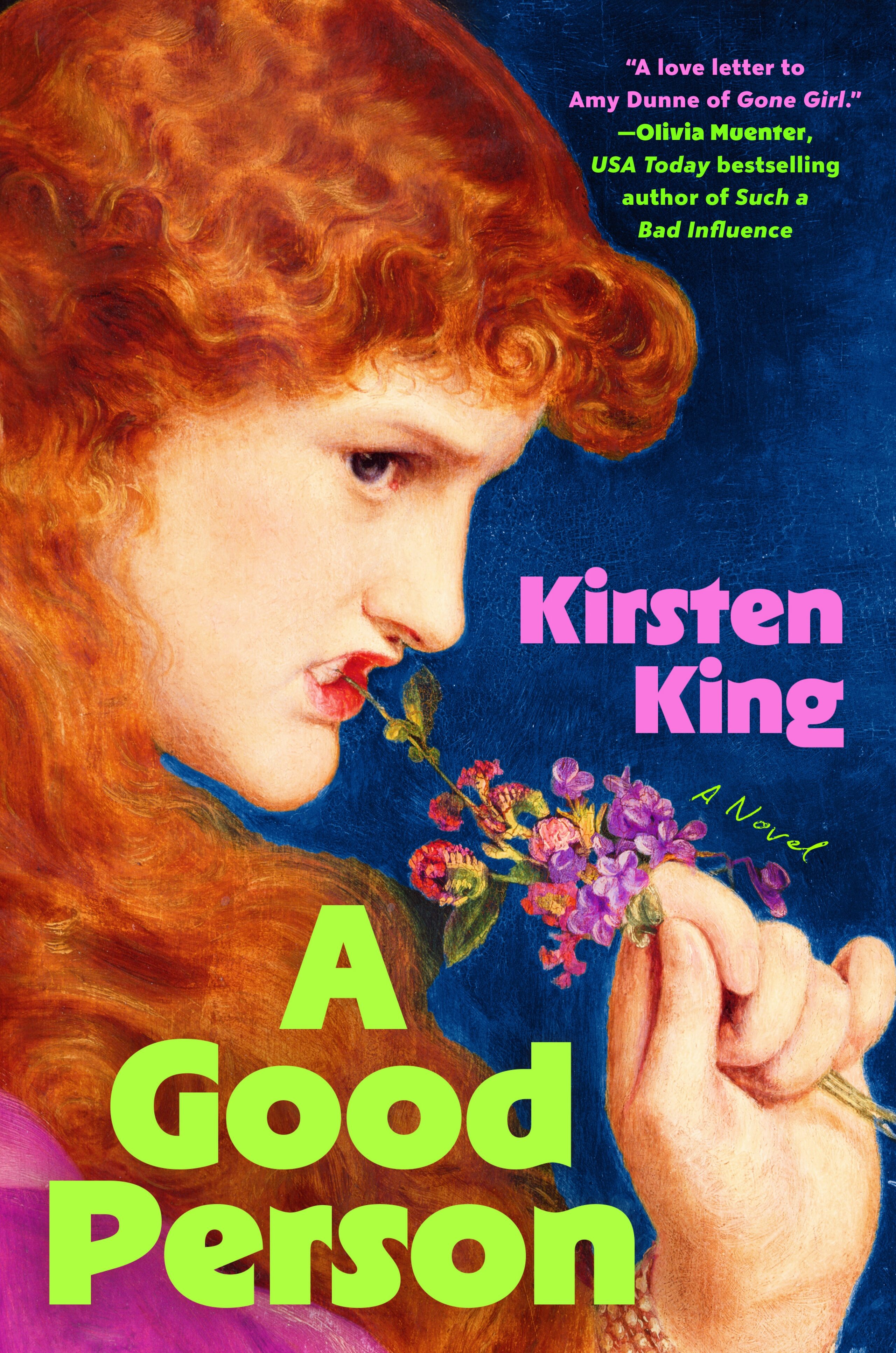
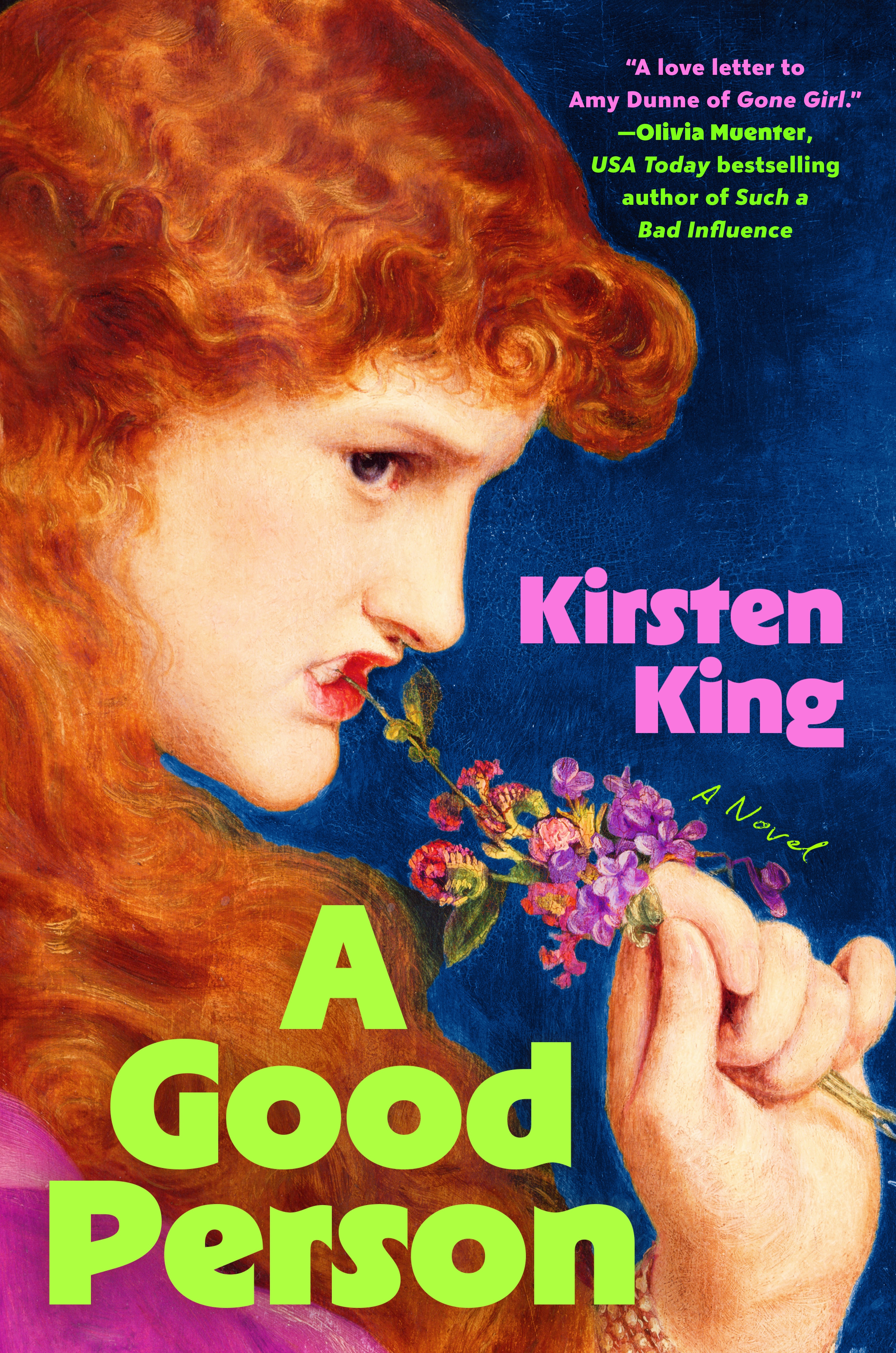
What makes a good person? Kirsten King considers the action of goodness in debut novel “A Good Person.” King explores the complexities of one’s internal world and external actions. Critics relate it to the likes of Gone Girl by Gillian Flynn and My Year of Rest and Relaxation by Ottessa Moshfegh. It’s tragic at points, then emotional, conflicting, all while maintaining a sharp humor. Contrary to the title, the story focuses on an entirely not good person. In values and virtue, Lillian is somewhat misguided but mostly just a narcissist. Example A: She hexes her situationship after a messy breakup. Lillian attempts to navigate the dramatic highs and lows of a modern-day romance but loses herself somewhere in the process (the outcome of any proper situationship). The term “situationship” may have emerged recently but the concept is as old as time. It lands somewhere between relationships and strangers, taking inspiration from both.
A Good Person came to life during the Writers Guild strike of 2023. King used it as an exercise; producing a novel wasn’t initially the goal. She wrote scenes, imagining characters, and eventually, the form of a longer story began to appear. After the successful book launch, King is working on a screen adaptation and a second book coming in 2027. King spoke with V, discussing the ins and outs of situationships, finding inspiration, and the dynamics of the literary industry.
Ailbhe Killalea: Talking about the character of Lillian, how did that come into shape? Are there parts of yourself or other people that informed the creation of her or her development?
Kirsten King: As much as I don’t want her to be any part of me…she came from my brain. I feel like maybe she’s the worst intrusive thoughts I’ve ever had, pre-therapy, ten years ago. I think all of us know a “Lillian” in some sense. Some of us have been friends with “Lillians.” It’s scary to be in a friendship with someone who’s a “Lillian”, but it fascinates me as a writer. I work in Hollywood. There are plenty of narcissists; there’s plenty of material to kind of gather here. I feel like she was kind of this compilation of different things and different people I’ve had experiences with.”
AK: I feel like it’s so difficult for a reader to find themselves relating to such a dislikable character and unreliable narrator. But I mean, there were so many moments where I found myself relating to the kind of things she would say. It was this idea of, “I would never say this out loud…but I’ve had that thought.” Did you expect readers to be able to relate to Lillian?
KK: It’s such a hard balance. I’ve seen reactions where people are like, “Oh my god, I love her,” and that scares me. I’ve seen people who reject her entirely, and they’re like, “I hate her, she didn’t grow or learn.”
So many people just don’t grow. There’s so many people who don’t go to therapy. So many people don’t change, who have no interest in changing or growing or learning. I was interested in telling that story and not being focused on giving her an arc of growth. Like what happens if someone that’s sort of bad doubles down?
But I do think in terms of the relatability, there are parts of her that are so real. There’s this desire to be loved. There’s this acceptance of the bare minimum from a man. That’s really relatable to me when I was in my twenties. I was absolutely chasing situationships that were giving me no indication they were going to grow into anything more.
AK: That idea of being the accommodating, easygoing, nonchalant person to your partner…that this is going to make them fall in love with you. I feel like this never really works out. It never actually lands a relationship.
KK: Oh, absolutely. I think it’s just too exhausting to hold onto a facade for too long. You can’t keep up with it, unless you’re really willing to put in the work of, “Oh, I’ve read all of Kurt Vonnegut.” Are you going to read all of it? You have to go back and do work just to keep up the facade that you’re giving people. It’s not sustainable because at some point, when you’re in a long-term relationship, your true self crawls out. And then there’s a point where this person is like, “Okay, I still love you.”
AK: Have you ever cast a spell on an ex-situationship or ex-relationship?
KK: No, I’ve not cast any spells. I’ve definitely pulled tarot cards. I’ve done natal charts. Like, I’m in LA. I also had an exorcism once.
AK: Oh my god.
KK: I know, which is a crazy story, but she offered it for free. You can’t say no to a free exorcism. But I’ve never done a spell on anyone. I grew up Catholic. I’m not religious anymore, but I feel the guilt and the fear of doing something like that would just stay with me forever.
AK: I know that you’re mostly in screenwriting, but I think this can also apply to movies and television. There’s this obsession with haste and getting things done quickly. The concept of patience has been totally forgotten. How do you think that the literary world is adapting to this kind of hastiness, because it’s notorious for being so slow?
KK: I wrote a movie, and for a month, people were talking about it, and then it went away, and it was the next thing. With books, they may have a longer lifespan. People can pick it up in a library and discover it, it can mean something to someone longer term. At least I would like to hope that’s the case.
With my book, there are some topical elements. There are some things that are going to age it pretty quickly. I think by default I lean into the fast pace because, unfortunately, I’m a pretty online person, and I can’t help but think in that way.
I’m constantly thinking about how to maintain longevity with creativity, longevity with people caring about your work. But I also want to speak to the specific moments that we’re living in. With this book, I wanted to talk about how people are performing goodness.
AK: What do you think are the genres, topics, or subjects that should have the most coverage right now?
KK: With this book, I wanted to talk about how people are performing goodness. I don’t know what people should be focusing on more online. I think people should actually log off, touch grass, join aid organizations, and actually get involved with their communities.
AK: What’s next for your literary journey?
KK: So I’m working on a second book. Just a standalone. But it is about a young woman who gets out of a nine-year relationship and essentially starts turning to a chatbot for comfort and becomes increasingly more delusional as she turns to this chatbot. And it’s not a normal chatbot, but I’m imagining a world in which influencers have chatbots that are like extensions of themselves so people can kind of foster these parasocial relationships. So I’m imagining a self-help podcaster who has this chatbot that this woman is talking to.
So it’s critiquing both the self-help podcast circuit that we see a lot of, and AI becoming something that people are increasingly more dependent on. Ultimately, it’s about loneliness and people trying to find connection in a time when it’s increasingly more difficult to find connection. And I’m also working on a screenplay adaptation of A Good Person that I’m working on with Working Title Productions and Daisy Edgar-Jones.
Discover More