The Object of Power According to Rocío García & Carmen Maria Machado
For her first institutional solo show in New York, the Cuban painter joins forces with the author of ‘In the Dream House’ to visually map out the unruly parts of living
How does one play into power? Is it through surrender and virtue? Or must one become a bullet rather than bite it?
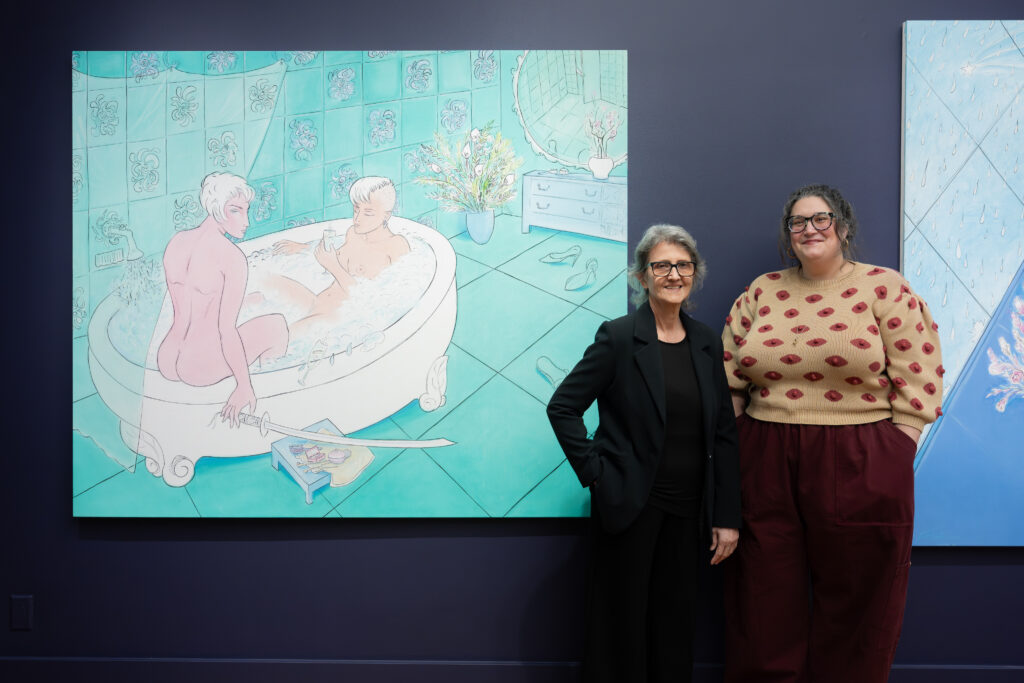
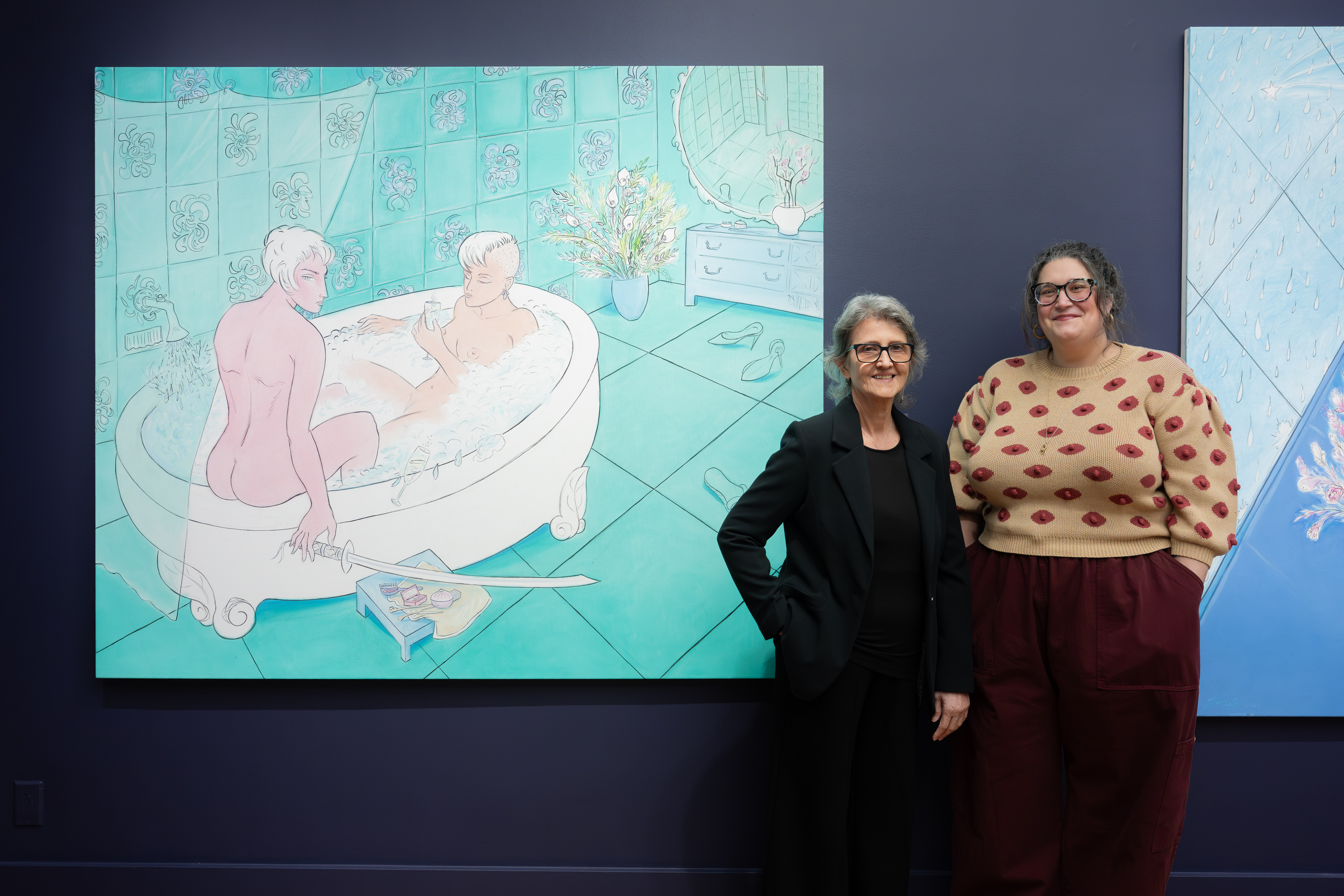
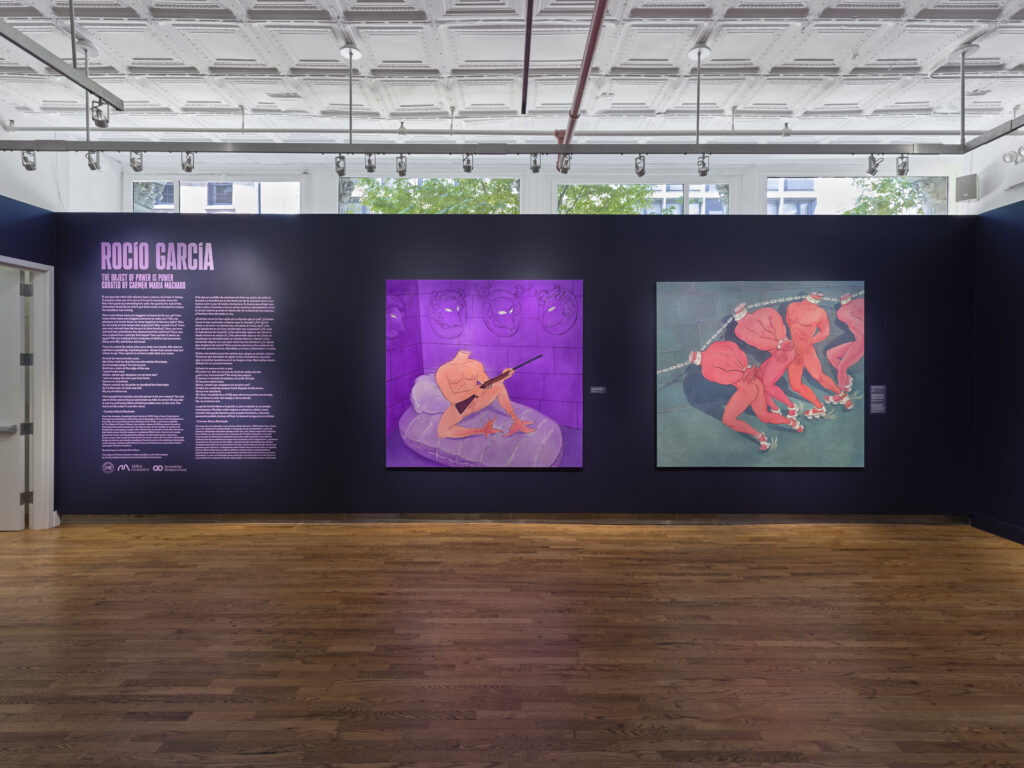
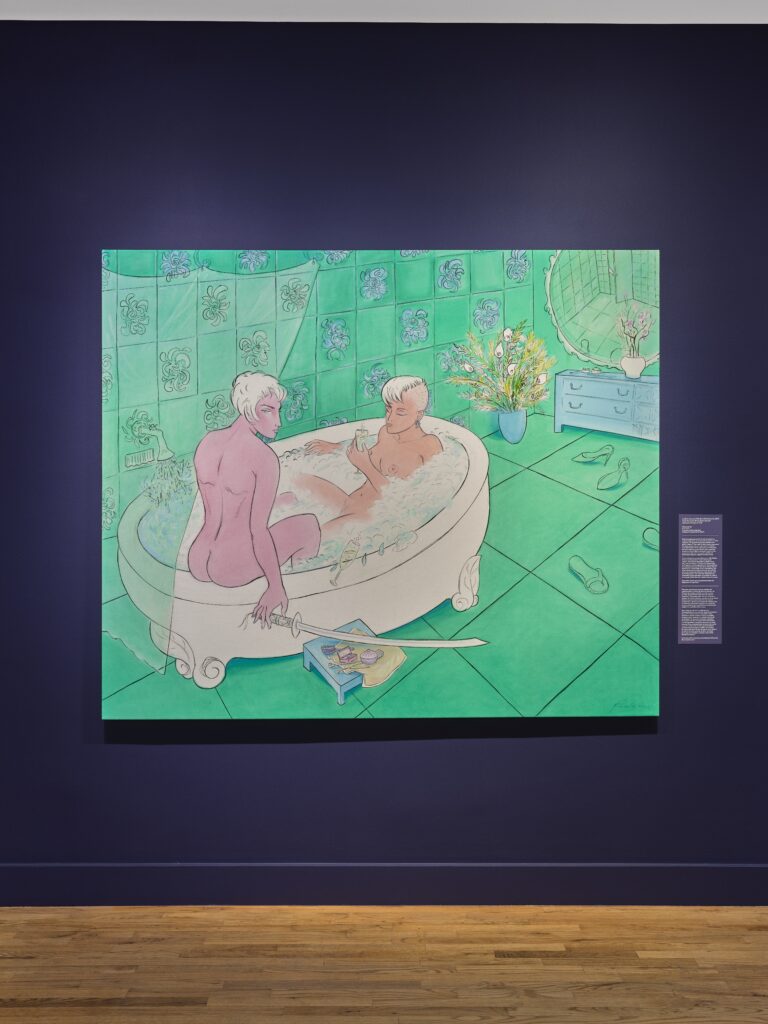
The answer to these questions might just lie within the halls of the Leslie-Lohman Museum of Art’s newest exhibition, The Object of Power is Power, which brings together twelve pieces from the work of postmodern feminist painter Rocío García. Charged with intense visuals that unfold as if they were literature, the Cuban artist creates within an unconventional narrative space, allowing revolution and its resolutions to exist in the viewer’s eye. For over five decades, García developed a distinct language that draws from the sensuality of film noir, the panel-by-panel storytelling of comics, and the absurdist nature of literary heroes like Franz Kafka.
The exhibition is housed at the Leslie-Lohman Museum and curated by Cuban American author Carmen Maria Machado. Who is best known for her memoir In the Dream House, as well as her short story collection Her Body and Other Parties. Together, Machado and García foreground alternative ways of expressing desire as a pretext for questioning the political and interpersonal structures that shape our relationships with others as well as ourselves. In conversation with V, Machado discusses her thoughts on the body as commodification, the throughline of the written word and visual curation, and the possibilities of queer art existing separate from singularity.
JULIET AMORINA: Carmen, you’re primarily known as a writer. How did stepping into a curatorial role for Rocío’s exhibition at the Leslie-Lohman Museum of Art come about?
CARMEN MARIA MACHADO: It’s been fascinating as I’ve never done anything quite like this. The closest thing might be editing an anthology, where you’re arranging different voices into some kind of conversation. But when I first saw Rocío’s paintings, I immediately thought, “Oh yeah, this feels very in my creative space.” Even though I’m not a professional curator or visual artist, there was a real familiarity to my writing. So it was exciting to be invited to join Rocío and the Leslie-Lohman in bringing her work to New York.
JA: In what ways did you find yourself connecting your work to curating Rocío’s paintings?
CMM: I feel like I have gotten a lot of questions about what brings my practice in line with the show. So I’ve been trying to think of analogies – is her use of color my use of sentences? And yet, the thing about art is that it is nonverbal, it is outside the spoken or written, but its job is to permit conversation. Every painting feels like you’ve walked into the middle of a short story or novel. That’s very close to how I conceptualize writing: you’ve dropped into a moment where something is already happening, and you have to feel your way through it.
JA: How did the selection of the twelve paintings in this exhibition come together?
CMM: There were some practical constraints; much of Rocío’s work is still in Cuba and difficult to move, but she also had strong feelings about what belonged in these walls. It ended up being a kind of cross-section of her practice: different series, different projects, and recurring characters. You can trace them, like Jack the Punisher, who appears in more than one painting; sometimes, he is in the background on a rope outside of a window. They are chapters from a longer book that are meant to be pieced together.
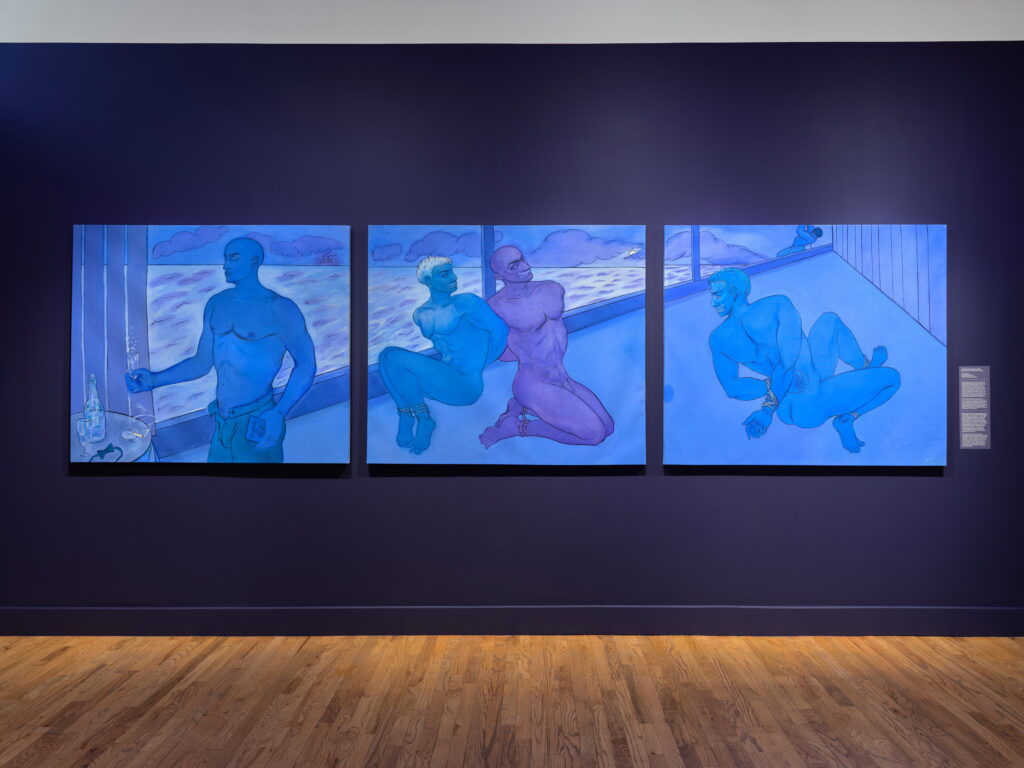
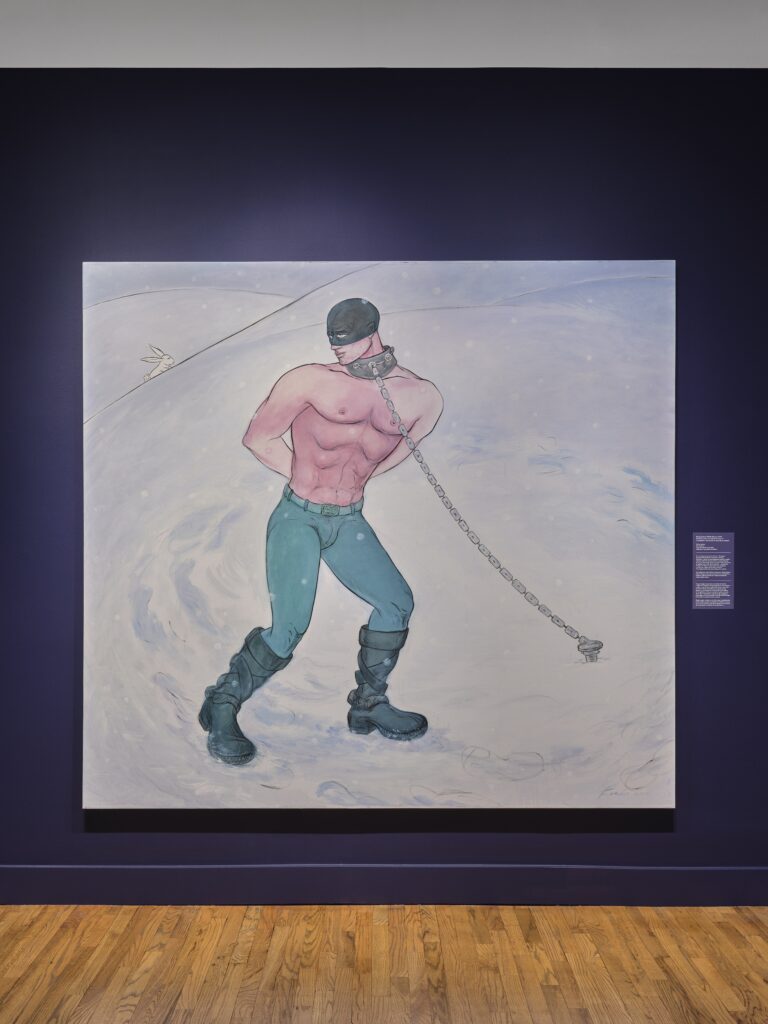
JA: The show is titled The Object of Power is Power, a direct quote from George Orwell’s 1984. Can you explain this choice?
CMM: Rocío had a working title along the lines of My Power Over You, and we were trying to figure out if that was right. I was playing around with different formulations and came across this line from Orwell that clicked for me. It brings the work into explicit conversation with state power and political violence. Everything is already political, of course, but the Orwell reference foregrounds the question of: how do we submit or refuse to submit to the power of the state? Even as we also submit to one another in love, sex, or friendship?
When you ask me, “Should we submit to the power of the state?” my answer is absolutely not. But if you ask, “Should we submit to vulnerability?” then my answer is, of course, we have to in order to live with each other.
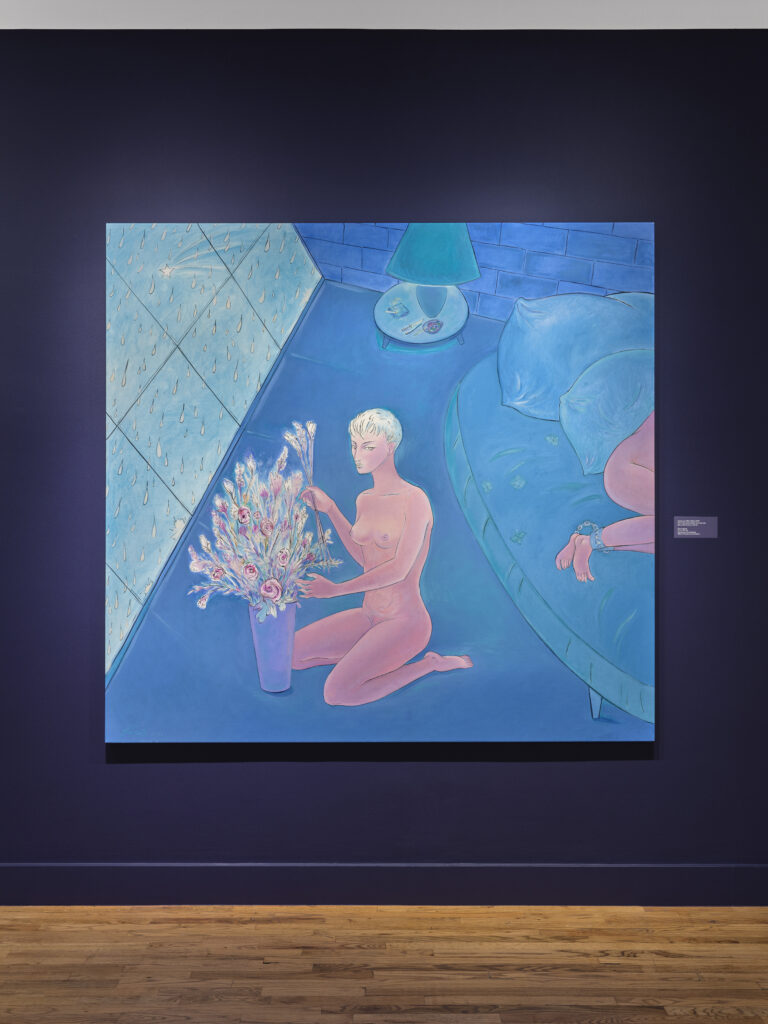
JA: The work displayed is what some might call “homoerotic,” so how does one honor the specificity of queer art without reducing it to the identity attached?
CMM: I had an ex a long time ago who told me she would rather die than be a lesbian writer, but I am really proud to be a lesbian writer. My identity is important to me because it’s truly inextricable from my mind and body. When I do write about all of those things, I try to answer the question of commodification. I don’t want to be a product or someone who uses this label as a marketing gimmick. Queer artists find their identity through their practice. And look at Rocío’s paintings; they absolutely refuse that flattening. They’re queer, but they’re not illustrations of a single identity; they’re complex ideas about power, state violence, eroticism, belief, and survival.
JA: What do you hope visitors take away from the show?
CMM: First, that they actually come. I spent months looking at the works digitally, and nothing prepared me for seeing these canvases on the wall, at this scale, against this particular wall color. It’s completely different. This is Rocío’s first institutional solo show in New York. It’s a rare moment. I hope people leave thinking differently about how power operates—in the state, in their relationships, in their own bodies—and about how much risk and beauty there is in choosing to surrender, or refusing to.
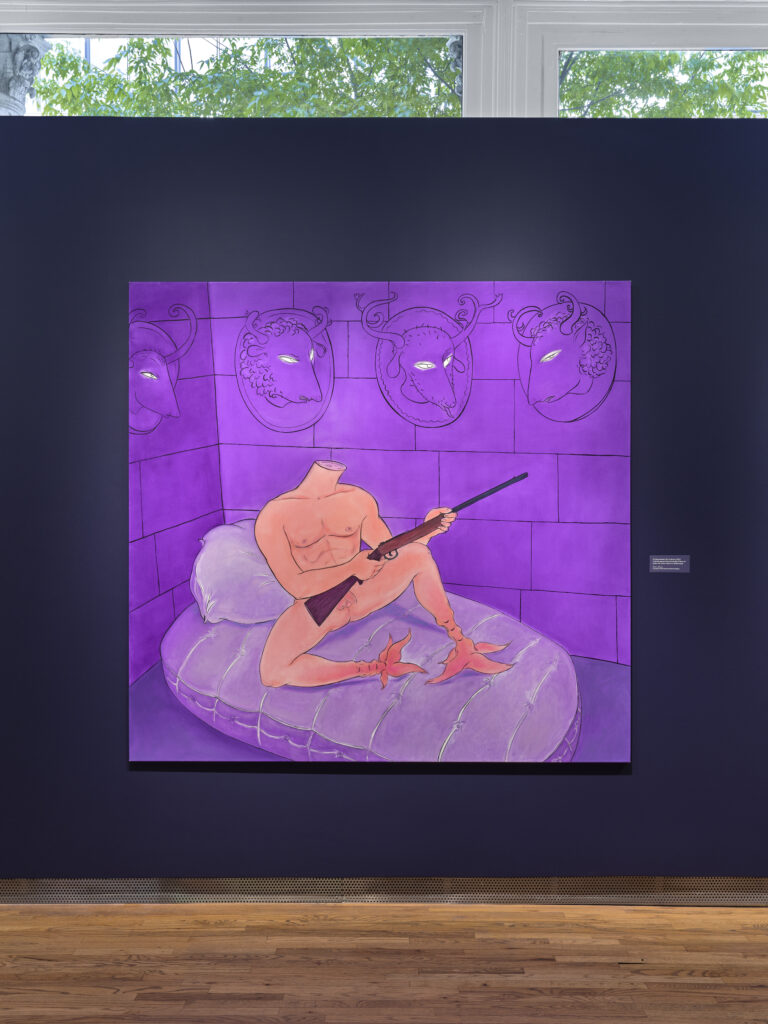
The Object of Power is Power, curated by Carmen Maria Machado, is on display at the Leslie-Lohman Museum of Art between May 6th to September 20th.
Discover More