The Sculptural Mind Behind Dior 2026-27 Haute Couture
Showcased in Paris, the collection explored the sculptural possibilities of fabric through the work of artist Lynda Benglis
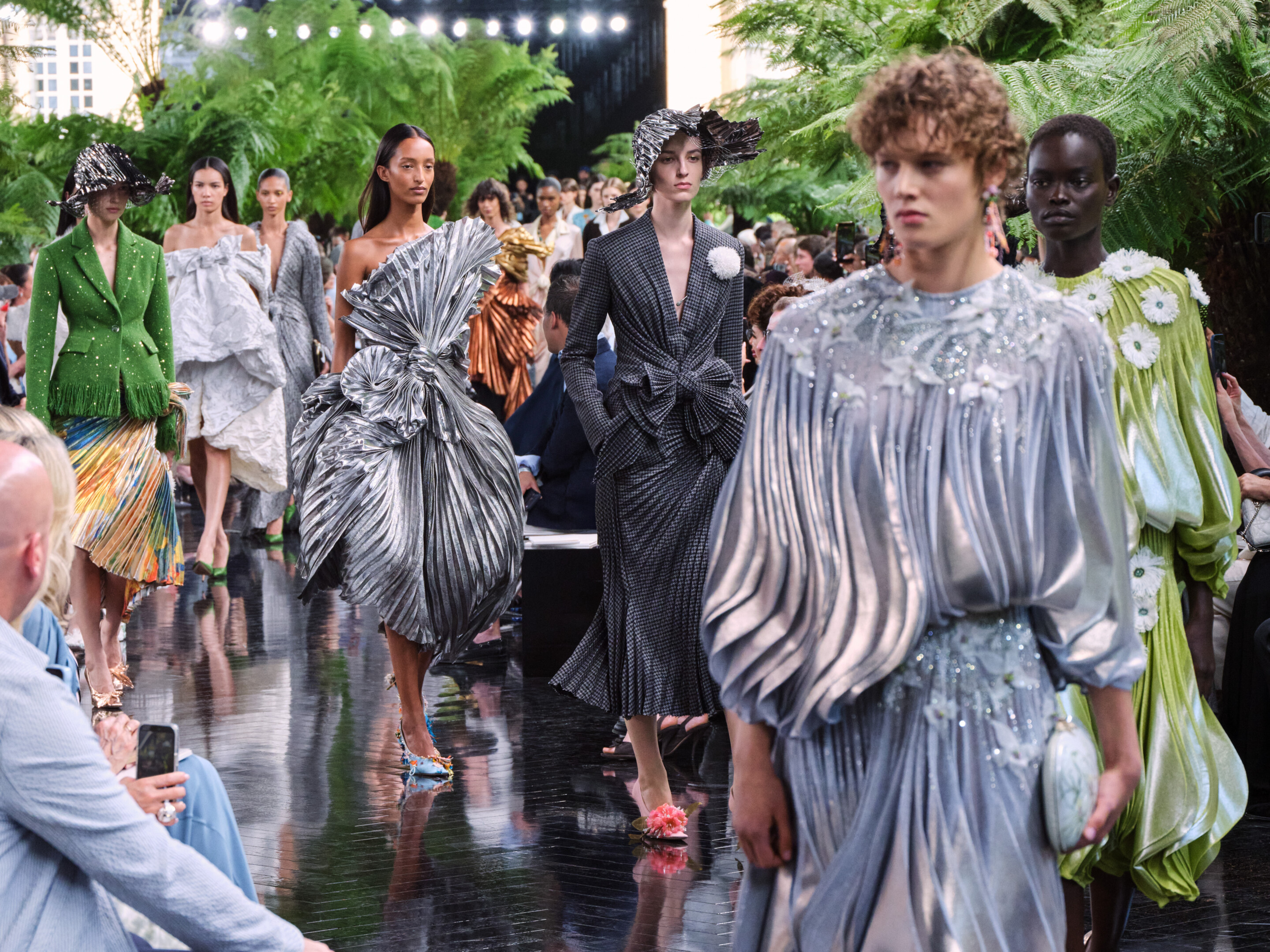
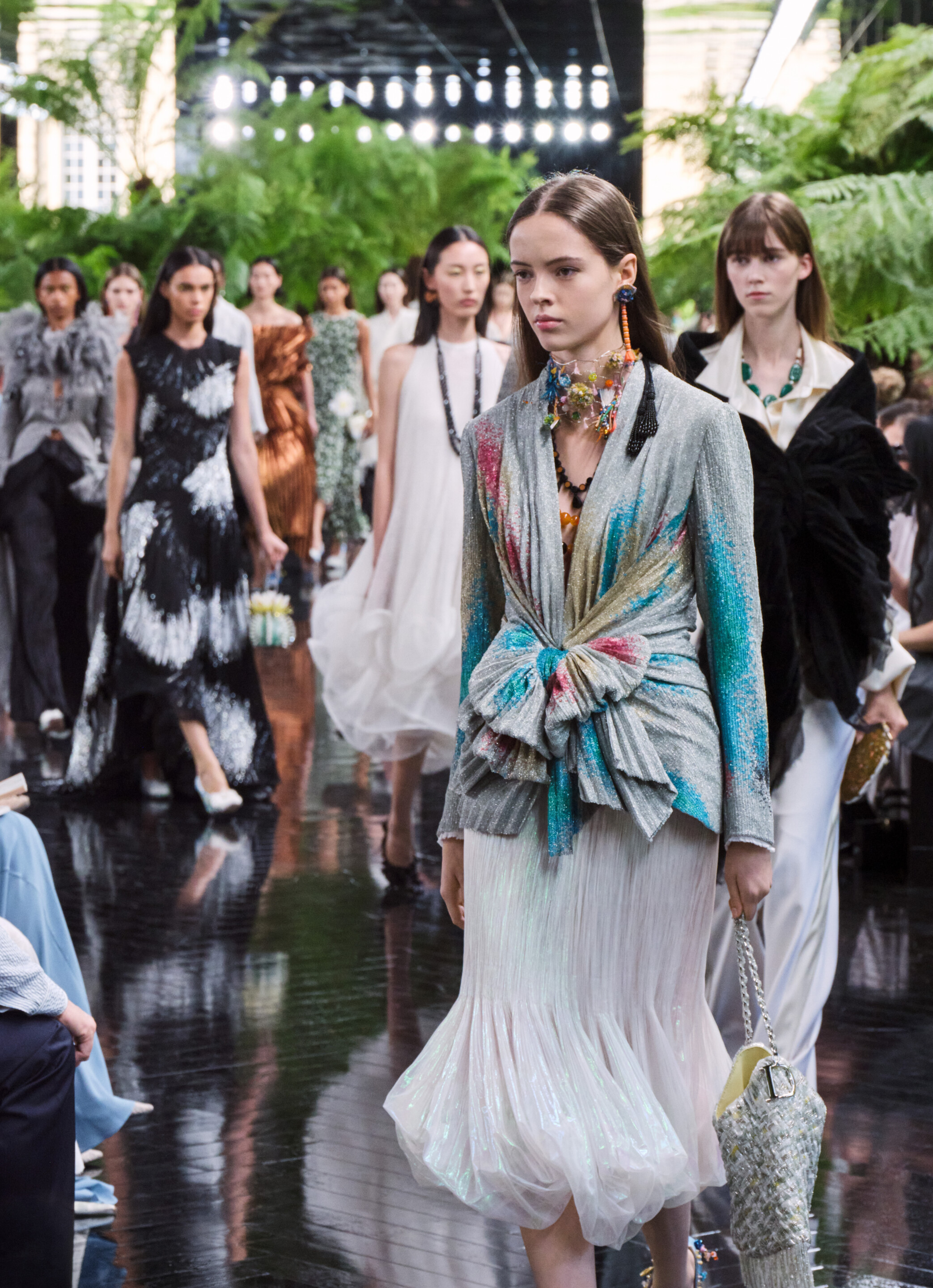
Presented at the Musée Rodin, the Dior Haute Couture Fall/Winter 2026-27 collection explored the relationship between volume, texture, and form, drawing unexpected parallels between fashion and sculpture. Jonathan Anderson’s dialogue with sculpture was particularly evident in his references to Lynda Benglis, whose practice transformed humble materials such as latex, beeswax, chicken wire, and paper into dynamic three-dimensional forms through pressure and manipulation.
That influence was most apparent in a pale chambray skirt paired with a crisp white blouse, emphasized by an enormous circular fan, embroidered in saturated reds, blues, and golds, that unfurled from the shoulder like a wing. The piece recalled Benglis’s Peacock series, where sculpture extends beyond the pedestal to become something fluid, expressive, and bodily—a sensibility the creative director translated into dress.
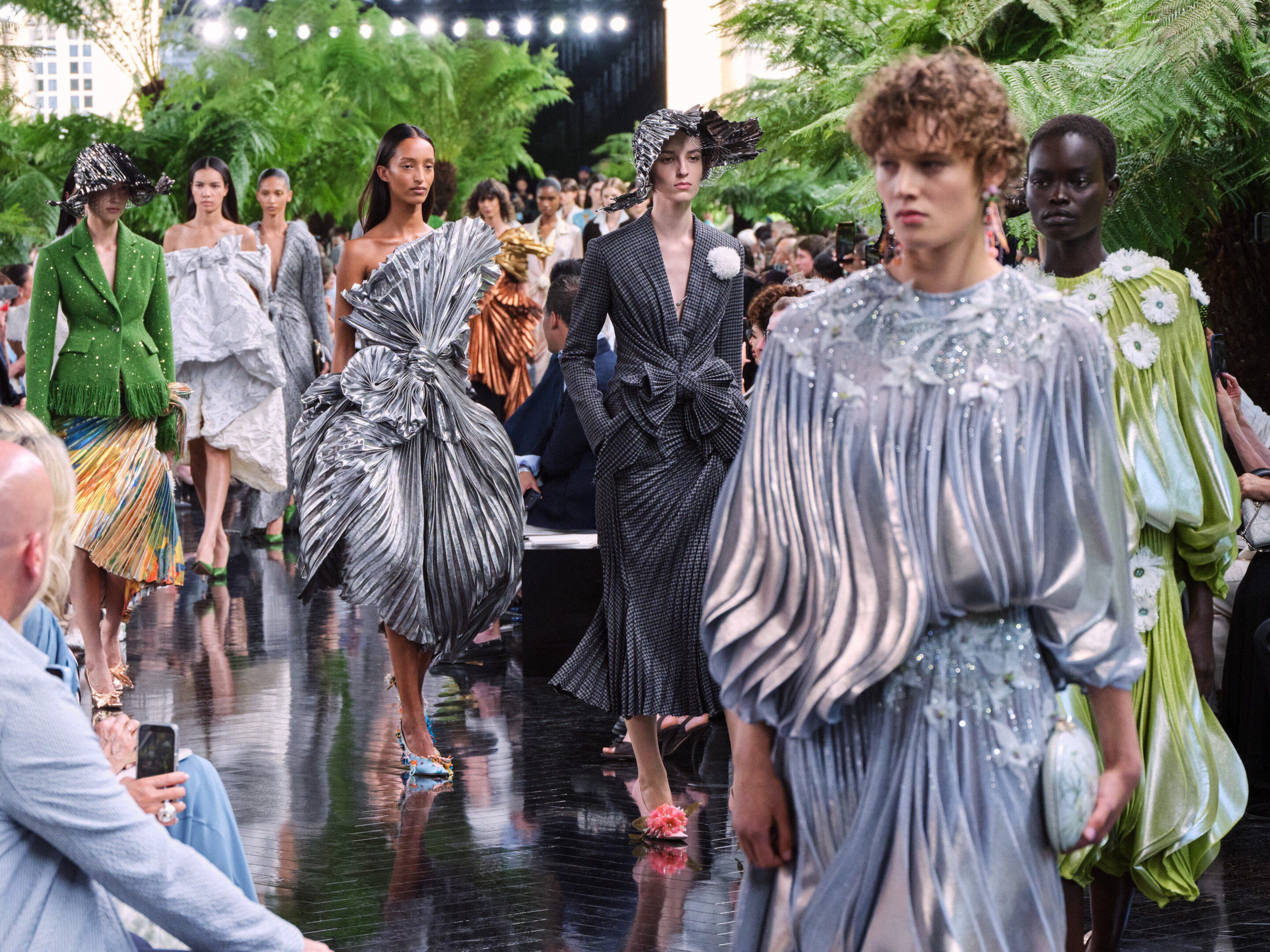
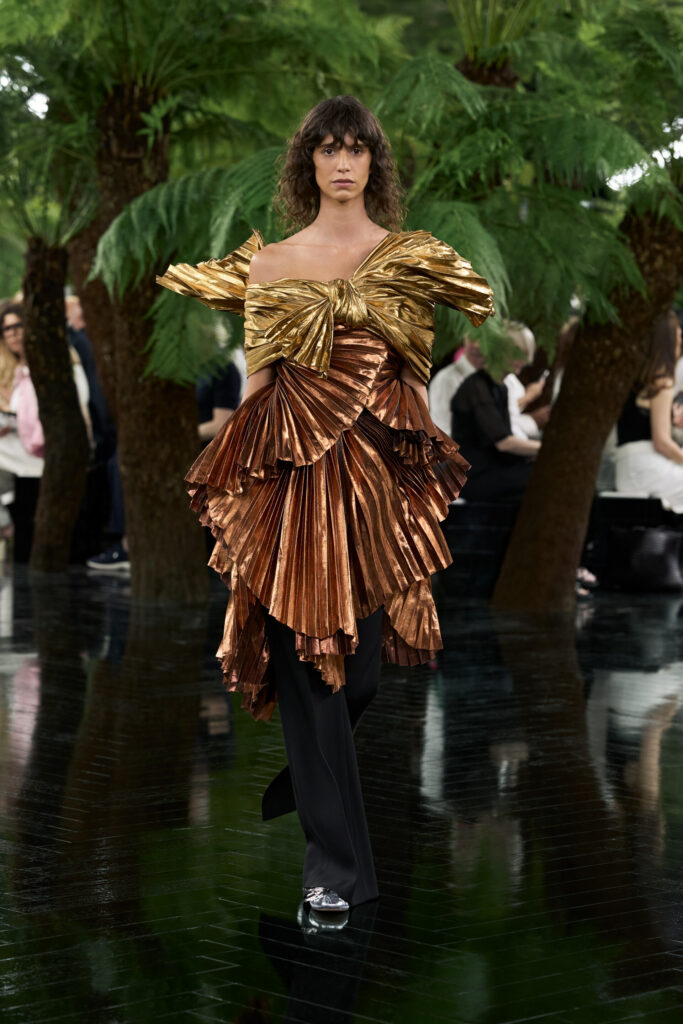
Anderson continued his exploration of materiality through pieces that treated clothing as sculpture. Hammered silver satin was twisted into a monumental knot until it appeared almost cast in metal rather than cut from cloth, while a bronze-and-gold bodice was pleated into radiating ridges, transforming the body into a study in structure and relief. These sculptural gestures were balanced by moments of softness. Cropped tweed jackets in blue-grey bouclé and acid green arrived with deliberately frayed edges, gently unraveling Dior’s customary precision, while a charcoal pantsuit fastened with a sculptural brooch brought couture refinement to masculine tailoring.
Color became another means of shaping form through a pale mint gown marbled with washes of pink and violet, which introduced a painterly softness that contrasted with the collection’s metallic surfaces. A chartreuse dress scattered with dimensional daisy appliqués brought unexpected lightness to a palette otherwise dominated by silver, bronze, and jewel tones, while a dusty rose gown revealed Anderson’s gentler hand. Even a black silhouette, finished with an oversized indigo-and-violet feathered stole, reaffirmed that texture alone could command the same dramatic presence as ornament.
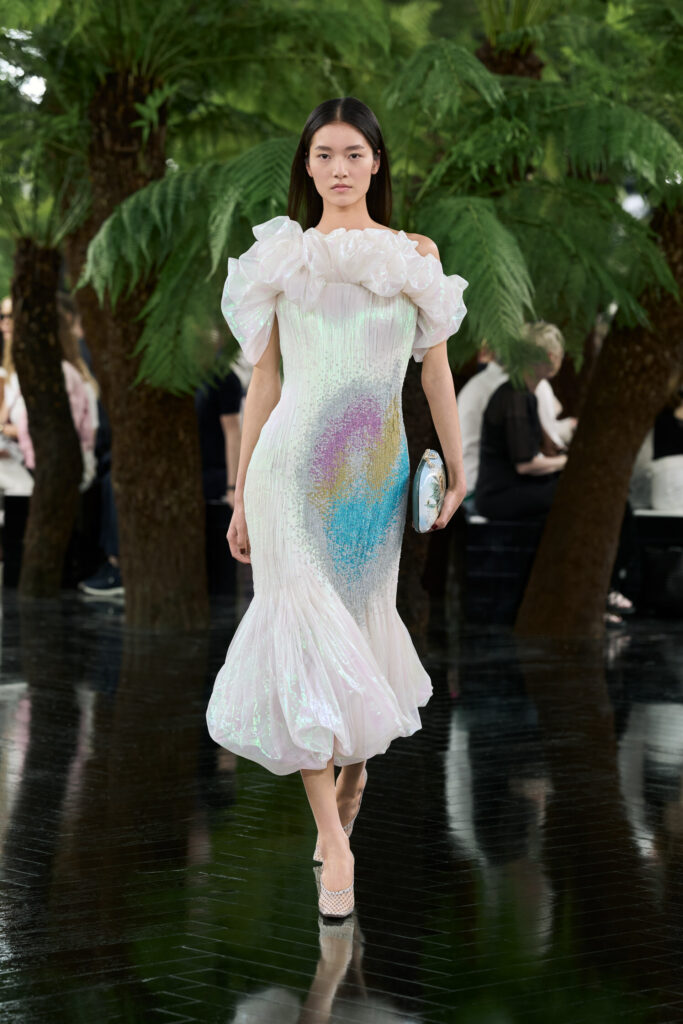
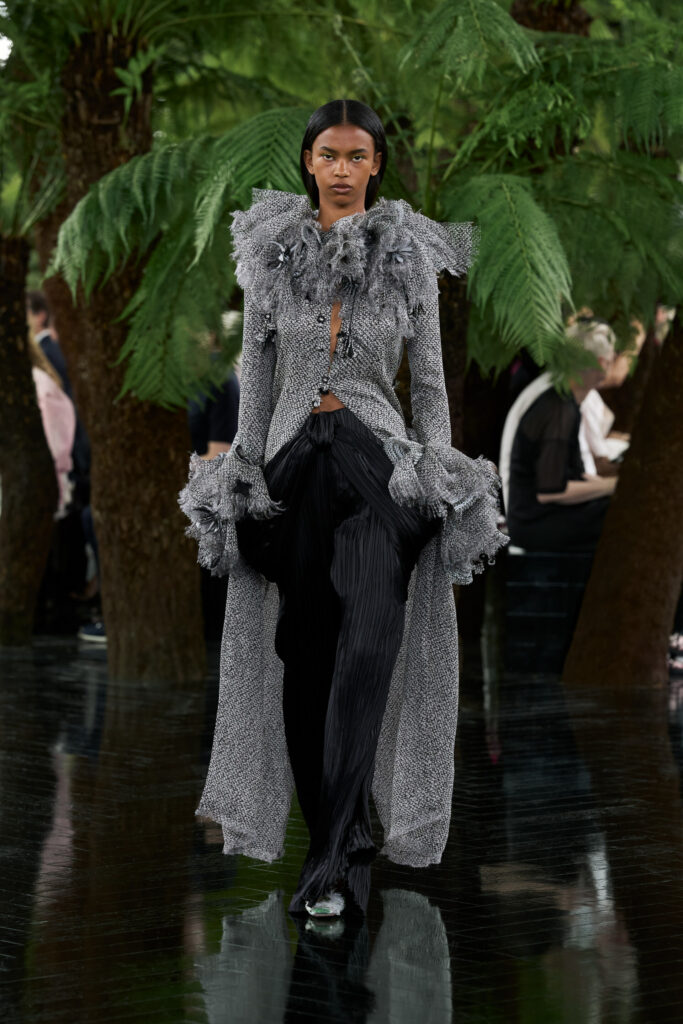
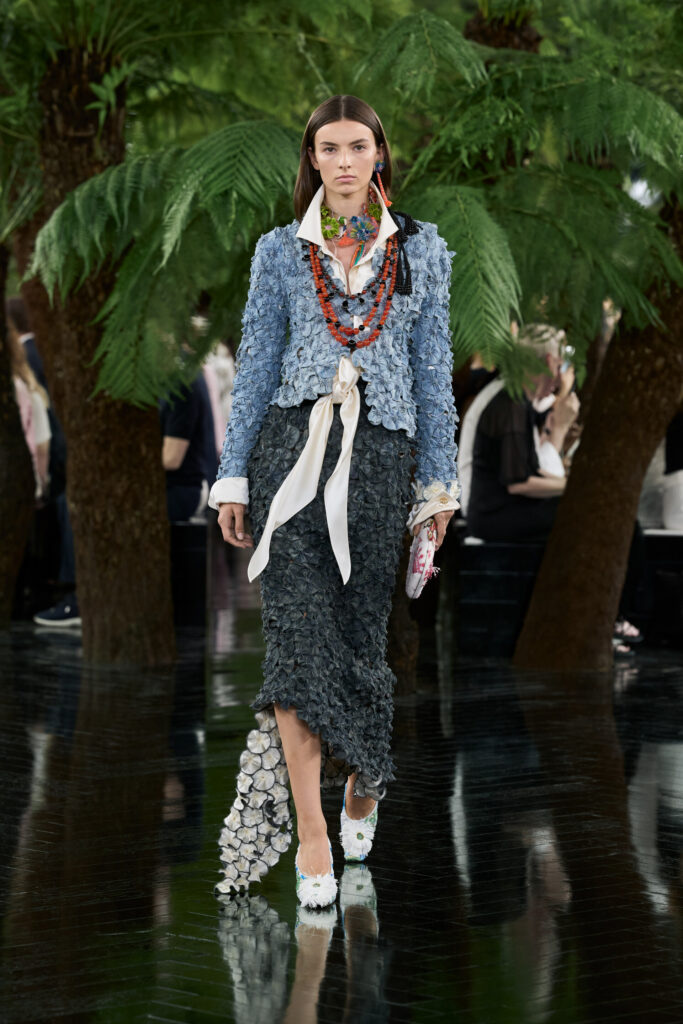
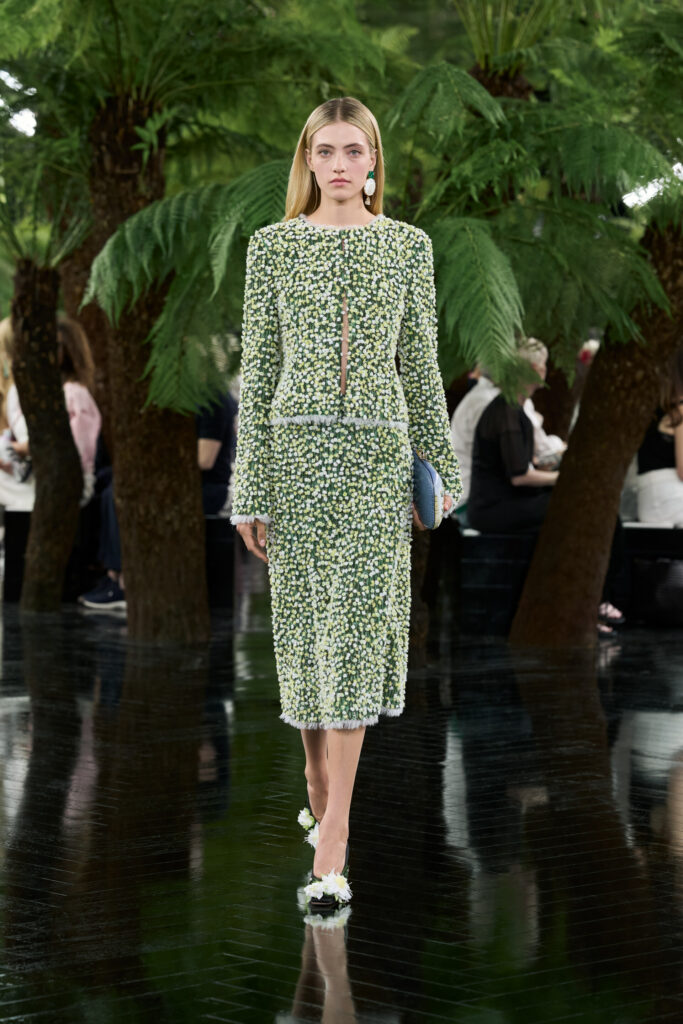
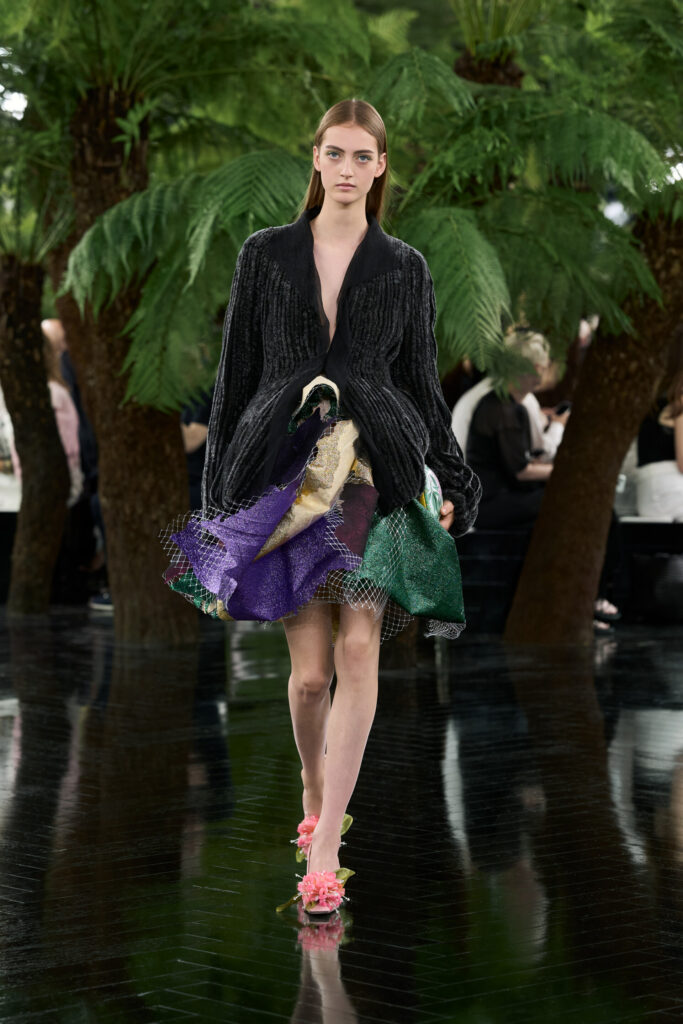
Dior 2026-27 Haute Couture, courtesy of Dior
That dialogue between materiality and craftsmanship extended beyond the garments themselves. Antique Indian chintz textiles appeared on miniature Lady Dior and Petit Dîner bags, while jewelry crafted in Jaipur and Rajasthan from mother-of-pearl, rock crystal, and carved green onyx reinforced the collection’s fascination with texture and surface. Japanese-inspired volumes introduced a softer architectural sensibility, tempering the collection’s sculptural silhouettes.
Even as the designer looked outward, the collection remained anchored in Dior’s archive. Pleating recalled Monsieur Dior’s original Tailleur Bar, while a striking red look reimagined the 1948 Arizona coat with sun pleats, making a silhouette more than seventy years old feel unexpectedly modern. Even exposed linings reinterpreted the house’s construction techniques rather than rejecting them. Presented alongside pieces from Dior’s archive and Lynda Benglis’s sculptures at the Musée Rodin, Grammar of Forms ultimately argued that couture evolves not by abandoning tradition but by continually reshaping it.
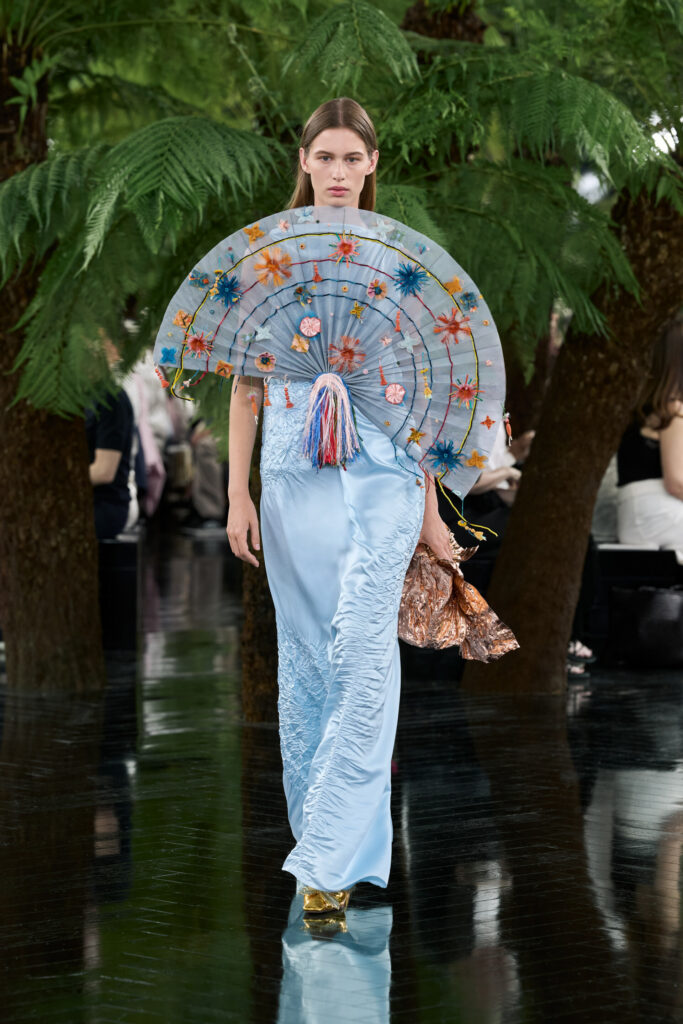
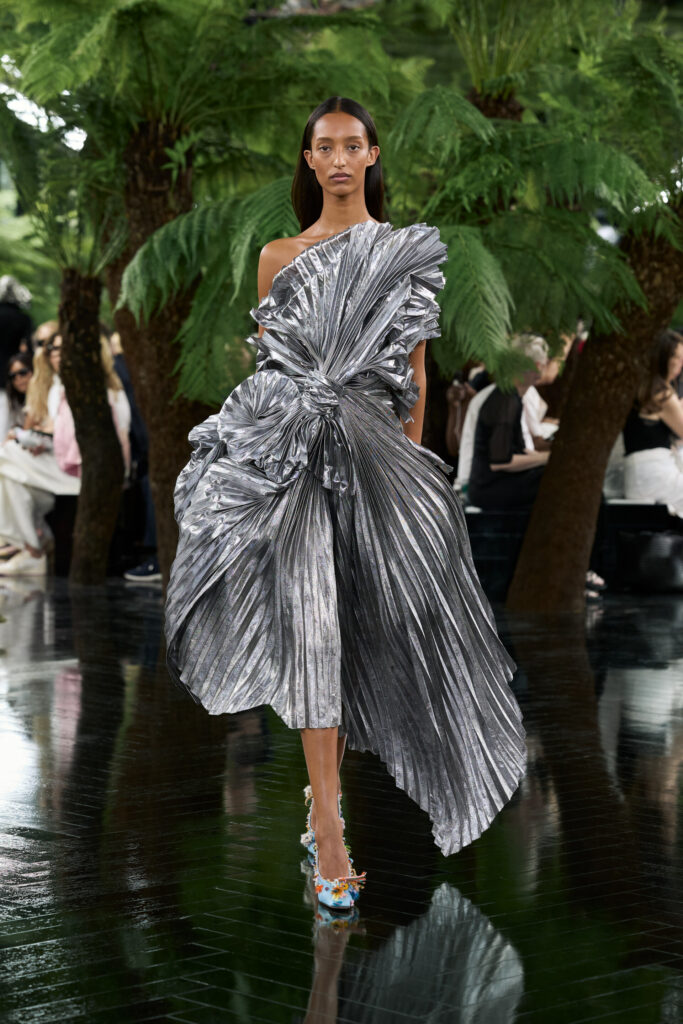
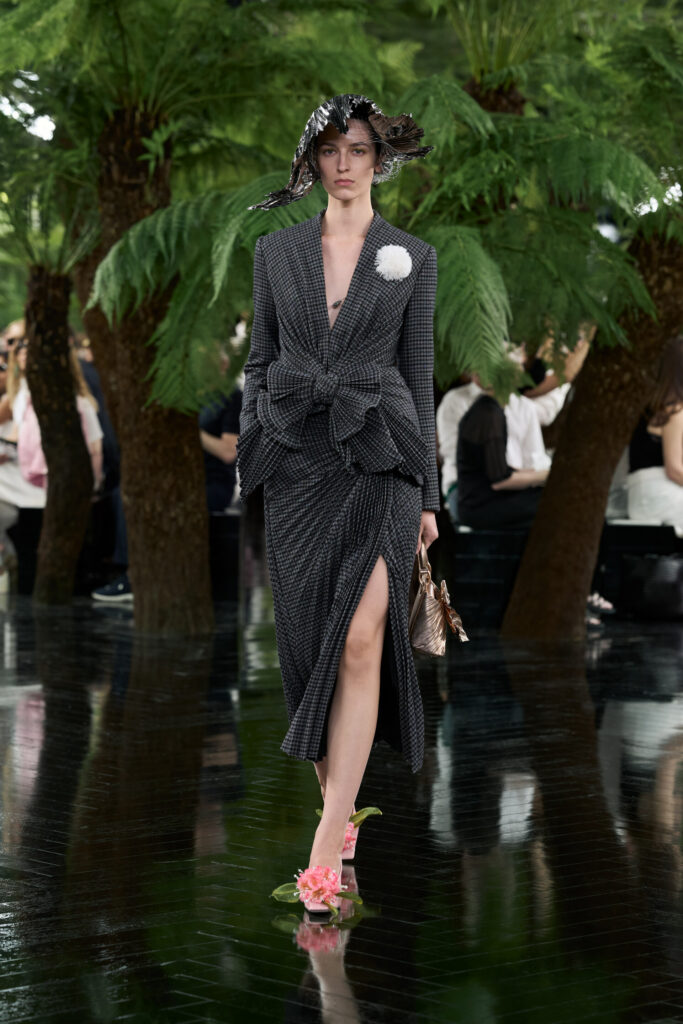
Dior 2026-27 Haute Couture, courtesy of Dior
Discover More