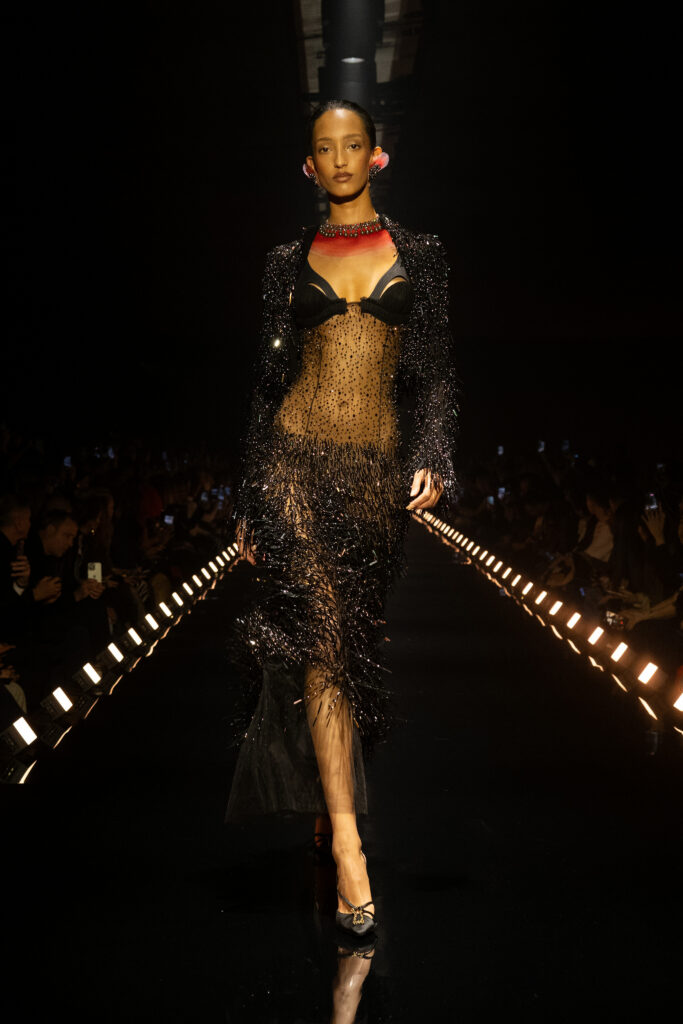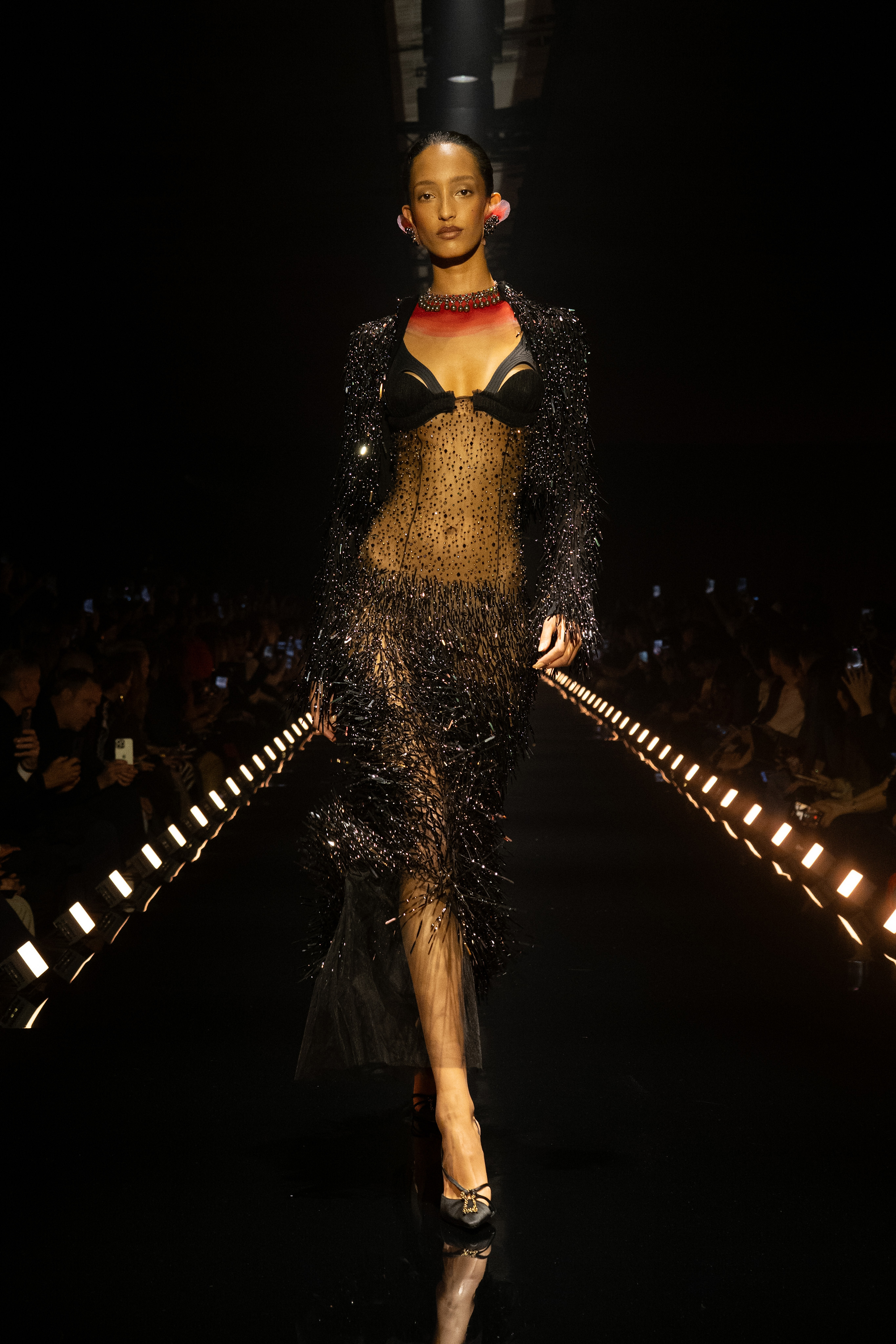
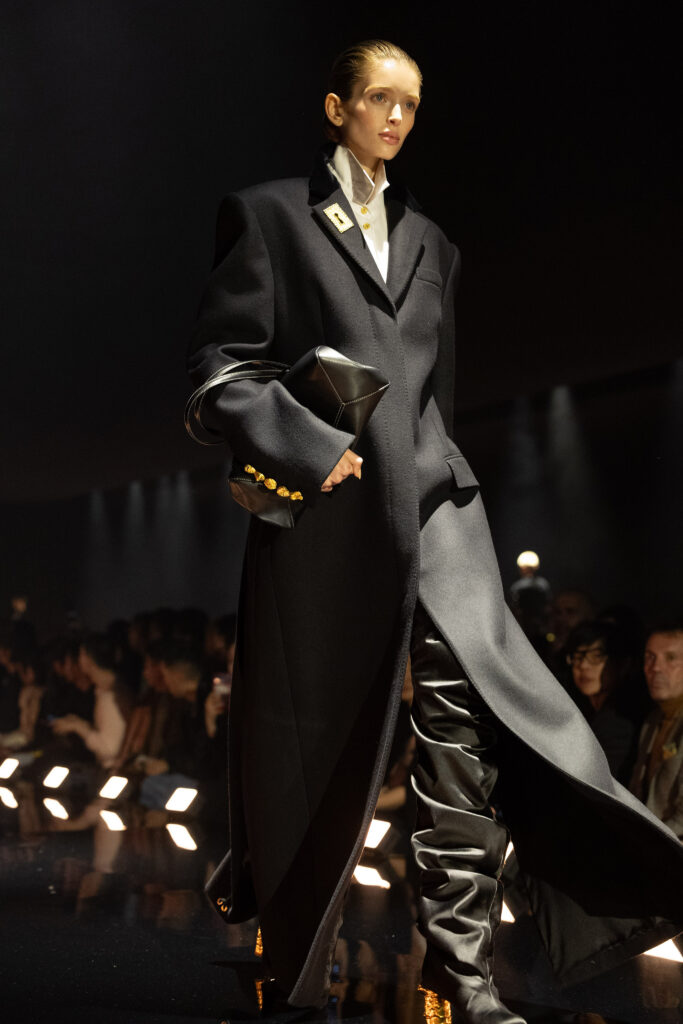
Titled The Sphynx, the collection balanced strong structure with unexpected lightness. Tailored coats with exaggerated shoulders appeared alongside fluid gowns and soft knits, creating silhouettes that moved between discipline and ease. The contrast reflected the idea that Schiaparelli has always lived somewhere between theatricality and wearability.
Many of the looks balanced strong structure with unexpected lightness. Tailored coats with exaggerated shoulders appeared alongside fluid gowns and soft knits, creating silhouettes that moved between discipline and ease. The contrast reflected the idea that Schiaparelli has always lived somewhere between theatricality and wearability. Likewise, the house’s iconic symbols also appeared throughout the collection. The keyhole motif returned across accessories and tailoring, acting as a visual thread that connected many of the looks. The symbol carried a sense of intrigue; it suggested the idea of revealing something hidden, reinforcing the mysterious quality that has long defined the brand’s identity.
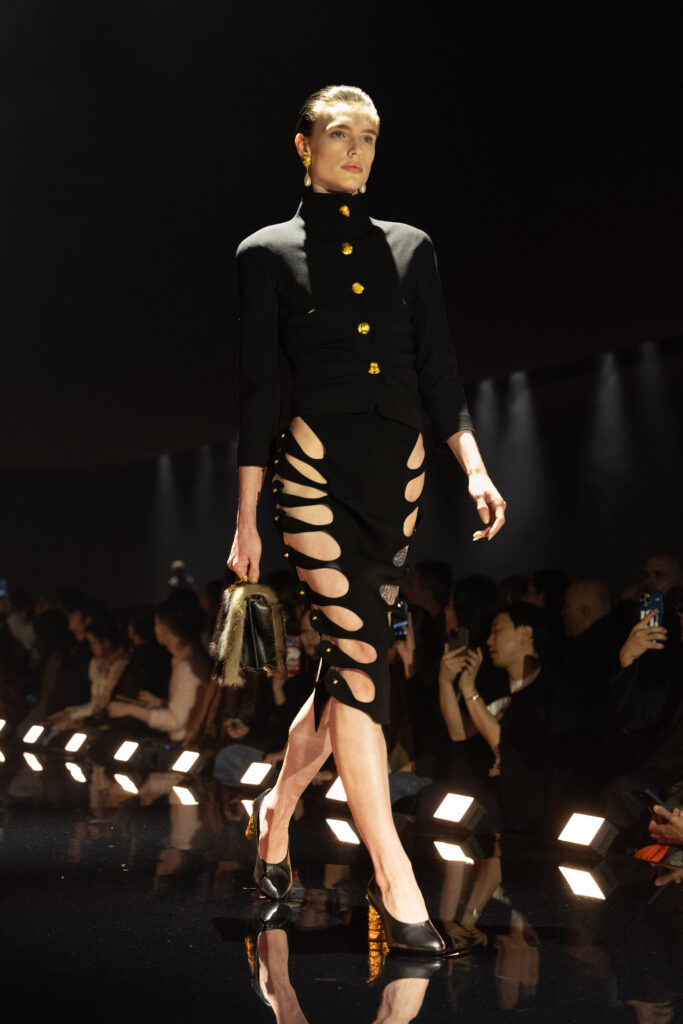
Courtesy of Schiaparelli
Elsa Schiaparelli built her legacy by treating clothing as something more than a garment. Her work blurred the line between fashion and art, turning everyday pieces into objects that carried symbolism, humor, and imagination. That same spirit continues to shape the house today.
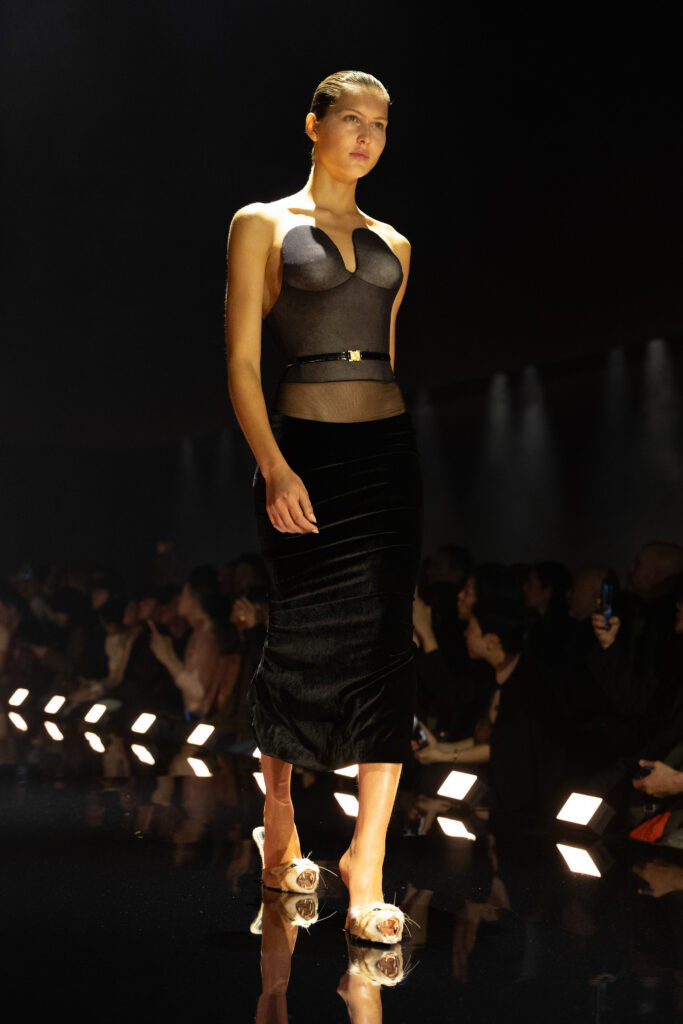
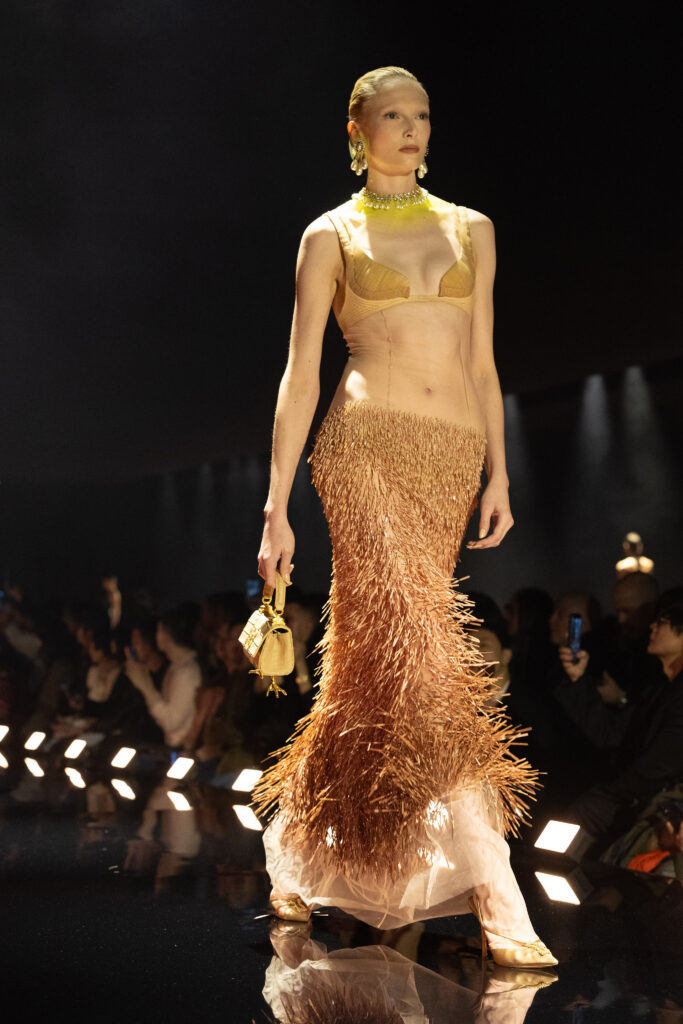
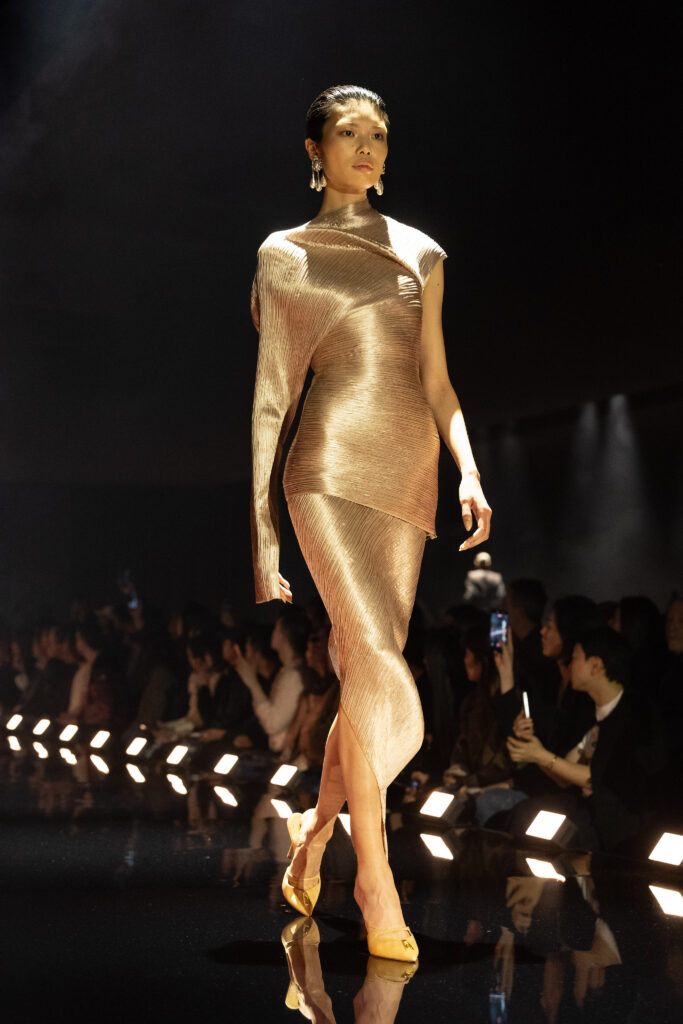
For instance, material experimentation played a large role. Daniel Roseberry paired traditional textures with unexpected fabrics, allowing garments to appear heavier or more structured than they actually were. Knitwear was combined with sheer sections, creating the illusion of weight while maintaining movement. Furthermore, glossy surfaces and laminated fabrics gave eveningwear a sculptural shine under the lights. Now, illusion was another recurring theme. Some dresses appeared to be leather but were actually printed textiles, continuing the house’s tradition of trompe l’oeil techniques.
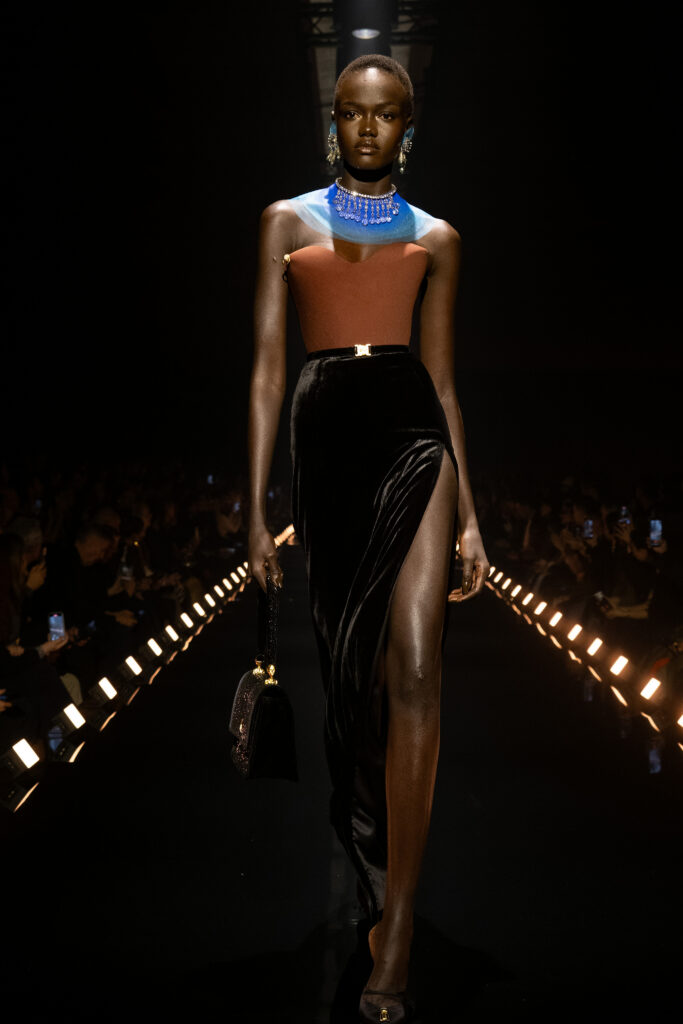
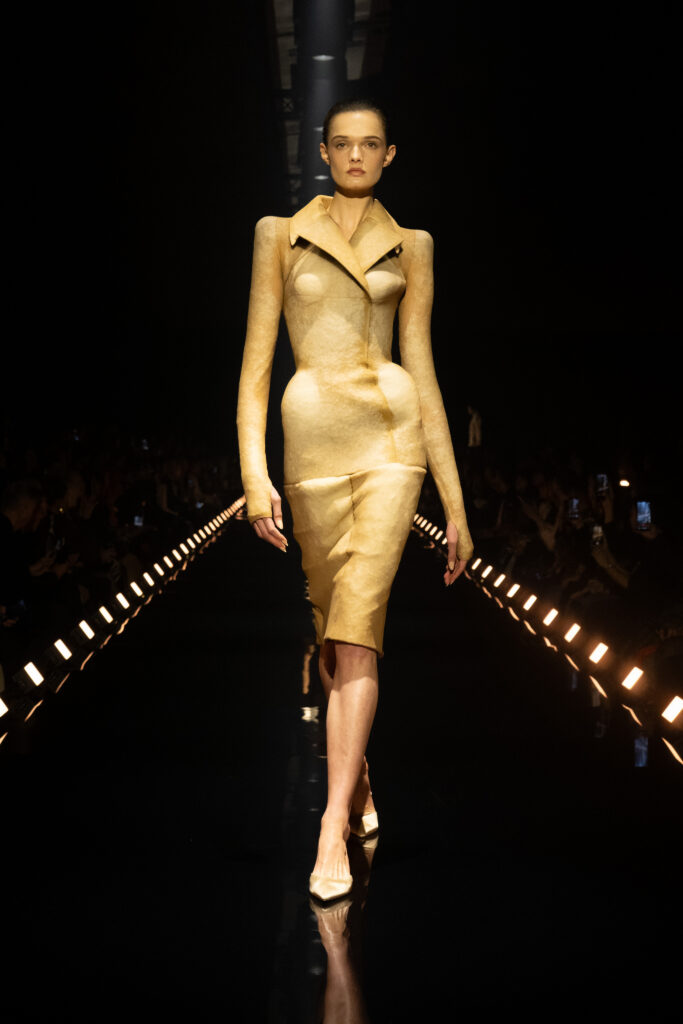
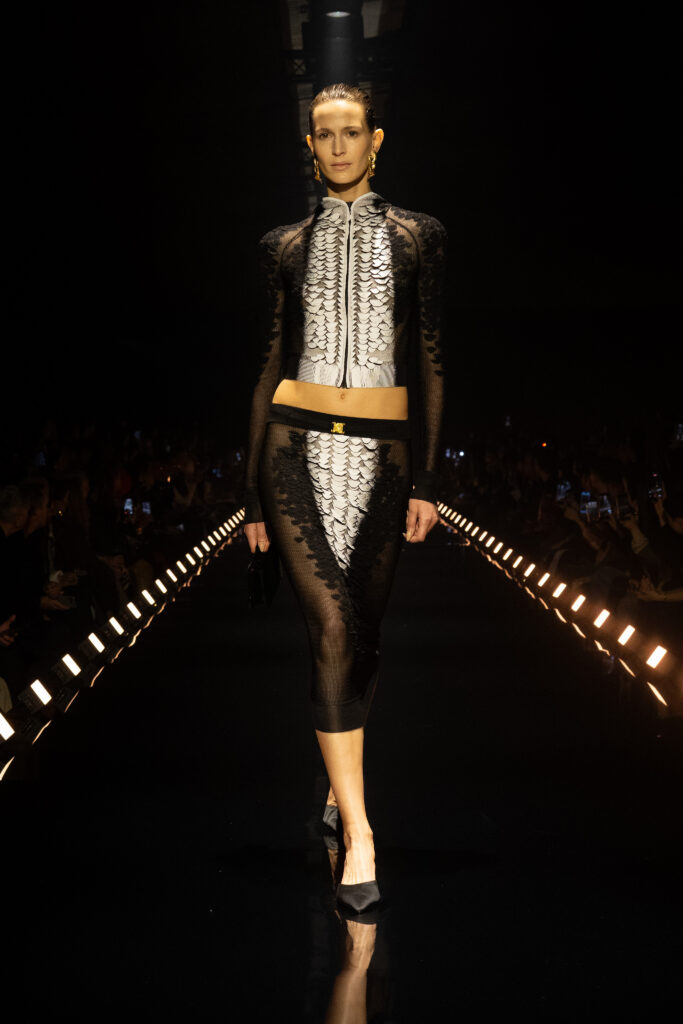
Courtesy of Schiaparelli
Accessories leaned into the surrealist heritage that has always distinguished the brand. Sculptural jewelry, metallic hardware, and whimsical details transformed everyday pieces into something more imaginative. Cat-head heels with snarling feline toes added a theatrical touch to the runway.
Despite the theatrical references, the collection remained wearable. Strong tailoring grounded many of the looks, giving the lineup a sense of clarity and restraint. Roseberry seems increasingly interested in balancing the house’s artistic legacy with clothing that feels relevant in a modern wardrobe. In many ways, that balance is precisely what made Elsa Schiaparelli’s work so enduring. Her designs invited fantasy but never abandoned the body that would wear them. Roseberry’s garments continue that conversation, revisiting the surreal language of the house while allowing it to evolve for a new moment.
Discover More