V Girls: Miriam Petche Means Business

From fintech fraud to true crime to (fingers crossed) romantic comedy, the actor is only getting started
Let it be known: Miriam Petche wants to do a rom-com. She laughs when she says it, and given the conversation we’ve just had, the laugh makes total sense. We’ve spent the last few minutes talking about her breakout role as Sweetpea Golightly on HBO’s sexy finance drama Industry, and Petche’s newest project, Believe Me, in which she plays a young Carrie Symonds (now Carrie Johnson). The ITV crime drama tells the story of the women targeted by serial rapist John Worboys and their courageous fight to prevent his release from prison. “Something lighthearted, funny, and romantic would be great,” she says when I ask what’s next. After everything else on her plate, something unserious would be a nice change.
The twenty-four-year-old Brighton native plays Industry’s most compulsively watchable newcomer, Sweetpea: the ambitious Gen-Z hire with a side hustle on OnlyFans. She stepped into Pierpont & Co. (the fictional, prestigious investment bank at the center of the show) in season three and swiftly predicted its downfall. “I had no idea where her story would go,” she says when I ask whether she ever expected the character to become such a central figure in the story. “As an actor, I was naturally rooting for her to continue being a part of this world.”

Season four gave Petche even more to work with. Sweetpea spent it digging into a nine-billion-dollar fintech fraud traced back to a scam company in Accra, Ghana, only to be violently attacked in a bar bathroom by someone hired to intimidate her off the story in episode five. Fans and critics have called it the standout episode of the season. “I viewed that episode as her confronting her relationship with control and agency,” she explains. “Going forward, it will be interesting whether she leans into letting go a little bit more or stops feeling that she has to be so obscenely competent all the time.”
When I ask what advice she’d give to anyone starting out, it’s not hard to see Sweetpea in her answer. “You can pursue your career scared or confident, at your best or worst, but do it as yourself. Don’t let anyone tell you there’s only one way to do it. Follow your instincts, follow what makes you feel good, and be kind along the way.” Which is perhaps why Petche plays her with such ease.
With Believe Me streaming now and Industry returning for its fifth and final season of beautiful people doing morally questionable things, we sat down with Petche to talk about what to expect next from Sweetpea, the brutal episode five, and why her next dream project involves absolutely no financial fraud whatsoever.
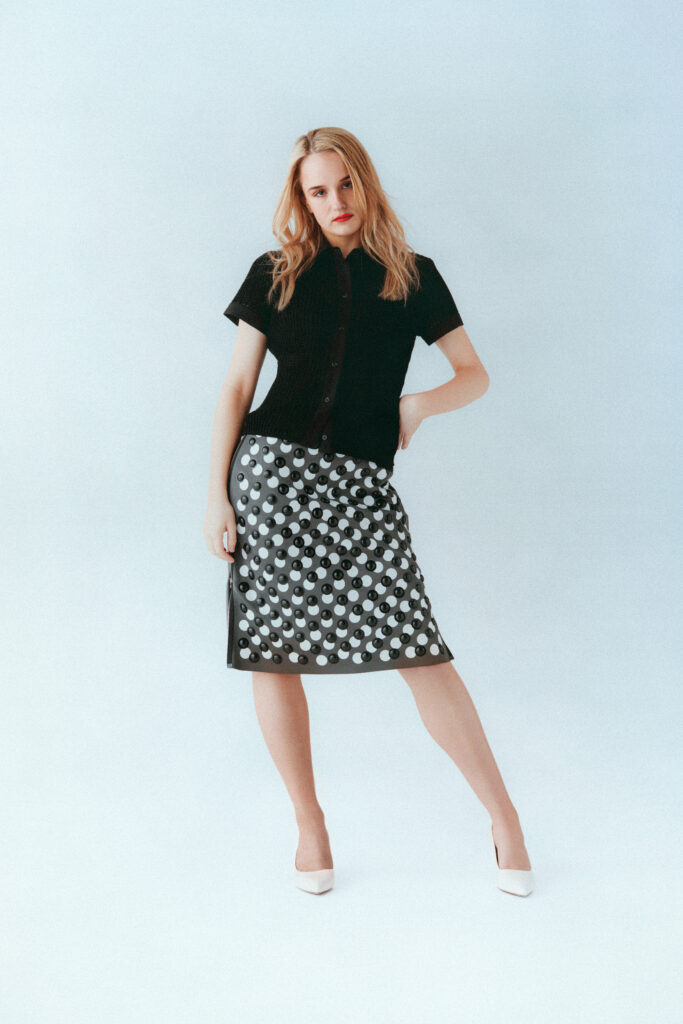
V Magazine: You’re being called the “breakout star” of Industry, and Sweetpea has quickly become one of the show’s most compelling characters. When you first stepped into the role, did you anticipate that she would evolve into such a central figure in the story?
Miriam Petche: No, not at all. I was preparing for what was in the script. She’s a new Gen Z hire. Particularly in season three, she’s crucial for figuring out the downfall of Pierpoint, but I had no idea where her story would go. As an actor, I was naturally very much rooting for her to continue being a part of this world. Her storyline could have gone in any direction. When you introduce a new character, she doesn’t have the infrastructure that characters who have been there from season one have. She could add new elements to her personality or new backstory elements or new career choices. I was very intrigued to see where Mickey [Down] and Konrad [Kay] wanted to take her. That prediction wasn’t there, but naturally, I’m extremely happy that she’s still a part of the show.
V: I’m sure there’s more to be revealed. One of the most shocking moments this season comes from episode 5 when Sweetpea is violently attacked after pursuing a major financial story. How did you approach filming that episode, and how do you think Sweetpea will grow from that experience?
MP: I viewed that episode and that period of her life as her confronting her relationship with control and agency. It became clear to me, particularly through season three and through season four, that she believes being useful and competent is her means of getting through the world, and if she’s of use to the people around her, if she becomes indispensable, then she will continue to work and she will continue to be able to provide for herself. Control is massive for her. Particularly in that episode, the idea of her control being her safety is massively challenged. These traumatic moments that happen to her present the idea that her being in control doesn’t equate to her being safe. I imagine going forward, it will be interesting whether she leans into the idea of letting go a little bit more or stops feeling that she has to be so obscenely competent all the time. Sometimes we stick to our old habits and patterns, and if they’ve kept us surviving for so long, that’s what we fall back to. Mickey and Konrad are brilliant at challenging an audience’s idea of a character and challenging a character’s idea of themselves. To see where they’ll take her will be brilliant.
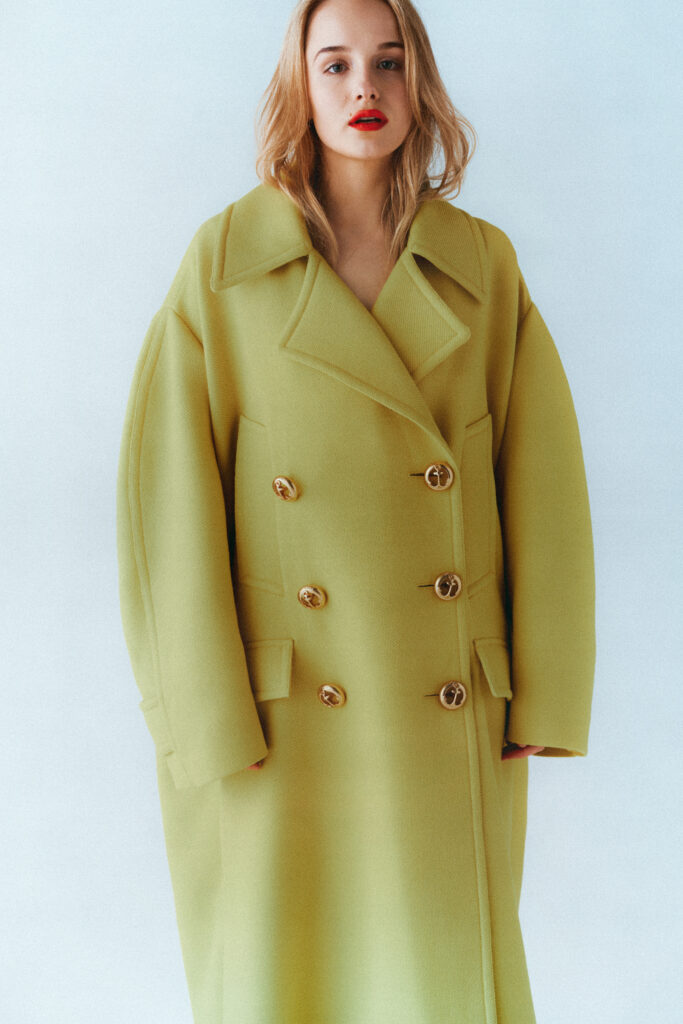
V: The state of Harper and Sweetpea’s relationship is one of the most interesting open questions for the remainder of the series. How do you feel Sweetpea’s attitude toward Harper will be like moving forward?
MP: I believe there’s a baseline of respect there for one another. From Sweetpea’s perspective, Harper was one of, if not the only, person who continued to hire her and root for her when she couldn’t get a job. For the type of person she is, and how much work means to her, that didn’t land lightly. I think she feels very indebted to Harper in that way. Naturally, as they work together, frustrations arise because they’re two young, ambitious women who want the best for themselves, and sometimes that’s at the expense of others. I would be interested if they were in a position where they had to work against one another. When they’re together, they’re formidable. Harper is willing to take risks that Sweetpea might not, but Sweetpea has a follow-through that Harper might not. When they’re aligned, they’re powerful. Working against each other would be very interesting.
V: I can’t wait to see what the showrunners do for season five. You’ve been acting since very very young, what drew you to acting at such a young age?
MP: When you’re younger, you don’t necessarily think in terms of careers. I’ve always been drawn to things that make me feel like myself. I was too impatient and movement-driven to focus at school, so when I was in environments where that was encouraged, like theater schools or making up dances, I felt more like myself. I just wanted to spend more time doing it—making people laugh, sing, and be silly. I followed those feelings, and that led to work. I felt more relaxed on set than at school, which was interesting. I also felt like I had something to say on set, whereas at school I wasn’t always sure what I had to offer. It became a form of freedom. As I got older, I had to decide whether to go to drama school. I told my parents I’d try for two years, and if I got in, I’d commit fully. I did, and it’s been the joy of my life. Acting never has a conclusion, and I love that it’s an open question. It’s personal and sometimes difficult, but I would struggle without it. I’m very lucky to do it as a job.
V: Did you have a plan B? If it hadn’t worked out, what would you have done instead?
MP: I don’t think I was that organized. I don’t have anything specific. I was most drawn to English literature in school, so maybe I would have gone in that direction. I love books and storytelling, so maybe writing scripts. I think I would have found something that made me happy.
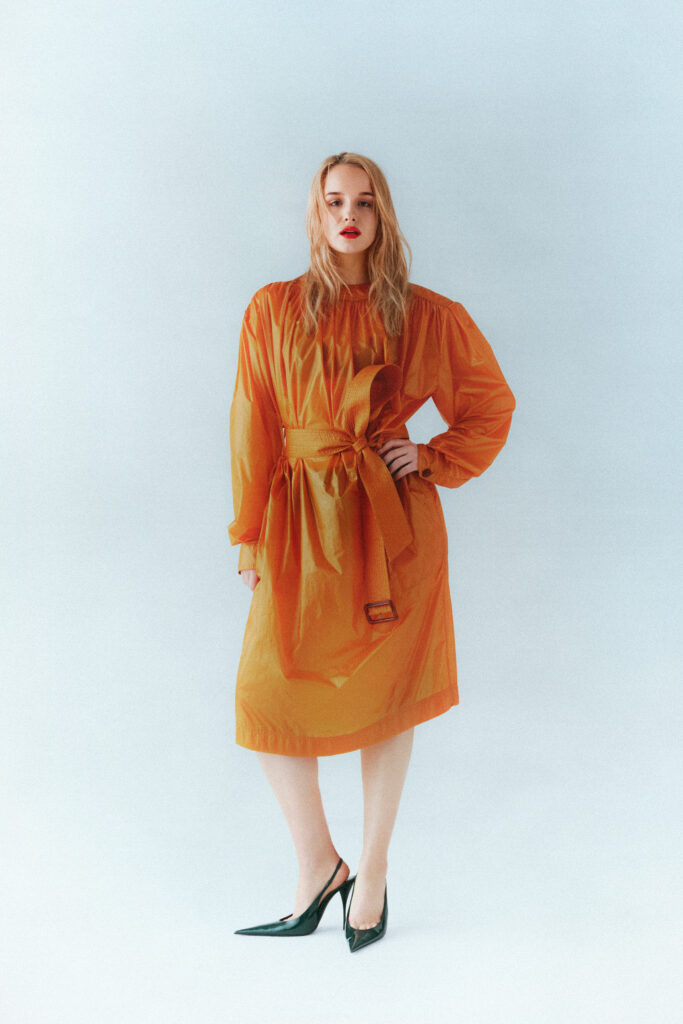
V: You’re also starring in the ITV drama Believe Me. What drew you to that project, and how did preparing for a true-crime drama differ from working on Industry?
MP: It’s very different. This project requires a huge level of care and sensitivity. It’s based on real-life events and real women. I was drawn to it because the issues it raises are still relevant. Conversations about believing women when they speak out are still important.
V: Do you think it’s important to include scenes which can often be difficult to create and watch?
MP: It depends on the story. There has to be constant conversation about what is being portrayed, especially when it’s based on real events. The priority is making sure it’s handled appropriately.
V: Looking ahead, are there any types of characters or stories you’d like to explore?
MP: I would love to do something with rom-com energy. It would be nice to have a lighter experience. I love comedy. It fascinates me because there’s no strict formula. I’m also a hopeless romantic. I love those films. Something lighthearted, funny, and romantic would be great.
V: Lastly, what advice would you give to people starting their careers?
MP: You can pursue your career scared or confident, at your best or worst, but do it as yourself. Don’t let anyone tell you there’s only one way to do it. Follow your instincts, follow what makes you feel good, and be kind along the way.
This story is featured in V160: now available for purchase!
Photography Alessandro Burzigotti
Fashion Nilo Akbari
Makeup Mee Kee using Armani Beauty
Hair James Catalano (The Wall Group)
Casting Kev Ponce
Production Locals Worldwide
Hair Assistant Rogerio da Silva
Photo Assistant Luke Regan
Styling Assistant Roksi
Production Assistants Elwood Rainey, Simão Nogueira
Makeup Assistant Natsu Tomonaga
Discover More