V Girls: Rebecca Black Enters a New Age of Dance-Pop
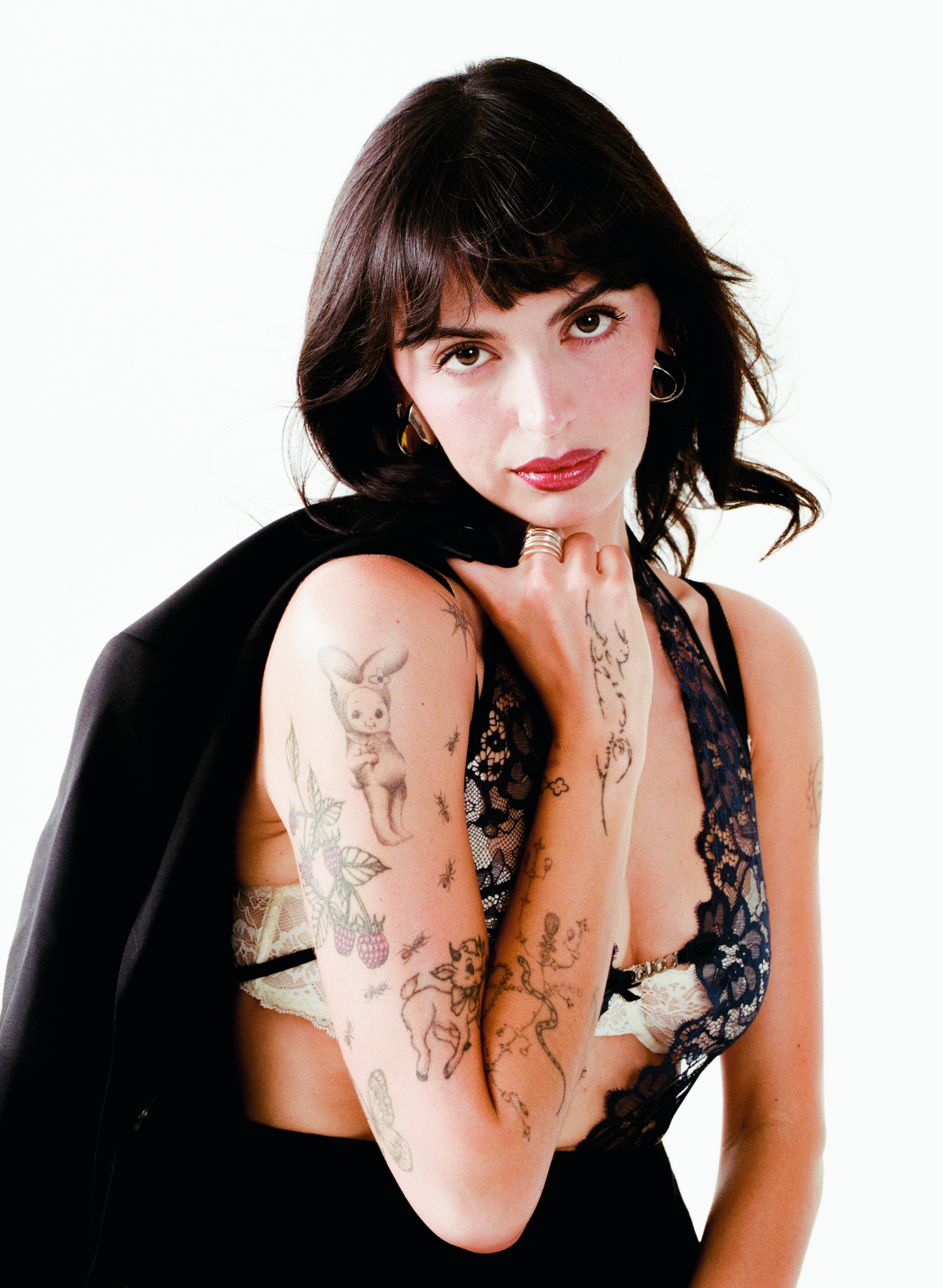
Rebecca Black enters a new age of dance-pop with ‘Age of the Exhibitionist’, her most personal album yet.
It’s been 15 years since Rebecca Black’s “Friday” became the most hated song on the internet. The middle-school lyrics and autotuned track—for which Black’s family paid the now-defunct Los Angeles production company ARK Music Factory $4,000 to assemble, along with its accompanying music video—bubbled up from the corners of YouTube, Tumblr, and Twitter to become one of 2011’s fastest-growing memes. The video was parodied, covered, and remixed countless times, unleashing a wave of cruel criticism towards the then-13-year-old living in Anaheim, California. Reduced to a punch line by strangers and too young to comprehend the scale of her overnight visibility, Black learned early on that going viral can be a double-edged sword.
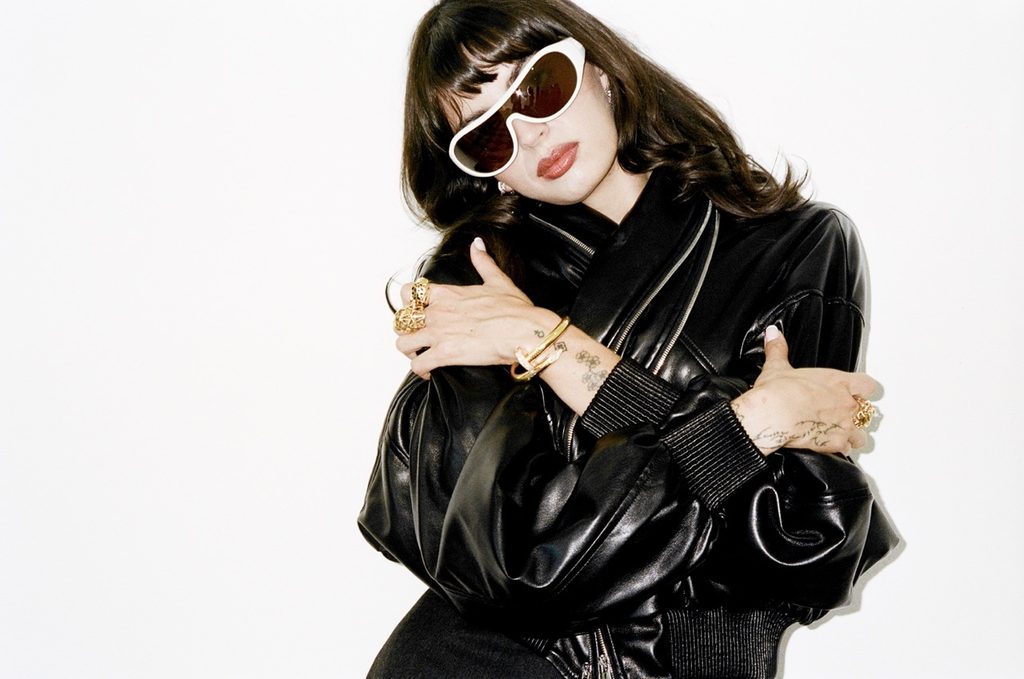
Now 29, the pop star and DJ draws inspiration from the modern panopticon—a world in which everyone is at once watching and being watched. On her sophomore studio album, Age of the Exhibitionist, Black explores what it means to put yourself on display and how difficult it can be to control what others see. “As I got deeper into the process of making the record, it felt clearly like this ever-bending relationship I have with my own identity just kept coming up in the writing process. I tried to pull back my own curtain for once and let a more intimate side of my inner world, and own personal feelings about my relationship with having been on display in some way for all these years, take the reins,” she says. If the world insists on watching, she might as well put on a show. On her mood board there are Stanley Kubrick films, ’60s and ’90s fashion editorials, mod aesthetics, and classic Bob Fosse choreography. “It feels like the songs on this album are more uniquely me than anything I’ve made before.”
As it happens, entering the industry as a teenager can cause your confidence to slip away; but 15 years can alter a multitude of meanings. “I finally shed a lot of the shame and insecurity from my childhood that was never mine to begin with,” she says, “and now I’ll keep reaching as far and high as little me hoped I would.” “Friday,” once shorthand for “the worst song ever,” is now RIAA-certified Platinum. If teenage Rebecca could see her now, Black says, “she would be proud to finally recognize a piece of her return that was missing for a long time.”
Below, Rebecca Black reflects on Age of the Exhibitionist, her headlining North American tour, and finding her way back to the joy of performing.
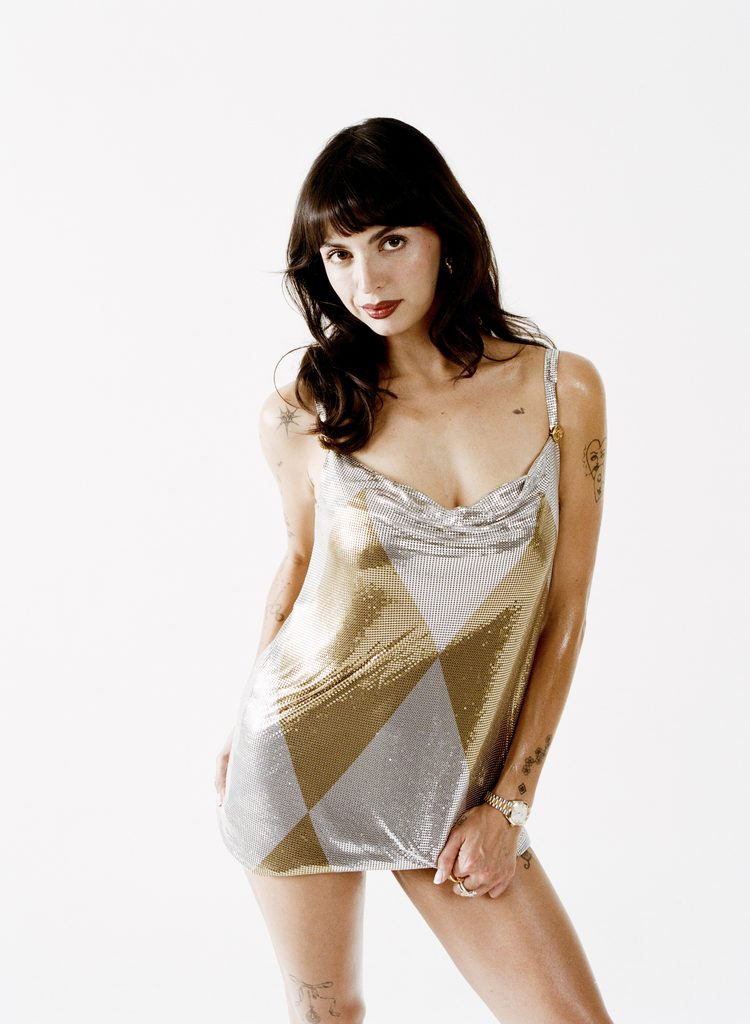
V: How did you come up with the title Age of the Exhibitionist? What does it mean to you?
Rebecca Black: As I got deeper into the process of making the record it felt clearly like this ever-bending relationship I have with my own identity just kept coming up in the writing process. As much as I love to create a fantasy, or a character, and definitely continue to do in certain moments on this album, I really tried to pull back my own curtain for once and let out a more intimate side of my inner world, and own personal feelings about my relationship with having been on display in some way for all these years take the reins. In the world of this album, it’s the push and pull that comes with being seen as who you truly are, versus as what you might want to be seen as, that makes you an exhibitionist.
V: You’ve spent much of your life being perceived by people who don’t actually know you. When does being seen feel empowering to you, and when does it start to feel vulnerable?
RB: I only think it feels too vulnerable when the eyes looking back at you feel more powerful, or crucial, than your own. Something I’ve always learned and loved about the best kinds of performers is that you have to be so comfortable with your own emotional exposure in order to make what you’re giving an audience meaningful and true. I’ve always felt empowered by that since I was young.
V: What was on the mood board for this new era beyond music?
RB: A lot of Kubrick films, 60s and 90s editorials. Mod and its overall use of restraint became very clearly pertinent to the feel of what we were creating. I was also watching a lot of old Fosse choreography. I felt really connected to this playful spirit against surrealist scapes and how to continue to let each visual piece feel like its own part of the greater puzzle.
V: What feels most different about the Rebecca Black entering this era?
RB: I feel maybe the most free to roam and explore, and I definitely feel this sense of vulnerability in what I’m sharing that’s only doubled from my last project. I created this album with such a tight knit group of people who I trust so deeply and understand my mission. It feels like the songs on this album are more uniquely me than anything I’ve made before. It often felt like something I was making for only me and I really fought to execute this album in every minute detail. It’s a blood, sweat, and tears album through and through.
V: You’ve been DJing for years, and I can see how much of your sound as a singer and DJ fully merge on this record. How did thinking like a DJ change the way you built the album?
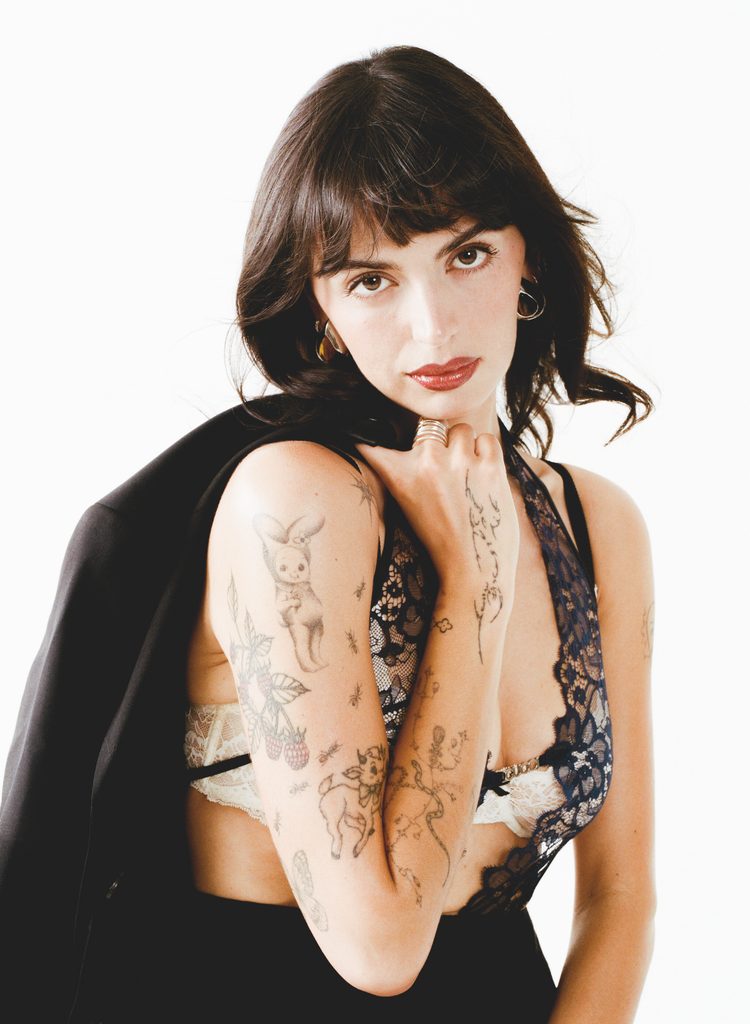
RB: I think through DJing I found a community and an audience who listen to dance music just like me, and that empowered me to continue exploring my taste in dance music on this record. I also found the flow of the album track listing incredibly important considering how many different kinds of sounds and feelings this album takes you through, which is so parallel to building a set. You want the intentional up and down of each moment to feel as impactful as the next – track listing can make or break the album experience. This one came with so much trial and error to make it feel perfect.
V: Who is the “Miss Delicious” of the track on the album? If Miss Delicious was planning the perfect night out, where would she take us and what would be playing?
RB: Miss Delicious is the most fearless, diabolical, unserious, and ultra-confident version of myself. She would be forcing the Uber to let her play some psychotically crunchy beat, low-quality techno noise mix on full blast and losing her mind to it. She would take you out to some warehouse in the weirdest part of town to the most sickening, sweaty underground club and vanish without you into the dance floor the second you walk in. She picks out my DJ sets.
V: On the track “Waschesalon,” you sing, “Just made a million off my so-called mediocrity.” There’s something defiant about turning the criticism you’ve faced into a celebration of your success. What makes that line meaningful to you?
RB: I look back and much of my experience in my younger years was defined by feeling a lack of control over my own personal truths. As I’ve gotten older and gathered more sureness in myself in my life and career, I finally shed a lot of the shame and insecurity from my childhood that was never mine to begin with – and now I’ll keep reaching as far and high as little me hoped I would. I finally feel so proud of who I’ve become in every facet of my life through the ashes of what I’ve seen before.
V: What part of bringing this album to life are you most excited for people to experience? What can fans expect from your upcoming tour?
RB: I’m really excited for everyone to hear what it has to say as a whole. Every song only continues to thread the needle and I do feel it’s at its strongest as a full, top-down listen. There’s an intimate quality to a lot of these songs, some of them hidden behind the beats, but it feels like a full picture of every part of me. This tour is the most ambitious one I’ve ever put together and I think the design is just beautiful, and the tour feels like its own unique continuation of the experience. I can’t wait for people to only dive in more with me.
V: “Friday” has been RIAA-certified Platinum, which is wild considering at the time it was blasted as the “worst song ever” by media outlets everywhere. If teenage Rebecca could see you in this era now, what do you think would make her the proudest?
RB: I think she would be proud to finally recognize a piece of her return that was missing for a long time. I haven’t experienced a love for what I do like this since I was a kid performing in summer-long theatre camps. I feel so inspired to continue to find ways to push my own creative boundaries and I feel so lucky that this is my life.
This cover story appears in the pages of V163: now available for purchase!
Photography Richie Lee Davis
Fashion Bin X. Nguyen
Creative Director / Editor-in-Chief Stephen Gan
Hair Gregg Lennon Jr. (The Only Agency) using Bumble and bumble
Makeup Nick Lennon (The Only Agency) using Saie Beauty
Digital Director Mathias Rosenzweig
Editor Kev Ponce
Fashion Market Editor Gabby Buchan
Executive Producer Kevin Warner (WAK Creative)
Associate Producer Nick Lambrakis (WAK Creative)
Lighting Director David Miller
Fashion Assistant Nikko Panti
Hair Assistant Ilaina Espinaco
Makeup Assistant Abby Smith
Cinematographer Lukas Chmiel
Discover More