V161: Sooner or Slayyyter
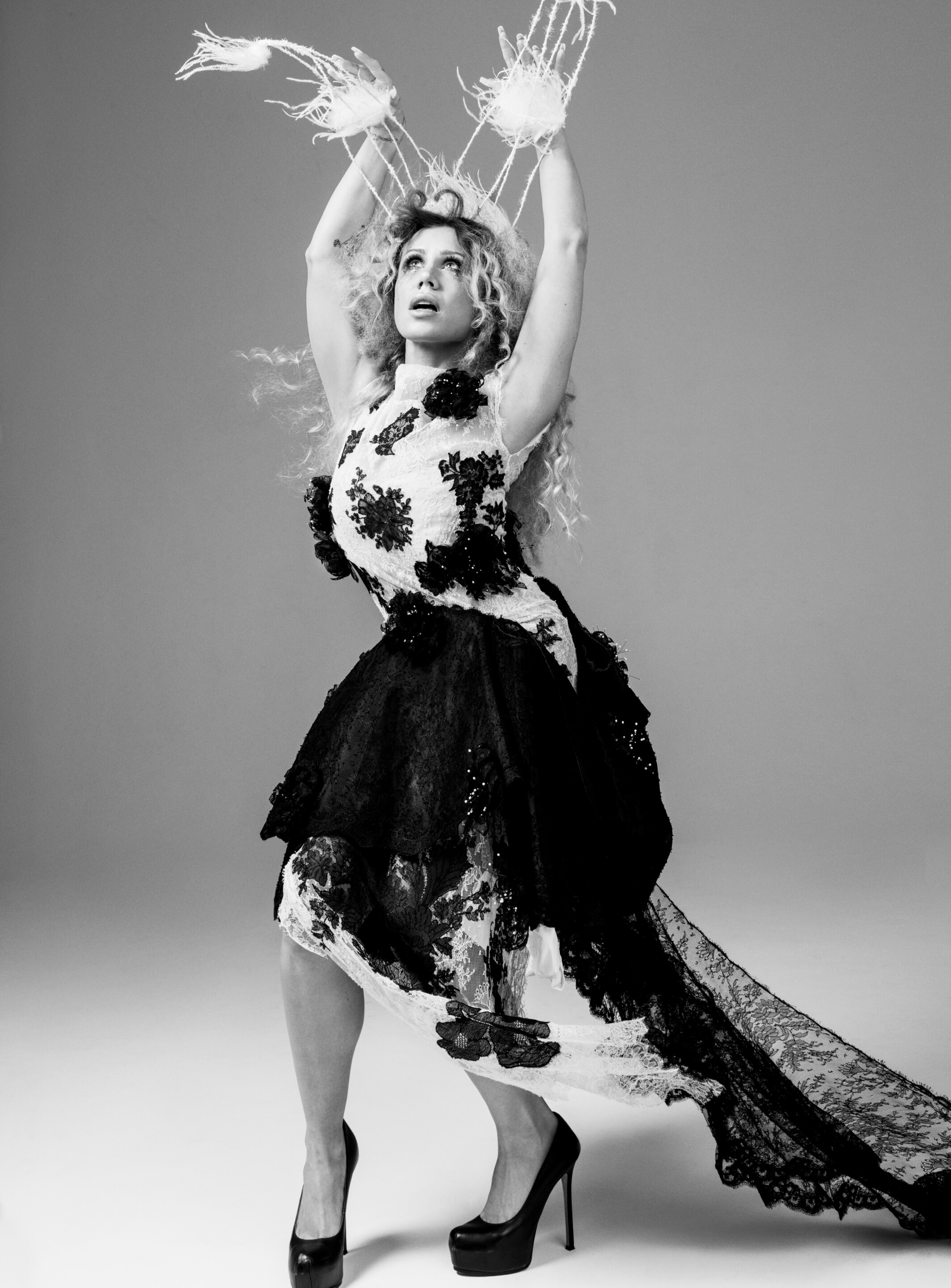
Music’s wild child spent a decade turning trash into treasure. Now, Slayyyter is ready to be crowned as the people’s princess of pop
Comparing Slayyyter to Princess Diana is ludicrous. One is a seasoned, 29-year-old pop star—and an unconventional one at that—who raps about how she gets “so gay off that tequila” and has a song called “Throatzillaaa,” whereas the other was an aristocrat-turned-British-royal whose married life and tragic passing were the undeniable epicenter of ‘90s pop culture.
But when journalist Julie Burchill first coined the term “The People’s Princess” for Diana Spencer, later popularized the morning after her passing (she died on August 31st, 1997, less than a year after Slayyyter was born) by former Prime Minister Tony Blair, she was referring to the 36-year-old’s ability to relate with her fellow Englishmen: her emotional accessibility, the way she did not put herself above the common people, her willingness to discuss personal matters like bulimia and infidelity. She was “real,” unapologetically revealing the royal family’s blemishes. There was even a democratic undertone: the English do not elect their royals, but if they did, Diana would have been the clear winner. The world loved her as if they knew her deeply—which of course, they did not.
Slayyyter, too, is no nepo-baby born into pop royalty (Diana was an aristocrat, but not royal). In fact, the artist born Catherine Grace Garner has spent the last ten years cycling between thriving and struggling as a “lower-middle-class” singer. Fighting the turbulence of life on the pop periphery, she collected a highly devoted but relatively niche following compared to where she is now. As a kid from Kirkwood, Missouri, a suburb of St. Louis, she was estranged from her father (something she references in her track “Gas Station”), and grew up with her devout Christian mother, attending Catholic school on a full scholarship because her family could not afford tuition. Later, she dropped out of college and began making music in the closet of her mother’s house. Inspired by artists like Charli XCX and Kesha—both of whom she’s now toured and worked with—she started uploading songs to SoundCloud while working at a hair salon, sweeping hair and answering phones. Early songs like “Mine” found unlikely success on Stan Twitter, eventually allowing her to quit her job entirely. Her self-titled mixtape reached No. 4 on the iTunes Pop chart in 2019, and music from this period has since enjoyed a resurgence: her 2019 track “Daddy AF” appeared in the A24 horror-comedy Bodies Bodies Bodies (2022) and then Sean Baker’s Anora (2024), which went on to win the Academy Award for Best Picture at the 2025 Oscars.
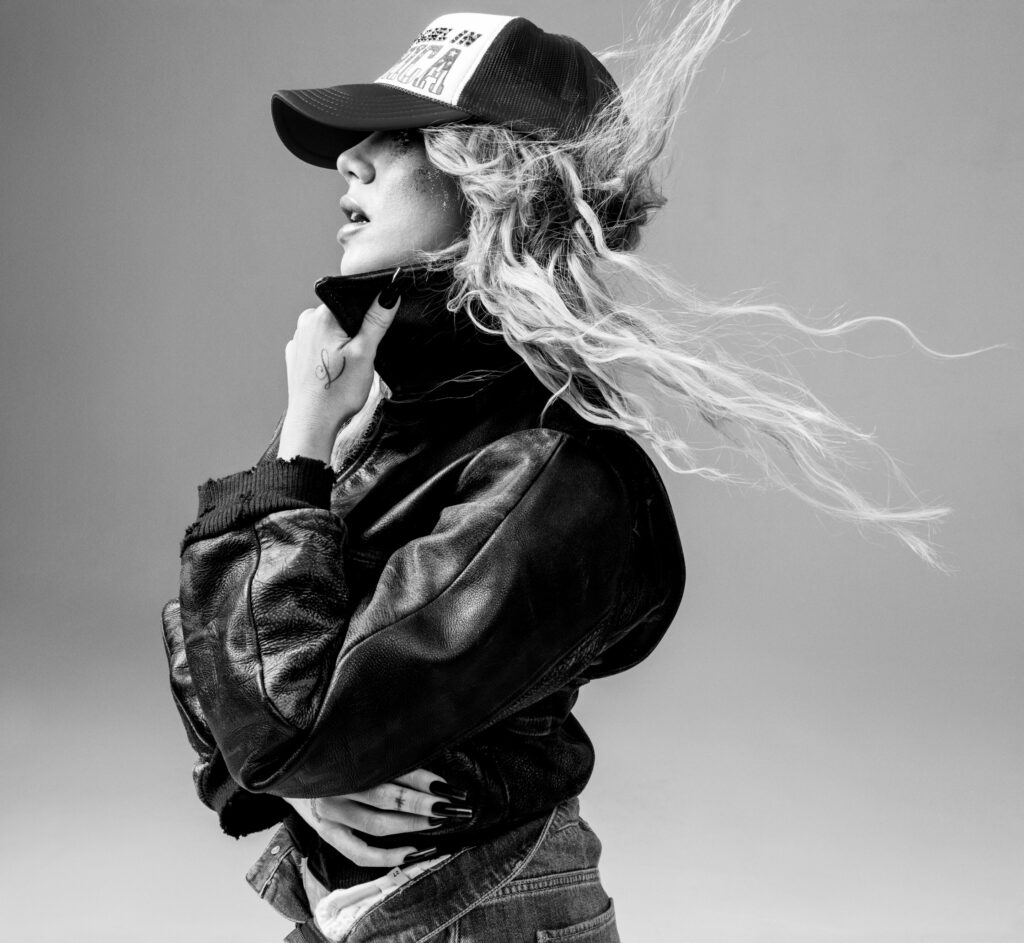
| On lips M·A·C COSMETICS Lip Pencil in Stripdown, M·A·Cximal Silky Matte Lipstick in Velvet Teddy, Lipglass in Clear
While these successes looked good on paper, they were also part of a then-decade-long career that still hadn’t spawned any mainstream hits. It was survivable, but logistically and financially difficult. On our call in May, a freshly showered Slayyyter in a white bathrobe and long curly hair joked about how she’d never even entered the “Khia Asylum”—a new term for one-hit wonders. “When people talk about that, they’re talking about people who have had major chart success and then kind of dipped off after. I didn’t even have that. I never got my foot in the door. I was always kind of this underground floater.”
As such, Slayyyter spent nearly a decade inhabiting a strange middle ground: too famous to be unknown, but more of a cult it-girl than a mainstream celebrity. Making music from a modest apartment in Beverly Hills, she often found herself surrounded by the rich and famous without quite belonging to that world herself. That vantage point became the foundation for her 2023 album Starfucker, a record fascinated by both Hollywood’s glamour and its dark underbelly. “I’m so not a celebrity-type person,” she says with a smile, as if the concept itself is silly. “I feel like there are people who do the celebrity song and dance very well. But even if things get bigger and bigger and bigger, I don’t ever feel like a famous person. That’s so ridiculous to me…I don’t ever want to carry myself in that way because I don’t think I’m any different from the people who listen to my music.”
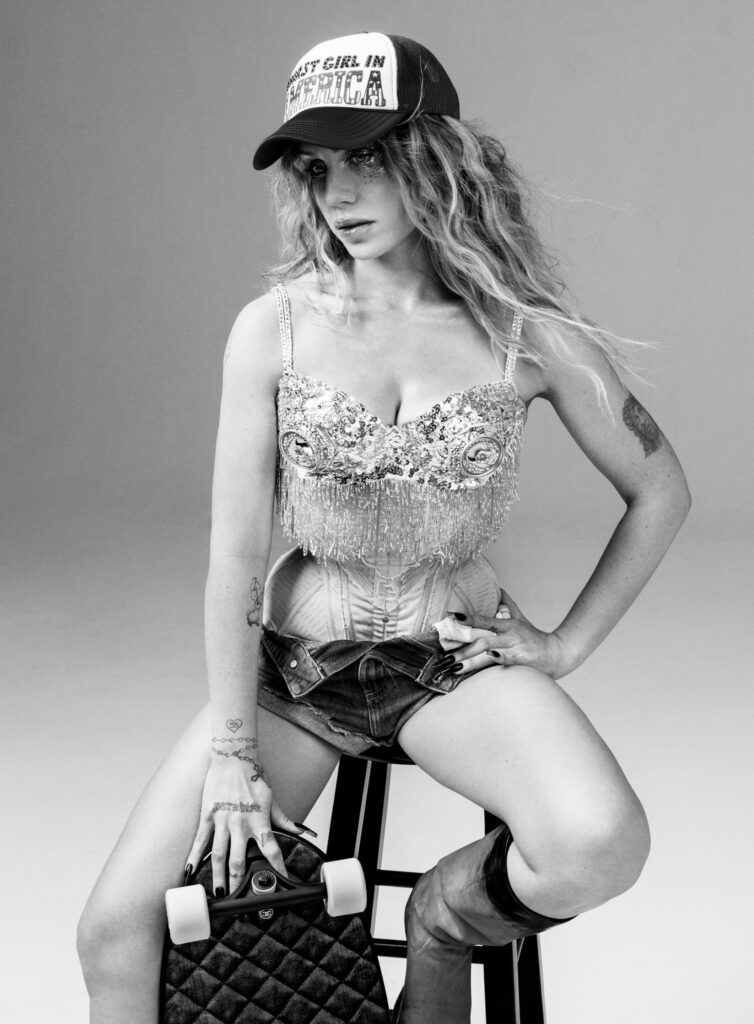
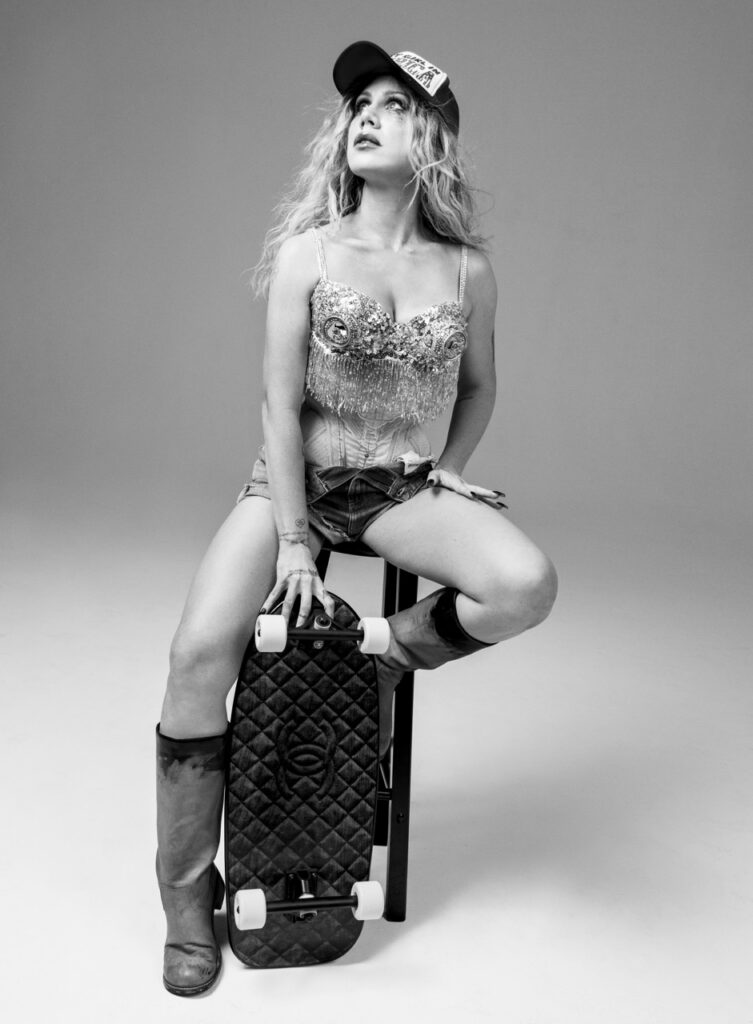
It is, strangely, the same quality that made Princess Diana so radical. She was not admired because she seemed above ordinary people, but because she seemed determined to remain one of them.
In fact, Slayyyter sees her equity with her fans as part of her purpose. She is much more likely to take shots with fans—which she’s done after performances—than surreptitiously slink away to a deluxe tour bus or private jet to escape them. Instead, she believes relatability is key. “I think people who listen to my music, or even people who are new to my project, can tell that I’m not a fluffed-up celebrity figure. I am not a fancy person. I’m a real person. I’m from St. Louis. And it’s not really a big city. It’s not a very remarkable place. Suburbs of the Midwest don’t feel very remarkable when you’re visiting. But I think a lot of people really adore the romanticization of those unremarkable cities and towns and places, and it makes you feel kind of proud to be from a random suburb of Iowa or Kentucky or Missouri or whatever.”
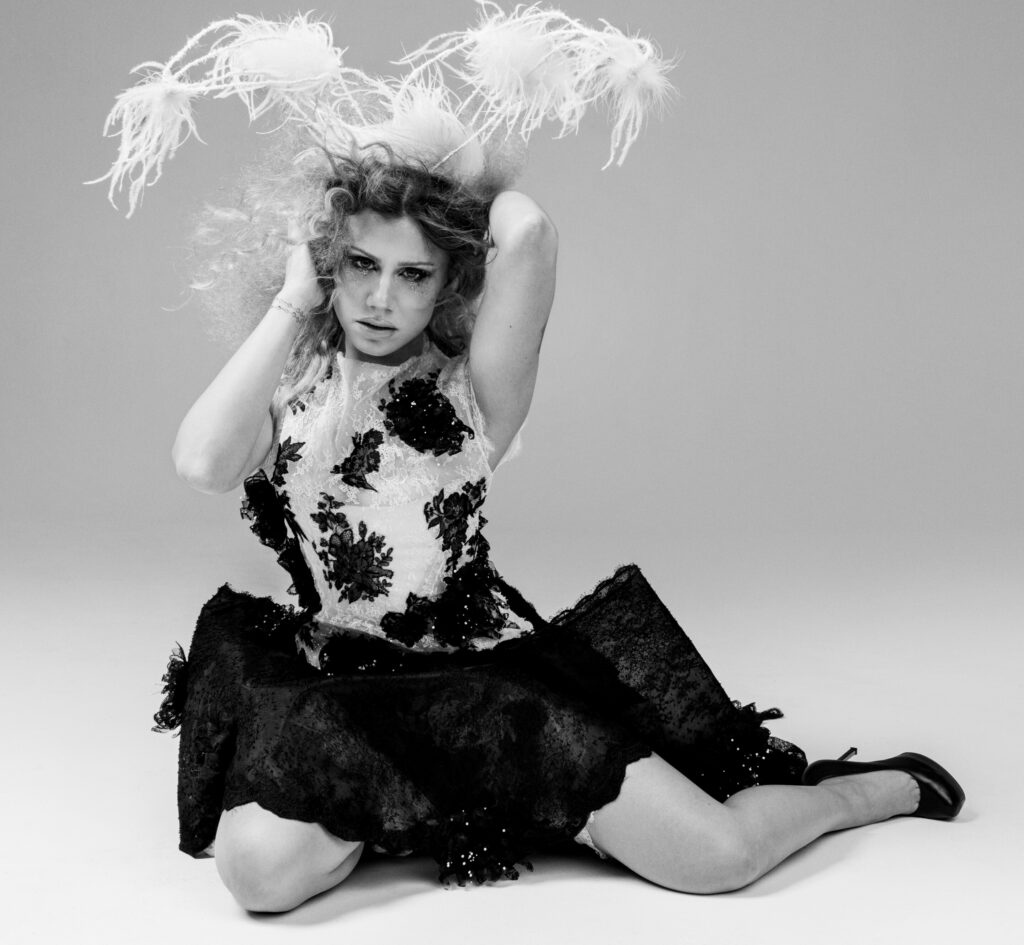
Despite all the online love, Slayyyter found it difficult that even after building a devoted audience, touring internationally, releasing acclaimed projects, and even getting the attention of bigwigs like Lady Gaga (whom Slayyyter idolizes), she was still fighting to make being an artist work economically. Last year’s Club Valentine Tour and merchandise rollout proved particularly challenging, despite drawing some of her largest crowds to date. “I’ve been doing so much myself for so long,” she says. “I just remember being really depressed after the last tour, even though it was a great tour. I don’t want any fans to hear that and be like, ‘Oh my gosh, were we not good crowds?’ There were great crowds. Some of the shows at that time were the biggest shows I had done, like in London, for example. But it went from being my debut mixtape, a very small tour, but things sell out, and you feel like you’re kind of getting ahead, or things are kind of happening, and then just these long stalls. Every project I would make, I would have these hopes that maybe this one will break through and I can really do this,” she says, “but it always felt like I would take a step forward and then get knocked two steps backwards, whether it was some kind of random unforeseen problem or financial issues.”
From the outside, Slayyyter’s career appeared to be steadily ascending. Behind the scenes, she was beginning to wonder how much longer she could sustain it. The idea of moving back to Missouri loomed over her like a taunting cloud. Much of what fans loved about Slayyyter—the earlier, larger-than-life visuals, the costumes, the hyper-pop fantasy she built, and her similarities to the people who love her—required constant reinvestment. Long before major-label resources arrived, she was funding that world herself. She made her own costumes, shot music videos with friends (she once mentioned to me shooting two music videos in one day due to budget restrictions), and carried around her own merch on tour.
“I feel like I’m really bad with money, but I genuinely spent so much back into this project,” she says. “I would spend a ton of money that I didn’t have on costumes and rhinestones and wardrobe for stage looks and all this stuff, and then it just felt like I was putting so much into it without a lot. It wasn’t becoming feasible to keep doing things. (Even Princess Diana said: “They say it is better to be poor and happy than rich and miserable, but how about a compromise like moderately rich and just moody?”)
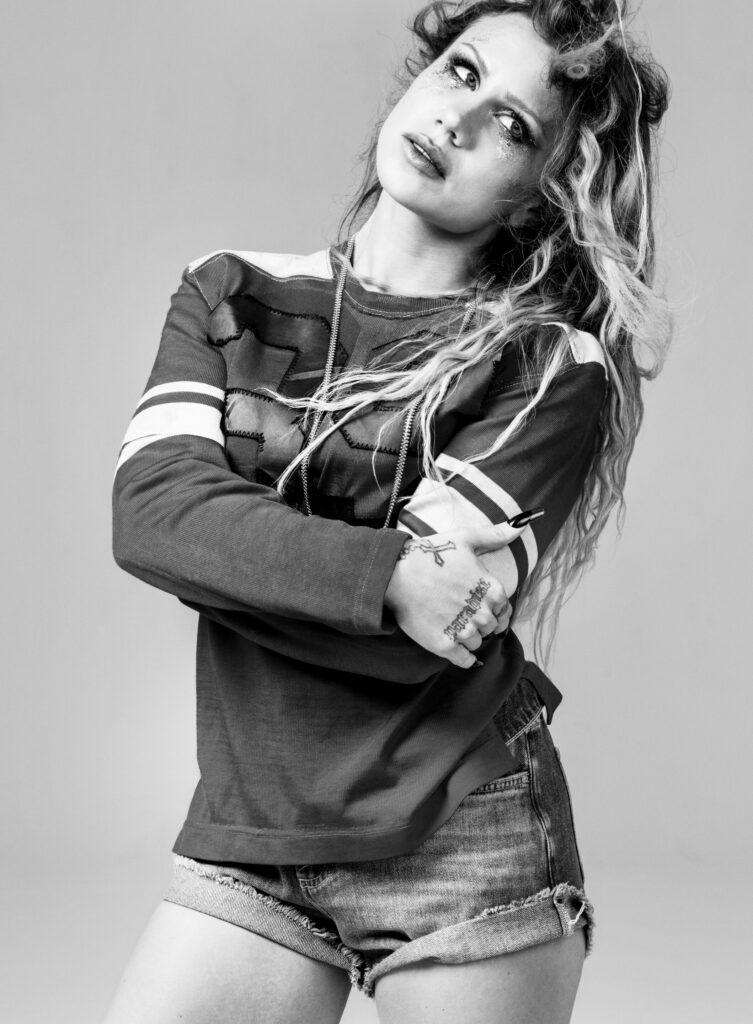
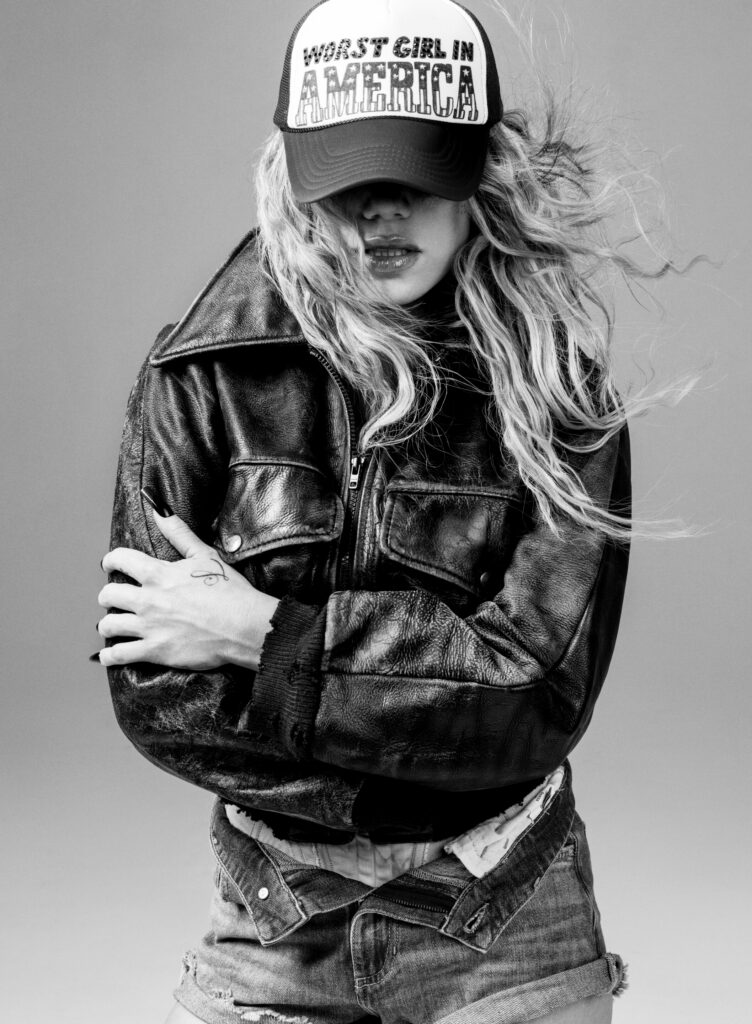
Still, giving up on music itself was never really the question. What she was beginning to doubt was whether she could continue building a life around a career in music. “I would create no matter what. Even if this album didn’t hit off, and this was technically my last attempt at a rollout and trying to do this the proper way, I would still probably have made music more as a hobby, more like how I started,” she says, speaking of her breakthrough album, WOR$T GIRL IN AMERICA. “But it’s just been so many years of being in that middle-class, or honestly lower-middle-class, range of artistry where I don’t have any previous mega hits to my belt.”
The thought carried additional weight because there was no obvious backup plan waiting for her. For years, she had poured everything into the pursuit of pop stardom, often at the expense of stability. A large part of her believed that WOR$T GIRL IN AMERICA would be her “swan song”—one last big offering before she finally threw in the towel, a possibility that felt as necessary to consider as it was terrifying. “If this [career] doesn’t work, I don’t have a college education. I don’t know what the fuck I’m gonna do. I think when coming from a place like that, it can get really scary,” she says, noting that other pop stars with mainstream success might not release hit after hit, but they still have money or millions of followers or at least some serious cash to fall back on. Slayyyter would likely never have found herself sweeping hair again, but she could easily have slipped out of the strange corner of pop culture she had spent a decade carving out for herself.
Like Diana, what the establishment often perceived as flaws ultimately became part of the appeal. Diana’s emotional openness, her willingness to appear vulnerable, helped transform her into a figure people felt they knew personally. For Slayyyter, the equivalent was a quality she jokingly describes as “trashiness.” Rather than distancing herself from the criticism, she decided to embrace it and build an entire persona around the things people mocked her for.
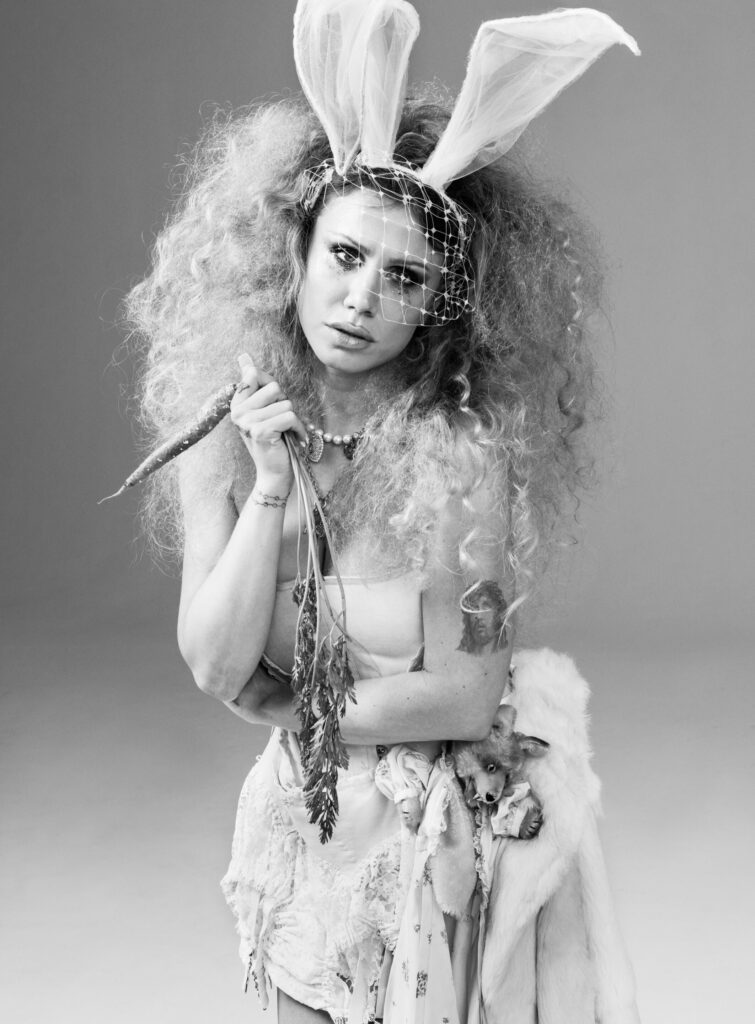
“You know, I think a lot of people see themselves in this kind of WOR$T GIRL IN AMERICA character that’s kind of too trashy, way too messy, way too drunk at the bars,” she says. “People kind of call it tweakery in a way, but it kind of reclaims all of that negativity and makes it into something that feels special. I think a lot of this album was me trying to turn how I thought people viewed me,” she says. “I was like, ‘Oh, everyone just thinks I’m this St. Louis tweaker girl, and that I’m trashy, and that I have fried blonde hair. I was like, ‘I will be that then. I will be a character of that,’ to the point where it’s like wearing it as a badge of honor.”
Diana was similarly difficult to package. Too emotional for the monarchy, too glamorous for the tabloids, too ordinary for the aristocracy. The qualities institutions treated as liabilities often became the very reasons ordinary people loved them. What birthed WOR$T GIRL IN AMERICA was this irreverent, self-aware attitude and an abandonment of the idea of chasing a hit. Years of near-breakthroughs had made her skeptical of the entire exercise. Instead of trying to predict what audiences or executives might want, she decided to make the record she wanted to hear herself. It was a creative philosophy born partly from exhaustion and partly from liberation.
“I really approached this album just being like, ‘You know, fuck it. I’m gonna make this for myself. I want to make music that I think is cool. I’m not gonna chase trying to make marketable or commercial music, because I don’t even have that. I’ve never even had a hit. What am I going into the studio trying to write hits for? I don’t even have any.’” WOR$T GIRL IN AMERICA became the most commercially successful project of her career, introducing her to a broader audience and earning the strongest chart performance she had ever seen. The breakthrough arrived only after she stopped treating it as the goal. “It was charting on Billboard and the dance charts. I don’t think I’ve ever charted on Billboard before this album.” It also led to her television debut on ‘The Tonight Show Starring Jimmy Fallon,’ where she performed the infectious “Dance,” a track built around an impossibly seductive ’80s synth line that puts her singing voice front and center, revealing an artist whose talents extend well beyond the rap-inflected pop with which many first associated her. About that performance, she says, “I was a little bit nervous, but also not. I feel like everything happening lately has kicked up the way that I used to feel when I was younger, where I do feel like I was born to do this. I do feel like I was put on this earth to do what I’m doing right now.”
Before that, there was her Coachella debut—which is, for her, the moment she realized something was changing with her career. “Coachella was life-changing,” she says. “I feel like my head is still spinning from that one weekend. That singular event kind of changed everything. Since then, it’s been insane.” When asked about whether there’s been a change in how the music industry treats her now that she’s a success—perhaps similar to how the royal family felt once they saw the public’s adoration for Diana—she agrees that there’s been a shift, but also that there are no hard feelings. “Sometimes it takes this magic wand of the general public liking something for everyone to be like, ‘Oh, oh, she’s cool now. I can fuck with this.’ Which, you know, I’m not even bitter. If my music in the past didn’t resonate with other people, or peers, or even audiences, that’s totally fine. And if this is the thing that people resonate with, I totally get it. It’s my favorite music I’ve made, too. But it is interesting to kind of see the change in language about things, or the change in the way people kind of treat me. I feel like everyone’s kind of like, ‘Oh, you’re the girl now. You’re the girl of the moment.’ And that could go away very soon. Who knows? But it’s just interesting to feel like a lot of this album was made about me feeling like such a loser and feeling like no one’s really paying any attention to me at all, but still feeling like I’m talented and the things that I make have worth to them, in my opinion.”
At the moment, she’s not taking any of her success for granted. “I think as an artist now, you don’t even have to make good music anymore. You just have to be good at marketing yourself, and I think that kind of is the most important thing,” she says. “In the current climate of music or culture, there are a lot of people who are super talented that don’t ever really get a chance, or because of circumstances or the internet not favoring them, they don’t really get to ever do what they also might be born to do. I feel very blessed that any of these opportunities are even coming at all, just because there are so many people who are so talented out there who people might not ever know about. It sucks to say, but it’s a hard game to play.”
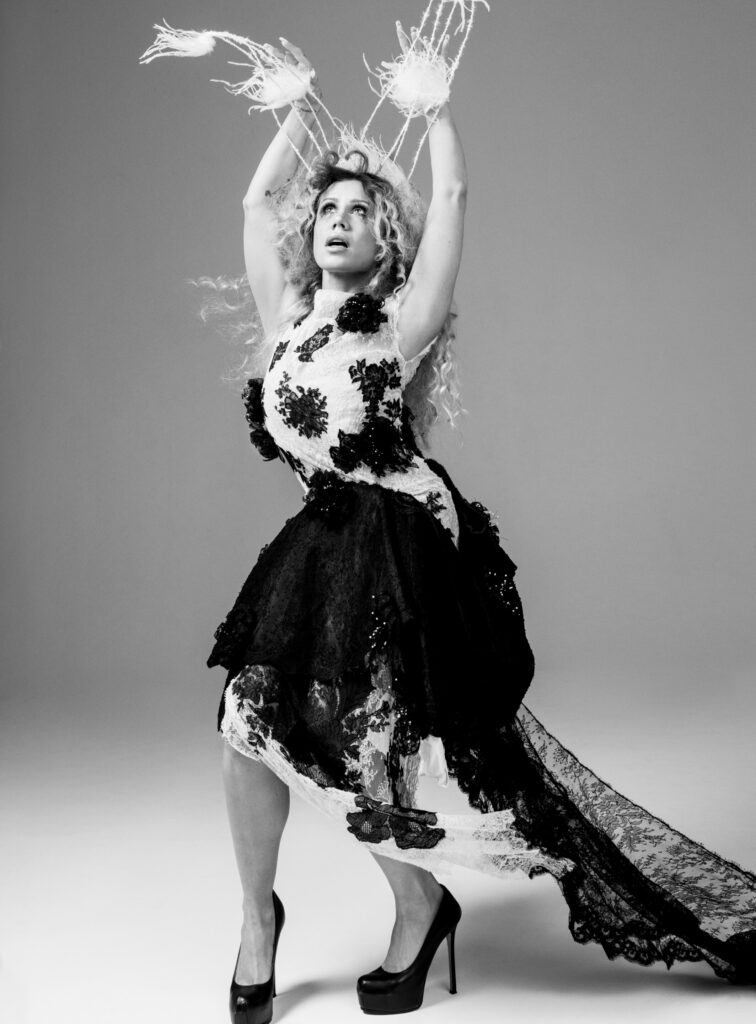
She laughs now about finally receiving “industry plant allegations,” the internet’s way of pretending overnight success exists. But nothing about Slayyyter happened overnight—that “game” was, it seemed, a losing one for Slayyyter, until finally, it wasn’t. Princess Diana was called “The People’s Princess” because she made one of the world’s oldest institutions feel startlingly human. Slayyyter has spent ten years doing something similar for pop music. In an industry increasingly built on strategy, branding, massive marketing budgets, and carefully engineered mystique, her greatest asset may simply be that she never convinced anyone she was above them. She remained the girl from St. Louis, making songs in a bedroom, hoping they might reach somebody.
Eventually, they reached millions.
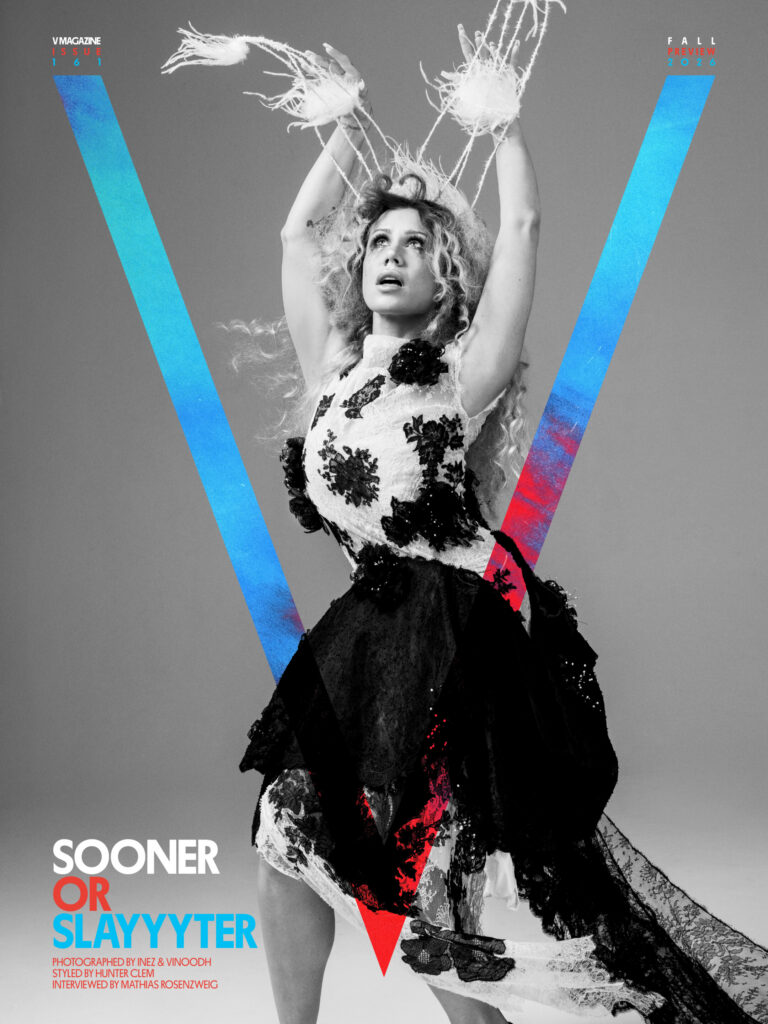
This cover story appears in the pages of V161: now available for purchase on shop.vmagazine.com!
Photography Inez & Vinoodh
Fashion Hunter Clem
Makeup Lilly Keys (A-Frame Agency) using MAC Cosmetics
Hair Ricky Fraser (The Wall Group)
Manicure Natalie Pavloski (BRIDGE Artists)
Casting Greg Krelenstein (GK-LD)
Editor Kev Ponce
Lighting Direction Jodokus Driessen
Digital Technician Brian Anderson
Photo Assistant Fyodor Shiryaev
Styling Assistant Thomas Jay
Makeup Assistant Maya Lozada
Hair Assistant Donovan Blyden
Production John Nadhazi, Michael Gleeson (VLM Productions)
Production Assistant Emma Skakel, Andy Martinez
Location Spring Studios
Special Thanks Nicola Formichetti / MAC Cosmetics
Discover More