V163: Penélope Cruz & Guitarricadelafuente Set Hollywood Ablaze
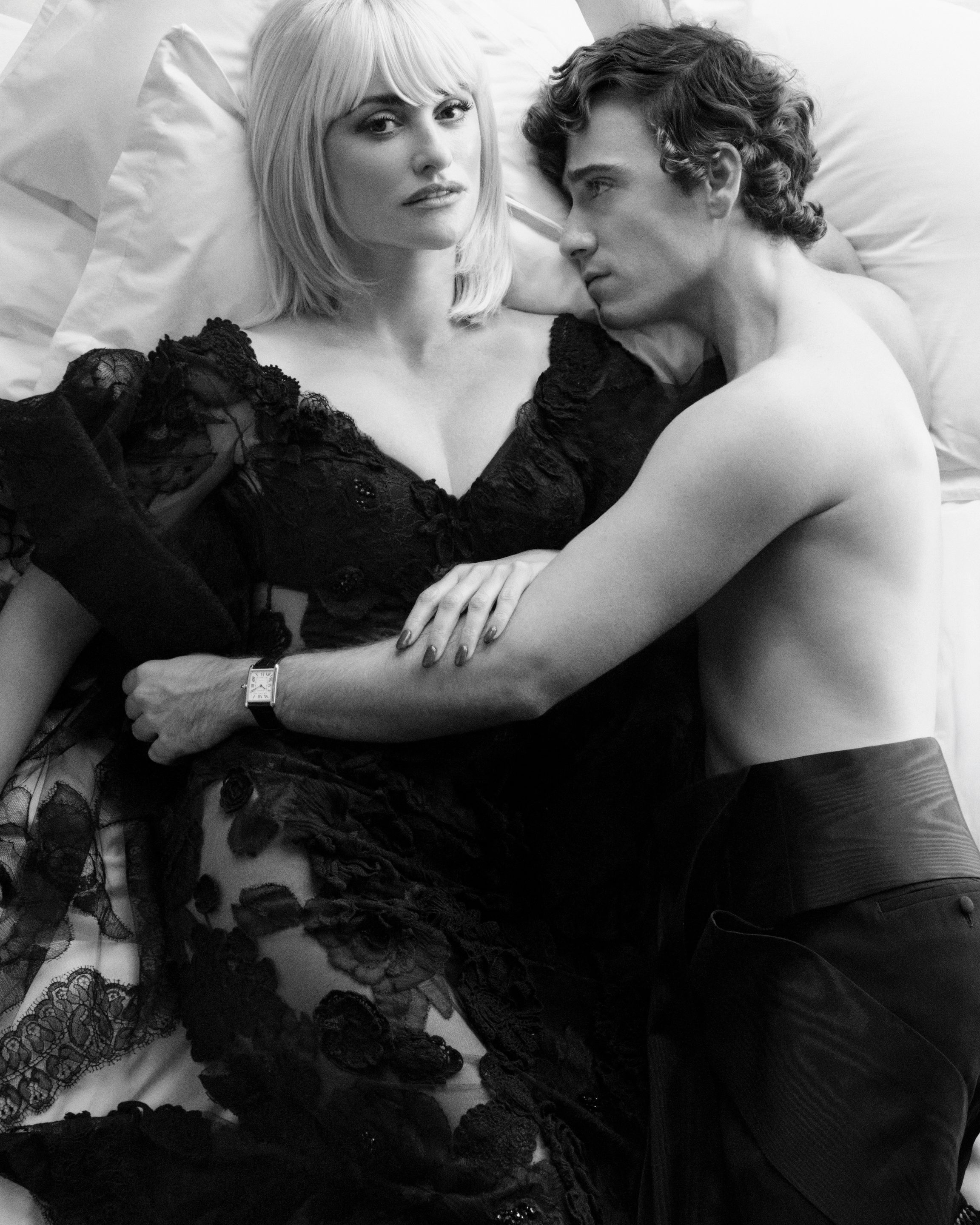
With ‘La Bola Negra’ poised to become pop culture’s next obsession, the stars of the film are giving a distinctly Spanish story of freedom, hope, and identity a global stage
La Bola Negra, directed by Javier Ambrossi and Javier Calvo, arrived in theatres this fall, but there was almost 100 years of history behind it. It was formed in part by a play of the same name by celebrated Spanish poet and author Federico García Lorca that was never finished—Lorca was murdered shortly after beginning the work during the Spanish Civil War of the 1930s. If published, the work would have been Lorca’s first featuring openly gay characters. This work became the jumping-off point for La Bola Negra, also written by Ambrossi and Calvo, with playwright Alberto Conejero–Conejero’s own play La Piedra Oscura [The Dark Stone] inspired the other part of the film. Set in 1932, 1937, and 2017, it visualizes the adversities endured by homosexuality in Spain against the backdrop of the Spanish Civil War and its aftermaths.
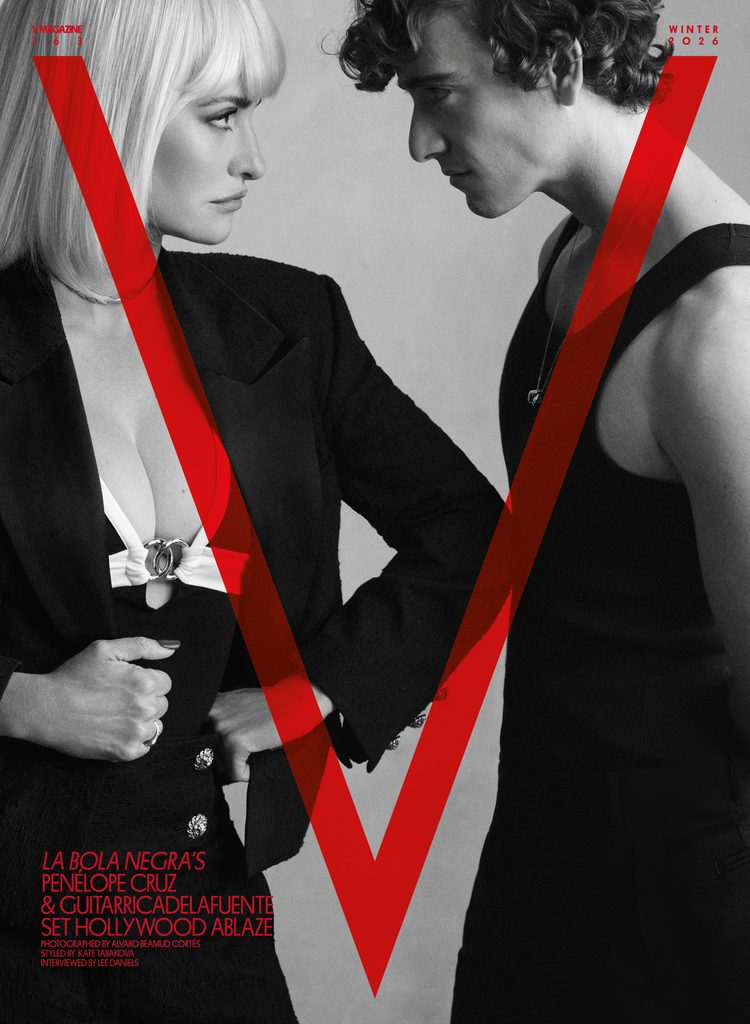
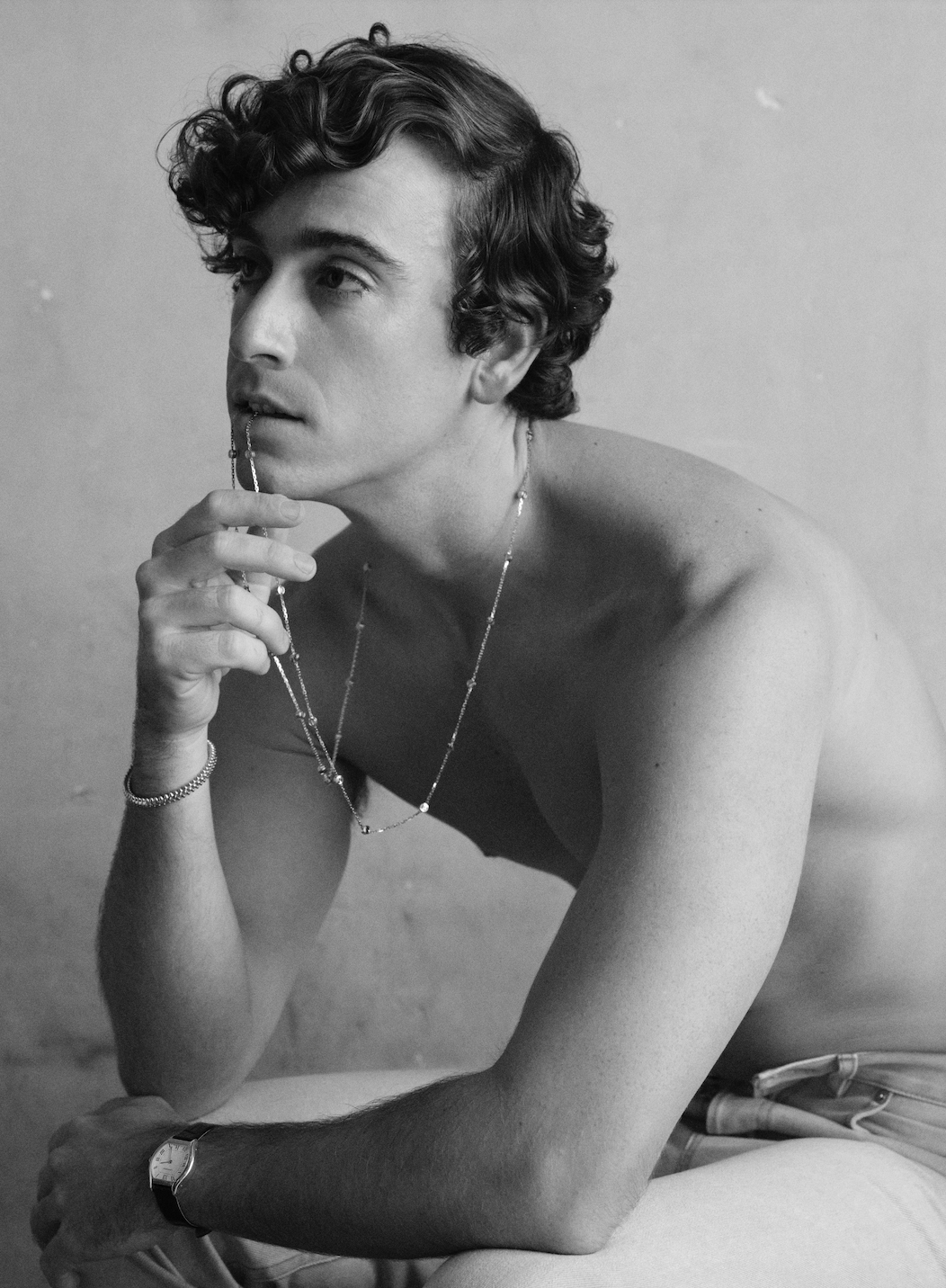
Guitarricadelafuente wears tank top PETIT BATEAU, Pure-wool tuxedo pants CANALI (Fall ‘26) , Panthère de Cartier pendant CARTIER
In his first film role, musician Guitarricadelafuente, the stage name of Álvaro Lafuente Calvo, stars as the quiet and sensitive Sebastián, a young man discovering his sexuality in the midst of national turmoil, a rifle forcibly placed in his hands by the fascist party. On this journey, he encounters the vibrant Nené Romero, a cupletista–a singer of satirical or salacious Spanish songs–played by the legendary Penélope Cruz. Nené shows him there’s a promise beyond the war of a life where he can freely be himself. Though their time on screen is comparatively brief, the spirit of optimism it creates in film is undeniably essential and moving.
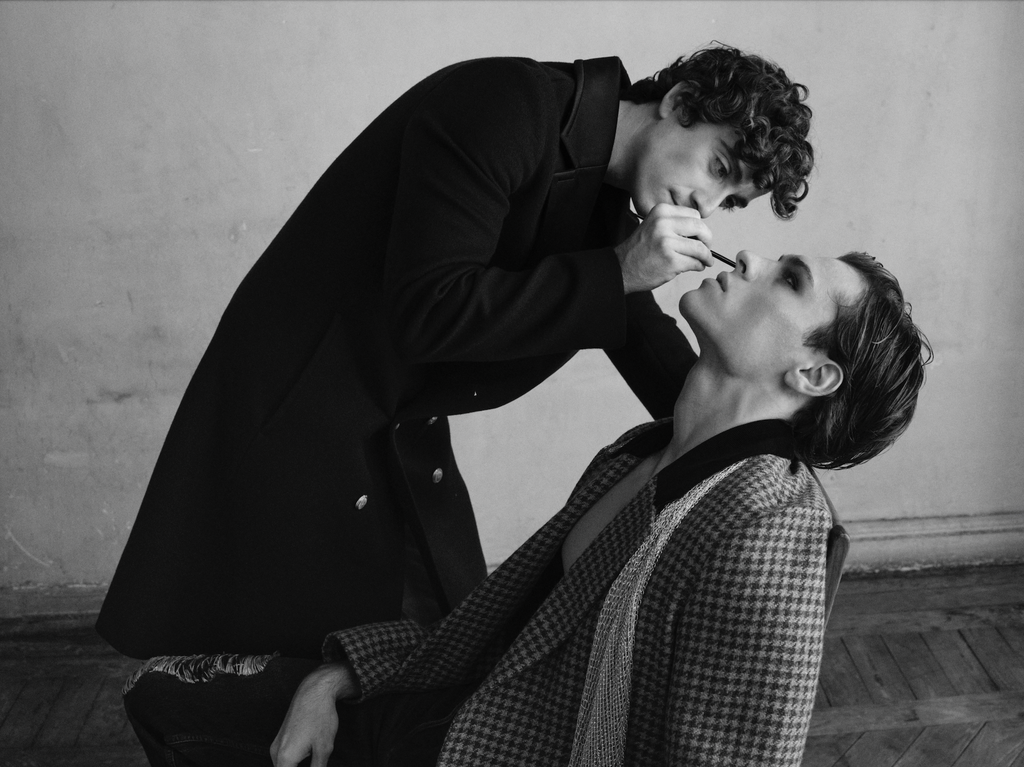
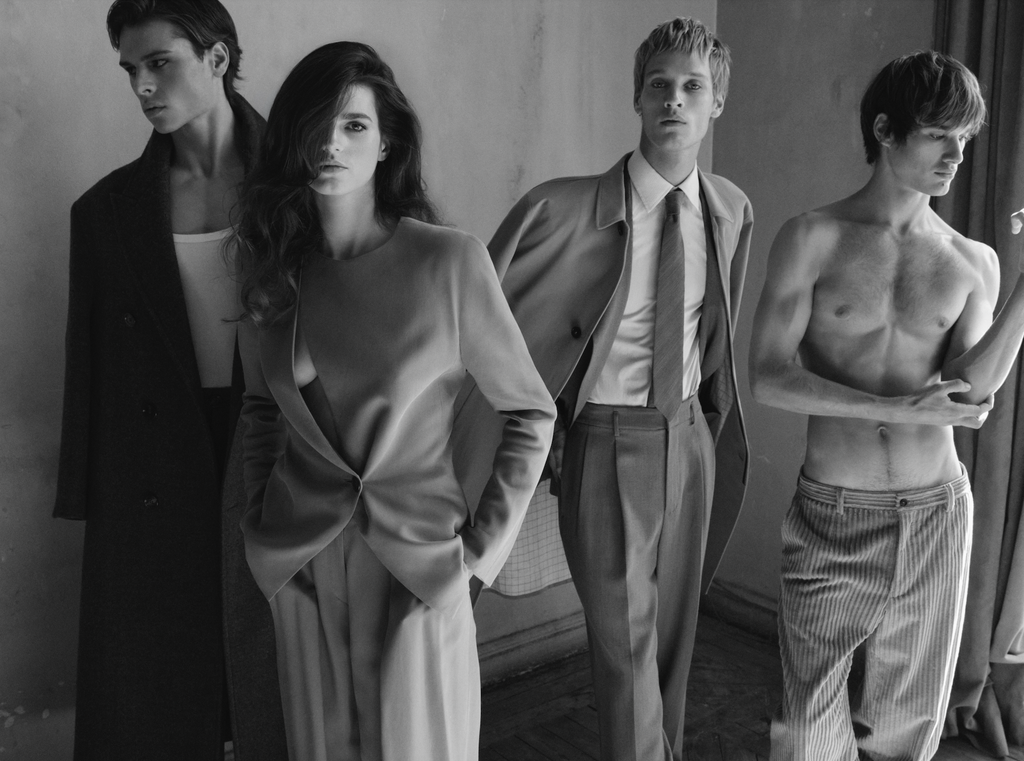
Here, Penélope Cruz and Guitarricadelafuente are interviewed by director Lee Daniels. It’s a full-circle moment–five years ago, Daniels also interviewed Javier Ambrossi and Javier Calvo for V in time for the release of their groundbreaking television show Veneno. With the release of this new epic from Ambrossi and Calvo, which is already generating Oscar buzz, Daniels discusses with its stars the making of La Bola Negra, digging into its characters, and how a film can create hope.

LEE DANIELS: Penny, it’s been 100 years. The last time I saw you was in a recording studio. We were kids.
PENÉLOPE CRUZ: Oh, with Lenny?
LD: Yeah.
PC: I was so happy when I heard that you were doing this. Thank you so much.
LD: First of all, I don’t even know where to begin because I just saw the film. I was at the Javis’ New Year’s Eve party, and they were bringing me into the bathroom, saying, “You got to see these scenes, and they were so spectacular.” I was like, “Why are you teasing me with this shit?” I was a psycho fan of theirs before. And then I saw this movie and I was just like, “what the fuck did I just see?”
PC: I know. I feel the same way. I think they did something incredible.
LD: How much of the film is historic? How much of it is fiction?
PC: A lot of it happened. Other things can be interpretations, but there are obvious things related, for example, to Lorca’s death. Some people today would want to argue–but it is very well known and would be absurd to argue–that he was killed because of his political ideas and because he was homosexual. You can still find people questioning that. But with any film that could happen, and especially with something like this, because in our history everything that happened in our country is not so far away. What makes me very happy is that a lot of young people are going to the theater, because you never know what’s going to happen. The day of the release, they knew what the movie was about. Obviously, in parts of the other stories, a lot of things are fiction, but the parts that have to do with the history of our country, you never know how young people are going to react. I was almost crying on Friday, the day of the premiere, when I saw in the news that 16-year-olds, 18-year-olds, were not going to school or university. They had tickets for 11 am screenings, and in some theaters in Madrid, they were having 15 different sessions in one day. A lot of young people bought their tickets before, and they wanted to be the first ones there. It’s been kind of an incredible movement. I think people are smart and sensitive, and they know that the Javis are smart, sensitive, and very brave. They didn’t create something that’s as simple as, here are the bad guys, here are the good guys. For me, if I had to explain, the main subject of the film in one sentence, is when Álvaro says, “I don’t know why I ended up here, they just gave me a rifle,” which to me today and a few years ago and at the beginning of time, like in any war, I’m sure many young people were feeling like, I don’t even know what I’m fighting for. To me, that sentence from Álvaro and the one at the end when you hear the voice saying, “Be careful because we are still in danger.” This movie, unfortunately, could not be more modern, and Lorca could not be more modern and more necessary.

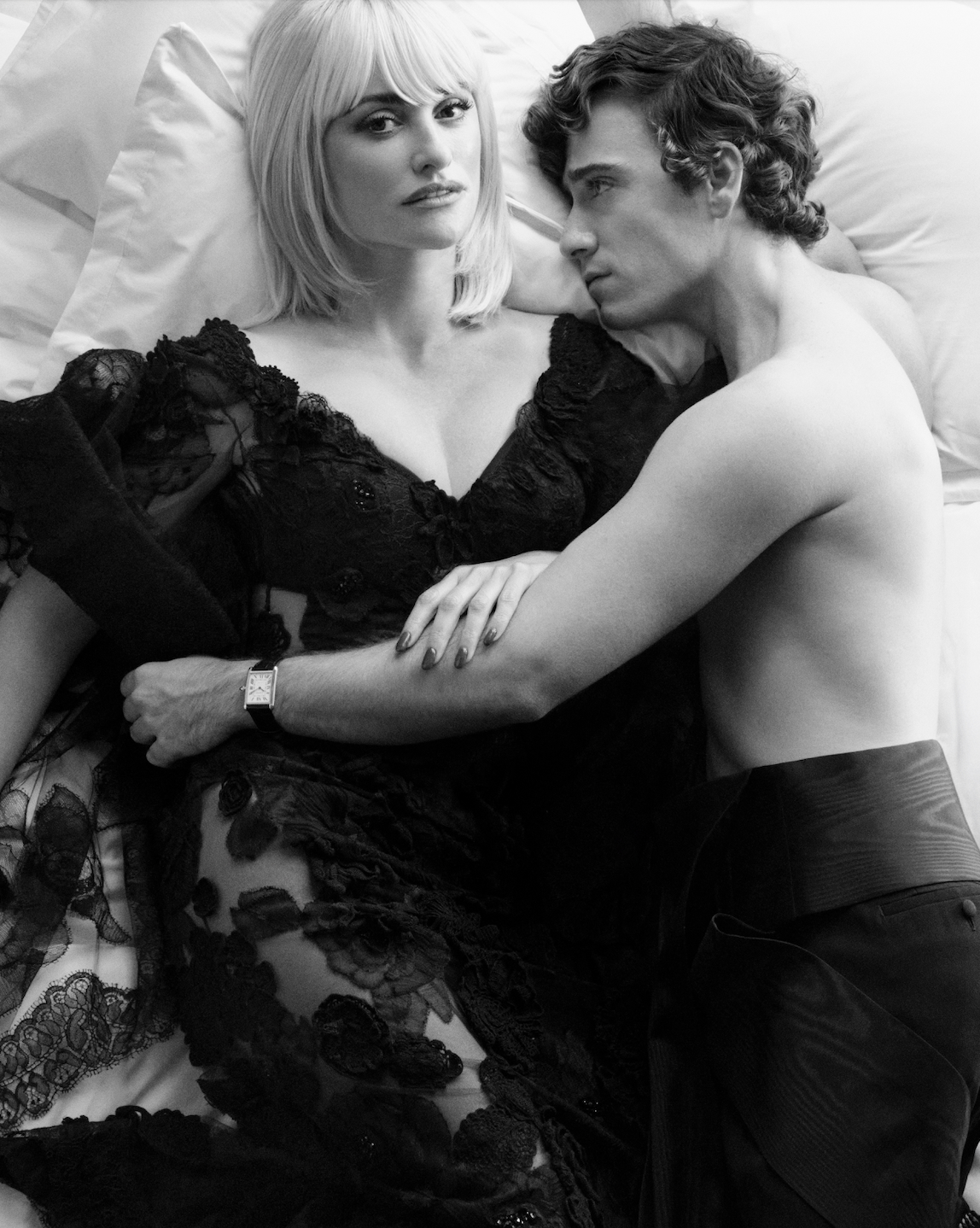
LD: Penny, that character, this bitch right here, this one, honey, it starts with the eyebrows. For me, I was watching a drag queen. It just fucked me up. It was just a fucking hot mess. Genius.
PC: That is a really interesting way of reading this. I like it because she is performing for men all the time, and she knows that in all those men that she sees, where she doesn’t share their ideas, but she cannot say. She doesn’t have a place where she can be free and say what she thinks, and nobody’s going to ask her. She is one of the few women in there, on top of that, having very different ideas. But she knows in that big group, she always finds some that she can identify with, and those are the ones she wants to talk to, the ones that have a hope that maybe there is a place and a time in the world where they can be themselves. That is why when she sees Álvaro ‘s character in the crowd, in one second she knows, you are the one I want to have a conversation with because I want you to hear from me that there is hope, that I know how you’re feeling. We don’t know the story of this character. I would love to explore the story. Sometimes I dream, when I love a character very much, let’s bring her back, and let’s see where she came from.
LD: Álvaro , you’re young and you’re thrown into the world of the Javis. What was that like?
Guitarricadelafuente: It was very frightening for me because the first time they approached me with this idea, like the script wasn’t even even finished, and they had this play from [playwright] Alberto Conejero [La piedra oscura] that is the story of Sebastián and Rafael. They were like, okay, we’re thinking that you can do Sebastián, and I was like, okay, you know that is my first time acting. They were like you need to say yes because we’re writing this already. I was like, okay.
LD: This is why I love them because the idea they can take someone who has never acted before and believe in them is a testament to the directors that they are. It was breathtaking. It was honest. It fucked me up.
Was it scary? Did you just do it? Was it like having sex for the first time? What was in your head when you were going through it?
G: The first time I read the script, I was constantly imagining how Álvaro would be at that moment in time. They already told me they were imagining every scene as how I, Álvaro , would do each scene, so it was very easy for me to understand each part. It was difficult having this preparation in Madrid with Los Javis and doing first acting exercises, but I’m a singer first. Obviously you perform on a stage, but at the end of the day you’re playing alter egos of yourself, or that’s what I think. You play an aspirational character that you wish to be in your day to day life. I think Sebastián was very close to myself. It was a very intense journey in the way that we had to reach certain emotions, to unveil personal things inside of my past that I didn’t want to unveil, to reach those places and to feel so many parallelisms with Sebastián. For example, everybody has a story with the Spanish Civil War, it’s something everybody in Spain has been touched by directly. My grandfather was from a small village in the north of Spain, so he had to fight for the Fascist Party–they put a rifle in his hand the same way they do it with Sebastián. So he was kind of living a past life suddenly. It was very intense. Also when Penelope arrives in his life in the movie, it’s the first time he feels a little bit of hope in all of that hostility, that repression, and it’s the first time that you can see.
LD: Do you know why that is?
G: I can tell you. I remember that day. Nobody was expecting Penélope to arrive that day on set. They believed somebody else was going to play. As soon as she came up to the stage, everybody was like, “Okay, wait, that’s Penélope Cruz. So it was like a magical moment where it was a surprise for everybody. All of the extras, the people that came voluntarily that day, they dream cinema every day. They have seen Penélope in cinema throughout their lifetimes. To see they were sharing the same space as Penélope, everybody had a smile on their face, so it was amazing.

LD: Let me just share with you as a director how twisted the Javis are and how brilliant they are. They did that shit because they knew you were going to react that way, and I’m not surprised at all. The brilliance of the scene really is that they captured the authenticity of the moment.
Penélope, your character represents. to me, a coming out. This is something I did not expect coming from you at all. It was guttural. The story, it’s not just a Spanish story. It speaks to any voice that has not been heard that identifies with Penélope’s character in the stomach. The Javis did it because they’re gangsters and they’re smart. What else did you learn from the character, Penélope?
PC: Thank you for what you said. I think what you’re saying you felt and that you think a lot of people feel with the character, and I think it’s true because it’s written that way. I was very lucky to give her life. I was on a mission. It is such a privilege giving a voice to the character that is giving voice to so many other people. This woman, this character, is a treasure. What she represents, I put in a cocktail all the people in my life that have fed my dreams, that have made me believe through my little television in the living room in my home. When I was able to rent movies, when we had a huge Betamax machine, and I was renting the same movie 12 times in a row, so that I could keep dreaming that one day maybe I could live from this profession. That was like saying, Mom, Dad, I want to be an astronaut. “Okay, it’s going to be really difficult, but if you want to try, we are not going to laugh in your face.”

LD: Were you scared?
PC: To play her? No,because I’m scared every time, so that comes with it. I felt like it was such an honor because she represents freedom, a world of possibilities. The main thing is that all the people she takes time to talk to– because she’s gonna talk to the ones that are sensitive, the ones she sees are suffering, the ones that speak the same language, because who knows what things she has gone through. She is in total survival mode. Her escape is through art, through singing and dancing. In those seconds, she can get back her sanity and give it back to them, because she is aware that a lot of those young kids don’t even know why they are there. I feel like she has compassion for all of them. It was a big responsibility because I love her, and I wanted to transmit exactly what you were saying before, because it was on paper. She is the one escape in the moviescape, for all of us when we watch it, of hope. It’s not just a movie about our history, our country. It’s a movie about a lot of universal issues that keep creating so much suffering and pain, and that people still today cannot be themselves. I still have friends that had to bury their mothers, being 80 or 90 without the opportunity to tell their mothers they were gay. When they explain to you the heartbreak of not being able to have those conversations, it is so necessary, this film. I think once in a while a film creates something that becomes so much more than entertainment. I think this film is just good for the world right now.
LD: Álvaro , did you know what you were stepping into when you were stepping into this? How long did it take for you to prep and shoot this?
G: I can’t even remember. It was maybe the beginning of April last year when we started doing the first reading with Miguel. They weren’t even sure if Miguel was going to do that or who was the right person. But it was like maybe like four months in and out from Madrid, because I live in Barcelona, doing all of these exercises, going to Cantabria, to the hospital where everything happens. The shoot was for us one month in Cantabria, and then we had these two or three days with Penélope , where we went to this amazing old theater to have the spectacle of Penélope. It was one month and a half shoot and like four months preparation, something like that.

LD: What was the hardest part for you? Really, the hardest part.
G: I’m gonna be honest. Truly, for me, it has been like the post more than the preparation. It may sound stereotypical, but once we were there in Cantabria shooting this, you could start to feel the horror of the war, in a way. You would get up seven in the morning and go to bed like nine in the night, living as Sebastián, having like all of that weight on your back, but at the end, it cannot seem that way. It’s like a weight inside of you. After that, I think it was difficult, kind of. It was very exhausting, emotionally, to feel how people would feel, and not the repression, but the block that they have to themselves, not being able to express who they are, or not having even the chance to discover it, because of what’s going on in the world. That’s something that still happens today, and it makes you think a lot about the things that still go on. It’s what you said. It’s not a story that just touches people in Spain, but even this is the case of a guy from a small village in Spain that sees his favorite artist, and she says, “I will wait for you in Madrid,” and like this represents where freedom comes to its highest point. I imagine someone from the Midwest in the states, from a small village, seeing Chappell Roan, and she’s also from the Midwest, or somebody saying “I wait for you in New York,” as my God, this is my way out of this this environment where I’m not even able to discover who I am, and this is causing pain in me.
LD: What do you want people to think when they walk away from this?
PC: I feel like at the end of the day, we all do this because we want to touch people’s hearts, and we do that together. It’s never something you do alone. But with something like this, when all the puzzle pieces work, and you can see people’s reactions–now people are recording themselves before and after the screening because everyone is having these explosions of emotion. At the end, art always has that mission of wanting to move something inside, and I think the Javis have accomplished that without giving you any kind of lecture, without telling you what to think. It just goes so deep, and brings up the right questions. To create a level of emotion with a film, we all know that doesn’t happen every time. To be a part of it makes me feel very grateful. It’s like somebody writing a book, writing a song, making a movie, anything related to art–at the end of the day, it’s not for your ego. It’s because you want to contribute to something that can make us all more aware of each other, more aware of the respect for the other and for ourselves, and to contribute to have hope for this world that seems so fucked up in so many ways. Also, having young directors like Los Javis who are total artisans in the way they work–that is a word I always use with Almodóvar, and they are as obsessed with Almodóvar as I am. We are like the same school for life and for cinema, a total reverent in so many ways–the way they work, the time they invest with every extra, every actor that comes through the set even if it’s for two hours, the time they spend when they work with children, the attention to detail to every department. For me, that is the way to make film. The audience can feel that, and they maybe don’t know how to put into words what happened with the experience of watching it, but they know it has a heart. If you don’t have that from the directors and it’s not on the page, probably the miracle is not going to happen. But here it was everywhere, in every decision they made.

G: I went yesterday with two friends to the cinema to see the film again, for the seventh time. And it was in a cinema in Barcelona, and I just remember at the end of the film, watching–something many of my friends have also told me is that at the end of the film, everybody stays to see all of the credits, and like the the cinemas stays silent, and that’s something that takes your breath away. I remember this 16-year-old gay couple sat three seats away. They were holding hands and crying. I think overall, this is the movie, when you finish it for the first time, it leaves you something inside. I think it gives you a conclusion that there’s so many impossible stories that haven’t been able to happen, like untold love stories that haven’t had the chance to happen. I imagine seeing this when I was younger, at that age, 16, that I wasn’t even out of the closet because of the circumstances in Spain. So this would have been super inspiring. It encourages you to make a decision in your life, to not leave things behind, and not take freedom for granted, what you have, and all those stories that couldn’t happen. Value that you’re being able to live them today and be careful, because at the end of the film it says, danger because they are still fetching us. It encourages people to be not alert but to think about what has been going on in the past, and what people have had to live, and to live today for those who couldn’t.
This cover story appears in the pages of V163: now available for purchase!
Photography Alvaro Beamud Cortés
Fashion Kate Tabakova
Creative Director / Editor-in-Chief Stephen Gan
Interview Lee Daniels
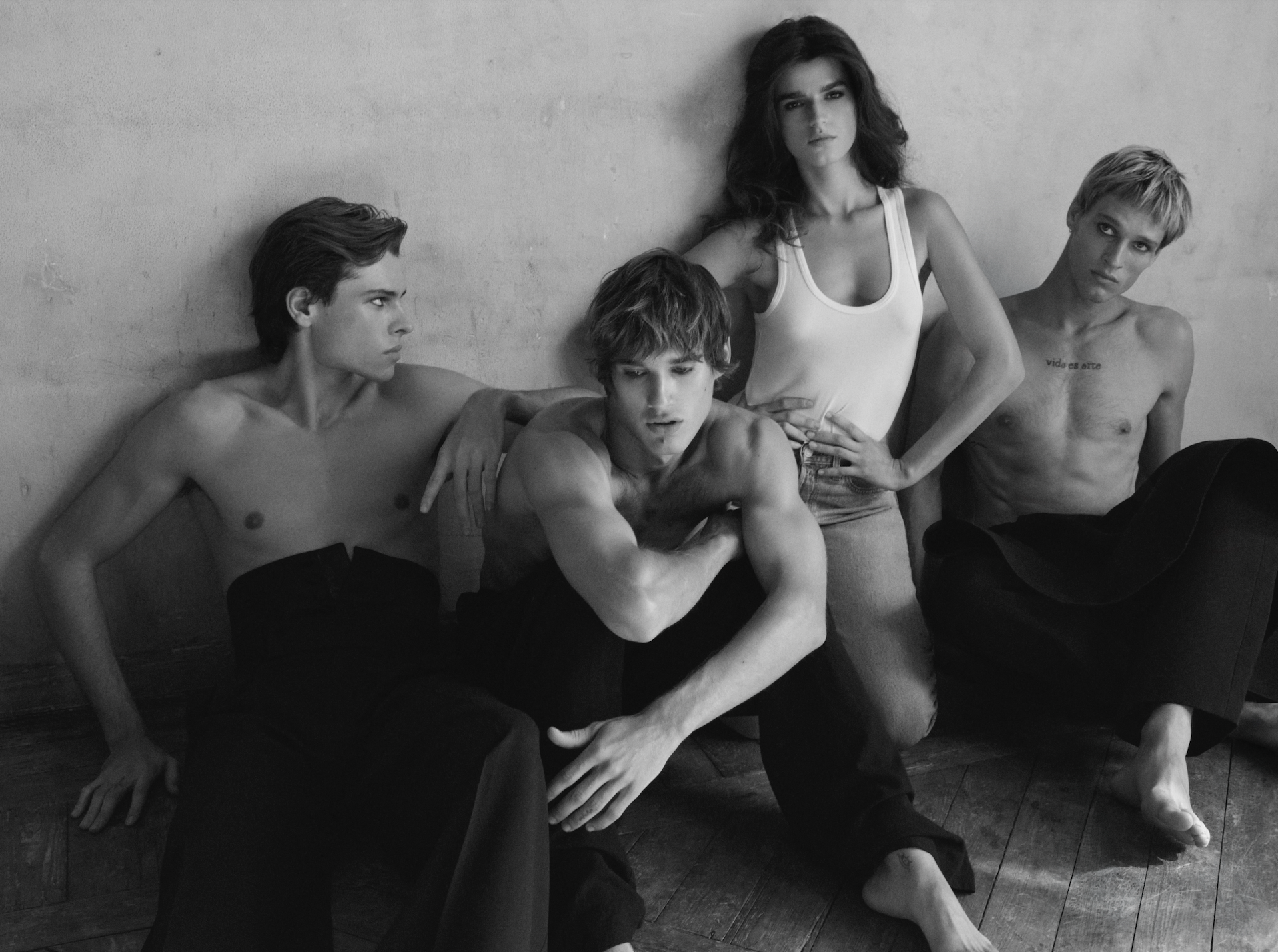
Models Yeray Allgayer (New Madison), Gonzalo Allgayer (New Madison), Paula Anguera (Viva Barcelona), Cameron Smet (NEXT), Kirill Karpenko (Success Models), Valentin Caron (Success Models), Africa Peñalver (Elite Paris), Lucy Rosiek (Elite Paris)
Makeup & Hair (Penélope) Pablo Iglesias (NS Management)
Makeup & Hair (Guitarricadelafuente) Miky Vallés (Another Artist Agency)
Makeup (Models) Sayuri Yamashita (Interlude Project)
Hair (Models) Mijo Majhen (Interlude Project)
Digital Director Mathias Rosenzweig
Editor Kev Ponce
Fashion Market Editor Gabby Buchan
Casting (Talent) Greg Krelenstein (GK-LD)
Casting (Models) Goran Macura (Macura Production)
Executive Producer (Penélope & Guitarricadelafuente) Mayca Márquez (SAMPLE)
Production (Models) Elena Cimarosti & Antonio Lonis (Interlude Project)
Set Design (Penélope & Guitarricadelafuente) Miriam Velo Lorenzo
Production Manager (Penélope & Guitarricadelafuente) Carlota García-Velasco
1st Photo Assistant & Cinematographer Simone Triacca
Styling Assistants Vladi Avksenenko & Liliane Rancao
Makeup Assistant (Penélope) Kilpatrik Rodriguez
Production Assistants Jaime Ballesteros, Javier García-Velasco, Alejandro Arroyo & Carlos Alonso
Hair Assistant (Models) Tracy Nguyen
Makeup Assistants (Models) Mafer Astudillo, Amparo Sanchez & Maria Andrés
Photo Assistants Remi Desclaux & Ayub El Kadmiri
Digital Technicians Lorenzo Touzet & Javier Torrente
Director of Editorial Film Mynxii White
Location (Models) Studio Astre
Discover More