‘Walk With Me’ Explores The Work of Staying

A conversation with documentary filmmaker, wife, and mother Heidi Levitt.
In Walk With Me, Heidi Levitt does something radical. There are no swelling arcs, no tidy awakenings, no promises of redemption. Instead, the film about her husband’s diagnosis of early-onset Alzheimer’s lingers with what most narratives avoid: care as a daily practice, grief without a finish line, love without guarantees.
What emerges is a cinematic portrait of what it means to stay: in a marriage, in a body, in a system that was never designed to support care, let alone value it. I spoke with Levitt the evening before her premiere in New York to discuss authorship, ambiguous loss, motherhood, and how caregiving has quietly become her most political act.
Sinead McInerney: Watching Walk With Me, it does not announce itself in any obvious way. It just unfolds. When you were making it, did you know what kind of film this needed to be, or did that reveal itself over time?
Heidi Levitt: No, I just knew I needed to start telling the story. My husband was diagnosed in 2019, and at the beginning, we did not even fully understand what the diagnosis meant. We heard terms like abnormal dementia and cognitive impairment, but nothing felt definitive. That ambiguity made everything harder, especially conversation. People did not know what to say. I did not know how to talk about it either. Over time, I realized something was missing culturally. The stories that exist tend to focus on end stages, on horror, on disappearance. But that is not what daily life looks like, at least not at first. We were still living. Loving. Raising kids. I wanted to tell that story.
SM: You spent decades working in film supporting other people’s visions as a successful casting director. This feels like a very different position to stand in.
HL: Being in front of the camera was never the intention. It was not about visibility. It was about honesty. There was no way to tell this story without acknowledging that I was in it emotionally, structurally, practically. It was uncomfortable at first. I have always been a supporter. That role comes naturally to me, and it is culturally reinforced, especially for women. You make space. You hold things together. This was the first time I had to say, “This is my vision.
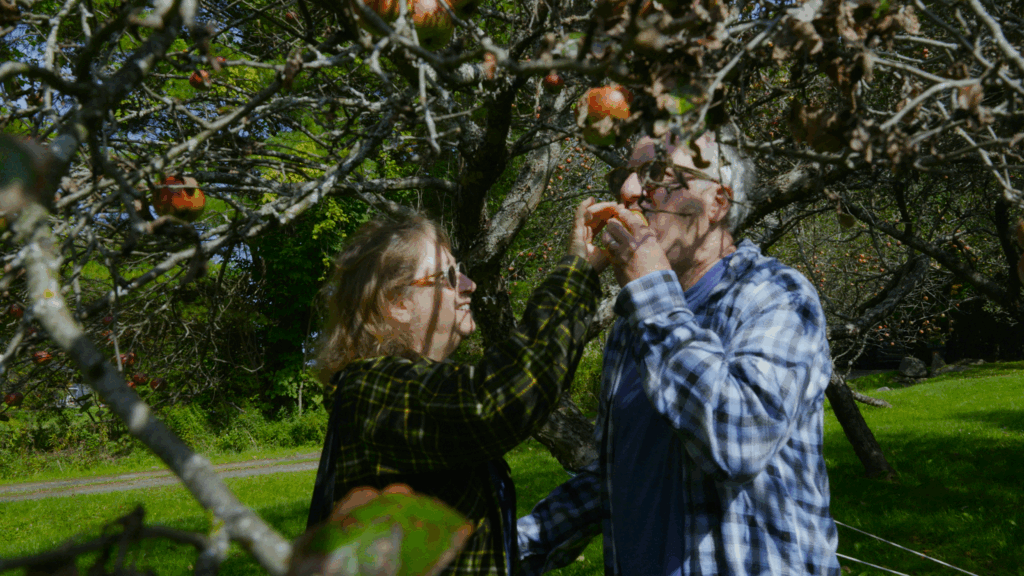
STILL FROM DOCUMENTARY: WALK WITH ME
SM: The way you directed it made the memories feel layered rather than chronological. Was that intentional?
HL: That was very intentional. My husband makes collages, and that became a metaphor. Dementia is not a straight line. It is overlapping loss, presence, regression, and tenderness. The structure needed to reflect that internal reality. I was influenced by Sarah Polley’s Stories We Tell. That film gave me permission to privilege emotional truth over narrative convention.
SM: When you were directing your own family, including your children. How did you hold that responsibility?
HL: Carefully, and imperfectly. That was the hardest part. You cannot treat family like actors. You have to create safety, not performance. There were moments we filmed that I chose not to include because they crossed a line. Sometimes I only realized that in hindsight. You are always asking yourself if something is honest or if it is extractive. If it is extractive, it does not belong.
SM: Pauline Boss makes an appearance, and I am a huge fan of her and her work around ambiguous loss; it was so nice to see you had discovered her, too. What was working with her like?
HL: Discovering her work was a turning point for me. It gave language to something I was already living but could not name. You are grieving someone who is still alive, and there is no social ritual for that. No permission. That kind of grief isolates people, especially caregivers. You do not feel entitled to speak because the person is still here, yet you are losing them in real time.
SM: The film really depicts that isolation and slowly shifts toward acceptance, which mimics that grieving process. Was that on purpose?
HL: At first, I was frantic. I went to conferences, to Harvard Medical School, and spoke to neurologists. Like many families, I pinned hope on the amyloid plaque theory that dominated Alzheimer’s research. Then I realized something devastating. They do not fully understand the brain. Accepting that was heartbreaking but also clarifying. Once I stopped trying to outrun reality, I asked a different question. How do we live now?
SM: Caregiving becomes the film’s quiet argument.
HL: Care is unpaid labor. It is invisible labor. It is overwhelmingly performed by women. It is a trillion-dollar economy we pretend does not exist. For a long time, I did not even call myself a caregiver. I was a wife, a mother, and a working woman. None of those titles accounted for the reality of my days. Advocacy became unavoidable.
SM: You have taken that advocacy to Washington!
HL: Yes. I have been lobbying Congress around caregiver policy. I recently attended a conference where Hillary Clinton spoke, and she articulated something I already felt. Caregiving has to be framed as an economic issue if we want systemic change. There are tax credits for childcare and education, but none for caregiving adults. Care is treated as a private moral obligation rather than a structural responsibility. That has to change.
SM: And so the film has moved beyond being a personal project of expression.
HL: That was never the plan, but it was inevitable. When I began screening the film, caregivers came up to me in tears, saying, “This is my life.” Judges, policymakers, doctors told me they had never actually seen care before. That was when I understood the film no longer belonged only to us.
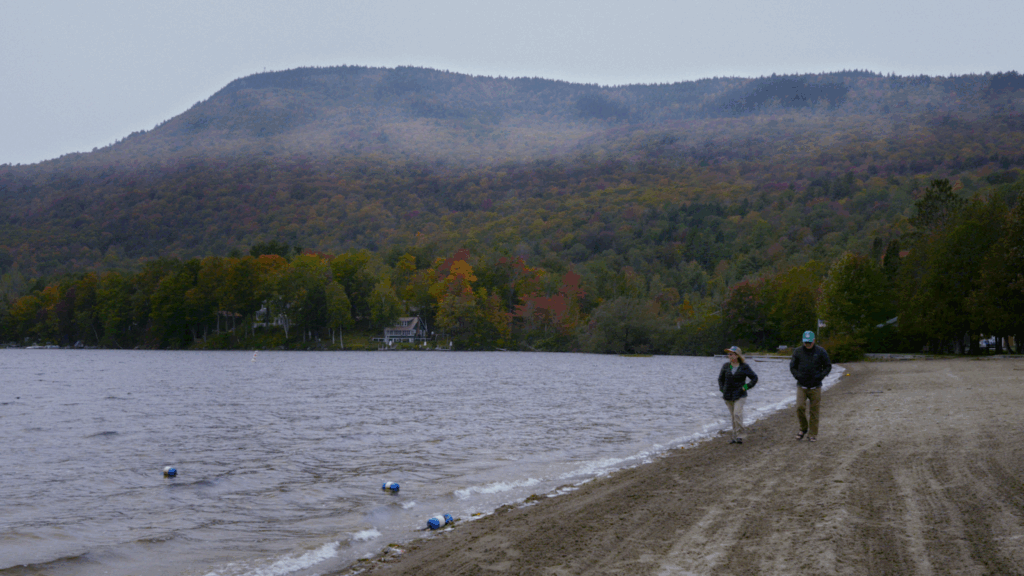
STILL FROM DOCUMENTARY: WALK WITH ME
SM: Has the making of Walk With Me changed your understanding of identity?
HL: Completely. Who are we when memory dissolves? Are we our thoughts, our neural pathways, our emotions? Dementia forces presence. You cannot live in projection.
SM: You’ve spoken about caregiving as invisible labor and about how often it gets minimized or overlooked. If there is one thing you want people to understand after watching this film, what is it?
HL: I want people to understand that care is not a private problem or a personal failing. The numbers are staggering. Estimates range from hundreds of billions to over a trillion dollars in unpaid labor, and most of that work is done by women. But beyond statistics, care is what makes everything else possible. We need to start treating it as a shared responsibility and a national conversation, not something that gets quietly absorbed by families.
SM: After everything this film has become, as both a work of art and a catalyst for advocacy, what does staying mean to you now?
HL: Staying means choosing presence over retreat. It means recognizing that love does not end when things become difficult. For me, staying is not resignation. It’s attention. It’s care. And it’s the most human thing we can do.
SM: Before we wrap up, can you share where Walk With Me will be released and how audiences will be able to see it in the coming months?
HL: We have a North American theatrical release with Outsider Pictures. The film will play across North America between January and July. We are also exploring an online release in the spring. And finally, we are waiting to see if there is any traction with the Academy Awards.
Discover More