With ‘Duet,’ JuJu Lee and Zac Thompson Expand the Lens of Queer Nightlife
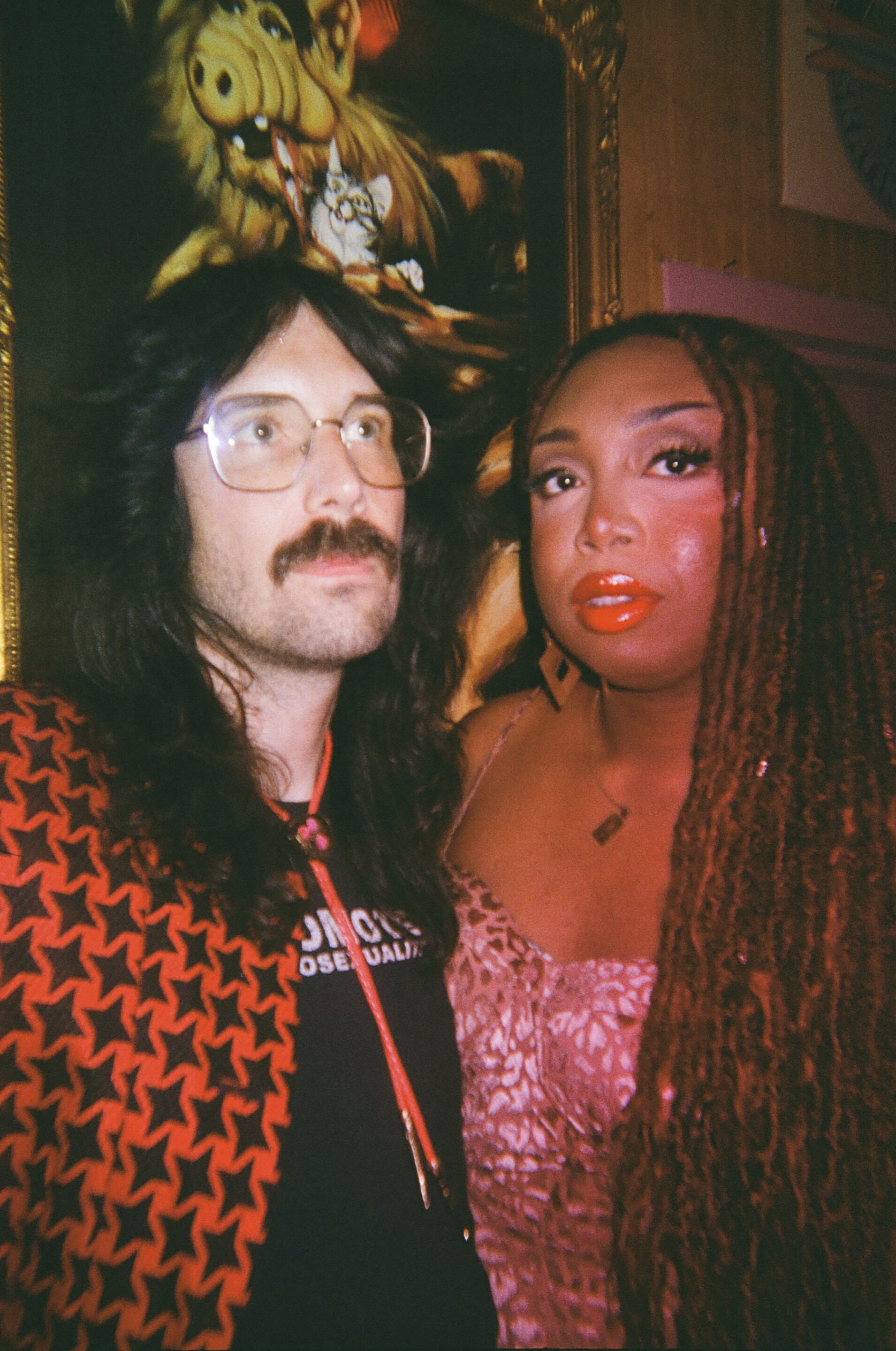
“It felt important to not just document queer nightlife in this tradition, but [to also ask] how can we push it?”
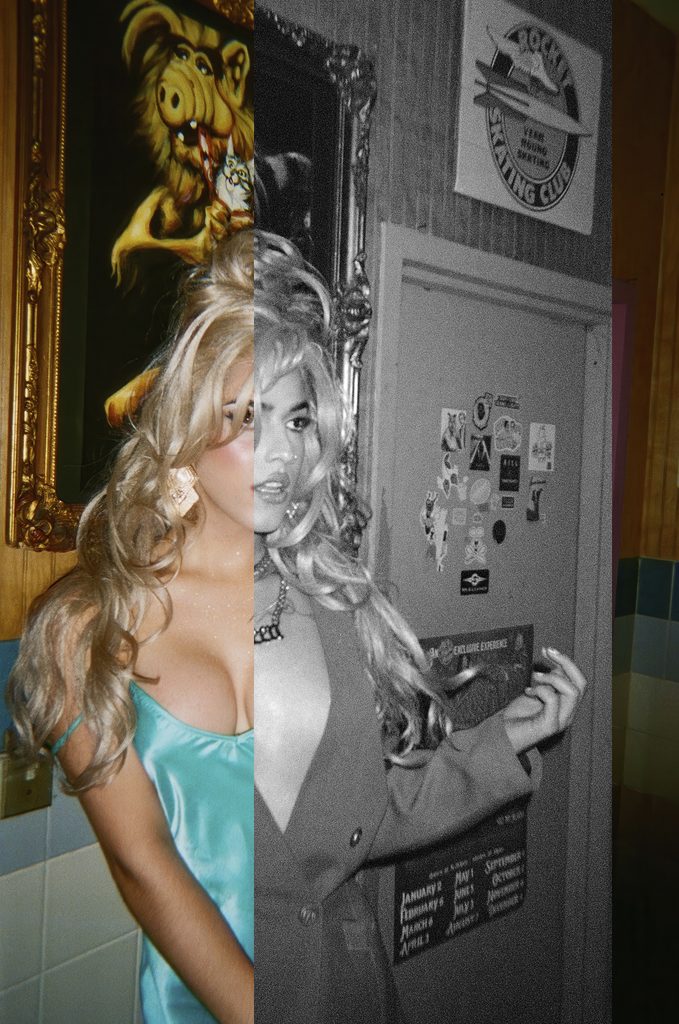
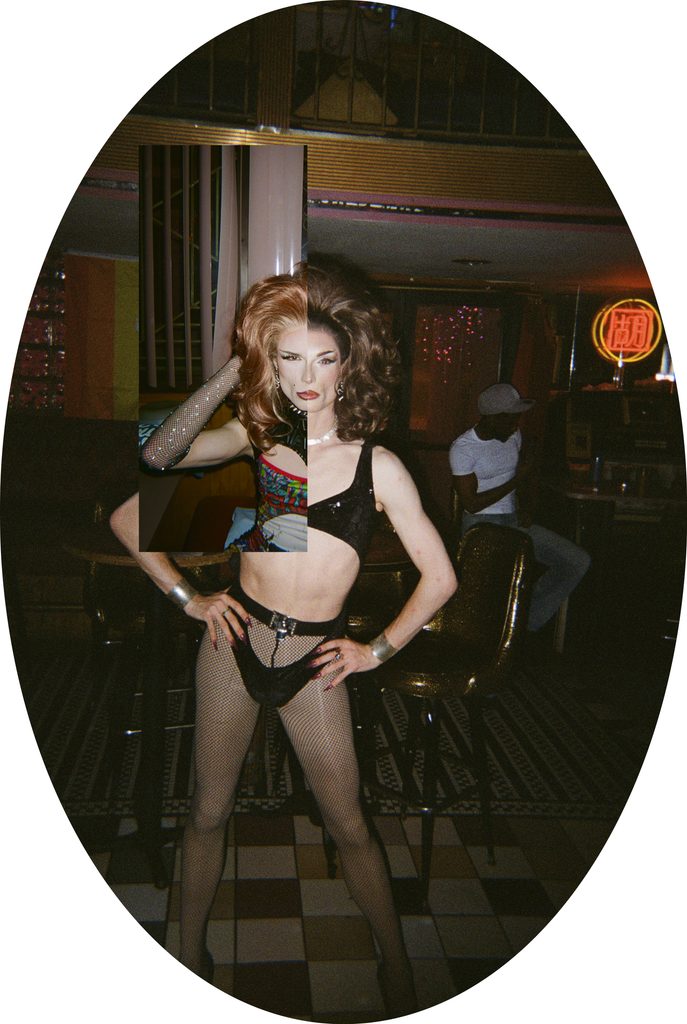
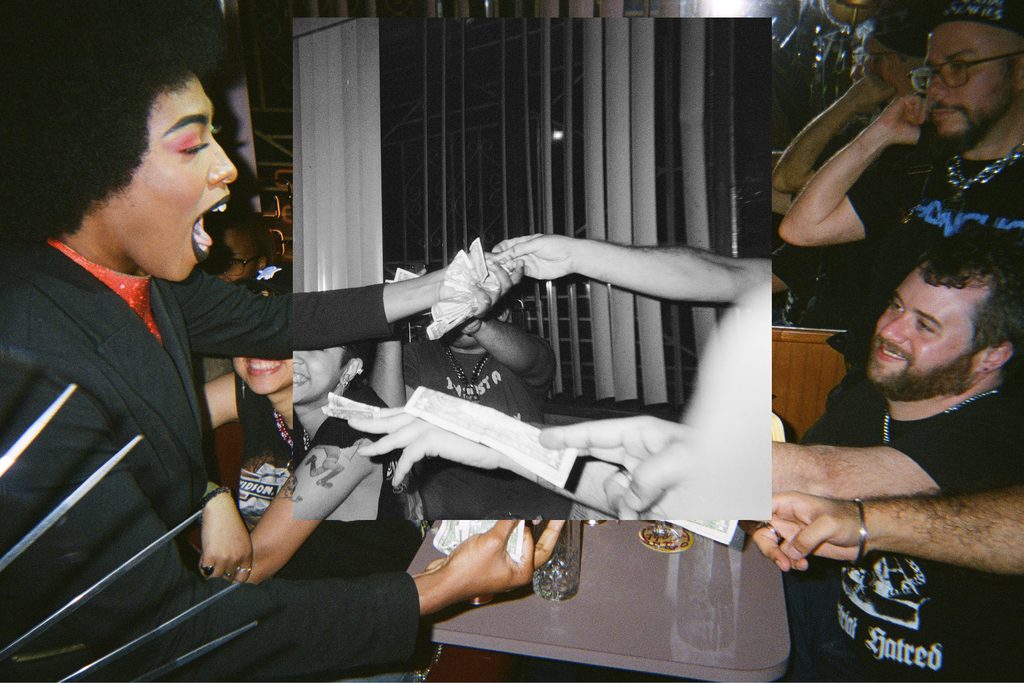
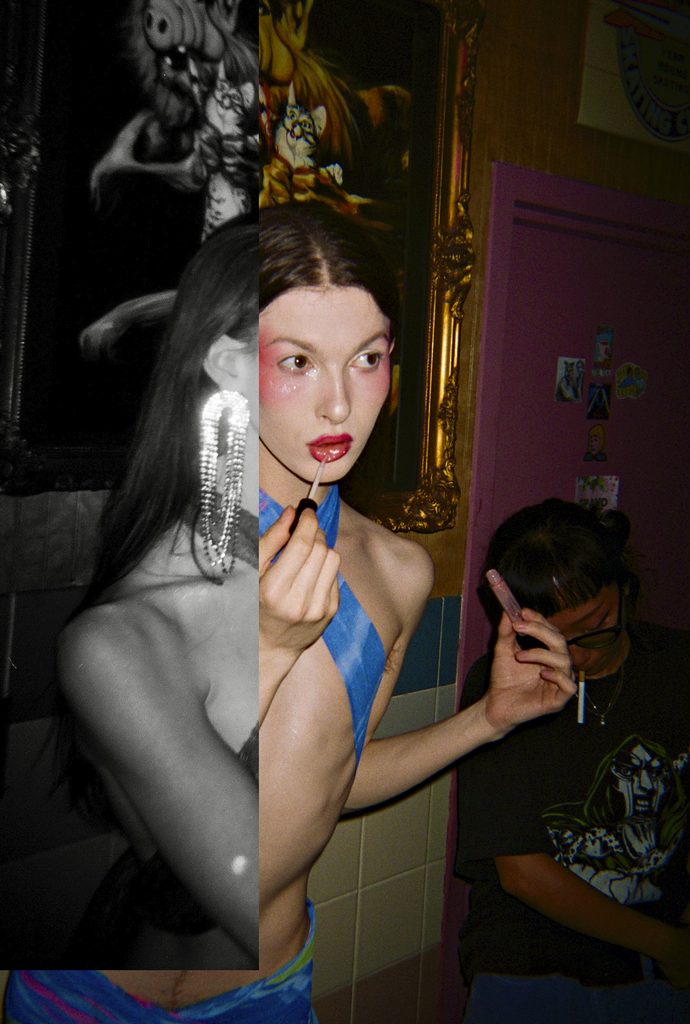
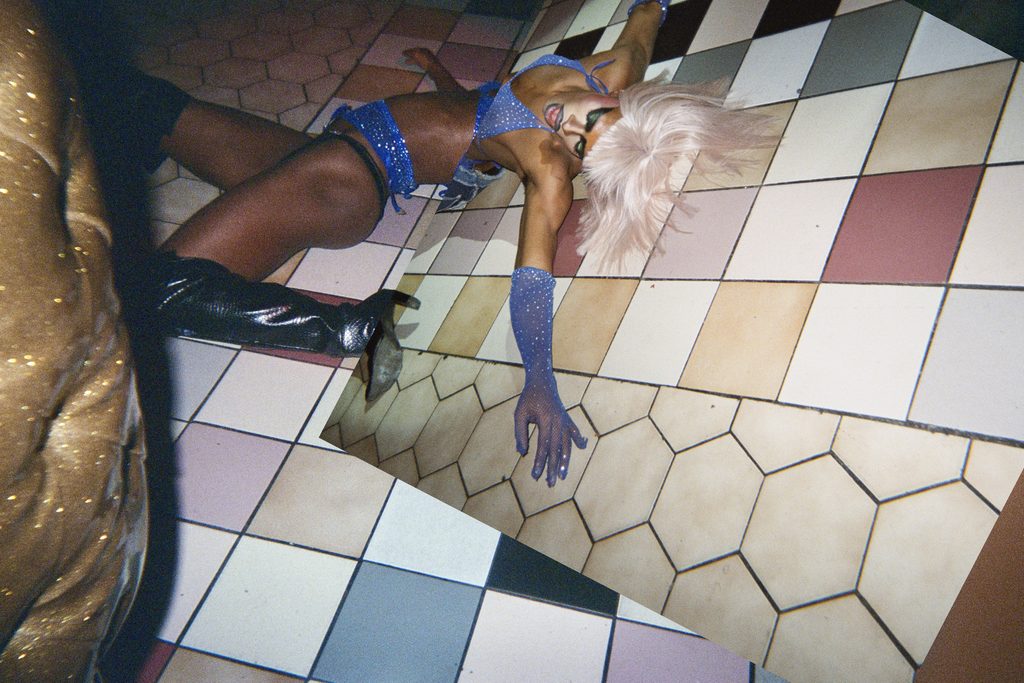
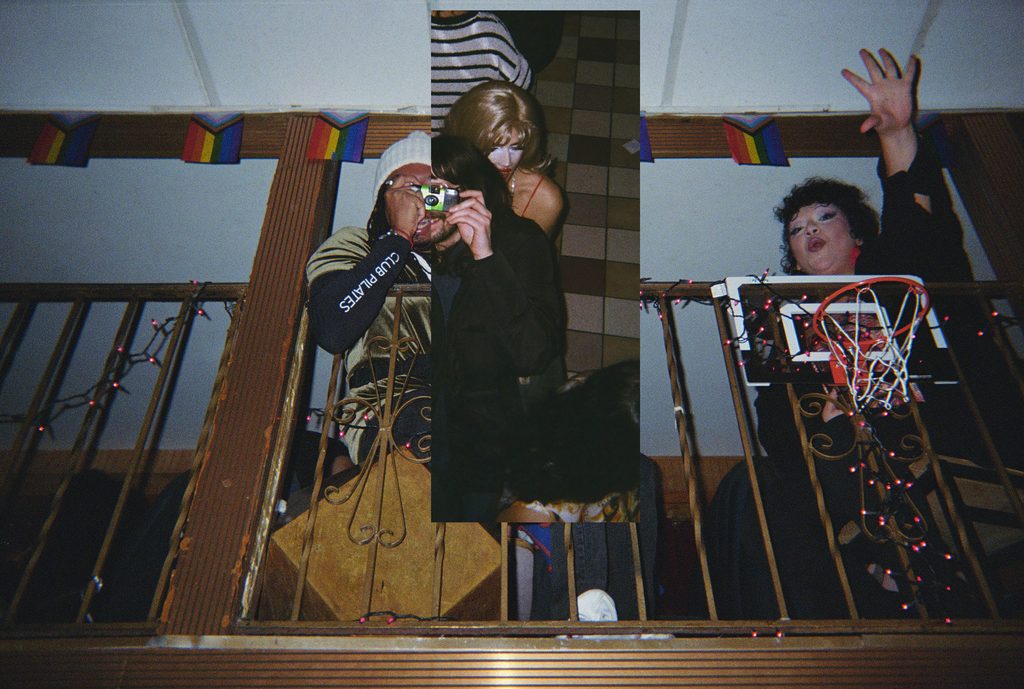
Artist Zac Thompson had been photographing drag performances at the Brooklyn queer bar All Night Skate when they met performer JuJu Lee. Entranced by Thompson’s camera, Lee wanted to learn more about how to make her own images. Together they ended up photographing performances at All Night Skate and beyond, always on disposable or point-and-shoot cameras. The result was “Duet,” a series of images the two photographers made by collaging their images of queer and trans performers in their community. The series has since become both a gallery exhibition at West Lab Gallery–images are still available for purchase–and an accompanying zine.
“Duet” became more than just a series, though–it became both a time capsule and love letter to queer life in Brooklyn. In the tradition of artists before them like Nan Goldin, Linda Simpson, and Ryan McGinley, the work boldly, joyfully proclaims the presence of the queer and trans artists in front of and behind the camera. Not only that, Thompson and Lee wanted to make sure the images benefited their community–any sale of the images goes in part to those photographed.
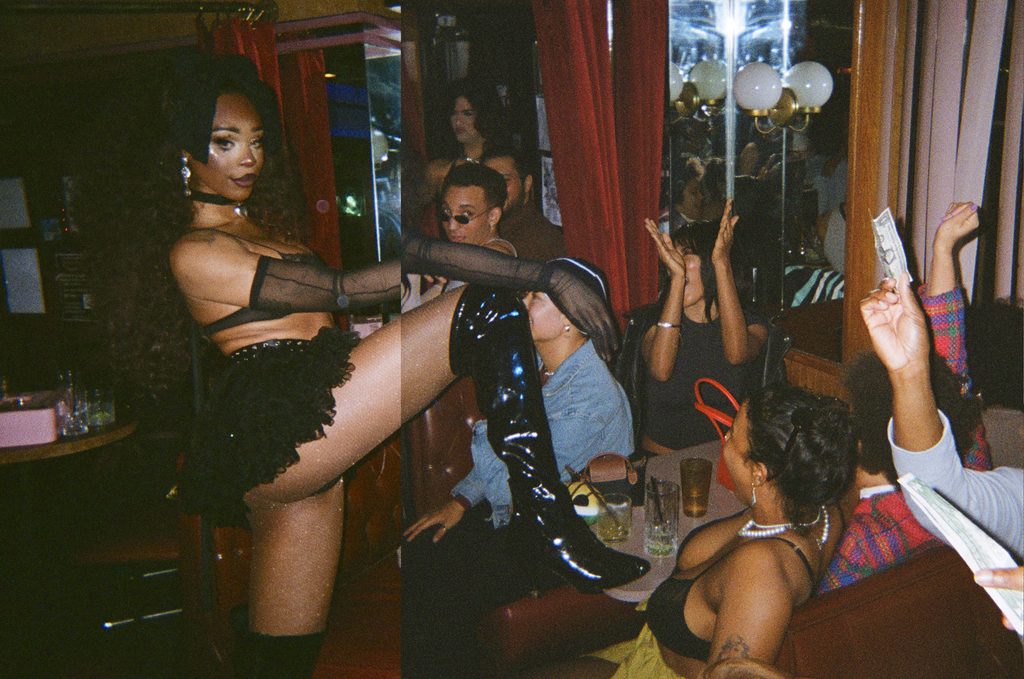
“JuJu said, ‘It’s like we’re taking our two points of view to create a third new one,’ which is queer theory, world building,” Thompson says. “I think collage is inherently queer because you’re taking disparate elements from the world and smashing them together to make something for yourself. It felt important to not just document queer nightlife in this tradition, but how can we push it? I think it’s through doing the duets together, expanding the history of documenting queer nightlife.”
Here, Lee and Thompson talk to V about “Duet,” drag, disposable cameras, and queer world building.
V: What brought you to All Night Skate, even before you started taking pictures, or if you started taking pictures right away?
JuJu Lee: I think for me, one of my first nights at All Night Skate was either a Halloween blow pop or a Halloween Double D’s. I can’t remember which is which because I remember the Halloween Blow Pop. Me and Zac took a picture together. That’s one of my favorite pictures of us that we have. I had just moved to Brooklyn not long before that, so I was like, okay, I want to go out. Where the girls at? And so that’s how I stumbled upon All Night Skate, and truly, it’s been history ever since.
ZT: I went to their Pride show for the first time in like 2021. I had been sort of in the drag scene since 2017, and once the pandemic hit, a lot of the usual spots I was going to either shut down or the scene completely changed. I had seen some things online about All Night Skate and their like House of Qwench drag show, and they just seemed like the most femme, queer, punk, experimental, which was what I’m into. So I went and I was like, oh yeah, this is like the spot that I want to be at.
V: How did you meet?
JL: I had always seen Zac taking pictures anytime I would come out.
ZT: That’s so funny.
JL: I think just one day I was finally like, okay, let me just build up the courage and be like, “Okay, what is that? I want to do that. Teach me, teach me.” That camera did something to me, and I was like, “I need one. How do I get one?”
V: So Zac, you were already taking pictures at All Night Skate?
ZT: Yeah, I had taken photos my whole life, and had started shooting drag and nightlife in LA in like 2015, 2016. And then when I moved here to do grad school, I was also going to like three drag shows a week. I was documenting everything, then trying to do grad school, where I was doing drawing, installation, and performance art. Photo was not the thing. It was just a visual diary. I was shooting drag a lot, especially [former bar] The Rosemont scene and [drag shows] Oops and Sad Songs. All Night Skate became the home bar. Me and JuJu also go to other shows and shoot, so it wasn’t just All Night Skate-specific but it was Brooklyn queer-trans scene in general.
V: What made you want to photograph nightlife?
JL: I felt like I wanted a change. I was always in my phone taking videos of performances, and I wanted to separate that and have something a little more physical. Doing it on the disposables allowed me to just take a picture of that moment, still be locked into the moment, and whatever I get from it, that’s what I get from it. Then to see it at the end is the best feeling ever. Taking a picture on your phone versus on a disposable camera is miles different. Disposable is so much fun, and it’s very much like you say, a diary. I have two photo albums full of disposable pictures, and I was working on my other one yesterday. I love being able to get these printed, put them in my little photo album, and it’s like, oh, I remember that night, I remember this night.
ZT: It very much for me is a photo album, a family album. My dad always took film photos of us, of our family growing up, and my sister also shoots film. I grew up with these photographers who would have this shoebox full of prints. I would look through to contextualize myself within my family. I realized a lot of these queer and trans scenes, their relationships with their biological families is all over the place, and a lot of them performing, being in those spaces, and being able to be themselves for the first time, or over the years photographing the same people and seeing them grow and change, for me it was important to create an archive and participate in that. Thinking of Nan Goldin, always looking up to her photos of nightlife, or Linda Simpson, their archives are so important for queer and trans people to look back on to feel like we belong or I’ve always been here. I got tired of being a passive observer in those spaces and wanted to be an active participant. As a creative, what can I do? I can document, take photos, share those photos with everyone. They use them for promo or whatever. At some of those shows, people were taking phone pictures, but no one was photographing.
JL: Right. I feel like you were the only photographer, at least that I knew of, that was taking pictures like that at shows at that time, and that was, what 2024? Photographers didn’t start popping out ‘til like 2025.
ZT: Now there’s a bunch, and it’s so cool. For me, it’s also important to have a physical negative, and to archive that. It feels nice to have something physical, especially during a political landscape where everyone’s telling us we’re bad, we shouldn’t exist, and it’s like, well, I have physical proof.
V: What made you choose point-and-shoot and disposable cameras specifically?
JL: What made me choose it was Zac! [laughs]
ZT: Disposables are really democratic. Everyone knows what it is, and so it’s very unassuming. I found that people are a lot more at ease with them, and people also don’t really take you seriously, which I love. You get to move in these spaces, and people are more [forthcoming]. I liked that disposables [weren’t] precious, and it was immediate. Then we graduated to other point-and-shoot cameras that you could put your own film into.
JL: And it’s so funny, every time Zac got a new camera, I got that same camera.
ZT: Yeah, point-and-shoot, you don’t have to really do anything. As a photographer and working in the photo world, the first question a lot of people ask is “Oh, what kind of camera are you using?” And I love that it’s just a disposable [laughs]. It was also important to show you don’t need fancy stuff to document your world or your life.
JL: You still get the pictures.
ZT: Yeah. So that was part of it, too. Anyone can get one.
V: Something that makes me think of is, especially with history, something historians are trying to do more is to make people realize they have the ability to document and be historians of their own communities.
JL: We don’t have to wait for somebody else to do it. We can do it ourselves. Exactly.
V: How have you seen that play out in your relationship to the work and what it means to be documenting in this accessible way?
JL: Seeing pictures of myself in 2024 and now, seeing pictures pre-transition and then in pictures in 2026, I truly see all the lives I’ve lived and then get to see this isn’t even the final product. We’re still growing and going from here. Versus seeing it in our photo albums on our phone, [we’re] seeing it in physical copies. This is what it looks like when you finally make that decision. It’s so beautiful to see it play out. And even with the performers, I always get them saying, “Wow! I get pictures taken, but none of them are like this.” They hold a more special place because you’re truly in the moment.
ZT: Yeah. I think film is alchemical in a way. It’s so different from digital, and there is a nostalgic aesthetic. A lot of people associate that aesthetic with the family photo album or with history. I think when performers see our images, part of it is them seeing, I want to say, the love, the care, and the historical aspect of that place and time. It is crazy to think that we’re shooting in 2026, but [with] our photos you might think we’re in the ‘90s.
V: What was your growth process as photographers and artists during this project?
JL: With the shots we chose for the gallery, those pictures were me still trying to figure out who I was as a person, what I wanted to do, if I just like photography, if I also wanted to perform as well. We have [drag artists] Zenobia, Junior [Mintt], all people I looked up to and admire as women. Then starting my HRT in March, I think I took my first T-blocker and Estrogen the day when we went to go install. I was already feeling so many emotions. I was crying. I was like, I love this. But it made me feel so much more vulnerable to let go and let it be–instead of holding those emotions in, feeling those emotions, honoring the people we have in the show, and honoring myself because I have grown so much as a person through photographing and now performing. Those physical moments of Zac’s picture [and] my picture being collaged together make one whole new world.
ZT: I started to take my photography seriously when I first went to All Night Skate. I had always been shooting, but something about those people in that place felt special. It made me want to take what I’m doing seriously because they were all very serious and confident about everything they were doing. I was like, “Let me actually think about this as an art project and show up consistently.” And then, meeting JuJu and JuJu being interested in film, I started to show JuJu how I was taking photos. It made me more interested in experimenting with different types of film. It felt like we could play again. Photography started to become this magical…you didn’t know what you were going to get. Chance was a big part of it.
V: How did this body of work come to be?
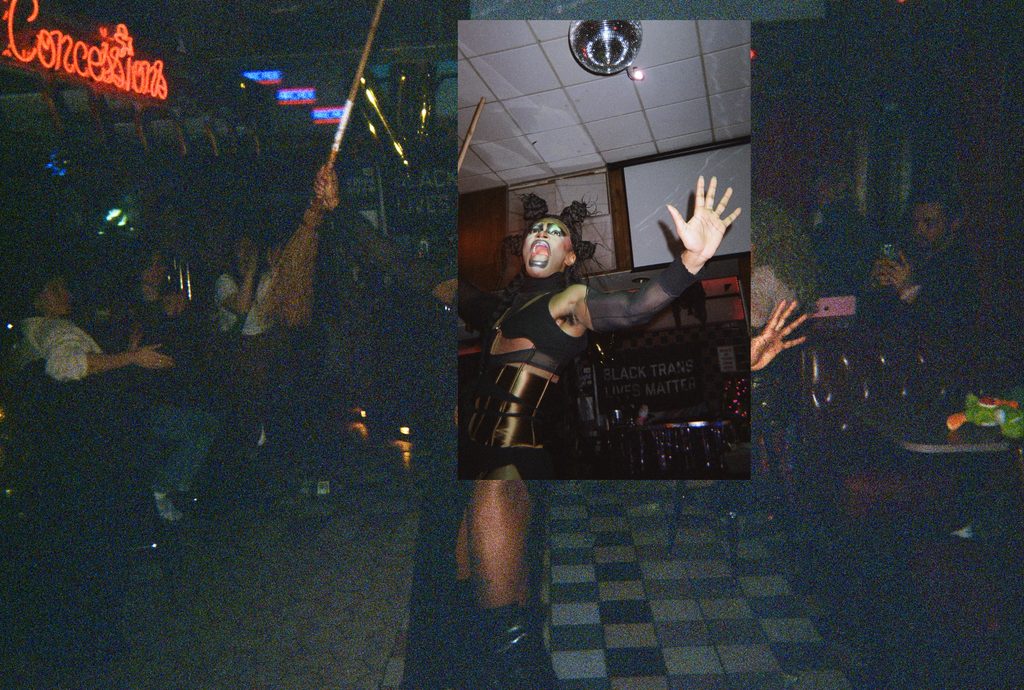
JL: It truly came from Zac sitting on their rooftop, me lying in my bed, and I’m like, I have all these headless pictures, just bodies, hands, feet. And I’m like Zac, I know you took the pictures. I’m just gonna send you all these pictures and I need you to put a head, to make it what it’s supposed to be. Zac says, I’m sending like 20 different ones, so we collaged them together and it’s been history ever since.
ZT: Yeah, we would both get our film developed at West Lab, get the files, then text each other photos we got because we were so excited. And we’d be like, “What’d you get? Oh my gosh! Love this, love that.” We were basically geeking out and gassing each other up about photos we took, and then Juju [was] like, “I have no head on this,” and I was like, “I think I have the head for that?” And so it was literally just collaging on my phone our two photos together. We ended up making over 60-something collages in a week. It just clicked. I’d never seen somebody do this before. So many photographers are competitive with each other, so it was very special and sweet to embrace the collaboration and be like, actually we can do something really cool together. If we let go of our ego and our need for authorship to blur the line, that’s way more interesting because then it becomes more about the person in the photo than who took it. Working on this project made me push myself artistically, because I’ve always been doing collage, except they were usually not my photos. I’m now at a place where I have the confidence to use my own photos. I love materials and materiality, which I think is a big part of drag, too–the makeup, the rhinestones, the fabrics, the wigs.There’s a ritual to choosing these materials and activating them. Similarly, it made me think about how we physically collage our works together, playing with all the materials we have, the same way nightlife and drag play with all these different materials and aesthetics.
V: What did you want to make sure your work documenting queer nightlife did that you hadn’t seen previously?
ZT: I am a photo nerd, especially the history of photography, but seeing our work as part of a queer and trans lineage of photographers felt so special. I love Nan Goldin, Linda Simpson, even photographers before then, or Ryan McGinley. [I’m] actively thinking about that lineage while I’m shooting. I’m continuing in 2026 what they did in the 80s, the 90s, the early 2000s. Then [seeing] how we can add to it, it’s by us collaborating instead of choosing to be separate, and physically putting our photos together to make one photo. JuJu said, “It’s like we’re taking our two point of views to create a third new one,” which is queer theory, world building. I think collage is inherently queer because you’re taking disparate elements from the world and smashing them together to make something for yourself. It felt important to not just document queer nightlife in this tradition, but how can we push it? I think it’s through doing the Duets together, expanding the history of documenting queer nightlife.
JL: Absolutely, at least for me, I’m not a film nerd. I don’t know as much as I should. But for me, the pictures we have, I’ve never seen black trans women, queer people, be photographed like this. These are probably my only connection to that. So for that connection to be people I look up to, people who are my friends in the scene, it’s like, wow! I don’t have to wait for it to be somebody else. My people are doing that now. I can do that, too.
ZT: Yeah. I think that’s why it’s important that we wanted to do the show now and at a museum-quality level. Thinking of other photographers, we appreciate their photos now, years later, and unfortunately, a lot of queer nightlife photographers died in the AIDS crisis. Why should we wait 10 years to celebrate these images? Tomorrow’s not guaranteed. Let’s just give them their flowers now.
JL: We didn’t just want to do this just for us. We wanted to do it for the performers and the people we took pictures of. Making [the] model release was truly just giving a guideline like, “Hey, if this sells, it sells. We would love to have your image be a part of our show.” And then if we got any payment from it, they would know that they would get a portion as well. It’s not like we’re trying to keep all of this for ourselves, we’re trying to give this back to the community, just like we’re trying to show the work off to the community.
ZT: We’re trying to think about this as ethically as possible. Working in the art world, seeing other photographers who shoot people, often they’ll have a model release that says they can do whatever they want with the photo. But when we’re documenting friends who are trans and queer–I’ve also learned this from experience, having shown work before–it is really important to ask and get permission that they want to be a part of it first, which is what we did. Then to not take advantage and to be ethical about it, [we created] a model release form they all signed that said this is how we can use your image and promote, but also this is a payment structure. It’s typical for galleries to take 50% and then the artists get the other 50%. West Lab took less. Then, whatever that profit is, 60% would be split three ways between me, JuJu, and whoever’s in the photo.
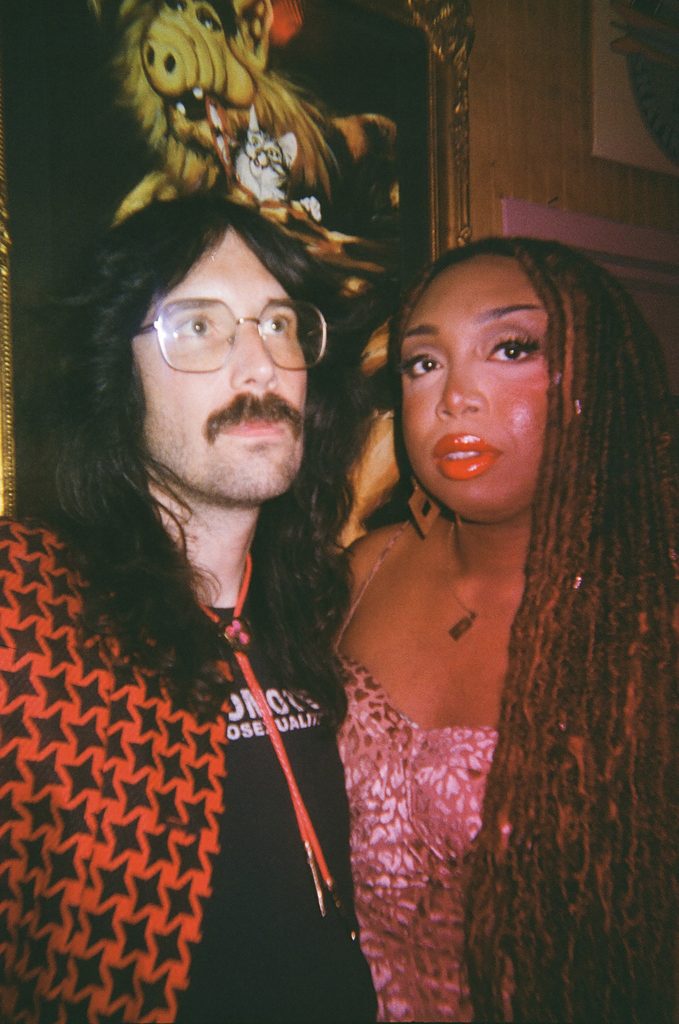
JL: This is truly a love letter–for me and Zac’s relationship, for all of our performers. I love all the people in our show and I never want them to feel like we’re doing this for us. We’re doing this for everybody–for All Night Skate, for the performers at All Night Skate.
ZT: Yeah. I think similarly, it is like a love letter. I remember looking at my dad’s photos–he had slides, and we would project them, and he was pretty quiet like me. And he was a keen observer, especially of me and my siblings growing up. Looking at his photos, through his point of view, you could feel how much he cared about us by how he photographed us. To me, that actually was the way I could feel his love more than him saying something. A picture is worth 1000 words, so I feel that way when it’s me and JuJu. I truly just love these people, this place, and this art form, so I hope that sense of care and love [comes] through the images.
Discover More