With His New Documentary ‘Avedon,’ Ron Howard Crafts a Portrait of a Singular Artist
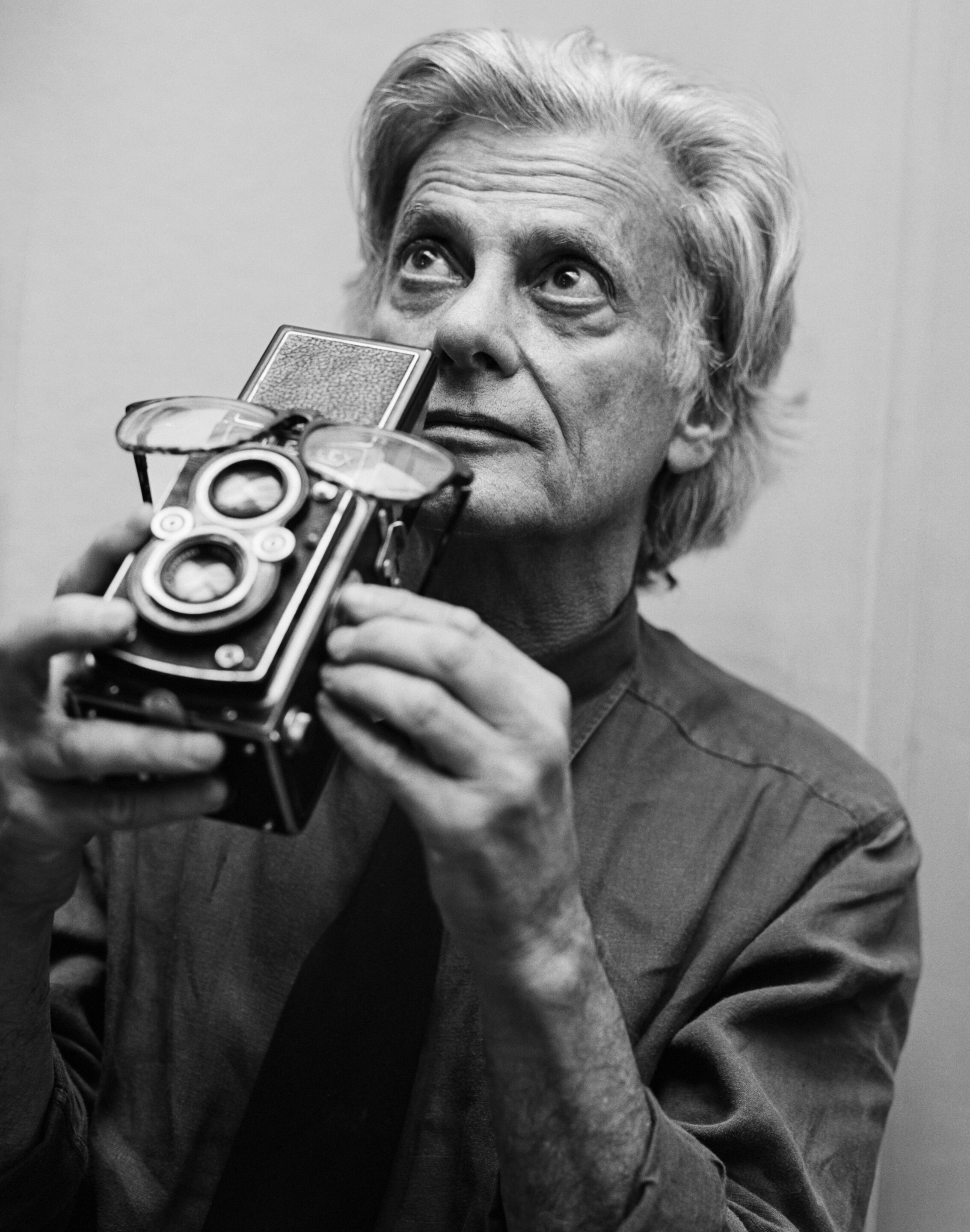
“Every photograph is accurate. And none of them is the truth.”
Throughout his 40+ year career as a director, Ron Howard has become known for narrative films that are deeply human, whether they’re rooted in truth, fantasy, or something in between. Such an experience also lives in his documentary work, which has included lauded cultural figures ranging from The Beatles to Luciano Pavarotti to, now, the master photographer Richard Avedon. Avedon, Howard’s latest documentary, arrives on Netflix today after debuting at the 2026 Cannes Film Festival.
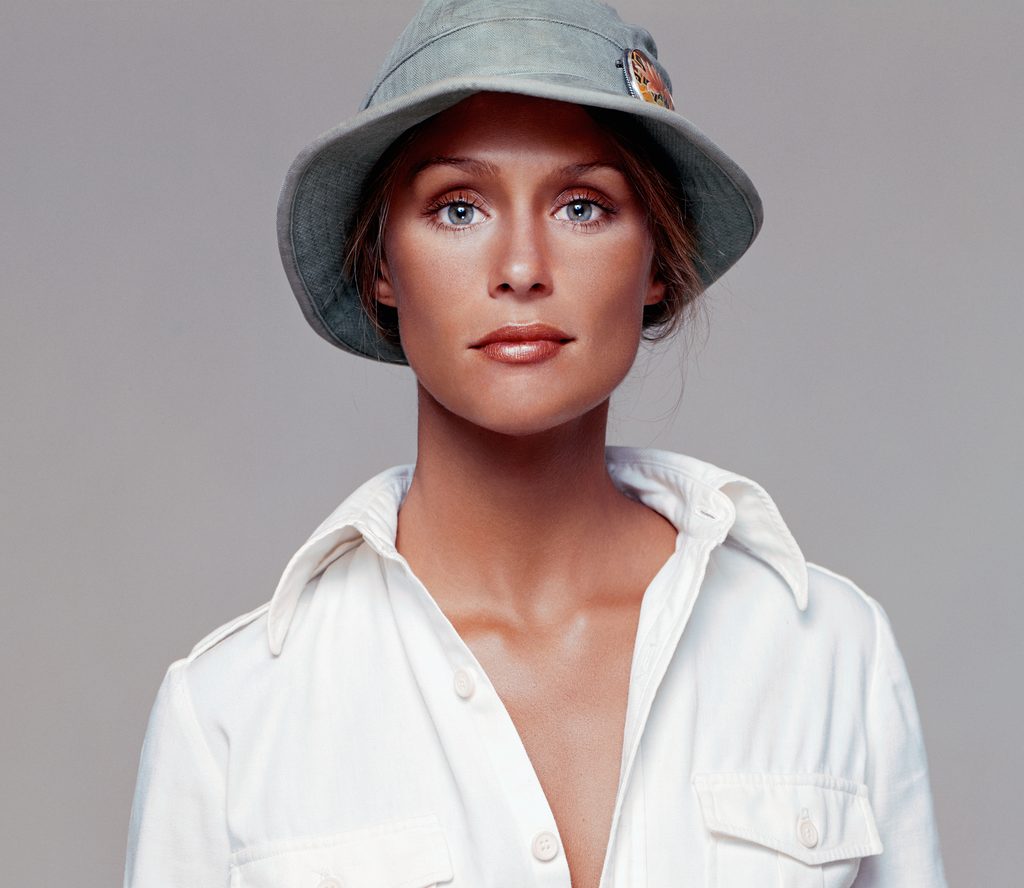
Though it incorporates Avedon’s images from his career of over six decades, some of which have never been seen before, the documentary also situates Avedon’s work in the context of his own biography and the culture in which he made images. It follows Avedon’s relationship to photography–as a young person, as a fashion photographer, and as a portraitist–alongside his challenges away from the camera throughout his life. Voices from the likes of Isabella Rossellini, Lauren Hutton, Hilton Als, Beverly Johnson, Avedon’s son John Avedon, and more offer insight into the man behind the lens, his personal and commercial work, and his philosophies as an artist. Avedon’s voice is vibrant in the film, not just in recordings, but also, of course, in his images–there was a magic to the life he created in front of the lens, we learn, that he sometimes found difficult to capture away from it. “Every photograph is accurate,” Avedon said. “And none of them is the truth.”
Interestingly, Ron Howard had only tangential knowledge of the photographer before beginning work on the documentary, before being invited into the archives Avedon himself crafted before his passing. But his treatment of Avedon and his work still becomes an informative, revelatory portrait that even longstanding Avedon acolytes will find moving and incisive. In Avedon, we discover a man with a singular vision, who stood up for what he believed in, and in the process crafted an indelible mark on visual culture that’s still present across photography today.
Here, V spoke to Ron Howard about crafting the documentary, what it means to be a storyteller, and the power of a portrait.
V: What was your relationship to Richard Avedon’s work before starting work on the documentary?
RON HOWARD: [It was] all over the place, and I was certainly aware of Avedon’s name. A few of the images I knew were Avedon and I was surprised by a lot of striking images that I didn’t know were Avedon, like sad Marilyn [Monroe]. I didn’t know my favorite photo of the film director John Ford, this shot of him with his eye patch looking crusty, that’s Avedon. I didn’t know the photo [of Natstassja Kinski] with the boa constrictor was Avedon either. I had seen “Dovima with Elephants” before, but I didn’t know that was Avedon. So the answer is not a lot, but I knew he was famous. I just didn’t necessarily know what photos to ascribe to him. Nor did I know he directed the Brooke Shields Calvin Klein commercials.
V: I read that the documentary opportunity arose when the Richard Avedon Foundation opened its archive to you. How did we get from that visit to your interest in making the documentary?
RH: As soon as you visit the archive, it’s a pretty amazing opportunity because it’s full of amazing images of glamorous people across decades. I thought we might start off with a behind-the-scenes of maybe eight or 10 photos, and of course learn about Avedon, but more than anything, marry the subjects to how they were photographed, what was going on in their time. That’s how we proceeded for about the first year. But the more I kept learning about Avedon through reading, listening to his interviews, and as the archival footage came to us–but I think even more significantly through beginning to have interviews with subjects–I became more and more fascinated by his journey as an artist, his evolution, and honestly his creative courage. It wasn’t until the end that his father-son story came into focus. His relationship with his father we knew about because he had photographed him. When we understood Avedon from his son’s [John F. Avedon’s] perspective, suddenly that aspect of the journey became something we could talk about with some authority, and it was relatable. Year one was glamour and celebrity. Year two was his creative courage, his call to civil action, attraction to unconventional people, and exposing hypocrisy. That last year was more about him and his relationship to his family. His son’s interview was the last one, and pushed us into a couple of months of re-editing to refine and rebalance around that. To me, it felt so immediate and something we could share with real confidence and honesty. [Previously] it had been almost entirely work-related, and even [with] his father as more of a subject. So then [we] went back a little bit deeper into some of those telephone conversations that Dick [Avedon] had with his own father, and we began to see a generational connection. We rebuilt the first act with a focus on where Dick had come from and how that had shaped him.
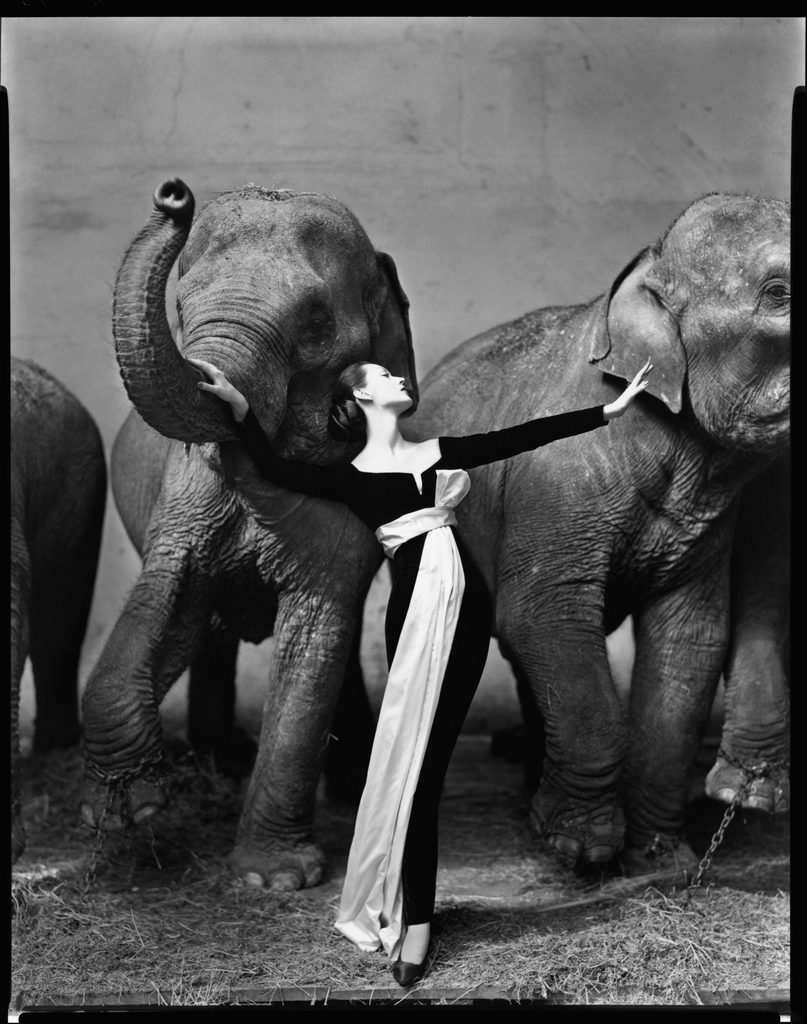
Photograph by Richard Avedon, courtesy Netflix.
V: What did you want your documentary to do that you hadn’t seen in previous stories told about Avedon, whether they were on screen or on the page?
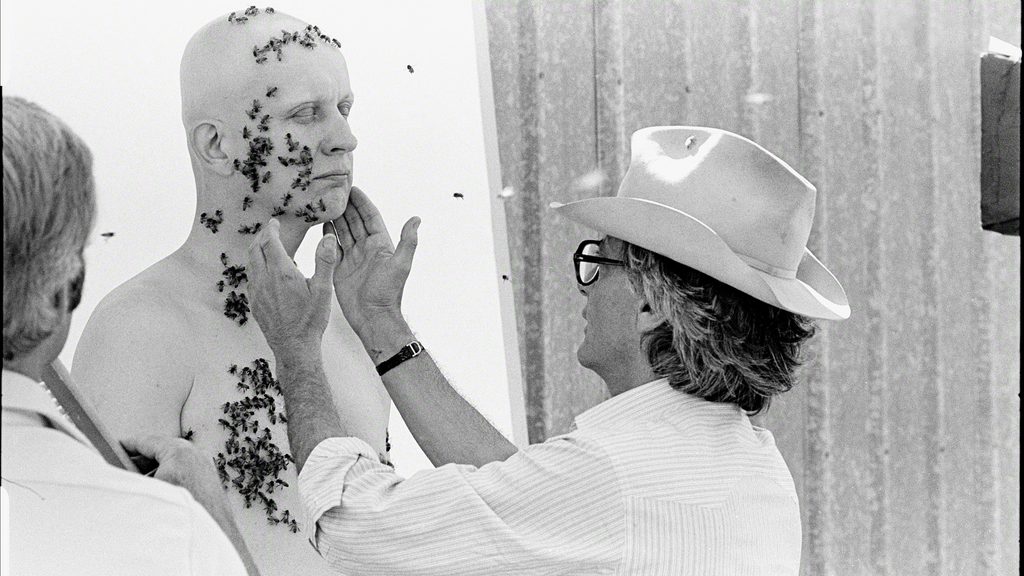
RH: Just to update, to be as comprehensive as we could be. I related to him as a storyteller because I began to realize he wasn’t like a journalist who was out there shooting in the field, grabbing moments. As he says, everything is staged. Everything is scripted. They’re all creative choices he makes. I began to think of him more like a director, and wanted to share that insight. I loved getting the moments where the models were talking about what he brought out in them, or how he created this environment that would allow them to create the character that would become the star of a particular photo. I became fascinated by all that. But also, we knew it was going to be a chance to talk to people who had a different, new, or refined perspective on Avedon. It was great to talk to people who really knew him, but now had some distance on their relationship.
V: What do you think made their perspectives newer or more refined than what had been out there previously?
RH: They had a sense of his place in culture, and could now look and say, wow, his work has resonated, and why. People like Twyla Tharp, his son, even some of the models could look at it with a now decades-old perspective on which images had endured and what it had required for him to get those images, whether they were political or about social movements, or the glamour stuff. I found that helpful. Also, I tried to get at his process. A couple of people who worked closely with him were able to tell stories. By the way, [with] everybody, you could feel the enduring love for Avedon, even though there were acknowledgements that he could be tricky, a little volatile, a little mercurial, and that’s in the documentary, too. But the throughline is this real, deep appreciation for having had the associations they did with Avedon.
V: I saw the trailer on Netflix, and was taken by the last line of the trailer, “Every photograph is accurate, and none of them is the truth.” Did you see the film as a case study in what’s presented to us as the truth, and did that affect how you made the film?
RH: To me that wasn’t a revelation, but I thought it was interesting, and it reinforced this idea that he wasn’t out in the world just observing. He was editorializing, so he really was communicating. That was a little bit of a surprise to me. I didn’t think of that. Outside of the most obvious staged situations, I wouldn’t have thought about what a photographer wanted to express or was discovering through a portrait sitting. But I loved it because I also didn’t necessarily understand photography as the art form that it is, which sounds silly. I’ve been around it all my life, but the choices, the control in the printing, the nuances that, of course, I do when we’re doing the color timing and final DIs [Digital Intermediates, or color-grading] on movies. I just never thought about photographers bringing out certain highlights, not just because they looked better, but because they said something about the spirit of the subject they were trying to convey. I found all that fascinating. They’re works of art. He was a storyteller, and these are the stories he chose to tell. Certainly that means they literally came through his lens, but his mind’s eye even more than the mechanical lens.
V: How did working on the documentary affect the way you saw his influence in culture now?
RH: [In the photograph of] Kareem Abdul-Jabbar [then Lew Alcindor] and he’s only 18–he’s not even at UCLA yet. I know Kareem a little bit, and it’s interesting how [Avedon] was capturing this blend of intelligence, humanity, and an understanding of who he was at that age, just by the way he’s standing in a playground, holding a basketball and looking at the camera. It’s proof positive Avedon’s instincts about people, I think, were right. I’m reminded that purposeful rigor around the work pays huge dividends. Those nuances matter, that sustaining energy, that dedication around trying to express whatever it is you’re trying to express through a scene, a shot, a moment, a whole movie, whatever it might be. That was my takeaway: it adds up because you see it in his commercial work; whether playful and silly, or sexy, campy, or deadly serious; whether he’s photographing something that’s harsh and hard to look at, or beautiful and inviting. That rigor is there, and I now recognize that it existed across all genres and subjects. I admired that. For me, that was one of the big “notes to self.” This man worked hard at everything, and everything mattered, and we’re the beneficiaries of that.
V: I was thinking about the breadth of his career, and how his impact has a lot to do with the role photography played in culture at that time. Though the role of photography has shifted slightly, what do you think artists can still learn from Avedon’s work, and why do you think it’s still so impactful?
RH: I think what can be learned is probably less about the medium that he chose, and more about the way of life–this ongoing drive to try to understand something, and then share what you understand as your truth, as your sense of the way a subject or an idea could be looked at, should be looked at, and understood. Even as he says towards the end of the documentary, “Well, there may be a day when there is no photography. You just call up images,” and that was decades before anyone was thinking about AI photography or image creation. But it’s about what catches an artist’s eye, what can they [share], how can they share it–whether it’s words, painting, photography, movies, whatever it might be. It’s a practice, it’s not luck. It’s not something you do on a whim. He was seeing plays, looking at movies, going to museums, drenching himself in artistic expression. In his generation, he was using photography as his form of conveying what he thought and came to understand. That’s what inspires me about his journey and I hope inspires other creative folks.
V: How did Avedon’s work make you reflect on your own?
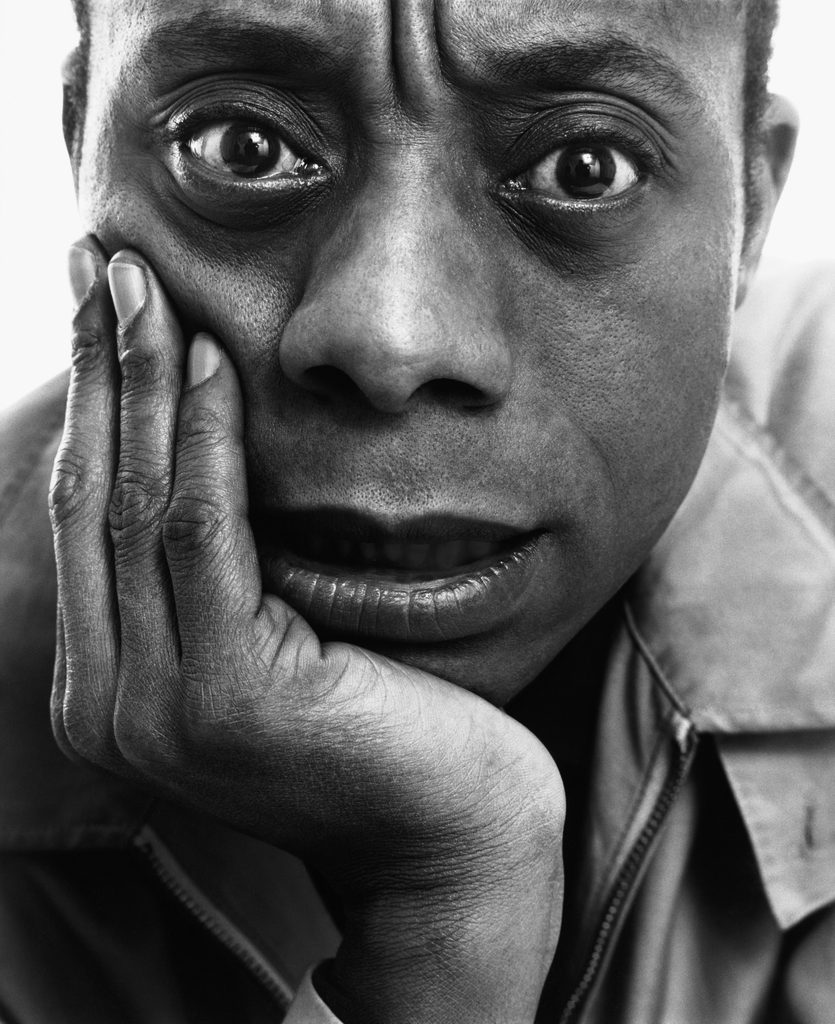
RH: One is, he was very courageous, and once he had established his career, he did things like he pushed [Harper’s Bazaar] to use [model] China Machado, the first woman of model of color in a major fashion magazine. It made sense to him, and that’s what he did. It reminded me a little bit of, in my Beatles documentary, late in the game, we found out that the Beatles had refused to play segregated events in the South. Because the Beatles were so big, they desegregated them. We had an interview subject who had been there, an African-American woman, talking about how meaningful it was. It changed the course of that documentary and that perspective for them. It was just common sense, just as it seemed like common sense for Avedon. But that doesn’t make it easy. There’s still a decision there that not everyone would make, and I like to think I would make that call. I don’t think I’ve ever been in that position, but I certainly admire Avedon as I admired the Beatles in taking that position. Avedon took a lot of risks, and it wasn’t even popular. It wasn’t like he was getting a lot of support. You see this little press conference he’s having for the book he did with James Baldwin [Nothing Personal, from 1964], and he’s trying to explain it. They don’t even know how to talk to him about it. They are so disinterested in this book, or they don’t believe in him and his involvement. He’s getting no respect at all, and yet he just kept powering ahead. And I say hats off to him for using his talent and his stature in those courageous ways.
V: How do you see your work as a documentary filmmaker different from your narrative work?
RH: I love the documentaries, and for the last 12 years now, I’ve had a documentary project going simultaneously to my scripted work. My kids are grown, and [my wife] Cheryl puts up with me throwing myself into the docs as well as the scripted projects. But it is a different approach in some ways, and then and then satisfyingly similar in other ways. In this case, it’s almost all post-production because it’s all about building and sharing ideas with an audience. The difference is with a documentary audience, the promise is to inform first and foremost. That sharing of information can be engaging and its own brand of entertainment. If you find something funny or emotional, or any of those things you look for in a scripted movie, that’s great, too. On the scripted side, information is secondary. People don’t want to be fooled if it’s supposed to be based on real events. They don’t want you to lie to them. But first and foremost, they’re there for a ride, to be transported, and that’s the responsibility. It’s interesting to shift back and forth. I have found my scripted work to become a little more truthful and maybe a little more creative in the way ideas and nuances are conveyed than they had been before. I’ve been putting this time into documentaries where the challenge is, you don’t always have someone saying the thing, but you want to convey an idea. So how do you use the medium of cinema juxtaposed [with] quotes or images in order to convey what it is that you’ve learned to through your lens, as Avedon would say, to find the truth that you want to share.
Discover More