K8 Hardy’s Cult Photography Series ‘Positions’ Gets a New Life as a Book
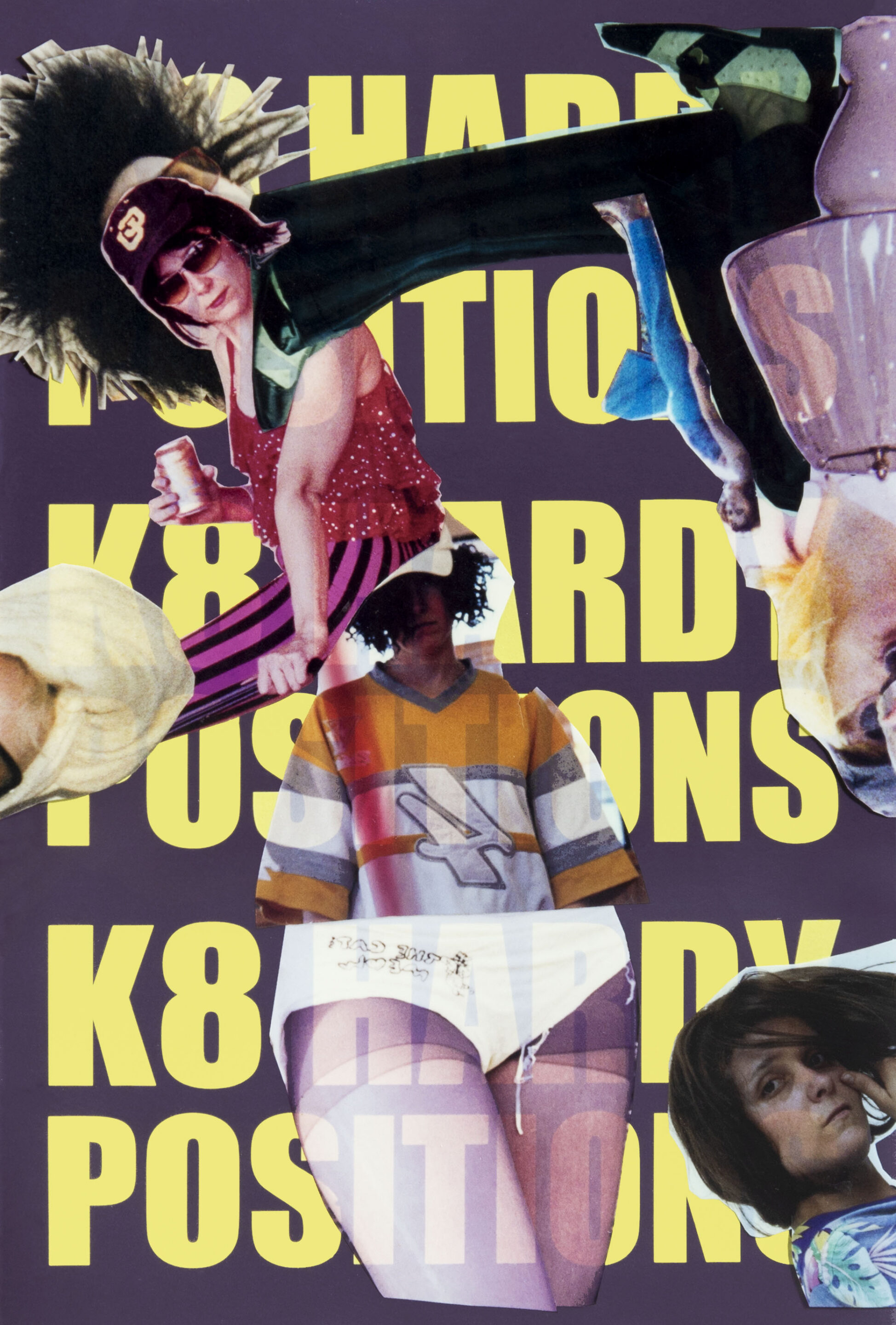
Based on her ‘Position Series,’ Hardy sends up fashion while contemplating gender and identity
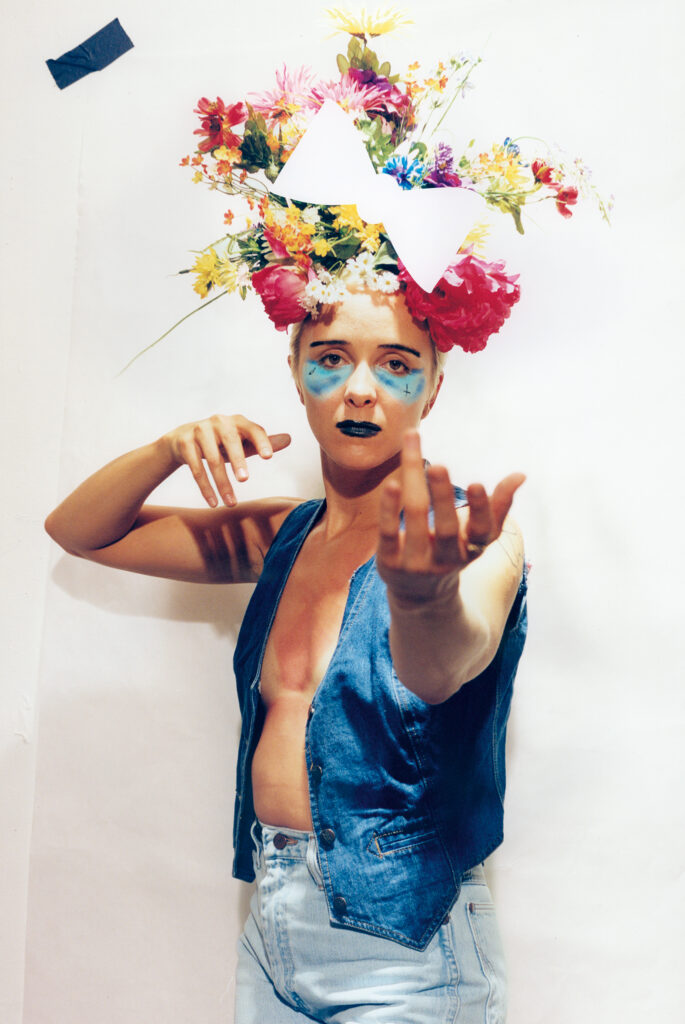
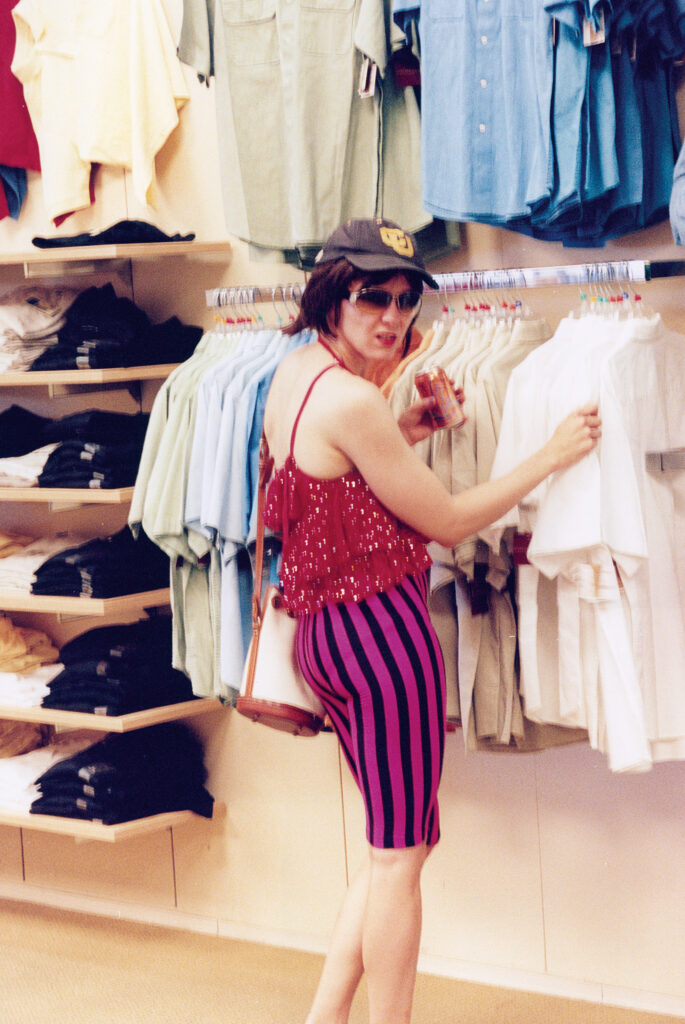
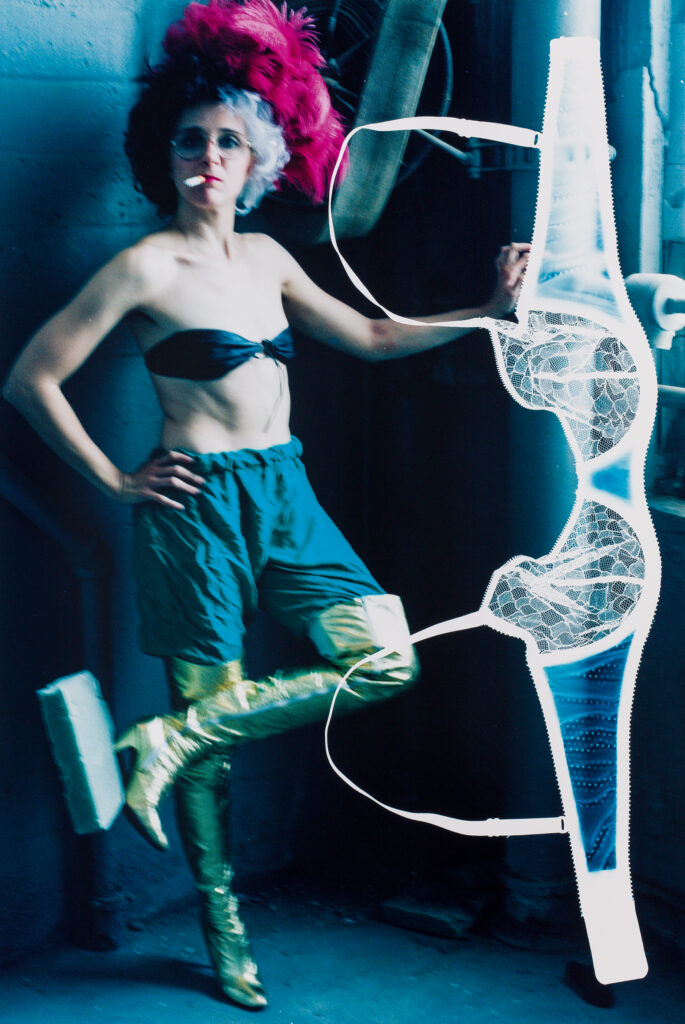
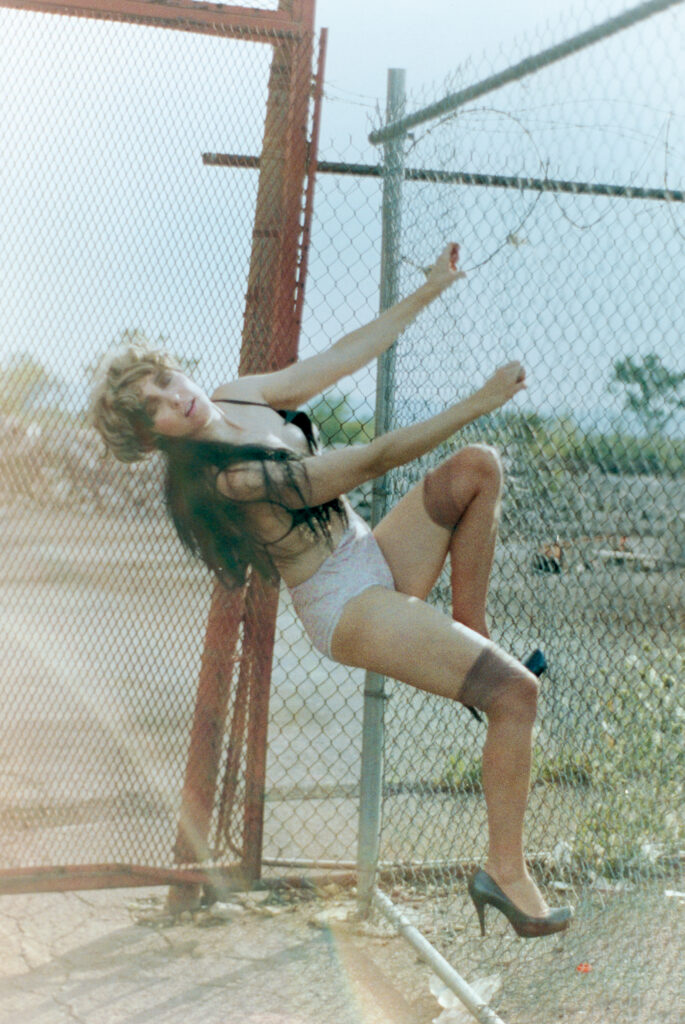
When artist K8 Hardy started her Position Series in 2009, it was a moment before the spike in selfies; before using fashion or even oneself in artmaking was as accepted in the art world as it is now; before conversations about body positivity or queer representation were as active a part of the cultural landscape. Yet Hardy, who moved to New York from Boston and grew up in Texas, began playing with fashion and her own image as part of her work anyway, queering self-portraiture through the lens of the 2000s New York DIY subcultures she inhabited. Influenced by Claude Cahun, Cindy Sherman, Carrie Mae Weems, and Coco Fusco, her work became an examination of photography, gender performance, representation, and identity, questioning and contemplating social structure.
This took many shapes over the years. Hardy created a zine called FashionFashion between 2002 and 2006, where she sent up traditional fashion imagery in a series of shoots where she attired and posed herself in different personas, always in the interest of subverting taste. This later became Position Series, which Hardy worked on until 2012. “There is a failure to narratively cohere, a schism of realness in the representation, and an argument against authenticity,” Hardy wrote in an artist statement. “I wanted to get at how we construct a photo and therefore, an identity…I see style as just another tool on my tool belt.”
Fifty images from the series were acquired by the Museum of Modern Art in 2018. They are now collected in a book, Positions, published by MACK books on September 15 with a foreword by Brontez Purnell. Position Series will also be on view at MoMA’s exhibition Taking Back Our Space: Photographic Perspectives, opening September 20th. The exhibition features the work of feminist artist Marianne Wex in addition to work by artists like Nona Faustine, Wendy Red Star, and Martine Gutierrez, among others, alongside Hardy herself.
In another related project, Hardy began documenting her outfits every day with a “shitty, mini-DV camera” from 2001 to 2012–this became the 2016 film Outfitumentary, which will be screening at The Roxy Cinema in New York on September 20th. Hardy also created a fashion show of her own, “Untitled Runway Show,” at the 2012 Whitney Biennial, featuring garments of her own construction; and designed a Studio Dress in 2024, which is still available for purchase, as much a meditation on labor and gender as it is a wearable artwork.
Here, Hardy spoke to V about self-documentation, the intersection of art and fashion, dress and identity, and more.
This interview has been edited and condensed.
V: I read the story about you wearing an “I pledge allegiance to shit” shirt in high school in Texas, and I was curious about your relationship to fashion at that point, and when there was a moment where you realized there was something you wanted to claim for yourself.
K8: Well, I didn’t necessarily think so much about high fashion growing up or have any interest or access to it. I mean, there were magazines around, but I wasn’t looking at them. But there were real politics in dressing, and real ways to make people uncomfortable to challenge what a girl could wear or how she could look, what was proper. It wasn’t a free and loose place to dress, Texas. Dressing was really a politics and a rebellion for me. I kind of hate that word rebellion.
V: Why do you hate it?
K8: Well, it sounds puerile, right? It doesn’t sound serious. But I mean, at the same time, in Texas, there’s glamour, and there’s meaning in dress. You grow up somewhere with cowboys… in most other places in the country, that’s a costume, but that’s a reality, that’s a lifestyle. So dressing holds more meaning or more intention. It’s not a casual thing. It’s very intentionally a way people are presenting themselves. And I didn’t grow up wearing designer clothes or really knowing much about them.
V: What understanding of what fashion “should be” and who fashion “was for” did you have before you started making work where you wanted to subvert taste in FashionFashion and Position Series?
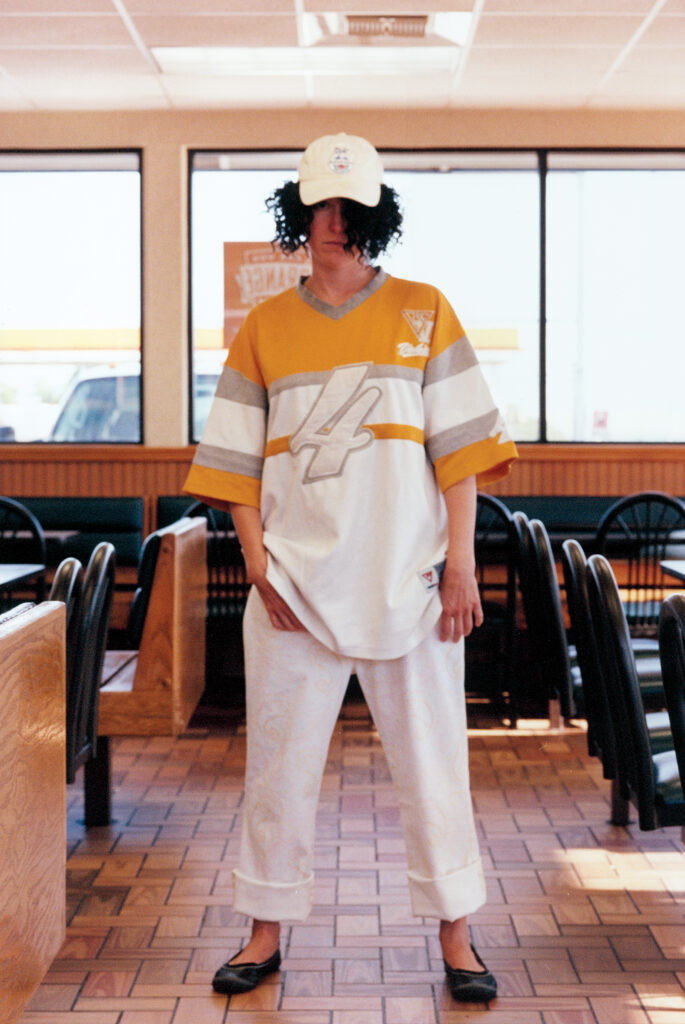
K8: Fashion was for skinny white girls, and it was just unattainable and problematic. Alongside that, I used my own body, which was a skinny white girl’s body, but I really tried to poke fun at that standard in the photographs. This photo series is really from a time before the proliferation of social media that enabled so many people to create their own imagery constantly, so it’s from a time where that was a very inaccessible, unequal, problematic mode of representation. We were just looking at the fashion magazines. It was before the proliferation of the selfie.
I thought about the series in terms of representation and using the fashion form, which generated so many oppressive body standards, to challenge it. That fashion form was the vertical page, the dress, the style, the posing, the high and low. I would say my understanding of gender as a performance was the reason I did bring fashion into the work. Understanding and exploring gender happens a lot through dress, and is created through dress, as well as identity, like queer identities, drag, all these things. For me, moving to the city and starting to see fashion, it was an added element to that.
V: Why was that interesting to you?
K8: It’s a storied project of feminist artists, photographing themselves, and I was always drawn to it. I really did it at a time where it felt wrong, and so I thought there was meaning there, and I wanted the conversation to keep moving forward.
V: Why did it feel wrong?
K8: In the art world, there was a sense that it had already been done, and it was pointless to keep at it. Sometimes, when I was doing studio visits at schools, professors would roll their eyes like ‘they have to get past this’ when people were photographing themselves or being themselves. Like that’s not real art or something. It’s actually a very accessible means of communication, I think, which is why we see it all over social media.
V: What was the relationship to fashion in the art world at the time?
K8: It was just a big no-no–to even touch it or reference it wasn’t art. It was like it brought you too close to commercialism, which therefore really wasn’t art. Now the younger generation are much more accepting of using clothing and style in their art or working through their outfits.
V: This was not the case even 14 years ago when you finished Position Series?
K8: I think it was starting around then, maybe.
V: It flies in the face of that earlier dismissal, too, then. It’s actually not frivolous, it matters.
K8: It also comes out of queer signs of dressing, like flagging and drag, and coming from that culture where you dressed a specific way to identify yourself, to see your community. Coming from Texas into the dyke community, there was always meaning in dress and identity.
V: What made you keep going, even though using fashion in art this way was considered so wrong?
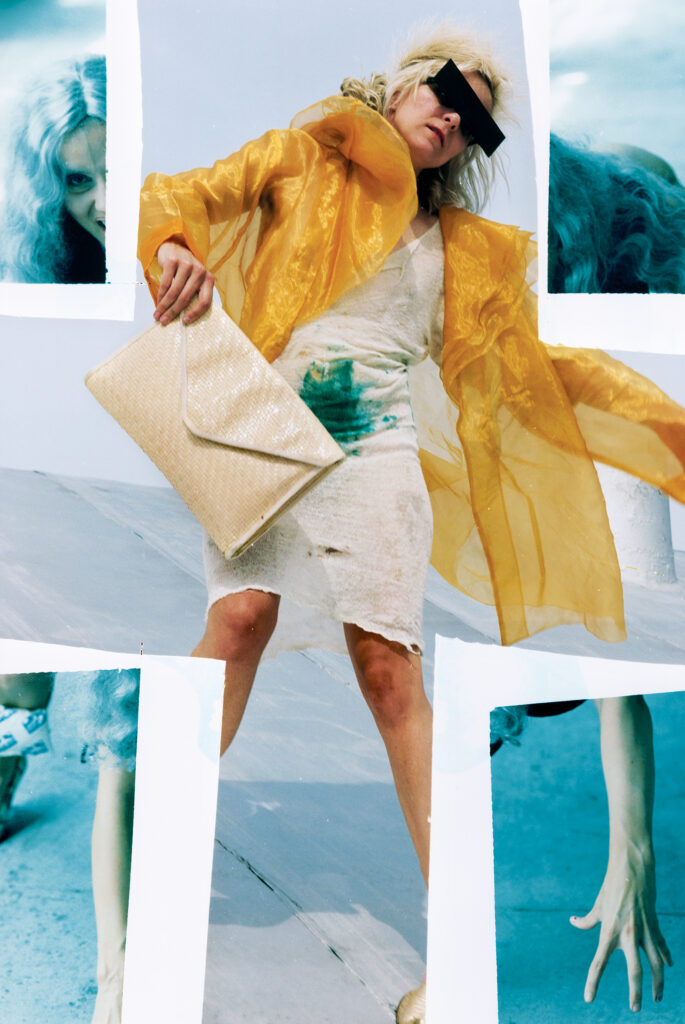
K8: I think in the wrongness, there’s something there about taste. It’s so elusive and difficult to talk about taste, but it compels me. I want to look at my work and see what’s happening as well in terms of taste, or how does this feminist project of self-portraiture update itself, become contemporary. Sometimes I create the work and then look at it for the differences. I feel like there’s like meaning in the differences, as far as taste, and then as far as a generational project. I think you can see in the photographs what doesn’t fit in, or in the awkwardness of it. Across perhaps material or in the poses, each photograph is a little bit different, but I always like to push those things, like the construction of the photograph, to the forefront so we can see it. I improvise and see what’s at hand. I try to take it outside of what I would wear regularly or who I am, and push it a little bit more. But the looks aren’t thought out ahead of time.
Fashion is more accessible and more accepted as a medium and a place of experimentation now than when I started. I think younger people are more interested in my work because of it.
V: What has the creation of fictional selves in Position Series and in your new work taught you about your actual self?
K8: That I’m a chameleon. I can change easily, dress however I want. I think it means I’m good at dressing and putting looks together. I don’t think of how I get dressed every day as my art, but it’s almost like sketching or something. Since I’m doing it all the time, and thrifting or on eBay all the time, it is like a moment of thinking and playing with those materials.
Discover More