V’s Guide to Fashion’s Major Spring/Summer 2026 Debuts
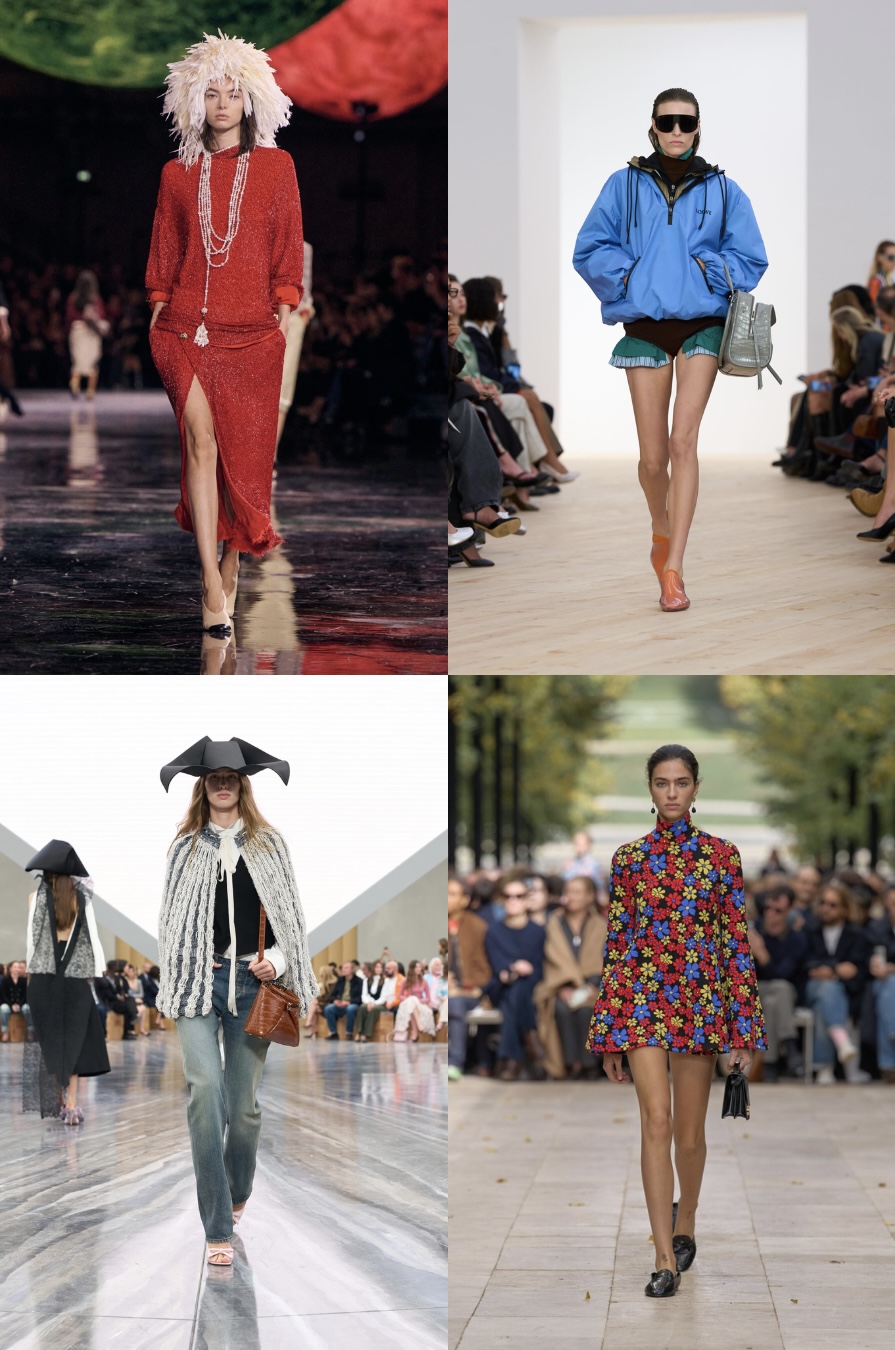
From Jonathan Anderson’s Dior to Matthieu Blazy’s Chanel, V break down the highs and lows of the runway’s greatest game of Creative Director musical chairs
What a month! New beginnings have unfolded across the world’s leading fashion houses this season. Between New York, Milan, and Paris, the respective Fashion Weeks have shared a total of 14 collection debuts from Creative/Artistic Directors at some of the most distinguished designers. From Nicholas Aburn’s Area debut at NYFW in early September to Matthieu Blazy’s debut of his first Chanel collection in Paris just last Monday, this month has stretched light-years long.
Dubbed a reset, a reshuffle, and even musical chairs—whatever you want to call it—the slew of new appointments is one of the biggest (and most confusing!) shake-ups in recent fashion history, turning the industry on its head. Where one designer left, another was appointed—tug on one thread and the pattern shifts. The quake picked up in late 2024, when Blazy first swapped his role at Bottega Veneta for Chanel, leading Louise Trotter to join Bottega and exit Carven, which then promoted Mark Thomas… and the web unwinds.
V accumulated everything you need to know about the Spring/Summer 2026 debuts and the industry’s greatest game of Creative Director musical chairs.
Nicholas Aburn at Area

As a veteran of Tom Ford, Alexander Wang, and most recently Balenciaga’s couture studio, Aburn’s new appointment to Area brings a versatile eye to the New York label. But having grown up in Maryland, the designer admittedly wears rose-colored glasses when viewing America’s most fashionable city.
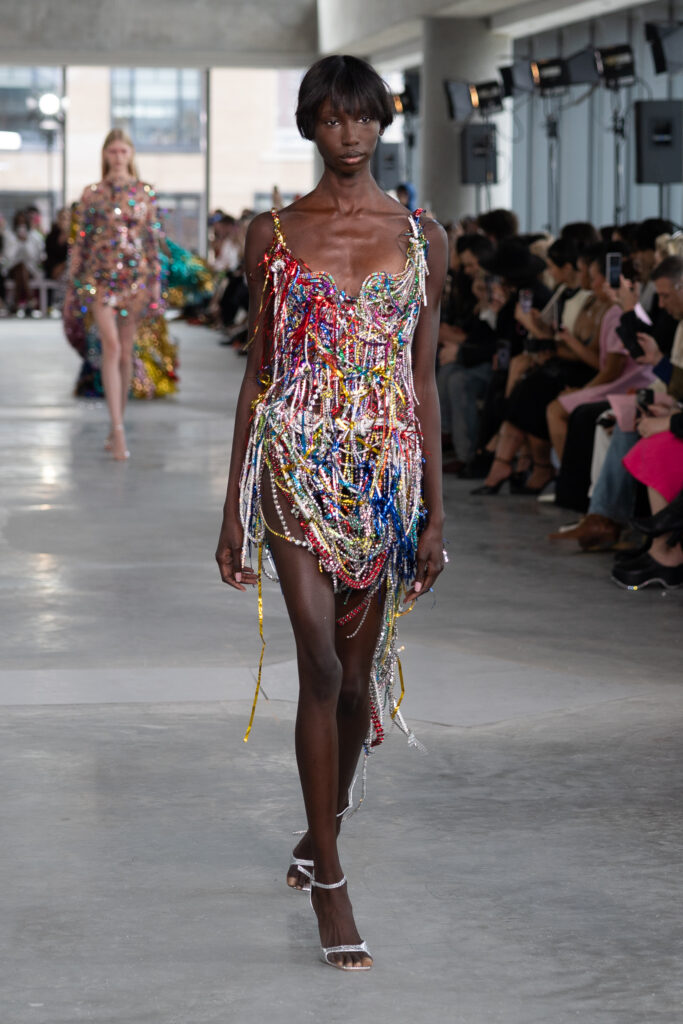
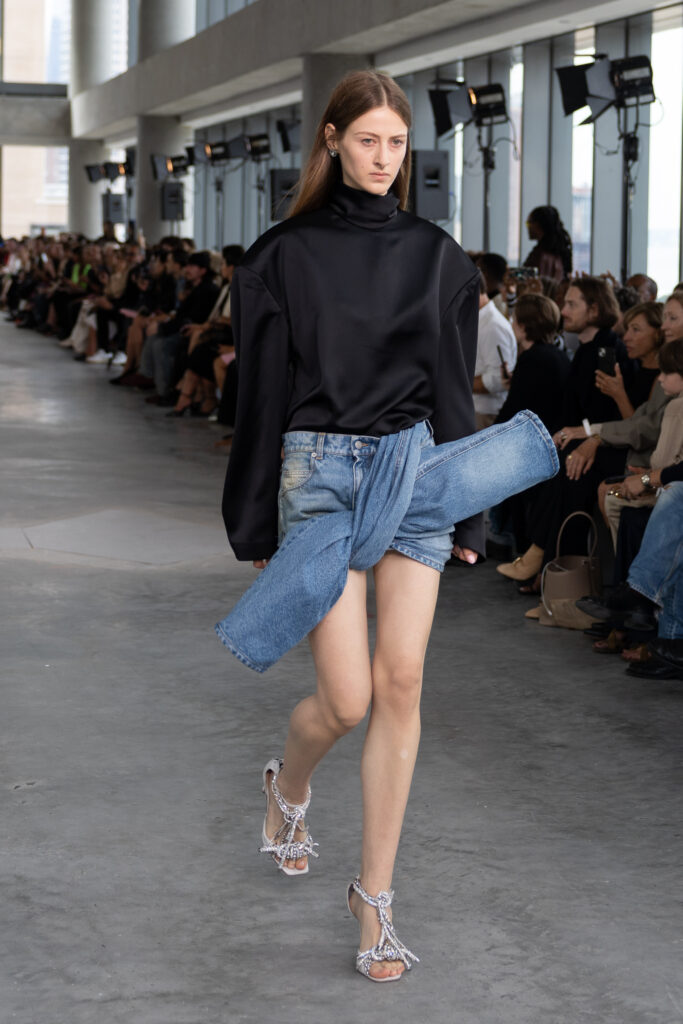
The new era of Area opens with an ode to “the party”—a reflection of the house’s history, New York’s nightlife, and celebrations of all kinds. Auburn’s Spring/Summer 2026 direction maintains Area’s revered, bejeweled aesthetic, while tying the house’s vision back to New York’s street vernacular. Jerseys transform into party dresses, and confetti becomes the gown through enlarged paillettes and reflective tinsel. Strung crystal-bead chains cascade into minis, and wrapped crystalized ribbons become evening gowns. Apposingly, unadorned, bare denim is manipulated to dramatize the typical jean silhouette—denim trousers are knotted to form a frontal bow on mini skirts, while other pieces utilize artful distressing. The garments transcend embellishment—the embellishments themselves become garments. Aburn’s debut proves his willingness to experiment.
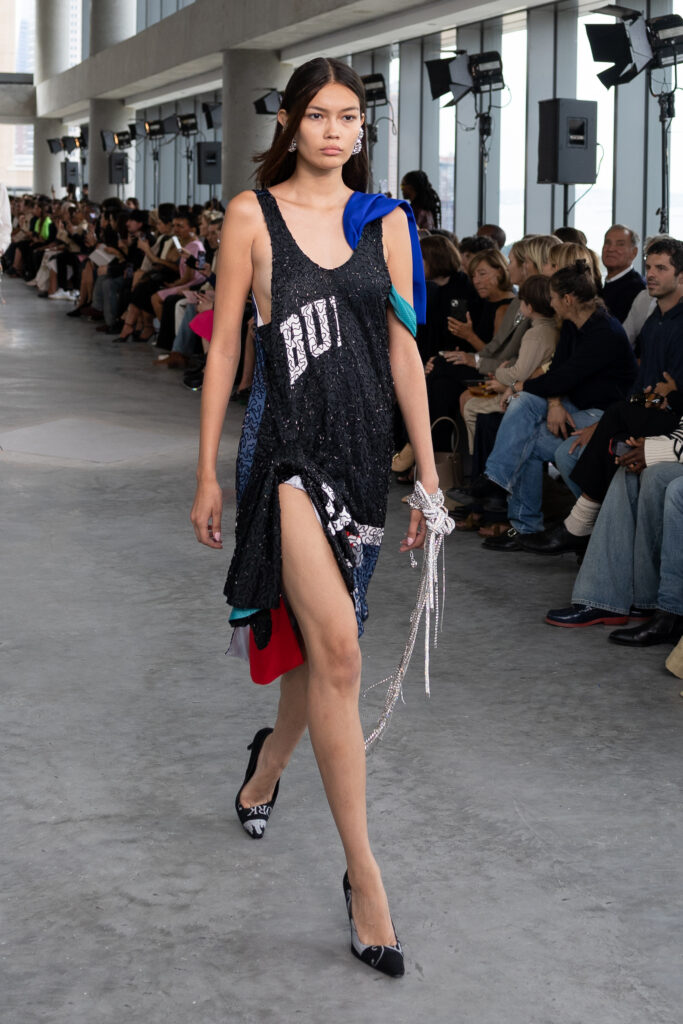
Courtesy of Area
Demna at Gucci
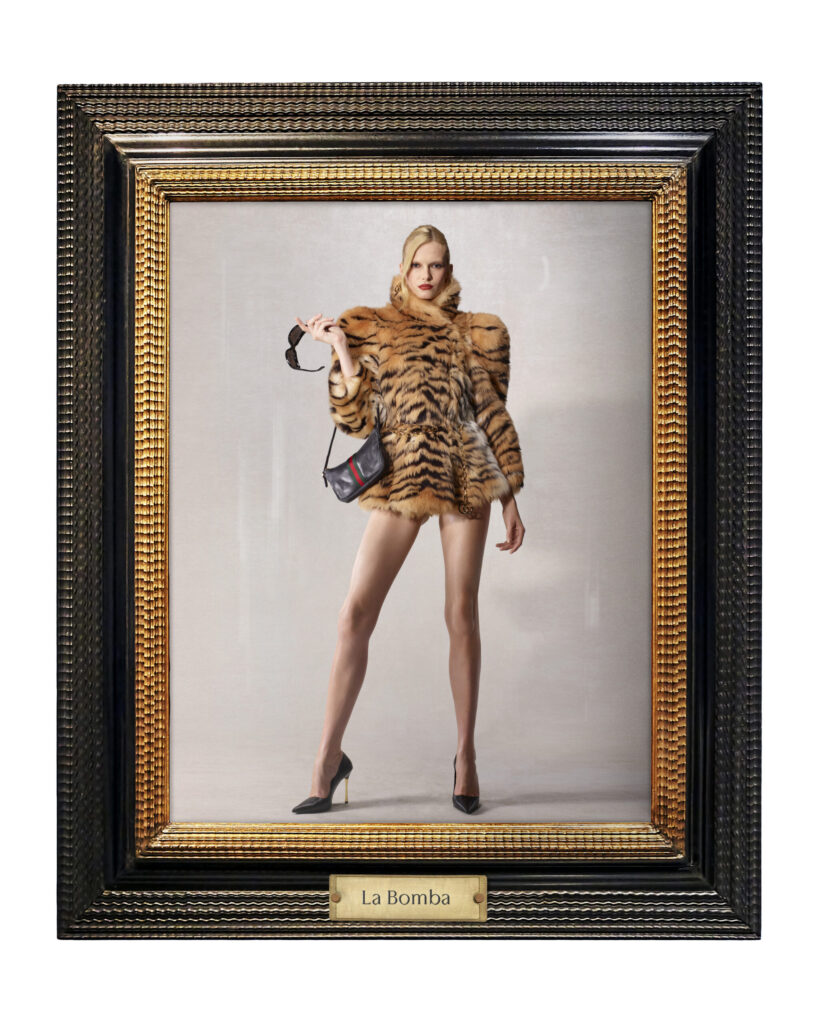
Having amassed countless culture-shifting looks during his time at Balenciaga, it’s an understatement to say that Demna’s new Gucci position is on the radar. True to his legacy of shock and spectacle, the Georgian designer stepped down from Balenciaga’s helm to assume the role at Gucci, which had been left vacant by Sabato De Sarno in February of this year.
Unlike his debut counterparts, Demna’s “La Famiglia” lookbook previewed on Milan’s silver screen. Directed by Spike Jonze and Halina Reijn, and starring Demi Moore, Elliot Page, Keke Palmer, Alex Consani, and more, the short film The Tiger follows a collection of campy archetypes: “La Bomba” prowls in tigerous fur, while “La Cattiva” shows up in full femme fatale. Instead of trying to be safe or coherent, the new vision doubles down on excess and eccentricity, acknowledging Gucci’s power of audacity. Slingbacks are worn wrong on purpose, soft mules slipped on with nonchalance, opera coats drenched in feathers, hosiery turned into near-nudity. Demna remains in his element: keeping us on our toes.
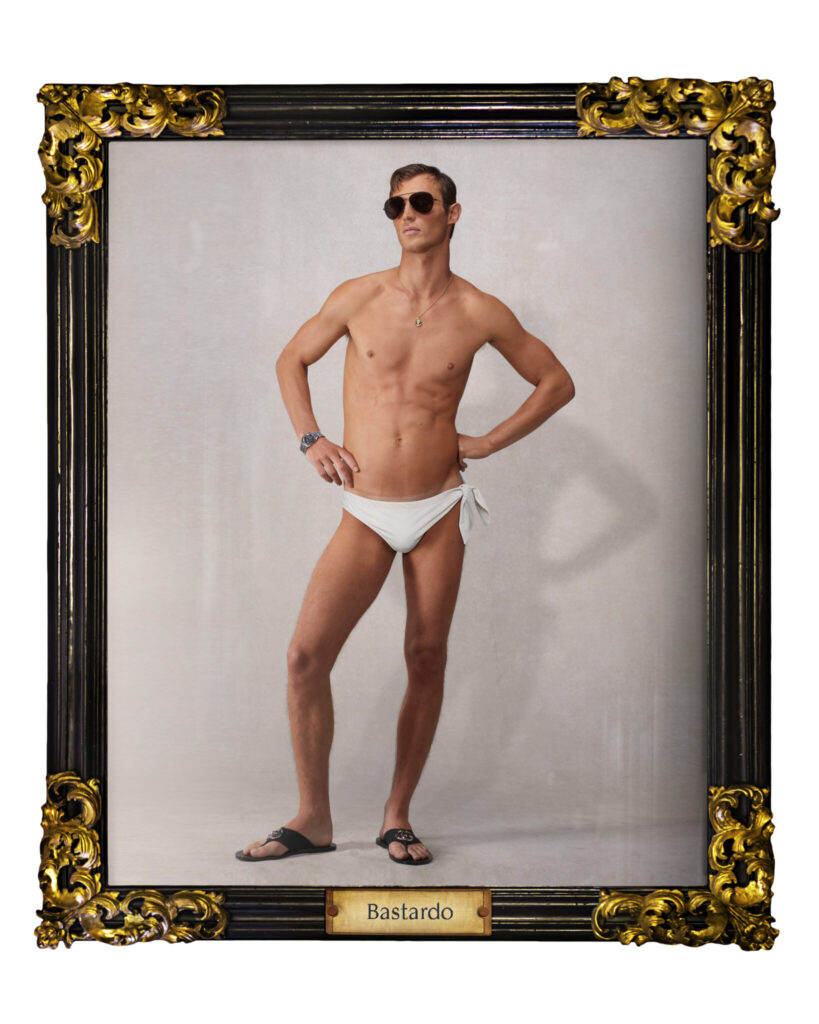
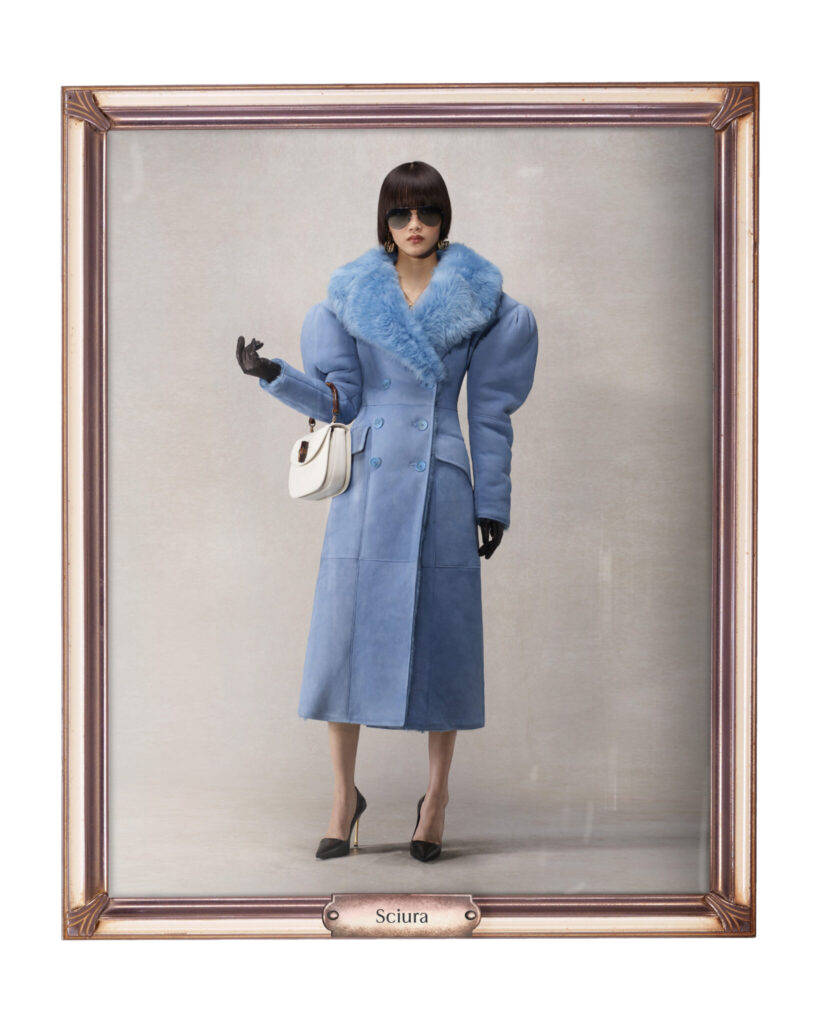
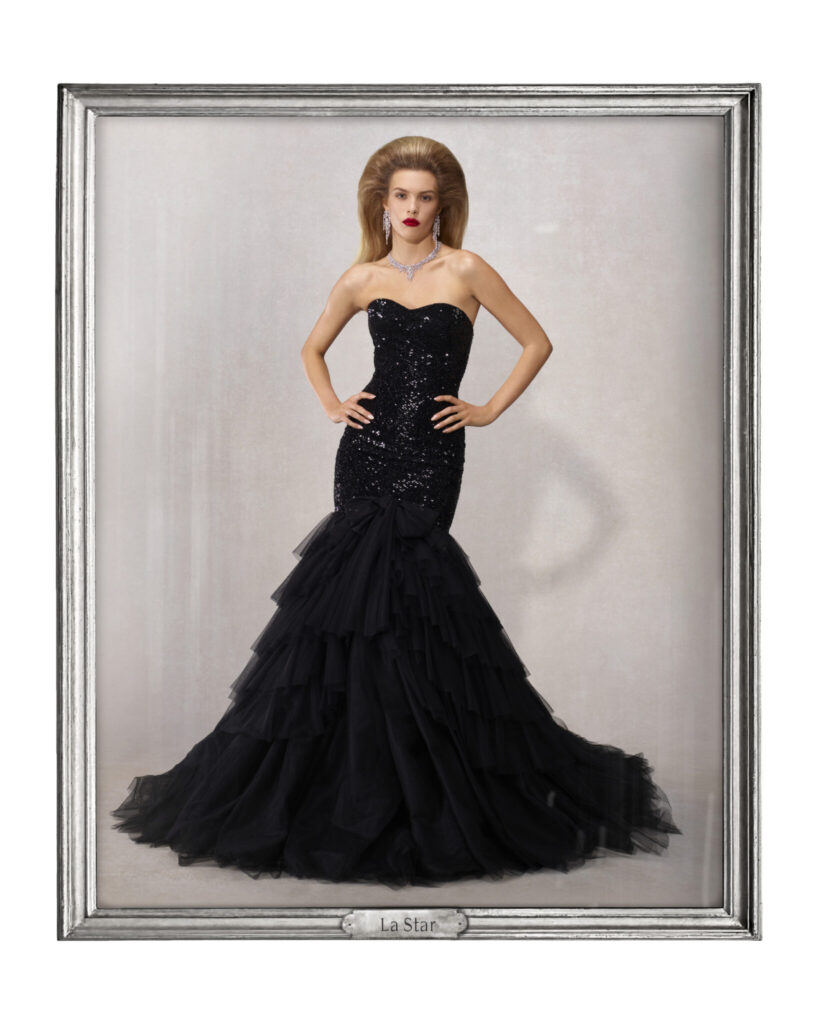
Courtesy of Gucci
Simone Bellotti at Jil Sander
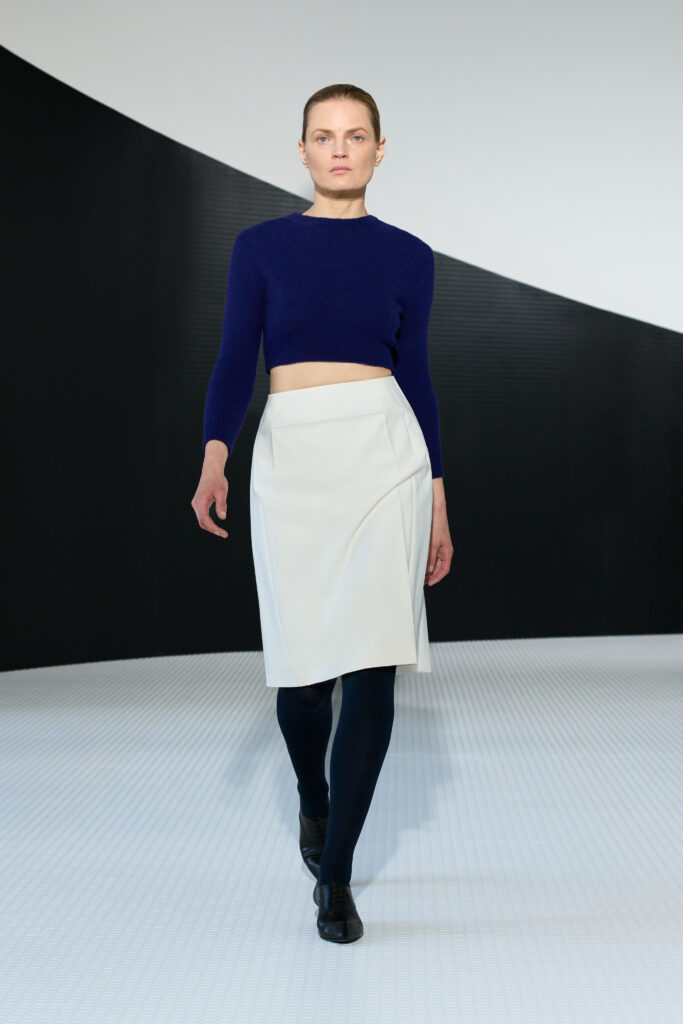
Immediately jumping from Bally’s creative director position to his current role, Simone Bellotti brings Sander back to the pure minimalistic roots. Assuming Jil Sander from the reins of Lucie and Luke Meier, who had cozied into the label’s minimalist aesthetic through function, Bellotti reimagines its simplistic style with an excited eye. In Milan, the Italian designer presents a retrospective nod to the house’s history.
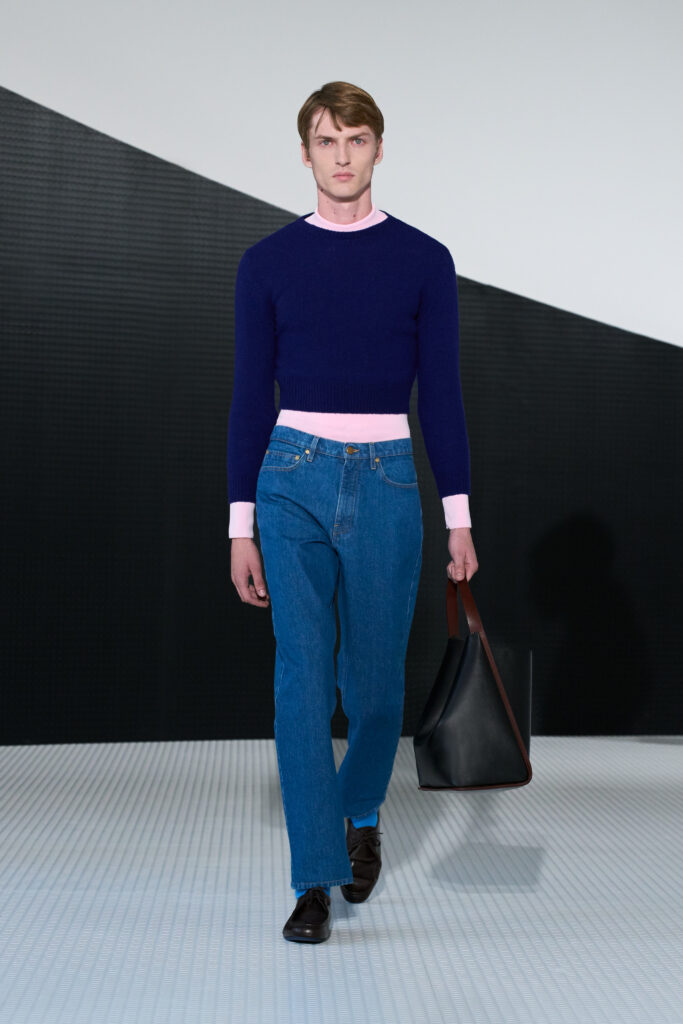
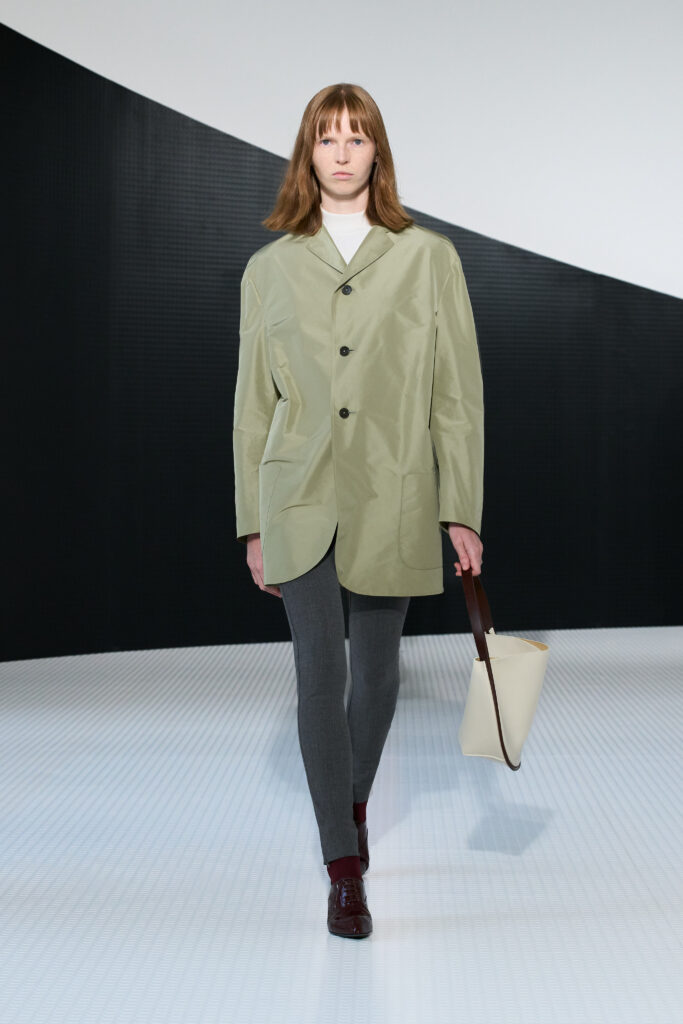
Finishing touches, charming tailored trims, are placed with precision and calculation. Dresses and knee-length skirts are made anew with diagonal slits, blazer tails with vertical cuts. The color-blocking techniques add to his considerate narrative and archival references. Oxford blues apposing rich cherry red, deep greys paired beside blacks, baby pinks with stark whites—all referring to Raf Simons’ tenure. You can feel the importance of the minor details: where one piece touches another, where a garment folds, where it sits on the body. Bellotti places everything with exactness.
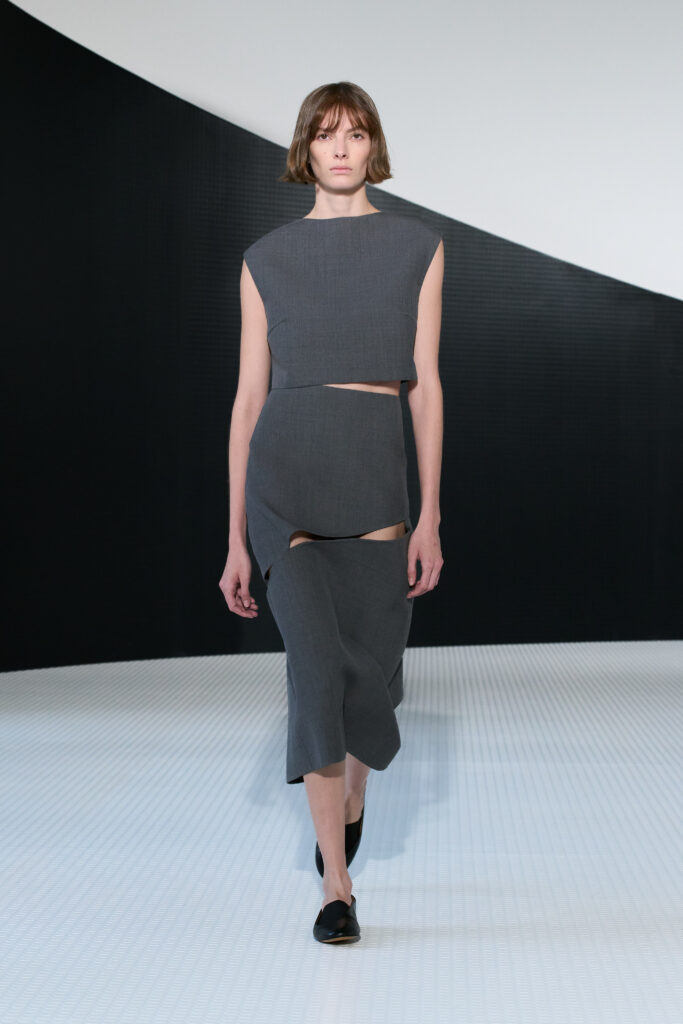
Courtesy of Jil Sander
Dario Vitale at Versace

For the past six months, the world has wondered what Versace is without Donatella’s creative vision. In early 2024, the curtain closed on her having direct creative control and opened on, then Miu Miu womenswear design director, Dario Vitale. As the first person not born a Versace to lead the brand, the shoes he must fill are not just big; they’re platform, pumped, and probably adorned with gilded hardware. But for Spring/Summer ’26, the millennial designer flipped the house on its axis, refocusing the collection to the pulse of his own generation. Timeless vintage standalones, dreamy ’80s silhouettes. Versace has re-entered the everyday wardrobe.
Circling the intimate chambers of the Pinacoteca Ambrosiana—stylized with lived-in California Kings and shuffled household trinkets—it feels as if the models, part of the Versace heir, are walking in their own home.
Vitale carries a confident nonchalance, new to the house’s timeline. The lauded mixed-medal chainmail is made casual by a light cardigan tied around the hip, or a simple brown leather throw-all bag in hand. Sex is incorporated through airy, Miami muscle tees, and an overall suave essence. Trousers are tightly cinched and belted at the hip, as are the season’s striped denims, which are tailored to a straight leg. Unforgettably, Vitale’s Versace is saturated with color and glamour, defined by its refreshed coolness.
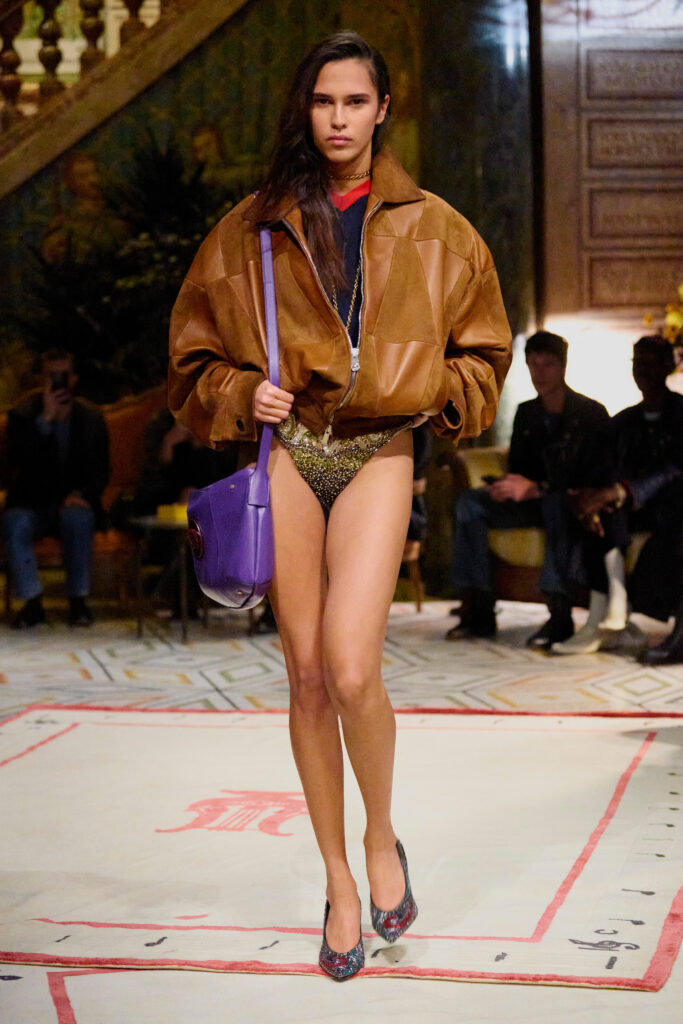
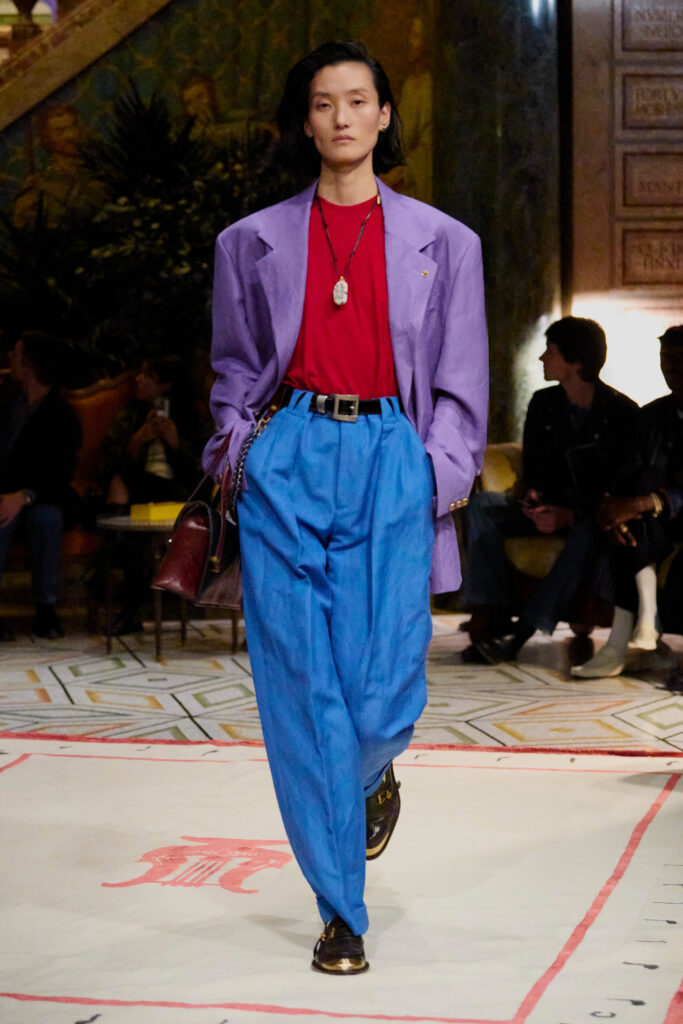
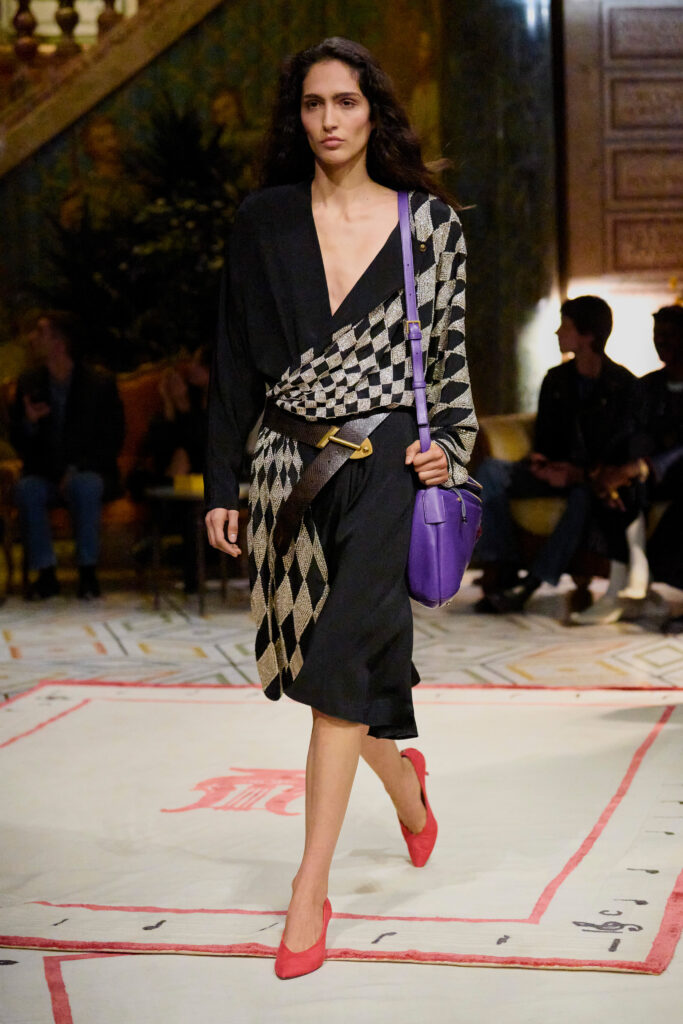
Courtesy of Versace
Louise Trotter at Bottega Veneta
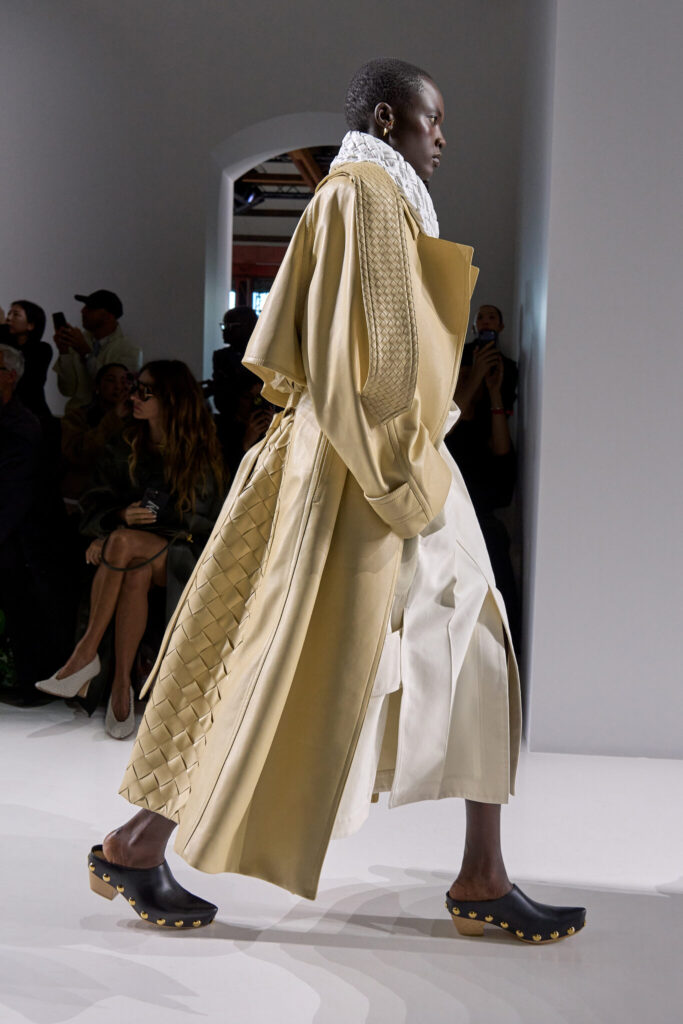
Though she was one of only two female Creative Directors to be appointed in the fashion house reshuffle—among 15 total—and the second woman to command the Bottega Veneta helm, Louise Trotter’s debut was nothing short of assured. Succeeding Matthieu Blazy, Trotter moved to the Milanese house in early 2025, leaving her three seasons at the helm of Carven behind.
For Spring/Summer 2026, Trotter leaned into the Bottega intrecciato leather technique by debuting versions of a micro-weave, a standalone testament to the new leadership’s fusion of innovation and craftsmanship. Introduced by founders Michele Taddei and Renzo Zengiaro, the technique, now synonymous with the brand’s identity, earned greater notoriety under its first female creative director, Laura Braggion. The intrecciato reappeared refreshed again and again, as leather bandanas, glazed jackets, a poncho fringe-edged dress, nappa trench coats, leather tops camouflaged in weave-peaking feathers, and purses of all shapes and sizes.
Sophisticated luxury maintains and evolves. The new Bottega Veneta wove nods to its past directors’ DNA, while embracing a new, female-forward era. Louise Trotter has proven she knows what women want.
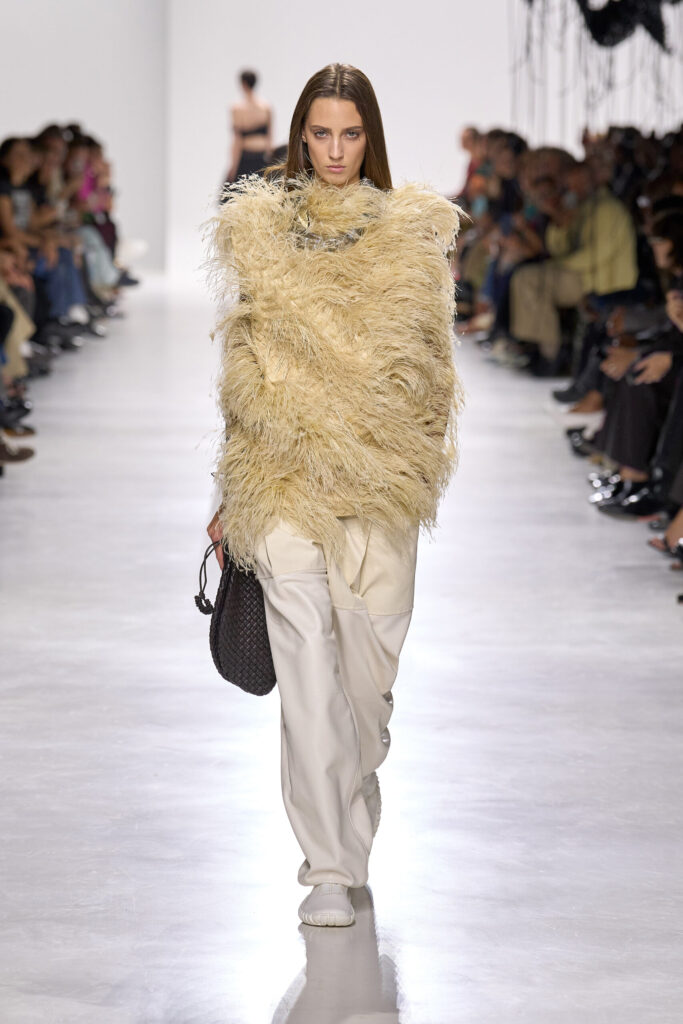
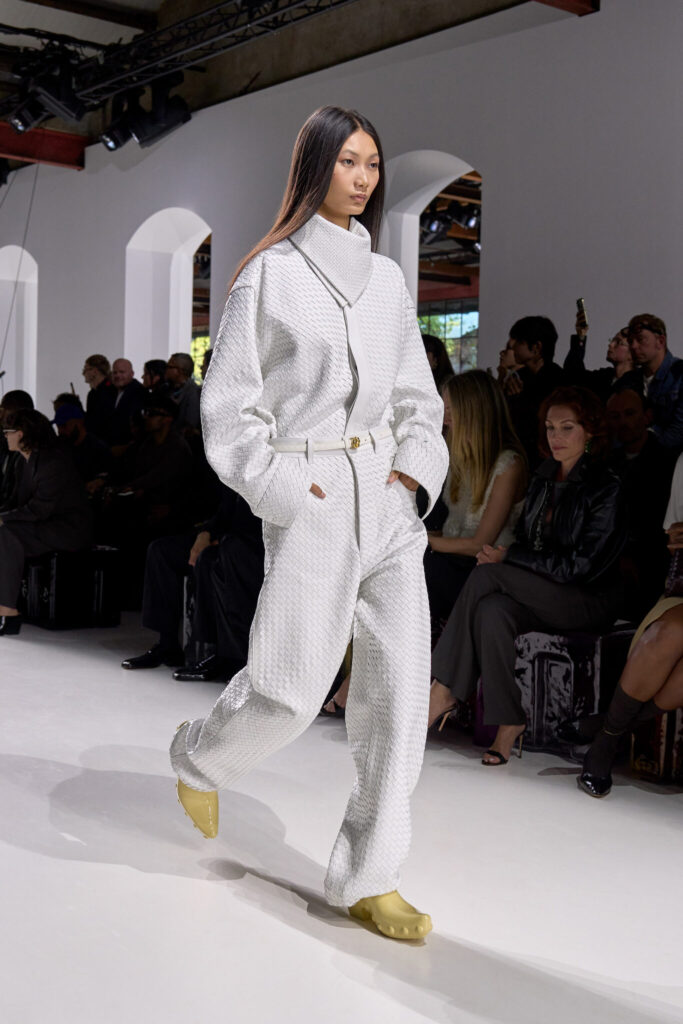
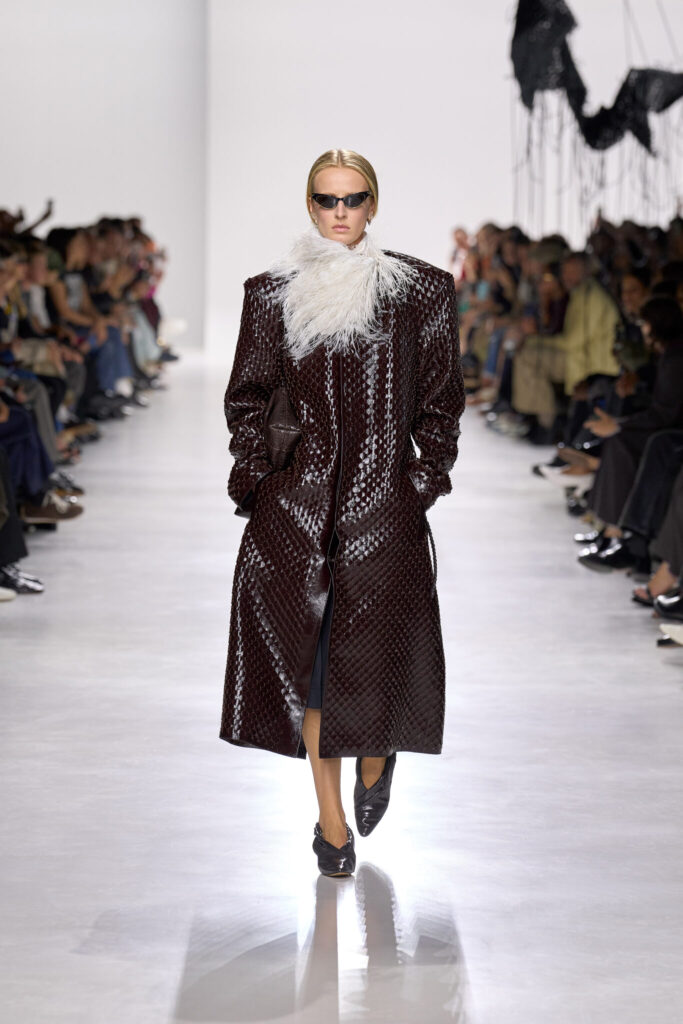
Courtesy of Bottega Veneta
Jonathan Anderson at Dior
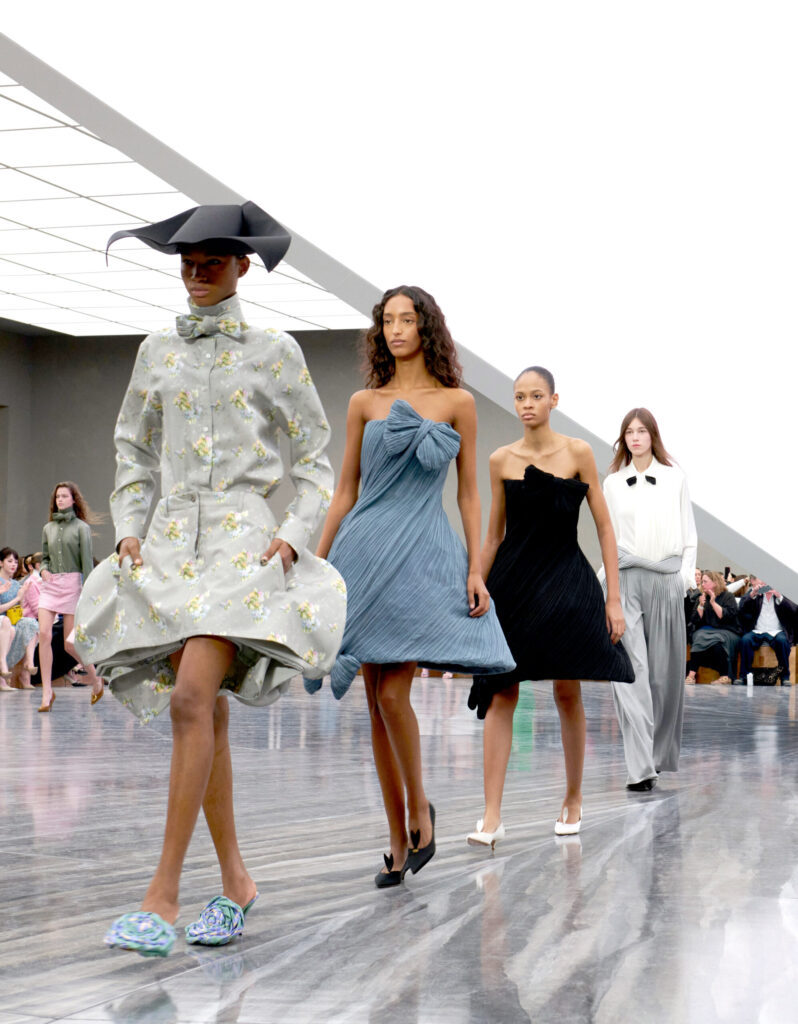
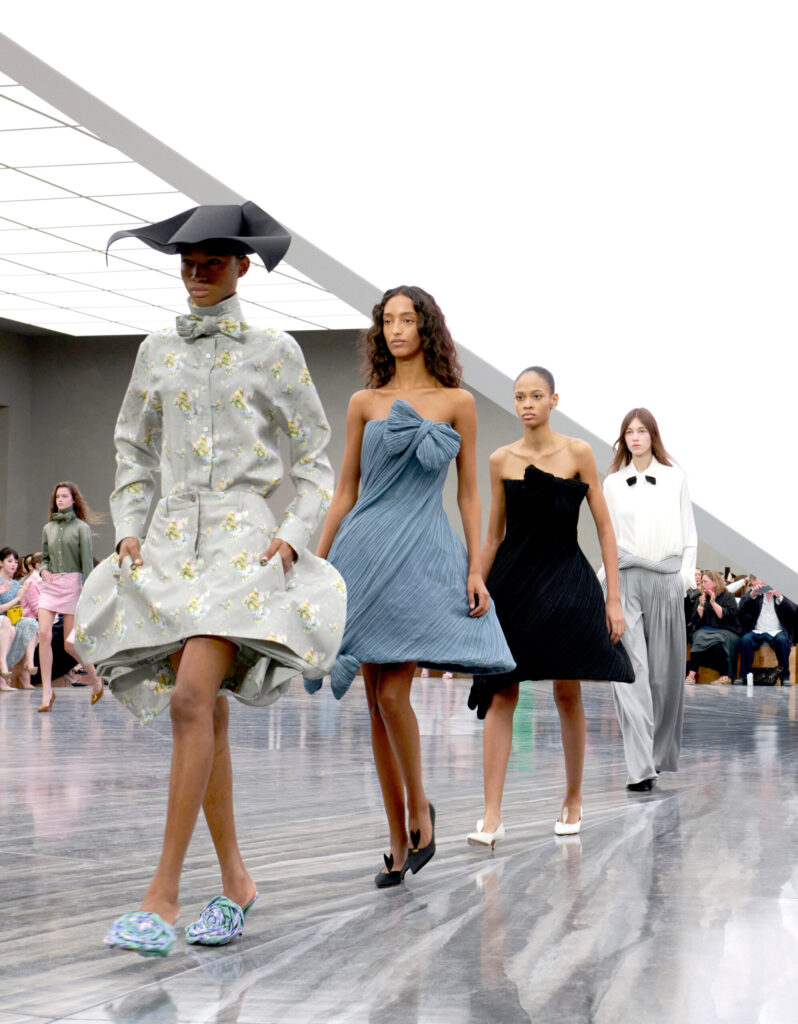
In recent years, Jonathan Anderson has been the fashion industry’s hottest topic. From his over-decade-long tenure at Loewe to his own namesake label, Anderson has been the one to watch, bringing even more eyes to his new position. Taking over for Maria Grazia Chiuri, the Irish designer not-so-surprisingly stepped up to the Dior helm this June. After his highly anticipated Menswear Summer 2026 debut, which simultaneously revealed the new (yet old) lowercase logo, Anderson’s womenswear began with an emotional montage of the house’s successors.
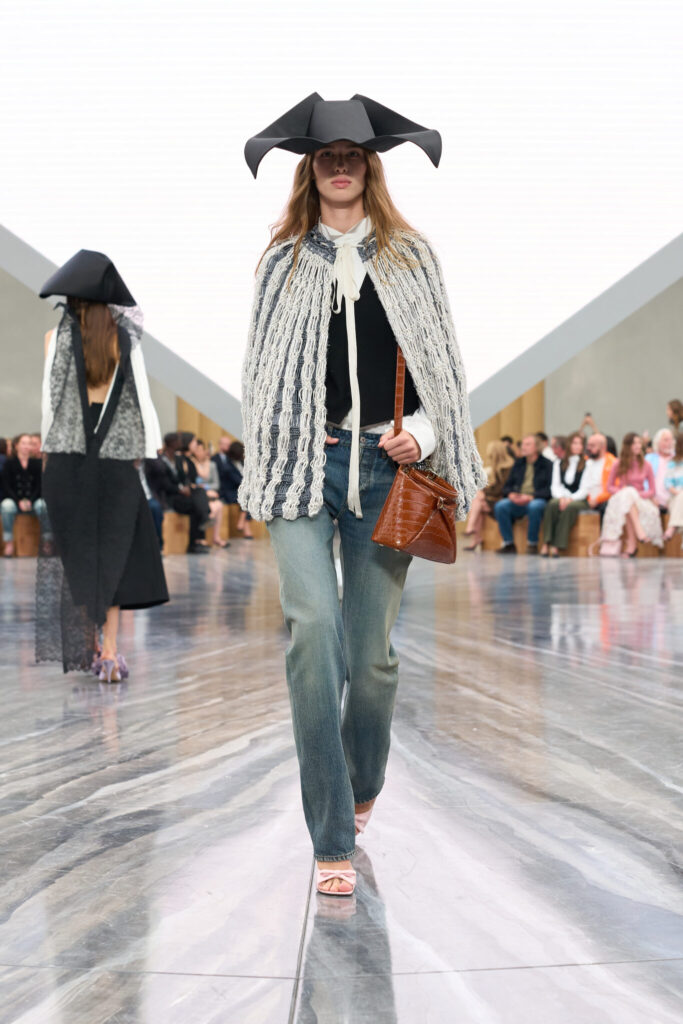
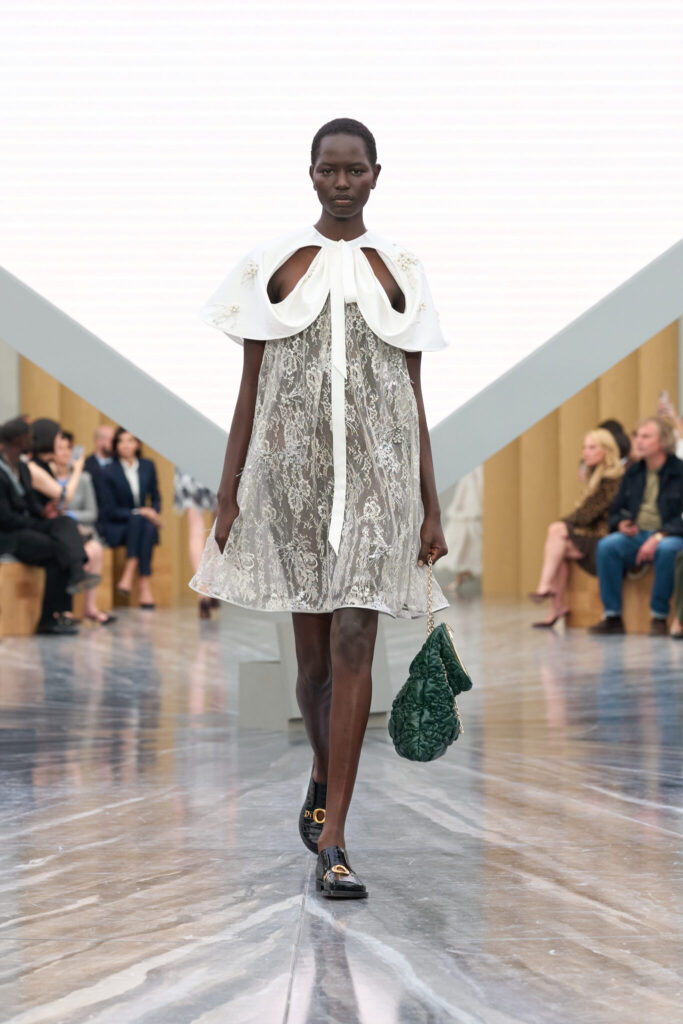
The season begins by revisiting the menswear collection’s blazers, capes, and cargo shorts, now feminized into skirts. But for many long-time Dior devotees, the Spring/Summer 2026 collection read as a contemporary transformation of legacy codes. Models paraded in black pirate-esque hats that peeked into John Galliano’s playbook; meanwhile, the ‘40s New Look—arguably the house’s most iconic silhouette—was honored through sculptural blazers, revised with bow-ear looped peplums and satin ribbon closures. As for accessories, Anderson has replenished the Dior woman’s shoe closet: satin-rose-adorned sandals, classic stilettos marked by the “C” “D” initials, bunny-eared kitten heels, and black loafers bearing the logo—its “O” obtuse and cut out. In purses, the debut lineup featured single-handle styles adorned with bow-like ears and minimalist suede shoulder bags with Galliano-era “Dior” reading handles.
Upon a teary-eyed bow, the audience erupted in a standing ovation. The new Jonathan Anderson Dior is a breath of fresh air.

Courtesy of Dior
Miguel Castro Freitas at Mugler
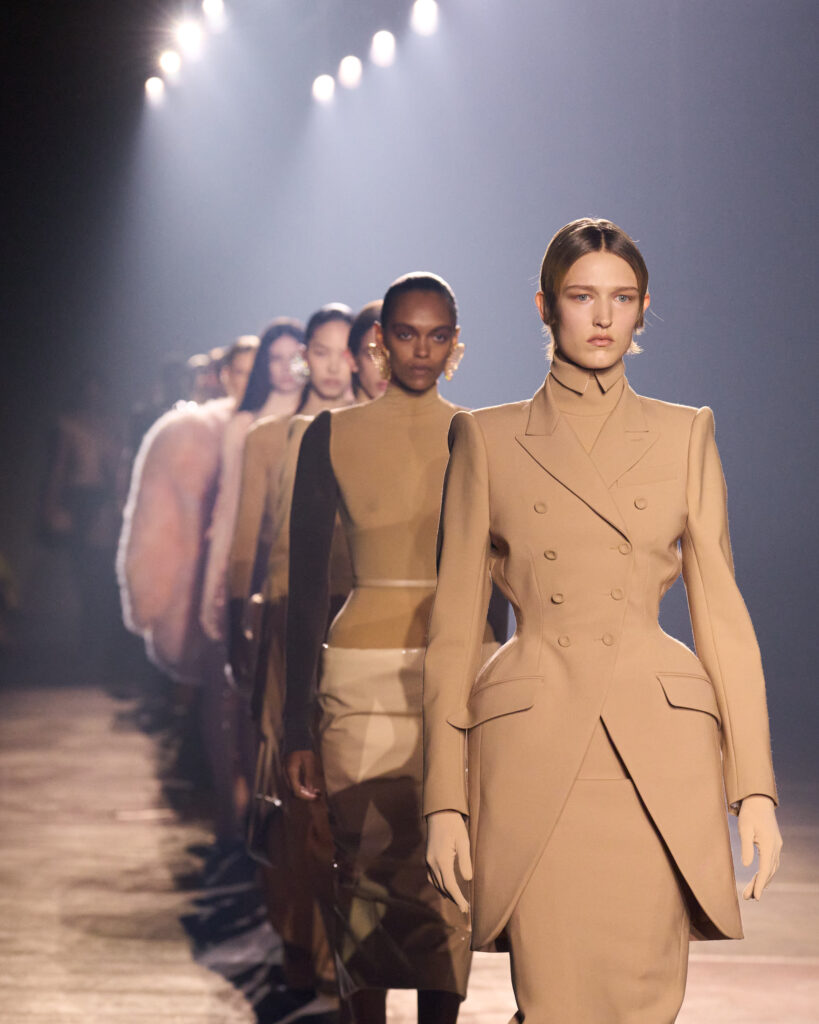
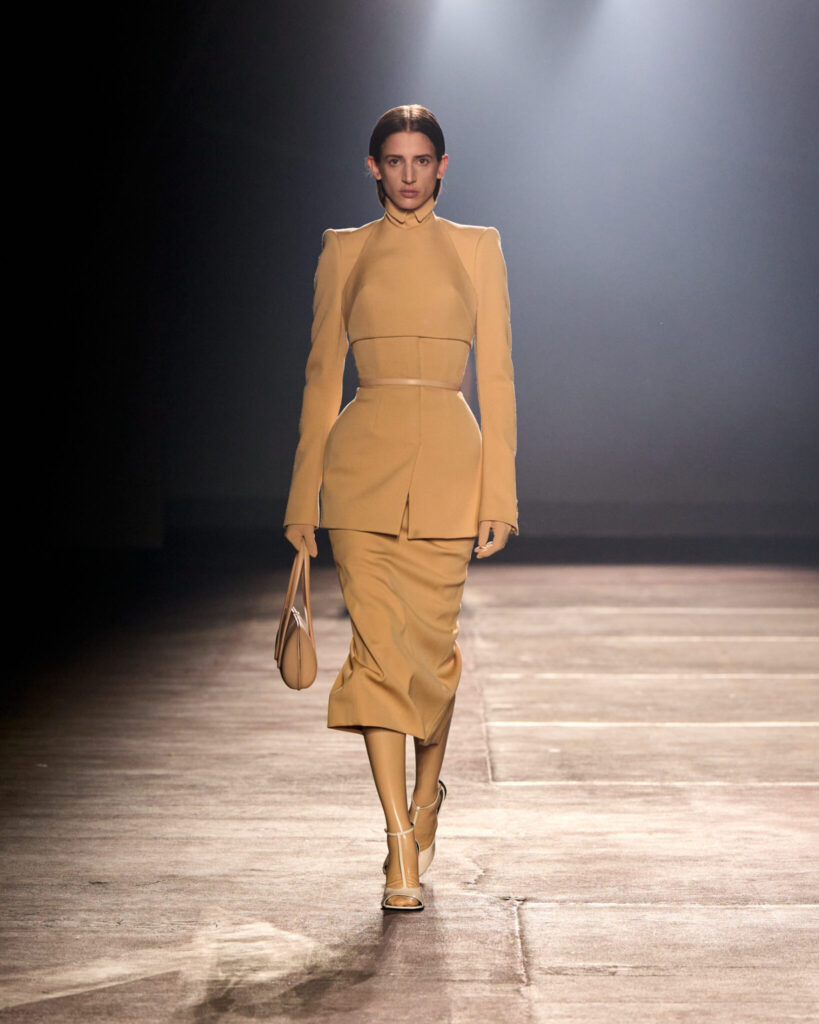
With Showgirls’ Elizabeth Berkley and The Last Show Girl’s Pamela Anderson seated in the front row, the new Mugler is present even before the curtain call. Titled “Stardust Aphrodite,” the Spring 2026 collection leans into a less conventional, more sensible glamour. The Portuguese designer joins the house equipped with a diverse toolkit, having spent time at Dior, Dries Van Noten, Alber Elbaz’s Lanvin, and, most recently, Sportmax as Creative Director. Now, Freitas succeeds Casey Cadwallader, whose tenure was defined by prestigious celebrity customs and culturally seismic looks.
Following the path of the French house’s signature terrain, nearly every look featured Mugler’s snatching hourglass silhouette, exaggerated by padded waistlines and pointed shoulders. The runway’s shadowy stage complemented the collection’s tonal shades of blacks, browns, and beige. Freitas balances the dualities of form and of the house—exposed and concealed, soft and rigid, theatrical and reality. While looks maintained their archival structure, tailoring was softened by wearable silhouettes. Still, at the center, a winged avian bodice claims the hero slot along with a twin-plumed skirt. The drama of Mugler is freshened, grounded in relatability.


Courtesy of Mugler
Mark Thomas at Carven
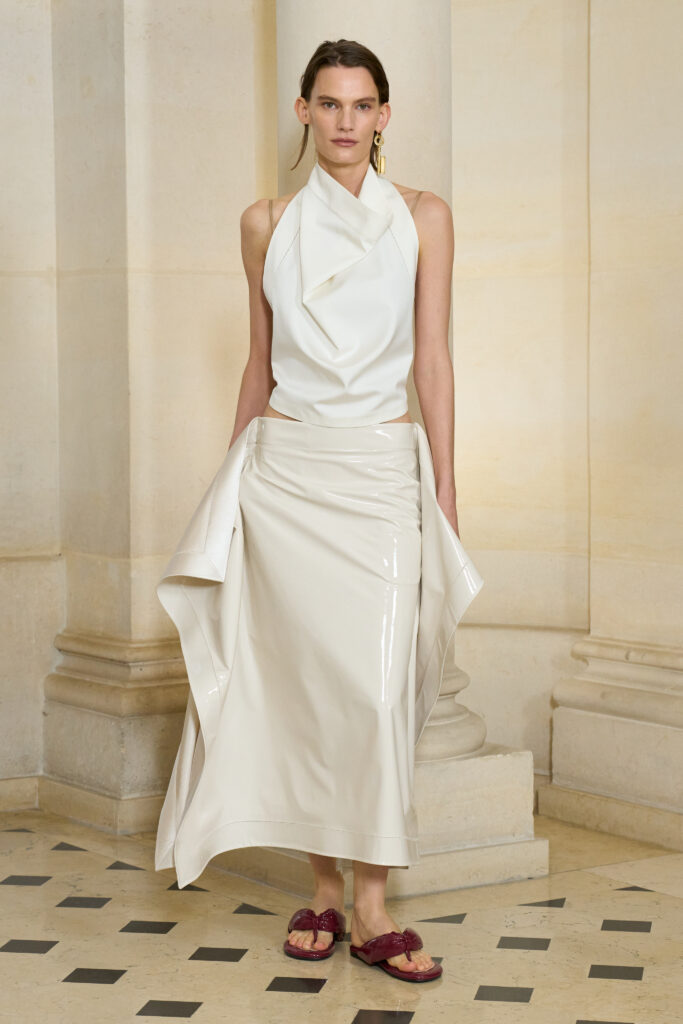
When his boss, Louise Trotter, left to claim the Bottega Veneta helm earlier this year, Mark Thomas—who directed the label’s sartorial and creative collaborations at the time—stepped up. The British designer arrived with his new promotion ready to build on the positive reception Trotter had led.
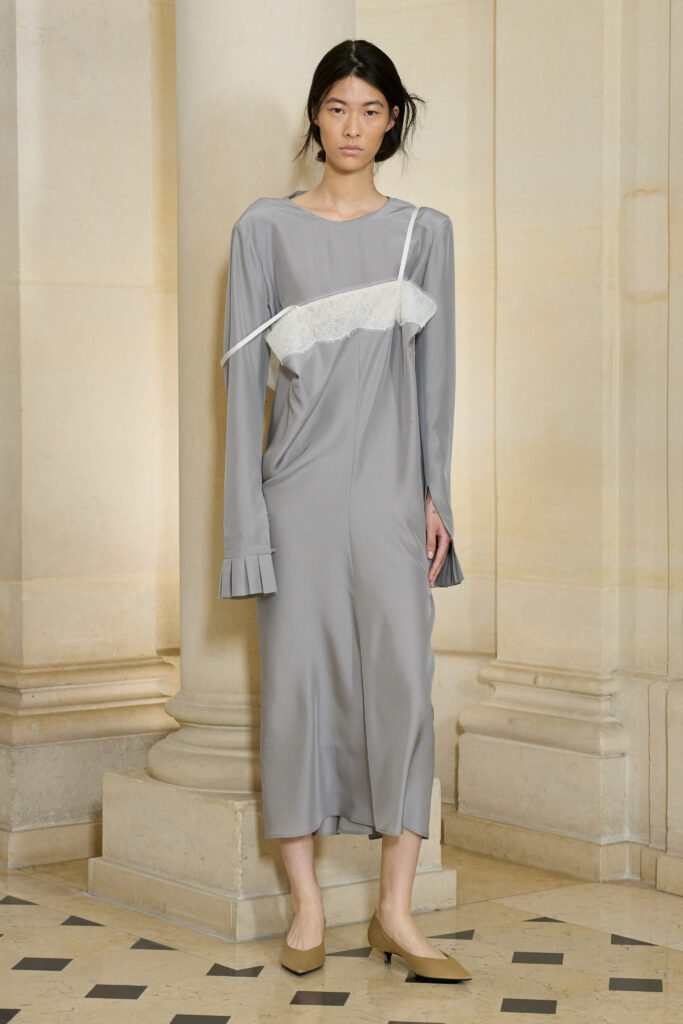
Circulating the ground floor of the maison’s Parisian HQ, the Spring/Summer 2026 collection is introduced by a palette of whites and écrus in various French fabrics—a blank slate for the new leadership. Texture remains central to Thomas’ design language. Mixtures of lace, silk, cotton voile, jacquard, and moiré fabrics define delicate and airy silhouettes, some apposed by a patent vinyl of black or cream. However, compared to the archives, the silhouettes bear more skin, executed with careful intention and mindfulness. Thomas maintains the maison’s heightened intimacy.


Courtesy of Carven
Lazaro Hernandez & Jack McCollough at Loewe
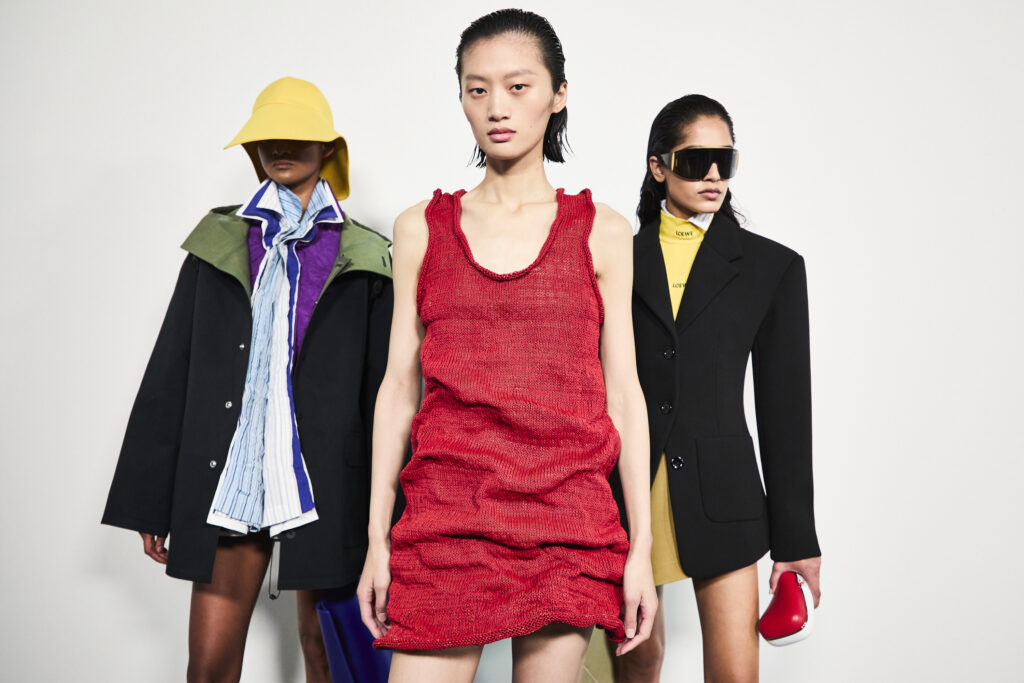
Following Jonathan Anderson’s evolutionary tenure, the founders left Proenza Schouler—which has since named Rachel Scott as their replacement—to take over Loewe. Though the shoes were quite large to fill, as Anderson’s historic 11-year run led the label to exponential growth, Hernandez and McCollough are wearing them with confidence—and socks.
The Spring/Summer 2026 collection finessed a series of charming silhouettes that hint at the aesthetic of Loewe’s evolution. Notably, the pair experimented with garment molds, sculpting simple leather dresses, crinkled knit tees to float over the bodice, and coastal towel dresses. Undone button-ups were double, thrice, quadruple-layered, and peaked beneath micro-short briefs, while minimal matte leather trenches revealed a drawcord cinching of the back yoke. Anderson’s accessory-driven house legacy lives on—interchangeable low-cut socks lined silicone clear kitten heels, and a series of boxy single-handle purses were just a couple of standouts. Intensified by a seasonable color palette of purples, blues, yellows, and greens, Loewe’s direction ultimately feels refreshed by playful Spanish summer codes and characteristic technical craftsmanship.
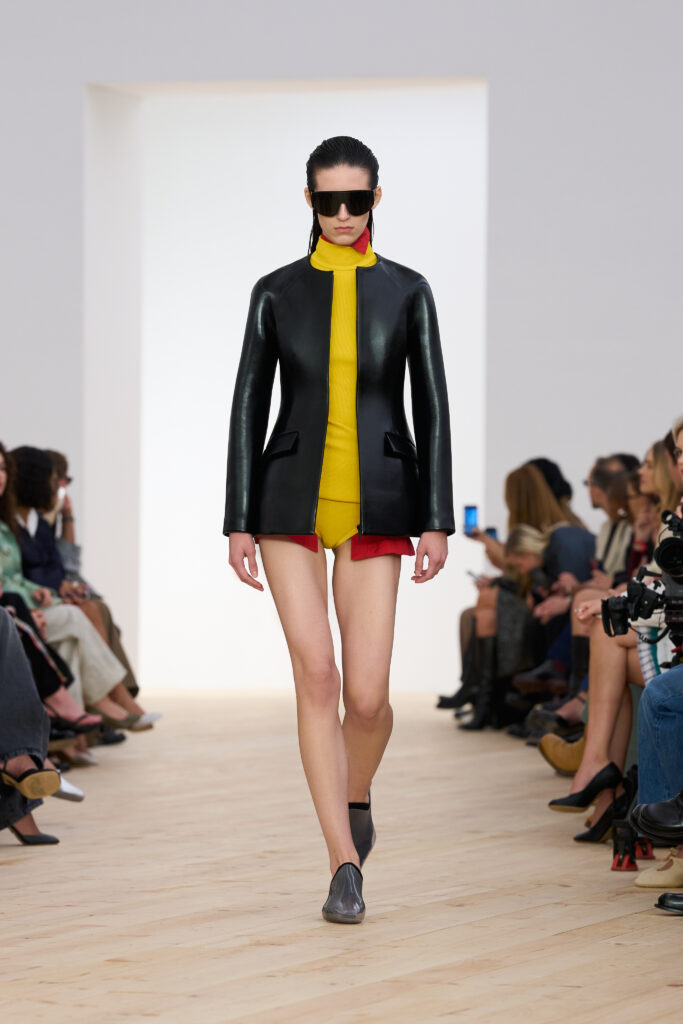
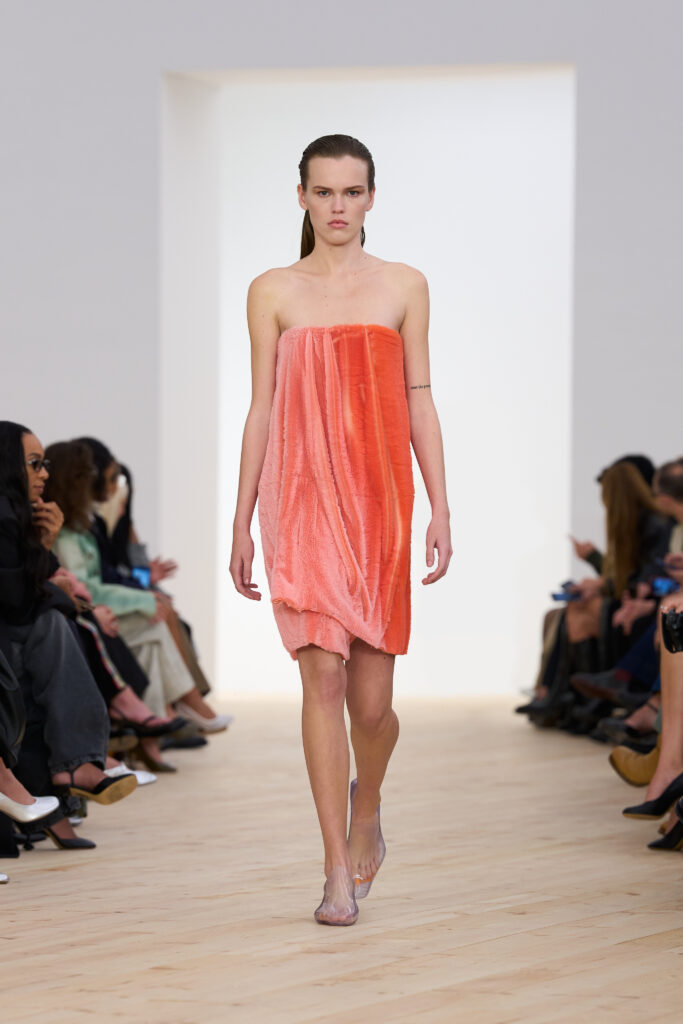
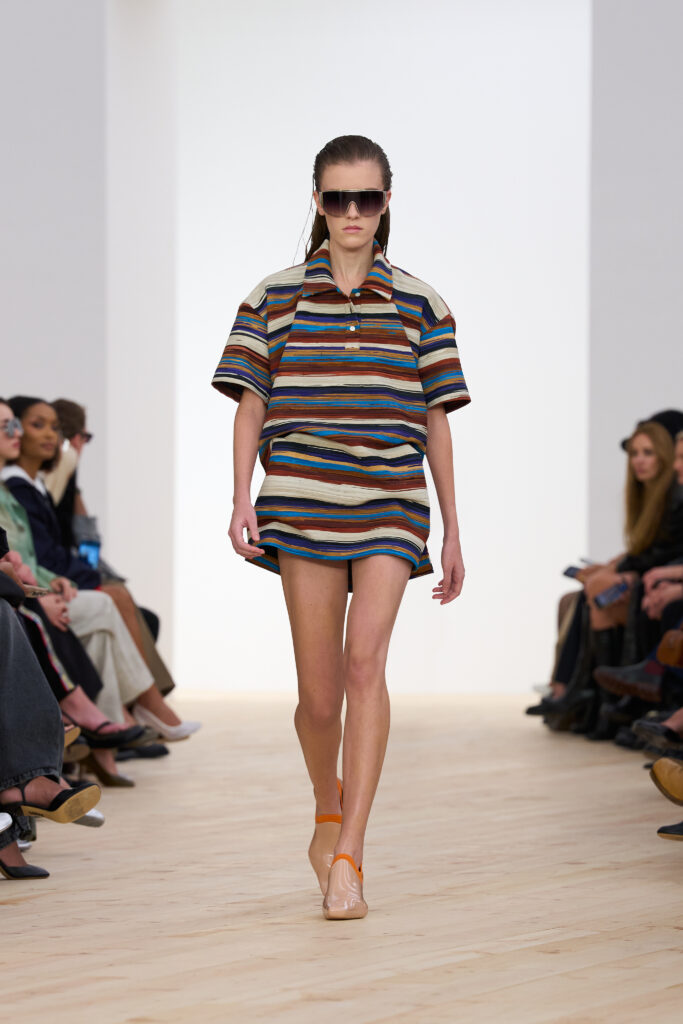
Courtesy of LOEWE
Glenn Martens at Maison Margiela

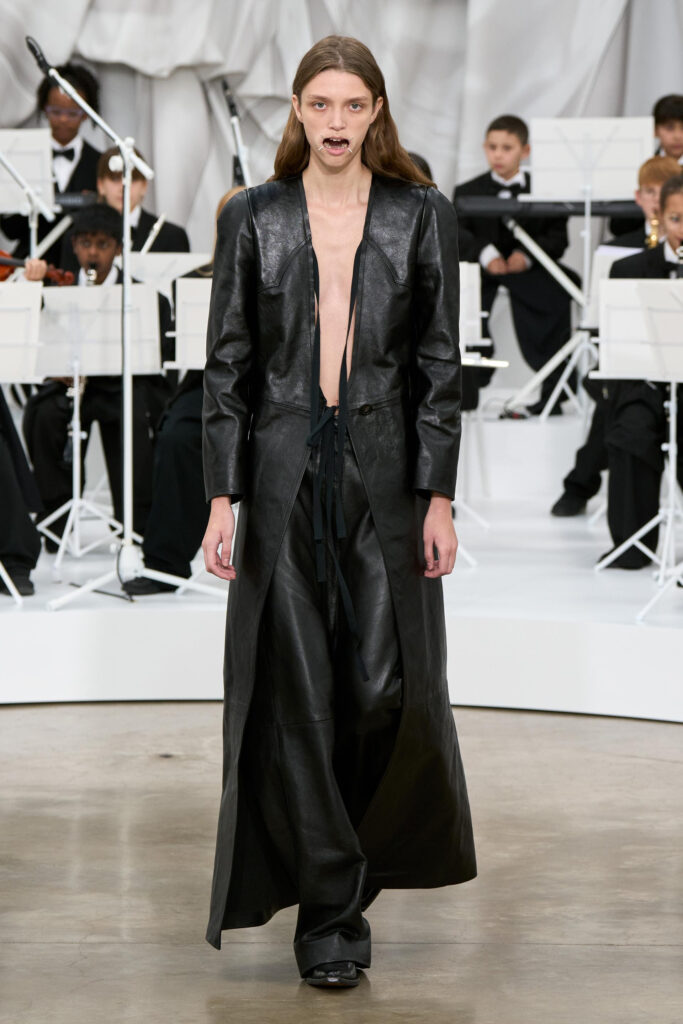
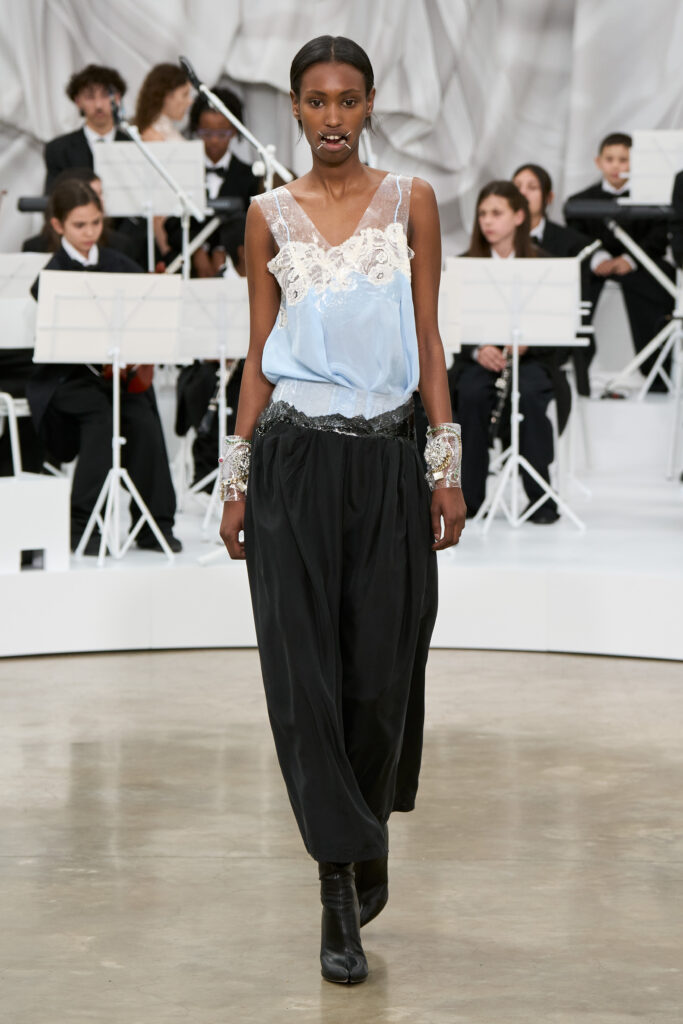
In Paris, 61 child musicians, aged 7 to 15, instrument a rambunctious classical mix—Beethoven, Mozart, Tchaikovsky, and so on—a reference to Mariegla’s debut show and echo of his imperfect aesthetic. An appropriate (but not so welcoming on the ears) introduction to a new era led by Glenn Martens as he succeeds the beloved John Galliano (read more about his appointment here).
Notably, models’ mouths were clamped open by metallic staples in the shape of the brand’s four-stitch non-logo, a commentary on expression and anonymity. The runway followed with a slew of reintroductions and evolutions of archival ideas from the maison: heel-less footwear is now extended to pumps, western boots, and long boots, and the emphasis of tailoring is now placed on denim. Continued from the Artisanal collection, Martens’ plasticisation technique is presented in upcycled jewellery, rainwear jackets, and floral dresses. The pointed Tabi Claw, Martens’ revision of the label’s most eponymous accessory, evolves to ready-to-wear, set with a plexi heel.
The bow concluded with the orchestra of children skipping down the runway, each picking up joyous momentum—a radiant, full circle finale to a new beginning.
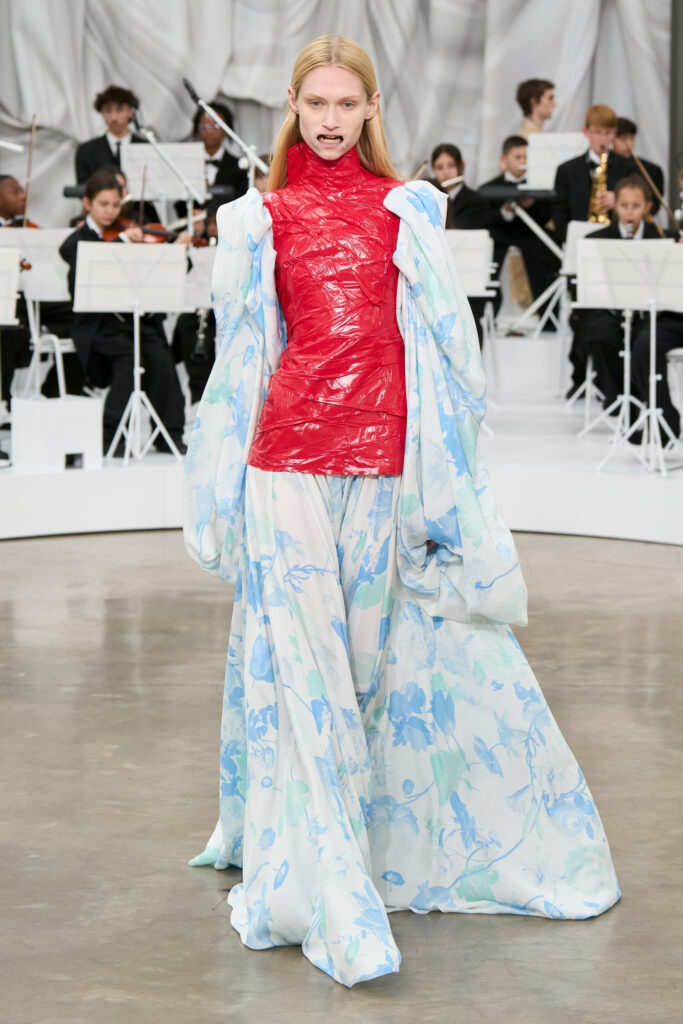
Courtesy of Maison Margiela
Pierpaolo Piccioli At Balenciaga
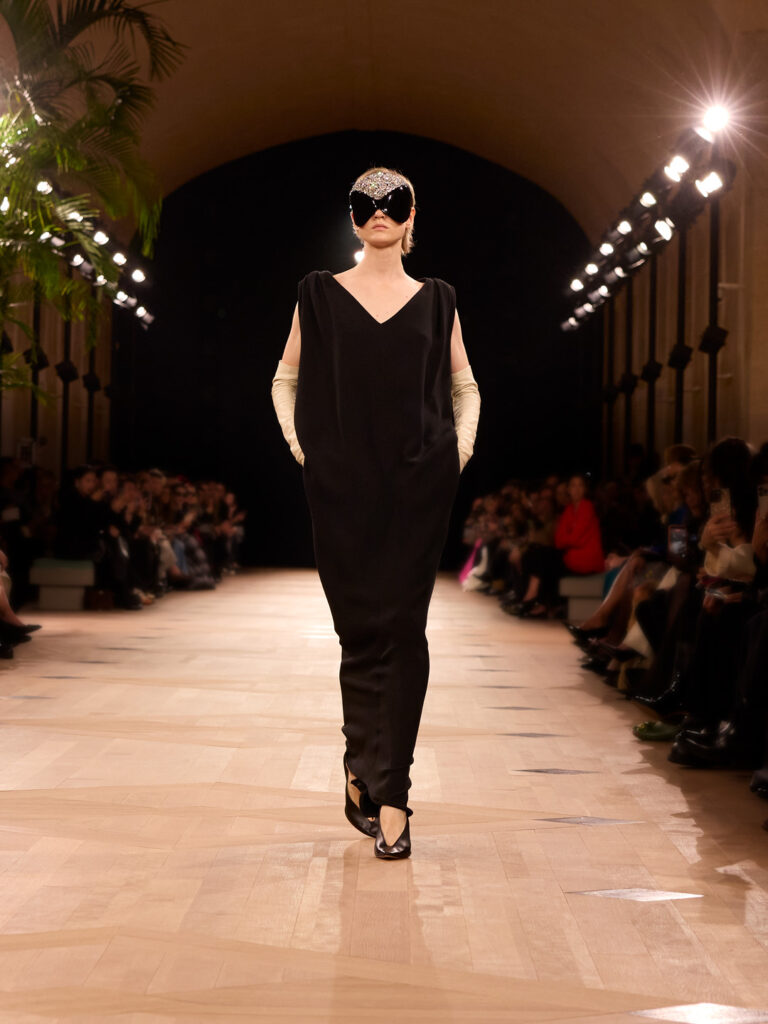
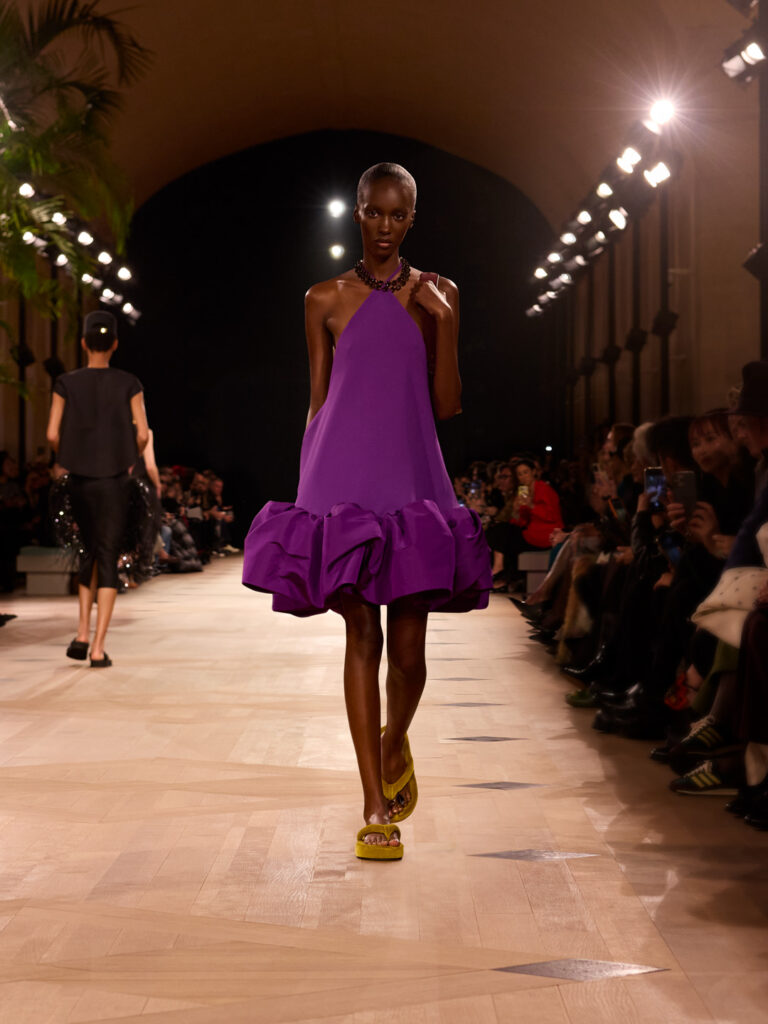
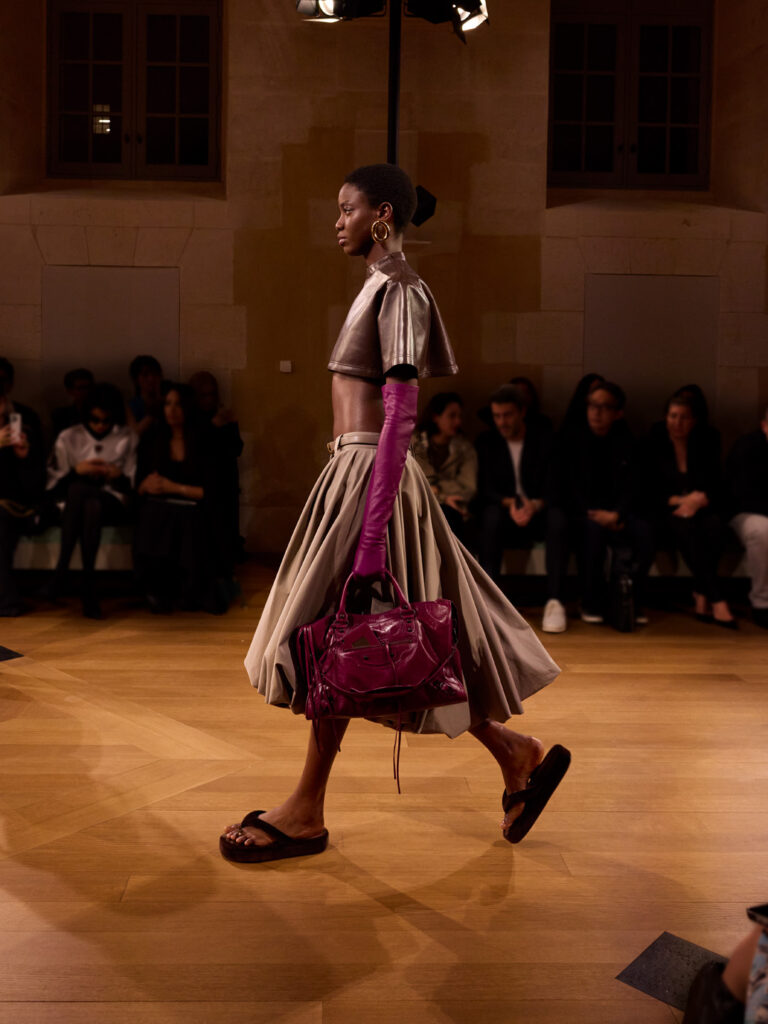
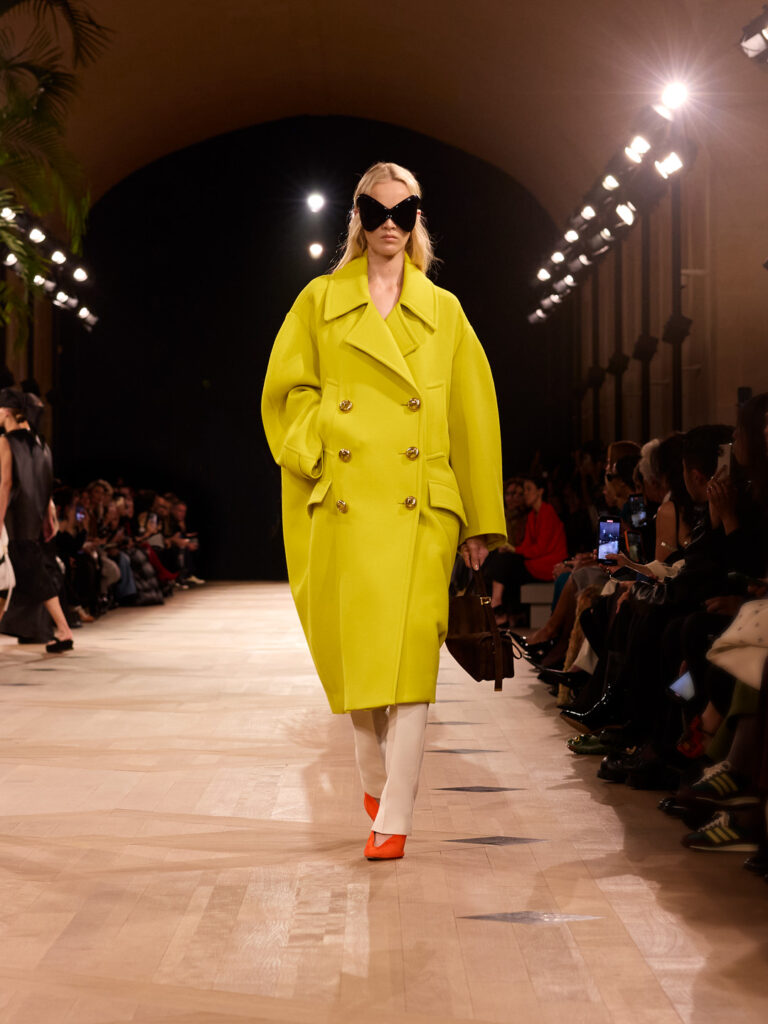
Following Demna’s viral charged, decade-defining Balenciaga may be the most challenging job of them all. For years, the Spanish house thrived on marrying topical societal commentary with ironic fashion quips, in turn, earning the brand a die-hard Demna fanbase. After spending decades designing couture for the Valentino house, Pierpaolo Piccioli took a page out of Cristobal’s archives, returning elegance and couture back to the Balenciaga runway in ready-to-wear form.
Still, nodding to Demna’s reign, bug-eyed glasses graze the first look of the Summer 2026 collection, accessorizing a simplistic billowed black gown. Throughout, Piccioli highlights the relationship between the cloth and body, echoing the house’s emphasis on humanity—a crucial factor in the new leadership’s aesthetic. In a radical change, the house is now redefined with precision and less noise.
Courtesy of Balenciaga
Michael Rider at Celine
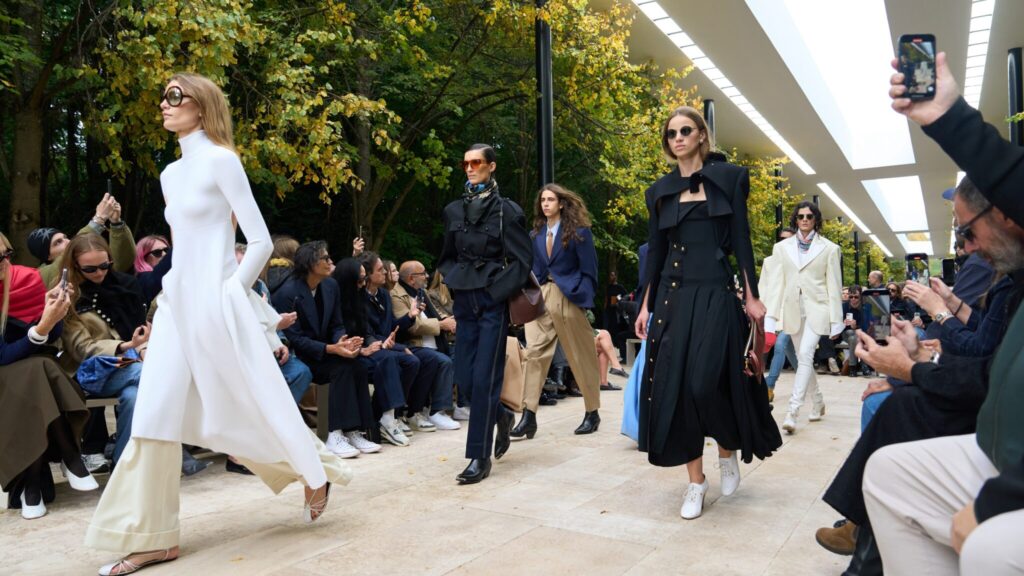
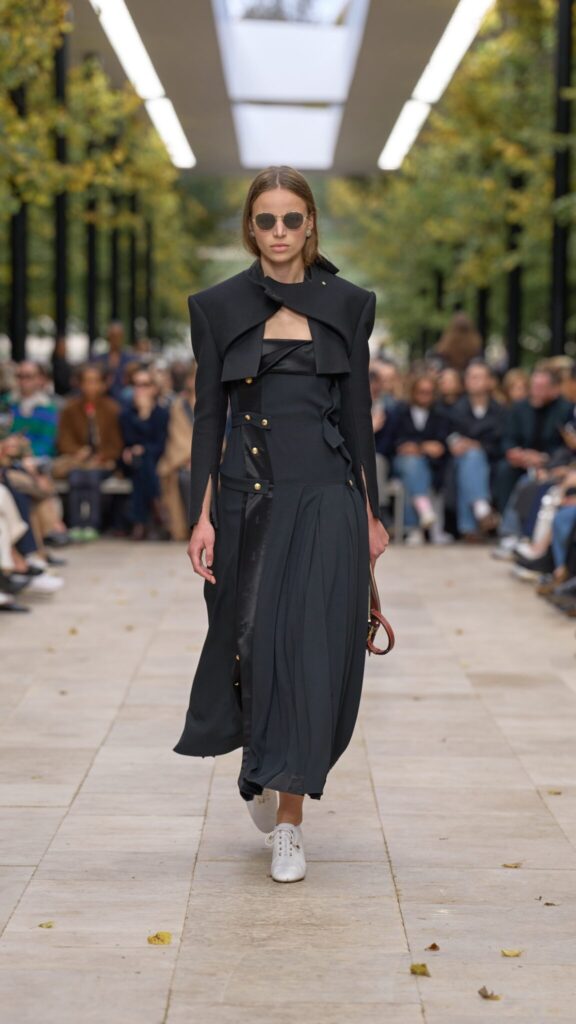
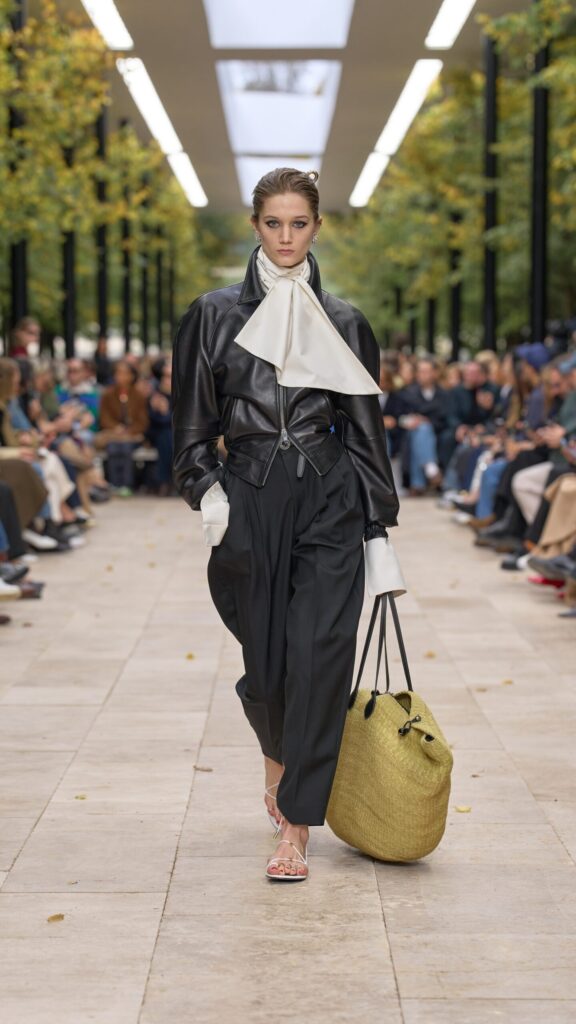
While July debuted his initial first steps at Celine’s reins, his sophomore, Été 2026 collection showcased even greater assurance. The American designer previously served at Balenciaga, then under Phoebe Philo at Celine, and eventually at Ralph Lauren, where he held the creative director role, until Hedi Slimane’s departure from Celine last year made way for his return and major appointment.
The season is a confident homecoming to the maison’s most pivotal eras—Vipiana’s Couture sportswear, and Philo and Slimane’s respective reigns—while defining Rider’s own leadership aesthetic. Canvased in black and white, pops of color are thoughtful and selective. Vivid floral ‘60s mini dresses, further retrofied through their flared hems and turtleneck collars, are innately starring pieces. Tailoring and styling are precise, yet the aesthetic feels relaxed. Some models swing Celine-branded bicycle helmets in their arms, while jackets are slung in others. Versatile and modern, Rider’s Celine translates the esteemed structure through his own language.

Courtesy of Celine
Duran Lantink at Jean Paul Gaultier
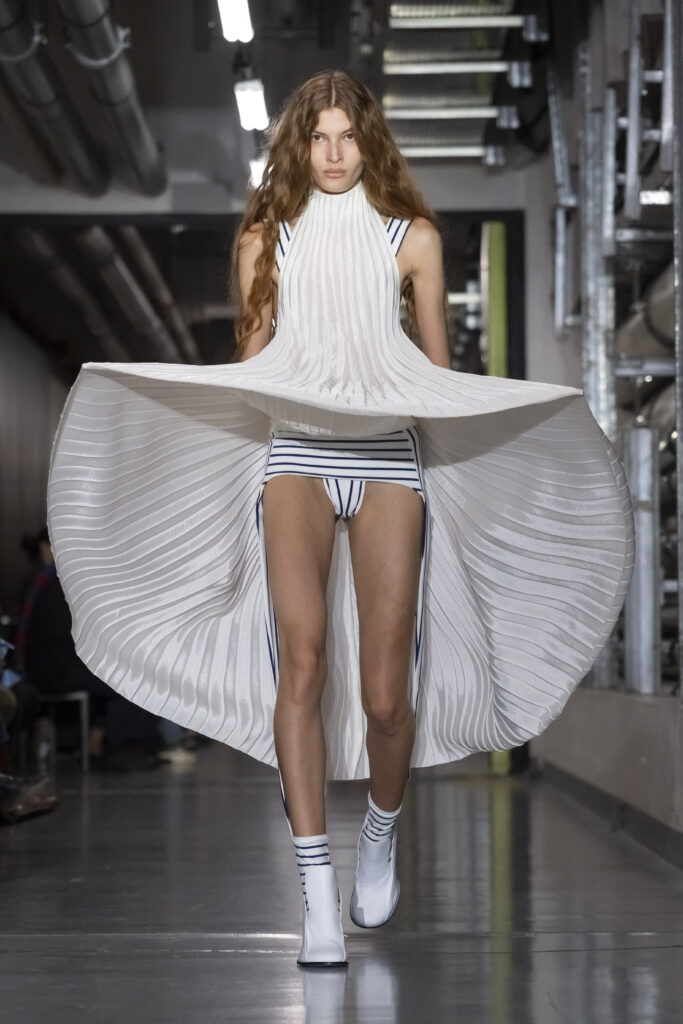
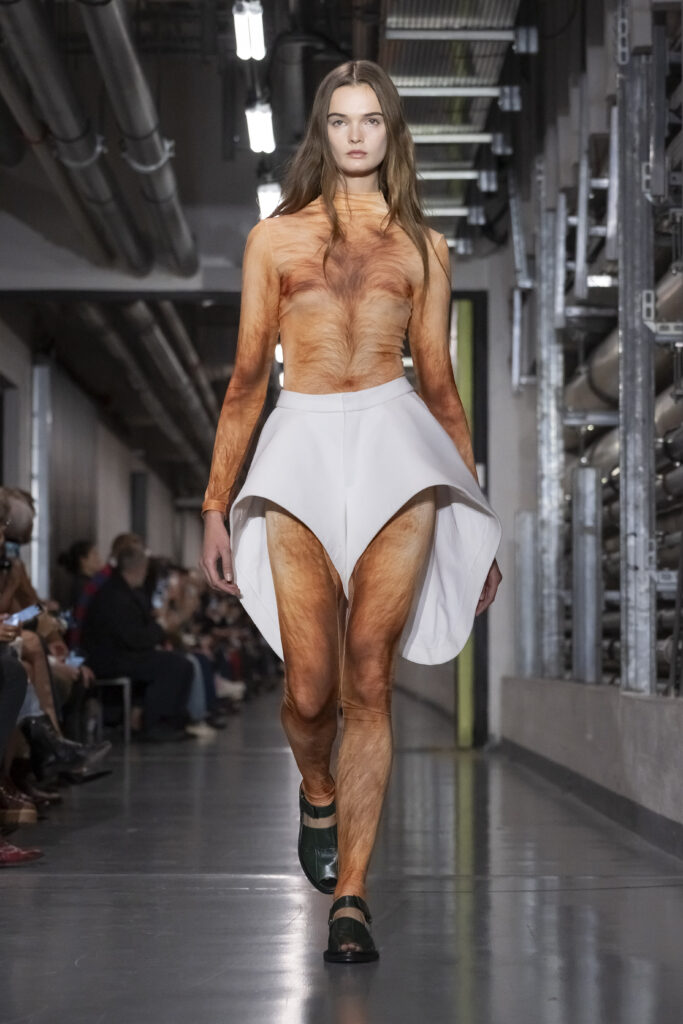
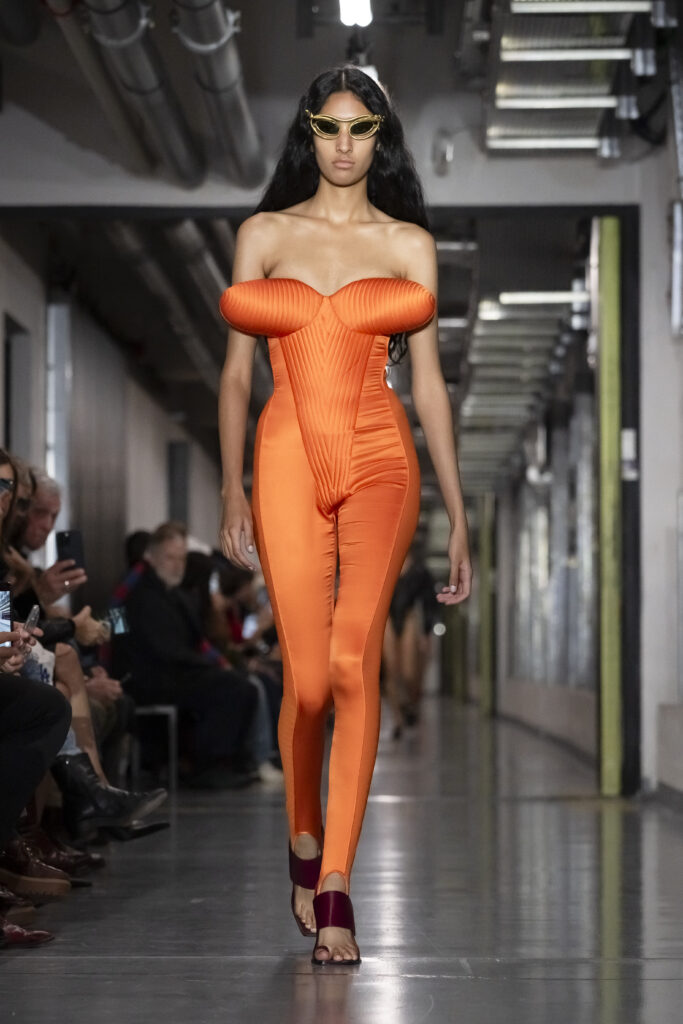
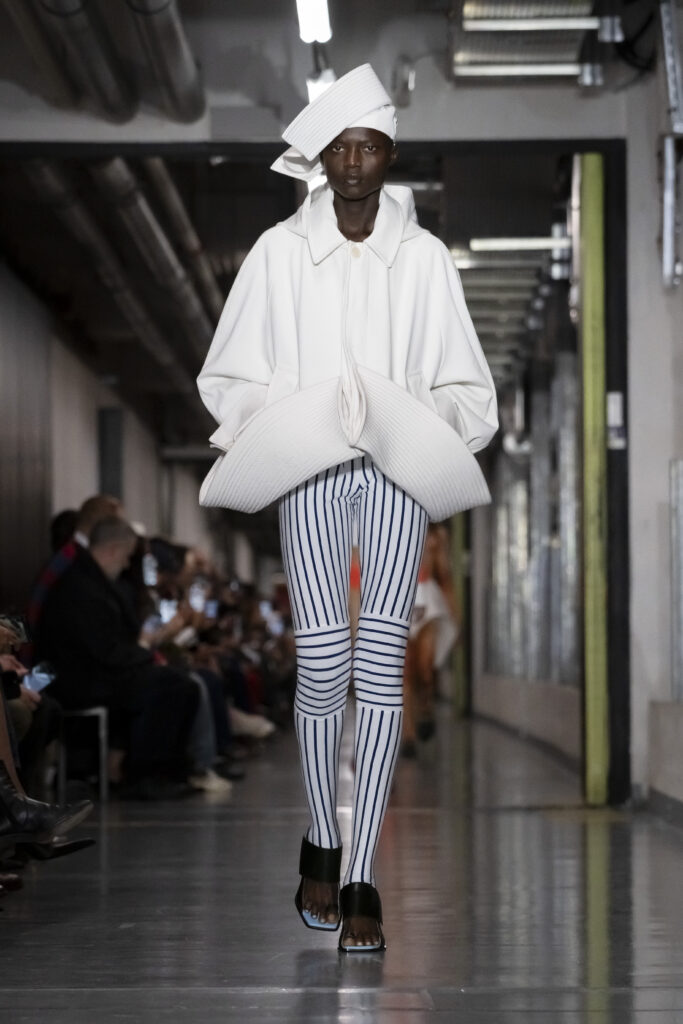
Named the first permanent director to take the house’s helm since Jean Paul Gaultier stepped down in January 2020, the Dutch designer is the underdog of the season, with only his namesake label in his repertoire. Waving adieu to the house’s coveted Haute Couture guest designer slot—assumed by the likes of Glenn Martens, Olivier Rousteing, Haider Ackermann, Julien Dossena, and Simone Rocha, to name a few—Lantink’s new Spring/Summer season is a risqué alter ego of Gaultier. Titled “Junior,” the divisive collection channels Amsterdam’s legendary RoXY club as Lantink’s primary inspiration.
Though the Jean Paul Gaultier house has undergone “Duranification,” Lantink pinpoints the classics: the Marinière stripe is spun into optical illusions, the sailor white caps return, and the color palette falls in very Gaultier shades of burgundy, mustard, and sky blue. Lantink took the theatrics even further, baring it all as provocative naked nylon suits charged the runway uncensored. Explicit, head-turning details punctuated each look—from waist-high French-cut bodysuits to revealing window cut-outs. Duran Lantink’s Gaultier has proven to carry a shock factor and test the limits of provocative freedom.
Courtesy of Jean Paul Gaultier
Matthieu Blazy at Chanel

A new Chanel is on the horizon this Spring/Summer 2026, after longtime deputy of Karl Lagerfeld, Virginie Viard, announced her departure from the house in June 2024. But six months later, Matthieu Blazy graciously stepped up to the plate. The Paris-born designer first began his career at Raf Simmons, most recently leaving Bottega Veneta before being appointed Artistic Director of Chanel late last year.
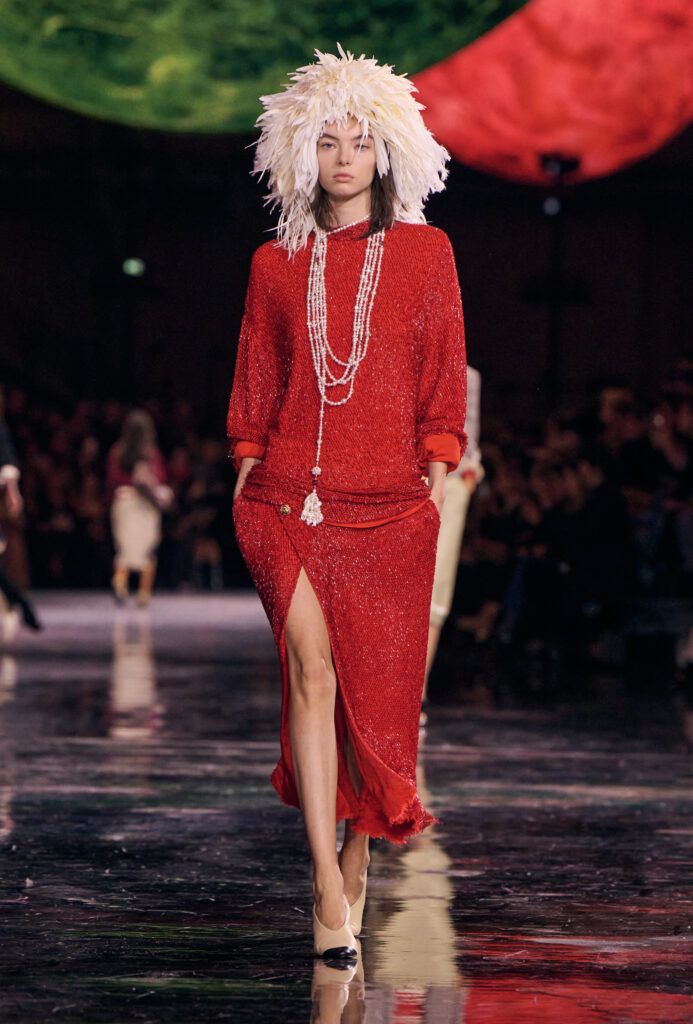
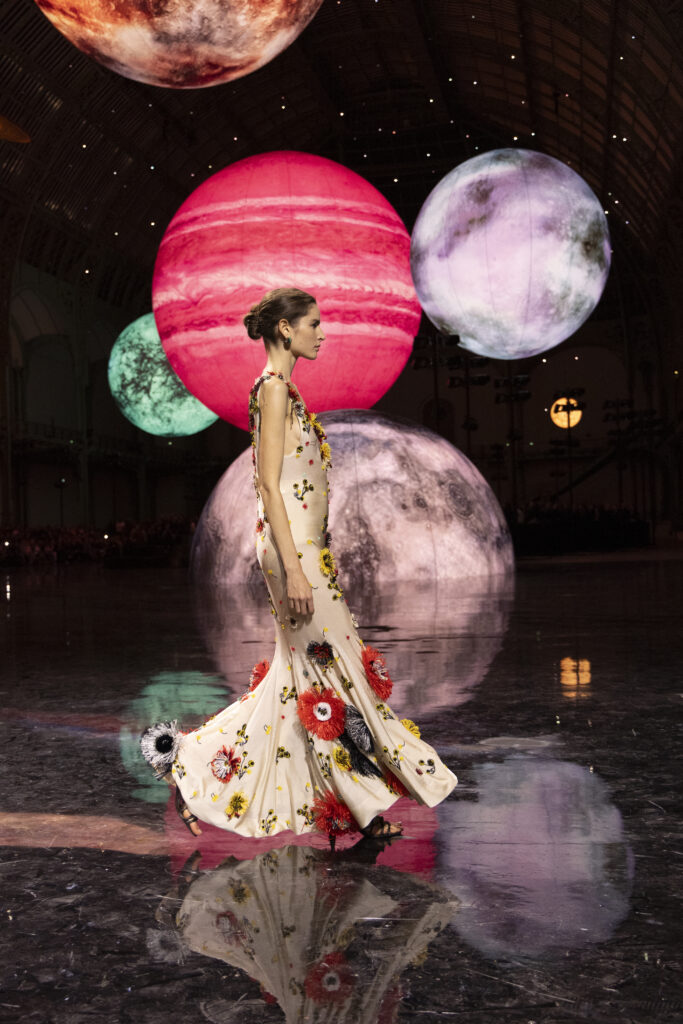
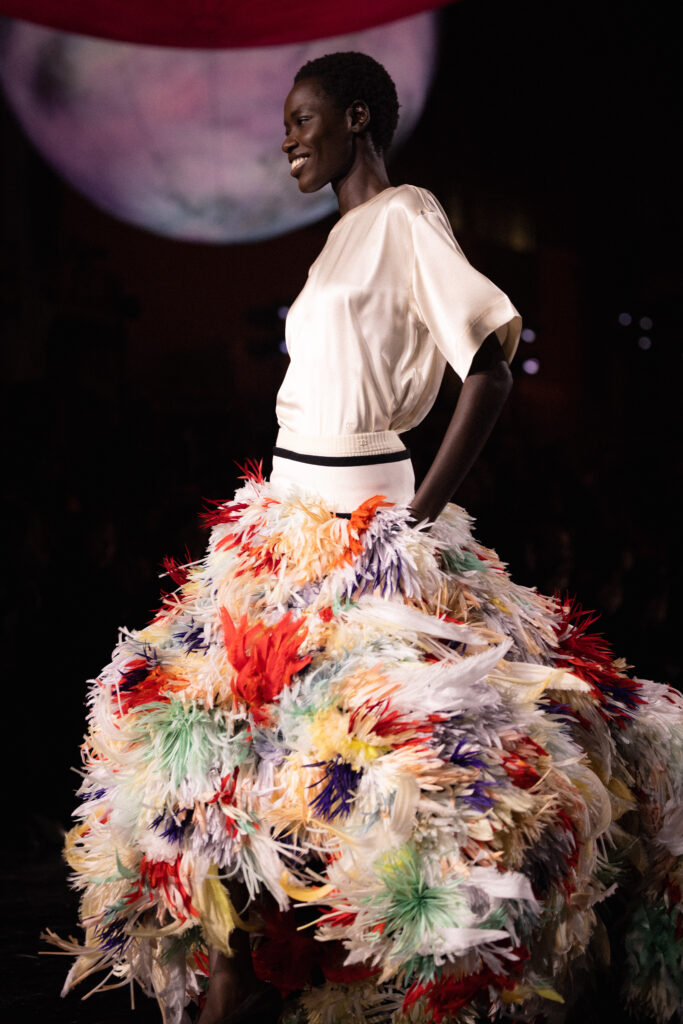
Back in Paris’ Grand Palais, a suspended solar system of gargantuan 3D glowing planets and a glazed galaxy floor decorates the runway. A refined, cropped blazer and twin low-rise pants introduce Chanel’s new era through subtle yet striking details—a micro houndstooth pattern, softened tailoring, and understated accessories that quietly redefine the house’s classic codes. Blazy’s Chanel girl can be immediately identified as refreshed and relaxed. Throughout the collection, tweed is torn, feathered, ripped, untethered, reinterpreted in unstructured silhouettes.
The maison’s branding is stripped down and predominantly told through its iconic craftsmanship and hallmark styles. Notably, the 2.55 purse has been pried open—perhaps a nod to the house’s dramatic reinvention—the flap having equipped a wire that can be molded and toyed into various shapes.
Upon the finale, a joyous, cheesing Awar Odhiang spun and gestured to the audience, showcasing a flouncy, feathered spring skirt to close out Blazy’s Chanel debut and Paris Fashion Week entirely. What an evening.
Courtesy of Chanel
Discover More